How to resolve AdBlock issue?
News
In commemoration of the 150th anniversary of the founding of Lake County this year, Lake County News is publishing a series of historical stories about the county, its people and places. This week's topic, the county's Old Toll Road, is covered in an excerpt from the files of Lake County historian Henry K. Mauldin, edited by Linda Lake, curator of the Lake County Museum.
In the early 1860s the old and tortuous Soldier Road – in close proximity to what is now Butts Canyon Road – was the only route from the southern part of Lake County to the Napa Valley.
It was popular opinion that a better route was needed, no doubt encouraged by the fact that the northern Clear Lake area was now being served by the new Lakeport-Cloverdale Toll Road.
By Legislative Act on March 17, 1866, John Lawley and Associates were granted the right to build a toll road from the foot of Mt. St. Helena, near Calistoga, up over the pass and into Seigler Valley in Lake County.
Before being completed however, this route was shortened to extend only to the mouth of St. Helena Creek at Mirabel Mine south of Middletown.
John Lawley, Henry Boggs and a Mr. Patterson built the toll road for $14,000. It was completed in early 1868.
The route from the Middletown end was about the same as Highway 29 until the Mt. Mill House was reached just inside the Napa County line. It then followed up the east side of St. Helena Creek, crossed where Highway 29 now is, and then went west up to the toll house which was 100 yards to the west of the Highway and several feet higher in elevation.
John Lawley owned the toll road until his death on May 26, 1906, at the age of 91. It then went to his heirs, sons Charles and Harry, and his daughter Mollie Patten.
Mollie was the gatekeeper for the last years of the road and according to Milt Kugelman, she was a tough old gal who could cuss like a man, and no one dared slip past her gate without paying the toll.
At the Toll House, a long Douglas Fir pole was swung across the roadway about 30 inches above ground level. It was removed on payment of the toll, which varied from time and time, but was once $1.50 for an eight horse team and wagon, $.50 for a horse and rig, $.10 for a horse and $.30 for a sheep.
This route was frequently used for livestock being driven by foot to the Bay Area markets. Hogs were the slowest, taking one full day to go from the Mirabel Mine to the Toll House.
It took three hours for a fast horse stage to go from Calistoga to Middletown. During this time, any stage robberies that took place on the Toll Road were the jurisdiction of Napa County.
About two-tenths of a mile down the road toward Calistoga was the Martz place. Old steam stages would stop there when going up and take on water, or if coming down the mountain, drivers would get out and throw water on the brakes to cool them off.
Auto Stages took over from horses in 1907 and Bill Spiers began a very profitable business with the help of contracts for carrying the U.S. Mail.
In 1922 with the prospect of Highway 29 being built, the counties of Lake and Napa bought the Old Toll Road from the Lawley family for $30,000. They collected fees until it was paid for.
It is believed this road was the last of the toll roads into Lake County.
For more information about the Lake County Sesquicentennial, visit www.lc150.org, join the celebration at https://www.facebook.com/home.php#!/pages/Lake-County-Sesquicentennial/171845856177015 and follow it on Twitter at http://twitter.com/LakeCo150 .
Follow Lake County News on Twitter at http://twitter.com/LakeCoNews, on Tumblr at www.lakeconews.tumblr.com, on Facebook at http://www.facebook.com/pages/Lake-County-News/143156775604?ref=mf and on YouTube at http://www.youtube.com/user/LakeCoNews.

NASA's Dawn spacecraft on Saturday became the first probe ever to enter orbit around an object in the main asteroid belt between Mars and Jupiter.
Dawn will study the asteroid, named Vesta, for a year before departing for a second destination, a dwarf planet named Ceres, in July 2012.
Observations will provide unprecedented data to help scientists understand the earliest chapter of our solar system. The data also will help pave the way for future human space missions.
“Today, we celebrate an incredible exploration milestone as a spacecraft enters orbit around an object in the main asteroid belt for the first time,” NASA Administrator Charles Bolden said. “Dawn's study of the asteroid Vesta marks a major scientific accomplishment and also points the way to the future destinations where people will travel in the coming years. President Obama has directed NASA to send astronauts to an asteroid by 2025, and Dawn is gathering crucial data that will inform that mission.”
The spacecraft relayed information to confirm it entered Vesta's orbit, but the precise time this milestone occurred is unknown at this time.
The time of Dawn's capture depended on Vesta's mass and gravity, which only has been estimated until now.
The asteroid's mass determines the strength of its gravitational pull. If Vesta is more massive, its gravity is stronger, meaning it pulled Dawn into orbit sooner. If the asteroid is less massive, its gravity is weaker and it would have taken the spacecraft longer to achieve orbit.
With Dawn now in orbit, the science team can take more accurate measurements of Vesta's gravity and gather more accurate time line information.
Dawn, which launched in September 2007, is on track to become the first spacecraft to orbit two solar system destinations beyond Earth.
The mission to Vesta and Ceres is managed by NASA's Jet Propulsion Laboratory in Pasadena, Calif., for the agency's Science Mission Directorate in Washington.
Dawn is a project of the directorate's Discovery Program, which is managed by NASA's Marshall Space Flight Center in Huntsville, Ala.
The University of California, Los Angeles, is responsible for the overall Dawn mission science. Orbital Sciences Corp. of Dulles, Va., designed and built the spacecraft. The German Aerospace Center, the Max Planck Institute for Solar System Research, the Italian Space Agency and the Italian National Astrophysical Institute are part of the mission's team.
Follow Lake County News on Twitter at http://twitter.com/LakeCoNews, on Tumblr at www.lakeconews.tumblr.com, on Facebook at http://www.facebook.com/pages/Lake-County-News/143156775604?ref=mf and on YouTube at http://www.youtube.com/user/LakeCoNews.
THIS ARTICLE HAS BEEN UPDATED WITH ADDITIONAL DETAILS.
MIDDLETOWN, Calif. – A Santa Rosa man was killed and five others injured in a head-on crash on Highway 29 near Middletown Saturday early afternoon.
Albert Koran Jr., 60, of Santa Rosa, died after his Toyota Tundra was hit head-on by a Chevy pickup driven by 70-year-old Keith Cronin of Anderson Springs, according to California Highway Patrol Officer Josh Dye, the collision's investigating officer.
The crash was reported shortly after noon just inside the Lake County line, Dye said.
For unknown reasons, Cronin, driving northbound on Highway 29, crossed the double-yellow lines and hit Koran's pickup, which was traveling southbound, according to Dye.
Koran attempted to take evasive action but was unable to avoid the collision, according to Dye's investigation.
Dye said Koran suffered major injuries and was trapped in the vehicle.
Koran's wife, Kathleen – whose age was not immediately available – and their 25-year-old son, Jason, were with him in the pickup and both suffered minor injuries, Dye said.
Both Kathleen and Jason Koran, as well as passersby, performed cardiopulmonary resuscitation on Albert Koran until firefighters arrived. However, Dye said Albert Koran died at the scene.
Cal Fire Battalion Chief Greg Bertelli said Cal Fire and South Lake County Fire Protection District also responded to the incident, and he was at the scene just minutes before being dispatched to a crash on Butts Canyon Road involving a vehicle versus a motorcycle, which CHP indicated later was a noninjury incident.
Before he left the scene, Bertelli said he tried to clear a large crowd that was forming at the fatal crash site.
The CHP incident logs indicated that county road crews were called to the scene to clear the debris from a large tree that resulted from the crash.
Dye said Kathleen and Jason Koran, along with Cronin's passengers – his son, Robert Cronin, 41, of Santa Rosa and Rebecca McGough of Sunnyvale, whose age was not available – were transported by ambulance to St. Helena Hospital Clearlake for treatment.
Robert Cronin and McGough also suffered minor injuries, Dye said.
Cronin was transported via air ambulance to Santa Rosa Memorial Hospital with major injuries, including a collapsed lung and broken pelvis, according to Dye.
The roadway was closed for nearly an hour and a half while the victims were transported and the damaged vehicles were cleared. Dye said the northbound lanes were reopened just after 1:30 p.m.
CHP incident logs reported that a Santa Rosa CHP unit was requested to respond to Santa Rosa Memorial Hospital for a blood draw on Cronin.
Dye said he was at the crash scene for some time investigating it before heading off to St. Helena Hospital Clearlake to speak with the passengers of the two vehicles.
On the way, CHP officers had to stop to make an arrest for driving under the influence, he said.
“It was pretty busy,” said Dye, who had just gotten back to the CHP's office in Kelseyville shortly before 7 p.m. Saturday.
E-mail Elizabeth Larson at
A new law that took effect July 1, the Carbon Monoxide Poisoning Prevention Act of 2010 (SB 183), requires homeowners, landlords, apartment managers and builders to install carbon monoxide detectors and smoke detectors in an effort to prevent accidental deaths.
Failure to comply with the law could result in 30-day compliance notices or fines up to $200.
The state said owners of multi-family leased or rental dwellings – including apartment buildings – have until Jan. 1, 2013, to comply with the new law.
State officials say that the new law will save lives, with carbon monoxide claiming an estimated 480 people each year nationwide and between 30 and 40 annually in California alone.
Acting State Fire Marshal Tonya Hoover said carbon monoxide sends more than more than 20,000 people to emergency rooms across the nation each year.
Local fire officials also are urging use of the devices to keep people safe.
“Carbon monoxide is a very deadly gas,” said Kelseyville Fire Chief Mike Stone.
Stone said carbon monoxide is both odorless and colorless, “so it sneaks up on people,” and is very difficult to notice unless a detector is in place.
Cal Fire said carbon monoxide is produced by heaters, fireplaces, furnaces, many types of appliances and cooking devices.
The agency suggested that the best way for homeowners to stay protected from carbon monoxide is to have a detector installed on every floor and outside each sleeping area.
A recent study found that nearly nine in 10 California households did not have a carbon monoxide detector, Cal Fire reported.
There have been local occurrences of carbon monoxide poisoning, including a March 2005 case in which the Lake County Sheriff's Office concluded that a couple found dead in their Lower Lake home had died as a result of the gas.
Even so, it's not common, with Sutter Lakeside Hospital reporting that in the last two years none of its emergency room visits had a carbon monoxide poisoning-related diagnosis.
Although he hasn't seen issues with carbon monoxide poisoning locally since arriving in Lake County two years ago, Stone said in Marin County, where he previously lived and worked, he periodically saw problems arising from faulty heating systems – including fireplaces – or when people used barbecues indoors to try to heat their homes.
Lake County Building Official Dave Jezek said the county's building department will monitor compliance in new construction, additions and remodels.
Whenever a permit is valued at more than $1,000, Jezek said the county requires that the homeowner fill out a document that attests to the fact that they've installed carbon monoxide and smoke detectors for the home.
“For new construction they all have to be hard wired and interconnected,” Jezek said, while existing dwellings can use battery operated detectors that can be purchased from home improvement stores.
Stone said installing the simple devices can save a lot of lives.
The portable plug-in devices, which can be purchased at hardware stores or online, typically run between about $13 and $40, based on an Internet search. Check reviews and ask your local hardware store staff for suggestions on high quality devices.
For more information on how to prevent carbon monoxide poisoning visit the Cal Fire Web site at www.fire.ca.gov/communications/communications_firesafety_carbonmonoxide.php .
For a list of approved carbon monoxide detection devices visit the Office of the State Fire Marshal's Web site at http://osfm.fire.ca.gov/strucfireengineer/pdf/bml/CSFM%20listed%20carbon%20monoxide%20devices%20as%20of%20June%2021%202011.pdf or see the list posted below.
E-mail Elizabeth Larson at
The grant is part of federal health care reform, which for the first time in history designates a federal funding stream specifically for school-based health centers (SBHCs), according to a Friday report from the Lake County Office of Education.
Of the 278 grantees nationwide, 35 are in California, school officials reported.
Research has shown the inextricable link between good health and success in school.
“These grants will make a tremendous difference in the lives of thousands of children and their families by funding new and expanded services at school-based health centers,” said Serena Clayton, executive director of the California School Health Centers Association, the statewide organization that helped get SBHC funding in the health care reform law.
“These grants embody the spirit of health care reform – making health services affordable and accessible and putting prevention first,” Clayton said. “Putting health care right where kids spend most of their day gives every child the opportunity to be healthy and successful.”
The process began early last year, when representatives from several Lake County agencies, along with Lower Lake High School, gave fresh energy to this dream that has existed for some time.
Joan Reynolds, director of the Healthy Start program at Lake County Office of Education, is quick to share that this success is attributable to the strong collaborations that exist throughout agencies and programs in Lake County.
“So many people got on board with this idea and really made it happen,” Reynolds said. “I wish we could list them all.”
The grant funds will be used for the conversion of the old weight room at Lower Lake High School into the Student Wellness Center, with counseling and health services available for students and the community. A complete listing of proposed services and resources will be available in the coming months.
“This student wellness center is going to be a tremendous asset to our students, families and the entire Clearlake/Lower Lake community,” said Lower Lake High School Principal Jeff Dixon. “Congratulations to the entire team for their work on this project and especially to Karen MacDougall, consultant and grant writer, for getting all of our ideas on paper in a comprehensive manner.”
Special recognition goes to Lower Lake High School students who participated on the team and were a wealth of great ideas and enthusiasm. Dr. Mark Cooper, a member of the Lake County Office of Education Board of Trustees, was especially instrumental in the process.
Follow Lake County News on Twitter at http://twitter.com/LakeCoNews, on Tumblr at www.lakeconews.tumblr.com, on Facebook at http://www.facebook.com/pages/Lake-County-News/143156775604?ref=mf and on YouTube at http://www.youtube.com/user/LakeCoNews.
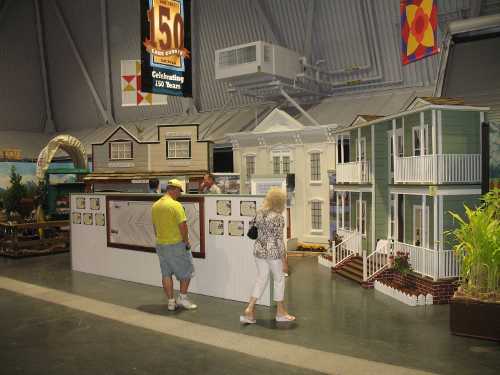
LAKE COUNTY, Calif. – Lake County's state fair exhibit received high honors at the fair's debut this week.
On Thursday, July 14, the California State Fair's opening day, the county of Lake exhibit was presented with a Gold Award and an award for the Best Design of all county exhibits, according to Lake County Chamber of Commerce Chief Executive Officer Melissa Fulton.
The Lake County Chamber of Commerce has been responsible for the design, construction and staffing of the exhibit for eight years.
The design was determined by the chamber, using the 150th anniversary of the county of Lake as the exhibit theme. It featured small-scale facade reconstructions of local 1800s storefronts, as well as the Lake County Courthouse Museum and the Lillie Langtry house.
This year three major portions of the exhibit were built by Tim Salisbury Construction of Kelseyville (1800s main street merchant stores), Dave Meek Construction (Lakeport Courthouse Museum) and Jan-Mar Builders (Langtry Estates Ranch House).
On-the-ground construction support prior to and during the Sacramento construction phase was handled by John Fulton with assistance from Walt and Mary Southard.
G&G Printing Service, Pak N Mail, Soul Cooperative and Patrice Wray Graphics handled much of the poster design/printing. Marilyn Holdenried and the Quilt Trail Committee provided artwork for the two quilt reproductions hanging above the exhibit.
Dwain Goforth of the Lower Lake Schoolhouse Museum crafted 10 highlights of the county's 150 years into small “story” posters which surround the 7-foot reproduction of the time line.
Several Lake County wineries provided wines for the display and the Lake County Winery Association provided a map of the various viticulture areas in the County.
Bill Groody made the video which depicts some of the historic moments from the Lake County 150 year celebration, the Lake County Quilt Trail story and stories of tribal basket making, pear, walnut and vineyard farming.
RAH Outdoor Signs created the Lake County “sign,” a 7.5-foot-tall reproduction of the LC150 logo designed by Gerri Groody.
Fulton said this is not a complete list of all who have participated; that list will be printed in the Lake County Chamber August newsletter.
The California State Fair runs from July 14 through July 31. There are more than 60 volunteer Lake County Ambassadors who will be telling the Lake County's story to several thousand fair visitors during that time.
At the close of the state Fair, the chamber will return the exhibit to the Lake County Fairgrounds where the builders and volunteers will reconstruct it for the Lake County Fair, which runs from Sept. 1 through Sept. 4, Fulton said.
There is still time to volunteer to be an ambassador at Cal Expo in Sacramento. Fulton said to contact the Lake County Chamber office at 707-263-5092.
Follow Lake County News on Twitter at http://twitter.com/LakeCoNews, on Tumblr at www.lakeconews.tumblr.com, on Facebook at http://www.facebook.com/pages/Lake-County-News/143156775604?ref=mf and on YouTube at http://www.youtube.com/user/LakeCoNews.