 How to resolve AdBlock issue?
News

I may have kept this a secret until now, but my husband and I have a mixed marriage. Yes, a dividing line exists between us regarding a very important subject.
He’s a broccoli hater. I happen to think it’s one of the most incredible foods on the planet.
How can someone hate this amazing vegetable, I wonder? But many do.
Broccoli seems to evoke strong emotions. I don’t recall encountering anyone who, when the subject arose, didn’t have a vigorous opinion. While broccoli haters exist, this verdure also has its ardent followers, including me.
Even the elder President Bush got into the act. He famously said, “I do not like broccoli. I haven’t liked it since I was a little kid and my mother made me eat it. I’m president of the United States and I’m not going to eat any more broccoli!”
The truth is that broccoli is a nutritional powerhouse and remains a regular on every super foods list I’ve seen.
It’s a versatile vegetable that’s favored in pasta dishes, cream soups, casseroles and stir-fries. When steamed or boiled and served with butter, garlic and lemon, it becomes a comfort food to me.
Broccoli, with its thick stalks, branch-like appendages and heads that resemble forest canopies, is a member of the cabbage family. Native to Italy, it was developed from wild cabbage in ancient Rome.
Its large head is actually a bundle of unopened florets. When in bloom, the compact green buds give way to tiny yellow flowers.
Its Italian name, broccolo -- meaning “cabbage sprout” -- is derived from the Latin term brachium, which means branch or arm, a reference to broccoli’s tree-like shape.
While it was introduced to the United States in colonial times, chiefly through Thomas Jefferson’s European contacts, it didn’t become well-known here until Italian immigrants brought it with them from their homeland.
Varieties of broccoli include popular calabrese, named for Calibri, the region in Italy were it was first cultivated, and sprouting broccoli, with a larger number of heads on many thin stalks. White and purple varieties also exist, with the purple turning mostly green when cooked.
Romanesco broccoli, with lime green coloration and a unique spiral pattern, is actually a variant form of cauliflower, as is light green broccoflower.
Broccoli may be enjoyed in its crunchy, raw state (such as shredded in a slaw or on a vegetable platter), oven roasted, boiled, steamed, sautéed or stir-fried. Steaming it quickly is considered the most healthful cooking method, as it preserves most of the nutrients.
In addition, broccoli can provide special cholesterol-lowering benefits when steamed. Its fiber-related components do a better job of binding with bile acids for excretion of cholesterol when cooked in this way.
Raw broccoli also has this ability, though at a lower level. Raw broccoli and broccoli sprouts have been shown to support the health of the stomach.
Broccoli stems may be peeled prior to use, if desired, especially if they appear to be tough or woody.
The fibrous stems cook more slowly than the florets, so should be added to the sauté pan, steamer, or water a few minutes before florets are added.
If cooking broccoli with florets and stems intact, slits may be made in the stem after peeling to quicken the cooking process.
Interestingly, allowing cut broccoli to rest for five minutes before cooking can increase its health benefits by allowing health-promoting enzymes to become activated.
Roasting broccoli brings out a deep, rich, nutty flavor. To prepare it this way, toss cut broccoli in olive oil and garlic, add salt and pepper to taste, spread it out in one layer on a baking sheet, and slip it into an oven set at 350 degrees Fahrenheit to cook until tender and caramelized. If desired, sprinkle on a bit of freshly grated Parmesan cheese when it comes out of the oven.
Broccoli is a wonderful addition to pasta dishes and is especially popular with farfalle, also known as bow-tie pasta.
To make a meal that’s delicious in its simplicity, blanch broccoli florets in boiling salted water until tender-crisp and cook pasta until al dente (meaning not too soft, but with a bit of chew). Combine them together in a bowl.
Meanwhile, sauté a generous amount of sliced garlic in extra virgin olive oil and when the garlic’s tender, pour the mixture over the hot pasta and broccoli. Toss to combine, adding salt, pepper, and fresh Parmesan cheese to taste. A squeeze of lemon juice or a light touch of lemon zest may be added for balance.
Now that’s dinner in a hurry!
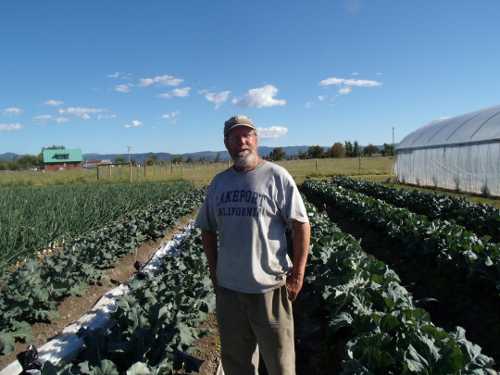
Lightly steamed broccoli is wonderful when tossed with extra virgin olive oil, garlic, a bit of lemon juice, salt and pepper to taste, and any of a myriad of additions, such as kalamata olives, feta cheese, toasted pine nuts, thinly sliced red onions (soak them in water for 20 minutes or so to soften their pungency), finely diced red bell pepper or bits of marinated sundried tomatoes.
Broccoli’s health benefits are legendary. It has antioxidant, anti-inflammatory and detoxification properties, and has been shown to be a cancer preventative.
According to the “World’s Healthiest Foods” Web site, broccoli is an excellent source of immune-supportive vitamin C, anti-inflammatory vitamin K, and heart-healthy folate.
It’s a very good source of free-radical-scavenging vitamin A, enzyme-activating manganese and molybdenum, digestive-health-supporting fiber, heart-healthy potassium and vitamin B6, and energy-producing vitamin B2 and phosphorus.
As well, it’s a good source of energy-producing vitamin B1, vitamin B3, vitamin B5, protein, and iron; bone-healthy magnesium and calcium; and antioxidant-supportive vitamin E and selenium.
Anchovies and broccoli is a traditional kitchen marriage, and today’s recipe, Chef Mario Batali’s “Christmas Broccoli,” highlights that match.
Its flavor base is what is known in Italy as a “soffriti,” meaning a fat, such as butter or olive oil, in which garlic or onion has been cooked.
If you’d like, sauté a bit of diced red bell pepper in the oil along with the garlic to add a touch of red, enhancing its Christmas appeal.
Enjoy!
Christmas Broccoli
3 pounds fresh broccoli, with leaves
¼ cup extra virgin olive oil
8 cloves garlic, peeled and sliced in half
10 salted anchovies, cleaned, filleted, and roughly chopped
Trim the broccoli into long stalks, removing the bottom two inches and leaving the stems attached.
Bring six quarts of water to a boil.
Meanwhile, place a 12- to 14-inch sauté pan over medium heat and add the olive oil. Add the garlic and anchovies and cook five minutes, until just golden brown and very fragrant.
While the garlic and anchovies cook, plunge broccoli into boiling water and cook for one minutes. Remove from water, drain well, and add to the pan with the garlic and anchovies. Cook ten to twelve minutes, until tender and yet holding its shape.
Remove from heat and season aggressively with pepper and timidly with salt.
This dish may be served hot or at room temperature.
Recipe by Mario Batali and courtesy of www.FoodNetwork.com.
Esther Oertel, the “Veggie Girl,” is a culinary coach and educator and is passionate about local produce. Oertel gives private cooking lessons. She welcomes your questions and comments; e-mail her at
Follow Lake County News on Twitter at http://twitter.com/LakeCoNews, on Tumblr at www.lakeconews.tumblr.com, on Google+, on Facebook at www.facebook.com/pages/Lake-County-News/143156775604?ref=mf and on YouTube at www.youtube.com/user/LakeCoNews .
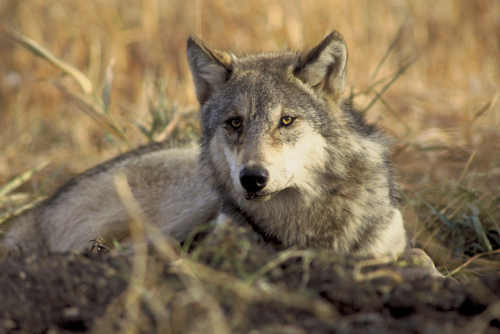
Recent news accounts have reported that a gray wolf has been wandering in southern Oregon.
According to the Oregon Department of Fish and Wildlife, this animal is a 2 and a half year old male formerly from a pack in northeast Oregon.
Since the animal has been collared with a global positioning system device that periodically transmits its location, biologists have been able to document its travels since early September. Based on the GPS data, he is now more than 300 miles from where his journey began.
As of yet, there are no direct observations confirming his presence, or that of any other wolves, in California.
“It’s too early to say with any certainty whether wolves will again become a resident species in California,” Department of Fish and Game Director Charlton Bonham said. “But it is definitely an historic predator surrounded by legend and lore.”
Any wild gray wolf that returns to California is protected as endangered under the Federal Endangered Species Act, administered by the U.S. Fish and Wildlife Service.
DFG has been following the recovery and migration of gray wolves in western states with the expectation that at some point they will likely reach California.
The last confirmed wild gray wolf in California was killed in Lassen County in 1924.
The available historic information on wolves in California suggests that while they were widely distributed, they were not abundant.
DFG has been compiling historic records, life history information, reviewing studies on wolf populations in other western states, enhancing communication with other agencies and training biologists on field techniques specific to wolves.
This effort is to ensure that DFG has all necessary information available when needed, it is not a wolf management plan and DFG does not intend to reintroduce wolves into California.
There are more than 1,600 wolves in the northern Rocky Mountains following a federal reintroduction effort which occurred in the mid-1990s.
In 1999 a single wolf crossed into Oregon from Idaho, after nearly a 60-year absence in that state.
There are now at least 23 wolves in Oregon in four reproducing packs. It has taken an additional 12 years for the first wolf to now approach the California border.
This particular animal is exhibiting normal dispersal behavior for a young male and there is no way to predict whether he will enter California, stay in Oregon, or travel east into Nevada.
Eventually, DFG expects that wolves will reach California. Whether this will lead to the establishment of packs or simply transient individual animals is unknown.
Gray wolf recovery in other Western states has been controversial, particularly regarding impacts on prey populations, livestock depredation and human safety.
There have been instances where gray wolf predation has contributed to declines in deer and elk populations, however, in most cases, predation has had little effect.
Some gray wolves have killed livestock – mostly cattle and sheep – while others rely entirely on wild prey.
In other Western states the impact of depredation on livestock has been very small, certainly less than predation by coyotes and mountain lions, although the effect on an individual livestock producer can be important, particularly when sheep are killed.
Concerns about human safety are largely based on folklore and unsubstantiated in North America.
In recent years there was one human mortality in Canada caused either by wolves or bears and one confirmed human mortality in Alaska by wolves.
Based on experience from states where substantial wolf populations now exist, wolves pose little risk to humans.
In the near future DFG expects to add information to its Web site, www.dfg.ca.gov, to provide extensive information on wolves to the public.
Follow Lake County News on Twitter at http://twitter.com/LakeCoNews, on Tumblr at www.lakeconews.tumblr.com, on Google+, on Facebook at www.facebook.com/pages/Lake-County-News/143156775604?ref=mf and on YouTube at www.youtube.com/user/LakeCoNews .
The anti-speed enforcement efforts of the “Focused Attention Towards Enforcing Speed” (FATES) continue through Sept. 30, 2012.
“We all know speeding is very, very dangerous. Leave a little extra time to get to your destination,” said CHP Commissioner Joe Farrow. “It isn’t worth the consequences of injuries or worse yet, the death of your friends and loved ones.”
The objectives of the grant are to reduce the number of speed-related collisions occurring throughout the state, save lives, and prevent serious injury.
Some of the strategies that the CHP will employ to achieve these goals include enhanced enforcement and radar trailer deployments.
In addition to the enforcement efforts, public awareness campaigns and safety presentations will be held at schools, employee safety days, local auto events and other community functions throughout the state.
The consistent message to each audience is that speed kills.
“Nearly one-third of fatal and injury collisions in California are a direct result of speed,” added Commissioner Farrow. “Drivers need to be aware of the current conditions and the posted speed limit.”
Funding for the FATES project is provided by a grant awarded by the California Office of Traffic Safety through the National Highway Traffic Safety Administration.
Follow Lake County News on Twitter at http://twitter.com/LakeCoNews, on Tumblr at www.lakeconews.tumblr.com, on Google+, on Facebook at www.facebook.com/pages/Lake-County-News/143156775604?ref=mf and on YouTube at www.youtube.com/user/LakeCoNews .
On Friday morning, an armada of spacecraft witnessed something that many experts thought impossible: Comet Lovejoy flew through the hot atmosphere of the sun and emerged intact.
"It's absolutely astounding," said Karl Battams of the Naval Research Lab in Washington, DC. "I did not think the comet's icy core was big enough to survive plunging through the several million degree solar corona for close to an hour, but Comet Lovejoy is still with us."
The comet's close encounter was recorded by at least five spacecraft: NASA's Solar Dynamics Observatory and twin STEREO probes, Europe's Proba2 microsatellite, and the ESA/NASA Solar and Heliospheric Observatory.
The most dramatic footage so far comes from SDO, which saw the comet go in and then come back out again, shown in the videos on this page.
In the SDO movies, the comet's tail wriggles wildly as the comet plunges through the sun's hot atmosphere only 120,000 km above the stellar surface.
This could be a sign that the comet was buffeted by plasma waves coursing through the corona. Or perhaps the tail was bouncing back and forth off great magnetic loops known to permeate the sun's atmosphere. No one knows.
"This is all new," said Battams. "SDO is giving us our first look1 at comets travelling through the sun's atmosphere. How the two interact is cutting-edge research."
“The motions of the comet material in the sun’s magnetic field are just fascinating,” adds SDO project scientist Dean Pesnell of the Goddard Space Flight Center. “The abrupt changes in direction reminded me of how the solar wind affected the tail of Comet Encke in 2007.”
Comet Lovejoy was discovered on Dec. 2, 2011, by amateur astronomer Terry Lovejoy of Australia.
Researchers quickly realized that the new find was a member of the Kreutz family of sungrazing comets.
Named after the German astronomer Heinrich Kreutz, who first studied them, Kreutz sungrazers are fragments of a single giant comet that broke apart back in the 12th century (probably the Great Comet of 1106).
Kreutz sungrazers are typically small (~10 meters wide) and numerous. The Solar and Heliospheric Observatory sees one falling into the sun every few days.
At the time of discovery, Comet Lovejoy appeared to be at least 10 times larger than the usual Kreutz sungrazer, somewhere in the in the 100 to 200 meter range. In light of Friday's events, researchers are re-thinking those numbers.
"I'd guess the comet's core must have been at least 500 meters in diameter; otherwise it couldn't have survived so much solar heating," said Matthew Knight. "A significant fraction of that mass would have been lost during the encounter. What's left is probably much smaller than the original comet."
SOHO and NASA's twin STEREO probes are monitoring the comet as it recedes from the sun. It is still very bright and should remain in range of the spacecrafts' cameras for several days to come. Researchers will be watching closely, because there a good chance for more surprises.
"There is still a possibility that Comet Lovejoy will start to fragment," continued Battams. "It’s been through a tremendously traumatic event; structurally, it could be extremely weak. On the other hand, it could hold itself together and disappear back into the recesses of the solar system."
"It's hard to say," agreed Knight. "There has been so little work on what happens to sungrazing comets after perihelion (closest approach). This continues to be fascinating.”
Dr. Tony Phillips works for the National Aeronautics and Space Administration.
Follow Lake County News on Twitter at http://twitter.com/LakeCoNews, on Tumblr at www.lakeconews.tumblr.com, on Google+, on Facebook at www.facebook.com/pages/Lake-County-News/143156775604?ref=mf and on YouTube at www.youtube.com/user/LakeCoNews .
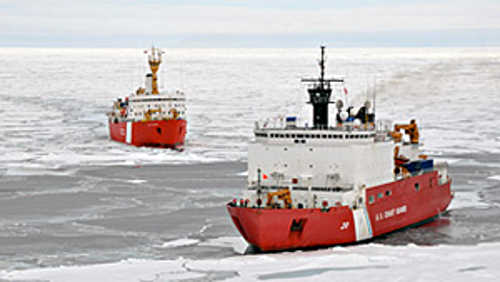
A recent mission marked the completion of a five-year collaboration between the United States and Canada to survey the Arctic Ocean.
The bilateral project collected scientific data to delineate the continental shelf beyond 200 nautical miles from the coastline, also known as the extended continental shelf (ECS).
The U.S. has an inherent interest in knowing, and declaring to others, the exact extent of its sovereign rights in the ocean as set forth in the Convention on the Law of the Sea.
For the ECS, this includes sovereign rights over natural resources on and under the seabed including energy resources such as: oil and natural gas and gas hydrates; “sedentary” creatures such as clams, crabs, and corals; and mineral resources such as manganese nodules, ferromanganese crusts, and polymetallic sulfides.
The 2011 joint Arctic mission spanned nearly six weeks in August and September and was the fourth year to employ flagship icebreakers from both countries, the U.S. Coast Guard Cutter Healy and the Canadian Coast Guard Ship Louis S. St-Laurent.
“This two-ship approach was both productive and necessary in the Arctic’s difficult and varying ice conditions,” said Larry Mayer, Ph.D., U.S. chief scientist on the Arctic mission and co-director of the NOAA-University of New Hampshire Joint Hydrographic Center. “With one ship breaking ice for the other, the partnership increased the data either nation could have obtained operating alone, saved millions of dollars by ensuring data were collected only once, provided data useful to both nations for defining the extended continental shelf, and increased scientific and diplomatic cooperation.”
Preliminary studies indicate the U.S. ECS, including the Arctic Ocean areas surveyed, total at least one million square kilometers, an area about twice the size of California. Additional data collection and analysis will lead to more accurate estimates of the extent of the U.S. ECS.
U.S. ECS work is not limited to the Arctic and includes areas in the Bering Sea, Gulf of Mexico, the Atlantic, Gulf of Alaska, Marianas and Line Islands, as well as areas off northern California and northwest of Hawaii.
In addition to Arctic survey work, the U.S. Geological Survey (USGS) led missions in 2011 to collect seismic data in the Gulf of Alaska and the Bering Sea, and scientists from the Joint Hydrographic Center collected bathymetric data northwest of Hawaii. NOAA and USGS funded the 2011 U.S. missions.
Two U.S. ECS missions are planned for 2012, one in the Atlantic and one in the Arctic.
“The amount and quality of the data collected as part of these joint Arctic missions met and often exceeded the expectations we would set each year,” said Deborah Hutchinson, Ph.D., a geologist with the USGS and U.S. science lead and liaison on board CCG Ship Louis S. St-Laurent.
This year’s U.S. Arctic mission was led by the Joint Hydrographic Center, a partnership between NOAA and the University of New Hampshire, while the Canadian mission was led by the Geological Survey of Canada of Natural Resources Canada.
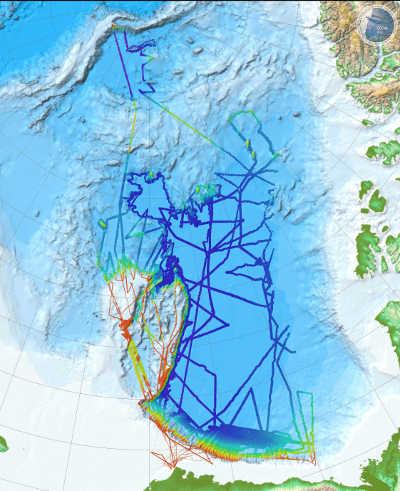
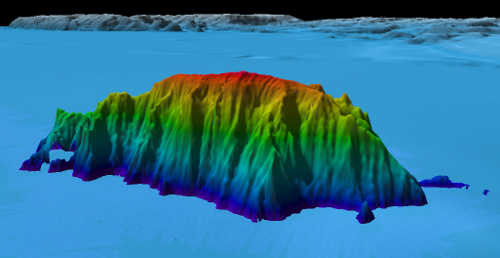
Scientists on board Healy used a multibeam echo sounder to collect bathymetric data to create three-dimensional images of the seafloor.
Scientists aboard CCGS Louis S. St-Laurent collected seismic data to determine the thickness of the sediments under the seafloor and to better understand the geology of the Arctic Ocean.
The 2011 Arctic mission traversed more than 5,600 total miles over the Beaufort Shelf, Chukchi Borderland, Alpha Ridge, and Canada Basin and reached more than 1,230 miles north of the Alaskan coast.
“As in previous Arctic missions, we obtained data in areas we were not entirely sure the ice would allow us to proceed, even with a two-ship operation,” said Andy Armstrong, co-chief scientist on the Arctic mission and co-director of the NOAA-University of New Hampshire Joint Hydrographic Center. “This was especially true in the eastern part of the Canada Basin where some of the thickest Arctic ice is found.”
Data collected by these two nations tells other scientific stories for the first time. For example, USGS scientists collected baseline data on ocean acidification and scientists from the National Ice Center compared observed ice conditions with interpretations of the same ice seen on satellite imagery.
From 2006 to date, scientists on board CCGS Louis S. St-Laurent have collected nearly 15,000 kilometers (9,320 miles) of seismic data, vastly increasing the seismic data holdings in this area of the deep Arctic Ocean.
Scientists from the United States and Canada are using these seismic data to revise models of the origin and tectonic evolution of this poorly understood portion of the ocean.
Since the start of U.S. ECS work in the Arctic in 2003, Healy alone has mapped more than 320,000 square kilometers (123,000 square miles) of the Arctic seafloor, or about the size of Arizona.
“These data provided high resolution maps to help determine the outer limits of the U.S. ECS, while revealing previously undiscovered mountains, known as seamounts, and scours created by past glaciers and icebergs scraping along the ocean bottom 400 meters below the surface,” said Mayer.
The U.S. Extended Continental Shelf Task Force is responsible for delineating the U.S. ECS and is chaired by the Department of State with co-vice chairs from the National Oceanic and Atmospheric Administration and the Department of the Interior.
Ten additional agencies participate in the task force, including the U.S. Geological Survey, Joint Chiefs of Staff, U.S. Navy, U.S. Coast Guard, Department of Energy, National Science Foundation, Environmental Protection Agency, Bureau of Ocean Energy Management, the Arctic Research Commission, and the Executive Office of the President.
Follow Lake County News on Twitter at http://twitter.com/LakeCoNews, on Tumblr at www.lakeconews.tumblr.com, on Google+, on Facebook at www.facebook.com/pages/Lake-County-News/143156775604?ref=mf and on YouTube at www.youtube.com/user/LakeCoNews .
Anderson said the caller claims to represent Medicare or the Social Security office and asks the consumer to verify or provide information, such as a Medicare number, bank and checking account information.
He said all consumers should be cautious when speaking to unknown individuals on the telephone, and to never give out any personal information over the phone including date of birth, Medicare or Social Security number, policy numbers, credit card numbers or bank account information.
When this information is obtained by con artists it is used for identity theft and to invade bank accounts and credit cards, Anderson said.
"If you receive one of these calls, hang up and do not give them any information," Anderson cautioned. "Medicare or Social Security employees will not contact you via phone requesting this type of information. If you have any questions about the status of your Medicare of Social Security benefits, you can contact the agencies directly."
Follow Lake County News on Twitter at http://twitter.com/LakeCoNews, on Tumblr at www.lakeconews.tumblr.com, on Google+, on Facebook at www.facebook.com/pages/Lake-County-News/143156775604?ref=mf and on YouTube at www.youtube.com/user/LakeCoNews .