 How to resolve AdBlock issue?
News
… because everyone was outside watching the planets align?
It's true. On Monday, Dec. 26, the night after Christmas, Venus and the slender crescent Moon will gather for a jaw-dropping conjunction in the western sky.
The action begins shortly before sunset.
Around 4:30 p.m. to 5 p.m. local time, just as the sky is assuming its evening hue, Venus will pop into view, glistening bright in the deepening twilight.
No more than 6 degrees to the right lies the crescent Moon, exquisitely slender, grinning like the Cheshire cat with his head cocked at humorous attention.
This is a wonderful time to look; there are very few sights in the heavens as splendid as Venus and the Moon gathered close and surrounded by twilight blue.
But don't go inside yet, because the view is about to improve. As the sky fades to black, a ghostly image of the full Moon materializes within the horns of the lunar crescent.
This is caused by Earthshine, a delicate veil of sunlight reflected from our own blue planet onto the dusty-dark lunar terrain. Also known as "the da Vinci glow," after Leonardo da Vinci who first understood it 500 years ago, Earthshine pushes the beauty of the conjunction over the top.
Meanwhile, Jupiter will be looking down on it all from a perch overhead in the constellation Pisces.
In ascending order, Jupiter, Venus and the Moon are the three brightest objects in the night sky, able to pierce city lights and even thin clouds. Almost everyone, everywhere will be able to see them.
Although no telescope is required to enjoy the show, if one happens to be under your Christmas tree, take it outside.
With a simple triangular sweep, you can see the clouds and moons of Jupiter, mountains and craters on the Moon, and the fat gibbous form of Venus. (Like the Moon, Venus has phases, and at the moment she is 83 percent illuminated.) Rarely can so much amateur astronomy be done with so little effort.
Some people find the night after Christmas to be a bit of a letdown. This year, it's not so bad.
Dr. Tony Phillips works for the National Aeronautics and Space Administration.
Follow Lake County News on Twitter at http://twitter.com/LakeCoNews, on Tumblr at www.lakeconews.tumblr.com, on Google+, on Facebook at www.facebook.com/pages/Lake-County-News/143156775604?ref=mf and on YouTube at www.youtube.com/user/LakeCoNews .
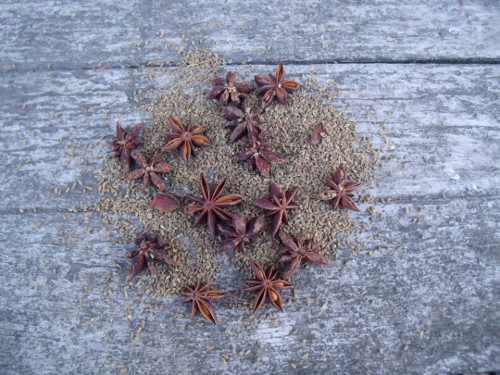
I’m chewing on anise seeds as I write, having just tossed a pinch or two into my mouth. The taste is pleasant, a cross between licorice and fennel.
These little seeds have been used as a breath freshener since ancient Roman times, when noted Roman scholar Pliny the Elder said that anise “removed all bad odors from the mouth if chewed in the morning.” Anise extract is still used in breath-freshening products, such as toothpastes and mouthwashes that favor natural ingredients.
The Romans widely cultivated anise for its fragrance, flavor and medicinal properties, which, in their opinion, included relief from epileptic seizures, maintaining a youthful appearance and avoidance of bad dreams.
The Romans (as well as the Greeks) found other medicinal uses for anise that are still extant today, such as a remedy for coughs and improvement of the digestive system.
They mixed the seeds into a cake called “mustaceum” that was eaten as a digestive aid at the end of a meal. This spicy cake became a favorite after heavy meals, including wedding feasts, and some believe the modern tradition of the wedding cake is an outgrowth of this practice.
Anise is still recommended for improving digestion (and some say for preventing flatulence), and making tea is a simple way to achieve this. Crush the seeds and steep a teaspoon in a cup of boiled water for about 10 minutes. Strain and sip slowly. (I’m drinking a cup of it now, having moved on from chewing on seeds.)
The Romans weren’t the only ancients who valued this little seed. The Egyptians have cultivated the plant for over 4,000 years, with a reference to anise found in an Egyptian papyrus dating to 2,000 B.C.
This herb native to the Mediterranean region is used to impart a licorice-like flavor to a variety of foods and drinks around the world. Scandinavian, Greek, Moroccan and Arabic cuisines have all made good use of anise. It’s also popular in the cuisine of India, where it’s not distinguished from fennel. The same name is applied to both.
It’s popular in Spanish cookery, as well as in cuisines throughout South America, as Spanish conquistadors brought anise to the shores of the new world.
The seed may be used whole or ground, and if you grow anise in your garden, its tender, young leaves may be used in a salad or as a bouquet to flavor a stew. In its seed form, anise (also known as aniseed) will stay fresh for a couple of years. It quickly loses its savor when ground, so should be ground only as needed.
Anise is a popular flavor in cookies, cakes, and confections throughout the world, including in British aniseed balls, Australian humbugs, New Zealand aniseed wheels, Italian pizzelle, German Pfeffernusse and Springerle, Austrian Anisebögen, Netherland muisjes, Norwegian knotts, New Mexican Bizcochitos and Peruvian picarones. Many of these are popular Christmas treats.
While the flavor of anise is quite similar to that of licorice, the two plants are not related. In some cases, anise is combined with licorice in candies to impart a stronger flavor, such as in black jelly beans that are naturally flavored.
One of the most noted uses of anise is as a flavoring in various liqueurs. Equal parts of anise, fennel, and coriander seeds flavor sugared vodka to create anisette. Anesone is a similar liqueur, but stronger and sweeter.
A number of other anise liqueurs are made in countries all over the world. In addition to anisette, the French make pastis; the Spaniards, ojen; the Peruvians, anis; the Mexicans, xtabentun; the Puerto Ricans, tres castillos; the Turk, raki; the Colombians, aguardiente; the Italians, sambuca; the Dutch brokmopke; the Bulgarians, mastika; the Germans, jagermeister; the Greeks, ouzo; and in the Middle East, arak.
In addition, the infamous and once illegal alcohol from France, absinthe, is flavored with anise.
The most powerful flavor component of the essential oil of anise, anethole, is also found in an unrelated spice, star anise, which features prominently in Asian cooking. Star anise is the seed pod of an evergreen tree that is native to China and Japan. Its eight symmetrical appendages inspire its name and give a home to the tree’s seeds.
Star anise is typically added whole to flavor dishes; however, in its ground form it is a component of Chinese Five Spice, a pungent spice blend that also features fennel, cloves, Chinese cinnamon, and Sichaun pepper.
Anise and star anise have very similar licorice-like flavor profiles, though star anise is significantly stronger.
On this festive day, I offer three recipes: pears poached with star anise, biscotti flavored with anise seeds and anisette liquor, and a slushy beverage that takes advantage of the happy relationship between lemon and anise.
While it’s not necessarily the season for icy drinks, the slushy would be a wonderful use of the Meyer lemons that are in season this time of year. As well, it could be a surprising cocktail (with or without alcohol) at a New Year’s Eve party.
Before I leave, here’s a piece of anise-related trivia: humans aren’t the only species to enjoy its flavor. Reputed to be a favorite of mice, it was used as bait in medieval mouse traps.
In addition, it’s often referred to as catnip for dogs. While it doesn’t have the “crazy-making” affects of the feline favorite, it’s beloved enough by our canine friends to be the scent used on the “rabbit” that racing greyhounds chase around the track.
If you’re celebrating Christmas today, I hope your holiday is a joyous one.
Enjoy!
Cinnamon-anise poached pears
2 pears, peeled, halved, and cored
2 cups water
2/3 cup sugar
2 cinnamon sticks
2 star anise pods
½ cup heavy cream
1 tablespoon sugar
¼ teaspoon ground cinnamon
Combine water, sugar, cinnamon sticks, and star anise pods in a medium saucepan. Add pear halves.
Bring liquid to a boil; turn heat down so liquid remains at a steady simmer. Simmer pears until tender and water is reduced to a somewhat syrupy consistency.
Meanwhile, whip cream with sugar and cinnamon until soft peaks form.
When pears are tender, remove from pan, reserving liquid.
Serve pears with a drizzle of the poaching syrup and the whipped cream. This recipe makes four servings.
Anise biscotti
2 cups all purpose flour
2 teaspoons baking powder
½ teaspoon salt
1 stick unsalted butter, at room temperature
1 cup granulated sugar
2 large eggs
¼ cup anisette or sambuca
1 teaspoon vanilla extract
½ cup pine nuts, lightly toasted
1 tablespoon anise seeds
Preheat oven to 350 degrees F. Line 1 large baking sheet with parchment paper.
Combine the flour, baking powder, and salt in a small bowl.
In a large bowl, cream together the butter and sugar until fluffy. Add the eggs, beating after the addition of each. Add the dry ingredients, alternating with the anisette. Add the vanilla and mix well. Fold in the nuts and anise seeds.
Divide the dough into two equal pieces. On a lightly floured surface, roll each under your palms to make a log about twelve inches in length and two inches in diameter. Place logs on baking sheet about two inches apart. Bake until golden brown and firm, about 30 minutes. Remove from the oven and let cool completely on the sheet.
Reduce the oven temperature to 300 degrees F.
Transfer the cooled cookie logs to a large cutting board and with a heavy knife cut into slices about ¾ inches thick. Spread the cookies on the baking sheet. Bake until firm and crisp, about 30 minutes, turning over halfway through the cooking. Remove from the oven and transfer to a wire rack to cook.
This recipe by Emeril Lagasse yields about three dozen biscotti cookies and is courtesy of www.FoodNetwork.com. Chef Lagasse recommends serving these biscotti with lemon ice cream, but they’re also wonderful dunked in coffee.
Esther’s note: Chopped local walnuts may be added in place of the pine nuts.
Lemon anise slush
½ cup fresh lemon juice, plus more to taste
1/3 cup sugar or honey, plus more to taste
¾ teaspoon anise seeds
1 cup water (or vodka for an adult version)
Ice cubes to fill blender
Blend lemon juice, sugar or honey, and anise seeds in a blender until the seeds break up, at least 30 seconds, but longer, if needed.
Add the water (or vodka) and enough ice to fill the blender. Blend until smooth.
If necessary, add more water, a little at a time, for desired consistency.
Adjust for sweetness and lemon as you go.
Serve immediately. This recipe makes four to six servings.
This recipe is courtesy of www.101cookbooks.com.
Esther Oertel, a freelance writer, cooking teacher, and speaker, is passionate about local produce and all foods in the vegetable kingdom. She welcomes your questions and comments and may be reached at
Follow Lake County News on Twitter at http://twitter.com/LakeCoNews, on Tumblr at www.lakeconews.tumblr.com, on Google+, on Facebook at www.facebook.com/pages/Lake-County-News/143156775604?ref=mf and on YouTube at www.youtube.com/user/LakeCoNews .
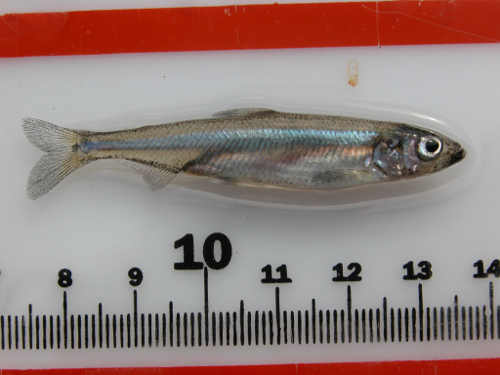
There is some good news about one of the state’s endangered fish populations.
The California Department of Fish and Game reported that Delta smelt abundance in 2011 is greater than it has been since 2001 but remains a small fraction of historical abundance.
State biologists believe the improvement in the Delta smelt’s population is likely due in large part to higher than usual Delta outflow, which resulted in more and better habitat.
Because it is exceptionally difficult to determine the actual number of Delta smelt, Department of Fish and Game biologists use survey data to develop “indices” of the species’ abundance.
An index is a number that is likely to vary in direct proportion to abundance, the state said. For example, if a hypothetical index were to double from 4 to 8 then abundance would also have doubled (e.g., from 200,000 to 400,000).
The Fall Midwater Trawl Survey index of Delta smelt abundance – which has been developed almost yearly since 1967 and is named after the season and type of net used to collect fish for the index – was 343 this year while the index in 2010 was 29 and its record high was 1673 in 1970, the Department of Fish and Game reported.
After a decade of record or near-record low annual abundance, the increased number of Delta smelt in 2011 is encouraging, biologists said.
To help protect and recover Delta smelt, the Department of Fish and Game monitors the geographic distribution and trends in the abundance of Delta smelt during each of its life stages.
In January, the agency will begin monitoring the spawning migration of adult Delta smelt and resulting larval Delta smelt.
Delta smelt occur only in the Sacramento-San Joaquin River Delta, into which waters from Clear Lake and Cache Creek flow.
The finger-sized fish was historically one of the most abundant in the Delta, but the species declined substantially and was listed as threatened under the California and Federal Endangered Species acts in 1993.
After a further decline, the species was designated as endangered in 2010 under the California Endangered Species Act.
Ongoing efforts to protect and recover the Delta smelt population include research on threats to the species, active management to minimize loss at water diversions under federal Endangered Species Act biological opinions and a state Endangered Species Act authorization, development of the Bay Delta Conservation Plan, improved water quality, habitat restoration and conservation of genetic diversity through special hatchery-rearing techniques.
Longfin smelt abundance is also indexed using Fall Midwater Trawl Survey data, the state said. Abundance of the species in 2011 is greater than it has been since 2006 but remains a small fraction of historical abundance.
The species declined substantially and was listed as threatened under the California Endangered Species Act in 2010.
Follow Lake County News on Twitter at http://twitter.com/LakeCoNews, on Tumblr at www.lakeconews.tumblr.com, on Google+, on Facebook at www.facebook.com/pages/Lake-County-News/143156775604?ref=mf and on YouTube at www.youtube.com/user/LakeCoNews .
NASA's Dawn spacecraft spent the last four years voyaging to asteroid Vesta – and may have found a planet.
Vesta was discovered over two hundred years ago but, until Dawn, has been seen only as an indistinct blur and considered little more than a large, rocky body. Now the spacecraft's instruments are revealing the true complexity of this ancient world.
"We're seeing enormous mountains, valleys, hills, cliffs, troughs, ridges, craters of all sizes and plains," said Chris Russell, Dawn principal investigator from UCLA. "Vesta is not a simple ball of rock. This is a world with a rich geochemical history. It has quite a story to tell!"
In fact, the asteroid is so complex that Russell and members of his team are calling it the "smallest terrestrial planet."
Vesta has an iron core, notes Russell, and its surface features indicate that the asteroid is "differentiated" like the terrestrial planets Earth, Mercury, Mars and Venus.
Differentiation is what happens when the interior of an active planet gets hot enough to melt, separating its materials into layers.
The light material floats to the top while the heavy elements, such as iron and nickel, sink to the center of the planet.
Researchers believe this process also happened to Vesta.
The story begins about 4.57 billion years ago, when the planets of the Solar System started forming from the primordial solar nebula.
As Jupiter gathered itself together, its powerful gravity stirred up the material in the asteroid belt so objects there could no longer coalesce.
Vesta was in the process of growing into a full-fledged planet when Jupiter interrupted the process.
Although Vesta’s growth was stunted, it is still differentiated like a true planet.
"We believe that the Solar System received an extra slug of radioactive aluminum and iron from a nearby supernova explosion at the time Vesta was forming," explained Russell. "These materials decay and give off heat. As the asteroid was gathering material up into a big ball of rock, it was also trapping the heat inside itself."
As Vesta’s core melted, lighter materials rose to the surface, forming volcanoes and mountains and lava flows.
"We think Vesta had volcanoes and flowing lava at one time, although we've not yet found any ancient volcanoes there," said Russell. "We're still looking. Vesta's plains seem similar to Hawaii's surface, which is basaltic lava solidified after flowing onto the surface.”
Vesta has so much in common with the terrestrial planets, should it be formally reclassified from "asteroid" to "dwarf planet"?
"That's up to the International Astronomical Union, but at least on the inside, Vesta is doing all the things a planet does,” Russell said.
If anyone asks Russell, he knows how he would vote.
Dauna Coulter works for the National Aeronautics and Space Administration.
Follow Lake County News on Twitter at http://twitter.com/LakeCoNews, on Tumblr at www.lakeconews.tumblr.com, on Google+, on Facebook at www.facebook.com/pages/Lake-County-News/143156775604?ref=mf and on YouTube at www.youtube.com/user/LakeCoNews .

The amount of air pollutants in the atmospheric plume generated by the Deepwater Horizon oil spill was similar to a large city according to a new National Oceanic and Atmospheric Administration-led study published in a new special issue of Proceedings of the National Academy of Sciences.
Researchers from the NOAA Earth System Research Laboratory (ESRL) and NOAA’s Cooperative Institute for Research in Environmental Sciences (CIRES) in Boulder, Colo., along with university colleagues, focused on ozone and particulate matter – two pollutants with human health effects.
About eight percent, or about one of every 13 barrels of the Deepwater Horizon-spilled oil that reached the ocean surface, eventually made its way into airborne organic particles small enough to be inhaled into human lungs, and some of those particles likely reached the Gulf coast when the winds were blowing toward the shore, according to the study.
"We could see the sooty black clouds from the burning oil, but there’s more to this than meets the eye. Our instruments detected a much more massive atmospheric plume of almost invisible small organic particles and pollutant gases downwind of the oil spill site," said Ann M. Middlebrook, scientist at NOAA ESRL’s Chemical Sciences Division (CSD) and lead author of the study.
According to the study, over the course of the spill, the total mass of organic particles formed from evaporating surface oil was about ten times bigger than the mass of soot from all the controlled burns.
Controlled burns are used to reduce the size of surface oil slicks and minimize impacts of oil on sensitive shoreline ecosystems and marine life.
The organic particles formed in the atmosphere from hydrocarbons that were released as surface oil evaporated, and they got bigger as they traveled in the plume. The atmospheric plume was about 30 kilometers wide – about 18.5 miles – when it reached the coast.
Some of the hydrocarbons from the evaporating oil reacted with nitrogen oxides in the atmosphere to create ozone pollution, but this other atmospheric plume was only 3 to 4 kilometers (2 to 3 miles) wide at the coast.
“The levels of ozone were similar to what occurs in large urban areas. During the oil spill, it was like having a large city’s worth of pollution appear out in the middle of the Gulf of Mexico,” said Daniel M. Murphy, NOAA scientist at ESRL/CSD and a co-author of the study.
The relatively small amounts of nitrogen oxides in the vicinity of the oil spill (which included nitrogen oxides emitted by the spill cleanup and recovery efforts) limited the amount of polluting ozone that was formed offshore. When the excess hydrocarbons reached the coast, they could have reacted with on-shore sources of nitrogen oxides, such as cars and power plants, to form additional ozone.
The researchers gathered data in June 2010 on two flights of NOAA’s WP-3D research aircraft that was outfitted to be a “flying chemical laboratory.” They also analyzed data gathered on ships in the vicinity and at two monitoring sites in Mississippi downwind of the oil spill.
They used a regional air quality model to project the path of the particle pollution, and found that time periods when the pollution plume was predicted to have reached the coast matched up well with a few short periods of high readings at the monitoring sites.
In addition to the organic particles that formed from the evaporating oil, soot particles were lofted into the atmosphere from the oil that was burned on the surface.
The authors note that their findings could help air quality managers anticipate the effects of future oil spills.
The depth of the Deepwater Horizon spill, about a mile beneath the surface, limited the effects on air quality because some hydrocarbons, such as benzene, largely dissolved in the water.
“It was fortunate that the effects on air quality of the Deepwater Horizon oil spill were limited in scope,” said Middlebrook. “Our findings show that an oil spill closer to populated areas, or in shallower waters, could have a larger effect.”
Follow Lake County News on Twitter at http://twitter.com/LakeCoNews, on Tumblr at www.lakeconews.tumblr.com, on Google+, on Facebook at www.facebook.com/pages/Lake-County-News/143156775604?ref=mf and on YouTube at www.youtube.com/user/LakeCoNews .
Atmospheric deposition is the predominant pathway for mercury to reach sensitive ecosystems, where it can accumulate in fish and harm wildlife and humans, the US Geological Survey reported.
Coal-fired power plants and industries are among the primary sources of mercury emissions. Mercury emissions can travel far in the atmosphere, and the relative importance of local, regional, or international mercury emissions to natural waters is generally unknown.
This is the first study to quantify the relation between mercury fallout and distance from major urban centers.
The study included lakes nearby, and remote from Boston, Mass.; Albany, N.Y.; Montreal, Canada; New Haven, Conn.; Tampa and Orlando, Fla.; Chicago, Ill.; Minneapolis, Minn.; Denver, Colo.; Salt Lake City, Utah; and Portland, Ore.
To better understand geographic patterns of mercury deposition, the USGS analyzed sediment cores from 12 lakes with undeveloped watersheds near to – less than 30 miles – and remote from – more than 90 miles – several major urban areas in the United States.
Mercury deposition in the near-urban lakes greatly exceeds amounts found in remote lakes. The full report can be found in the journal Environmental Pollution.
"With all of the environmental issues requiring attention, this study is an excellent example of how science can help target our attention and actions to geographic areas where mercury's toxic impacts are likely to be the greatest in the near term on both ecosystems and humans," said USGS Director Marcia McNutt. "This study also helps scale the distance over which atmospheric deposition of mercury is most severe, although no region escapes mercury contamination."
Mercury emissions were previously known to contribute to global air pollution, but the importance of deposition near sources was less certain.
Mercury deposition to South Reservoir, a protected water supply lake six miles north of downtown Boston, was five-times greater than mercury deposition to Crocker Pond, 130 miles to the north in western Maine. This pattern was repeated in near-urban and remote lakes in other parts of the country.
"This finding could have important implications for management of mercury emissions to reduce the risks mercury poses to humans and wildlife,” said USGS scientist Peter Van Metre, author of the study. “The results illustrate the importance of reducing mercury emissions in the U.S. and not focusing only on emissions globally."
The study is part of the USGS National Water Quality Assessment Program, which has been using age-dated lake sediment cores from across the United States to evaluate contaminant trends.
Other lake coring studies have found elevated mercury levels in urban areas. However, many urban lakes are affected by urbanization in the watershed, which makes it difficult to distinguish atmospheric mercury deposition from other sources of mercury pollution.
An important factor in this study was finding and sampling lakes in undeveloped, protected watersheds in and near major cities.
The findings of this study support previous conclusions from models that indicate increased mercury deposition near major cities.
Follow Lake County News on Twitter at http://twitter.com/LakeCoNews, on Tumblr at www.lakeconews.tumblr.com, on Google+, on Facebook at www.facebook.com/pages/Lake-County-News/143156775604?ref=mf and on YouTube at www.youtube.com/user/LakeCoNews .