 How to resolve AdBlock issue?
News
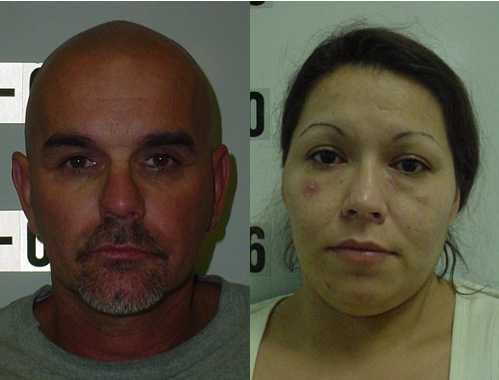
MIDDLETOWN, Calif. – The service of a search warrant by the Lake County Sheriff’s Narcotics Task Force on Friday morning resulted in two arrests, the seizure of approximately six grams of methamphetamine and several pounds of processed marijuana.
Arrested were 48-year-old David Phillip Clark and Stephanie Alyce Ybarra, 29, both of Middletown.
On Thursday, Dec. 22, narcotics detectives secured a search warrant for Clark’s person, home and vehicle, according to Sgt. Steve Brooks.
Then on Friday, Dec. 30, at approximately 11 a.m., detectives served the warrant at Clark’s home on Santa Clara Road in Middletown.
When narcotics detectives entered the home, they detained Clark and Ybarra without incident, Brooks reported.
During a search of the home, detectives located approximately six grams of methamphetamine packaged for sales and multiple pounds of processed marijuana, which was also packaged for sales, according to Brooks. Several packages of the marijuana also were labeled with prices.
Brooks said detectives also located a glass meth pipe, digital scales and a surveillance system monitoring the front of the home.
Clark was arrested for possession of a controlled substance for sales, possession of a controlled substance, possession of marijuana for sales and possession of narcotics paraphernalia, Brooks said.
He reported that Ybarra was arrested for possession of a controlled substance and possession of narcotics paraphernalia.
Both were transported to the Lake County Hill Road Correctional Facility and booked.
Jail records indicated Ybarra’s bail was set at $15,000, and Clark’s at $25,000. Both remained in jail overnight.
The Sheriff’s Narcotics Task Force can be reached through its anonymous tip line at 707-263-3663.
Follow Lake County News on Twitter at http://twitter.com/LakeCoNews, on Tumblr at www.lakeconews.tumblr.com, on Google+, on Facebook at www.facebook.com/pages/Lake-County-News/143156775604?ref=mf and on YouTube at www.youtube.com/user/LakeCoNews .
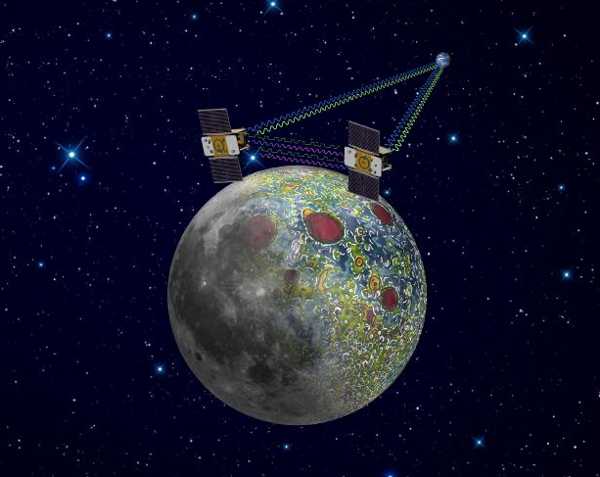
NASA's twin GRAIL spacecraft, on a mission to study the moon's gravitational field, are nearing their New Year's Eve and New Year's Day main-engine burns to place the duo in lunar orbit.
Named Gravity Recovery And Interior Laboratory (GRAIL), the spacecraft are scheduled to be placed into orbit beginning at 1:21 p.m. Pacific Time for GRAIL-A on Saturday, Dec. 31, and 2:05 p.m. Pacific Time on Sunday, Jan. 1, for GRAIL-B.
"Our team may not get to partake in a traditional New Year's celebration, but I expect seeing our two spacecraft safely in lunar orbit should give us all the excitement we need," said David Lehman, project manager for GRAIL at NASA's Jet Propulsion Laboratory (JPL) in Pasadena, Calif.
The distance from Earth to the moon is approximately 250,000 miles.
NASA's Apollo crews took about three days to travel to the moon. Launched from Cape Canaveral Air Force Station Sept. 10, 2011, the GRAIL spacecraft are taking about 30 times that long and covering more than 2.5 million miles to get there.
This low-energy, long-duration trajectory has given mission planners and controllers more time to assess the spacecraft's health.
The path also allowed a vital component of the spacecraft's single science instrument, the Ultra Stable Oscillator, to be continuously powered for several months. This will allow it to reach a stable operating temperature long before it begins making science measurements in lunar orbit.
"This mission will rewrite the textbooks on the evolution of the moon," said Maria Zuber, GRAIL principal investigator from the Massachusetts Institute of Technology (MIT) in Cambridge. "Our two spacecraft are operating so well during their journey that we have performed a full test of our science instrument and confirmed the performance required to meet our science objectives."
During their final approaches to the moon, both orbiters move toward it from the south, flying nearly over the lunar south pole. The lunar orbit insertion burn for GRAIL-A will take approximately 40 minutes and change the spacecraft's velocity by about 427 miles per hour.
GRAIL-B's insertion burn 25 hours later will last about 39 minutes and is expected to change the probe's velocity by 430 miles per hour.
The insertion maneuvers will place each orbiter into a near-polar, elliptical orbit with a period of 11.5 hours.
Over the following weeks, the GRAIL team will execute a series of burns with each spacecraft to reduce their orbital period from 11.5 hours down to just under two hours.
At the start of the science phase in March 2012, the two GRAILs will be in a near-polar, near-circular orbit with an altitude of about 34 miles.
When science collection begins, the spacecraft will transmit radio signals precisely defining the distance between them as they orbit the moon.
As they fly over areas of greater and lesser gravity, caused both by visible features such as mountains and craters and by masses hidden beneath the lunar surface. they will move slightly toward and away from each other.
An instrument aboard each spacecraft will measure the changes in their relative velocity very precisely, and scientists will translate this information into a high-resolution map of the Moon's gravitational field.
The data will allow mission scientists to understand what goes on below the surface. This information will increase our knowledge of how Earth and its rocky neighbors in the inner solar system developed into the diverse worlds we see today.
For more information about GRAIL, visit www.nasa.gov/grail.
Dr. Tony Phillips works for the National Aeronautics and Space Administration.
Follow Lake County News on Twitter at http://twitter.com/LakeCoNews, on Tumblr at www.lakeconews.tumblr.com, on Google+, on Facebook at www.facebook.com/pages/Lake-County-News/143156775604?ref=mf and on YouTube at www.youtube.com/user/LakeCoNews .
The 2011 Invasive Species Report includes the first records of the appearance in the San Francisco Bay of four species previously found only in other parts of the coast.
These organisms include:
Caprella simia, a Caprellid, or “skeleton” shrimp, which was first discovered in California’s Long Beach Harbor in 2000. C. simia is a Japanese species, probably introduced by fouling or ballast water and considered likely to spread north. It is now widespread in San Francisco Bay.
Nicolea sp. A Harris, an undescribed polychaete worm, was first found in California in 2000 in San Diego Bay and Los Angeles/Long Beach Harbor. Possible vectors include ballast water and fouling on ships or recreational boats.
Grateloupia lanceolata, a red alga native to Japan and Korea, has been found for the first time in the Port of Oakland and in Richardson Bay. This species was previously found at Santa Catalina Island, Port Hueneme and Moss Landing. It has been working its way up the coast.
The collection of Amphibalanus eburneus (ivory barnacle) from Richmond and San Francisco marinas confirmed new distribution records for the San Francisco Bay. Although one specimen had been collected from a ship’s hull around 1938, no other occurrences were documented in the Bay during the intervening time. More recent California observations of this North Atlantic native had been limited to Colorado Lagoon (Long Beach) and Huntington Harbor.
DFG’s Marine Invasive Species Program (MISP) conducts biological surveys to monitor California coastal and estuarine waters to determine the level of invasion by non-native aquatic species (NAS).
The triennial report covers July 2008 through June 2011 and describes results of field surveys for NAS in the San Francisco Bay Area, as part of long-term monitoring efforts of its ports, harbors, estuaries and the outer coast.
MISP, housed in DFG’s Office of Spill Prevention and Response, employs a variety of programs with partners to gather report data.
Programs include:
A survey of 50 sites in 2010 and molecular analysis of NAS in the Bay.
A two-year pilot program to detect NAS using a “next-generation” sequencing process to analyze the DNA extracted from samples collected from artificial settling plates.
A collaborative study with Smithsonian Environmental Research Center (SERC) to examine the transfer mechanisms (vectors) likely responsible for marine introductions to the state.
An MISP-funded genetic study of the difficult-to-identify “Breadcrumb” sponges by Moss Landing Marine Laboratories Genomics Lab.
MISP monitors coastal and estuarine waters of California for new introductions of NAS that could have been transported into state waters in ballast or as hull-fouling.
Research with SERC shows that of the 290 NAS (excluding fish and vascular plants) with established populations in western North America, 81 percent were first recorded in California.
Of the 257 NAS established in California, 61 percent were first recorded in San Francisco Bay and 57 percent are known from multiple estuaries, suggesting secondary spread.
Ballast water and hulls of ocean-going ships remain the primary mechanisms responsible for bringing species to California in recent years.
NAS affect the structure and function of ecosystems through declines of native and commercial fisheries, parasite interactions with native species and humans, and physical habitat alteration.
Non-native species can compete with native species; approximately 42 percent of the species on the federal threatened or endangered species lists are at risk primarily because of predation, parasitism and competition from non-native species.
Approximately 40 percent of the species forced to extinction in aquatic ecosystems are due to biological invaders.
The data from the monitoring efforts can be viewed at
www.dfg.ca.gov/ospr/Science/invasive_species.aspx.
Follow Lake County News on Twitter at http://twitter.com/LakeCoNews, on Tumblr at www.lakeconews.tumblr.com, on Google+, on Facebook at www.facebook.com/pages/Lake-County-News/143156775604?ref=mf and on YouTube at www.youtube.com/user/LakeCoNews .
Friends Kevin Hart and Jordan Armstrong were severely injured in the fire, which occurred on Dec. 20 and destroyed the home, as Lake County News has reported. Fire investigators have ruled the fire’s cause as accidental but undetermined.
Both young men are being treated at UC Davis Medical Center’s burn unit, with Hart having been burned over 80 percent of his body and Armstrong over 30 percent of his body.
A mobile blood bank will be at St. Helena Hospital Napa Valley, 10 Woodland Road, from 9 a.m. to 1 p.m. Tuesday, Jan. 3. Hart’s blood type is O+ but all blood types are asked to donate. Information on Armstrong’s blood type wasn’t immediately available.
To schedule an appointment call Susan Ganz at 707-963-6451 or e-mail
A steady supply of blood for the two young men is necessary because of the number of skin grafts and reconstructive surgeries they are facing, according to Facebook pages their families have set up to update friends and community members.
Hart has undergone three surgeries since the fire, according to his Facebook page. The most recent was Thursday, when doctors worked on skin grafting and addressing his facial injuries.
This week Armstrong was to have undergone his first surgery, according to Hart’s page.
The Hidden Valley Lake Hardester’s plans to raise money for both Armstrong and Hart through their “Change for Children” program.
The Hidden Valley Community Church is taking donations for Armstrong. Checks can be sent to the Hidden Valley Community Church, P.O. Box 1049, Middletown, CA 95461, with “Jordan Armstrong” in the subject line. The church can be contacted at 707-987-3510.
For those who can’t make the Jan. 3 blood drive, blood donations for the two young men can be made through Blood Source, 3505 Industrial Drive, Santa Rosa, telephone 916-456-1500, www.bloodsource.org.
Armstrong’s Facebook page can be viewed at www.facebook.com/events/239085382830595/, and Hart’s at www.facebook.com/pages/Kevins-Blood-Drive/303291886377820.
E-mail Elizabeth Larson at
NORTHERN CALIFORNIA – The gray wolf that was wandering in southern Oregon has crossed the California border.
The 2 and a half year old male wolf, dubbed “OR7,” crossed the state line into northern Siskiyou County on Wednesday, according to the California Department of Fish and Game.
"Whether one is for it or against it, the entry of this lone wolf into California is an historic event and result of much work by the wildlife agencies in the West," said DFG Director Charlton Bonham. “If the gray wolf does establish a population in California, there will be much more work to do here."
The Oregon Department of Fish and Wildlife said “OR7” came from a pack in northeast Oregon.
Since the animal has been collared with a GPS device that periodically transmits its location, biologists have been able to document its travels since it was collared in February 2011, wildlife officials reported.
Tracking data puts his most recent location as a few miles south of the Oregon border. Biologists believe OR7 is now more than 300 miles from where his journey began.
The wolf’s journey, in total, has been more than twice that far with many changes in direction, according to the Thursday report. Several times he has reversed direction and returned to previous locations.
The Thursday report said it’s not possible to predict his next movements, which could include a return to Oregon.
DFG continues to collaborate with ODFW and expects to receive daily location data. This information is transmitted daily when atmospheric conditions permit.
DFG will be sharing only general location information as this wolf, while in California, is protected as endangered under the Federal Endangered Species Act.
Any wild gray wolf that returns to California is protected as endangered under the Federal Endangered Species Act, administered by the U.S. Fish and Wildlife Service.
DFG has been following the recovery and migration of gray wolves in Western states with the expectation that at some point they will likely reach California.
The last confirmed wild gray wolf in California was killed in Lassen County in 1924.
The available historic information on wolves in California suggests that while they were widely distributed, they were not abundant.
DFG has been compiling historic records, life history information, reviewing studies on wolf populations in other Western states, enhancing communication with other agencies and training biologists on field techniques specific to wolves.
This effort is to ensure that DFG has all necessary information available when needed, it is not a wolf management plan and DFG does not intend to reintroduce wolves into California.
There are more than 1,600 wolves in the northern Rocky Mountains following a federal reintroduction effort which occurred in the mid-1990s, the agency reported.
In 1999 a single wolf crossed into Oregon from Idaho, after nearly a 60-year absence in that state, according to DFG. There are now at least 24 wolves in Oregon in four reproducing packs. It has taken an additional 12 years for the first wolf to now reach the California border.
This particular animal is exhibiting normal dispersal behavior for a young male and there is no way to predict whether he will stay in California, return to Oregon, or travel east into Nevada, officials said.
Eventually, DFG expects that other wolves will reach California. Whether this will lead to the establishment of packs or simply transient individual animals is unknown.
Gray wolf recovery in other western states has been controversial, particularly regarding impacts on prey populations, livestock depredation and human safety. There have been instances where gray wolf predation has contributed to declines in deer and elk populations, however, in most cases, predation has had little effect.
Some gray wolves have killed livestock – mostly cattle and sheep – while others rely entirely on wild prey. In other Western states the impact of depredation on livestock has been small, less than predation by coyotes and mountain lions, although the effect on an individual livestock producer can be important, particularly when sheep are killed.
Concerns about human safety are largely based on folklore and are unsubstantiated in North America, the Department of Fish and Game reported.
The agency said that in recent years there was one human mortality in Canada caused either by wolves or bears and one confirmed human mortality in Alaska by wolves.
Based on experience from states where substantial wolf populations now exist, wolves pose little risk to humans. However, DFG recommends that people never approach a wolf, or otherwise tamper with or feed a wolf.
More about how to avoid human-wildlife interactions can be found on DFG’s Web site at www.dfg.ca.gov/keepmewild/.
In the near future DFG expects to add information to its Web site, www.dfg.ca.gov, to provide extensive information on wolves to the public.
Follow Lake County News on Twitter at http://twitter.com/LakeCoNews, on Tumblr at www.lakeconews.tumblr.com, on Google+, on Facebook at www.facebook.com/pages/Lake-County-News/143156775604?ref=mf and on YouTube at www.youtube.com/user/LakeCoNews .
LAKE COUNTY, Calif. – As 2011 draws to a close, California motorists should be aware of some of the new laws going into effect Jan. 1, 2012.
These new traffic laws were passed by the Legislature and signed by the governor earlier this year, and the California Highway Patrol is asking the motoring public to familiarize themselves with the changes before they take effect.
“Our hope is by educating the public of these new traffic safety laws in advance, more lives will be saved in the new year,” said CHP Commissioner Joe Farrow.
The following are highlights of a few of the significant changes for the upcoming year.
SB 929, Evans
A change to California’s child passenger safety seat law will now require children to ride in either a car seat or booster seat until the age of eight, or until they reach a height of 4 feet 9 inches.
This law also requires children who do not meet the age or height requirement to ride in the rear seat of a vehicle unless the vehicle has no back seats, the restraint system cannot be properly installed or the rear seats are already occupied by children under age 8.
However, the law still maintains that a child may not ride in the front seat of a vehicle with an active passenger airbag if they are under one year of age, less than 20 pounds, or riding in a rear-facing child safety seat.
AB 353, Cedillo
This new law requires drivers to stop and submit to a sobriety checkpoint. However, peace officers will be prohibited from impounding a vehicle for 30 days out of a sobriety checkpoint if the only offense by the driver is failing to hold a valid driver license.
The new law requires that the officer make a reasonable attempt to identify the registered owner in order to release the vehicle.
AB 520, Ammiano
Anyone who is convicted of reckless driving under Section 23103.5 of the Vehicle Code can apply for a restricted driver license prior to the completion of their one-year suspension, provided they meet specified conditions, including the installation of an Ignition Interlock Device in their vehicle.
AB 1105, Gordon
Vehicles will be prohibited from crossing double parallel solid white lines except where permitted.
AB 348, Buchanan
A segment of Vasco Road between I-580 in Alameda County and Walnut Boulevard in Contra Costa County has been redesignated as a double fine zone until Jan. 1, 2017.
AB 475, Butler
Electric vehicles (EV) must now be plugged in for refueling when occupying an EV-designated parking space, otherwise they may be towed.
In addition, the law prohibits a person from obstructing, blocking, or otherwise barring access to an EV-designated parking space.
AB 61, Jeffries, and SB 290, Correa
The county of Riverside, or any city within the county, has been permitted to develop a neighborhood electric vehicle transportation plan.
AB 628, Conway
Inyo County, using a pilot program, has been granted authority to explore options for developing a greater network of linked Off-Highway Vehicle trails; they will be allowed to designate combined use highways on unincorporated county roads for up to 10 miles, subject to CHP approval.
This program will remain in effect until Jan. 1, 2017.
AB 607, Brownley
The city of Santa Monica can now operate 25 city-owned buses with illuminated signs displaying advertising messages.
This pilot program is authorized through Jan. 1, 2017.
AB 1298, Blumenfield
Local governments can now regulate advertising signs on any motor vehicle parked or left standing upon a public street, except for signs painted directly upon or permanently affixed to the vehicle for permanent decoration, identification, or display that do not extend beyond the overall length, width, or height of the vehicle.
AB 349, Chesbro
Licensed livestock carriers can continue to travel on Highway 101 within the counties of Del Norte, Humboldt and Mendocino from its junction with Highway 1 near Leggett, north to the Oregon border until Jan. 1, 2015.
AB 1601, Hill
A law dealing with repeat driving under the influence offenders that was passed in 2010 also goes into effect on Jan. 1.
Section 23579 was added to the Vehicle Code, which authorizes courts to revoke a driver’s license for 10 years if a person is convicted of three or more DUIs.
Under this law enacted in 2010, a motorist may be allowed to apply for reinstatement of his or her driver’s license with the Department of Motor Vehicles after five years, if the person installs an Ignition Interlock Device in their vehicle.
The law allows the DMV to terminate this restricted license if the Ignition Interlock Device requirements are not met.
The points above are only a synopsis of the new laws listed here and only a partial list of California’s new laws adopted for 2012.
For complete information on chaptered bills enacted in 2011, please refer to the Legislative Counsel Web site at www.leginfo.ca.gov.
Follow Lake County News on Twitter at http://twitter.com/LakeCoNews, on Tumblr at www.lakeconews.tumblr.com, on Google+, on Facebook at www.facebook.com/pages/Lake-County-News/143156775604?ref=mf and on YouTube at www.youtube.com/user/LakeCoNews .