How to resolve AdBlock issue?
News
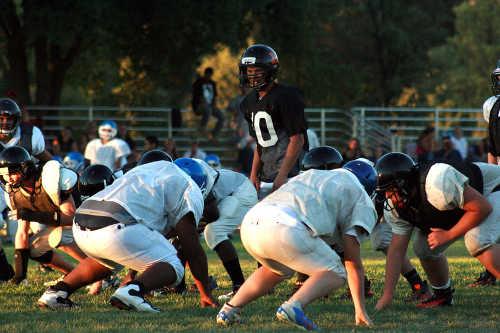
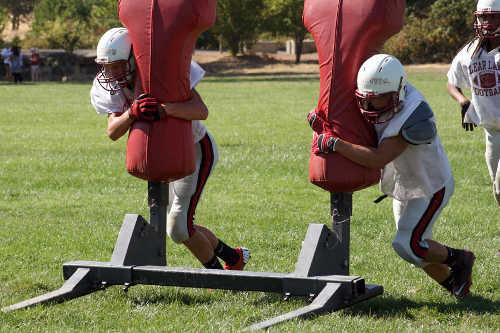
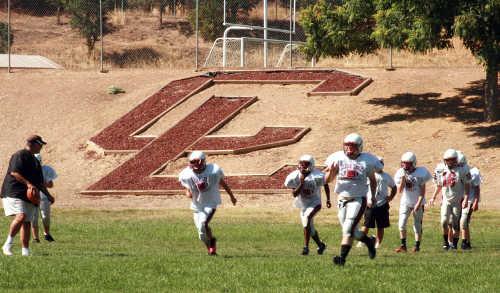
This week’s Fall Football Preview is following the county’s high school teams as they get ready for the upcoming season.
LAKEPORT, Calif. – Any way you crunch them, the numbers are coming up small at Clear Lake High this football season.
Consider the number of returning starters on offense (3) or on defense (4). Or the number of Cardinals who led the team in noteworthy statistical categories last year, such as rushing, passing, scoring, receiving or tackling: 0.
Or the number of varsity players who, though obviously too old for Pop Warner ball, tip the scales under that league’s 145-pound size limit: 10.
There are fewer players this season, too.
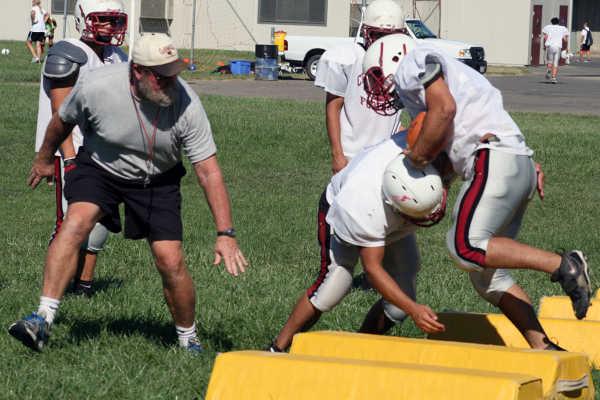
“We’re low on numbers, “said head coach Glenn “Milo” Meyer, who, as of Tuesday, had 22 varsity players and 23 on his JV team.
The junior varsity turnout was the smallest in his years at Clear Lake, Meyer said. “Usually, we’ll have 40 on the JVs.”
But amid all the shrinking numbers, Cardinal fans can find solace in some other stats that light up the corridors of Clear Lake High’s football annals.
As Meyer starts the second year of his second stint as Clear Lake’s coach, his record of turning out winners stokes the embers of optimism.
In a 12-year stretch from 1997 to 2008, his teams won 76 games and four league titles, and were fixtures in the North Coast Section playoffs.
The Cardinals won the NCS title in his second year (1998), beating a tough Kelseyville team that had a quarterback named Rob Ishihara, who’s now in his third season as Kelseyville’s head coach.
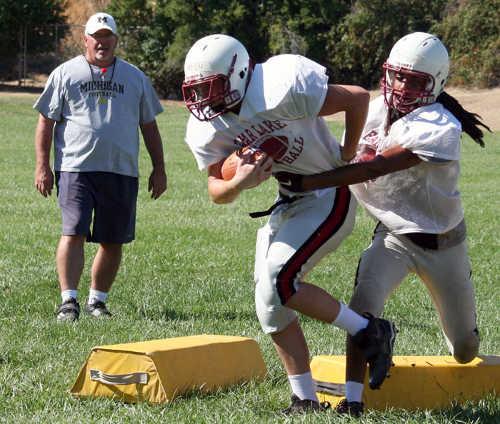
Meyer stepped down after the 2008 season. “It was combination of things,” he said to explain his two-year leave of absence from the varsity coaching job (though he did remain as the school’s athletic director).
“There was some burn-out involved, plus my wife’s health wasn’t the greatest. The thing about coaching football, it takes up so much time. There are a lot of late nights.”
Schad Schweitzer took over in 2009 and coached for two seasons. Then he lost his day job and had to move out of the area to find work.
So Meyer took the reins again last year and the first thing he did was bring back his three assistants who were on his first staff at Clear Lake in ’97, and were there the following year when the Cardinals won the NCS title.
Steve Newnham is again the defensive coordinator, Rick Hayes is the offensive coordinator, and Mike Hansen coaches the running backs and linebackers.
The Cardinals suffered some blowouts early last season and opened the North Central League at 0-3.
Then they got competitive.
They were in three close games – and pulled out three league victories: 34-26 over Lower Lake, 7-3 over Kelseyville, and, in the league-opener that ultimately gave them fourth place, a 21-14 win over Fort Bragg.
Clear Lake finished at 4-6 overall and 4-3 in the NCL behind St. Helena, Willits and Middletown.
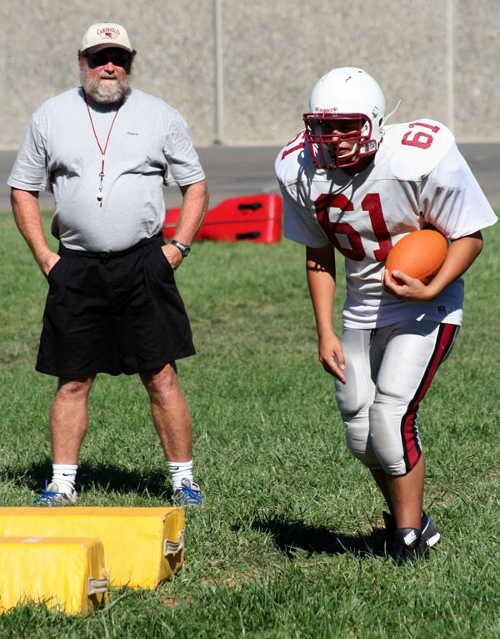
The strong finish didn’t surprise anyone familiar with Meyer’s coaching skills.
“Milo is organized and structured – he has a definite plan for what he wants to do,” said Hansen, his long-time assistant. “We’ve worked with him long enough to know the drills. But the thing about Milo is, he knows how to adjust to the kind of players we have. On this level, you have to adjust.”
Some adjustments will no doubt be required this season as the coaches search for ways to remain competitive with a small and inexperienced lineup.
The biggest kids are up from a JV team that went 4-6 last year: junior tight end and defensive lineman Gabe Strong (6-6, 225 pounds) and sophomore lineman Julian Lewis (5-10, 230).
But the rest of the “big guys” are more the size of senior Josh Larsen (6-0, 185), the only returning starter from last year’s line.
Indicative of their smallness is when 5-6, 160-pound Andre Buendia, a cornerback last year, was switched to linebacker.
Still, Buendia has 20 pounds on the Cards’ starting quarterback, 5-7, 140-pound Kenny Henninger.
“It’ll be a challenge for us,” Meyer said. “We haven’t had a team that’s this small and with so little experience.”
But he adds that this season will provide some important continuity to the rebuilding process.
When Meyer left in 2008, so did his option veer offense, which takes a couple of years for the players (especially the quarterbacks) to master.
In the meantime, coaches around the league aren’t about to overlook Clear Lake this season.
“You always have to prepare to face a team Milo coaches,” said Middletown coach Bill Foltmer. “He and his assistants do a great job. You can never overlook them.”
On Thursday: The Middletown Mustangs get set for the season.
Rich Mellott can be reached at
Clear Lake Cardinals
Coach/Record: Glenn “Milo” Meyer (14th year), 80-56-3.
Assistants: Offensive coordinator Rick Hayes, defensive coordinator Steve Newnham, RB/LB coach Mike Hansen.
Last year: 4-6.
League: 4-3 (4thth place).
JVs: 4-6.
Offense: Option veer.
Returning starters: 3 on offense, 4 on defense.
Top players: OL/DL Josh Larsen (5-10, 185), Sr.; TE/DL Gabe Strong (6-6, 225), Jr.; OL/DL Julian Lewis (5-10, 230), Soph.; QB/DB Kenny Henninger (5-7, 140) Jr.; RB/LB Andre Buendia (5-6, 160), RB/LB Luke Punzalan (5-9, 185) Sr.
Keep an eye on: Whether the coaches can get their undersized and inexperienced players ready to compete with league rivals Fort Bragg, Lower Lake, Kelseyville and Cloverdale; or looking at it another way, how long will it take for the inexperienced players (including some decent athletes playing football for the first time) to start contributing.
Key games: How the Cardinals do in early NCL games at Fort Bragg and at home against Cloverdale will say a lot about their prospects for a successful season.
CLEARLAKE OAKS, Calif. – Dozens of community members gathered in Clearlake Oaks Monday evening to hear from state and local officials about the response to a pair of wildland fires that tore through the hills near Clearlake Oaks last week, causing evacuations and burning thousands of acres.
County Supervisor Denise Rushing hosted the hour-and-45-minute-long meeting at the Clearlake Oaks Moose Lodge, which was a short distance from where the Wye Fire had broken out Sunday, Aug. 12, about 20 minutes after the Walker Fire was dispatched.
County staff and leaders, local fire chiefs and a number of Cal Fire chief officers were on hand to discuss the incident and answer questions.
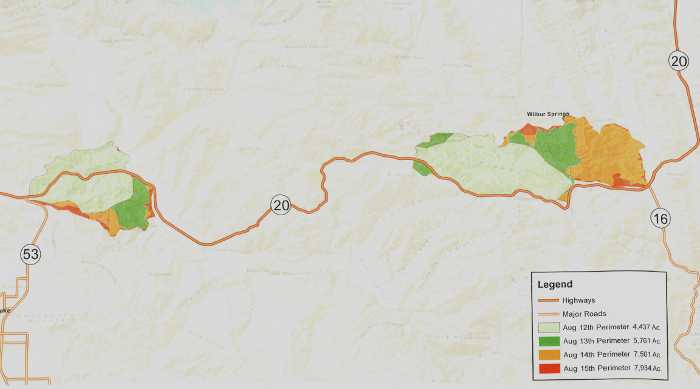
The Walker and Wye Fires – eventually managed as just the Wye Fire – burned a total of 7,934 acres before being contained last Saturday morning.
Overall, the entire incident cost an estimated $7,355,896, including the engines that remain on scene patrolling the fire areas, Cal Fire spokesperson Suzie Blankenship said Tuesday.
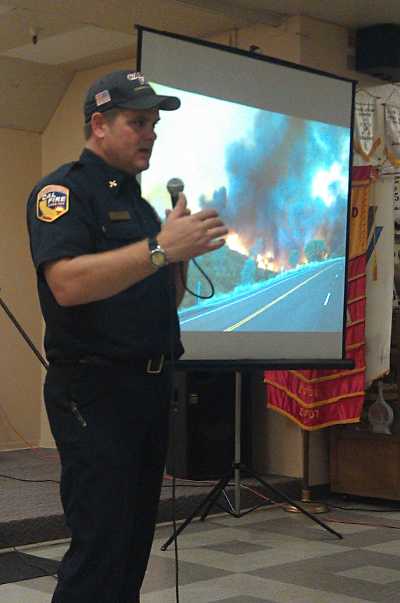
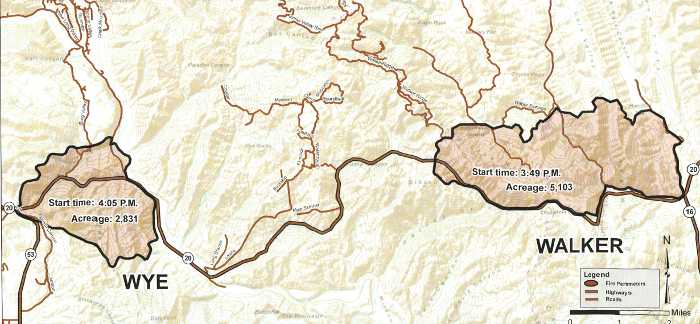
The fires were dispatched minutes apart on the afternoon of Aug. 12, according to Northshore Fire Deputy Chief Pat Brown, who showed a slideshow of photos captured of the incidents by community members.
He said the Walker Fire was dispatched first, at 3:48 p.m. Brown and other Northshore Fire units passed through the “Y” – the intersection of Highway 20 and 53 – minutes later.
Within 10 minutes of their units passing through the intersection, the second fire was dispatched at 4:05 p.m. after Fire Capt. Joe Baldwin of Cal Fire spotted it and called it in. Cal Fire would dub the second fire the “Wye,” a variation of the intersection’s nickname.
Brown said Baldwin stopped some of the equipment that was heading to the Walker Fire and diverted it to the Wye.
Very quickly, the challenges – and dangers – began to mount. Traffic was backing up in the area, the fire spread quickly and it was hit by the area’s afternoon winds. Within 20 minutes it had reached nearby oak trees and took off, he said.
Lake County Fire Chief Willie Sapeta had been on scene within minutes, ordering equipment. Within 20 minutes, Cal Fire air resources were doing fire drops, Brown said.
Forty six minutes after the fire was dispatched, just after 5 p.m., the house that the late Clearlake Oaks resident Max Thorburn built was fully involved, he said.
At about 5:30 p.m., the fire was cresting over Long Valley and entering Spring Valley, according to Brown.
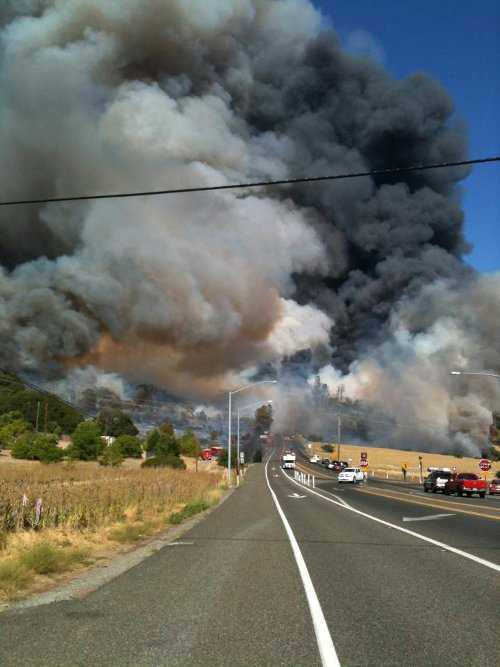
Brown called the photo Clearlake Oaks resident Chris Hallsted shared with Lake County News of the fire the “iconic” image of the blaze, showing what he called a “boilover.”
Setting priorities
Cal Fire Battalion Chief Mike Wink was the first Cal Fire chief officer on scene, and became the initial incident commander. He, Sapeta and Baldwin evaluated the scene and began making big resources requests, seeking dozens of engines and crews.
Once the fire progressed to the New Long Valley and Old Long Valley areas, Wink said they decided they needed to evacuate.
Lake County has a natural wind that comes off the lake from the west in the afternoon and evenings, and that – along with a “plume-dominated” wind – was causing the fire to escalate rapidly, he explained.
Firefighters began getting reports from the California Highway Patrol of downed power lines along Highway 20, and Wink said at that point they knew they couldn’t get fire resources across the power lines. So they requested resources from Colusa County.
“Our priorities are life, property and environment – in that order,” said Wink.
As such, they were trying to get people out of the fire’s path while diverting aircraft and other resources from the Walker Fire to the Wye Fire, he said.
Wink said they got radio traffic that Patsy Thorburn was trapped in her driveway while trying to escape. Firefighters couldn’t get to her, so they diverted air resources to try to hit the fire so she could get out.
Later that night they heard she had escaped, Wink said. “We were all relieved to hear that.”
Motorists on Highway 20 were diverted toward Williams, and a nearby quarry property was used as a diversion area for motorists, where Wink said people soon began piling up.
Lake County Animal Care and Control and its Lake Evacuation & Animal Protection (LEAP) group were requested to assist with evacuating animals from Spring Valley, and after the Moose Lodge filled up Red Cross was activated and set up a temporary shelter at the Highlands Senior Center in Clearlake. People who had been diverted to Williams were helped by the Red Cross there, Wink said.
“All those things are continually going on through the night,” he said.
Cal Fire Division Chief Eric Hoffman, who is based out of Santa Rosa, would take over command of the fire early on Monday, Aug. 13, after the Cal Fire Incident Management Team 4 was activated.
The firefighters who had been part of the initial attack “worked heroically,” Hoffman said, with many of them working 36 to 48 hour shifts.
Cal Fire Sonoma-Lake-Napa Unit Chief Tim Streblow told the the incident command team that the No. 1 objective was to put out the fire, while the No. 2 objective was to leave the community satisfied with the firefighting effort, according to Hoffman.
“We took that real seriously,” Hoffman said.
Fire officials quickly put the Wye Fire at the top of the priority list. Hoffman said they gave it the resources needed to hit it hard and get containment in under seven days.
After Hoffman spoke, Rushing told the group, “As you can see, it’s quite an effort to face something this huge, and it's certainly something our little community can't handle ourselves.”
A cooperative effort
Sapeta discussed the evacuations and how that cell 911 calls often are diverted out of area rather than directly to Lake County Central Dispatch. Several Spring Valley residents in the audience complained that their area didn’t have cell phone coverage anyway.
When the fire erupted, Sapeta said Central Dispatch’s two dispatchers were handling a deluge of calls.
He and Wink knew there would be challenges in evacuating, which he said is a labor intensive process.
When Red Cross was activated, it determined where to set up the evacuation shelter. In addition he recognized LEAP and Animal Care and Control for their efforts.
“This was a cooperative effort with everybody in the county involved,” Sapeta said.
Sapeta said the county hadn’t seen an event of this magnitude since the 1996 Fork Fire, which also required Spring Valley to evacuate.
Tim Miller, regional chief executive officer for the American Red Cross of Sonoma, Mendocino and Lake Counties said the group’s primary role was sheltering and feeding evacuees.
On Aug. 12 the Red Cross served 150 meals and sheltered 25 people overnight who had evacuated because of the fires, Miller said. The following night they had two people who still needed shelter.
Lynnette Bertelli spoke about LEAP, which formed a year and a half ago, and is a group of volunteers that worked with Animal Care and Control to evacuate animals.
The group, which is trained in evacuation and safety procedures, was activated at 5:45 p.m. Aug. 12, she said. The group staged at the Spring Valley Pantry and helped remove four dogs, one cat and five horses. Later, they escorted residents in to either remove their livestock and pets or feed them if they couldn’t be moved.
She lauded Clearlake Veterinary Clinic and the Animal Hospital of Lake County for keeping their offices staffed all night long to assist with animal evacuations.
Bertelli said the goal is to educate the public to the point where LEAP doesn’t have to be called in to rescue animals.
Northshore Fire Chief Jay Beristianos said some Spring Valley residents did a very good job in establishing defensible space around their homes – so much so that there were homes where the fire burned around them but didn’t damage them because there was clearance.
“You can see there’s a lot of effort that goes into an event like this,” said Rushing. She added that a debriefing of all the agencies hadn’t yet been held to determine what went well and what didn’t.
The meeting wrapped up with a question and answer session that covered defensible space and weed abatement, how the abatements were handled and cell phone coverage in Spring Valley.
One of the questions on peoples’ minds that doesn’t yet have a definitive answer is what caused the Wye Fire.
Hoffman said the investigation remains under way, with the Walker and Wye fires being investigated as separate incidents.
He said investigators are working on good leads but haven’t given him a final cause.
“The one thing I can tell you about the investigation is that there is nothing concrete to link the two fires,” he said.
He recognized the community’s anxiety, and urged people not to jump to conclusions.
“As soon as we can put that to bed, we will,” he said of the cause, adding, “When we know, you will know.”
Email Elizabeth Larson at
NORTH COAST, Calif. – Mendocino County officials on Tuesday issued evacuation orders for areas near the community of Covelo, where two wildland fires are burning.
The North Pass Fires – previously called the Pass Complex – reached 10,000 acres on Tuesday, with 10 percent containment, according to Cal Fire.
The lightning-caused fires have been burning since early last Saturday morning in the Williams Valley near Mendocino Pass Road, 10 miles northeast of Covelo.
The fires have so far claimed one outbuilding and are threatening 45 residences, according to Cal Fire.
There were 869 personnel on scene Tuesday, along with 63 engines, 26 fire crews, three helicopters, 29 dozers and 21 water tenders, Cal Fire reported.
With the complex moving into the Mendocino National Forest, Cal Fire and the US Forest Service have a unified command of the incident.
Mendocino National Forest spokesperson Tamara Schmidt said the Southern California Interagency Incident Management Team 3 assumed command of the fire on Tuesday morning, with the incident command post located at the Round Valley Airport.
Schmidt reported that the fires were actively burning in heavy timber and moving northeast into the Yolla Bolly Middle Eel Wilderness. Extreme fire behavior – including crowning, torching and long range spotting – have been observed in the afternoons.
She said firefighters both on the ground and in the air are actively fighting the fire.
The fires prompted the Mendocino County Sheriff's Office to issue a mandatory evacuation order for all residents of Indian Dick Road (USFS Road M1), east of Covelo; all residents on Indian Dick Road from the intersection of Mendocino Pass Road (USFS Road FH7) north to the Trinity County line and east to the Tehama County line.
The order included all residences and USFS campsites at Howard Lake Campground, Little Doe Campground and Hammerhorn Lake Campground.
Also evacuated was Blands Cove Road, east of Covelo, from the start of the Traveler's Home Wilderness Trail Head, north to the Trinity County line.
Blands Cove Road and Indian Dick Road (USFS Road M1) will be closed to all non-emergency traffic in the evacuation areas. The road closures remain in effect until the mandatory evacuation order is rescinded.
Schmidt said the fire closure area boundary begins at the intersection of the Middle Fork of the Eel River and the forest boundary, then continues north along the Middle Fork of the Eel River to a point half a mile south of Henthorne Lake, then continues due west to its intersection with the forest boundary, then continues south along the forest boundary back to the starting point.
Anyone displaced by this evacuation order can contact the American Red Cross for housing assistance at 707-463-0112 or 855-891-7325.
Email Elizabeth Larson at
LAKE COUNTY, Calif. – The Department of Defense has formally identified the soldiers who perished in a Black Hawk helicopter crash, including a young Kelseyville man whose family was notified last week.
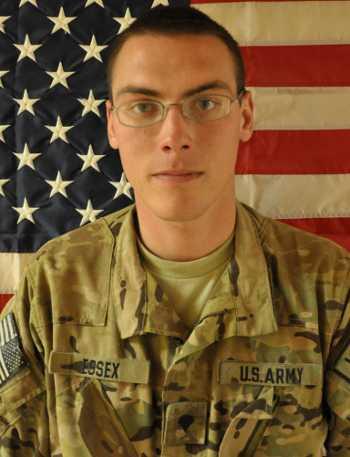
Sgt. Richard Essex, 23, a 2008 graduate of Kelseyville High School, was among the 11 who died in the crash, which occurred northeast of Kandahar, Afghanistan last Thursday, Aug. 16, as Lake County News has reported.
Essex was assigned to A Company, 2nd Battalion, 25th Combat Aviation Brigade, 25th Infantry Division, based at Schofield Barracks, Hawaii.
His family is planning a military service for him on Saturday, Sept. 1, at Kelseyville High School.
“Our heartfelt condolences and prayers go out to the families and loved ones of our fallen heroes,” said Maj. Gen. Kurt Fuller, commanding general, 25th Infantry Division. “Although the 25th Combat Aviation Brigade family has suffered a huge loss, they still continue their mission with the utmost
courage and resolve.”
The cause of the crash is under investigation, the Army reported.
Essex was the gunner on the Black Hawk, according to his aunt, Mayme Dyslin of Kelseyville.
His family reported being notified last Thursday afternoon by military officials.
The Black Hawk also was carrying three other members of the Army, three members of the Navy, three members of the Afghan national security forces and an Afghan civilian interpreter, the Department of Defense reported.
Other Army 25th Infantry Division members on the Black Hawk were Chief Warrant Officer Brian D. Hornsby, 37, of Melbourne, Fla; Chief Warrant Officer Suresh N. A. Krause, 29, of Cathedral City, Calif.; and Sgt. Luis A. Oliver Galbreath, 41, of San Juan, Puerto Rico, military officials reported.
The Department of Defense identified the Navy members who died in the crash as Explosive Ordnance Disposal Petty Officer Technician 1st Class Sean P. Carson, 32, of Des Moines, Wash., assigned to an explosive ordnance disposal mobile unit in San Diego; Special Warfare Operator Petty Officer 1st Class Patrick D. Feeks, 28, of Edgewater, Md., assigned to a West Coast-based naval special warfare unit; and Special Warfare Operator Petty Officer 2nd Class David J. Warsen, 27, of Kentwood, Mich., assigned to a West Coast-based naval Special warfare unit.
The Army report said Essex joined the Army July 1, 2008, and became a wheeled vehicle mechanic on Nov. 23, 2008.
Dyslin recalled that her nephew had always wanted to go into the military.
He was on his second deployment, according to the Army. Dyslin said he was due to return home in November.
The Army said Essex’s awards and decorations include the Army Commendation Medal, Army Good Conduct Medal, National Defense Service Medal, Afghanistan Campaign Medal, Iraq Campaign Medal, Global War on Terrorism Service Medal, Army Service Ribbon, Overseas Service Ribbon, NATO Medal, Combat Action Badge, Army Aviation Badge and the Drivers Badge.
Email Elizabeth Larson at
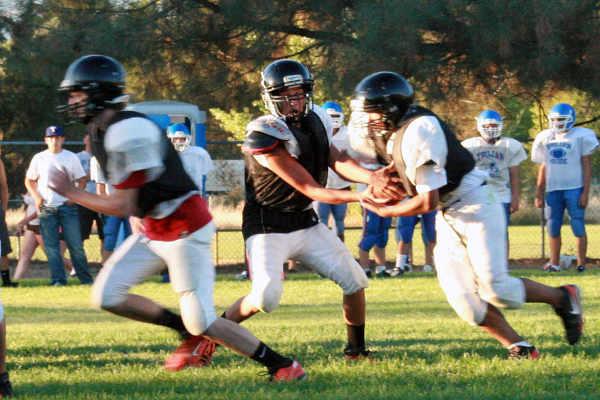
This week’s Fall Football Preview will feature the county’s high school teams as they get ready for the upcoming season.
KELSEYVILLE, Calif. – Going into last season, Kelseyville Coach Rob Ishihara figured the key to a successful year would be his team’s ability to win the close North Central League I games.
He figured right.
The Knights found themselves in four tight league matches – and lost them all, finishing at 1-6 in the NCL and 1-9 overall.
Three of the losses were by less than a touchdown—7-3 to Clear Lake, 34-29 to Cloverdale and 28-25 to Middletown. And the 17-7 loss to Fort Bragg “could have gone either way,” Ishihara said.
With each game hanging in the balance, the Knights demonstrated a propensity for self-destruction.
“We made too many turnovers at inopportune times,” he said, referring to the string of fourth-quarter fumbles that turned potential victories into gut-wrenching losses.
Looking ahead to this season, Ishihara has come up with a new key to what would be a bounce-back year – and it doesn’t involve holding on to the ball (Ishihara believes the ball-stripping drills this summer should cure the team’s chronic fumbling problem).
“This year it’s going to boil down to our players being mentally tough,” said Ishihara, a former all-league quarterback at Kelseyville. “We’re a small team. We have some talent at the skill positions, but we don’t have any size. We’ll have to be mentally tough to compete against the bigger teams.”
Among the undersized players upon whose skills Ishihara is relying are seniors John Mark Reagan (5-8, 145-pound quarterback/cornerback), Jake Peters (5-9, 165-pound running back/defensive back), Pedro Hernandez (5-10, 160-pound receiver/defensive back) and Greg Fricker (5-11, 165-pound receiver/defensive back).
Reagan ran the Knights’ wing-T offense last year, rushing for 351 yards (and a 7-yard per carry average) and passing for another 354 yards, but his inexperience showed in the early-season blowouts, especially when he was forced to pass to overcome big deficits.
Fricker (8 catches, 149 yards) was the team’s most productive receiver last season.
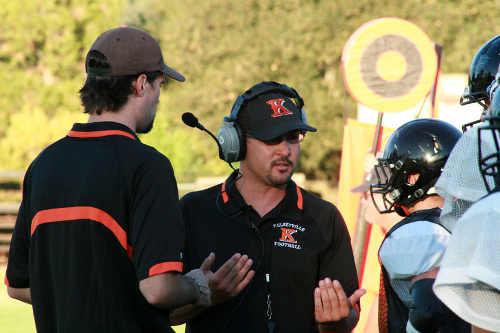
It’ll be interesting to see how the coaches work Peters into the scheme; the Lower Lake transfer has skills – but where’s he going to play? Maybe a little quarterback, Ishihara says, along with running back and defensive back.
Players off a JV team that went 6-4 last year will be thrown into the mix right away. Gone is last year’s top rusher, Geno Poloni (1074 yards, 5.4 avg.), but a couple of impressive underclassmen should help pick up the slack: Kevin Duty, a 6-1, 200-pound junior who doubles at linebacker, and sophomore Robert McLean (5-9, 185), who also plays strong safety.
It’s in the trenches where the undersized Knights will have to find ways to compensate. Senior Zac Cocco (6-0, 185 pounds), who was second on the team in tackles last year, returns as a two-way starter.
Up from the junior varsity is 6-feet, 180-pound junior David Simonson, who will play in the offensive line as well as at linebacker. Junior Justin Johnson will be in the mix.
For the Knights to have a turn-around year, a year like 2010, when Ishihara was a rookie coach and his team went 7-4, they’ll have to use their quickness and athleticism to negate the size advantage that most opponents will enjoy.
They have good depth at the skill positions, so don’t be surprised if Ishihara, a Lake County real estate agent, uses his powers of salesmanship to persuade some of his more athletic types to hunker down near the line of scrimmage and then sprint past (or dance around) opposing linemen to make the tackle or the block.
Either that or maybe the coaches can devise a defense that features one nose guard, six linebackers and four defensive backs, which might actually work against the two or three teams they face that like to throw the ball.
But for the time being, Ishihara is counting on his team’s “mental toughness” to compete against the bigger teams, along with his better athletes to come up with some big plays – the type of plays that win games that are hanging in the balance.
Tomorrow: The Clear Lake High School Cardinals get ready for the fall season.
Rich Mellott can be reached at
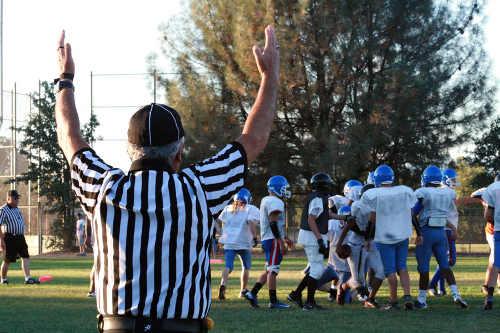

Kelseyville Knights
Coach/Record: Rob Ishihara (3rd year), 8-13 1.
Assistants: Nick Veenstra, Jim Ducoti, Lou Poloni, Todd Hansen, Tim Tangley, Sonny Duty.
Last year: 1-9.
League: 1-6-1.
JVs: 6-4.
Offense: Wing-T.
Returning starters: 5 on offense, 6 on defense.
Top players: QB/DB John Mark Reagan, QB/RB/DB Jake Peters, RB/LB Kevin Duty, RB/DB Robert McLean, OL/DL Zac Cocco, OL/DL David Simsonson, R/DB Gregory Fricker.
Keep an eye on: Whether the numerous new players up from the JV team can make an early impact, including Duty, McClean and Simonson … Also, whether the ball-stripping drills in practice this summer will make a difference for a team haunted by costly fumbles last year.
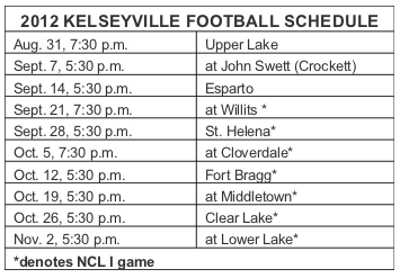
Key games: Kelseyville will have its hands full in its Aug. 31 opener against Upper Lake, but it has a good shot at matching its 2011 win total in its second game on Sept. 7 at John Swett (Crocket), which takes a 10-game losing street into its opener against South Fork … The Knights open NCL play against two of the league’s best teams, at Willits (Sept. 21) and at home against defending champ St. Helena (Sept. 28).

KELSEYVILLE, Calif. – Rob Ishihara had seen it before: a senior with no football experience coming out for the team.
“It can be hard for them,” the Kelseyville head coach said. “Even if they’re good athletes, there’s an adjustment, certain skills they have to develop.”
When summer drills opened last week, Ishihara welcomed a senior whose only “organized football” experience was an all-girls flag contest last spring between the Kelseyville juniors and seniors.
Crystal Maciel, who had been mulling over the possibility of playing with the boys since that “powder puff” game, decided the day before practice started to give it a go.
“If I didn’t go out, I was afraid I’d regret not taking advantage of the opportunity to play,” she said earlier this week.
She’s not just playing with the boys – she’s mixing it up with them, trying to knock them on their butts before they do the same to her.
You won’t confuse Maciel for the soccer crossovers of the ’70s and ’80s, the girls who helped bust through prep football’s gender barrier as placekickers, a role that rarely subjected them to getting smashed by testosterone-fueled linemen twice their size.
Maciel is a 5-foot-4, 270-pound candidate for lineman who happens to enjoy the contact of the game.
“Overall, I think I’m doing pretty good,” she said before last Wednesday’s practice and after a week-and-a-half of summer workouts.
Ishihara agrees. “Her effort has been great,” he said. “So has her attitude.”
Maciel admits she wasn’t in the kind of shape required to thrive in the heat and intensity of two-a-day workouts the first week of practice. “That’s been the hardest part,” she said.
She also knows she has room for improvement in the technical aspects of blocking and tackling.
But she feels she’s learning fast. Overall, she says, “I’m keeping up (with the boys).”
Maciel got her first real taste of contact at last Tuesday night’s practice, on a play where she was heading down field – and the next thing she knew, she was flat on the ground.
“I didn’t see it coming. But I got up. I was OK with it,” said Maciel, who’s practicing at various positions on both the offensive and defensive lines.
This isn’t her first high school team. She swam at Shasta High as a freshman and played girls soccer last fall at Upper Lake.
Though her organized football experience is limited to the one “powder puff” game, she fondly recalls as a kid playing football with her brother and cousins, and she remembers holding her own in the areas of tackling and overall roughhousing.
It was the flag football game with the girls – and the week of practice that preceded the game – that got Maciel thinking seriously about playing with the boys.
When she approached some assistant coaches on the Kelseyville staff a couple weeks ago about going out for the team, several who had apparently seen her play in the girls game encouraged her to go talk to Ishihara.
“They said I wasn’t afraid of contact,” she said. “They liked that.”
Her friends, including some guys on the team, also encouraged her to come out for the team.
Initially, Ishihara had some reservations about letting her play. But he called her a couple days before summer drills began and invited her to join the team.
According to the National Federation of State High School Associations’ Web site, 1,561 girls played high school football in the United States in 2010, up 17.5 percent from the 2006 season.
In the California high school ranks, 179 girls played football in 2010 (either on freshmen, JV or varsity teams). Statistics for the 2011 season haven’t been released yet.
Rich Mellott can be reached at