How to resolve AdBlock issue?
Refresh this page
How to resolve AdBlock issue?
Refresh this page
Lake County News,California
  • Home
    • Registration Form
  • News
    • Education
    • Veterans
    • Community
      • Obituaries
      • Letters
      • Commentary
    • Police Logs
    • Business
    • Recreation
    • Health
    • Religion
    • Legals
    • Arts & Life
    • Regional
  • Calendar
  • Contact us
    • FAQs
    • Phones, E-Mail
    • Subscribe
  • Advertise Here
  • Login

News

Clearlake Animal Control: ‘Bugsy’ and ‘Jupiter’

CLEARLAKE, Calif. — Clearlake Animal Control has friendly dogs waiting for new homes this week.

The Clearlake Animal Control website lists 38 adoptable dogs.

The available dogs include “Bugsy,” a nearly 2-year-old pit bull mix who likes to play with toys and is good with other dogs. He is neutered and vaccinated.

“Bugsy.” Photo courtesy of Clearlake Animal Control.

Also up for adoption is “Jupiter,” a 2 and a half year old male German shepherd mix with a tricolor coat. Staff said he’s still learning to walk on a leash and is a bit shy at first but then warms up when he meets people. He's neutered, up to date on his vaccines and microchipped.

The shelter is located at 6820 Old Highway 53. It’s open from 9 a.m. to 6 p.m. Tuesday through Saturday.

“Jupiter.” Photo courtesy of Clearlake Animal Control.

For more information, call the shelter at 707-762-6227, email This email address is being protected from spambots. You need JavaScript enabled to view it., visit Clearlake Animal Control on Facebook or on the city’s website.

This week’s adoptable dogs are featured below.

Email Elizabeth Larson at This email address is being protected from spambots. You need JavaScript enabled to view it.. Follow her on Twitter, @ERLarson, or Lake County News, @LakeCoNews.

Estate Planning: Difficult to administer assets

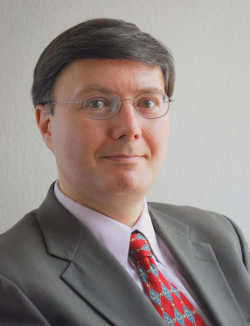
Dennis Fordham. Courtesy photo.

Some types of assets are difficult to sell or to distribute to the beneficiaries when settling a decedent’s probate or trust estate.

Recognizing such assets and considering the foreseeable difficulties may prompt action during the owner’s life and avoid leaving problems behind. Let us discuss some scenarios.

Timeshares are notoriously difficult to sell or to surrender and cease paying the maintenance fees. Leaving time shares in one’s estate may be a dubious gift to one’s loved ones unless perhaps some beneficiary actually wants to receive it.

That said, a timeshare owner may choose to address the difficulty by calling the company to discuss how to leave the timeshare to a specific beneficiary or how to sell or surrender it now or after one’s death. The answers vary depending on the timeshare involved.

Fractional ownership in real property is another difficult asset to sell as it requires the cooperation of the co-owners. Typically, the only interested buyers are the other co-owners.

Moreover, it is impossible to borrow against a fractional interest of real property because the lender cannot foreclose on only a partial interest. Otherwise, a court partition action to force a sale of the real property is necessary. It may, therefore, be wise to address this issue while alive.

Stock shares held in certificate form are increasingly rare but some stock certificates that were issued years ago remain. These certificates are title documents and must be safeguarded.

Replacing lost certificates takes time and money. Moreover, selling certificated shares often involves the additional step of using a transfer agent to retitle the certificates into a brokerage account to sell the shares.

Thus, it is wise for the owner to transfer all certificated shares (stocks) into brokerage shares while alive. The brokerage account can then be titled in the owner’s living trust or be titled as a transfer on death account, each avoids probate.

Gold and silver coins or bars can be misplaced, lost or stolen. Sometimes these assets are kept in storage or in a hiding place (e.g., buried). The person administering the estate may not know whether they still exist and if so where or how to find them.

Storing the gold or silver in a bank deposit (and making sure the necessary persons know the account) or else selling the gold and silver while alive and investing the proceeds may avoid costly mishaps. One can buy shares in companies that invest in precious metals to avoid the risks of direct ownership.

Probably one of the biggest headaches now in settling a decedent’s estate is owning cryptocurrency – i.e., a portion of a block chain asset like “Bitcoin” — for a variety of reasons.

First, cryptocurrency is highly speculative (i.e., value fluctuations are wild). Such volatility usually makes cryptocurrency an unacceptable asset for a successor trustee or an executor of a decedent’s estate to hold.

Second, so-called, “cryptocurrency keys” are essential to owning, controlling and selling the intangible assets. The keys can easily be lost and when lost cannot be recovered. Like investing in gold and silver, it is possible to buy shares in a company that invests in cryptocurrency and so avoid the risks of a cryptocurrency key.

Sole proprietorships, especially those that require licenses (e.g., a law or medical practice), are very difficult, time consuming, and often fraught with risk for the person settling the deceased owner’s estate.

Succession planning involves placing the sole proprietorship into a legal entity (such as an LLC or corporation) and then legally nominating, or providing authority for nominating, qualified replacements to step in and manage the business should the principal (owner) unexpectedly become incapacitated or die.

Otherwise, emergency probate court proceedings and frantic efforts to find suitable persons become necessary at the worst of times and do not guarantee saving the business.

Some problems are foreseeable. No one plans to fail but people do fail to plan. Why take unnecessary risks?

The foregoing discussion is not legal advice. Consult a qualified attorney for guidance.

Dennis A. Fordham, attorney, is a State Bar-Certified Specialist in estate planning, probate and trust law. His office is at 870 S. Main St., Lakeport, Calif. He can be reached at This email address is being protected from spambots. You need JavaScript enabled to view it. and 707-263-3235.

Late bedtimes and not enough sleep can harm developing brains – and poorer kids are more at risk


Poor sleep can have adverse effects on brain development. Alex Potemkin/E+ via Getty Images

We are neuroscientists who are passionate about reducing socioeconomic disparities in child development. To better understand how socioeconomic disadvantage affects sleep health and brain development in children, we recruited 94 5- to 9-year-old children from socioeconomically diverse families living in New York. About 30% of the participating families had incomes below the U.S. poverty threshold.

We asked parents to report on their child’s sleep environment, the consistency of their family routines, and their child’s bedtime and wake-up time. We also had children complete a magnetic resonance imaging scan of their brains to analyze the size of a brain region called the amygdala and the strength of its connections with other regions of the brain. The amygdala plays a critical role in processing emotions and the amount of negative emotion a person experiences. Adversity experienced early in life can affect how the amygdala works.

Animation of consecutive cross-sections of the brain from one side to another, one small area near its center colored green
This animation of a brain MRI highlights in green a region deep in the brain called the amygdala. Danielsabinasz via Wikimedia Commons, CC BY-SA

We found that children in families with low economic resources were getting less sleep at night and going to sleep later compared with children in families with higher economic resources. In turn, shorter sleep and going to sleep later were associated with reduced amygdala size and weaker connections between the amygdala and other emotion-processing brain regions. This link between socioeconomic disadvantage, sleep duration and timing, and amygdala size and connectivity was found in children as young as 5.

Our results suggest that both amount and timing of sleep matter for the functioning of these brain regions involved in emotion processing.

Why it matters

Not getting enough sleep increases the risk of developing mental health problems and interferes with academic achievement. Reduced sleep may make it harder for children to cope with stress and manage their emotions. Children from families or neighborhoods with low socioeconomic resources may be at increased risk for stress-related mental health problems due in part to the negative effects of their environment on sleep health.

During childhood, the brain develops at a fast pace. Because of this, childhood experiences can have effects on brain function that last a lifetime. Problems from childhood can continue throughout life.

Child resting head in arms against an open notebook, pencil in hand
Poor sleep can contribute to poor mental health and academic performance. WC.GI/Moment via Getty Images

Our findings reinforce the importance of ensuring all families have sufficient economic resources to provide for their children. Research suggests that income supplements for families in need can help support children’s brain function, along with their mental health and academic outcomes.

What still isn’t known

Why do socioeconomically disadvantaged environments make it hard for children to sleep?

Our research suggests that parents who were struggling to make ends meet had a harder time maintaining consistent family routines, possibly leading to less consistent bedtime routines, which may have contributed to children getting less sleep.

However, there are likely multiple factors connecting socioeconomic disadvantage and poor sleep quality, such as not being able to afford a comfortable bed, overcrowding, neighborhood noise, excessive light and heat.

What’s next

Most sleep research has focused on teens, who are especially at risk for poor sleep. However, our results suggest that environmental effects on sleep patterns and habits start a lot earlier.

Interventions to improve sleep may need to start earlier than adolescence to be optimally effective. Bolstering economic resources for families in need may also be key to supporting children’s sleep health, brain development and emotional well-being.

The Research Brief is a short take about interesting academic work.The Conversation

Emily C. Merz, Assistant Professor of Psychology, Colorado State University and Melissa Hansen, Ph.D. Candidate in Cognitive Neuroscience, Colorado State University

This article is republished from The Conversation under a Creative Commons license. Read the original article.

Shorter sleep and later bedtimes are linked to potentially harmful functional changes to parts of the brain important for coping with stress and controlling negative emotions, our recently published research found. And children in families with low economic resources are particularly at risk.

Space News: NASA ships moon rocket stage ahead of first crewed Artemis flight

Move teams with NASA and Boeing, the SLS core stage lead contractor, position the massive rocket stage for NASA’s SLS (Space Launch System) rocket on special transporters to strategically guide the flight hardware the 1.3-mile distance from the factory floor onto the agency’s Pegasus barge on July 16, 2024. The core stage will be ferried to NASA’s Kennedy Space Center in Florida, where it will be integrated with other parts of the rocket that will power NASA’s Artemis II mission. Pegasus is maintained at NASA’s Michoud Assembly Facility. Credit: NASA.

NASA rolled out the Space Launch System, or SLS, rocket’s core stage for the Artemis II test flight from its manufacturing facility in New Orleans on Tuesday for shipment to the agency’s spaceport in Florida.

The rollout is key progress on the path to NASA’s first crewed mission to the Moon under the Artemis campaign.

Using highly specialized transporters, engineers maneuvered the giant core stage from inside NASA’s Michoud Assembly Facility in New Orleans to the agency’s Pegasus barge.

The barge will ferry the stage more than 900 miles to NASA’s Kennedy Space Center in Florida, where engineers will prepare it in the Vehicle Assembly Building for attachment to other rocket and Orion spacecraft elements.

“With Artemis, we’ve set our sights on doing something big and incredibly complex that will inspire a new generation, advance our scientific endeavors, and move U.S. competitiveness forward,” said Catherine Koerner, associate administrator for NASA’s Exploration Systems Development Mission Directorate at NASA Headquarters in Washington. “The SLS rocket is a key component of our efforts to develop a long-term presence at the Moon.”

Technicians moved the SLS rocket stage from inside NASA Michoud on the 55th anniversary of the launch of Apollo 11 on July 16, 1969.

The move of the rocket stage for Artemis marks the first time since the Apollo Program that a fully assembled Moon rocket stage for a crewed mission rolled out from NASA Michoud.

The SLS rocket’s core stage is the largest NASA has ever produced. At 212 feet tall, it consists of five major elements, including two huge propellant tanks that collectively hold more than 733,000 gallons of super-chilled liquid propellant to feed four RS-25 engines. During launch and flight, the stage will operate for just over eight minutes, producing more than 2 million pounds of thrust to propel four astronauts inside NASA’s Orion spacecraft toward the Moon.

“The delivery of the SLS core stage for Artemis II to Kennedy Space Center signals a shift from manufacturing to launch readiness as teams continue to make progress on hardware for all major elements for future SLS rockets,” said John Honeycutt, SLS program manager at NASA’s Marshall Space Flight Center in Huntsville, Alabama. “We are motivated by the success of Artemis I and focused on working toward the first crewed flight under Artemis.”

After arrival at NASA Kennedy, the stage will undergo additional outfitting inside the Vehicle Assembly Building. Engineers then will join it with the segments that form the rocket’s twin solid rocket boosters.

Adapters for the Moon rocket that connect it to the Orion spacecraft will be shipped to NASA Kennedy this fall, while the interim cryogenic propulsion stage is already in Florida. Engineers continue to prepare Orion, already at Kennedy, and exploration ground systems for launch and flight.

All major structures for every SLS core stage are fully manufactured at NASA Michoud. Inside the factory, core stages and future exploration upper stages for the next evolution of SLS, called the Block 1B configuration, currently are in various phases of production for Artemis III, IV, and V.

Beginning with Artemis III, to better optimize space at Michoud, Boeing, the SLS core stage prime contractor, will use space at NASA Kennedy for final assembly and outfitting activities.

Building, assembling, and transporting the SLS core stage is a collaborative effort for NASA, Boeing, and lead RS-25 engines contractor Aerojet Rocketdyne, an L3Harris Technologies company. All 10 NASA centers contribute to its development with more than 1,100 companies across the United States contributing to its production.

NASA is working to land the first woman, first person of color, and its first international partner astronaut on the Moon under Artemis. SLS is part of NASA’s backbone for deep space exploration, along with the Orion spacecraft, supporting ground systems, advanced spacesuits and rovers, the Gateway in orbit around the Moon, and commercial human landing systems. SLS is the only rocket that can send Orion, astronauts, and supplies to the Moon in a single launch.

For more on NASA’s Artemis campaign, visit http://www.nasa.gov/artemis.

Clearlake City Council approves updated school resource officer contract

LAKE COUNTY, Calif. — On Thursday evening the Clearlake City Council approved a new school resource officer contract with the Konocti Unified School District for the coming school year.

The district has reported that enrollment is growing across its nine schools in Clearlake, Clearlake Oaks and Lower Lake, and the agreement with the Clearlake Police Department is meant to increase safety through having a full-time police officer dedicated to the district.

Police Chief Tim Hobbs said this is the latest contract with the district and covers the 2024-25 school year.

There had been a school resource officer in place until October 2020, when the longtime assigned officer retired. The school resource officer arrangement was put back in place beginning in 2023, Hobbs said.

Hobbs said nothing in the new memorandum of understanding changes except for price increases for the school district.

Konocti Unified will pay $160,992.62 to fund the cost of the full-time school resource officer, which includes salary, benefits, overtime, training and vehicle usage costs. Hobbs said that cost increased by about $14,300 since last year due to a cost of living adjustment required with the police bargaining unit and an increase in the vehicle lease cost and additional fuel cost.

He said there is provision in the agreement to add additional officers with reimbursement.

In response to a question from Mayor David Claffey’s question about how much time the officer spends at which schools, Hobbs said that prior to last year, the office was mostly at Lower Lake High School and Lower Lake Elementary School, with the rest of the time spent at the other schools.

Last year, with the new Obsidian Middle School being open, he said the officer spent the majority of the time at that location, followed by the high school and the elementary school.

Councilman Russ Cremer moved to approve the memorandum of understanding with Konocti Unified, with Councilwoman Joyce Overton seconding and the council voting unanimously in support.

In other business, the council voted to support a mitigation fee program on behalf of the Lake County Fire Protection District; approved updates to the city’s management classification and benefits plan and city salary schedule, including a 3% cost of living adjustment to management; and approved the first reading of Ordinance No. 270-2024, which amends Section 2-3.7 of the Clearlake Municipal Code to authorize the city manager to sign documents as specified in Government Code Section 40602, with a second reading scheduled for the next meeting.

Email Elizabeth Larson at This email address is being protected from spambots. You need JavaScript enabled to view it.. Follow her on Twitter, @ERLarson, or Lake County News, @LakeCoNews.

ReCoverCA Homebuyer Assistance Program workshop planned July 24

CLEARLAKE, Calif. — Golden State Finance Authority will host an upcoming homebuyer workshop for the ReCoverCA Homebuyer Assistance Program aimed at providing crucial support to individuals affected by wildfires in Lake County in 2018.

The event will take place on Wednesday, July 24, at 7 p.m. at the Clear Lake Masonic Lodge, 7100 S. Center Drive in Clearlake.

Residents who were renters or homeowners residing in high or very high fire hazard severity zones during the devastating Lake County fires of 2018 are encouraged to attend.

Golden State Finance Authority, or GSFA, also encourages all wildfire recovery agencies and organizations, real estate professionals, and members of the media to attend this pivotal event.

Community participation is vital in supporting the recovery efforts and spreading awareness about the ReCoverCA Homebuyer Assistance Program.

“We extend a warm invitation to all residential service providers, fire departments, disaster assistance organizations, real estate agents, and the media to join us at this event,” said Carolyn Sunseri, GSFA marketing director. “Your participation is vital for gaining insights into the program and for assisting in educating the residents of our community.”

Eligible participants may qualify for up to $350,000 in financial assistance, specifically designed to facilitate homeownership outside of high or very high fire hazard severity zones within California.

“This financial assistance could really make a difference in people’s lives,” said Lake County Supervisor EJ Crandell. “When one family gains some stability, they are better able to show up in their employment, in their education, in their relationships with friends and family and in their community. When one family succeeds in taking a step forward in recovery, we all benefit.”

Key highlights of the Homebuyer Assistance program include:

• Financial assistance up to $350,000.
• Forgiveness of financial assistance after five years.
• Accessibility for applicants with varying credit histories.

The event promises to be informative and empowering, offering attendees the opportunity to learn more about the program and begin their journey towards homeownership.

“We invite all interested individuals to join us at the Clear Lake Masonic Lodge to explore how this program can benefit them,” added Sunseri. “Imagine owning your own home, free from the worries and insurance costs of living in a high fire zone. This event is the first step towards making that dream a reality for you or someone you know.”

To ensure inclusivity, GSFA will provide translation services in Spanish and Tagalog, as well as American Sign Language interpretation upon request. Attendees are encouraged to indicate their preference for translation services during the free ticket reservation process.

For more information and to register for this free event, please visit https://qrco.de/bfDqzG.

The ReCoverCA Homebuyer Assistance Program is provided by the California Department of Housing and Community Development, funded by a HUD Community Development Block Grant - Disaster Recovery grant and managed by GSFA.

Complete program policies, eligibility requirements, interest rates, APRs and loan applications are available through a network of ReCoverCA HBA approved lenders, published on the GSFA website.
  • 405
  • 406
  • 407
  • 408
  • 409
  • 410
  • 411
  • 412
  • 413
  • 414

Community

  • Lake County Wine Alliance offers sponsor update; beneficiary applications open 

  • Mendocino National Forest announces seasonal hiring for upcoming field season

Public Safety

  • Lakeport Police logs: Thursday, Jan. 15

  • Lakeport Police logs: Wednesday, Jan. 14

Education

  • Woodland Community College receives maximum eight-year reaffirmation of accreditation from ACCJC

  • SNHU announces Fall 2025 President's List

Health

  • California ranks 24th in America’s Health Rankings Annual Report from United Health Foundation

  • Healthy blood donors especially vital during active flu season

Business

  • Two Lake County Mediacom employees earn company’s top service awards

  • Redwood Credit Union launches holiday gift and porch-to-pantry food drives

Obituaries

  • Rufino ‘Ray’ Pato

  • Patty Lee Smith

Opinion & Letters

  • The benefits of music for students

  • How to ease the burden of high electric bills

Veterans

  • CalVet and CSU Long Beach team up to improve data collection related to veteran suicides

  • A ‘Big Step Forward’ for Gulf War Veterans

Recreation

  • Wet weather trail closure in effect on Upper Lake Ranger District

  • Mendocino National Forest seeking public input on OHV grant applications

  • State Parks announces 2026 Anderson Marsh nature walk schedule 

  • BLM lifts seasonal fire restrictions in central California

Religion

  • Kelseyville Presbyterian to host Ash Wednesday service and Lenten dinner Feb. 18

  • Kelseyville Presbyterian Church to hold ‘Longest Night’ service Dec. 21

Arts & Life

  • Auditions announced for original musical ‘Even In Shadow’ set for March 21 and 28

  • ‘The Rip’ action heist; ‘Steal’ grounded in a crime thriller

Government & Politics

  • Lake County Democrats issue endorsements in local races for the June California Primary

  • County negotiates money-saving power purchase agreement

Legals

  • March 3 hearing on ordinance amending code for commercial cannabis uses

  • Feb. 12 public hearing on resolution to establish standards for agricultural roads

How to resolve AdBlock issue?
Refresh this page