 How to resolve AdBlock issue?
News
LAKEPORT, Calif. – State and local firefighters responded to a small wildland fire reported along the Hopland Grade late Saturday night.
The fire was dispatched before 10 p.m., and was accessed from the 6100 block of Highway 175, near the top of the Hopland Grade on the Lake County side, according to radio traffic.
Cal Fire and Lakeport Fire personnel arriving at the scene found a fire that at that point was between an acre and an acre and a half in size, burning up a slope in heavy fuel and bumping up against the roadway, radio reports indicated.
The terrain was reported to be too steep for dozers, so two hand crews, along with four engines and a water tender handled the incident, according to reports from the scene. They were able to build line and put down hose around the fire’s perimeter.
All but one engine was released by 12:45 a.m., with that remaining Cal Fire engine patroling the fire area through the night, based on scanner reports.
A final size and cause were not immediately available.
Email Elizabeth Larson at
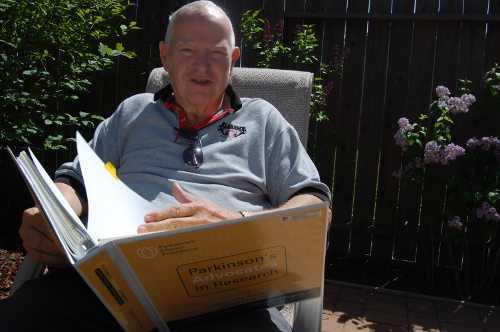
LAKEPORT, Calif. – Phil Myers, a Lakeport resident, carried the recommendation of Dr. Jay Nutt, a world-leading neurologist in Parkinson’s disease research, into his membership in the Parkinson’s Disease Foundation.
Based on what can be immediately surmised it was because Myers has an upbeat personality, excellent communications skills, a good comprehension of the disease … and Parkinson’s.
The recommendation by Dr. Nutt, who is associated with the Oregon Health and Science University, was proffered two years ago in the wake of the death of Myers’ wife, Jackie.
Jackie Myers was the victim of a very rare Parkinson’s-like condition referred to as PSP – progressive supranuclear palsy.
“We went to Oregon because other neurologists – including the Mayo Clinic – could not diagnose it,” said Phil Myers. “It’s like Parkinson’s, but it’s not. It usually takes people within six to eight years. Dr. Nutt diagnosed it in five minutes.”
The Oregon doctor apparently also saw something in Phil Myers that could turn the man’s tragedy into something far more positive.
“He felt that I was the kind of person who could work with individuals with Parkinson’s,” recalled Myers, who, at age 70, is a retired electrical engineer. “He put the recommendation in (to the PDF) and I was accepted and went to Chicago for a few days of training.”
Among Myers’ most important functions is to encourage people with Parkinson’s to participate in research.
“To do that well you have to know a lot about Parkinson’s,” he said.
Myers obviously does. Last month in Oregon he addressed the issue of clinical trials and why people with Parkinson’s should participate in a 20-minute turn at the rostrum of a Oregon Health and Science University symposium attended by 126 people.
Presently Myers is partnered with two other men, Bill Biggs and Charlie Lunt, in an effort to establish a Parkinson’s support group in Lake County.
“My job,” said Myers, “is to make sure that the patients and people with Parkinson’s hear about the research. So I think there is plenty of need for us to have a Parkinson’s support group, let whoever wants to come to it come and we’ll talk about the issues and what the different treatments are when you have Parkinson’s you feel a bit alone.”
One of the functions of the group sessions would be to help Parkinson’s victims get over the feeling of being so alone.
To ensure that Myers’ message is interpreted the way he intends, herewith is the text of an email he created.
“If you have Parkinson’s disease and would like to talk with others with the disease you may want to participate in a Parkinson’s Support Group. We would discuss symptoms, current treatments, ongoing research and helpful hints. If you are interested please contact either Bill Biggs at 707-279-8183 (
Nationwide, it is estimated that a million Americans have Parkinson’s disease.
If anyone wants to dig deeper into research about Parkinson’s, Myers recommends contacting UCSF “which has a very good Parkinson’s center.”
To get more Parkinson’s patients to participate in clinical trials what needs to be done, he said, is to educate them to what the trials are all about and why they should be involved.
“ … And I think I participate better with people as opposed to have a doctor telling them this,” he said.
“The reasons people are reluctant to get involved in clinical trials are multiple,” Myers added. “One reason is that half of them are going to get the placebo and half are going to get the real drug. ‘What if I get the placebo? It will be a waste of time,’ they’ll say.
“Another reason is maybe they don’t even hear about the research because the doctor who has been treating them doesn’t want to get them involved with other doctors and maybe take them away as a patient. It’s the money angle. I hate it that they’re correct and a lot of that is happening,” he said.
If group sessions for people with Parkinson’s come to pass in Lake County, there is indeed much to talk about. One topic, the mortality rate.
“Very few people die from Parkinson’s,” said Myers. “They catch pneumonia or they fall and hit their heads. The disease causes a slowness in you but doesn’t (directly) cause death.”
The abiding concern of research into what causes Parkinson’s will continue to be talked about. Most often mentioned are the preponderance of head injuries, with Muhammad Ali as a prototype, but no clear-cut relationship exists.
A chemical cause also is being seriously studied. Extensive use of insecticides, defoliants and other sprays and a higher incidence of Parkinson’s has caused the agricultural Central California area to come under the microscope. But again, so far there’s nothing substantial to clearly make that link.
“There are several questions that are unanswered,” said Myers. “What is the best treatment? How do I evaluate the different treatments and decide which one to deal with? We need to get together once a month to talk about all this.”
Myers is optimistic that within the next decade a treatment for Parkinson’s will emerge that will stop the advancement of the disease, although not one to prevent its occurrence.
As to symptoms of his own Parkinson’s, he raises a slightly trembling right hand. Come what may, Myers is committed to a positive disposition.
Will his symptoms increase?
“Probably,” he replied without changing expression. “I may lose my ability to walk. That’s why I’m going out and talking to people now.”
So how can he remain so outwardly calm?
“Why not?” he asked. “Life is precious. It’s a gift. Enjoy it. There are bumps in the road, but a positive attitude can do a lot for you.”
Email John Lindblom at
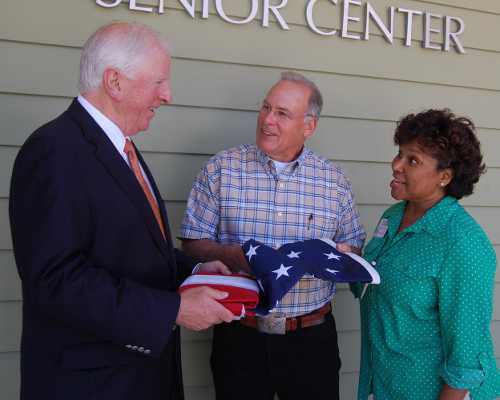
MIDDLETOWN, Calif. – During a visit to Middletown last Wednesday, Congressman Mike Thompson stopped by to see the new Middletown Senior Center and Library.
The new facility had its grand opening last month. It’s located at 21256 Washington St.
Thompson said it’s a beautiful building.
He also suggested that bringing the library and senior center together pays special dividends because seniors can interact with children and children can interact with seniors.
Thompson also presented a US flag for the building to Supervisor Jim Comstock and Voris Brumfield.
LAKE COUNTY, Calif. – A new group of dogs of various breeds and sizes is available for adoption this week at Lake County Animal Care and Control.
Big dogs, little dogs, medium-sized dogs, most spayed or neutered, are ready to join your family.
Dogs that are adopted from Lake County Animal Care and Control are either neutered or spayed, microchipped and, if old enough, given a rabies shot and county license before being released to their new owner. License fees do not apply to residents of the cities of Lakeport or Clearlake.
If you're looking for a new companion, visit the shelter. There are many great pets hoping you'll choose them.
The following dogs at the Lake County Animal Care and Control shelter have been cleared for adoption (additional dogs on the animal control Web site not listed are still “on hold”).
In addition to the animals featured here, all adoptable animals in Lake County can be seen here: http://bit.ly/Z6xHMb .
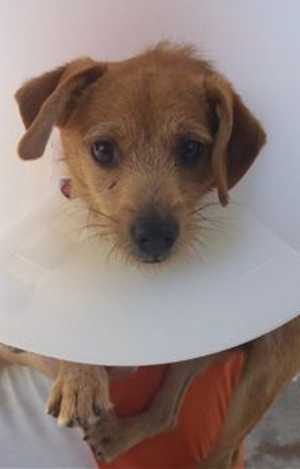
Chihuahua-wirehaired terrier mix
This Chihuahua-wirehaired terrier mix is 7 months old.
He weighs nearly 10 pounds, has a long wirey coat and floppy ears, and has been neutered.
Find him in kennel No. 3a, ID No. 36211.
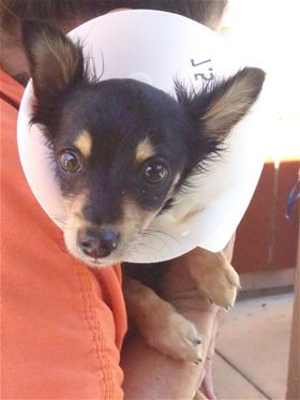
Chihuahua mix
This male Chihuahua mix is 2 years old.
He has a long black and tan coat, weighs nearly 5 pounds and has been neutered.
He’s in kennel No. 3b, ID No. 36212.
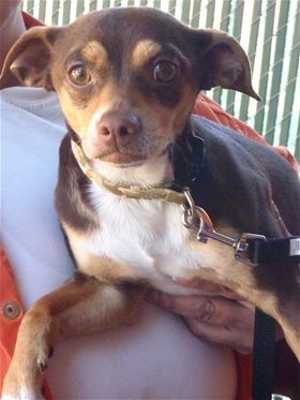
Chihuahua-terrier mix
This male Chihuahua-terrier mix is 1 year old.
He weighs almost 14 pounds, has a short tricolor coat and has been neutered.
Find him in kennel No. 4, ID No. 36213.
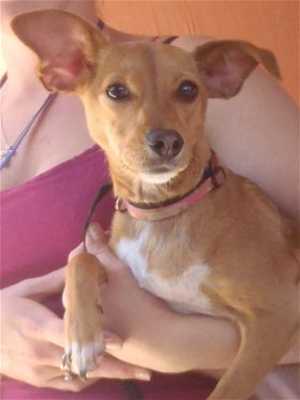
‘Percy’
“Percy” is a 9-month-old female Pomeranian-dachshund mix.
She has a short tan and white coat, weighs 11 pounds and has been spayed.
She’s in kennel No. 4, ID No. 36229.
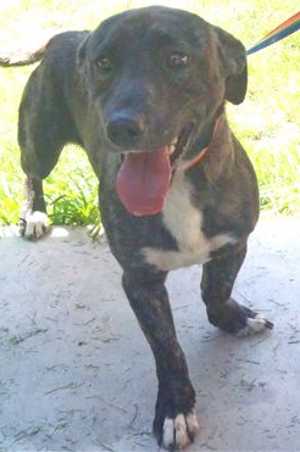
Basset hound-pit bull terrier mix
This male basset hound-pit bull terrier mix is 4 years old.
He has a short brown brindle coat and weighs 40 pounds. It was not reported if he had been neutered.
Visit with him in kennel No. 10, ID No. 36262.
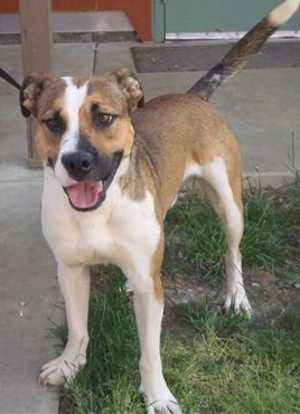
Pit bull terrier-hound
This male pit bull terrier-hound is 2 years old.
He has a short tricolor coat, weighs 45 pounds and has not yet been spayed.
Visit with him in kennel No. 11, ID No. 36261.
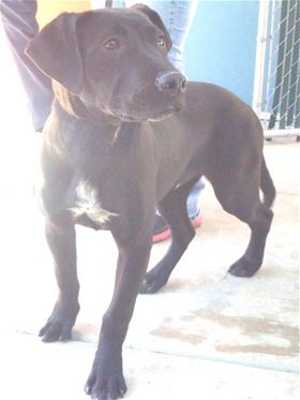
Labrador Retriever-border collie mix
This male Labrador Retriever-border collie mix is 9 months old.
He has a short black coat and weighs nearly 54 pounds. It was not reported if he had been neutered.
He’s in kennel No. 12a, ID No. 36259.
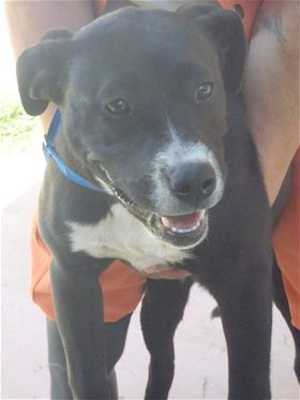
Labrador Retriever-border collie mix
This female Labrador Retriever-border collie mix is 9 months old.
She has a short black and white coat and weighs almost 37 pounds. It was not reported if she had been spayed.
She’s in kennel No. 12b, ID No. 36260.
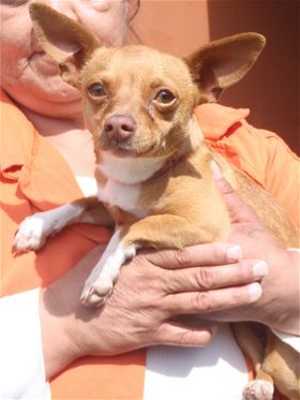
Female Chihuahua mix
This female Chihuahua mix is 2 years old.
She has a short tan and brown coat, weighs 7 pounds, and has been spayed.
She’s in kennel No. 18, ID No. 35907.
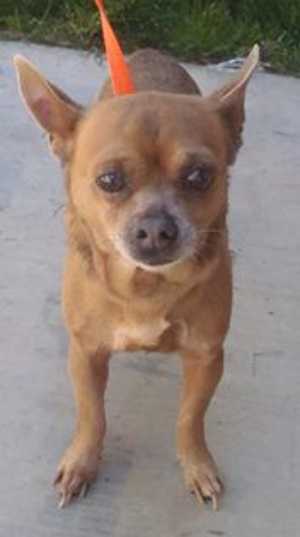
Male Chihuahua mix
This male Chihuahua mix is 7 years old.
He has a short tan coat, weighs 10 pounds and has been neutered.
Find him in kennel No. 18, ID No. 36150.
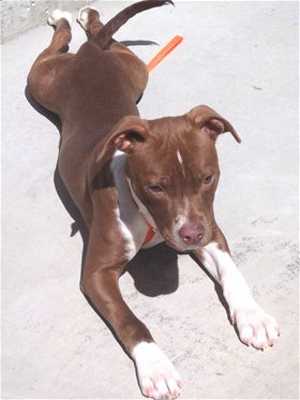
Pit bull terrier mix
This female pit bull terrier mix is 6 months old.
She has a short brown and white coat, has gold eyes, weighs 25 pounds and has been spayed.
She’s in kennel No. 19, ID No. 35880.
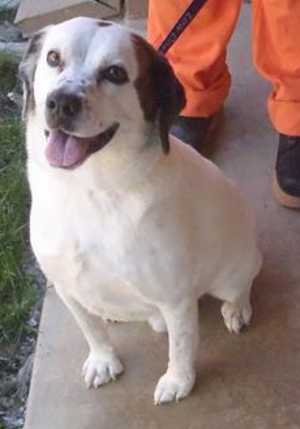
Beagle-Australian Shepherd mix
This male beagle-Australian Shepherd mix is 7 years old.
He has a short brown and white coat, weighs 47 pounds, has a docked tail and has been neutered.
He’s in kennel No. 21, ID No. 36111.
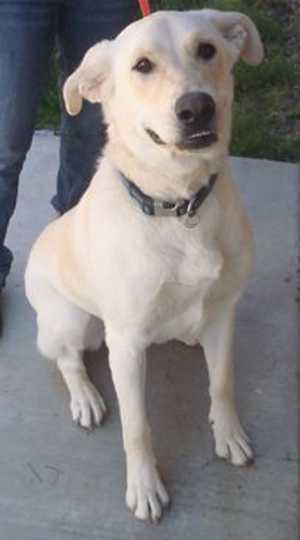
Labrador Retriever mix
This male Labrador Retriever is 9 months old.
He weighs 86 pounds, has a short yellow coat and has been neutered.
He’s in kennel No. 32, ID No. 36131.
Please note: Dogs listed at the county shelter's Web page that are said to be “on hold” are not yet cleared for adoption.
To fill out an adoption application online visit http://www.co.lake.ca.us/Government/Directory/Animal_Care_And_Control/Adopt/Dog___Cat_Adoption_Application.htm .
Lake County Animal Care and Control is located at 4949 Helbush in Lakeport, next to the Hill Road Correctional Facility.
Office hours are Monday through Friday, 8 a.m. to 5 p.m., and 1 p.m. to 3 p.m., Saturday. The shelter is open from 10:30 a.m. to 4:30 p.m. Monday through Friday and on Saturday from 1 p.m. to 3 p.m.
Visit the shelter online at http://www.co.lake.ca.us/Government/Directory/Animal_Care_And_Control.htm .
For more information call Lake County Animal Care and Control at 707-263-0278.
Email Elizabeth Larson at

NASA’s Cassini spacecraft has provided scientists the first close-up, visible-light views of a behemoth hurricane swirling around Saturn’s north pole.
In high-resolution pictures and video, scientists see the hurricane’s eye is about 1,250 miles wide, 20 times larger than the average hurricane eye on Earth.
Thin, bright clouds at the outer edge of the hurricane are traveling 330 miles per hour. The hurricane swirls inside a large, mysterious, six-sided weather pattern known as the hexagon.
“We did a double take when we saw this vortex because it looks so much like a hurricane on Earth,” said Andrew Ingersoll, a Cassini imaging team member at the California Institute of Technology in Pasadena. “But there it is at Saturn, on a much larger scale, and it is somehow getting by on the small amounts of water vapor in Saturn’s hydrogen atmosphere.”
Scientists will be studying the hurricane to gain insight into hurricanes on Earth, which feed off warm ocean water.
Although there is no body of water close to these clouds high in Saturn’s atmosphere, learning how these Saturnian storms use water vapor could tell scientists more about how terrestrial hurricanes are generated and sustained.
Both a terrestrial hurricane and Saturn’s north polar vortex have a central eye with no clouds or very low clouds. Other similar features include high clouds forming an eye wall, other high clouds spiraling around the eye, and a counter-clockwise spin in the northern hemisphere.
A major difference between the hurricanes is that the one on Saturn is much bigger than its counterparts on Earth and spins surprisingly fast.
At Saturn, the wind in the eye wall blows more than four times faster than hurricane-force winds on Earth. Unlike terrestrial hurricanes, which tend to move, the Saturnian hurricane is locked onto the planet’s north pole.
On Earth, hurricanes tend to drift northward because of the forces acting on the fast swirls of wind as the planet rotates. The one on Saturn does not drift and is already as far north as it can be.
“The polar hurricane has nowhere else to go, and that’s likely why it’s stuck at the pole,” said Kunio Sayanagi, a Cassini imaging team associate at Hampton University in Hampton, Va.
Scientists believe the massive storm has been churning for years. When Cassini arrived in the Saturn system in 2004, Saturn’s north pole was dark because the planet was in the middle of its north polar winter.
During that time, the Cassini spacecraft’s composite infrared spectrometer and visual and infrared mapping spectrometer detected a great vortex, but a visible-light view had to wait for the passing of the equinox in August 2009. Only then did sunlight begin flooding Saturn’s northern hemisphere.
The view required a change in the angle of Cassini’s orbits around Saturn so the spacecraft could see the poles.
“Such a stunning and mesmerizing view of the hurricane-like storm at the north pole is only possible because Cassini is on a sportier course, with orbits tilted to loop the spacecraft above and below Saturn’s equatorial plane,” said Scott Edgington, Cassini deputy project scientist at NASA’s Jet Propulsion Laboratory in Pasadena, Calif. “You cannot see the polar regions very well from an equatorial orbit. Observing the planet from different vantage points reveals more about the cloud layers that cover the entirety of the planet.”
Cassini changes its orbital inclination for such an observing campaign only once every few years. Because the spacecraft uses flybys of Saturn’s moon Titan to change the angle of its orbit, the inclined trajectories require attentive oversight from navigators.
The path requires careful planning years in advance and sticking very precisely to the planned itinerary to ensure enough propellant is available for the spacecraft to reach future planned orbits and encounters.
For more information about Cassini and its mission, visit: http://www.nasa.gov/cassini and http://saturn.jpl.nasa.gov .
Dr. Tony Phillips works for the National Aeronautics and Space Administration.
A significant portion of wealth transfers are lifetime transfers from parents to their children (or grandchildren) while the parents are still alive.
Let us examine why and how such transfers take place and what it means for those involved.
Often due to their immediate life circumstances adult children ask for a portion of their anticipated inheritance from their parents while they are still alive.
The children may need money to make a down payment on a home, to start a business, or to pay off their existing creditors.
Sometimes, parents agree and decide to help their children. Such help will either come as a loan or as a gift to the child. Each approach entails different income tax, estate planning, and future Medi-Cal eligibility outcomes.
For a loan to be respected for income tax purposes commercially reasonable interest must be paid. Otherwise, especially with intra family loans, the IRS may impose a reasonable interest rate or else find that a gift was made of the foregone interest not charged.
The interest paid (or imputed) is ordinary income to the parent/lender for income tax reporting purposes.
Depending on the purpose of the loan, the interest may or may not be a deductible expense on the child's income tax return.
Other issues raised by parental loans are whether they are secured by deeds of trusts against real property owned by the children (in case of default) and whether any unpaid balance will be forgiven at the parent's death or else be deducted from the recipient's share of the parent's estate.
Any assets, including money, transferred as a gift will be considered should the parents later-on apply for Medi-Cal within Medi-Cal's look period.
Medi-Cal's present 30-month look back period will soon double to 60 months. Parents may not realize that their gifts to their children can later result in a period of denial of eligibility for Medi-Cal benefits down the road, such as when the parents go into a skilled nursing home.
Next, lifetime gifts and unpaid loans are factors to consider when doing one's estate planning.
For those parents who wish to treat all children equally, as is often the case, it will only make sense that any substantial lifetime gifts later count as advance distributions of inheritances when dividing the parent's estate. Otherwise, an equal division of what remains at death means that those children who received more gifts during life are favored in end.
This unevenness is entirely appropriate if that is what the parents choose. What is unfortunate is if ambiguity over the parent’s intentions exists because then the children may quarrel amongst themselves over whether or not the lifetime gifts should count as advances towards the gift recipient's share of the parent's estate.
To be sure, any existing divisions (faults) amongst the surviving children will get played out in such disputes after the parents die.
To resolve the outcome of such disputes, it may be helpful if the parents' estate plan expressly addresses the issue of whether lifetime gifts count as advances of inheritance.
The foregoing discussion shows why estate planning must consider the whole picture of the parents' lifetime relationship with each child.
What is not expressly addressed by the parents in life may later create problems amongst the surviving children who see things from their own vantage points. All the more reason to tie up any loose ends.
Dennis A. Fordham, attorney (LL.M. tax studies), is a State Bar Certified Specialist in Estate Planning, Probate and Trust Law. His office is at 55 First St., Lakeport, California. Dennis can be reached by e-mail at