 How to resolve AdBlock issue?
News
LAKE COUNTY, Calif. – Registrations are currently being accepted for the 18th annual Sponsoring Survivorship Walk Run on Saturday, Oct. 5, which benefits men and women of Lake County in the battle against breast cancer.
Anyone who would like to participate in this event can do so by obtaining a registration form at the event starting location, the downtown Lakeport Bank of America, 500 North Main St., between 7 a.m. and 8:30 a.m. Starting time is 9 a.m.
The event registration fee is $20. Donations from entrants and non-entrants will also be accepted. All participants will receive a Sponsoring Survivorship lanyard.
Registrants have the choice of participating in a 2K walk, a 5K walk, a 5K run and a 10K run. The walk run is not a timed event.
A spaghetti feed with a raffle and prizes at the Lakeport Senior Activity Center, 527 Konocti Ave. will precede the event on Friday night, Oct. 4, with tickets priced at $10 for adults and $3 for children under 12 years of age.
All proceeds of the feed will also go to Sponsoring Survivorship, a nonprofit serving only Lake County.
For more information about the walk run call Julie Kelley at 707-263-1094 or Shirley Crawford, 707-279-1364.
Additional information on the spaghetti feed can be obtained by calling the Lakeport Senior Activity Center at 707-263-4218.
Visit the Sponsoring Survivorship Web site at www.sponsoringsurvivorship.com .
LAKE COUNTY, Calif. – It's a full house of kittens as fall gets under way at Lake County Animal Care and Control.
Tuxedos, tabbies and a tortie are among the wide variety of colors and varieties, with the cats ranging in age from 8 weeks to 2 years.
In addition to spaying or neutering, cats that are adopted from Lake County Animal Care and Control are microchipped before being released to their new owner. License fees do not apply to residents of the cities of Lakeport or Clearlake.
If you're looking for a new companion, visit the shelter. There are many great pets there, hoping you'll choose them.
The following cats at the Lake County Animal Care and Control shelter have been cleared for adoption (other cats pictured on the animal control Web site that are not listed here are still “on hold”).

Female brown tabby
This female brown tabby is 2 years old.
She weighs 7 pounds, has a short coat and and been spayed.
She's in cat room kennel No. 35, ID No. 38013.

Brown tabby
This brown tabby is of undetermined age and gender.
It has a short coat and a bobbed tail.
The cat is located in cat room kennel No. 38, ID No. 37762.

'Mom'
“Mom” is a 2-year-old domestic long hair mix.
She has green eyes, is of medium size and has not yet been spayed.
She's in cat room kennel No. 44, ID No. 37995.

Male brown tabby
This male brown tabby is 5 months old.
He has a short coat and has not yet been neutered.
He's in cat room kennel No. 46a, ID No. 37986.

Brown and white male tabby
This brown and white male tabby is 5 months old.
He has a short coat and has not yet been neutered.
He's in cat room kennel No. 46b, ID No. 37985.

Female brown tabby
This female brown tabby is 1 year old.
She has a short coat and has not yet been spayed.
She's in cat room kennel No. 59, ID No. 37984.

Female brown tabby
This female brown tabby is 5 months old.
She has a short coat and it was not reported if she has yet been spayed.
She's in cat room kennel No. 77, ID No. 37987.

Orange tabby
This male orange tabby is 13 weeks old.
He weighs 2 pounds, has blue eyes and has been neutered.
Find him in cat room kennel No. 81a, ID No. 37441.

Domestic medium hair mix kitten
This female domestic medium hair mix kitten is 15 weeks old.
She has a white coat and gold eyes, and has not yet been spayed.
She's in cat room kennel No. 83a, ID No. 37992.

Female tuxedo kitten
This black and white tuxedo kitten is 8 weeks old.
She has green eyes and has not yet been altered.
Find her in cat room kennel No. 83a, ID No. 37996.

Female tuxedo kitten
This black and white tuxedo kitten is 8 weeks old.
She has gold eyes and has not yet been altered.
Find her in cat room kennel No. 83b, ID No. 37993.

Calico kitten
This female kitten is 15 weeks old.
She has torbie markings and a medium coat, and has not yet been spayed.
She's in cat room kennel No. 83c, ID No. 37994.

Male tuxedo kitten
This black and white tuxedo kitten is 8 weeks old.
He has green eyes and has not yet been altered.
Find her in cat room kennel No. 83d, ID No. 37998.

Female tuxedo kitten
This black and white tuxedo kitten is 8 weeks old.
She has green eyes and has not yet been altered.
Find her in cat room kennel No. 83e, ID No. 37997.

Domestic short hair mix
This female domestic short hair mix is of undetermined age.
She has a gray and white coat and is large in size. It was not reported if she had been altered.
Find her in cat room kennel No. 99, ID No. 37960.
Adoptable cats also can be seen at http://www.co.lake.ca.us/Government/Directory/Animal_Care_And_Control/Adopt/Cats_and_Kittens.htm or at www.petfinder.com .
Please note: Cats listed at the shelter's Web page that are said to be “on hold” are not yet cleared for adoption.
To fill out an adoption application online visit http://www.co.lake.ca.us/Government/Directory/Animal_Care_And_Control/Adopt/Dog___Cat_Adoption_Application.htm .
Lake County Animal Care and Control is located at 4949 Helbush in Lakeport, next to the Hill Road Correctional Facility.
Office hours are Monday through Friday, 8 a.m. to 5 p.m., and 1 p.m. to 3 p.m., Saturday. The shelter is open from 10:30 a.m. to 4:30 p.m. Monday through Friday and on Saturday from 1 p.m. to 3 p.m.
Visit the shelter online at http://www.co.lake.ca.us/Government/Directory/Animal_Care_And_Control.htm .
For more information call Lake County Animal Care and Control at 707-263-0278.
Email Elizabeth Larson at
LAKE COUNTY, Calif. – The 2013-14 Lake County Grand Jury is seeking additional alternates for the current year.
This year's group of grand jurors was sworn in on July 10.
When the grand jury year begins, it is with 19 sworn jurors who will serve from July 1 through June 30. They volunteer an average 15 to 20 hours a week, according to court officials.
There also are alternates, but they do not serve or attend meetings until there is an opening on the panel of 19.
During the year, the grand jury always see some attrition with the panel of 19, which court officials said is normal because sometimes issues come up with families or which dictate they need to devote their time elsewhere.
When the panel is reduced below the 19, alternates are needed to replace those empty seats.
Since this year's panel has been sworn in, however, there has been an unusual turnover with a number of jurors leaving the panel, the court reported.
Currently, there is a full panel of 19, but there are no alternates “waiting in the wings.”
Because it's a long time until next June 30 and the odds are good that more openings will occur on the grand jury, the court has begun recruiting again.
For more information, call the Lake County Superior Court at 707-263-2282, visit http://www.lake.courts.ca.gov or use the form below to apply.
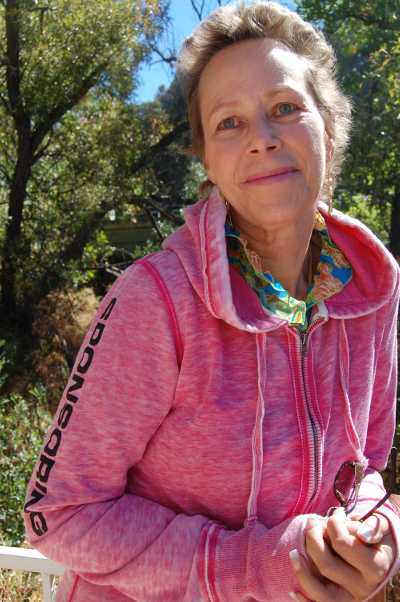
LAKE COUNTY, Calif. – It was 15 months ago – July 12, 2012, to be exact – when Christina Basor discovered the golf ball-sized lump on her breast.
That same month she was diagnosed at the UCSF Breast Cancer Center as having her2neu+, which to the rank and file may sound like the composition of a bomb.
To Basor and her husband, Gary, a Lakeport Police officer, the diagnosis was a bomb, shattering in its effect.
The clinical name for the kind of cancer she was found to have is human epileptic growth receptor. Its prognosis: life-threatening. Among the 110 types of cancer, it's one of the deadliest, she learned.
It was particularly difficult for Basor to accept because of her vibrant persona which she attributes to a healthy all-natural, vegetarian – and now vegan – diet.
A spritely 60-year-old who could pass for 20 years younger, she still looked fetching in a bikini during the Hawaiian vacation that she and Gary had recently returned from when she made her fateful discovery.
“I was sure that my name was on the top of the list of people who were never going to get cancer,” she said.
The morning after her life-changing discovery Basor consulted her doctor, who suggested maybe the lump was just a cyst, but she would definitely need to undergo a mammogram.
She elected to go to UCSF because, she said, of its Nobel prize-winning Carol Franc Buck Breast Care Center.
“I knew from the size of the lump that I was going to need a team of people that included the best doctors in the world,” she said.
“They did the mammogram and then sent me down to get a fine needle biopsy and had me wait,” Basor recalled. “When they came back they said 'You have cancer' that 45 rpm record I had turning in my head all of a sudden speeded up to about 150. I called Gary and we cried together.”
Much has happened in the interim between then and now, almost all of it positive. Although she still has treatments every three weeks, Basor said she is 100 percent cancer-free.
As a lifelong devotee to herbs and homeopathy, she was convinced there had to be a natural treatment for her illness and read 20 books on natural healing in her search for it. Then she poured over volumes of cancer books and combed the Internet for all she could find on these subjects.
She is also dedicated to helping other women who have been recently diagnosed with having breast cancer through Sponsoring Survivorship, an 18-year-old Lake County-based nonprofit exclusively serving women who are afflicted with breast cancer.
The organization was created by Julie Kelley, who works in the medical field in Kelseyville and is a marathoner. Her organization has aided more than 60 women with breast cancer.
Basor has been focusing her energy on aiding the women who don't qualify for financial aid. Much of her time has been devoted to Sponsoring Survivorship's 18th annual Walk Run next Saturday, Oct. 5, and a spaghetti feed on Friday night, Oct. 4, both of which are fundraisers.
Her commitment to Sponsoring Survivorship stems from its abiding support for her, ranging from weekly post-surgery morale-building phone calls to medical co-payment of the medical bills confronting she and Gary. It is the only agency in the county that involves itself to that extent.
Basor implored Kelley to appoint her to its board of directors in order to pay back all it has done for her.
How important is Sponsoring Survivorship's support to her recovery?
“Oh my gosh! It was everything to us. You got somebody to talk to, somebody who cares,” she said.
“Julie called me one Saturday and asked how I was doing.” Pretty good, said Basor, but she and Gary were swimming in medical bills.
“So,” she told Kelley, “we have resigned ourselves that we're going to be paying these bills the rest of our lives. But Julie said 'We're going to pay for that.'
“I burst out bawling and had to give the phone to Gary because I couldn't talk anymore. When I heard him hang up the phone I went into his office. He's the strongest man I know, but he had tears running down his face and said, 'We can't take that money. There are other people worse off than we are.' I said we're going accept it, but we're going to pay it back and he said, 'OK, deal.'”
The medical bill issue went much deeper for the Basors. Gary's mother succumbed to pancreatic cancer. When his father died 12 years later, Gary learned he was still paying his mother's medical bills.
“I realized I was doing the same thing to my husband,” Christina Basor said.
She looks back on her decision to go to UCSF for her April 2 surgery as critical. The key to her treatment was a core biopsy immediately after her cancer was discovered, which is a “standard of care” that applies to most women who are diagnosed with breast cancer.
“I first told the surgeon to cut my breasts off,” Basor said. “But I had an aggressive type of cancer that can migrate to your brain, your bones, your liver and your spine. You can die from that, so you don't want it spreading. They told me if they cut the breasts off the cancer would still be there and would grow on my chest wall. So they don't recommend cutting the breasts off.”
But the cancer's effect varies from woman to woman and the course of treatment after a cancerous lump is detected is a matter of choice.
Basor's tumor was removed on April 2, She received a breast lift on both sides on the same day. Then she underwent a program of chemotherapy to shrink the lump on her breast.
Her followup treatments now are to ascertain that the cancer “doesn't come back and bite me.”
Basor praised the way the surgeon and plastic surgeon worked in tandem “to make me look beautiful,” she quipped.
The surgeon was nationally known Dr. Laura Esserman, director of the UCSF Carol Franc Buck Breast Care Center at the Mount Zion campus, and Dr. Robert Foster, chief of plastic surgery and director of the breast reconstruction service at Carol Franc Buck, was the plastic surgeon.
“I came out better than when I started,” said Basor with a laugh. “I tell people that was the frosting on my mud pie.”
For more about Sponsoring Survivorship, visit http://www.sponsoringsurvivorship.com/index.html .
Email John Lindblom at
LAKEPORT, Calif. – Seaplanes from around the Western United States are visiting Lake County this weekend for the annual Clear Lake Splash-in.
The event continues through Sunday afternoon at the Natural High School property in the 800 block of N. Main Street in Lakeport.
In the video above by John Jensen of Lake County News, check out highlights from the Splash-in on Saturday, including shots of the planes in action, and comments from visitors and pilots talking about the event.
Anticipation is building as Comet ISON approaches the sun for a close encounter on Thanksgiving Day, Nov. 28.
No one knows if the blast of solar heating ISON receives will turn it into one of the finest comets in years – or destroy the icy visitor from the outer solar system.
Astronomer Carey Lisse, the head of NASA's Comet ISON Observing Campaign, hopes that “every telescope on Earth will be trained on the comet in October and November.”
He may get his wish.
As September comes to an end, amateur astronomers around the world are already monitoring the comet.
“Comet ISON is approaching Mars in the pre-dawn sky,” explained Lisse. “It is invisible to the naked eye, but within reach of backyard telescopes.”
“I photographed Comet ISON on Sept. 15 using my 4-inch refractor,” reported astrophotographer Pete Lawrence of Selsey UK. “The comet's tail is nicely on view even through this relatively small instrument.”
In Aquadilla, Puerto Rico, astronomer Efrain Morales Rivera saw the comet on Sept. 14 “rising above the canopy of the rain forest just minutes before sunrise. I used a 12-inch telescope,” he said.
In mid-September, the approaching comet was glowing like a star of 14th magnitude. That's dimmer than some forecasters expected.
“Certainly we would love it to be a couple of magnitudes brighter right now,” said researcher Karl Battams of the Naval Research Lab in Washington, D.C., “but it's doing just fine. I'd say it's still on course to become a very eye-catching object.”
Battams is especially optimistic about NASA's twin STEREO probes and the NASA/ESA Solar and Heliospheric Observatory.
Those three spacecraft are equipped with coronagraphs – devices which cover the blinding disk of the sun to produce an artificial eclipse.
The coronagraphs will be able to see ISON at its brightest when it is making its closest approach to the sun on Thanksgiving.
If ISON survives its brush with solar fire, sky watchers on Earth might get an eye-full as well.
Based on the latest images, internationally known comet expert John Bortle said “ISON appears likely to survive the in-bound leg of its journey all the way to the Sun. It will probably brighten more slowly than all the early hype led the public to believe. Nevertheless, Comet ISON should very briefly become exceptionally bright, at least rivaling the planet Venus in the hours preceding its closest approach to the sun.”
After Thanksgiving, Comet ISON will emerge from the sun's glare well-positioned for observers in the northern hemisphere.
The comet's tail will likely be visible to the naked-eye in both the morning and evening sky throughout December 2013.
A useful point of comparison is Comet Lovejoy, which put on a grand show after it brushed the sun in 2011.
People in the southern hemisphere still remember the comet's tail stretching halfway across the night sky.
Judging from the brightness of Comet ISON, Matthew Knight of the Lowell Observatory believes that “ISON is likely a few times bigger than Lovejoy was, so I am optimistic that Comet ISON will become an impressive sungrazer.”
Because this is Comet ISON's first visit to the inner solar system, no one can say for sure what will happen. Comets are unpredictable, capable of fizzling at the last minute even after months of promising activity.
Battams, who has been “burned” before by sungrazing comets, cautions that “at no point in the next couple of months are we going to know if Comet ISON will survive or not until we actually observe it with our own eyes.”
“Observations from amateur astronomers are really valuable pieces of the puzzle for us,” adds Battams. “They help us to see how the comet is evolving.”
The NASA Comet ISON Observing Campaign aims to get as many eyes on ISON as possible. To learn how you can help, visit http://isoncampaign.org .
Dr. Tony Phillips works for the National Aeronautics and Space Administration.