 How to resolve AdBlock issue?
News
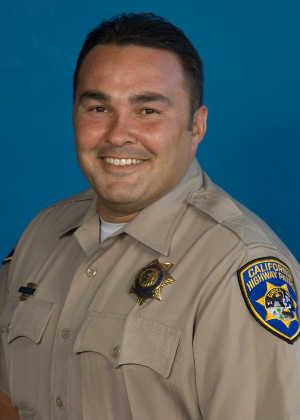
NORTHERN CALIFORNIA – Sworn to serve and protect the people of California, officers with the California Highway Patrol vow to “assist those in peril or distress, and, if necessary, lay down their [my] life rather than swerve from the path of duty.”
The courageous actions of two CHP officers recently captured the attention of the California State Firefighters’ Association (CSFA).
The actions of CHP Officer Brian Henderson, a helicopter pilot out of Northern Division, and Officer Adam Garcia from CHP’s Clear Lake Area office will be honored with an Award of Valor from CSFA. These awards are presented to individuals who place their own life in jeopardy to save that of another.
Officers Henderson and Garcia displayed exceptional judgment and ability to maintain their composure during two separate critical incidents.
“The actions of these two men epitomize bravery and heroism,” said CHP Commissioner Joe Farrow. “When lives were on the line, including their own, they stayed true to the CHP’s mission of saving lives. Their heroic behavior exemplifies the highest level of service.”
This year's awards ceremony will be held at the Holiday Inn Downtown Plaza, 300 J St., in Sacramento on Saturday, Oct. 5.
The Award of Valor from the CFSA is being bestowed upon the officers based on the following incidents.
On July 5, 2012, Officer Henderson and Officer Tony Stanley were conducting a remote rescue operation of an injured hiker at Big Bear Lake in the Trinity Alps Wilderness. Upon exiting the helicopter, Officer Stanley was struck in the head by the helicopter rotor.
Officer Henderson summoned the aid of the injured hiker, Jeremy Kilburn, who was also a U.S. Air Force critical care physician.
Recognizing the gravity of Officer Stanley’s condition, Officer Henderson inspected the blade and deemed the helicopter airworthy, configured it for medical evacuation, and positioned Kilburn and camp counselor, Elizabeth Fitch, on board to provide ongoing medical attention to Officer Stanley during the flight to the hospital.
Officer Henderson demonstrated judgment, swift action, and composure throughout this critical incident that was exemplary.
On Jan. 27, 2013, Dow Walton was driving his pickup truck northbound on State Route 29. The pickup was also occupied by two other passengers, Regina Walton and Andy Hopper.
Walton attempted to pass another vehicle, but slid sideways off the road’s edge and careened end-over-end before landing in a creek bed. Officer Garcia was on patrol a short distance away and responded to the collision.
When Officer Garcia arrived on scene, the engine compartment was just starting to ignite and smolder. Hopper was standing outside of the vehicle; however, the Waltons were still inside.
The engine compartment quickly became fully engulfed in flames and the heat was intense. The driver and passenger doors were jammed shut, which prevented immediate extrication.
Despite the intense heat, Officer Garcia managed to pull both passengers through the driver’s window and drag them to a safe location.
Officer Garcia was treated at the scene by paramedics for smoke inhalation, back strain and exhaustion.
The CSFA officially established its annual Awards of Valor in 1967 to provide recognition for those persons throughout California who, during the annual period of eligibility, distinguished themselves by performing singular acts of heroism.
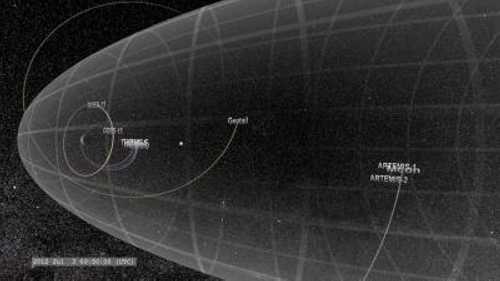
Scientists have provided the most comprehensive details yet of the journey energy from the sun takes as it hurtles around Earth's magnetosphere.
Understanding the changes energy from the sun undergoes as it travels away and out into space is crucial for scientists to achieve their goal of some day predicting the onset of space weather that creates effects such as the shimmering lights of the aurora or interruptions in radio communications at Earth.
Taking advantage of an unprecedented alignment of eight satellites through the vast magnetic environment that surrounds Earth in space, including NASA's ARTEMIS and THEMIS, scientists now have comprehensive details of the energy's journey through a process that forms the aurora, called a substorm.
Their results, published in the journal Science on Sept. 27, showed that small events unfolding over the course of a millisecond can result in energy flows that last up to half an hour and cover an area 10 times larger than Earth.
“One of the unique features of our research field is that microscopic things can sometimes run the whole show,” said David Sibeck, the project scientist for ARTEMIS and THEMIS at NASA's Goddard Space Flight Center in Greenbelt, Md. “The tiniest causes may have global consequences. That's not typical in terrestrial weather where you don't have to look at a tiny spot on a weather map to understand a whole hurricane.”
Trying to understand how gigantic explosions on the sun can create space weather effects involves tracking energy from the original event all the way to Earth.
It's not unlike keeping tabs on a character in a play with many costume changes, because the energy changes form frequently along its journey: magnetic energy causes eruptions that lead to kinetic energy as particles hurtle away, or thermal energy as the particles heat up. Near Earth, the energy can change through all these various forms once again.
Most of the large and small features of substorms take place largely in the portion of Earth's magnetic environment called the magnetotail.
Earth sits inside a large magnetic bubble called the magnetosphere. As Earth orbits around the sun, the solar wind from the sun streams past the bubble, stretching it outward into a teardrop. The magnetotail is the long point of the teardrop trailing out to more than 1 million miles on the night side of Earth.
The moon orbits Earth much closer, some 240,000 miles away, crossing in and out of the magnetotail.
Tracking how such small events can have large-scale space weather effects requires observatories located throughout the whole system.
To help with this endeavor, in July 2011, two of the five THEMIS (Time History of Events and Macroscale Interactions during Substorms) spacecraft moved into place around the moon for a different vantage point on the magnetotail, through which the moon travels once a month.
NASA renamed these two spacecraft the ARTEMIS mission for Acceleration, Reconnection, Turbulence and Electrodynamics of the Moon's Interaction with the Sun.
Once per year, all the orbits of the THEMIS and ARTEMIS spacecraft line up in the magnetotail together. On the most recent conjunction, in July 2012, a substorm occurred. During the same period, the joint Japan Aerospace Exploration Agency/NASA mission Geotail and the National Oceanic and Atmospheric Administration's GOES 13 and GOES 15 were also in the magnetotail.
With eight spacecraft making observations at once, the scientists had a comprehensive view of how the energy in any given region moved around and transformed into other kinds of energy.
“It's a meticulous accounting job,” said Vassilis Angelopoulos, the principle investigator of ARTEMIS and THEMIS at the University of California in Los Angeles and the first author on the Science paper. “With all these spacecraft measuring what's going on continuously throughout the system, we can track the total energy and see where and when it's converted into different kinds of energy. And the effort paid off handsomely!”
Scientists have observed much of the energy's journey through a substorm before. When the solar wind streams off the sun it can connect with the front of Earth's magnetosphere.
As the two sets of magnetic fields come together, a process called magnetic reconnection turns the energy of the forward-moving solar wind into an explosion that sends particles and magnetic fields moving around the planet to the far side of Earth.
Here, the fields reconnect again creating a burst that turns magnetic energy into acceleration of particles and heating. Just where and how this energy converted to particle movement, however, has been unclear.
The details of what happened next required observations from many spacecraft simultaneously. While the magnetic reconnection event itself happened in a specific place somewhere halfway between Earth and moon's orbit in a region just a couple hundreds of miles across, this is not the main place where the energy was converted.
Regions, labeled as “reconnection fronts” in the paper, surged away from the original reconnection point – one propagated toward Earth and one moved away, past the moon and down the magnetotail.
These fronts are like sheets of current, a wall hurtling in each direction, continuing to convert energy for up to 30 minutes afterward. The energy moving in toward Earth helps to create the aurora and it also funnels into the giant donuts of radiation around Earth called the radiation belts.
“The amount of power being converted is comparable to the electric power generation on Earth from all sources at any moment in time. And it happens over 30 minutes,” said Angelopoulos. “The amount of energy released is equivalent to a 7.1 Richter scale earthquake.”
The fact that this energy can move around so dramatically is not in and of itself surprising. Scientists have certainly previously suggested such things based on computer models.
But it is only with a fleet of spacecraft that scientists can confirm the location and exact nature of the process, not to mention learning something new such as how continuous and long term the energy conversion process is after the initial magnetic reconnection event.
In late 2014, NASA will add a new mission to their Heliophysics fleet. The Magnetospheric Multiscale or MMS mission will put spacecraft directly in the magnetic reconnection areas on both the day- and night-sides of Earth.
“Understanding where to look for the energy conversion, opens up a new window for research,” said Sibeck. “MMS will be focusing on tracking just this kind of observation.”
Work like this lays the groundwork for a full mapping of the transfer of energy from sun to Earth.
Once MMS launches there will be even more opportunities to add observations to the yearly ARTEMIS and THEMIS spacecraft conjunctions along with other space assets in orbit, forming a veritable global space weather station network. These will be able to observe and study the constantly changing solar energy along its journey through Earth's near space environment, in the upcoming solar maximum.
This knowledge is critical for improving future modeling and prediction of space weather fronts as meteorologists do now for weather fronts on Earth.
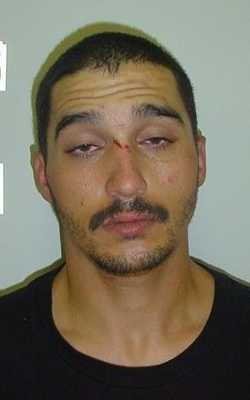
LAKE COUNTY, Calif. – Authorities have arrested a third suspect in the Thursday Lower Lake home invasion and vehicle pursuit that led to one responding deputy being in a head-on collision that killed a Clearlake woman.
Jesse Gilbert Moncivaiz, 28, an unemployed Clearlake man who has previous drug and weapons arrests in his record, was taken into custody Thursday evening, officials said.
Two of Moncivaiz's alleged accomplices – James Robert Conaster, 38, of Clearlake and Lauren Astor Faumuina, 20, of Middletown – were arrested on Thursday morning, as Lake County News has reported.
Lt. Steve Brooks of the Lake County Sheriff's Office said a fourth suspect is still outstanding. A description of that individual was not available.
Moncivaiz, Conaster, Faumuina and the fourth suspect are alleged to have robbed a Lower Lake home at gunpoint on Thursday morning, beating the victim and shooting at him, then fleeing in a pickup, officials said.
One deputy saw the vehicle in the area of Oak Haven and Morgan Valley Road and began a pursuit that led into the city of Clearlake, where the suspects eventually ditched the pickup and fled on foot. Conaster and Faumuina were taken into custody a short time later, according to the sheriff's report.
Another deputy responding to the area would have a head-on collision with a vehicle driven by 26-year-old Gabriela Rivas Garcia of Clearlake in the Manning Flat area between Kits Corner and Diener Drive on Highway 29.
Garcia was killed in the crash, which is under investigation by the California Highway Patrol Multidisciplinary Accident Investigation Team and the Lake County District Attorney's Office, Brooks said. The deputy was seriously injured and flown out of the county.
On Thursday personnel consisting of the Sheriff’s Narcotics Task Force, Lake County Special Weapons and Tactics Team and a Clearlake Police Department K9 unit received information that Moncivaiz was one of the suspects responsible for the robbery, Brooks said.
Brooks said they also received information that Moncivaiz was hiding in a residential complex located in the 8000 block of Lake Street in Lower Lake.
At approximately 6:15 p.m., Moncivaiz was located behind the complex and taken into custody without incident, according to Brooks.
Brooks said Moncivaiz was arrested for robbery, burglary, being armed in the commission of a felony, threatening crime with the intent to terrorize and conspiracy.
Moncivaiz was transported to the Lake County Hill Road Correctional Facility and booked early Friday morning. His bail is currently set at $1 million, according to jail records.
This investigation is ongoing and anyone who may have information regarding this case, or the identity of the one remaining suspect, is encouraged to contact the Lake County Sheriff’s Office at 707-263-2690.
In the last two weeks the Lake County Sheriff’s Office has responded to six robberies, Brooks said. All six of the robberies were centered on the theft of marijuana.
The Lake County Sheriff’s Office expects this trend to continue through the height of the marijuana harvest season, Brooks said.
NORTHERN CALIFORNIA – The crew of Sonoma County Sheriff’s “Henry-One” helicopter took quick action during routine patrol on Thursday to save a windsurfer in Marin County.
Henry-One and its flight crew – consisting of Pilot Paul Bradley and Tactical Flight Officer-Deputy Sheriff Chris Mahoney – frequently assist with rescue and recovery operations around the region.
Lt. Tim Duke of the Sonoma County Sheriff’s Office reported that the helicopter and its crew were on routine air patrol, flying over the Santa Rosa area, on Thursday when at 5:47 p.m. the flight crew overheard a radio transmission from Marin County Fire Dispatch requesting fire and rescue personnel for an ocean rescue near the mouth of Tomales Bay.
Henry-One responded along with the United States Coast Guard and Marin County emergency personnel, according to Duke.
Within eight minutes of the ocean rescue radio transmission, Henry-One arrived on scene and the crew immediately located a distressed windsurfer who was in the water just outside the mouth of Tomales Bay, Duke said. The windsurfer was clinging to his board, intermittently waving his arms, signaling he was in distress.
Duke said Bradley landed the helicopter on the west shore of Tomales Bay and Deputy Mahoney configured the aircraft for a long-line rescue.
In a matter of moments, once the aircraft had been rigged for a rescue, Mahoney attached himself to the bottom of the long-line and Bradley flew him to the distressed windsurfer, Duke said.
Mahoney secured the windsurfer in a rescue device and Bradley flew them – at the bottom of the long-line – to shore at Dillon Beach, where emergency personnel were waiting to assist, according to Duke.
Duke said the entire Henry-One flight crew routinely trains for rescues in the ocean, on cliffs and other remote areas located along the North Coast.
The aircraft and crew members always carry water rescue equipment for incidents such as this, Duke said.
NORTHERN CALIFORNIA – A fire reported in Napa County Thursday night quickly burned hundreds of acres near Lake Berryessa.
The Putah Fire was first reported just after 8:30 p.m. Thursday, according to radio reports.
It is located off of Berryessa Knoxville Road near Lake Berryessa, north of Napa, Cal Fire reported.
Within two hours the fire had burned about 500 acres and was 75 percent contained, with the forward movement stopped, Cal Fire said late Thursday night.
The fire is reported to be threatening structures on several nearby ranches, but the Napa County Sheriff's Office was not calling for evacuations Thursday night, based on Cal Fire's report.
Email Elizabeth Larson at
SACRAMENTO – State Controller John Chiang has updated his public employee compensation Web site with the latest wage and benefit data for Community College employees.
The site address is www.publicpay.ca.gov .
Chiang also released upgraded custom report-building tools that will help users analyze the health and retirement costs associated with public sector positions.
This update covers calendar year 2012.
In August, the site was updated to include state and California State University (CSU) employees for the same time period.
“To have a more effective and responsive government, we must provide Californians with increasing access to the details of how their tax dollars are spent,” said Chiang. “Thanks to the leadership and support of Community Colleges Chancellor Brice Harris, we are able to include the most recent wage and pension data for employees of the largest system of higher education in the world.”
This latest update adds wage and benefit data for 149,342 positions, with approximately $4.3 billion in wages paid during 2012 and $930 million of reported health and retirement costs. Sixty-six districts submitted wages for today's update.
Since the site's launch in 2010, it has registered more than 6.7 million page views online. The controller completed an overhaul of the public website in late 2012, adding additional search, browse and mapping functions.
Those visiting www.publicpay.ca.gov can:
- View compensation levels on map graphics, and search for compensation by region;
- Develop charts, trend-line and trend graphs;
- Quickly see lists of top earners at cities, counties, and other local governments;
- Generate side-by-side comparisons of local government payrolls;
- Create local agency summaries;
- Export custom reports or raw data from the site.
The updates also allow users to create charts, graphs and reports that focus exclusively on health and retirement costs for public positions.
For more information, a series of video tutorials is available to guide users through the new site's interface.