 How to resolve AdBlock issue?
News
LOWER LAKE, Calif. – Earlier this week the Sheriff’s Narcotics Task Force eradicated 5,974 marijuana plants from a parcel of property located in the Lower Lake area earlier this week.
Lt. Steve Brooks said that on May 22 narcotics detectives conducted an overflight mission of the Lower Lake area.
The purpose of these missions is to locate illicit marijuana growing operations within Lake County. During the overflight, detectives located a large-scale growing operation in the area of Morgan Valley Road and Sloan Ranch Road, Brooks said.
On Sunday, narcotics detectives and law enforcement officers from the Bureau of Land Management hiked into the marijuana grow site, where Brooks said they located evidence indicating the grow was being operated by a drug trafficking organization.
Brooks said it appeared that the suspects were not yet living at the site full-time. Detectives located a complex drip irrigation system which utilized timers to automatically water the plants.
It appeared that the suspects were illegally obtaining water from BLM property, according to Brooks. Brooks said detectives located and eradicated 5,974 marijuana plants, which were all approximately 4 feet tall.
They searched the area and were unable to locate any suspects or additional evidence which would assist in their identification. The Sheriff’s Narcotics Task Force can be reached through its anonymous tip line at 707-263-3663.
California’s teen birth rate has continued to decline to a record-low of 25.7 births per every 1,000 females ages 15-19, Dr. Ron Chapman, director of the California Department of Public Health (CDPH) and the state public health officer, announced Tuesday.
The 2012 rate reflects an 8 percent decline from the 2011 rate of 28.0, Chapman said.
“I am very pleased with the positive strides California is making in reducing teen pregnancy,” Chapman said. “By encouraging positive and sensible choices for our young men and women, we can inspire our youth to strive for successful futures.”
Teen birth rates decreased among all racial and ethnic groups between 2000 and 2012. While Hispanic adolescents continue to have the highest birth rate at 38.9 births per 1,000 females ages 15-19, they also had the greatest decline down from a 77.3 in 2000 – a 49.7 percent drop.
From 2000 to 2012, the number of births per 1,000 females ages 15-19 also dropped among African Americans from 59.1 to 30.8, among Whites from 22.3 to 10.2, and among Asians from 15.0 to 5.0.
In Lake County, the teen birth rate from 2010 to 2012 was 38.8, well above the state average, with a rate of 16.6 percent for repeat births to teen mothers, below the state average.
Twelve counties had higher rates during that time period than Lake did, according to the latest data.
The 38.8 percent rate for Lake County is down from the 2008-10 reporting period, when Lake's teen birth rate was 43.4 percent, according to state records.
Delaying childbearing until adulthood can improve both maternal and infant outcomes, and increase youth opportunities for educational and career success, health officials said.
California has a number of programs and policies aimed at preventing adolescent pregnancy and improving outcomes of such pregnancies.
Some of the key components of the state’s multi-pronged approach include:
State laws requiring school-based and other state-funded sexuality education to be comprehensive, medically accurate, and age-and culturally-appropriate.
Community-based education programs that provide sexual health information, skill development, and supportive environments and opportunities for youth.
Services and supports for expectant and parenting adolescents to empower young families to be successful and thrive.
CDPH funds the Information and Education Program, the Personal Responsibility Education Program authorized through the Affordable Care Act of 2010, and the Adolescent Family Life Program for expectant and parenting adolescents.
In addition, the state provides no-cost family planning services to eligible males and females, including youth, through the Family PACT Program.

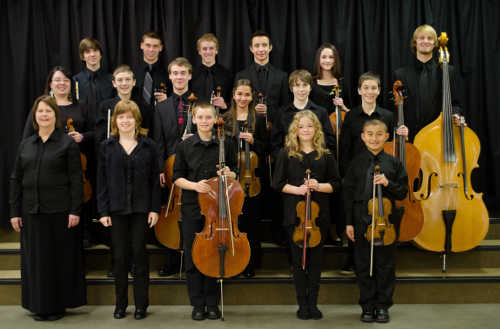
LAKEPORT, Calif. – The Lake County Symphony Youth Orchestra will perform its annual Spring Concert on Sunday, June 8.
The concert will begin at 3 p.m. at the Soper Reese Theatre, 275 S. Main St. in Lakeport.
According to conductor Sue Condit, the orchestra will be preceded by musicians from the Symphony Association’s string music classes.
The four classes include violin, viola and cello. All classes will participate, playing pieces from the “String Explorer” method book.
Rafael Contreras will perform a viola solo by Hans Sitt called, “Album Leaves” accompanied by Jeanine Mullen on piano.
The classes have been made possible by a generous grant from the Lake County Wine Alliance.
After the string class performers open the concert, the Youth Orchestra will take the stage to perform two pieces by Wolfgang Amadeus Mozart.
“Amadeus!” is the recognizable theme from Mozart’s “Symphony No. 25,” and was featured in the award-winning 1984 film “Amadeus!”
Known for its high energy, this piece has become one of the orchestra’s favorites, according to Condit. “Minuetto” is the third movement of Symphony 35, perhaps better known as the “Haffner.” It is a bright and cheerful work in contrast to the slow and serious movements that surround it.
The next selection moves into a more contemporary field with “Halo 3” which was composed by Marty O’Donnell and Michael Savatori, and features themes from the popular 2007 video game “Halo 3.”
Arranger Michael Story has combined a feeling of mystery with primitive and driving music, which makes this piece very exciting both to play and to hear.
The first half will end with a reprise from the Mother's Day Symphony Concert of the theme from the movie “The Avengers,” based on Marvel Comics superheroes. It was written by Alan Silvestri and arranged by Larry Moore.
The concert’s second half will open with the finale from Serge Prokofiev’s “Classical Symphony.” Arranger Carrie Lane Gruselle has captured the spirit of this high-energy piece with its key changes, accents and accidentals. “Shepherd’s Hey” (an English Morris Dance) composed by Percy Grainger and arranged by Harry Alshin, features staccato, shared melody in all parts, and counter melodies in the second violin part.
Following is “An Irish Party in Third Class” which showcases two traditional Irish fiddle tunes arranged by Gaelic Storm and adopted by Larry Moore. Both of these tunes were featured in the soundtrack of the motion picture “Titanic.” Upper position work in the first violin part makes these pieces challenging.
Clayton Rudiger, Edison Serena and Lars Tisell will perform a fiddle tune called “Wizard's Walk” by contemporary composer Jay Ungar that features incredibly difficult fingering patterns, and “Tam Lin,” a popular, driving Irish reel composed by Davey Arthur, of County Kerry, Ireland. The boys will be accompanied by Mark Rudiger on guitar and Jeanine Mullen on piano.
The concert will end with “Back to the Future,” the Silvestri/O’Loughlin theme from the popular 1985 Steven Spielberg movie. This is the most difficult piece the Youth Orchestra has ever attempted and they are meeting the challenge.
Members of the symphony who have provided past support during sectionals will join the orchestra members in this number.
The Soper Reese’s Wally Fuller will show slides from the movie on the theater’s big screen.
Lake County music lovers are urged to show support for the kids and their families who work hard to keep music alive and well here, and one way to show appreciation is to attend their annual concert.
For Symphony Association season ticket holders admission is free. There also is no charge for any youngsters under 18, while admission for others is just $5.
The Soper Reese Theatre has waived its standard fees, so all proceeds will go directly into the Youth Orchestra fund.
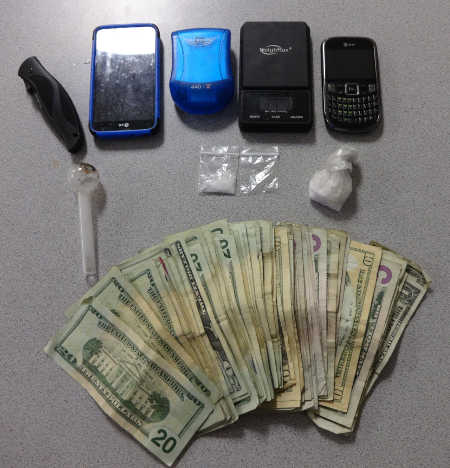
CLEARLAKE OAKS, Calif. – A vehicle stop this week resulted in two arrests and the seizure of approximately 10.5 grams of methamphetamine.
Raven Inez Garcia, 33, of Clearlake and 35-year-old Thomas Joseph Peterson of Clearlake Oaks were arrested during the stop, according to Lt. Steve Brooks of the Lake County Sheriff's Office.
At 2:10 p.m. Sunday a patrol deputy was traveling southbound on Lake Street in Clearlake Oaks behind a vehicle that appeared to have an expired registration. Brooks said Central Dispatch conducted a records check of the vehicle and advised the registration had been expired since March.
The deputy conducted an enforcement stop of the vehicle in the area of Shoreview Drive and Lake Street. Brooks said the driver was identified as Garcia, with Peterson riding as her passenger. Peterson told the deputy that he was currently on parole.
Brooks said the deputy looked inside the vehicle and noticed a small plastic bag containing a white crystalline substance, sitting on the floor behind the passenger seat.
The deputy recognized the substance to be methamphetamine and detained Peterson without incident. During a pat search the deputy located $879 and a knife in Peterson’s pockets, Brooks said.
Garcia was instructed to exit the vehicle and a pat search was conducted on her as well. Inside one of her pockets the deputy located a digital scale, according to Brooks.
When the deputy mentioned that he could see a white residue on the scale, Garcia immediately told him that the scale was not hers. Brooks said she also denied ownership of the methamphetamine located behind the passenger seat.

The deputy asked if she had anything else in her possession and she admitted that she did. Garcia removed a plastic bag containing methamphetamine and a glass pipe she had hidden under her clothing, Brooks said.
Garcia initially said the items were on the vehicle floor and she got scared, so she picked them up and hid them under her clothing. Brooks said she later told the deputy that the items belonged to Peterson and he told her to hold the items for him.
Peterson was arrested for possession of a controlled substance, possession of a controlled substance for sale and transportation of a controlled substance, Brooks said.
Garcia was arrested for possession of a controlled substance, possession of a controlled substance for sale, transportation of a controlled substance and possession of controlled substance paraphernalia, according to Brooks.
They were both transported to the Lake County Hill Road Correctional Facility and booked.
Bail for each was set at $35,000. Jail records indicated Garcia had been released on bail, but Peterson remained in custody early Tuesday.
Brooks said the methamphetamine later was weighed and determined to have a gross combined weight of 10.44 grams. The methamphetamine and glass pipe were seized as evidence. The $879 was seized pending asset forfeiture proceedings.
The Sheriff’s Narcotics Task Force can be reached through its anonymous tip line at 707-263-3663.
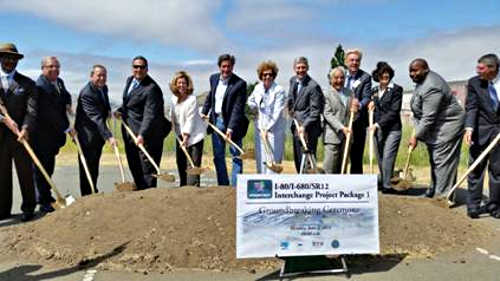
NORTHERN CALIFORNIA – On Monday, Congressman John Garamendi (D-Fairfield), a Member of the House Committee on Transportation and Infrastructure, joined several leaders in the groundbreaking for a regional highway project that will create 1,200 jobs and will reduce congestion and improve safety for 150,000 motorists who travel through the Interstate 80/Interstate 680/State Route 12 interchange daily.
The Solano-Napa I-80 Interchange Project was developed through a partnership among the Solano Transportation Authority, the Metropolitan Transportation Commission, California Transportation Commission, Federal Highway Administration and the California Department of Transportation.
The project is the first construction package of Phase 1 of the I-80/I-680/SR 12 Interchange Project.
It proposes to improve connector routes from westbound I-80 to westbound RR 12 and to modify the westbound onramp from Green Valley Road, as well as the I-80/Green Valley Interchange.
A new Green Valley Road overcrossing will be constructed above I-80 about 200 feet east of the existing overcrossing. The new overcrossing will have twice the number of lanes – four – as the existing overcrossing, along with a new on ramp to westbound I-80/SR-12.
The connector ramp from westbound I-80 to SR-12 also will be widened from one lane to two lanes.
“For far too long, the ‘Cordelia Junction’ did not function for commuters, but today, we are beginning to break through the traffic jam,” said Congressman Garamendi. “This project will accelerate commerce, improve safety, and create jobs throughout Northern California. I want to thank the Solano Transportation Authority, other transportation agencies, and the private construction businesses for their partnership in moving this project forward.”
Garamendi said the project has federal, state and regional funds committed to it. “There was a problem, and the American people said let’s fix it.”
However, he said another problem is looming: The U.S. Highway Trust Fund is set to run out in only a few months, threatening 700,000 American jobs and the stoppage of 112,000 projects.
“In the same spirit that is on display here in Solano, we must come together to pass a Highway Transportation Bill that keeps America running and fixes our crumbling infrastructure,” he said.
It only sounds like science fiction.
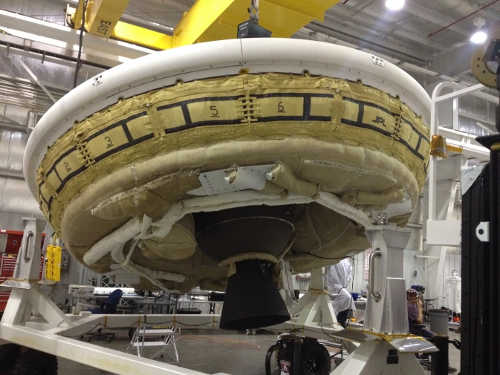
To test a new technology for landing heavy payloads on Mars, NASA is about to drop a flying-saucer shaped vehicle from a helium balloon high above Earth's surface.
The first launch opportunity for the Low Density Supersonic Decelerator (LDSD) is Tuesday, June 3, at 8:30 a.m. HST, when the launch window opens at the U.S. Navy's Pacific Missile Range Facility in Kauai, Hawaii. Officials are calling it an “engineering shakeout flight.”
“The agency is moving forward and getting ready for Mars as part of NASA's Evolvable Mars campaign,” said Michael Gazarik, associate administrator for Space Technology at NASA Headquarters in Washington.
As NASA plans increasingly ambitious robotic missions to Mars, laying the groundwork for human science expeditions to come, missions will require larger and heavier spacecraft.
The objective of the LDSD project is to see if the cutting-edge, rocket-powered test vehicle operates as it was designed – in near-space at high Mach numbers.
“We use a helium balloon – that, when fully inflated, would fit snugly into Pasadena's Rose Bowl – to lift our vehicle to 120,000 feet,” said Mark Adler, project manager for the Low Density Supersonic Decelerator at NASA's Jet Propulsion Laboratory. “From there we drop it for about one and a half seconds. After that, it's all about going higher and faster – and then it's about putting on the brakes.”
A fraction of a second after dropping from the balloon, and a few feet below it, four small rocket motors will fire to spin up and gyroscopically stabilize the saucer.
A half second later, a Star 48B long-nozzle, solid-fueled rocket engine will kick in with 17,500 pounds of thrust, sending the test vehicle to the edge of the stratosphere.
“Our goal is to get to an altitude and velocity which simulates the kind of environment one of our vehicles would encounter when it would fly in the Martian atmosphere,” said Ian Clark, principal investigator of the LDSD project at JPL. “We top out at about 180,000 feet and Mach 4. Then, as we slow down to Mach 3.8, we deploy the first of two new atmospheric braking systems.”
“After years of imagination, engineering and hard work, we soon will get to see our Keiki o ka honua, our 'boy from Earth,' show us its stuff,” said Adler. “If our flying saucer hits its speed and altitude targets, it will be a great day.”
The project management team decided also to fly two supersonic decelerator technologies that will be thoroughly tested during two more LDSD flight tests next year.
If this year's test vehicle flies as expected, the LDSD team may get a treasure-trove of data on how the 6-meter supersonic inflatable aerodynamic decelerator (SIAD-R) and the supersonic parachute operate a full year ahead of schedule.
The SIAD-R, essentially an inflatable doughnut that increases the vehicle's size and, as a result, its drag, is deployed at about Mach 3.8.
It will quickly slow the vehicle to Mach 2.5 where the parachute, the largest supersonic parachute ever flown, first hits the supersonic flow.
About 45 minutes later, the saucer is expected to make a controlled landing onto the Pacific Ocean off Hawaii.
NASA TV will carry live images and commentary of LDSD engineering test. The test vehicle itself carries several onboard cameras. It is expected that video of selected portions of the test, including the rocket-powered ascent, will be downlinked during the commentary.
Websites streaming live video of the test include http://www.nasa.gov/nasatv and http://www.ustream.tv/nasajpl2 .
NASA's Space Technology Mission Directorate in Washington funds the LDSD mission, a cooperative effort led by JPL. NASA's Marshall Space Flight Center in Huntsville, Alabama, manages LDSD within the Technology Demonstration Mission Program Office.
NASA's Wallops Flight Facility in Virginia is coordinating support with the Pacific Missile Range Facility and providing the balloon systems for the LDSD test.
For more information about LDSD, visit http://www.nasa.gov/mission_pages/tdm/ldsd/ .
Dr. Tony Phillips works for the National Aeronautics and Space Administration.