 How to resolve AdBlock issue?
News
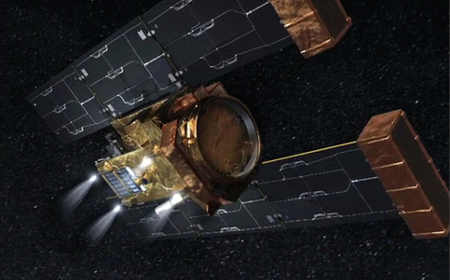
Since 2006, when NASA's Stardust spacecraft delivered its aerogel and aluminum foil dust collectors back to Earth, a team of scientists has combed through the collectors in search of rare, microscopic particles of interstellar dust.
The team now reports that they have found seven dust motes that probably came from outside our solar system, perhaps created in a supernova explosion millions of years ago and altered by eons of exposure to the extremes of space. They would be the first confirmed samples of contemporary interstellar dust.
“They are very precious particles,” said Andrew Westphal, a physicist at the University of California, Berkeley's Space Sciences Laboratory and the lead author – with 65 coauthors – of a report on the particles appearing in the Aug. 15 issue of the journal Science.
Twelve other papers about the particles are now available online and will appear next week in the journal Meteoritics & Planetary Science.
Westphal cautioned that additional tests must still be done before the team can say definitively that these are pieces of debris from interstellar space.
But if they are, the particles could help explain the origin and evolution of interstellar dust that until now could only be guessed from astronomical observations.
Specifically, these particles are much more diverse in terms of chemical composition and structure than previously thought; the small ones are much different from the big ones, and may have had different histories; and many of the big ones have a fluffy structure, like a snowflake, he said.
“The fact that the two largest fluffy particles have crystalline material – a magnesium-iron-silicate mineral called olivine – may imply that these are particles that came from the disks around other stars and were modified in the interstellar medium,” he added. “We seem to be getting our first glimpse of the surprising diversity of interstellar dust particles, which is impossible to explore through astronomical observations alone.”
Needles in a haystack
Two particles, each only about two microns (thousandths of a millimeter) in diameter, were isolated from the light, fluffy aerogel detectors after their impact tracks were discovered by volunteers calling themselves “Dusters” who scanned more than a million images through Stardust@home, a UC Berkeley citizen-science project that proved critical to finding these needles in a haystack.
A third track was made by a particle coming from the right direction – the flow of the interstellar wind – but apparently was going so fast, more than 15 kilometers per second (10 miles per second), that it vaporized.
Another 29 tracks discovered by volunteers were determined to have been kicked out of the spacecraft into the collectors.
An additional 100 tracks found by Dusters have yet to be analyzed, and only 77 of the 132 aerogel panels have been scanned to date.
Westphal expects to find no more than a dozen particles of interstellar dust in all – a millionth the amount of cometary material picked up by other collectors that were on board Stardust.
Four of the particles reported in Science were found in aluminum foils located between aerogel tiles on the collector tray.
Although the foils were not originally planned as collection surfaces, an international team led by physicist and nanoastronomer Rhonda Stroud of the Naval Research Laboratory searched the foils for the smallest grains that might be captured, too tiny to image in the aerogel.
The team identified four pits lined with partially melted material composed of elements that fit the profile of interstellar dust particles.
“They were splatted a bit, but the majority of the particles were still there at the bottom of the crater,” said Stroud. “Their diversity was a surprise, but also these fluffy particles, sort of like a tossed salad, were complex, an agglomeration of other particles, rather than one dense particle suggested by the simplest models of interstellar particles.”
Three of these particles, just a few tenths of a micron across, also contained sulfur compounds which some astronomers have argued do not occur in interstellar dust particles.
Stroud and other members of the preliminary examination team plan to continue analysis of the remaining 95 percent of the foils, in hopes of finding enough particles to understand the variety and origins of interstellar dust.
The two aerogel-embedded particles – dubbed Orion and Hylabrook by their Duster discoverers and paper coauthors – are destined for further tests to determine their oxygen isotope abundances, which could provide even stronger evidence for an extrasolar origin.
Supernovas, red giants, and other evolved stars produce interstellar dust and generate heavy elements like carbon, nitrogen and oxygen that are necessary for life.
Interstellar snowstorm
Stardust was launched in 1999 to fly through the debris sloughed off by comet Wild-2 and capture cometary dust with aerogel tiles and aluminum foils mounted on the front of a two-sided collector.
Collectors mounted on the rear were designed to catch particles from the “snowstorm of interstellar dust streaming through the galaxy,” said UC Berkeley research physicist Anna Butterworth.
“This dust is relatively new, since the lifetime of interstellar dust is only 50 to 100 million years, so we are sampling our contemporary galaxy,” said Butterworth.
The separate comet and interstellar dust collectors, each a tennis-racket sized mosaic of 132 aerogel tiles, were dropped by parachute as Stardust flew by Earth in 2006, and a consortium of scientists led by Westphal proceeded to analyze the interstellar collectors.
Scientists at the Johnson Space Center in Houston have scanned half the panels at various depths through the transparent aerogel and turned these scans into movies.
Westphal and his team tailored the movies for their virtual microscope, allowing Dusters – some 30,000 in all – to go online and search them as if focusing a microscope at different depths.
“We expected to find grains less than a micron across that would leave a track a couple of microns wide. That is about one-fiftieth the width of a human hair. We might not see the particles in an optical microscope, so the Dusters are looking for the impact tracks they made,” Butterworth said.
Once several Dusters tagged a likely track, Westphal's team vetted them. In the million frames scanned, each a half-millimeter square, Dusters found 69 tracks, while Westphal found two.
Thirty-one of these were extracted along with surrounding aerogel by scientists at Johnson Space Center and shipped to UC Berkeley to be analyzed by a scanning transmission x-ray microscope, or STXM, attached to a synchrotron beam line at the Advanced Light Source at Lawrence Berkeley National Laboratory.
STXM used soft x-rays to probe the chemical composition, and ruled out 29 grains because they contained aluminum metal, which does not occur in space, or other substances probably knocked out of the spacecraft and embedded in the aerogel.
Stardust@home will continue to analyze the remaining detector aerogel tiles once Phase 7 starts on Aug. 15. Foil analysis will also be incorporated into the project soon.
“As one of the first citizen-science projects, Stardust@home has been an amazing success,” said Butterworth, who is first author of one of the 12 MAPS papers about the project. “If we had had one person searching the aerogel 40 hours per week, they would have taken three years to cover once the same area searched multiple times by the Dusters.”
The Stardust analysis was funded primarily by NASA, with additional resources from the Department of Energy.
Robert Sanders writes for the UC Berkeley News Center.
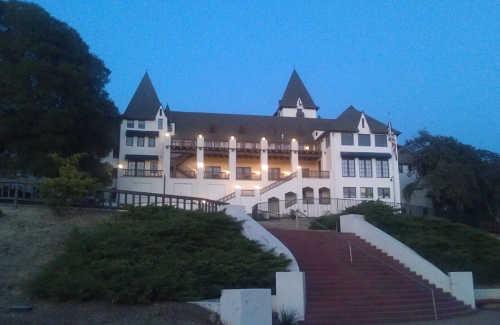
LUCERNE, Calif. – Marymount California University is inviting the community to a special welcome event for the first day of its fall semester classes at its new Lakeside Campus in Lucerne.
The event in honor of the inaugural bachelor's degree program class will take place from 5 to 6:15 p.m. Monday, Aug. 25, at the Lakeside Campus – formerly known as the Lucerne Hotel – located at 3700 Country Club Drive.
Campus Executive Director Michelle Scully welcomes the community to come and cheer on the students and tour the campus before classes start.
Scully said campus tours will take place from 5 to 5:30 p.m. Bistro Europa's Bistro & Co. food truck will be on campus with food for purchase from 5 to 6:30 p.m.
Classes get under way at 6 p.m., Scully said.
In 2010, the county of Lake purchased the historic hotel and renovated it, later signing a 15-year lease with Marymount California University, which has opened its third campus at the seven-acre site.
The county officially handed over the keys to the 75,000-square-foot building on Aug. 1, as Lake County News has reported.
At Lake County's first four-year university, the fall 2014 semester brings the opportunity to pursue bachelor's degrees in business, psychology and liberal arts – with emphases in business and psychology – and master's degrees in business, community psychology, and leadership and global development.
Scully reported that about 20 students – all local – have enrolled in the bachelor's and master's degree programs for the inaugural fall semester.
For more information, call 888-991-LAKE, email
Email Elizabeth Larson at
LAKE COUNTY, Calif. – After 18 years at the helm of the Lake County Fair, Richard Persons is heading south to a new assignment.
This week the Santa Maria Fairpark, 37th District Agricultural Association Board of Directors announced that it has hired Persons as its new chief executive officer.
“The board is looking forward to working with Mr. Persons, he has been highly involved in the fair industry for many years and we believe he will bring a fresh outlook to the many activities and projects we have going on at the Santa Maria Fairpark,” said Board President Kevin Merrill. “It’s a pleasure to welcome Richard and his wife Terri to our community.”
Persons told Lake County News that he'll remain with the Lake County Fair until Sept. 30, well past this year's summer fair, which takes place from Thursday, Aug. 28, through Sunday, Aug. 31.
Persons will be succeeded as the Lake County Fair chief executive officer by Kelseyville resident Debbie Strickler, a lifelong Lake County resident who for the last decade has worked as the fair's business assistant, a state-designated position that incorporates responsibilities for office management, accounting, contracting, payroll and human resources.
“The board is extremely happy to be able to promote Debbie to chief executive officer,” said Fair Board president Marcia Chauvin. “Lake County Fair is very lucky to had her services for the past 10 years. We will miss Rich, but Debbie has proven herself more than capable and we’re excited for the fair’s future under her leadership.”
Strickler's new job is effective Oct. 1, the same day Persons takes over in Santa Maria.
“I’m very excited and thrilled by this promotion,” Strickler said. “I love being at the fair, and working for Richard has been a rewarding experience. He is a wealth of knowledge and well respected in the fair industry, which has allowed me to learn from one of the best. I’m looking forward to applying that knowledge to my home town fair.”
Strickler – who is married to retired Kelseyville Fire District Chief Howard Strickler – exhibited lambs, steers, and hogs at the Lake County Fair beginning at the age of 9 until she graduated from high school.
She previously managed a staff of 250 as the human resources manager for Cheap Tickets, which maintained a telephone call center in Lakeport.
Prior to working at Cheap Tickets, Strickler worked at a number of large and small business positions in Lake County.
Persons, who has held the Lake County Fair CEO job since 1996, has nearly 30 years' experience working in the California fair industry.
Before coming to Lakeport, Persons – who has a degree in agricultural management – was the deputy manager of the Solano County Fair in Vallejo and owner of a small business that provided managerial services to county fairs and other events.
He also has served on a number of state fair industry boards and committees, including the California Fairs Alliance Board of Directors and chairs its Governmental Relations Task Force.
He's a past member of the Board of Directors of the Western Fairs Association and was president of the Board of Directors of the California Fairs Services Authority, a joint powers authority that provides insurance and risk management services to fairgrounds throughout California.
Persons said he and his wife, Terri – who works for the Lake County/City Area Planning Council – have for some time wanted to move to the Central Coast, where both attended Cal Poly San Luis Obispo.
They began looking for property in that area three years ago as part of a plan to retire there. Then the opportunity to run the Santa Maria Fairpark arose.
Persons said he was contacted by a headhunting firm that asked him to apply. Altogether, 18 individuals put in for the job.
Interestingly, when comparing Santa Maria and Lake County, Persons noted, “The fairgrounds are almost identical in size.”
Persons said the Santa Maria Fairpark is 33 acres – compared to Lake County's 34 acres – and hosts several events each year besides producing the Santa Barbara County Fair and the Santa Maria Valley Strawberry Festival. Unlike Lake County, Santa Maria's fair doesn't have a racetrack.
Santa Maria has a full-time staff of eight, hosts more people at its annual events and has a $2.5 million annual budget. Lake County's fair has two full-timers – Persons and Strickler – plus six year round part-time staff. It employs nearly 100 people during the annual fair and has a $650,000 annual budget, Persons said.
During his time as Lake County Fair CEO, Persons has overseen the establishment of the new Spring Fair, paid off a solar array, and made numerous capital improvements to the grounds, including replacing old buildings such as the horse barns and restrooms, improving Americans with Disabilities Act accessibility to virtually every area of the grounds, major upgrades to water and paving, placing a roadway all around the outside of the racetrack and completing a project that placed 12,000 volts of electricity underground.
In addition, in 2005 the Lake County Fair became the first fair to go to an all electronic entry system for its annual contests.
Many fairs have done it since, but Persons added, “It was crazy when we did it.”
However, the community has adapted “surprisingly well,” Persons said. For those individuals who don't have the needed Internet resources, the fair offers computers with high speed Internet or directs people to places like libraries where such resources are available.
Persons said the Lake County Fair still gets calls from other fairs asking how they made the transition.
He said Strickler must now begin the process of recruiting for her business assistant job.
Persons said the civil service position will go through a state hiring process.
The position requires two years of experience performing and coordinating a variety of business service and support functions, with work experience that includes public contact responsibilities.
The required experience must have included work as a full-charge bookkeeper with experience in performing bank reconciliations, maintaining trial balances and keeping a general ledger.
The completion of the equivalent of nine semester units in Accounting 1A and 1B and in Business Law also is required.
Anyone interested in the job is encouraged to call the Lake County Fair office at 707-263-6181.
Email Elizabeth Larson at
LAKE COUNTY, Calif. – The Lake County Public Services Department has announced the schedule for the 2014 Docent-led hikes on Mount Konocti.
The dates are:
- Sunday, Sept. 21;
- Sunday, Sept. 28;
- Saturday, Oct. 18;
- Sunday, Oct. 26;
- Saturday, Nov. 1;
- Saturday, Nov. 8.
Tom Nixon, retired State Parks Ranger and member of the Konocti Trails Team, will arrange for docents to lead the hikes which will include visits to the historic Downen Cabin and the top of Wright Peak.
The docents are knowledgeable about the mountain and its geology, history, flora, fauna and even folklore.
There also will be an optional climb to the top of the Cal Fire lookout tower for hikers 18 years or older who sign a release of liability form.
This moderately strenuous hike lasts approximately four hours and will cover six miles.
Hikers are encouraged to wear sturdy shoes, bring a lunch, water, daypack and binoculars/camera. Minors are welcomed when accompanied by a responsible adult.
Hikers will meet at the main parking lot of the Mount Konocti Park at 8 a.m., which can be accessed from Konocti Road in Kelseyville. Hikes will be canceled if inclement weather occurs.
Reservations are required due to limited space and must be made by Sept. 12 for the first scheduled hike.
Sept. 19 is the reservation deadline for the remaining hikes, which can be made by calling the Public Services Department at 707-262-1618.
In its monumental 2011 acquisition, The county of Lake purchased 1,520 acres of land on top of Mount Konocti to create the new Mount Konocti Park. This land is now placed in public hands for perpetuity.
The county-owned land is contiguous with an additional 821 acres of public lands managed by the Bureau of Land Management.
For more information on Mount Konocti Park, or to access a downloadable map, visit www.konoctitrails.com .
NORTHERN CALIFORNIA – A hunter who went missing in the Mendocino National Forest on Thursday was found Friday morning, according to the Glenn County Sheriff's Office.
Robert A. White, 50, of Orland, was located by Glenn County Search and Rescue personnel and sheriff’s deputies, according to a report from Glenn County Sheriff Larry Jones.
Jones said White was reported as a missing hunter to the Mendocino County Sheriff’s Office on Thursday.
Mendocino County contacted the Glenn County Sheriff’s Office at 11:22 p.m. Thursday, informing the agency that White had last been seen at approximately 8 a.m. that day when he departed to bow hunt dressed in all camouflage clothing. Jones said White was said to suffer from COPD.
Mendocino County requested assistance and stated that White may be in Glenn County. Jones said Glenn County Search and Rescue was deployed to the area of Black Butte Summit and Pinto Ridge areas of the Mendocino National Forest. A command post was established on Black Butte Summit.
The California Highway Patrol provided a helicopter to assist in an air search of the rugged terrain, Jones said.
At 8:15 a.m. Friday, Glenn County Sheriff’s Lt. Sean Arlin reported that he had a visual sighting of a person in a steep drainage. Jones said the CHP helicopter was provided with coordinates and at approximately 9 a.m. confirmed the sighting.
Dealing with the rugged area, three Search and Rescue members and Lt. Arlin reached White at approximately 2:15 p.m. Friday, Jones said.
Jones said White seemed incoherent and an ambulance was dispatched to the area. Details on White's exact medical condition were not available Friday.
With the assistance of United States Forest Service fire crew members, White was carried out of the canyon, Jones said.
More information on the case will be released as it becomes available, Jones said.
Barely 30 years ago, the only planets astronomers had found were located right here in our own solar system.
The Milky Way is chock-full of stars, millions of them similar to our own sun. Yet the tally of known worlds in other star systems was exactly zero.
What a difference a few decades can make.
As 2014 unfolds, astronomers have not only found more than a thousand “exoplanets” circling distant suns, but also they're beginning to make precise measurements of them.
The old void of ignorance about exoplanets is now being filled with data precise to the second decimal place.
A team led by Sarah Ballard, a NASA Carl Sagan Fellow at the University of Washington in Seattle, recently measured the diameter of a “super Earth” to within an accuracy of 148 miles total or about 1 percent – remarkable accuracy for an exoplanet located about 300 light years from Earth.
“It does indeed seem amazing,” said Ballard. “The landscape of exoplanet research has changed to an almost unrecognizable degree since I started graduate school in 2007.”
To size up the planet, named “Kepler 93 b,” Ballard used data from NASA's Kepler and Spitzer Space Telescopes.
First, Kepler discovered the planet. As seen from Earth, Kepler 93 b passes directly in front of its parent star, causing the starlight to dim during the transit.
That dimming, which occurs once per orbit, is what allowed Kepler mission scientists to find the planet in the first place.
Next, both Spitzer and Kepler recorded multiple transits at visible and infrared wavelengths. Data from the observatories agreed: Kepler 93 b was really a planet and not some artefact of stellar variability. Ballard then knew that by looking carefully at the light curve she could calculate the size of the planet relative to the star.
At that point, the only missing piece was the diameter of the star itself.
“The precision with which we measured the size of the planet is linked directly to our measurement of the star,” said Ballard. “And we measured the star using a technique called asteroseismology.”
Most people have heard of “seismology,” the study of seismic waves moving through the Earth. “We can learn a lot about the structure of our planet by studying seismic waves,” she said.
Asteroseismology is the same thing, except for stars: The outer layers of stars boil like water on top of a hot stove.
Those convective motions create seismic waves that bounce around inside the core, causing the star to ring like an enormous bell.
Kepler can detect that “ringing,” which reveals itself as fluctuations in a star's brightness.
Ballard's colleague, University of Birmingham professor Bill Chaplin led the asteroseismic analysis for Kepler-93 b.
“By analyzing the seismic modes of the star, he was able to deduce its radius and mass to an accuracy of a percent,” she said.
The new measurements confirm that Kepler-93 b is a “super-Earth” sized exoplanet, with a diameter about one-and-a-half times the size of our planet.
Previous measurements by the Keck Observatory in Hawaii had put Kepler-93 b's mass at about 3.8 times that of Earth.
The density of Kepler-93 b, derived from its mass and newly obtained radius, suggests the planet is very likely made of iron and rock, like Earth itself.
Although super-Earths are common in the galaxy, none exist in our solar system. That makes them tricky to study.
Ballard's team has shown, however, that it is possible to learn a lot about an exoplanet even when it is very far away.
See the ScienceCast at http://youtu.be/lA6MJkHJXVk .
Dr. Tony Phillips works for the National Aeronautics and Space Administration.