 How to resolve AdBlock issue?
News
CLEARLAKE, Calif. – The first Mendocino and Lake County Stand Down/Homeless Veteran’s Resource Fair will be held in Clearlake on Wednesday, Sept. 10, and Thursday, Sept. 11.
The event will take place from 9 a.m. to 4 p.m. each day at the American Legion Hall at 14770 Austin Road.
The term “stand down” in times of war meant that exhausted combat units requiring time to rest and recover were removed from the battlefields to a place of relative security and safety.
Today, “stand down” refers to a community-based intervention program designed to help veterans, active duty service members, reserve and guard service members and their families. The concept is all about Americans helping Americans.
Veterans, active duty personnel and their families are encouraged to come out to the two-day event to learn about the benefits that are readily available to them.
These resources will be gathered all in one place to provide services on site, education and enrollment in programs that will meet the short and/or long-term needs of the entire family.
Many veterans are unable to access the services they required because the agencies are spread out over a wide geographic area. This is especially frustrating for disabled or homeless veterans, exerting undue time and energy going from one agency to another.
In assisting veterans who are homeless, sometimes it takes just one small service for them to break out of the cycle of homelessness, such as needing a photo ID card, a bus token or a pair of shoes to start a new job.
The Mendocino-Lake County Stand Down will offer access to a wide range of services. These services include on-site medical and dental attention, as well as, on-site enrollment in health care and supplemental nutrition programs.
Employment and educational counseling and benefits, legal services and mental health counseling will also be available. Homeless and at-risk services include clothing, food boxes and housing assistance. Lunch also will be served.
Volunteers are needed prior to, during and after the event and donations are welcome. Any amount of time would be greatly appreciated.
If interested, please contact the Lake County Veterans Service Office at 707-263-2384, or the Mendocino County Health and Human Services Agency Veterans Service Office at 707-463-4226 or
LUCERNE, Calif. – A followup investigation for an unrelated case has resulted in the discovery of a butane honey oil lab and one arrest.
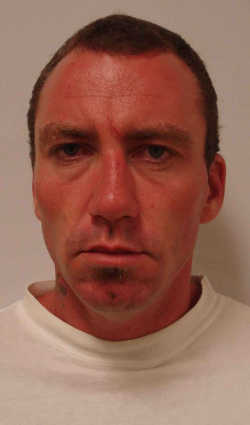
Deputies arrested 38-year-old Raymond Stroud Bowman of Nice for manufacturing a controlled substance, possession of a controlled substance for sale, possession of marijuana for sale, possession of a narcotic for sale, cultivating marijuana and keeping a place to sell narcotics, according to Lt. Steve Brooks of the Lake County Sheriff's Office.
At 9 a.m. Friday, Aug. 15, deputies responded to an address located in the 6000 block of First Avenue in Lucerne to conduct followup on an unrelated case, Brooks said.
During the investigation, Brooks said deputies noticed several items inside the residence which were components to a butane honey oil, or BHO, lab.
BHO labs are used to extract the tetrahydrocannabinol (THC) from the plant material by using butane as a solvent. THC is the psychoactive constituent of the cannabis plant, Brooks said.
The most dangerous aspect of a BHO lab is the manufacturing process. Brooks said butane is extremely volatile and large amounts of it are used in mostly closed-room makeshift labs. Fires and explosions caused by these makeshift labs have become very common in Lake County, threatening the safety of its citizens.
The deputies contacted members of the Sheriff’s Narcotics Task Force, who responded to the First Avenue address, Brooks said.
Narcotics detectives contacted Bowman and 22-year-old Jessica Louise South of Lucerne. Brooks said South told detectives that Bowman does not live at the residence.
She escorted the detectives to the spare bedroom, which is where the deputies had located the lab components. Brooks said South told detectives that most of the property in the spare room was left behind from the previous tenants and the rest belongs to Bowman.
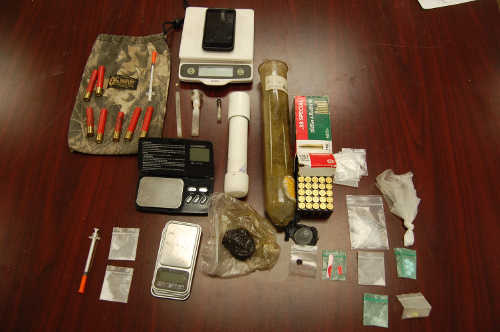
In plain view detectives located a BHO glass extraction tube filled with marijuana and a glass dish containing honey oil. Brooks said they located several bulk bags of processed marijuana and shake, which was leftover from trimming the plants.
The bulk marijuana was later weighed and determined to have a gross weight of 25.8 pounds. A large cardboard box containing cases of butane canisters, filters for the extraction tube and a digital scale was also located in the room, Brooks said. All of the items were seized as evidence.
South said Bowman recently brought some of his property to the residence. She admitted to having a relationship with Bowman, but denied that he was living there, Brooks said.
When detectives told South that they had located a stack of paperwork in the room belonging to Bowman, she admitted that he was living at the residence with her. She said Bowman had instructed her to tell law enforcement that he was not living there, so her residence could not be searched. Brooks said she also admitted that Bowman had requested to produce honey oil inside her house, but she refused.
Bowman told detectives that the paperwork located in the spare room was his, but denied ownership of lab components. Brooks said Bowman denied living at the residence, but admitted to bringing his property there.
Detectives searched the master bedroom and the nightstand which was being used by Bowman. Inside the nightstand detectives located 21.3 grams of butane honey oil, two digital gram scales, two glass meth pipes, 8.5 grams of methamphetamine, .2 grams of heroin, 8 lysergic acid diethylamide (LSD) pills, 5 diazepam pills and evidence indicating the sales of narcotics. 48 marijuana plants were also eradicated from the backyard Brooks reported.
Bowman was arrested, and during a search conducted as a result of his arrest detectives located two baggies containing methamphetamine in Bowman’s possession. Brooks said the two baggies had a gross weight of 1.1 grams.
Detectives also located a blue plastic cap with a dried used cotton ball stuck inside it and a hypodermic needle, Brooks said.
Bowman was transported to the Lake County Hill Road Correctional Facility and booked. He remained in custody early Friday on a no-bail hold.
The Sheriff’s Narcotics Task Force can be reached through its anonymous tip line at 707-263-3663.
The California Department of Fish and Wildlife is recruiting those interested in a career as a wildlife officer.
CDFW will accept applications for wildlife officer cadet from Aug. 22 through Oct. 17, 2014.
The department is particularly interested in recruiting applicants with a passion for conservation of California’s fish and wildlife resources.
For information on minimum qualifications and other requirements for wildlife officer cadets, please visit www.dfg.ca.gov/enforcement/career/index.aspx .
The CDFW Law Enforcement Division expects an overwhelming number of inquiries and asks prospective candidates to extensively review materials on the Web site before contacting CDFW with questions.
California wildlife officers are charged with ensuring public safety, enforcing fish and wildlife laws, investigating illegal sales of wildlife, protecting the state from pollution, enforcing habitat protection laws, fighting illegal drug trafficking, keeping the homeland secure and responding during natural disasters.
As peace officers, they have the authority to enforce all California laws, such as the Vehicle Code and Penal Code, and are federally deputized to enforce federal fish and wildlife laws.
A typical day for a California wildlife officer is diverse as the state’s fish and wildlife. Wildlife officers patrol ocean, desert, mountain and valley environments, as well as urban areas. They frequently work independently and conduct full-scale law enforcement investigations.
Wildlife officers employ everything from all-terrain vehicles to jet skis and snowmobiles while on patrol and spend much of their typical day making contact with Californians in the great outdoors. CDFW has a dive team and utilizes K-9 partners as well. Environmental crimes and pollution incidents also fall under the purview of wildlife officers.
Annually, wildlife officers make contact with more than 295,000 people and issue more than 15,000 citations for violations of the law.
Successful applicants will enter a 31-week academy training program, followed by 19 weeks of field training, where they will work with a seasoned field training officer.
CDFW’s academy at Butte College is California Peace Officer Standards and Training certified. Cadets are trained as police officers with specific emphasis on wildlife, pollution and habitat protection.
In California, with 159,000 square miles of habitat and wildlife diversity unequaled by any other state, the average wildlife officer has a patrol district of more than 600 square miles. The state has more than 1,100 miles of coastline, 30,000 miles of rivers and streams, 4,800 lakes and reservoirs, three desert habitat areas and scores of high mountain peaks.
To apply, please use the State of California application form 678 located at https://jobs.ca.gov/pdf/std678.pdf .
Applications must be postmarked no later than Oct. 17.
Gov. Edmund G. Brown Jr., Attorney General Kamala D. Harris, Senate President pro Tem Darrell Steinberg, Assembly Speaker Toni Atkins and members of the Latino Legislative Caucus on Thursday announced legislation to provide legal services to the unaccompanied minors arriving in California from Central America.
“Helping these young people navigate our legal system is the decent thing to do and it’s consistent with the progressive spirit of California,” said Gov. Brown.
The legislation provides $3 million to qualified nonprofits to provide legal services for unaccompanied minors.
In addition, the legislation eliminates any ambiguity regarding the jurisdiction of the state court to make findings necessary to enable the federal government to grant these minors special immigrant juvenile status. This federal status provides for an expedited naturalization process.
The legislation also reinforces the court’s authority to provide interpreters to unaccompanied, undocumented minors.
“These young people have legal rights and responsibilities, but they cannot fully participate in complex immigration proceedings without an attorney,” said Attorney General Harris. “It is critical that these children, many of whom are fleeing extreme violence in Central America, have access to due process and adequate legal representation.”
“These kids face a daunting immigration process and any failures in our justice system that lead to deportation can be a death sentence,” said Pro Tem Steinberg. “The systemic challenges addressed by this bill are a direct product of my legal team’s on-the-ground experiences and, without exaggeration, could make the difference between the life and death of a child.”
“With these bills we’re making it clear California wants unaccompanied immigrant children treated as children. We want their well-being ensured, their best interests pursued, and their safety protected,” said Speaker Atkins. “While no longer in the headlines, the humanitarian crisis that has brought so many children to our country continues. While the root causes of this crisis are being addressed, these victimized children deserve to be treated with kindness and justice.”
“I am proud that California is standing up for these children who have faced unimaginable hardships, trekking thousands of dangerous miles to escape a life of violence and poverty,” said Senate President Pro Tem-elect Kevin de León. “Our state is setting the example by upholding due process for these minors.”
“The humanitarian crisis at the border involving unaccompanied minors fleeing dangerous circumstances at home is a serious problem that requires a serious response. Deportation for some of these kids is tantamount to a virtual death sentence,” said Sen. Ricardo Lara, chair of the California Latino Legislative Caucus. “That’s why it’s critical that these kids have every opportunity to seek permanent residency, including through the Special Immigrant Juvenile Status. We’re clearing up confusion by stating unequivocally that California courts have the authority to review cases involving unaccompanied minors seeking the Special Immigrant Juvenile Status.”
“Our country was founded with the principle of due process for everyone and nobody deserves fair treatment in our legal system more than innocent children who are left to fend for themselves in a court of law,” said Assemblymember Lorena Gonzalez. “I couldn’t be prouder to see California setting an example that hopefully the rest of the country can follow.”
“The recent surge of unaccompanied minors is an issue that goes beyond the debate of our nation’s flawed immigration system,” said Assemblymember Luis Alejo, vice chair of the California Latino Legislative Caucus. “This is a question of whether or not we ought to take proper care of helpless children with no one to turn to. I applaud the leadership of our state’s highest officials for authorizing $3 million in emergency legal funds to give these children an effective voice in court and help protect their fundamental human rights.”
During California's Trade and Investment Mission to Mexico in July, the governor met with Archbishop of Los Angeles José H. Gomez and religious and diplomatic leaders from Mexico and Central America for a wide-ranging discussion on immigration reform and the influx of unaccompanied children migrating to the United States.
In addition, Pro Tem Steinberg and a delegation of state lawmakers went on a fact-finding mission to El Salvador and Guatemala, where they met with national leaders to discuss the root causes of a humanitarian challenge that has led to more than 57,000 minors arriving at the U.S. border since October 2013, mostly from El Salvador, Honduras and Guatemala.
In July, Speaker Atkins and members of the Latino Legislative Caucus toured Naval Base Ventura County, to review the conditions in which undocumented, unaccompanied children were being housed and to view how the children were responding following their journeys from Central America.
NORTHERN CALIFORNIA – The California Department of Public Health announced Thursday night that the federal Centers for Disease Control and Prevention has tested the sample from the patient under investigation who is hospitalized in Sacramento and reports the test results are negative for Ebola.
CDPH has been working in cooperation with the Sacramento County Public Health and the Kaiser Permanente South Sacramento Medical Center to ensure appropriate CDC protocols were followed in the investigation, testing, diagnosis and treatment of the patient.
Health officials said there are currently no confirmed cases of Ebola in California. There have been no patients admitted to California hospitals who are considered to be at high risk of Ebola according to CDC criteria.
“We are pleased with the negative outcome of the Ebola test and wish the patient a speedy recovery,” said Dr. Ron Chapman, CDPH director and state health officer. “The case in Sacramento County demonstrates that the system is working. This patient was quickly identified, appropriate infection control procedures were implemented, and public health authorities were notified.”
If a person has traveled to an affected country and develops a fever within three weeks of their return, they should contact their health care provider and let the provider know of their travel history.
The risk of the spread of Ebola in California is low. Any patient suspected of having Ebola can be safely managed in a California hospital following recommended isolation and infection control procedures.
Suspect cases of Ebola will be investigated by local health departments in consultation with CDPH.
State and local public health officials in California are monitoring the situation closely and taking steps to keep Californians safe. California's advanced health care system has appropriate protocols in place to prevent the spread of this often deadly disease.
Ebola is an infectious disease caused by the Ebola virus. Symptoms may appear anywhere from two to 21 days after exposure and include fever, headache, joint and muscle aches, weakness, diarrhea, vomiting, stomach pain and abnormal bleeding.
It is classified as a viral hemorrhagic fever (VHF) because of the fever and abnormal bleeding. Among the VHFs, Ebola is feared because of its high mortality. There are no specific treatments but supportive therapy can be provided to address bleeding and other complications.
For more information about Ebola, please visit CDPH’s Web site, www.cdph.ca.gov .
LAKE COUNTY, Calif. – The Lake County Land Trust is preparing for its annual dinner, to be held on Saturday, Oct. 11, in Upper Lake.
The dinner will be held at the Lodge at Blue Lakes with an earlier start time of 3 p.m.
Special guest speaker will be Congressman Mike Thompson.
Guests are being encouraged to attend the dinner, spend the night and enjoy a lovely Sunday on Blue Lakes.
Those coming to the dinner also are encouraged to come even earlier than 3 p.m. to relax on the deck, enjoy a glass of wine, and take in the beautiful views of Blue Lakes and the surrounding hillsides.
Ticket price is $70 per person and includes wine.
Maryann and Peter Schmid, the lodge's owners, will donate 10 percent of the proceeds from room rentals to the Land Trust and also will be providing a light continental breakfast to those staying over.
Invitations to the dinner will be sent to Lake County Land Trust members, but the public also is welcome to attend this fun event.
Room reservations may be made by calling the Lodge at Blue Lakes at 707-275-2181. Dinner reservations can be made by calling 707-262-0707.
Payment can be taken by credit card, or mail your check to The Lake County Land Trust, PO Box 711, Lower Lake, CA 95457.
The Lake County Land Trust is a private, nonprofit local organization dedicated to preservation of wildlife habitat, including wetlands, forests, and properties with unique scenic, cultural and agricultural value.
For information about the Land Trust, go to www.lakecountylandtrust.org or call 707-262-0707.