 How to resolve AdBlock issue?
News

“A lake carries you into recesses of feeling otherwise impenetrable.” – William Wordsworth
UPPER LAKE, Calif. – Blue Lakes, along Highway 20 in beautiful Upper Lake, provide yet another venue for relaxing or recreating in Lake County.
The azure lakes are nestled serenely in the wild woods of Cold Creek Canyon.
Blue Lakes differ from Clear Lake in a myriad of ways.
They are not as nutrient rich as our county's namesake, nor do they contain as much of a plant population as our eutrophic Clear Lake.
The two lakes that comprise Blue Lakes are considerably smaller in size, with 135 surface acres of water here. Swimmers love it at Blue Lakes.
For the kayaker, it's an easy two-hour paddle around each lake. With a 5 mile per hour boat speed limit you will not be rattled while paddling these puddles.
Blue Lakes is another one of Lake County's fishing destinations.
Fishermen state that the best fishing occurs during the cool spring months, and that the Department of Fish and Wildlife stock the lake with 10- to 12-inch rainbow trout.
Fishing for catfish, bluegill and largemouth bass is popular as well.
The lake's tranquility draws you to peer across the silky-smooth expanse of water out to the Mayacamas Mountains' foothills that form cups for these waters.
Then, a gentle breeze changes the lake's reflections, adding dimples across its waters, bringing to mind Monet's Impressionist pond paintings, or Mary Cassatt's painting, “The Boating Party.”

According to local archaeologist Dr. John Parker, in some 1930s geology publications, “It was indicated that that there was a landslide at the north end of Blue Lakes which blocked and backed up the Clear Lake outlet channel causing the shift to the Cache Creek outlet.”
He continues, “Yes there is a landslide there ... however it is not old enough to have caused the shift in Clear Lake’s outflow. The USGS (United States Geological Survey) has determined that the landslide is several hundred years (or thousand years) more recent than the change in outflow (which occurred approximately 12,000 years ago).
“It is likely that Clear Lake flowed out the Blue Lake canyon to the Russian River several times during its 500,000 plus years lifetime. It is also likely that its outlet channel that direction flowed through the Scott’s Creek Canyon a few times (rather than Tule Lake).
“In addition to the current Cache Creek outlet (which also was probably used many times over the millennia), geologic evidence suggests that the lake flowed past Lower Lake down the canyon by Hidden Valley Lake and drained out Putah Creek a few times,” Parker said.
Kathleen Scavone, M.A., is an educator, potter, writer and author of “Anderson Marsh State Historic Park: A Walking History, Prehistory, Flora, and Fauna Tour of a California State Park” and “Native Americans of Lake County.” She also writes for NASA and JPL as one of their “Solar System Ambassadors.” She was selected “Lake County Teacher of the Year, 1998-99” by the Lake County Office of Education, and chosen as one of 10 state finalists the same year by the California Department of Education.
LAKE COUNTY, Calif. – Lake County Animal Care and Control has several new dogs from various breeds needing homes this week.
Dogs available this week include mixes of Chihuahua, German Shepherd, Irish Setter, Labrador Retriever, mastiff, pit bull terrier and Rottweiler.
Dogs that are adopted from Lake County Animal Care and Control are either neutered or spayed, microchipped and, if old enough, given a rabies shot and county license before being released to their new owner. License fees do not apply to residents of the cities of Lakeport or Clearlake.
If you're looking for a new companion, visit the shelter. There are many great pets hoping you'll choose them.
In addition to the animals featured here, all adoptable animals in Lake County can be seen here: http://bit.ly/Z6xHMb .
The following dogs at the Lake County Animal Care and Control shelter have been cleared for adoption (additional dogs on the animal control Web site not listed are still “on hold”).

'Mickey'
“Mickey” is a male Chihuahua mix with a short buff-colored coat.
He is in kennel No. 7, ID No. 1029.
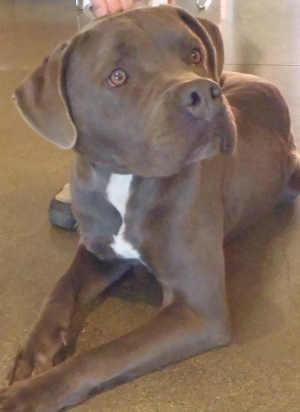
Male mastiff
This male mastiff has a short brown coat with white markings.
He is in kennel No. 14, ID No. 1030.

Male Rottweiler mix
This male Rottweiler mix is a young dog.
Shelter staff said he is still a puppy. He needs some training and would make a great dog.
Find him in kennel No. 12, ID No. 1032.
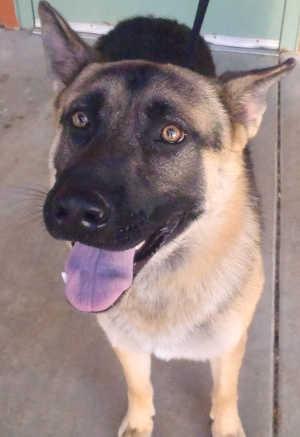
German Shepherd
This male German Shepherd needs a loving home.
He is very energetic and would do best with an active family and a large yard to run and play.
While he has some training, shelter staff said he would benefit from more training in obedience and basic manners. He is said to be good with all nondominant dogs.
He's in kennel No. 24, ID No. 975.

Male Chihuahua mix
This male Chihuahua mix has a short black and tan coat.
He's in kennel No. 26, ID No. 26, ID No. 1079.
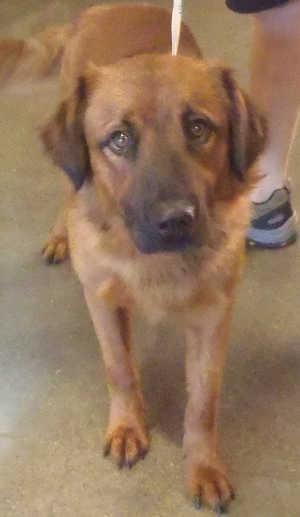
'Appa'
“Appa” is a male Irish Setter mix.
He has a medium-length reddish-brown coat.
Find him in kennel No. 27, ID No. 1078.
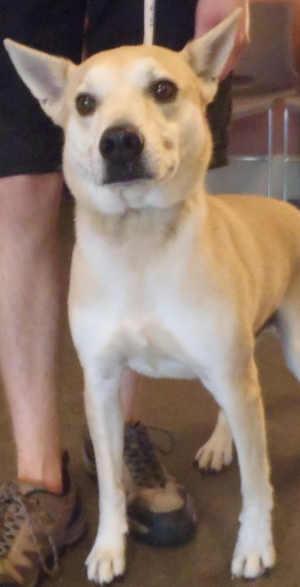
Male shepherd
This male shepherd has a short buff-colored coat.
He's in kennel No. 28, ID No. 1035.
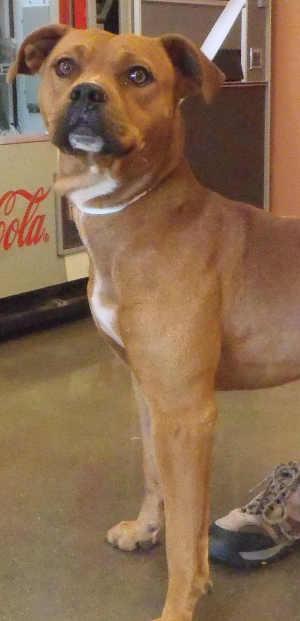
'Otis'
“Otis” is a male pit bull terrier mix with a short brown coat with white markings.
Find him in kennel No. 29, ID No. 1077.
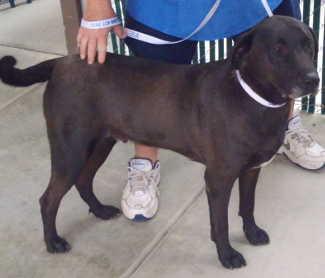
Male Labrador Retriever
This male Labrador Retriever mix has a short black coat.
He's good with other dogs prefers and prefers to be around other males.
Shelter staff said he has a mellow energy level. He appears to have been an outside dog and is a bit jumpy about being indoors, but will adjust well if given the chance.
He's in kennel No. 34, ID No. 779.
To fill out an adoption application online visit http://www.co.lake.ca.us/Government/Directory/Animal_Care_And_Control/Adopt/Dog___Cat_Adoption_Application.htm .
Lake County Animal Care and Control is located at 4949 Helbush in Lakeport, next to the Hill Road Correctional Facility.
Office hours are Monday through Friday, 8 a.m. to 5 p.m., and 1 p.m. to 3 p.m., Saturday. The shelter is open from 10:30 a.m. to 4:30 p.m. Monday through Friday and on Saturday from 1 p.m. to 3 p.m.
Visit the shelter online at http://www.co.lake.ca.us/Government/Directory/Animal_Care_And_Control.htm .
For more information call Lake County Animal Care and Control at 707-263-0278.
Email Elizabeth Larson at
LAKE COUNTY, Calif. – The Lake County Registrar of Voters Office said registered voters who want to request a vote-by-mail, or absentee, ballot for the Nov. 4 election have until early next week to do so.
Registrar of Voters Diane Fridley said the deadline to make the request by mail, phone or fax is Tuesday, Oct. 28.
Beginning on Wednesday, Oct. 29, and continuing until 8 p.m. on Election Day – Tuesday, Nov. 4 – voters who would like a vote-by-mail ballot must appear in person at the Lake County Registrar of Voters Office to apply for and obtain a ballot.
The Registrar of Voters Office is located in Room 209 on the second floor of the Lake County Courthouse, 255 N. Forbes St., Lakeport.

LAKE COUNTY, Calif. – The county of Lake reported Friday that abatement of unauthorized marijuana cultivation is continuing in neighborhoods around Lake County.
In a Friday statement, the county of Lake said there continues to be miscommunication as to the nature and scope of the preliminary injunction recently issued by a federal court and the effect of that injunction on Measure N.
Measure N was passed by voters in June. It bans marijuana grows in neighborhoods, sets plant limits on larger parcels and also governs the size of indoor grows.
Although a federal judge in San Francisco earlier this month granted a preliminary injunction as to nonemergency summary abatements action under Measure N, joint efforts between the Lake County Community Development Department and the Sheriff’s Narcotics Task Force to abate unauthorized marijuana cultivation have been able to continue successfully, officials said.
The Community Development Department has primarily focused its abatement attention on neighborhood grows to increase public safety in populated community areas, the county reported.
Officials said there also has been concern during this historic California drought about water theft and overusage in neighborhoods, particularly as wells and water systems are going dry in the county.
Illegal marijuana grows have the potential to consume large amounts of water that do not fit into current rationing guidelines, and threaten the water availability to other residents.
As a result of Measure N, which went into effect on July 11, more than 2,500 marijuana plants have been abated from 80 residential sites within neighborhoods, the county reported.
The average plant count is approximately 32 in the residential neighborhood grows which have been abated this summer, according to the Friday report.
Additionally, officials reported that the Sheriff’s Narcotic Task Force has eradicated approximately 194,000 marijuana plants to date this year on rural properties through criminal cases and the Measure N joint enforcement efforts.
Under the nonsummary abatement clause in Measure N, the Community Development Department responds to anonymous complaints by posting a “Notice to Abate Unlawful Marijuana Cultivation” at the grow site.
The resident of the property has five business days to comply with voluntary abatement. If there is no voluntary compliance, the Community Development Department will secure an abatement warrant for the property. The Lake County Sheriff’s Office will then carry out the abatement.
Neighbors and residents can protect their privacy and place anonymous complaints about illegal marijuana grows in their neighborhood by contacting the Lake County Community Development department at 707-263-2382 or by using the online complaint form located at http://www.co.lake.ca.us/Government/Directory/Code_Enforcement.htm .
NORTHERN CALIFORNIA – Though there are no confirmed or suspect cases of Ebola Virus Disease in California, on Friday the University of California Office of the President informed the California Department of Public Health that all five UC Medical Centers are positioned to provide in-patient care for Californians who have confirmed cases of Ebola if necessary.
CDPH continues working with health officials to prepare for potential cases of Ebola in California and the Division of Occupational Safety and Health (Cal/OSHA) is providing updated, specific guidelines on the protective equipment, training and other measures that must be in place to protect workers’ health and safety.
“All of the UC Medical Centers specialize in complex care and operate as or staff level one trauma centers. We appreciate their leadership role in willingness to treat Ebola patients,” said Dr. Ron Chapman director of CDPH and state health officer. “The administration will support these hospitals in meeting this public health need in California. At the same time all hospitals and medical providers need to redouble preparedness efforts to ensure that they can effectively assess Ebola risk in their patients, while ensuring workplace safety.”
“As part of a public university, UC’s medical centers are far along in their preparation activities and are willing to care for confirmed Ebola patients,” said Dr. John Stobo, UC senior vice president for health sciences and services. “Stepping up to a public health crisis is what these medical centers do, and in the past weeks we have been actively readying ourselves for any health eventuality related to Ebola. We are committed to addressing the health needs of this population and the public at large, as well as ensuring the safety of our health care workers. It is our intent that only health care workers who are members of a core designated group or who volunteer to do so will provide care to confirmed Ebola patients.”
The UC Medical Centers identified today include the Davis, Irvine, Los Angeles, San Diego and San Francisco facilities.
These hospitals will closely coordinate with CDPH and local health officers as they consider taking on such patients.
Friday's announcement means that the UC Medical Centers are positioned to accept patients in California with confirmed cases of Ebola.
They are not identified as treatment centers for patients being transported into the United States by the U.S. State Department.
Four hospitals in other parts of the country are already established as treatment centers for these repatriated U.S. citizens.
CDPH has been reviewing Ebola preparedness, screening and treatment guidance from the national Centers for Disease Control and Prevention and will ensure that the UC Medical Centers have the most up-to-date information on how to treat and care for Ebola patients, should confirmed Ebola cases appear in California.
The UC Medical Centers, like all health care facilities in California, are required to comply with standards set by Cal/OSHA to ensure that appropriate protective equipment, training and other measures are in place to protect worker health and safety while caring for Ebola patients. Cal/OSHA is developing updated guidance and compliance requirements specifically identifying what measures are adequate – and inadequate – to comply with California’s workplace health and safety legal requirement, based on CDC’s recent strengthening of clinical guidance for Ebola treatment.
Cal/OSHA also will provide on-site consultation for these medical centers to help them meet the established occupational health and safety standards.
CDPH has also committed to helping the five identified medical centers obtain the necessary personal protective equipment (PPE), should the hospitals have sourcing challenges. CDC recently updated the PPE guidance, aligning them with California’s stronger standards.
State officials also will work with these medical centers to ensure that medical waste generated from the treatment of an Ebola patient will be properly handled and disposed.
All hospitals throughout the state are expected to screen, identify and isolate any patients with Ebola risk.
Screening questions include: “Has the patient recently been in one of the three countries with Ebola outbreaks: Liberia, Sierra Leone and Guinea?”; and “Has the patient been in direct contact with someone known to have Ebola or someone exposed to Ebola?”
If further testing of the patient is recommended, the hospital will contact the local health department, which will provide a more detailed epidemiological assessment.
If necessary, the local health officer will then coordinate with CDPH and CDC to pursue testing at CDC-approved laboratories. During that time, the patient should remain in isolation until the test results are available.
If test results are positive, CDPH will work with the hospital, local health officers and the CDC to transfer the patient as needed.
CDPH remains in contact with hospitals and health care professionals throughout the state to monitor and strengthen medical preparedness and Cal/OSHA will be working with hospitals to provide compliance assistance on required workplace safety standards. Other hospitals will likely be identified as additional priority hospitals for Ebola treatment.
Since the Ebola outbreak began in Guinea, Liberia and Sierra Leone, CDPH has worked with state, federal and local health officials to prepare for potential cases of Ebola in California.
In August, CDPH launched an informational Web site compiling information about the outbreak and preparing California health care providers with guidance and protocols from the CDC. CDPH has developed an interim case report form for reporting suspected cases of Ebola to CDPH and has distributed CDC guidance on specimen collection, transport, testing and submission for patients suspected of having Ebola.
Last week, CDPH posted interim guidelines for Ebola medical waste management and recommended that all health care facility environmental services personnel and infection control staff work together to develop facility-specific protocols for safe handling of Ebola related medical waste.
CDPH has provided these and other documents to health care providers and partners via the California Health Alert Network.
In September, CDPH convened more than 1,100 health care and public health workers to urge them to assess their Ebola readiness and conduct drills in their facilities.
Last week, CDPH officials held a teleconference with health care providers to discuss the latest news and guidance about handling suspected Ebola cases.
CDPH is providing weekly updates to local health officials, first responders and health care providers as the Ebola outbreak continues in West Africa.
In addition, CDPH launched a telephone hotline call center to respond to public inquiries related to Ebola. Earlier this week, Gov. Brown joined officials from the California Health and Human Services Agency (CHHS), CDPH, Department of Industrial Relations (DIR) and Cal/OSHA to meet with California hospital leaders, nurses, emergency responders, local health directors and medical providers.
CDPH is also available to provide consultation about suspect Ebola cases to local health departments and health care providers 24 hours a day, seven days a week. It joins with a team of state departments and agencies including CHHS, the Governor’s Office of Emergency Services (CalOES), Emergency Medical Services Authority (EMSA) and DIR, to address all aspects of preparedness for a potential Ebola case in California.
For more information about how the state is preparing for potential cases of Ebola, please read CDPH's Ebola Virus Disease FAQs, which can be found at http://www.cdph.ca.gov/Pages/DEFAULT.aspx , and visit the CDPH Ebola Virus Information Page, http://cdph.ca.gov/programs/cder/Pages/Ebola.aspx , and the Cal/OSHA Ebola Virus Information site, http://www.dir.ca.gov/dosh/EbolaVirusInformation.htm .
Will your pets be taken care of if you became ill or if you – and your spouse – died?
Ensuring that beloved animals are properly taken care of is an important estate planning goal for many people.
The options that exist employ the following approaches: pet trusts and powers of attorney; a trusted friend; animal care organizations. Let’s examine each option.
First, the most common approach is to gift one’s beloved animal to a trusted friend or family member, usually with an accompanying gift of money, in one’s will or trust, as relevant.
Before relying on this approach it is necessary to have a discussion with the chosen person to ask whether they are willing and able to provide a stable and loving home to your pets.
Will they really earmark any money you leave them to take care of your pets? Will they treat your pets the way you want them to be treated?
Will they continue to have a home that can accommodate your pets or will they move and be unable to provide for your pets? If these questions are not answered affirmatively then you may wish to consider an alternative.
Second, another common approach, mostly limited to household cats and dogs, however, is to place the animal with an animal protection organization or no-kill humane shelter, which find suitable homes for pets. Many such organizations exist across California and can be found and researched on the Internet.
Once an organization is selected and the pets enrolled in the program a donation of money is either requested or required.
Third, for those not satisfied with the foregoing options, pet trusts give greater protection and flexibility to provide for the well-being of companion animals, when the owner dies.
This is particularly useful for hard to place animals. Such pet trusts prevent the neglect and abandonment of companion animals after the owner’s death.
Pet trusts and instructions for the care of animals become part of your revocable living trust and durable power of attorney.
If you are disabled your trustee and agent can use your assets to care for your companion animals. The pet trust is formally established as its own separate trust when you die.
A pet trust allows you to give the pet and assets to a trustee who manages and distributes the money for the pets’ benefit according to instructions regarding how the money is to be used to care for the health, care and routine of the pets.
Unless authorized in the pet trust itself, the trustee cannot utilize the assets for anyone other than the companion animals.
The trustee supervises and pays any caregiver who looks-after the animals; the two can be the same person. If so, then you may wish to have a “trust protector” to enforce the terms of the trust.
Should the trustee fail to perform, a trust protector can replace a nonperforming trustee.
When the animal dies, the pet trust terminates and assets are distributed to other designated beneficiaries.
Obviously naming the trustee as the remainder beneficiary creates a real conflict of interest and is ill-advised. You may choose to name a charitable organization that cares for animals as the beneficiary.
Pet owners concerned about caring for their pets in the event they become disabled and when they die should include this within their estate planning goals.
Even if a pet trust is not used, the power of attorney and the living trust, when used, should provide for the care and placement of the animals.
Dennis A. Fordham, attorney (LL.M. tax studies), is a State Bar Certified Specialist in Estate Planning, Probate and Trust Law. His office is at 870 S. Main St., Lakeport, California. Fordham can be reached by e-mail at