 How to resolve AdBlock issue?
News
KELSEYVILLE, Calif. – Get your favorite denim and bling ready and come out to support the community.
The annual “Denim & Diamonds” fundraiser kicks off at Chacewater Winery & Olive Mill at 6 p.m. Saturday, May 16.
Sponsored by the Rotary Club of Kelseyville Sunrise, the evening will feature dinner, dancing and both a silent and live auction.
Lindy’s Quality Catering will be serving a delicious menu of grilled prawns and tri-tip steak. A vegetarian option is available on request.
The LC Diamonds will play all of your favorite dance tunes to make the evening fun.
The club has gathered an array of items for the silent auction. Live auction items will include a flight with local pilot Tom Lincoln, an overnight for four at Safari West, a dinner for 10 at Thorn Hill winery, and a few more surprises.
Over the past five years, the Rotary Club of Kelseyville Sunrise has contributed $125,000 to local projects.
Funds raised by this event will enable the club to continue to fund projects in the community and beyond.
The Denim & Diamonds fundraiser has funded dictionaries for third graders, elementary school reading books, sponsorship of the Interact Club at Kelseyville High School and scholarships to graduating seniors.
The Rotary Club of Kelseyville has also completed projects to help Lake Family Resource Center, the Adopt a Fifth Grader program, and other projects with funds raised by the Denim & Diamonds event.
Sponsors for this year’s event include Fidelity National Title Co., Bella Vista Farming Co., Tribal Health Pediatrics and Obstetrics, Saw Shop Gallery & Bistro and the Lakeside Health Center of the Mendocino Community Health Clinic. Additional sponsors include PaknMail and Boatique Winery.
Tickets for this fun evening are $65 per person or tables of eight are available for $650. There are also additional sponsorship opportunities for $1,000.
For more information and tickets, call Marc Hooper at 707-349-0730 or Buz Dereniuk at 707 337-2873.
The Rotary Club of Kelseyville Sunrise chapter is made up of local business, professional and civic leaders. Members meet regularly, get to know each other, form friendships and, through that, get things done in the community.
For membership and other information about the Rotary Club of Kelseyville Sunrise, visit http://rotarykelseyvillesunrise.sharepoint.com .

Steadily and alarmingly, humans have been depleting Earth's soil resources faster than the nutrients can be replenished.
If this trajectory does not change, soil erosion, combined with the effects of climate change, will present a huge risk to global food security over the next century, warns a review paper authored by some of the top soil scientists in the country.
The paper singles out farming, which accelerates erosion and nutrient removal, as the primary game changer in soil health.
"Ever since humans developed agriculture, we've been transforming the planet and throwing the soil's nutrient cycle out of balance," said the paper's lead author, Ronald Amundson, a professor of environmental science, policy and management at the University of California, Berkeley. "Because the changes happen slowly, often taking two to three generations to be noticed, people are not cognizant of the geological transformation taking place."
In the paper published Thursday in the journal Science, the authors say that soil erosion has accelerated since the industrial revolution, and we're now entering a period when the ability of soil, "the living epidermis of the planet," to support the growth of our food supply is plateauing.
The publication comes nearly two weeks ahead of the Global Soil Security Symposium at Texas A&M University, a meeting held as part of the declaration of 2015 as the International Year of Soils by the United Nations.
A future 'phosphorous cartel'
The authors identify the supply of fertilizer as one of the key threats to future soil security. Farmers use three essential nutrients to fertilize their crops: nitrogen, potassium and phosphorous. The paper credits the discovery of synthetic nitrogen production in the early 1900s for significantly increasing crop yields, which in turn supported dramatic growths in global population. Because the process of synthesizing nitrogen is energy-intensive, its supply is dependent on fossil fuels.
"This could create political challenges and uncertainties," said Amundson. "Morocco will soon be the largest source of phosphorous in the world, followed by China. These two countries will have a great deal of say in the distribution of those resources. Some people suggest we will see the emergence of a phosphorous cartel."
Contributing to climate change
Another threat to soil security relates to its role as a mass reservoir for carbon. Left unperturbed, soil can hold onto its stores of carbon for hundreds to thousands of years. The most recent estimates suggest that up to 2,300 gigatons of carbon are stored in the top three meters of the Earth's soil – more carbon than in all the world’s plants and atmosphere combined. One gigaton is equal to a billion tons.
But agriculture’s physical disruption of soil releases stored carbon into the atmosphere. Based on the area of land used for farming worldwide, 50 to 70 gigatons of carbon has been released into the atmosphere throughout human history, according to the paper. Proponents of sequestration, the long-term storage of carbon in soil, have argued that regaining this carbon will be a means to mitigate continuing fossil fuel emissions of the greenhouse gas.
"Carbon sequestration plans won't make a dent in the amount of soil released by climate change," countered Amundson. "The amount of carbon stored through sequestration would be tiny compared to the potential amount lost through global warming."
Of particular concern are the large carbon stores in the soils in the planet’s polar regions. Researchers have found that temperatures are increasing at greater rates in the northern latitudes.
"Warming those areas is like filling your freezer with food, then pulling the plug and going on vacation," said Amundson. "There will be a massive feast of bacteria feeding on the food as the plug gets pulled on the stored carbon in the frozen soil. Microbes are already starting the process of converting the carbon to CO2 and methane."
Recycling soil nutrients
The authors recognize the human reliance on farming and note that most of the Earth's most productive soils are already in agricultural production. However, they argue for better management of the soils we rely upon.
One proposal is to stop discarding nutrients captured in waste treatment facilities. Currently, phosphorous and potassium are concentrated into solid waste rather than cycled back into the soil. Additionally, more efficient management is needed to curtail losses from soil.
Excess nitrogen, for example, is considered a pollutant, with the runoff sapping oxygen from the nation's waterways, suffocating aquatic life and creating dead zones in coastal margins.
Amundson noted that it did not take too long to get people to start separating paper, glass and aluminum cans from their trash for recycling.
"We should be able to do this with soil," said Amundson. "The nutrients lost can be captured, recycled and put back into the ground. We have the skillset to recycle a lot of nutrients, but the ultimate deciders are the people who create policy. It's not a scientific problem. It's a societal problem."
Other authors on the paper are Asmeret Asefaw Berhe, an associate professor of soil biogeochemistry at UC Merced; Jan Hopmans, a professor of hydrology at UC Davis; Carolyn Olson, a senior scientist at the U.S. Department of Agriculture Climate Change Program; A. Ester Sztein, assistant director at the National Academy of Sciences Board on International Scientific Organizations; and Donald Sparks, a professor of plant and soil science at the University of Delaware.
Sarah Yang writes for the UC Berkeley News Center.
UPPER LAKE, Calif. – Firefighters from several agencies responded to a small wildland fire above Upper Lake early Wednesday.
The fire was first reported at approximately 12:43 a.m., according to radio reports.
The reporting party said there was a flash and an orange glow up in the hills. Responding firefighters initially went to the area of Pitney Ridge Road near White Rock Road.
Northshore Fire personnel located the fire, on the main road going to the High Glade Lookout tower, at about 2 a.m., radio reports indicated.
Northshore Fire Chief Jay Beristianos said a vehicle that had been parked in the area about a year ago burned along with some vegetation.
Also responding to the fire were units from Cal Fire and the US Forest Service, Beristianos said.
Beristianos said the fire burned about a quarter of an acre before firefighters controlled it.
Email Elizabeth Larson at
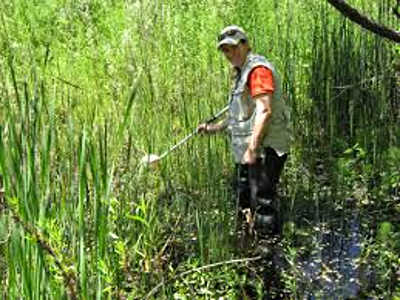
LAKEPORT, Calif. – The Lake County Library invites the public to get to know about some of Lake County’s many-legged residents on Saturday, May 16.
Dr. Jamesina “Jamie” Scott, district manager and research director for Lake County Vector Control District, introduces “Lake County Insects and other Critters” as part of the library’s free lecture series Know Lake County.
The program will begin at 2 p.m. at Lakeport Library, 1425 N. High St.
Scott will talk about the Clear Lake gnat, rice flies and mosquitoes and how they differ.
She will bring live specimens of each and display boxes of other local insects. Scott will talk about some of the other common insects and arthropods in Lake County and she will answer questions from the audience.
She says, “Thanks for the opportunity to come out and talk bugs!”
Scott has presented several programs at the library in the past which have drawn large audiences and much interest. Her enthusiasm for her subject is apparent to her audience.
The Know Lake County programs will take place on the third Saturday of each month from February through December at 2 p.m. at Lakeport Library.
Know Lake County delves into many facets of Lake County with family-friendly programs designed to inform and entertain local residents about Lake County.
For more information about Know Lake County and other library programs call 707-263-8817.
Lectures scheduled in coming months will feature the Lake County Master Gardeners, the Taylor Observatory and Anderson Marsh Interpretive Association.
The year will conclude with programs on Lake County’s prehistory, Konocti Regional Trails, the Soper Reese Theatre and the Children’s Museum of Art and Science.
Know Lake County’s full schedule is posted on the Know Lake County Web site at www.co.lake.ca.us/Government/Directory/Lake_County_CA__Library/KLC.htm . The schedule is subject to change without notice.
The Lake County Library is on the Internet at http://library.co.lake.ca.us and Facebook at www.facebook.com/LakeCountyLibrary .
Library events are also posted at http://www.co.lake.ca.us/Government/Directory/Lake_County_CA__Library/Calendar.htm .
Jan Cook works for the Lake County Library.
With emergency drought conditions persisting throughout California, the State Water Resources Control Board Tuesday adopted an emergency regulation requiring an immediate 25 percent reduction in overall potable urban water use statewide in accordance with Gov. Jerry Brown’s April 1 executive order.
The governor’s executive order required, for the first time in the state’s history, mandatory conservation for all residents and directed several state agencies, including the State Water Board, to take immediate action to safeguard the state’s remaining potable urban water supplies in preparation for a possible fifth year of drought.
A 25 percent savings in potable urban water use amounts to more than 1.2 million acre-feet of water over the next nine months, or nearly as much water as is currently in Lake Oroville.
The new rules also include a requirement that smaller water suppliers like those in Lake County – which serve fewer than 3,000 connections – must either reduce water use by 25 percent, or restrict outdoor irrigation to no more than two days per week.
These smaller urban suppliers, that collectively serve less than 10 percent of Californians, must submit a report on Dec. 15 to demonstrate compliance, the state said.
Tuesday’s action follows the release of water production figures for the month of March which registered only a slight increase from the amount of water saved in the prior month.
The amount of water conserved in March 2015, as compared to March 2013 was 3.6 percent, up less than one percent from February’s results.
Since the State Water Board adopted its initial emergency urban conservation regulation in July 2014, voluntary statewide conservation efforts have reached 9 percent overall – far short of the 20 percent Gov. Brown called for in 2014.
“This is the drought of the century, with greater impact than anything our parents and grandparents experienced, and we have to act accordingly,” said Felicia Marcus, chair of the State Water Resources Control Board.
“Today we set a high but achievable bar, with the goal of stretching urban California’s water supply,” Marcus said. “We have to face the reality that this drought may continue and prepare as if that’s the case. If it rains and snows next winter, we celebrate. If the drought continues, we’ll be glad we took difficult but prudent action today. It’s the responsible thing to do.”
Conservation standard
The emergency regulation identifies how much water communities must conserve based on their average residential water use, per person per day, last summer.
Every person should be able keep indoor water use to no more than 55 gallons per day. For the most part, the amount of water that each person uses in excess of this amount is water that is applied to lawns and other ornamental landscapes.
On average, 50 percent of total residential use is outdoors, in some cases up to 80 percent. To save water now, during this drought emergency, the regulation targets these outdoor uses.
Communities that are approaching, at or below the indoor target, are assigned a modest conservation standard while communities that use water well above the indoor target will be asked to do much more.
To reduce water use by 25 percent statewide, the regulation adopted by the board this week places each urban water supplier into one of eight tiers which are assigned a conservation standard, ranging between four percent and 36 percent.
Each month, the State Water Board will compare every urban water suppliers’ water use with their use for the same month in 2013 to determine if they are on track for meeting their conservation standard.
Local water agencies will determine the most cost effective and locally appropriate way to achieve their standard.
The State Water Board will be working closely with water suppliers to implement the regulations and improve local efforts that are falling short.
“This likely will result in all communities significantly cutting back on outdoor watering, particularly ornamental landscapes surrounding homes, institutions, and businesses, resulting in many golden landscapes statewide,” said Marcus. “This will be a heavy lift for some, but we believe that the regulatory strategy adopted today is doable – in fact, many communities that have focused on conserving water have already achieved significant conservation without losing their landscapes.”
Residential customers of water suppliers with a conservation standard of 36 percent currently use between 216 and 614 gallons of water per person per day during the months of July, August, and September.
Reducing their water use by 36 percent will still leave these residents with a minimum of 137 and up to 393 gallons of water per person per day; far more than the accepted standard of 55 gallons per person per day for indoor use.
The difference between 55 gallons per person per day and 137 – 393 gallons per person per day means that these residents will still have water available for outdoor irrigation. Communities using less than 65 gallons per person per day will be required to reduce their overall water use by 8 percent.
“Over the longer term, we have many ways to extend our precious water resources, particularly in urban areas – conservation, recycling, stormwater capture, and desalination in appropriate cases have great promise. Many communities have done a lot already, or have ambitious goals that we hope to help them achieve. In the short run however, conservation is the cheapest, fastest and smartest way to become more resilient in the face of drought today and climate change in the future,” said Marcus.
Summary of new requirements
– The conservation savings for all urban water suppliers (serving more than 3,000 connections) are allocated across nine tiers of increasing levels of residential gallons per capita per day (R-GPCD) water use to reduce water use by 25 percent statewide and will take effect June 1.
– Smaller water suppliers (serving fewer than 3,000 connections) must either reduce water use by 25 percent, or restrict outdoor irrigation to no more than two days per week. These smaller urban suppliers, that collectively serve less than 10 percent of Californians, must submit a report on December 15, 2015 to demonstrate compliance.
– Commercial, Industrial and Institutional properties that are not served by a water supplier (or are self-supplied, such as by a groundwater well) also must either reduce water use by 25 percent or restrict outdoor irrigation to no more than two days per week. No reporting is required but these properties must maintain documentation of their water use and practices.
– The new prohibitions in the Executive Order apply to all Californians and will take effect immediately upon approval of the regulation by the Office of Administrative Law. These include:
– Irrigation with potable water of ornamental turf on public street medians; and
– Irrigation with potable water outside of newly constructed homes and buildings not in accordance with emergency regulations or other requirements established by the Building Standards Commission and the Department of Housing and Community Development.
These are in addition to the existing restrictions that prohibit:
– Using potable water to wash sidewalks and driveways;
– Allowing runoff when irrigating with potable water;
– Using hoses with no automatic shutoff nozzles to wash cars;
– Using potable water in decorative water features that do not recirculate the water;
– Irrigating outdoors during and within 48 hours following measureable rainfall; and
– Restaurants serving water to their customers unless the customer requests it.
Additionally, hotels and motels must offer their guests the option to not have their linens and towels laundered daily and prominently display this option in each guest room.
Enforcement
In addition to other powers, local agencies can fine property owners up to $500 a day for failure to implement the water use prohibitions and restrictions.
The State Water Board can issue informational orders, conservation orders or cease and desist orders to water suppliers for failure to meet their conservation standard.
Water agencies that violate cease and desist orders are subject to a civil liability of up to $10,000 a day.
Next steps
Following board adoption, the regulation will be submitted to the Office of Administrative Law, which has 10 days to approve or deny the regulation.
If approved by the Office of Administrative Law, the regulation will take effect immediately and remain in effect for 270 days from that date.
For more information, please visit the Emergency Water Conservation Web site, http://www.swrcb.ca.gov/waterrights/water_issues/programs/drought/emergency_regulations_waterconservation.shtml .
LAKE COUNTY, Calif. – Some changes are in store for the hazardous materials collection services that have been offered to Lake County residents through the long-running Hazmobile program.
May will be the last month that Lake County Public Services will use the Mendocino County contractor that has taken the service – in the form of the Hazmobile – to a variety of locations around Lake County over the last several years, according to Public Services Director Caroline Chavez.
The Hazmobile will make its last stop in Middletown from 9 a.m. to 1 p.m. Friday, May 15, and Saturday, May 16, at South Lake County Fire Station, 21095 Highway 175.
The Public Services Integrated Waste Management Division and the Department of Resources Recycling and Recovery, CalRecycle, have subsidized the Hazmobile as a public service to Lake County residents. The final fiscal year 2014-15 county budget stated that the program's cost was $90,000.
Chavez said that, beginning in June, the services formerly offered by the Hazmobile will be handled by two franchise haulers contracted with the county of Lake.
The new hazardous waste collection responsibilities have been included in the updated contracts between the haulers and the county, she said.
Hazardous waste collection services will now rotate between oppose ends of the lake, in Clearlake and Lakeport, Chavez said, rather than visiting various Lake County communities, including Kelseyville, Lucerne, Middletown and Upper Lake.
Chavez said Clearlake and Lakeport have been the two places where there has been the heaviest usage for the Hazmobile services.
In Clearlake, Southlake Refuse will host the drop-offs at the Eastlake Landfill, 16016 Davis St., telephone, 707-994-8614; Web, www.southlakerefuse.com .
In Lakeport, Lake County Waste Solutions will hold the drop-offs at its transfer station at 230 Soda Bay Road, telephone, 888-718-4888 or 707-234-6400; Web, www.candswaste.com .
The hazardous materials collection services will continue on the third Friday and Saturday of each month at one of the two locations, said Chavez. Dates and times will be announced ahead of time.
As for the rest of the program, “Everything else is the same,” said Chavez.
She said households will still be offered the chance to drop off up to 15 gallons of toxic items free of charge. Fees will be charged for amounts over 15 gallons.
The materials the program will continue to accept include paint, solvents, fuels, five-gallon propane tanks, pool chemicals, pesticides, herbicides, batteries, up to 60 linear feet of fluorescent light tubes and other toxic materials that cannot be put in the trash.
The program does not accept radioactive materials or infectious wastes. It also does not take televisions, computer monitors, ammunition and explosives.
For more information about recycling or solid waste services, visit www.recycling.co.lake.ca.us , call the Recycling Hotline at 707-263-1980 or Public Services at 707-262-1618.
Email Elizabeth Larson at