How to resolve AdBlock issue?
News
NOAA Fisheries’ Northwest Fisheries Science Center in Seattle has mobilized extra scientists to join a fisheries survey along the West Coast to chart an extensive harmful algal bloom that spans much of the West Coast and has triggered numerous closures of important shellfish fisheries in Washington, Oregon and California.
The bloom stretches from the Central California Coast north to Washington and possibly Alaska, and involves some of the highest concentrations of the natural toxin domoic acid ever observed in Monterey Bay and off the Central Oregon Coast.
In early June elevated toxin levels led shellfish managers to close the southern Washington Coast to Dungeness crab fishing, the largest-ever closure of Washington’s multi-million-dollar crab fishery.
“We’re taking advantage of our active surveys to focus research on a serious concern for coastal communities and the seafood industry,” said Eileen Sobeck, assistant administrator for NOAA fisheries. “The better we understand what’s happening out on the water, the better we can address the impacts.”
While localized blooms of marine algae that naturally produce domoic acid are common in spring, the bloom that began earlier this year has grown into the largest and most severe in more than a decade.
Sardines, anchovy and other fish that feed on the algae and other microorganisms known as plankton can accumulate the toxin, in turn poisoning birds and sea lions that feed on them.
“This is unprecedented in terms of the extent and magnitude of this harmful algal bloom and the warm water conditions we’re seeing offshore,” said Vera Trainer, manager of the Marine Microbes and Toxins Program at the Northwest Fisheries Science Center (NWFSC) in Seattle. “Whether they’re related we can’t really say yet, but this survey gives us the opportunity to put these pieces together.”
State agencies monitor toxin levels closely and impose harvest closures where necessary to ensure that all commercial seafood remains safe to eat. NOAA Fisheries and others are also developing advanced robotic systems and models to better detect and forecast harmful algal blooms. See state agency Web sites linked below for the latest details on closures in California, Oregon and Washington.
The NWFSC’s Marine Microbes and Toxins Program is working closely with the University of California Santa Cruz, University of Washington, Quileute Nation and Makah Tribe to add scientists to an already scheduled fisheries survey that left Monday from Newport, Ore., aboard the NOAA research ship Bell M. Shimada.
The survey is a partnership between the NWFSC in Seattle and the Southwest Fisheries Science Center in La Jolla, Calif., to assess sardine and hake populations on the West Coast.
The additional scientists will examine levels of marine toxins and the organisms that produce them.
The researchers will collect samples of water, the microscopic diatoms that produce domoic acid and another form of marine microorganism called dinoflagellates that produce another type of toxin called paralytic shellfish toxins (PSTs) that have also been detected in some shellfish. Domoic acid and PSTs are rarely found in shellfish at the same time, but they have been this year.
The scientists will also sample plankton-feeding fish such as anchovies and sardines that concentrate the toxins and transfer them to other marine animals.
Research during previous harmful algal blooms found “hot spots” of toxin-producing organisms along the West Coast, Trainer said, and the survey will search for similar concentrations this year.
The Ecology and Oceanography of Harmful Algal Blooms (ECOHAB) Research Program is completing a study of one such hot spot in California’s Monterey Bay and provides funding for UC Santa Cruz to analyze samples that will be collected during the survey.
The results will help investigate connections between the current bloom and unusually warm ocean temperatures that have dominated the West Coast since last year, which may offer a preview of ocean conditions likely to become more common with climate change.
California officials have warned against consuming recreationally harvested mussels and clams, commercially or recreationally caught anchovy and sardines, or the internal organs of commercially or recreationally caught crab taken from Monterey and Santa Cruz counties.
Officials in Oregon have halted all shellfish harvesting from the Columbia River south to Tillamook Head and closed the entire state coastline to razor clamming because of elevated levels of domoic acid. High levels of PSTs have led to the closure of mussel harvesting along the Oregon Coast north of Gold Beach.
All coastal Washington beaches have also been closed to razor clamming, at an estimated loss of more than $9 million in revenue for coastal communities in the last month alone.
Background on the Harmful Algal Bloom and Hypoxia Research and Control Act is available at http://coastalscience.noaa.gov/research/habs/habhrca/ .
For current closures on the West Coast, visit the following sites:
– California: http://www.dfg.ca.gov/marine/healthadvisory.asp ;
– Oregon: http://www.oregon.gov/oda/programs/foodsafety/shellfish/pages/shellfishclosures.aspx ;
– Washington: https://fortress.wa.gov/doh/eh/maps/biotoxin/biotoxin.html .
LAKE COUNTY, Calif. – Several new cats and kittens are featured for adoption at Lake County Animal Care and Control this week.
Gray and orange tabbies, calicoes and black cats and kittens, with coats of different lengths, are available to new homes.
In addition to spaying or neutering, cats that are adopted from Lake County Animal Care and Control are microchipped before being released to their new owner. License fees do not apply to residents of the cities of Lakeport or Clearlake.
If you're looking for a new companion, visit the shelter. There are many great pets there, hoping you'll choose them.
In addition to the animals featured here, all adoptable animals in Lake County can be seen here: http://bit.ly/Z6xHMb .
The following cats at the Lake County Animal Care and Control shelter have been cleared for adoption (other cats pictured on the animal control Web site that are not listed here are still “on hold”).
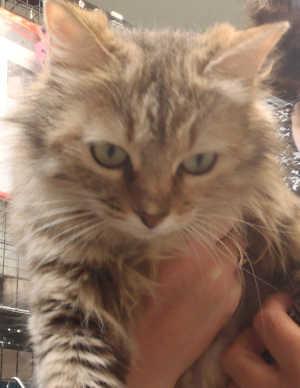
Domestic longhair mix cat
This domestic longhair mix mama cat has gray tabby coat.
Shelter staff calls her “super sweet.”
She's in cat room kennel No. 10, ID No. 2134.
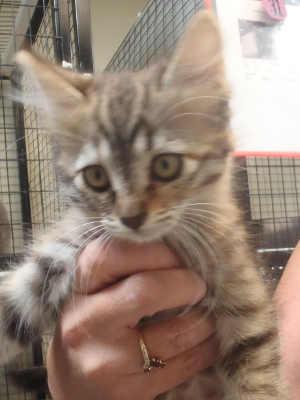
Domestic longhair mix kitten
This domestic longhair mix kitten of undetermined gender has a gray tabby coat.
The kitten is in cat room kennel No. 10a, ID No. 2136.

Domestic longhair mix kitten
This domestic longhair mix kitten of undetermined gender has a gray tabby coat.
The kitten is in cat room kennel No. 10b, ID No. 2137.
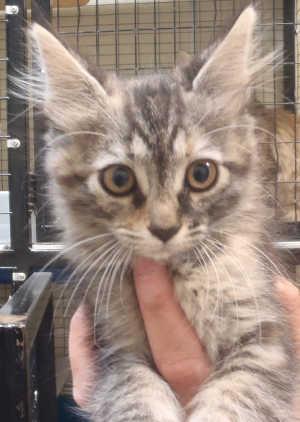
Domestic longhair mix kitten
This domestic longhair mix kitten of undetermined gender has a gray tabby coat.
The kitten is in cat room kennel No. 10c, ID No. 2138.
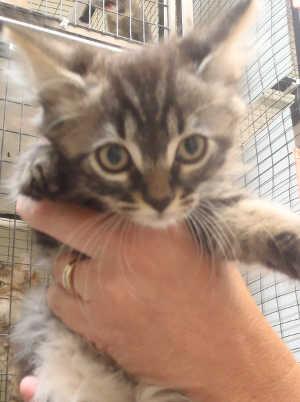
Domestic longhair mix kitten
This domestic longhair mix kitten of undetermined gender has a gray tabby coat.
The kitten is in cat room kennel No. 10d, ID No. 2139.
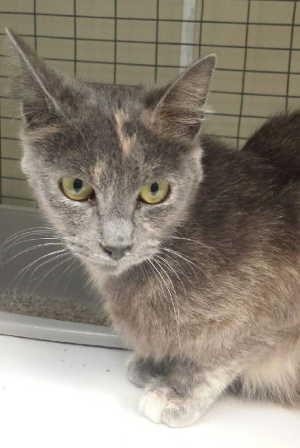
Domestic short hair mix
This female domestic short hair mix has a coat with calico markings.
She's in cat room kennel No. 12, ID No. 2106.
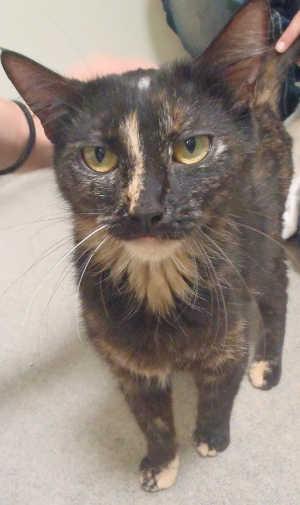
'Mom'
“Mom” is a pretty domestic short hair mix with calico markings.
She's in cat room kennel No. 27, ID No. 2213.
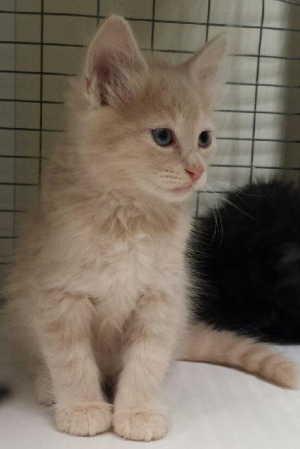
Domestic medium hair mix kitten
This domestic medium hair mix kitten has a buff-colored coat.
He's in cat room kennel No. 29a, ID No. 2107.
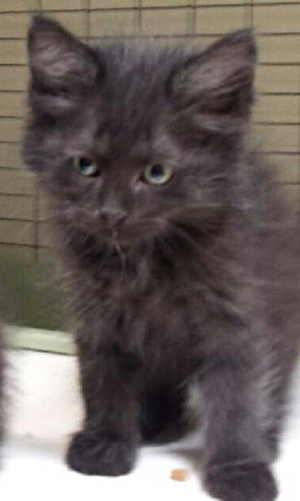
Domestic short hair mix kitten
This domestic short hair mix kitten has a black coat.
He's in cat room kennel No. 29c, ID No. 2109.
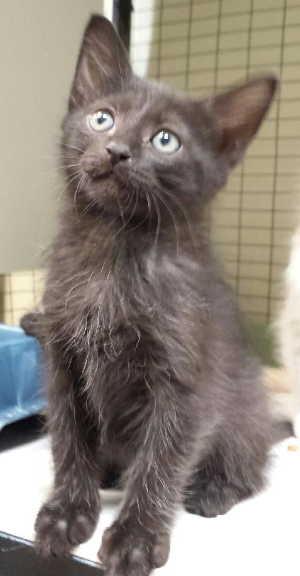
Domestic short hair mix kitten
This domestic short hair mix kitten has a black coat.
He's in cat room kennel No. 29d, ID No. 2110.
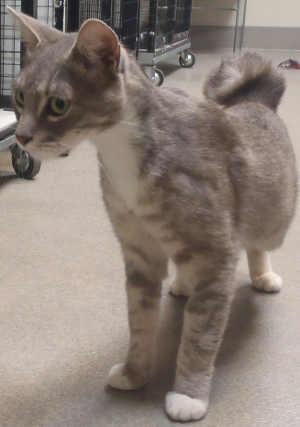
Domestic short hair mix
This adult domestic short hair mix of undetermined gender has a gray tabby and white coat.
The cat is in cat room kennel No. 31, ID No. 2373.
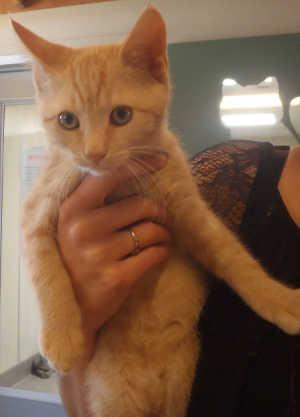
Orange tabby kitten
This male orange tabby kitten has a short coat.
He's in cat room kennel No. 73a, ID No. 2404.
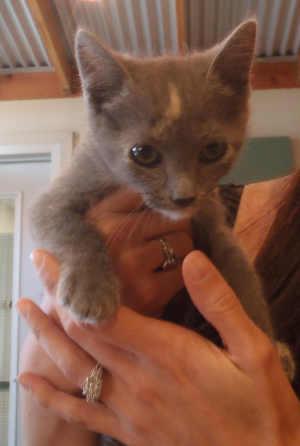
Domestic short hair mix kitten
This female domestic short hair mix kitten has a gray coat.
She's in cat room kennel No. 73b, ID No. 2030.
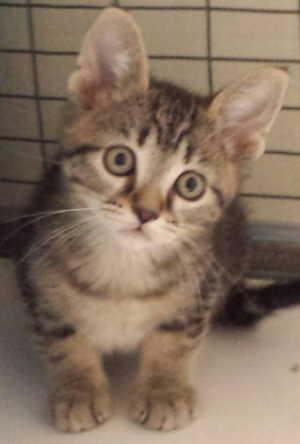
Domestic short hair mix kitten
This male domestic short hair mix kitten has a gray tabby coat.
He's in cat room kennel No. 91a, ID No. 2010.
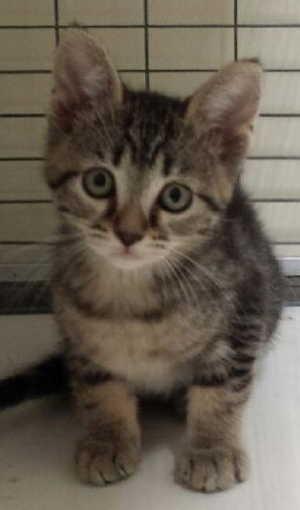
Domestic short hair mix kitten
This male domestic short hair mix kitten has a gray tabby coat.
He's in cat room kennel No. 91b, ID No. 2011.
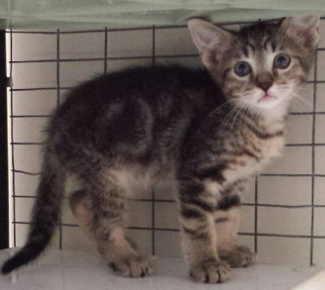
Domestic short hair mix kitten
This male domestic short hair mix kitten has a gray tabby coat.
She's in cat room kennel No. 91c, ID No. 2012.
Adoptable cats also can be seen at http://www.co.lake.ca.us/Government/Directory/Animal_Care_And_Control/Adopt/Cats_and_Kittens.htm or at www.petfinder.com .
Please note: Cats listed at the shelter's Web page that are said to be “on hold” are not yet cleared for adoption.
To fill out an adoption application online visit http://www.co.lake.ca.us/Government/Directory/Animal_Care_And_Control/Adopt/Dog___Cat_Adoption_Application.htm .
Lake County Animal Care and Control is located at 4949 Helbush in Lakeport, next to the Hill Road Correctional Facility.
Office hours are Monday through Friday, 11 a.m. to 5 p.m., and 11 a.m. to 3 p.m., Saturday. The shelter is open from 11 a.m. to 4 p.m. Monday through Friday and on Saturday from 11 a.m. to 3 p.m.
Visit the shelter online at http://www.co.lake.ca.us/Government/Directory/Animal_Care_And_Control.htm .
For more information call Lake County Animal Care and Control at 707-263-0278.
Email Elizabeth Larson at
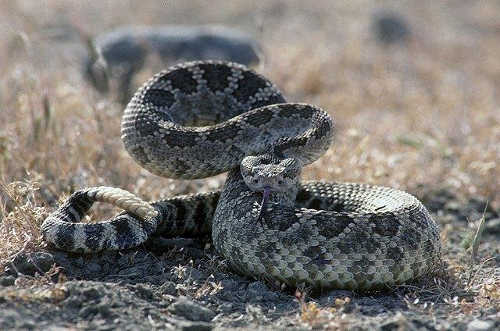
As the warm weather returns, humans are not the only species coming out to enjoy the sun. Snakes, too, can be found basking in the sun’s rays.
Although most snakes in the state are harmless, the California Department of Fish and Wildlife (CDFW) reminds the public to steer clear of the venomous rattlesnake and know what to do if one strikes.
All of California, from the marshlands to the mountains, is snake country. You don’t even have to be in the great outdoors to discover a snake.
They can be found in your garden and sometimes even your garage, but there is no need to panic. Snakes play an important role in the ecosystem, including keeping the rodent population under control.
Rattlesnakes are generally not aggressive and usually strike only when threatened or deliberately provoked. Given room, they will retreat.
Most snake bites occur when a rattlesnake is handled or accidentally touched by someone walking or climbing. The majority of snakebites occur on the hands, feet and ankles.
On rare occasions, rattlesnakes can cause serious injury to humans. The California Poison Control Center notes that rattlesnakes account for more than 800 bites each year in the U.S., causing one or two deaths.
Most bites occur between the months of April and October when snakes and humans are most active outdoors.
The potential of running into a rattlesnake should not deter anyone from venturing outdoors, as there are precautions that can be taken to lessen the chance of being bitten.
The dos and don’ts in snake country
Rattlesnakes are not confined to rural areas. They have been found in urban areas, on riverbanks and lakeside parks and at golf courses. Startled rattlesnakes may not rattle before striking defensively.
CDFW recommends the following safety precautions to reduce the likelihood of a rattlesnake bite:
– Wear hiking boots and loose-fitting long pants. Never go barefoot or wear sandals when walking through wild areas.
– When hiking, stick to well-used trails. Avoid tall grass, weeds and heavy underbrush where snakes may hide during the day.
– Do not step or put your hands where you cannot see, and avoid wandering around in the dark. Step ON logs and rocks, never over them, and be especially careful when climbing rocks or gathering firewood. Check out stumps or logs before sitting down, and shake out sleeping bags before use.
– Never grab “sticks” or “branches” while swimming in lakes and rivers. Rattlesnakes can swim.
– Be careful when stepping over doorsteps as well. Snakes like to crawl along the edge of buildings where they are protected on one side.
– Never hike alone. Always have someone with you who can assist in an emergency.
– Do not handle a freshly killed snake, as it can still inject venom.
– Teach children early to respect snakes and to leave them alone.
Keeping snakes out of the yard
The best protection against rattlesnakes in the yard is a “rattlesnake proof” fence.
The fence should either be solid or with mesh no larger than one-quarter inch. It should be at least 3 feet high with the bottom buried a few inches in the ground. Slanting your snake fence outward about a 30-degree angle will help.
Keep vegetation away from the fence and remove piles of boards or rocks around the home. Use caution when removing those piles – there may already be a snake there.
Encourage and protect natural competitors like gopher snakes, kingsnakes and racers. Kingsnakes actually kill and eat rattlesnakes.
What to do in the event of a snake bite
Though uncommon, rattlesnake bites do occur, so have a plan in place for responding to any situation.
Carry a cell phone, hike with a companion who can assist in an emergency and make sure that family or friends know where you are going and when you will be checking in.
– Stay calm.
– Wash the bite area gently with soap and water.
– Remove watches, rings, etc, which may constrict swelling.
– Immobilize the affected area.
– Transport safely to the nearest medical facility. For more first aid information, please visit California Poison Control at www.calpoison.com .
What you should NOT do after a rattlesnake bite:
– DON’T apply a tourniquet.
– DON’T pack the bite area in ice.
– DON’T cut the wound with a knife or razor.
– DON’T use your mouth to suck out the venom.
– DON’T let the victim drink alcohol.
More information about rattlesnakes can be found at the following Web sites: Photos and natural history, http://goo.gl/BAoabO ; UC Davis Integrative Pest Management, www.californiaherps.com/info/rattlesnakeinfo.html .
MIDDLETOWN, Calif. – A fundraiser is now under way in Middletown in order to create a summertime event for families at the community's new park.
Community member Marlene Elder is working with the Middletown Area Merchants Association on the goal of bringing movies to Middletown Square Park, located in front of the Middletown Library and Senior Center.
Tanya Striedieck, owner of Star Gardens Nursery and secretary of the association, said the merchants group is acting as the umbrella organization for the effort.
“Marlene really wanted to do this,” she said.
Striedieck said she heard Elder speak about the movies plan at a Middletown Area Town Hall meeting. Later, Elder came into the nursery and they began to talk about the project.
It was Striedieck who took the matter to the association, which had an informal discussion on it in April, with the board voting to support it in May.
There now is an association committee working with Elder on ironing out the details, said Striedieck.
One of the main focuses now is fundraising, Striedieck and Elder said.
“We need to get the money raised to get the equipment first,” said Elder.
Hardester's Market is conducting a fundraiser for the movies project, with people able to round up to the nearest dollar – or add more if they would like – to their bill when they check out, Elder said.
She said they are aiming to raise $6,000 to cover equipment – including a projector – as well as fliers and advertising, and other random expenses.
Striedieck said Hardester's has agreed to help pay movie licensing fees, with an association member offering the use of sound equipment.
As for when the showings of family friendly movies are set to start, “We're hoping for July, but we'll see,” said Elder.
At the Thursday Middletown Area Town Hall meeting, Elder updated community members on the movie plan and the Hardester's fundraiser.
She said the movies will be shown for free, but there will be a charge for concessions, which will be handled by the Boy Scouts.
Middletown resident Monica Rosenthal thanked Elder for her efforts on the movies project, noting she's been working on it for two years.
The Middletown Area Merchants Association can be reached through its Web site at http://www.middletownareamerchants.com .
Email Elizabeth Larson at
“Well, take me back down, cool water flows, yeah
Let me remember things I love
Stoppin' at the log where catfish bite
Walkin' along the river road at night
Barefoot girls dancin' in the moonlight”
– from “Green River” by John Fogerty, Creedence Clearwater Revival
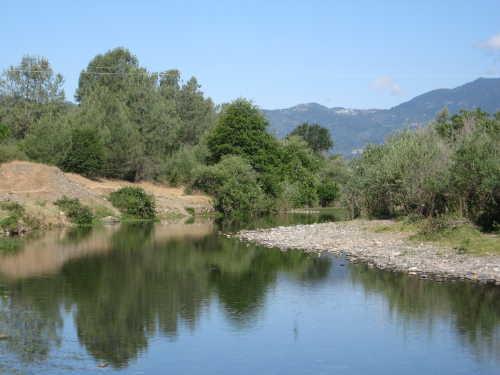
LAKE COUNTY, Calif. – We have an assortment of creeks coiling throughout our watershed here in Lake County.
Putah Creek is one of Lake County's key creeks, winding down from its headwaters in the Mayacamas Mountains to the Yolo Bypass tributary.
The source of this creek is attributed to springs which are located on Cobb Mountain's east side. Here, you can see native alder and willow trees, shading the lovely, cool pools which are ideal for trout.
This waterway flows through three counties: Lake, Napa and Solano.
Putah Creek's name has been the source of conjecture over the years. The Lake Miwok Indians called it puta wuwwe, or “grassy creek.”
Other accounts, such as documents from Mission San Francisco Solano, or Sonoma Mission hold that the Indians of this area were named Putto or Puttato. In 1844 the creek was named Arroyo de lost Putos.
After several similar names were ascribed to the creek over time, the current version of the name Putah Creek stuck. This was due to the Bancroft maps, and adopted by the United States Geological Survey.
Our streams and waterways are in demand more than ever, with the ongoing drought.
Conditions like these can be detrimental to a creek's diversity, and there is a potential for a decline in native aquatic organisms – including valuable fish.
Here is where our dedicated Department of Fish and Wildlife biologists play a key role in assessing the health of our waterways.
I had the good fortune to meet one such state biologist, and his two assistants, Juan Torres and Lanette Richardson at the recent East Lake Conservation District's “Field Day in the Creek” on Putah Creek, recently.
Ben Ewing is a district fisheries biologist for the California Department of Fish and Wildlife.
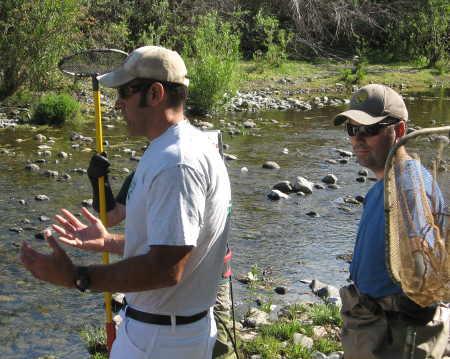
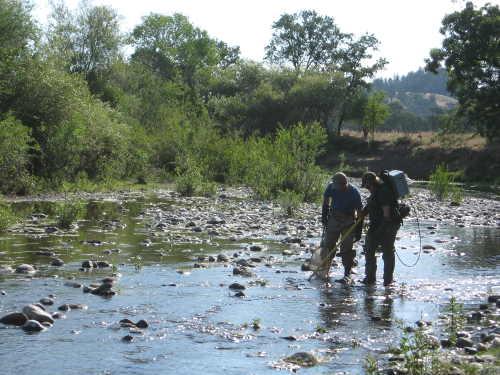
I asked Ewing what his essential job entailed. He replied, “I assess the fisheries in Lake, Amador, Alpine and Calaveras counties. To assess the fisheries we will use various sampling methods such as backpack and boat electrofishers, seines, traps, etc.”
For small creeks Ewing said they use a backpack shocker, and for lakes that they can launch a boat in, we will use a boat.
“We try and do the surveys as often as needed, but there are a lot of waters in my district and it is very difficult to get to all of them,” He said. “We will also sample fisheries by doing creel surveys in which anglers are asked how their fishing was.”
Ewing said the information gained helps the agency make management decisions on these waters. He does write ups on waters he has surveyed, and the information can be looked at for others to determine the “quality of the fishery.”
He's responsible for private stocking permits, which entails assessing people’s property to see if they are able to plant certain fish on their property, and for the state trout plants in the four counties where he works.
Ewing routinely give talks and presentations to the public at schools, town hall meetings, sporting shows and fishing clubs to answer questions they have about fisheries.
“A lot of backpacking and field work is involved with this job and I spend a lot of time in the field, which is great,” he said.
Putah Creek has a local claim to fame aspect today. According to a Rolling Stone Magazine article, singer John Fogerty, formerly of the band Creedence Clearwater Revival named the song, “Green River” after our own Putah Creek.
The creek has a tendency to “green up” at times due to vascular plants and algae, and Fogerty frequented Putah Creek near the town of Winters during his youth.
“I can hear the bullfrog callin' me how
Wonder if my rope's still hangin' to the tree
Love to kick my feet 'way down the shallow water
Shoe fly, dragonfly, get back 't your mother
Pick up a flat rock, skip it across Green River
Well!”
– from “Green River” by John Fogerty, Creedence Clearwater Revival
Kathleen Scavone, M.A., is an educator, potter, writer and author of “Anderson Marsh State Historic Park: A Walking History, Prehistory, Flora, and Fauna Tour of a California State Park” and “Native Americans of Lake County.” She also writes for NASA and JPL as one of their “Solar System Ambassadors.” She was selected “Lake County Teacher of the Year, 1998-99” by the Lake County Office of Education, and chosen as one of 10 state finalists the same year by the California Department of Education.

NICE, Calif. – Katherine and Ron Yoder of Nice have become the owners of the second quilt block to be placed in a location that can be viewed from the water trail on the Lake County Quilt Trail.
The new 4-foot by 4-foot block, “Ohio Star – 1790,” was inspired by a historic cloth quilt owned by Katherine Yoder and her three sisters. The original quilt has been dated back to the 1790s.
The story attached to the quilt is that it was stitched by the wives of President Washington's cabinet members. The quilt now is in the permanent collection of the Smithsonian.
The view of the quilt block, the 1940s-era redwood dock and the “summer cottage” from the water is quite an idyllic sight.
From the water the quilt block is next door and left of the Harbor Restaurant.

The Yoders feel that expanding the Lake County Quilt Trail with a water trail adds a fun and popular tourist attraction.
The quilt block was carefully installed over the water by Medford O'Donnell with help from Ron Yoder.
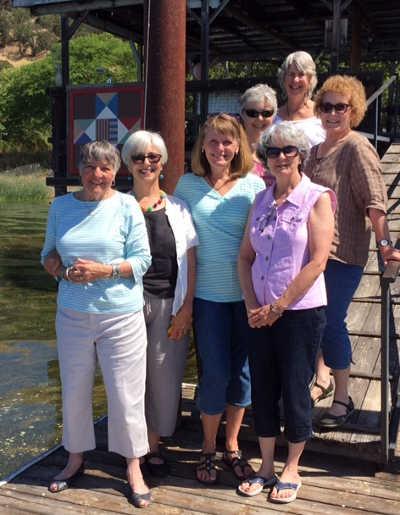
To celebrate the installation the Yoders served “cake on the lake” to the Lake County Quilt Trail team.
The first quilt block on the water trail is owned by Jim Perry of Corinthian Bay.
The Lake County Quilt Trail is an agricultural and tourism project designed to promote community pride.
The quilt block was drawn and painted by the Lake County Quilt Trail team, a group of dedicated quilters, graphic artists, painters, writers, carpenters and a videographer.
For more information about the Lake County Quilt Trail visit www.lakecountyquilttrail.com or the group's Facebook page.