 How to resolve AdBlock issue?
News
LAKE COUNTY, Calif. – Lake County Care and Control has a large group of dogs ready and waiting for adoption.
This week's available dogs include mixes of American Staffordshire Terrier, Chihuahua, dachshund, German Shepherd, Labrador Retriever, pit bull and terrier.
For those looking for lost pets as a result of the Valley fire, visit the Lake County Animal Care and Control Web site, which features additional dogs and cats that officials are looking to reunite with their families.
Dogs that are adopted from Lake County Animal Care and Control are either neutered or spayed, microchipped and, if old enough, given a rabies shot and county license before being released to their new owner. License fees do not apply to residents of the cities of Lakeport or Clearlake.
If you're looking for a new companion, visit the shelter. There are many great pets hoping you'll choose them.
In addition to the animals featured here, all adoptable animals in Lake County can be seen here: http://bit.ly/Z6xHMb .
The following dogs at the Lake County Animal Care and Control shelter have been cleared for adoption (additional dogs on the animal control Web site not listed are still “on hold”).

Male pit bull terrier
This male pit bull terrier has a short brown and white coat.
He was found at Highland Springs Park in Lakeport.
He's in kennel No. 3, ID No. 3854.
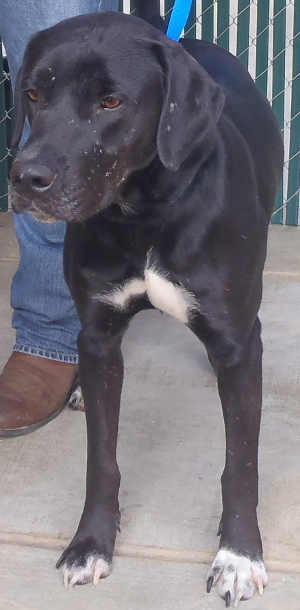
'Buddah'
“Buddah” is a male Labrador Retriever mix.
He has a short black coat with white markings.
She's in kennel No. 6, ID No. 3826.
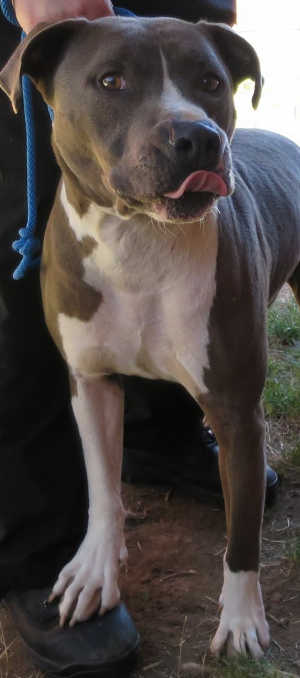
Male pit bull mix
This male pit bull terrier mix has a short gray and white coat.
He's in kennel No. 7, ID No. 3458.
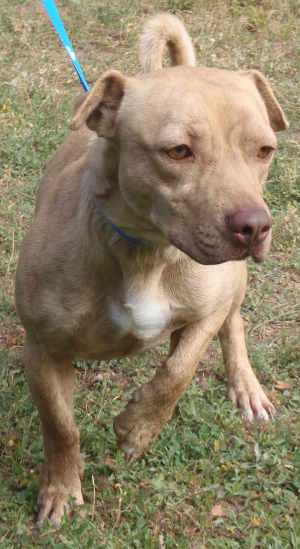
'Digger'
“Digger” is a male terrier mix with a short tan coat.
He was found on Lakeview Drive in Nice.
He's in kennel No. 8, ID No. 3693.

'Tortia'
“Tortia” is a female pit bull terrier mix, with a short brown coat.
Shelter staff said she is good with other dogs, but should not be in a home with cats or other small animals.
Tortia is in kennel No. 9, ID No. 3760.

Male pit bull terrier
This male pit bull terrier mix has a short brown and white coat.
He was found in Clearlake Oaks.
He's in kennel No. 17, ID No. 3719.

Chihuahua-dachshund mix
This female Chihuahua-dachshund mix has a short tricolor coat.
She was found on Big Valley Road in Finley.
She's in kennel No. 20a, ID No. 3867.

Chihuahua-dachshund mix
This female Chihuahua-dachshund mix has a short multi-colored coat coat, with blue merle-type markings.
She was found on Big Valley Road in Finley.
She's in kennel No. 20b, ID No. 3868.

Chihuahua-dachshund mix
This female Chihuahua-dachshund mix has a short multi-colored coat coat, with blue merle-type markings.
She was found on Big Valley Road in Finley.
She's in kennel No. 20c, ID No. 3869.
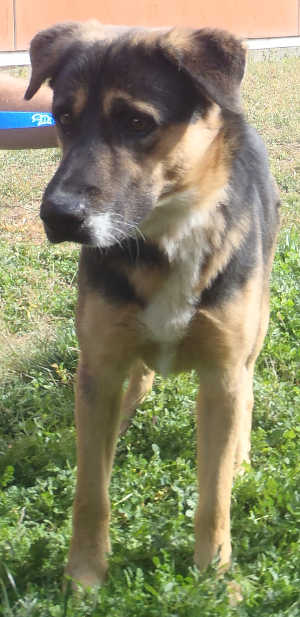
German Shepherd mix
This male German Shepherd mix has a short black and tan coat with white markings.
He was found on Fairway Drive in Kelseyville.
He's in kennel No. 23, ID No. 3820.
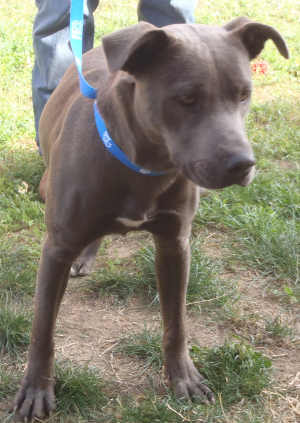
'Buddy'
“Buddy” is a male pit bull terrier mix with a short gray coat.
He was found on Lakeview Drive in Nice.
He's in kennel No. 25, ID No. 3694.

Female pit bull terrier mix
This female pit bull terrier mix has a short gray and white coat.
Shelter staff said she is a sweet dog.
She is in kennel No. 26, ID No. 3280.

'Princess'
“Princess” is a female American Staffordshire Terrier mix with a gray and white coat.
She was found on Atholl Road in Lucerne.
Shelter staff said she is good with other dogs – both small and large – but not good with cats. She is housebroken and doesn't jump up.
She is in kennel No. 27, ID No. 3832.

Female pit bull terrier
This female pit bull terrier mix has a short gray and white coat.
She's in kennel No. 30, ID No. 3851.

Female pit bull terrier
This female pit bull terrier mix has a short black coat with white marking.
She was found on Morgan Valley Road in Lower Lake.
She's in kennel No. 33, ID No. 3879.

'Oreo'
“Oreo” is a male Chihuahua mix.
Shelter staff said Oreo was surrendered by his owner, who couldn't afford to take care of him.
Oreo is described as a spunky little guy who is looking for some attention. He is housebroken, gets along with other dogs, both small and large. Come in and spend sometime in the play yard with him.
He's in kennel No. 34, ID No. 3790.
To fill out an adoption application online visit http://www.co.lake.ca.us/Government/Directory/Animal_Care_And_Control/Adopt/Dog___Cat_Adoption_Application.htm .
Lake County Animal Care and Control is located at 4949 Helbush in Lakeport, next to the Hill Road Correctional Facility.
Office hours are Monday through Friday, 11 a.m. to 5 p.m., and 11 a.m. to 3 p.m., Saturday. The shelter is open from 11 a.m. to 4 p.m. Monday through Friday and on Saturday from 11 a.m. to 3 p.m.
Visit the shelter online at http://www.co.lake.ca.us/Government/Directory/Animal_Care_And_Control.htm .
For more information call Lake County Animal Care and Control at 707-263-0278.
Email Elizabeth Larson at

Observations by the NASA/ESA Hubble Space Telescope have taken advantage of gravitational lensing to reveal the largest sample of the faintest and earliest known galaxies in the Universe.
Some of these galaxies formed just 600 million years after the Big Bang and are fainter than any other galaxy yet uncovered by Hubble.
The team has determined, for the first time with some confidence, that these small galaxies were vital to creating the Universe that we see today.
An international team of astronomers, led by Hakim Atek of the Ecole Polytechnique Fédérale de Lausanne, Switzerland, has discovered over 250 tiny galaxies that existed only 600-900 million years after the Big Bang – one of the largest samples of dwarf galaxies yet to be discovered at these epochs.
The light from these galaxies took over 12 billion years to reach the telescope, allowing the astronomers to look back in time when the universe was still very young.
Although impressive, the number of galaxies found at this early epoch is not the team's only remarkable breakthrough, as Johan Richard from the Observatoire de Lyon, France, pointed out, “The faintest galaxies detected in these Hubble observations are fainter than any other yet uncovered in the deepest Hubble observations.”
By looking at the light coming from the galaxies the team discovered that the accumulated light emitted by these galaxies could have played a major role in one of the most mysterious periods of the Universe's early history – the epoch of reionization.
Reionization started when the thick fog of hydrogen gas that cloaked the early Universe began to clear. Ultraviolet light was now able to travel over larger distances without being blocked and the Universe became transparent to ultraviolet light.
By observing the ultraviolet light from the galaxies found in this study the astronomers were able to calculate whether these were in fact some of the galaxies involved in the process.
The team determined, for the first time with some confidence, that the smallest and most abundant of the galaxies in the study could be the major actors in keeping the Universe transparent.
By doing so, they have established that the epoch of reionization – which ends at the point when the Universe is fully transparent – came to a close about 700 million years after the Big Bang.
Lead author Atek explained, “If we took into account only the contributions from bright and massive galaxies, we found that these were insufficient to reionize the Universe. We also needed to add in the contribution of a more abundant population of faint dwarf galaxies.”
To make these discoveries, the team utilized the deepest images of gravitational lensing made so far in three galaxy clusters, which were taken as part of the Hubble Frontier Fields ( http://frontierfields.org/ ) program.
These clusters generate immense gravitational fields capable of magnifying the light from the faint galaxies that lie far behind the clusters themselves. This makes it possible to search for, and study, the first generation of galaxies in the Universe.
Jean-Paul Kneib, co-author of the study from the Ecole Polytechnique Fédérale de Lausanne, Switzerland, explains, “Clusters in the Frontier Fields act as powerful natural telescopes and unveil these faint dwarf galaxies that would otherwise be invisible.”
Co-author of the study Mathilde Jauzac, from Durham University, UK, and the University of KwaZulu-Natal, South Africa, remarks on the significance of the discovery and Hubble's role in it,”Hubble remains unrivaled in its ability to observe the most distant galaxies. The sheer depth of the Hubble Frontier Field data guarantees a very precise understanding of the cluster magnification effect, allowing us to make discoveries like these.”
These results highlight the impressive possibilities of the Frontier Fields program with more galaxies, at even earlier time, likely to be revealed when Hubble peers at three more of these galaxy clusters in the near future.
KELSEYVILLE, Calif. – A message found written in a shared textbook at Kelseyville High School caused concern for school officials and led to an investigation this week.
Kelseyville Unified School District Superintendent Dave McQueen said a student found a phrase stating “school shooting tomorrow” in the textbook – which had been in a classroom for about two years – and showed it to school staff.
“All the students use it back and forth,” he said of the textbook, adding they didn't know who was responsible for writing the message.
McQueen said the message also appeared to be old – written a year ago, or possibly longer – but he nevertheless turned it over to the Lake County Sheriff's Office.
“It's one of those things where you don't know if it's two years old or it's one day old,” he said.
Deputy Cynthia Radoumis, who is the district's school resource officer, immediately went into investigative mode, McQueen said.
“We're still investigating it,” he said.
The district posted messages on its Web site and Facebook page on Thursday morning explaining the situation.
The messages did not indicate on which day the incident was threatened to have taken place. However, on Thursday evening, the district followed up with a Facebook message stating that school would be in normal session on Friday.
Some parents reacted angrily on the district's Facebook page, asking why McQueen didn't close down school, and recounting receiving phone calls from the school that gave them little information.
One student wrote to say she and other students did not attend school on Thursday due to their concerns and anxiety.
McQueen said he considered the need to possibly close the school for a day. Ultimately, after consulting law enforcement, he said he decided to keep school open as scheduled, adding that if he had believed students were in danger, he would have closed school.
One thing that, to McQueen, indicated that it likely was not a credible threat is that he did not hear any chatter on such a threat from students, and said they received no information about an actual individual making any plans for an attack.
“This was so ambiguous,” he said.
Aside from the reaction on social media, McQueen acknowledged getting some calls and other contacts from upset parents wanting to know why school wasn't closed.
He said he also received a lot of thank you messages from parents who felt the matter was handled appropriately.
McQueen emphasized that the district has taken precautionary measures and is following all of its safety plan procedures.
“Everything went smoothly the last couple of days,” he said Friday.
He said the district is looking out for students, and will continue to be vigilant about any possible threats.
“It doesn't matter if it's a false alarm,” he said. “The way things are happening nowadays, we're just going to be careful.”
Email Elizabeth Larson at
Driving too fast for conditions or driving aggressively can be costly and life changing. Failing to yield the right of way, making frequent lane changes, and tailgating are signs of aggressive driving.
To help prevent these driving behaviors and save lives, the California Highway Patrol is implementing a year-long statewide campaign to reduce the number of speed and aggressive driving-related collisions.
“Many safe drivers report feeling threatened by aggressive drivers,” CHP Commissioner Joe Farrow said. “Motorists should remain calm, patient, and courteous. Good drivers ensure their own behavior does not endanger, antagonize, or provoke other motorists.”
Speeding, along with aggressive driving, has increasingly become a danger to the motoring public, to pedestrians, and to individuals using alternate forms of transportation.
Data from the Statewide Integrated Traffic Records System in 2012 and 2013 indicates speed was a factor in approximately 43 percent of fatal and injury collisions in the state.
During this same period, more than 26,900 speed-related collisions led to the deaths of 252 people and the injury of approximately 39,000 others.
Although speed-related fatalities decreased, the number of speed-related injuries increased by 4.2 percent.
Increased enforcement, along with education, will be beneficial in preventing the number of speed-related collisions.
With the support of a federal traffic safety grant titled Reduce Aggressive Driving Incidents and Tactically Enforce Speed IV, the CHP is determined to educate motorists about the dangers of aggressive driving and to take appropriate enforcement action.
The primary goal of this grant is to reduce, by at least 5 percent, the number of fatal and injury traffic collisions where speed, improper turning, and driving on the wrong side of the road are primary collision factors.
To achieve this goal by Sept. 30, 2016, the CHP will combine statewide targeted enforcement with an active public awareness campaign, which includes at least 600 radar trailer deployments and a minimum of 200 traffic safety presentations throughout the state.
Funding for this program was provided by a grant from the California Office of Traffic Safety through the National Highway Traffic Safety Administration.
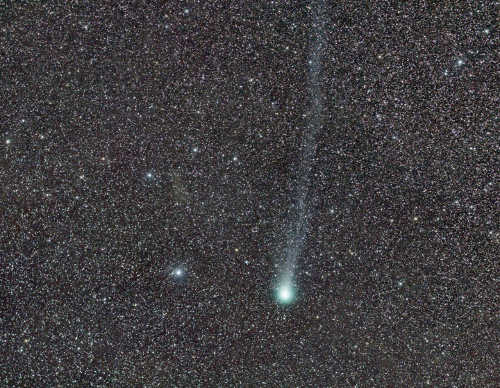
Comet Lovejoy lived up to its name by releasing large amounts of alcohol as well as a type of sugar into space, according to new observations by an international team.
The discovery marks the first time ethyl alcohol, the same type in alcoholic beverages, has been observed in a comet.
The finding adds to the evidence that comets could have been a source of the complex organic molecules necessary for the emergence of life.
“We found that comet Lovejoy was releasing as much alcohol as in at least 500 bottles of wine every second during its peak activity,” said Nicolas Biver of the Paris Observatory, France, lead author of a paper on the discovery published Oct. 23 in Science Advances. The team found 21 different organic molecules in gas from the comet, including ethyl alcohol and glycolaldehyde, a simple sugar.
Comets are frozen remnants from the formation of our solar system. Scientists are interested in them because they are relatively pristine and therefore hold clues to how the solar system was made. Most orbit in frigid zones far from the sun.
However, occasionally, a gravitational disturbance sends a comet closer to the sun, where it heats up and releases gases, allowing scientists to determine its composition.
Comet Lovejoy (formally cataloged as C/2014 Q2) was one of the brightest and most active comets since comet Hale-Bopp in 1997.
Lovejoy passed closest to the sun on Jan. 30, 2015, when it was releasing water at the rate of 20 tons per second.
The team observed the atmosphere of the comet around this time when it was brightest and most active. They observed a microwave glow from the comet using the 30-meter (almost 100-foot) diameter radio telescope at Pico Veleta in the Sierra Nevada Mountains of Spain.
Sunlight energizes molecules in the comet's atmosphere, causing them to glow at specific microwave frequencies (if microwaves were visible, different frequencies would be perceived as different colors).
Each kind of molecule glows at specific, signature frequencies, allowing the team to identify it with detectors on the telescope.
The advanced equipment was capable of analyzing a wide range of frequencies simultaneously, allowing the team to determine the types and amounts of many different molecules in the comet despite a short observation period.
Some researchers think that comet impacts on ancient Earth delivered a supply of organic molecules that could have assisted the origin of life. Discovery of complex organic molecules in Lovejoy and other comets gives support to this hypothesis.
“The result definitely promotes the idea the comets carry very complex chemistry,” said Stefanie Milam of NASA's Goddard Space Flight Center in Greenbelt, Maryland, a co-author on the paper.
“During the Late Heavy Bombardment about 3.8 billion years ago, when many comets and asteroids were blasting into Earth and we were getting our first oceans, life didn't have to start with just simple molecules like water, carbon monoxide, and nitrogen,” Milam said. “Instead, life had something that was much more sophisticated on a molecular level. We're finding molecules with multiple carbon atoms. So now you can see where sugars start forming, as well as more complex organics such as amino acids – the building blocks of proteins – or nucleobases, the building blocks of DNA. These can start forming much easier than beginning with molecules with only two or three atoms.”
In July, the European Space Agency reported that the Philae lander from its Rosetta spacecraft in orbit around comet 67P/Churyumov-Gerasimenko detected 16 organic compounds as it descended toward and then bounced across the comet's surface.
According to the agency, some of the compounds detected play key roles in the creation of amino acids, nucleobases, and sugars from simpler “building-block” molecules.
Astronomers think comets preserve material from the ancient cloud of gas and dust that formed the solar system.
Exploding stars (supernovae) and the winds from red giant stars near the end of their lives produce vast clouds of gas and dust.
Solar systems are born when shock waves from stellar winds and other nearby supernovae compress and concentrate a cloud of ejected stellar material until dense clumps of that cloud begin to collapse under their own gravity, forming a new generation of stars and planets.
These clouds contain countless dust grains. Carbon dioxide, water, and other gases form a layer of frost on the surface of these grains, just as frost forms on car windows during cold, humid nights. Radiation in space powers chemical reactions in this frost layer to produce complex organic molecules.
The icy grains become incorporated into comets and asteroids, some of which impact young planets like ancient Earth, delivering the organic molecules contained within them.
“The next step is to see if the organic material being found in comets came from the primordial cloud that formed the solar system or if it was created later on, inside the protoplanetary disk that surrounded the young sun,” said Dominique Bockelée-Morvan from Paris Observatory, a co-author of the paper.
LAKE COUNTY, Calif. – A Clearlake Oaks man who sustained major injuries in a Thursday night crash later was arrested on suspicion of driving under the influence.
Jerry Elkins, 58, sustained blunt force trauma in the two-vehicle crash, which occurred on Highway 20 west of Bartlett Springs Road between Nice and Lucerne at 9:15 p.m. Thursday, according to the California Highway Patrol's Clear Lake Area office.
Elkins, in a 2007 Dodge, was traveling eastbound on Highway 20 west of Bartlett Springs Road at an unknown speed when he crossed into the westbound lane and collided with the driver's side of a 2003 Cadillac driven by 19-year-old Benjamin Russell of Kelseyville, the CHP said.
The CHP said that after the collision Elkins' vehicle ran off the north side of Highway 20 and hit a wrought iron fence.
Firefighters arriving at the scene on Thursday night reported that the fence was at the location of the former Tulip Hill Winery, according to radio reports.
While Elkins suffered major injuries, Russell sustained minor injuries, specifically, bruising to his ribs, and cuts and scrapes on his left hand and arm, according to the CHP.
The CHP said Russell's passenger, 22-year-old Kelseyville resident Trevor Wilson, was uninjured.
Elkins was placed under arrest for suspicion of driving under the influence before he was flown via air ambulance to Santa Rosa Memorial Hospital for treatment of his injuries, the CHP said.
The CHP said Russell and Wilson were wearing their seat belts at the time of the wreck, but Elkins was not.
Email Elizabeth Larson at