 How to resolve AdBlock issue?
News
CLEARLAKE, Calif. – On Monday, Congressman Mike Thompson made a visit to Lake County, stopping by Lake County's landfill to see the impacts of the Valley fire.
Landfill Supervisor Kris Byrd, District 5 Supervisor Rob Brown and other county staff joined Thompson for a tour of the Eastlake Landfill in Clearlake Monday afternoon.
Byrd estimated that the impacts from last year's Valley fire have reduced the landfill's lifespan by seven to 10 years due to the sheer amount of debris that has been brought to the facility.
The fire, which began Sept. 12 and was fully contained Oct. 6, burned 76,067 acres, resulted in four confirmed deaths and destroyed nearly 2,000 structures, of which more than 1,300 were homes. It has been listed as the third most damaging fire in California history.
A massive cleanup project of the burned south county properties began in the fall, led by CalRecycle.
County officials estimated that 10 years of capacity was used up in five months' time as the Valley fire cleanup took place this fall and into the winter.
Byrd said that at the cleanup's peak the landfill had hundreds of trucks lined up to bring in the debris from the fire.
He said he had considered shutting down the facility due to the impact on the landfill and his staff.
Normally, it takes 10 years to get a landfill expansion process completed, and the county had about 12 to 15 years left on the landfill when it started taking in Valley fire debris, according to Byrd.
Byrd said the county is now working with the state water board and CalRecycle to expand the landfill in an expedited manner.
Thompson said he made the visit to see the impacts firsthand and to thank county staff for their hard work.
The landfill tour is documented in the video at the top of the page.
Email Elizabeth Larson at
COBB, Calif. – The next Valley Fire Long-Term Recovery Task Force meeting will be held Tuesday, March 1.
The meeting will begin at 6 p.m. at the Little Red Schoolhouse, located at 15780 Bottle Rock Road in Cobb.
“The public is welcome to attend so they can hear recovery updates first-hand. This also gives the fire survivors a venue to share their concerns and asks questions of members of the task force,” said Recovery Coordinator Carol Huchingson.
Huchingson has invited water and sewer system providers from the Cobb and Middletown areas to make presentations at the March 1 meeting.
The providers have been asked to provide updates on the status and capacities of their water systems since the Valley fire.
The Valley fire survey that was begun on Feb. 16 will end on Feb. 29. Huchingson advises any fire survivor who did not receive a phone call or a link to the survey to go online to www.LakeCountyRecovers.com or call 707-533-9271 to find out more information.
Huchingson also reported that the Work Right Donation center in Lakeport is closing this Friday, Feb. 26.
On Saturday, Feb. 27, there will be a yard sale held at the Work Right building for any remaining donations. The money earned from the sale will be donated to Valley Fire Relief funds.
The Lake County Valley Fire Recovery Task Force is a partnership of local, state, federal, and tribal representatives, as well as nonprofit organizations.
These agencies are working together to provide comprehensive services to aid in the recovery of Valley fire survivors and the rebuilding of Lake County.
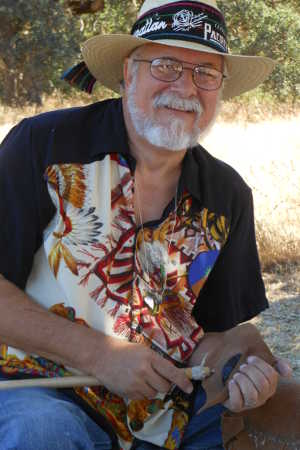
LUCERNE, Calif. – The Friends of Marymount California University (MCU) Lakeside and the Lake County Land Trust are pleased to announce the second presentation in a “Distinguished Speaker Series,” that started in February.
The next scheduled speaker is archaeologist Dr. John Parker, who will present on Thursday, March 3, at the MCU Lakeside campus in Lucerne from 6 to 7:30 p.m.
Dr. Parker will use artifacts and a PowerPoint presentation to take participants through the cultural, environmental and technological changes that occurred in Lake County during the past 20,000 years.
He will focus on the relationship between Lake County’s American Indian inhabitants and their environment.
Dr. Parker is a longtime Lake County resident.
In 1973 he began a 20-year study of Lake County’s prehistory. For 15 of those years, he lived in Clearlake, taught at Mendocino and Yuba community colleges, gave educational programs to civic clubs and community groups, conducted archaeological studies for landowners, and served as a planning commissioner for the city of Clearlake.
One of Dr. Parker’s important accomplishments was organizing public and political support for the purchase of the Anderson Marsh State Historic Park.
He is a Registered Professional Archaeologist, a life member of the Society for California Archaeology and a life member of the Lake County Historical Society where he currently serves as vice president as well as curation manager for the Ely Stage Stop and Country Museum.
His work has been seen on PBS, CBS Evening News, Good Morning America, CNN, FOX, in newspapers and in magazines such as People, Newsweek, Archaeology, Omni, Westways, American Film, Instructor, Sunset, California and Preservation News.
The campus is located at 3700 Country Club Drive and is the impressive building on the hill that is known by locals as “The Castle.” Parking directors and a shuttle will assist those attending this event.
The public is warmly invited and a $5 donation to benefit the Friends of MCU Lakeside scholarship fund is encouraged.
For more information, call 888-991-5253 or 707-262-0707, leave a message and someone will return your call.
The Friends of Marymount California University Lakeside is a new group with the goal of supporting and creating awareness of the educational opportunities of Lake County’s four-year university in Lucerne and raise funds for student scholarships.

LAKEPORT, Calif. – Looking for a dignified new friend to walk around the neighborhood with you?
This handsome male Doberman Pinscher is red in color with tan markings, and has a sweet disposition.
It appears that he has had some solid obedience training, as he knows basic commands and responds both to voice and hand signals, and walks well on a leash.
He's a large and grand-looking dog, and is expected to make a good companion for the person who appreciates him.
He's in kennel No. 23, ID No. 4461.
To fill out an adoption application online visit http://www.co.lake.ca.us/Government/Directory/Animal_Care_And_Control/Adopt/Dog___Cat_Adoption_Application.htm .
Lake County Animal Care and Control is located at 4949 Helbush in Lakeport, next to the Hill Road Correctional Facility.
Office hours are Monday through Friday, 11 a.m. to 5 p.m., and 11 a.m. to 3 p.m., Saturday. The shelter is open from 11 a.m. to 4 p.m. Monday through Friday and on Saturday from 11 a.m. to 3 p.m.
Visit the shelter online at http://www.co.lake.ca.us/Government/Directory/Animal_Care_And_Control.htm .
For more information call Lake County Animal Care and Control at 707-263-0278.
Email Elizabeth Larson at
The California Department of Water Resources on Wednesday today increased its water delivery estimate, or allocation, for most recipients to 30 percent of requests for the calendar year.
However, recipients are being warned that extended dry weather could force an allocation reduction.
The increase, although good news, does not mean the drought is ending, according to DWR Director Mark Cowin.
“After more than four dry years, we still have a critical water shortage,” said Cowin. “We need a lot more wet weather this winter to take the edge off drought. Using water carefully and sparingly is still the quickest, most effective way to stretch supplies.”
Wednesday's announcement is the second incremental increase in the State Water Project (SWP) allocation since an initial allocation of 10 percent was announced in December.
An increase to 15 percent was announced on January 26, after storms began to build the Sierra Nevada snowpack and bring significant rainfall to the drought-parched state.
The 29 public agencies – or contractors – that receive SWP water requested 4,172,786 acre-feet of water for 2016.
With Wednesday's allocation increase, they will receive 1,268,724 acre-feet. The 30 percent allocation announced may be increased if storms bring more rain and snow.
A remarkably dry February limited Wednesday's allocation increase – a stark reminder of how quickly California can turn from wet to dry.
Outdated water delivery infrastructure in the Sacramento-San Joaquin Delta also affected the allocation increase. SWP pumping in the Delta has been limited this winter in order to minimize harm to native fish species.
Water from Clear Lake makes its way to the Delta through Cache Creek and the Yolo Bypass.
DWR estimates that 458,000 acre-feet of water – enough to supply 3.4 million people for a year – could have been captured if the new intakes, tunnels, and operating criteria proposed by California WaterFix had been in place. That project proposal is now undergoing environmental review.
For the last two years, federal and state fish and wildlife agencies have been working together closely as a Real-Time Drought Operations Management Team to capture water supply in the Delta without unreasonably affecting threatened and endangered fish species.
That team works to balance multiple demands in the Delta while managing water project pumping infrastructure that pulls south Delta channels – and native fish – in unnatural directions. California WaterFix would minimize these harmful “reverse flows.”
There is no exact formula for ending the drought and conditions vary region by region, but a rough guidepost is that approximately 150 percent of average winter precipitation – rain and snow – would significantly ease statewide conditions, with the major exception of groundwater depletion.
The severe drought that began in 2012 has diminished water supplies to all sectors. California communities have been ordered to reduce overall water use by an average of 25 percent compared to 2013 levels. Some streams have dried up entirely, and others have gone slack and warm enough to threaten native fish populations.
Flow requirements for environmental purposes were reduced in 2014 and 2015 by state regulators struggling to balance competing demands for water. Water project deliveries to farmers have been reduced drastically, with some getting no deliveries for two consecutive years.
No crops were planted on more than half a million acre-feet of California farmland last year.
Collectively, the SWP Contractors serve approximately 25 million Californians and just under a million acres of irrigated farmland. The project provides the same allocation percentages to urban and agricultural water districts.
It is important to note that nearly all areas served by the SWP also have other sources of water, among them streams, groundwater and local reservoirs.
Key reservoirs are rising from early winter storms, but most remain low.
Lake Oroville in Butte County, the State Water Project’s principal reservoir, early Wednesday morning was holding 1,808,410 acre-feet, 51 percent of its 3.5 million acre-foot capacity and 74 percent of its historical average for the date.
Shasta Lake north of Redding, California’s and the federal Central Valley Project’s (CVP) largest reservoir, was holding 2,690,554 acre-feet, 59 percent of its 4.5 million acre-foot capacity and 82 percent of its historical average.
San Luis Reservoir, a critical south-of-Delta pool for both the SWP and CVP, reflects the same trend of lower reservoir storage this year. San Luis was holding 854,623 acre-feet, 42 percent of its 2 million acre-foot capacity and 50 percent of normal for the date.
Folsom Lake, a CVP reservoir near Sacramento, has risen to 64 percent of its 977,000 acre-foot capacity, 117 percent of its historic average for the date. Folsom fills more rapidly than many other reservoirs due to its relatively small size compared with its huge watershed.
Groundwater aquifers recharge much more slowly than surface reservoirs, with many in the Central Valley sinking toward record levels.
The 2015 20-percent allocation was the second lowest since 1991, when agricultural customers of the SWP got a zero allocation and municipal customers received 30 percent of requests. In 2014, SWP deliveries were five percent of requested amounts for all customers.
The last 100 percent allocation – difficult to achieve even in wet years largely because of Delta pumping restrictions to protect threatened and endangered fish species – was in 2006.
SWP allocations in recent years were as follows:
2015 – 20 percent;
2014 – 5 percent;
2013 – 35 percent;
2012 – 65 percent;
2011 – 80 percent;
2010 – 50 percent;
2009 – 40 percent;
2008 – 35 percent;
2007 – 60 percent;
2006 – 100 percent.
Governor Edmund G. Brown Jr. declared a drought state of emergency on January 17, 2014 and followed up with statewide water conservation mandates.
Long-range weather forecasts are uncertain, and there is no way to know if this winter will deeply dent the state’s historic drought.
UPPER LAKE, Calif. – On Tuesday evening the Upper Lake Unified School District Board continued with the work of determining key administrative positions and completing the tasks needed for the district unification to be complete by the end of June.
The board met for a closed session at 4 p.m., emerging just after 5:30 p.m. with no action to report. The meeting took place at the Upper Lake High School library/student center.
In an open session that ran just short of a half-hour, the board unanimously approved a memorandum of understanding between the new unified district and the Upper Lake Union High School District regarding the business manager position.
Upper Lake High's business manager, Sue Milhaupt, also will hold that job with the new district.
The board also unanimously approved resolutions authorizing Milhaupt and Dina McCrea, an Upper Lake High district employee who is the new district's administrative assistant, to sign documents on behalf of the district.
Including interim Superintendent Patrick Iaccino, the district now has three administrative members who are approved to sign district documents.
Milhaupt and Becky Jeffries, the chief business official of the Upper Lake Union Elementary School District, gave brief updates on their work to complete the necessary tasks on the administrative side, including updating vendors and grantors of the unification, and making notifications related to the unions.
Jeffries also reported during the meeting that she has accepted a position at the Mendocino County Office of Education. The unified school district board had wanted to name her the new district's chief business official.
In his report, Iaccino told the board that the administration is working on establishing seven new ad hoc committees that deal with issues like organizational structures, policies, student programs and facility maintenance.
He said that, at the board's next meeting – 5 p.m. Tuesday, March 8 – board members will vote on the new district's organizational structure, which will include the administrative group and directors of programs.
Iaccino said that the district's new Web address has been established at www.ulusd.org , but the site isn't yet up. It is being designed by BitSculptor, which oversees the high school Web site.
The work to combine the teachers' unions from the two districts also is continuing, and a California State Employees Association chapter has been established.
He said the district got some surprises on Tuesday from the Division of the State Architect, the state agency that oversees school construction. The surprises related to buildings that the agency hasn't signed off on since 1990, which no one knew about.
He said the Division of the State Architect has been trying to get caught up, and it only took them 26 years to notify people of those outstanding issues.
Iaccino said the elementary principal job also is being advertised. Valerie Gardner, the principal/superintendent of the soon-to-be-dissolved elementary district, is retiring at the end of the school year.
As of Tuesday, Iaccino said four people had applied – three of them from Lake County, one from Michigan – and he anticipated having more applicants. The application can be found online at https://www.edjoin.org/Home/JobPosting/765362 .
He's planning to form a committee that includes himself, two elementary teachers, an elementary classified employee and a parent of an elementary student to interview candidates. Board member Keith Austin also suggested having Gardner included, and she said she was happy to do it.
Iaccino said he hopes to have the group meet after March 4, the application deadline, to draft questions for the elementary principal candidates.
Board President Mel O'Meara said that he wanted to gauge the board's progress in March and then consider meeting just once a month rather than twice.
Email Elizabeth Larson at