 How to resolve AdBlock issue?
News
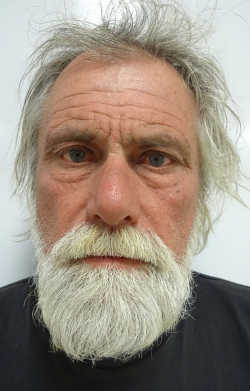
LAKEPORT, Calif. – A Lower Lake man was arrested on Monday after authorities said he stabbed a man during a confrontation near the county's temporary warming shelter for the homeless.
Terry Alan Rucks, 64, of Lower Lake, was arrested for assault with a deadly weapon, according to Lt. Steve Brooks of the Lake County Sheriff's Office.
At 6 p.m. Monday sheriff's deputies responded to a reported stabbing in the 700 block of Park Way in north Lakeport, Brooks said.
Brooks said Central Dispatch advised deputies that the responsible subject was reported to be at the Seventh-day Adventist Church, located in the 3000 block of Hill Road East in Lakeport, which since January has hosted the warming shelter.
Upon their arrival at the church, deputies contacted Rucks, who told the deputies that he was involved in the altercation and had called Central Dispatch to report the incident as well, Brooks said.
Brooks said the stabbing victim was being attended to by emergency medical personnel across the street from the church at that point.
Rucks told the deputies he stabbed the victim while acting in self-defense. He explained that the victim kicked the passenger side of his vehicle and was yelling at him, Brooks said.
Rucks said the victim began punching and kicking him, forcing him into the driver’s seat of his vehicle. Once in the vehicle he reached for a knife, which he kept in the vehicle and stabbed the victim. Brooks said Rucks told the deputies that he thought he stabbed the victim in the arm.
After speaking to Rucks, deputies contacted the victim, who said he has been having issues with the homeless people trespassing onto his property, which he said has been occurring since the church started operating their warming shelter, according to Brooks' report.
Brooks said the victim explained that people will wait on his property for the church to open. On Monday, the man said he noticed three male subjects who were on his property and had parked their vehicles at the end of his driveway, waiting for the church to open.
The man said he started yelling at the subjects and told them to leave. He explained that two of the subjects left the property, but Rucks stayed and they began to argue, Brooks said.
According to the victim's account, he began walking back to his residence when Rucks got into his vehicle and drove towards him. The victim said Rucks stopped his vehicle, got out and started walking towards him, then turned away and attempted to kick him at the same time, Brooks said.
Brooks said the stabbing victim told deputies he grabbed Rucks' shoulder to turn him around and that’s when Rucks stabbed him.
After he stabbed the man, Rucks left the property and went to the church parking lot, Brooks said.
Brooks said the stabbing victim was transported to Sutter Lakeside Hospital and then flown to an out-of-county hospital for additional medical attention.
Rucks was arrested for assault with a deadly weapon and transported to the Lake County Hill Road Correctional Facility where he was booked.
His bail was set at $75,000 and he remained in custody on Thursday.
Rucks' booking sheet indicated he is to appear in court on April 5.
The warming shelter is still on track to close this Friday, April 1, as originally planned.
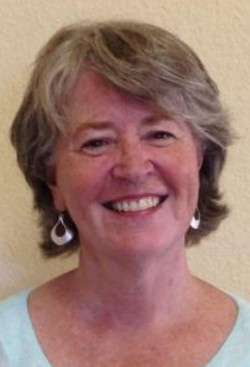
LAKEPORT, Calif. – Gloria Flaherty has been honored as Lake County Woman of the Year for the Fourth Assembly District.
In recognition of Women’s History Month, Assemblyman Bill Dodd honored one woman from each of the counties he represents who have made significant contributions in their respective communities.
“There are so many amazing and inspiring women in our county, and I am humbled to receive this recognition,” said Flaherty. “Serving the residents of Lake County has been so rewarding, and I want to recognize all of those people that made my work a labor of love.”
Flaherty recently retired as executive director of Lake Family Resource Center after 19 years of service.
As the founding director of Lake Family Resource Center, she was influential in growing the organization to serve some 1,400 families and 4,500 individuals annually.
Flaherty also helped secure funding for the Early Head Start Program, as well as the purchase and renovation of Freedom House, Lake County’s only domestic violence shelter.
“One thing that makes Lake County so special is its people, and Gloria is the ultimate example of that,” said Dodd. “She is a real inspiration, and we are truly lucky to have such compassionate and tireless advocates in our community.”
Over the years, Flaherty has been involved in numerous community activities and organizations, including past president of Kelseyville Sunrise Rotary Club, board president of Kelseyville Unified School District and commissioner of First 5 Lake County.
More recently she has served as the chair of the Lake County Continuum of Care, and a member of the boards of North Coast Opportunities, Friends of Mendocino College and the California Partnership to End Domestic Violence.
She also has been instrumental in numerous efforts associated with long-term fire recovery in Lake County. Among her numerous recognitions, she received the 2015 Lifetime Achievement Award from the Lake County Child Care Planning Council.
Dodd represents the Fourth Assembly District, which includes all or portions of Lake, Sonoma, Napa, Yolo, Colusa and Solano counties. Learn more about the district at www.asm.ca.gov/dodd .
LUCERNE, Calif. – The Lake County Land Trust and the Friends of Marymount California University Lakeside are co-sponsoring a series of programs on the natural environment of Lake County at the Marymount California University (MCU) Lakeside campus in Lucerne.
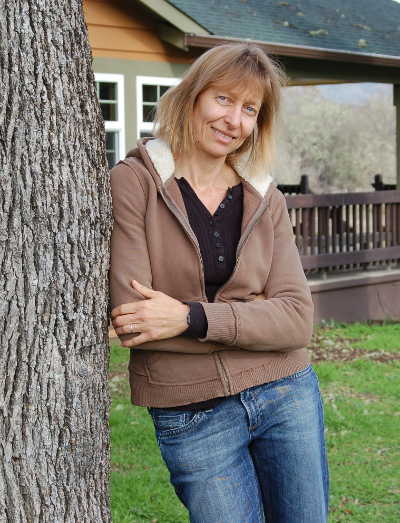
The third of these programs in the “Distinguished Speakers Series” is being presented on Thursday, April 7, from 6 to 7:30 p.m. and will feature local ecologist Catherine Koehler who will talk about the fascinating native grasslands of Lake County.
A $5 donation at the event will benefit a scholarship fund for students attending the Lakeside Campus.
Koehler is an ecologist with a special interest in native grasslands of our region. She is director of the University of California’s McLaughlin Reserve in eastern Lake County and is also the executive director for the Lake County Land Trust.
She has a broad background in the biological sciences, with a Bachelors in Zoology, a Masters in Ecology, and has worked in a range of projects in wildlife biology and plant ecology.
Since moving to Lake County she has delved into grassland restoration and has developed a deep appreciation of how geology, climate, and ecology interact to generate the diverse and often rare and unique ecosystems that comprise the biological hotspot in which Lake County is situated.
In her position as executive director of the Lake County Land Trust, she has rallied enthusiasm amongst the trust’s supporters for the persisting populations of native California bunch grass species at the Land Trust’s Rodman Preserve, which include the California Purple Needle Grass (Stipa pulchra), Squirrel Tail (Elymus elymoides) and California Brome (Bromus carinatus), and is spearheading a small restoration effort to help increase abundance of these grasses at the preserve.
Her presentation will focus on grasslands of the region – their current state, and what they may have been like before the introduction of species from other continents – and will include an overview of the diversity in plant communities of the region, which support the remarkable biological diversity that merits the classification of our region by conservation biologists and ecologists as a “Global Biological Hotspot.”
MCU Lakeside campus is located at 3700 Country Club Drive, Lucerne.
For more information, call 888-991-5253 or 707-262-0707, leave a message and someone will return your call.
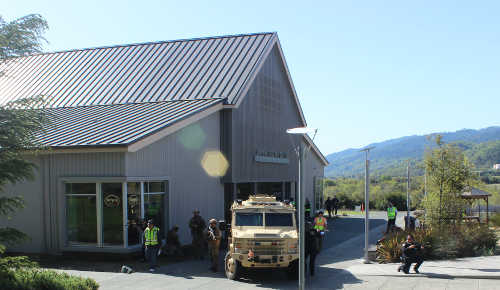
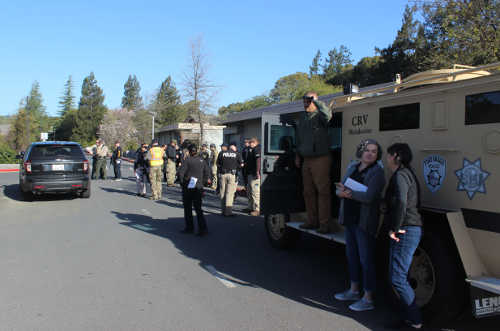 NORTH COAST, Calif. – As part of ongoing efforts to train for emergency situations, Mendocino College and local law enforcement agencies partnered on Wednesday for an active shooter training scenario at the Mendocino College Ukiah Campus.
The collaboration was led by the Mendocino County Sheriff’s office and included participation by the Ukiah Police Department, Ft. Bragg Police Department, Willits Police Department, Cal Fire, the Office of Emergency Services, the Ukiah High School SCRUBS program as well as other key local emergency responders.
More than 60 members of local law enforcement agencies and paramedic services were actively involved in the drill that took place on Wednesday.
Mendocino County Sheriff’s deputies, unloaded guns drawn, entered the doors of many buildings on the Mendocino College Ukiah Campus Wednesday morning during an active shooter exercise. Meanwhile, volunteer community members acted as victims of a campus shooting.
“Faculty and staff at the college are concerned about how to respond to an active shooter on campus,” said Mendocino College Superintendent/President Arturo Reyes. “The college has existing protocols and procedures to address this; however, today provided an excellent opportunity to exercise them in collaboration with law enforcement. This marked a key moment during which we could focus on a very important issue.”
Mendocino College administrative staff and Ukiah High SCRUBS students were active role players in the event.
As the scenario progressed from building to building, alert systems were deployed, the emergency texting system was used and fictitious 911 calls were made to test communications with law enforcement.
While the scenario was primarily designed for law enforcement, the college used this opportunity to affirm its communication protocols and general response.
More and more higher learning institutions are relying on training exercises and drills such as this, to prepare students and staff on how to deal with every situation in their institution, Mendocino College wanted to be on the front end of this training.
Mendocino College Vice President Eileen Cichocki said the active shooter training was an important step for the campus and represents a cutting-edge activity for campus safety overall.
“While we hope we never encounter this situation, our efforts today and our collaboration with local law enforcement have moved us forward in fine-tuning our response,” said Cichocki.
“We would like to thank all of the local agencies for coming together and conducting this major training exercise at our facility,” said President Reyes. “This event was truly an example of tremendous collaboration between community members, law enforcement, local emergency agencies, and our college community. The commitment to public safety shown in our community is truly first class.”

LAKEPORT, Calif. – This handsome male German Shepherd has a huge personality to match his huge paws.
He's friendly, playful and well-behaved, and has a lovely black, white, tan and sable coat.
Time out in the play yard revealed that he knows basic commands, shakes paws – he's ambidextrous – and walks nicely on a leash.
Overall, he's a people dog that is affectionate and ready to get to a new home.
He's in kennel No. 7, ID No. 4565.
To fill out an adoption application online visit http://www.co.lake.ca.us/Government/Directory/Animal_Care_And_Control/Adopt/Dog___Cat_Adoption_Application.htm .
Lake County Animal Care and Control is located at 4949 Helbush in Lakeport, next to the Hill Road Correctional Facility.
Office hours are Monday through Friday, 11 a.m. to 5 p.m., and 11 a.m. to 3 p.m., Saturday. The shelter is open from 11 a.m. to 4 p.m. Monday through Friday and on Saturday from 11 a.m. to 3 p.m.
Visit the shelter online at http://www.co.lake.ca.us/Government/Directory/Animal_Care_And_Control.htm .
For more information call Lake County Animal Care and Control at 707-263-0278.
Email Elizabeth Larson at [email protected] . Follow her on Twitter, @ERLarson, or Lake County News, @LakeCoNews.
LAKE COUNTY, Calif. – Despite the disasters it faced in 2015, Lake County's overall economic picture is bright and has shown marked improvements over the last several years, according to a recently completed report.
The “2016 Lake County: Economic Profile” was presented to the city councils this month.
The report was produced by the Sonoma County Economic Development Board in association with the Lake County Regional Economic Development Committee.
The report looks at factors including population and demographics, income and employment, real estate, consumer spending and taxable sales, and education through 2020, using the most recent data that is available.
Sources for the data used as the report's foundation came from the Lake County Association of Realtors, California Board of Equalization, California Department of Education, California Employment Development Department, Environmental Systems Research Institute and the US Census Bureau.
According to the report, Lake County's population in 2015 was 66,338, and is expected to rise by about 2.2 percent to 67,797 by 2020, based on projections from the Environmental Systems Research Institute.
The report said that Lake County is following a statewide trend with its increasing number of Hispanic residents. The growth trend in the county for the Hispanic population – the second largest ethnic group behind those classified as white – from 2010 to 2020 is projected at 4.8 percent.
As for age by population group, the number of individuals aged 65 and above is anticipated to grow by the greatest amount between 2015 and 2020, with individuals aged 45 to 64 decreasing.
By 2020, the 45 to 64 age group will be the largest, followed by 65-plus, 25 to 44, and 10 to 24, with ages 0 to 4 and 5 to 9 essentially even.
One of the report's most notable findings is the projected growth in household income.
In 2015, Lake County's median household income was $37,063. That's expected to jump by about 15 percent to $42,491 by 2020.
The report explained that from 2000 to 2015, the percentage of Lake County households earning less than $35,000 dropped by 4.6 percent.
During the same time frame, the fastest growing income group in the county was the range from $100,000 and $149,999, which went from about 5 percent to roughly 10 percent, and is expected to inch up a few more percentage points by 2020.
The largest household income group in 2000 was under $15,000 annually. The $50,000 to $74,999 range was the largest group at just under 18 percent as of 2015, and it's expected to rise above 20 percent by 2020.
Another key area noted in the report was employment, which has shown improvements as the county has emerged from the recession.
The report noted that Lake County's unemployment topped out at 17.8 percent in December 2009. In December 2015, the local unemployment rate was down to 7.3 percent, compared to the statewide rate of 5.8 percent.
More recent data from the California Employment Development Department puts the adjusted December 2015 unemployment rate at 7.8 percent, with January registering the same rate, and unemployment dropping to 7.4 percent in February.
The economic profile report said the industry with the highest projected growth in employment in Lake County is professional and business services, followed by construction; transportation, warehousing and utilities; leisure and hospitality; educational services, health care and social assistance; financial activities; retail trade; mining and logging; wholesale trade; and other.
As for real estate, median home prices in Lake County increased by 22 percent from 2014 to 2015, with the 2015 median price at $205,900.
Real estate sales have recovered but are not at the highest levels seen over the past decade and a half, with the highest selling year in that period being 2005, when 1,460 homes sold. Sales dipped to 169 homes in 2009 but were up to 871 homes sold in 2015.
Lake County's average sales price was $229,477 in 2014, compared to the $571,928 reported in neighboring Sonoma County.
Also improving is Lake County's taxable sales, which decreased from 2008 to 2011 but then rebounded in 2013.
Lake County's high school graduation rates have traditionally been higher than the state average, but in recent years have fluctuated. The rate dropped to 78 percent in the 2009-10 school year, rose to about 87 percent in 2011-12 and dropped to 80.3 percent in the 2013-14 school year, just below the state rate of 80.8 percent.
In the 2013-14 school year, white students had a graduation rate of 84.1 percent; Hispanic students, 79.2 percent; black students and students of two or more races, 68.2 percent; and American Indian students, 53.6 percent, based on the report.
Email Elizabeth Larson at