 How to resolve AdBlock issue?
News
LAKE COUNTY, Calif. – Three cats are waiting this week for new homes at Lake County Animal Care and Control.
The cats – two males and a female – all are domestic short hair mixes.
In addition to spaying or neutering, cats that are adopted from Lake County Animal Care and Control are microchipped before being released to their new owner. License fees do not apply to residents of the cities of Lakeport or Clearlake.
If you're looking for a new companion, visit the shelter. There are many great pets there, hoping you'll choose them.
In addition to the animals featured here, all adoptable animals in Lake County can be seen here: http://bit.ly/Z6xHMb .
The following cats at the Lake County Animal Care and Control shelter have been cleared for adoption (other cats pictured on the animal control Web site that are not listed here are still “on hold”).
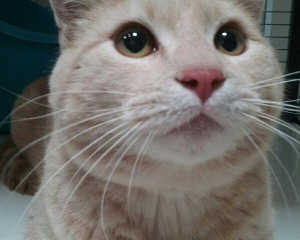
'Tanner'
“Tanner” is a young male domestic short hair mix with a buff-colored tabby coat.
He's in cat room kennel No. 24, ID No. 4671.
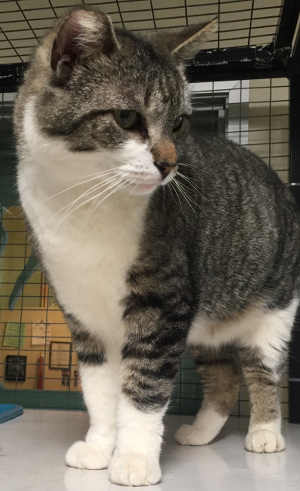
'Chip'
“Chip” is a female domestic short hair mix cat with gray tabby and white coat.
She's in cat room kennel No. 28, ID No. 4669.
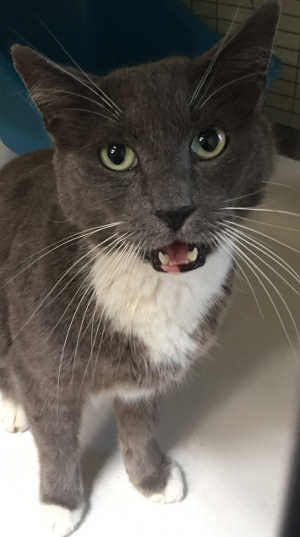
Male domestic short hair mix
This handsome male tuxedo cat has a short gray and white coat.
He's a tall and talkative guy, who likes to give head bonks.
He's in cat room kennel No. 49, ID No. 4686.
Adoptable cats also can be seen at http://www.co.lake.ca.us/Government/Directory/Animal_Care_And_Control/Adopt/Cats_and_Kittens.htm or at www.petfinder.com .
To fill out an adoption application online visit http://www.co.lake.ca.us/Government/Directory/Animal_Care_And_Control/Adopt/Dog___Cat_Adoption_Application.htm .
Lake County Animal Care and Control is located at 4949 Helbush in Lakeport, next to the Hill Road Correctional Facility.
Office hours are Monday through Friday, 11 a.m. to 5 p.m., and 11 a.m. to 3 p.m., Saturday. The shelter is open from 11 a.m. to 4 p.m. Monday through Friday and on Saturday from 11 a.m. to 3 p.m.
Visit the shelter online at http://www.co.lake.ca.us/Government/Directory/Animal_Care_And_Control.htm .
For more information call Lake County Animal Care and Control at 707-263-0278.
Email Elizabeth Larson at
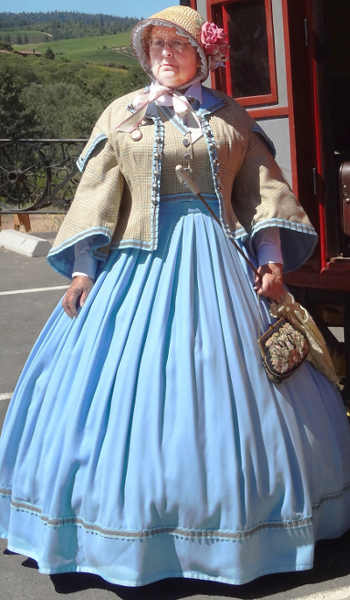
MIDDLETOWN, Calif. – A bang-up celebration – literally – has been set for the observance of the second anniversary of Middletown’s Gibson Museum & Cultural Center.
“A Look at Life in the 1860s” will be the focus of the event, which takes place on Saturday, May 14, beginning at noon.
The decade was dominated by the American Civil War. In recognition of the 19 Civil War veterans in Middletown Cemetery, a mini-Civil War will erupt on the fields behind Middletown Mansion just north of town.
Two authentically portrayed skirmishes between the Union and Confederacy, contributed by the American Civil War Association, will highlight activities.
Although the actual battles were far removed from California, passions here were high. Some Californians were drafted, many others voluntarily joined the war.
Gene Poleno, Lake County historian, will be on hand to share tales of local participation and other little-known information about the war will be offered.
Gibson’s look at the 1860s will also display the fashions, foods and foibles of the times.
Organizers are expecting Scarlett O'Hara – as depicted by Hidden Valley Lake resident Lori Cantrell – to be on hand. Hors d’oeuvres representative of the period, by Julie Hoskins of Chic Le Chef, will be offered along with a local wine.
A "dressing demonstration” by Barbara White of Kelseyville, long-time collector of Victorian era clothing, will show guests how much work it was for a proper lady in those times to get dressed to go out.
Music reminiscent of the era will be offered by David Neft on piano, and by Don Coffin and Andi Skelton on guitar and fiddle, respectively.
Sponsorships of this event will help generate funds to insure continued operation of the museum. Calpine At The Geysers has offered to match early sponsorships up to $1,000. Sponsors will be recognized in promotional efforts and during the course of the activities.
Advance ticket prices are adult, $60; senior, $50; student, $25; children under 10, free. If available, tickets at the gate will be $65, $55 and $30.
Tickets may be ordered online at www.Gibsons2ndAnniversary.com , purchased at Middletown Florist (21037 Calistoga in Middletown Plaza), or by calling Linda Moran at 707-987-2045 or Judy Kauffman at 707-987-2433.
“Nature is an infinite sphere of which the center is everywhere and the circumference nowhere.” – Blaise Pascal
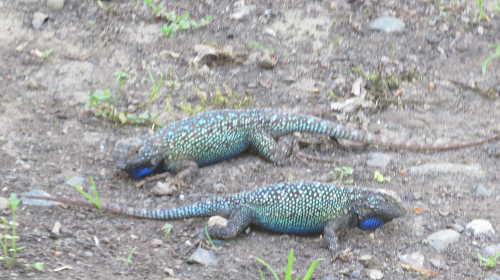
LAKE COUNTY, Calif. – Spring is one of the best times of year to observe the antics of Western Fence Lizards, or bluebellies.
These interesting reptiles like to stake a claim on their territory and vie for a mate in a most macho fashion.
The males will circle one another, and set about performing reps of studly push-ups before they tackle and wrestle one another. The winner gets the female.
I contacted reptile expert, Gary, at the www.CaliforniaHerps.com Web site to inquire about the lizards in photos I took for this article.
Gary replied, "This is my favorite time of year because people send me pictures like yours. The lizards are Northwestern Fence Lizards and the reason they look so blue is because they are both males and they are having a territorial dispute. It's mating season and males show off their bright colors and extend their blue throats to intimidate each other. When that doesn't work, they chase and bite each other until one runs off. It's stressful for the lizards but I have enjoyed watching the combat because the lizards are so pre-occupied that they ignore the threat of a large human trying to take pictures of them."
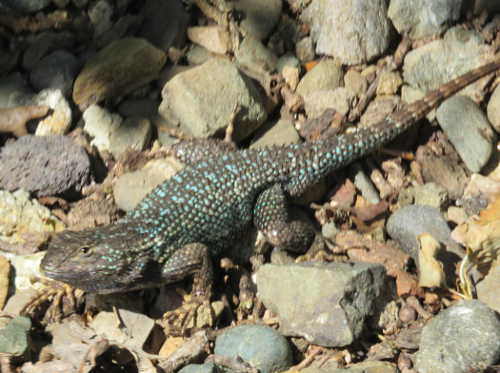
The Western Fence Lizard appears out of hibernation during late winter or early spring, and likes to sun himself, usually on a nearby stone, or, as its name implies- on a fence.
They are cold-blooded creatures, and come in a variety of colors: gray, tan, brown or black. These scaly critters grow to a length of more than 8 inches.
Western Fence Lizards are diurnal, or active during the daylight hours. Western Fence lizards breed after their second year, producing clutches of three to 17 eggs during the months of April to July. The baby lizards use an egg tooth to break free from their eggs.
Western Fence Lizards have been know to live three to five years. They instinctively and quickly scurry away from predators like birds and snakes, and can drop their tails if threatened, as a decoy to then allow for a hasty retreat. If the unlucky lizard is attacked, its tail flops about, drawing attention away from the lizard.
Lizards reserve the tail-drop routine strictly as a last resort, as re-growing a tail uses valuable stores of energy.
Lizards are beneficial in that they eat large quantities of bugs, ants, flies and spiders.
Scientists have learned that where lizards live, Lyme disease is lower. It has been proven that there is a protein in lizard blood that kills the Lyme disease bacterium, and renders the ticks safe from carrying Lyme disease.
Love those lizards!
Kathleen Scavone, M.A., is an educator, potter, writer and author of “Anderson Marsh State Historic Park: A Walking History, Prehistory, Flora, and Fauna Tour of a California State Park” and “Native Americans of Lake County.” She also writes for NASA and JPL as one of their “Solar System Ambassadors.” She was selected “Lake County Teacher of the Year, 1998-99” by the Lake County Office of Education, and chosen as one of 10 state finalists the same year by the California Department of Education.
LAKE COUNTY, Calif. – Lake County Animal Care and Control just finished a special weeklong adoption event, but it's still bursting at the seams with animals that need homes.
Nearly 50 dogs are listed for adoption as this week begins, with some of them urgent cases because they've been waiting so long.
This week's adoptable dogs include mixes of American Bulldog, border collie, Boston Terrier, boxer, bullmastiff, cattle dog, Chihuahua, Doberman, hound, Labrador Retriever, Rottweiler, terrier and pit bull.
Lake County Animal Care and Control is adopting out dogs this week with a $50 discount – waiving the county adoption fee portion and costs for microchipping. There will will be costs for spaying and neutering dogs.
Dogs that are adopted from Lake County Animal Care and Control are either neutered or spayed, microchipped and, if old enough, given a rabies shot and county license before being released to their new owner. License fees do not apply to residents of the cities of Lakeport or Clearlake.
If you're looking for a new companion, visit the shelter. There are many great pets hoping you'll choose them.
In addition to the animals featured here, all adoptable animals in Lake County can be seen here: http://bit.ly/Z6xHMb .
The following dogs at the Lake County Animal Care and Control shelter have been cleared for adoption (additional dogs on the animal control Web site not listed are still “on hold”).
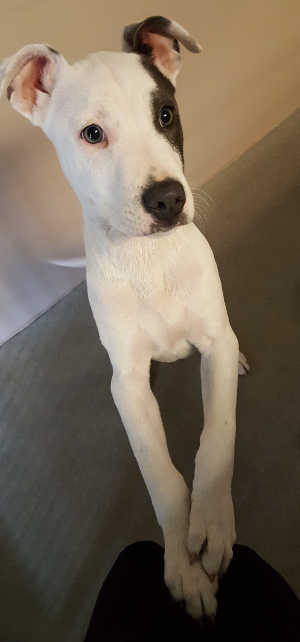
Male pit bull terrier mix
This young male pit bull terrier mix has a short white coat with black markings.
He is in kennel No. 2, ID No. 4697.
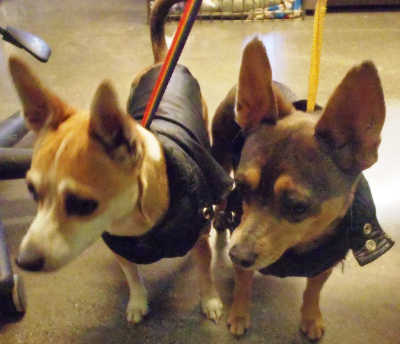
Female Chihuahuas
These two female Chihuahuas have short multicolored coats.
They're in kennel No. 3a, ID Nos. 4636 and 4637.
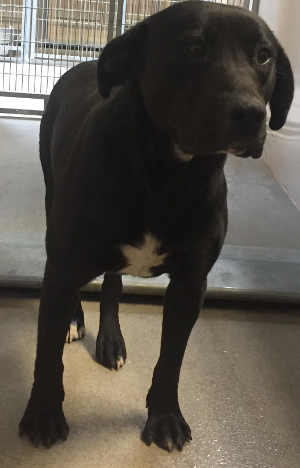
'Luther'
“Luther” is a male pit bull terrier mix who is in urgent need of a home, as he has been at the shelter since Feb. 28.
He has a short black coat with white markings.
Shelter staff said he is great with other dogs, both male and female, is very sweet and while he gets excited he doesn't jump on people.
He walks well on a leash and has basic commands.
In addition, he allows handling of his ears, mouth, paws and allowed nail trimming, has no food guarding, avoided cats and didn't mind the horses.
He's in kennel No. 4, ID No. 4511.
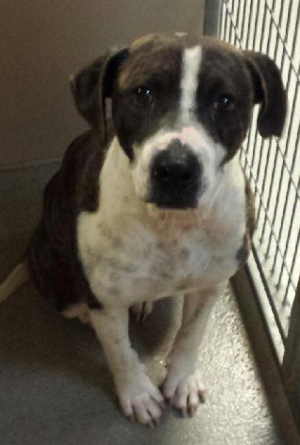
Female boxer mix
This female boxer mix has a short gray coat with white markings.
Shelter staff said she needs basic leash training, but is manageable for her size. She also allows handling of her ears, mouth, paws and body, and tolerated nail clipping without pulling away.
She has no food aggression, and would do great in a home with no cats. Staff said she has been tested with another dog and got along well.
They believe she will be happiest in a quiet home and will form a very strong bond with her handler.
She's in kennel No. 5, ID No. 4551.
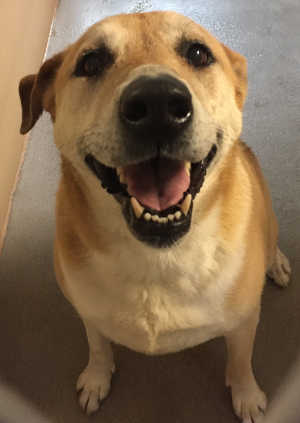
'Cali'
“Cali” is a female Labrador Retriever.
She has a short yellow coat.
She's in kennel No. 6, ID No. 4683.
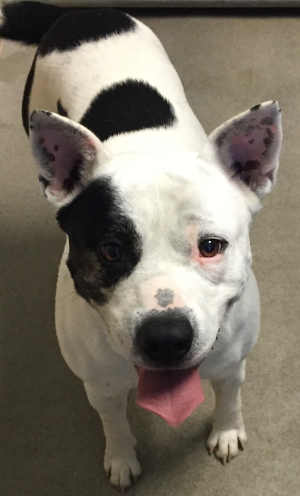
Cattle dog-pit bull terrier
This male cattle dog-pit bull terrier has a short white coat with black markings.
He's in kennel No. 7, ID No. 4694.
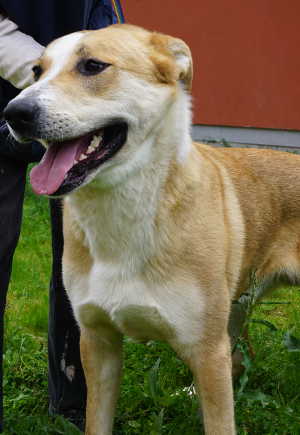
Male shepherd mix
This male shepherd mix has a short brown coat with white markings.
Shelter staff said he needs leash training but is very manageable, and in the play yard came when called when food was used as a motivator. He doesn't know basic commands yet, but did volunteer the behavior when another dog was doing it for treats.
He has no food aggression towards people or dogs, and allows handling of ears, mouth, paws and tail without any problems. He avoided the cats.
He's in kennel No. 8, ID No. 4560.
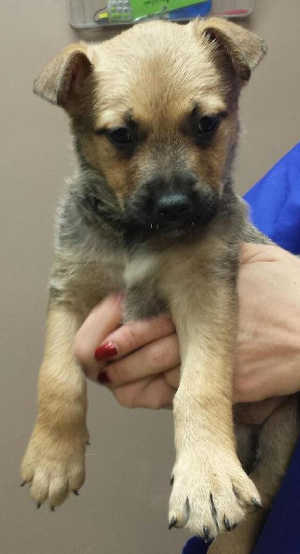
Shepherd-Rottweiler mix puppy
This female shepherd-Rottweiler mix puppy has a short tan and black coat.
She's in kennel No. 9a, ID No. 4713.
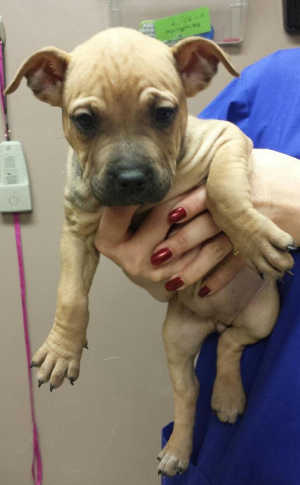
Shepherd-bullmastiff mix puppy
This female shepherd-bullmastiff mix puppy has a short tan coat.
She's in kennel No. 9b, ID No. 4714.
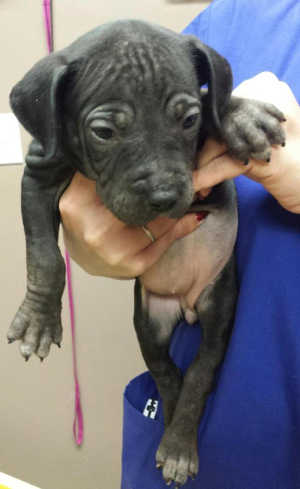
Rottweiler-bullmastiff puppy
This female Rottweiler-bullmastiff puppy has a short black coat.
She's in kennel No. 9c, ID No. 4715.
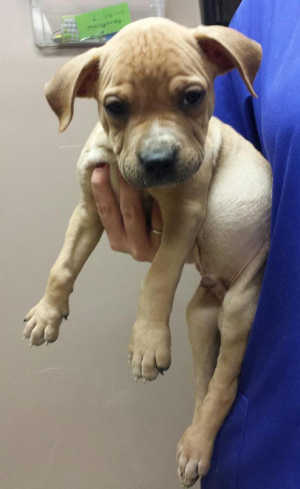
Shepherd-bullmastiff mix puppy
This female shepherd-bullmastiff mix puppy has a short tan coat.
She's in kennel No. 9d, ID No. 4716.
Shepherd-bullmastiff mix puppy
This male shepherd-bullmastiff mix puppy has a short tan coat.
He's in kennel No. 9e, ID No. 4717.
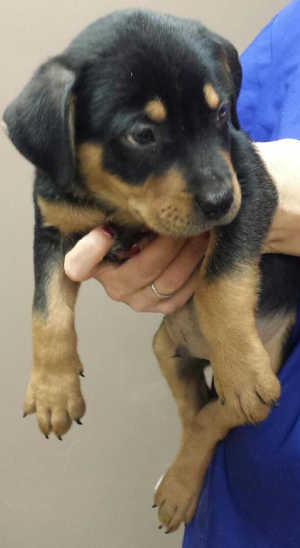
Shepherd-Rottweiler mix puppy
This male shepherd-Rottweiler mix puppy has a short tan and black coat.
He's in kennel No. 9f, ID No. 4718.
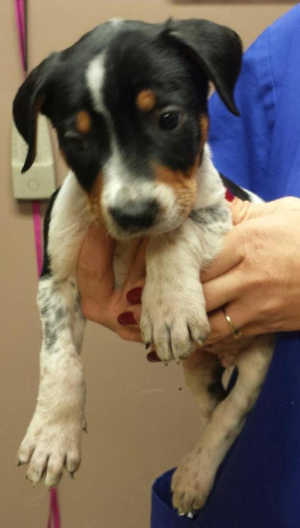
Rottweiler-border collie puppy
This male Rottweiler-border collie puppy has a short tricolor coat.
He's in kennel No. 9g, ID No. 4719.
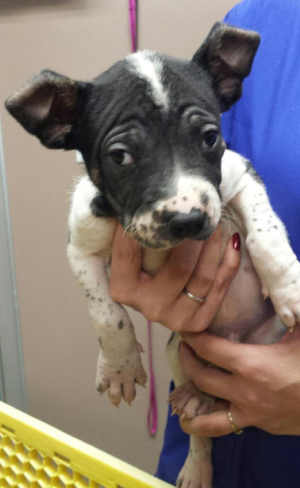
Border collie-bullmastiff puppy
This male border collie-bullmastiff puppy has a short black and white coat.
He's in kennel No. 9h, ID No. 4720.
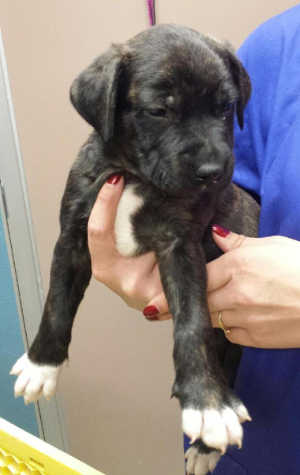
Rottweiler-bullmastiff puppy
This male Rottweiler-bullmastiff puppy has a short black coat with white markings.
He's in kennel No. 9i, ID No. 4721.
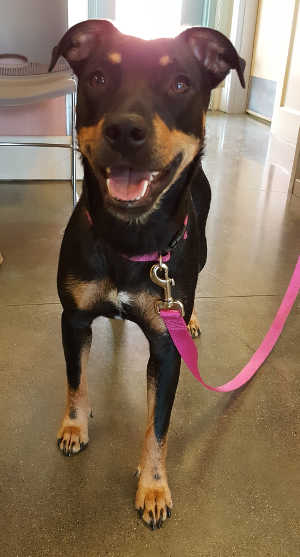
Rottweiler-border collie mix
This female Rottweiler-border collie mix has a short black coat with tan and white markings.
She's in kennel No. 11, ID No. 4722.
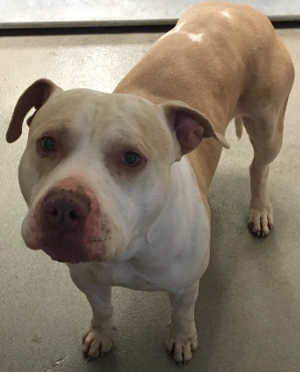
Male pit bull terrier mix
This male pit bull terrier mix has a light brown and white coat.
He's in kennel No. 12, ID No. 4608.
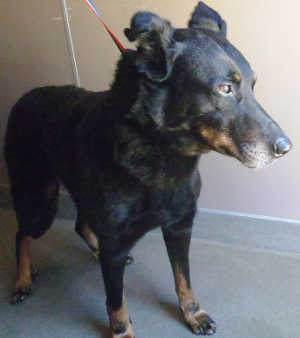
Shepherd-Doberman mix
This female shepherd-Doberman mix has a beautiful black and brown coat.
She's in kennel No. 13, ID No. 4638.
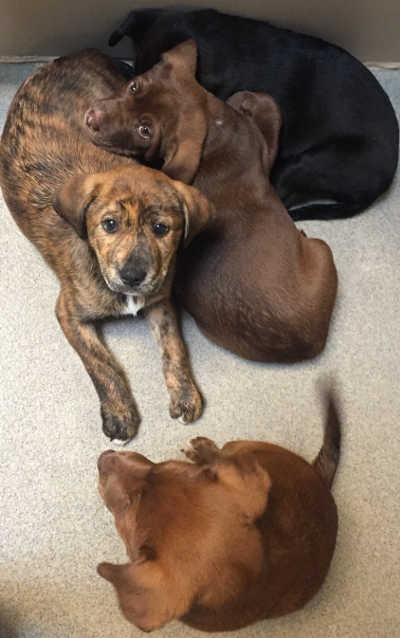
Labrador Retriever mix puppies
These Labrador Retriever mix puppies have a variety of coat colors – black, brown, chocolate and brindle.
There are three females and one male.
They are in kennel No. 15a, 15c, 15d and 15f, ID Nos. 4674, 4678, 4679 and 4681.
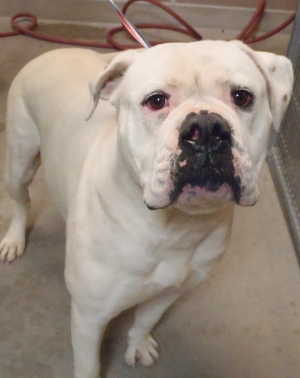
'Daisy'
“Daisy” is a female American Bulldog.
She has a white coat with some black markings.
Shelter staff said she is great with other dogs and loves to play. She is very well-mannered and does not require much exercise, and is an all-around fun girl.
Because she is already spayed and current on vaccines, her adoption fees will be very low.
She is in kennel No. 16, ID No. 4564.
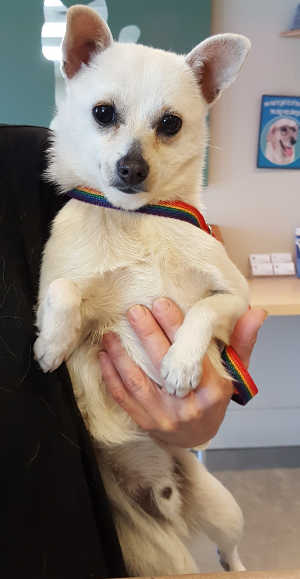
Male Chihuahua mix
This male Chihuahua mix has an all-white coat.
He's in kennel No. 17, ID No. 4591.
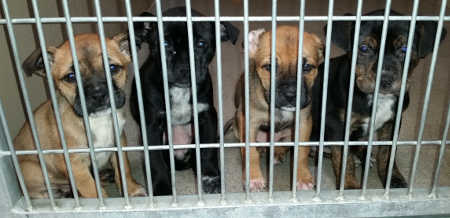
Labrador Retriever-pit bull mix puppies
These four female Labrador-Retriever mix puppies come in a variety of colors.
They're in kennel No. 18, ID Nos. 4574, 4575, 4577 and 4581.
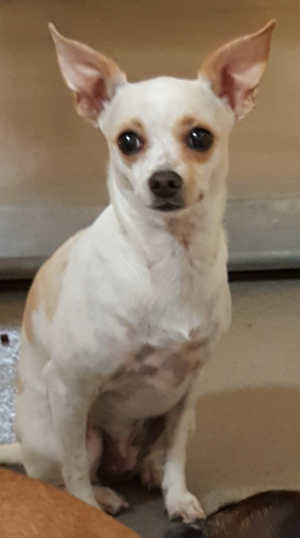
'Snowball'
“Snowball” is a female Chihuahua mix with a short tan and white coat.
She's in kennel No. 19a, ID No. 4705.
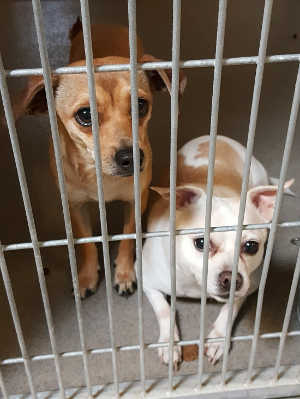
'Smokey' and 'Sandy'
“Smokey” and “Sandy” are two Chihuahuas in need of a new home.
They are in kennel No. 19b and 19c, ID No. 4706 and 4707.
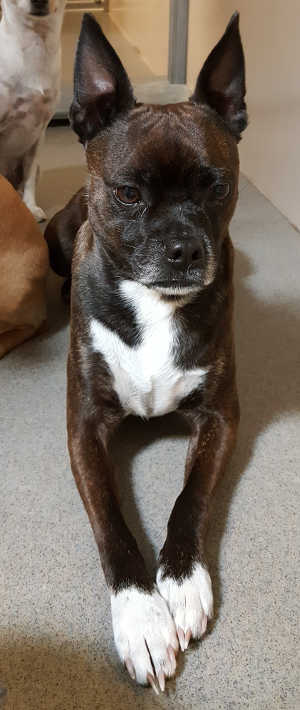
'Thor'
“Thor” is a male Boston Terrier mix.
He has a short black coat with white markings.
He's in kennel No. 19d, ID No. 4708.
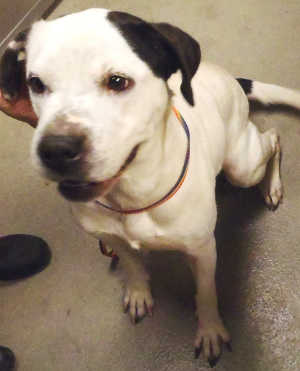
Hound-Labrador Retriever mix
This female hound-Labrador Retriever mix has a short white coat with black markings.
She's in kennel No. 21, ID No. 4641.
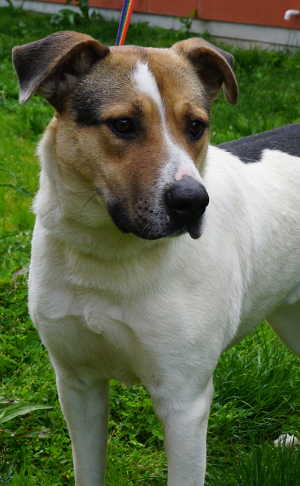
'Buddy'
“Buddy” is a handsome male Labrador Retriever-hound mix with a short tricolor coat.
He is in urgent need of a new home because he has been at the shelter since Feb. 25.
He was assessed with every dog in the kennel and loved them all, although shelter staff said he would do best in a home without livestock, small dogs or cats.
Shelter staff said he is a very well-mannered, tolerant dog with low energy.
He's in kennel No. 22, ID No. 4487.
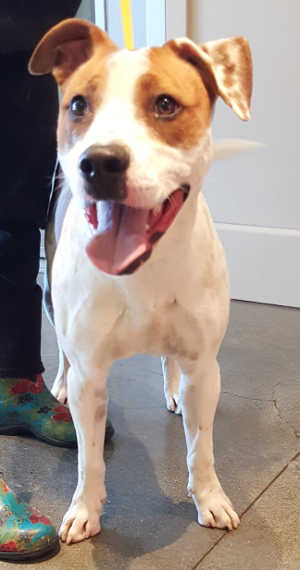
'Bronco'
“Bronco” is a male cattle dog mix.
He has a short white and brown coat.
Shelter staff said he needs some basic training and has a lot of potential.
He's in kennel No. 24, ID No. 4592.
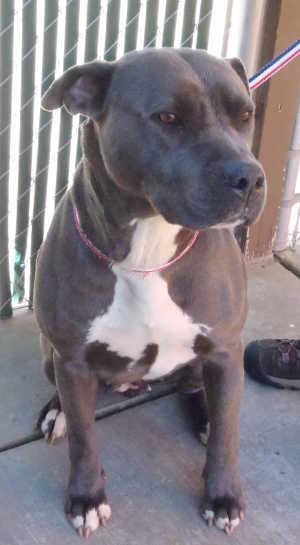
Female pit bull mix
This female pit bull mix has a short gray and white coat.
She's in kennel No. 25, ID No. 4588.
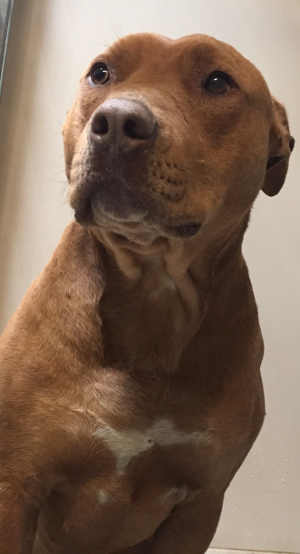
Male pit bull terrier mix
This male pit bull terrier mix has a short brown coat with white markings.
He's in kennel No. 27, ID No. 4673.
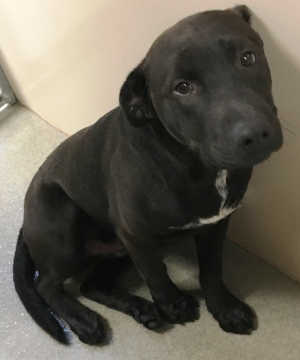
Labrador Retriever puppy
This male Labrador Retriever mix puppy has a short black coat with white markings.
Shelter staff said he would do well in a home with no male dogs.
He's in kennel No. 28, ID No. 4423.
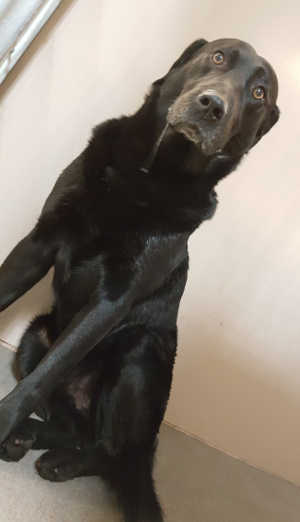
Male Labrador Retriever
This male Labrador Retriever has an all-black coat.
He's in kennel No. 30, ID No. 4711.
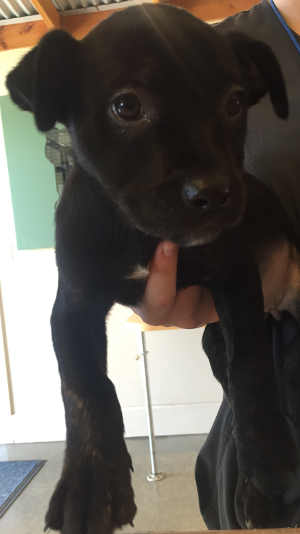
Rottweiler-mastiff puppy
This female Rottweiler-mastiff puppy has a short black coat.
She's in kennel No. 31b, ID No. 4620.
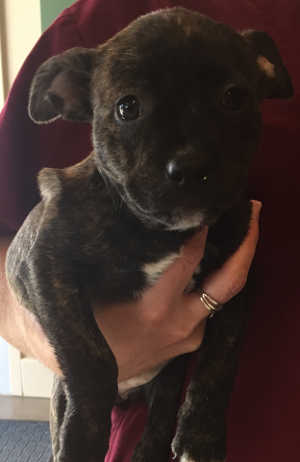
Rottweiler-mastiff puppy
This female Rottweiler-mastiff puppy has a short black coat.
She's in kennel No. 31c, ID No. 4621.
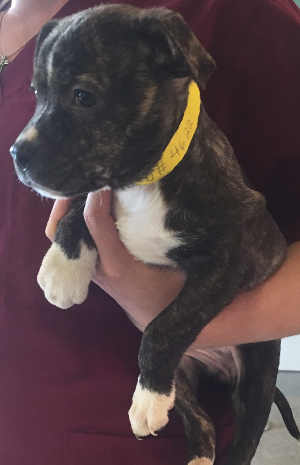
Rottweiler-mastiff puppy
This female Rottweiler-mastiff puppy has a short black coat with white markings.
She's in kennel No. 31d, ID No. 4622.
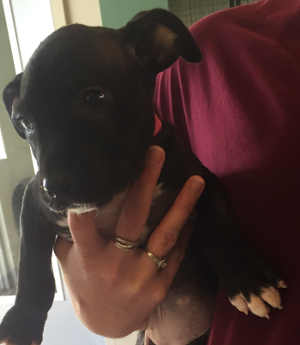
Rottweiler-mastiff puppy
This female Rottweiler-mastiff puppy has a short black coat.
She's in kennel No. 31e, ID No. 4623.
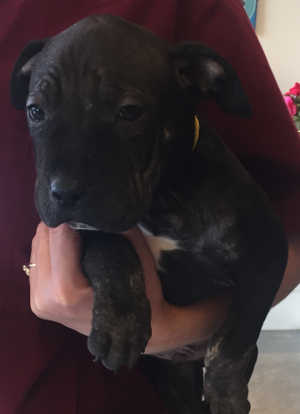
Rottweiler-mastiff puppy
This male Rottweiler-mastiff puppy has a short black coat.
He's in kennel No. 31f, ID No. 4619.
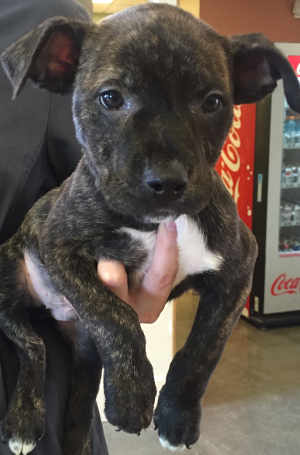
Rottweiler-mastiff puppy
This male Rottweiler-mastiff puppy has a short brindle and white coat.
He's in kennel No. 31h, ID No. 4625.
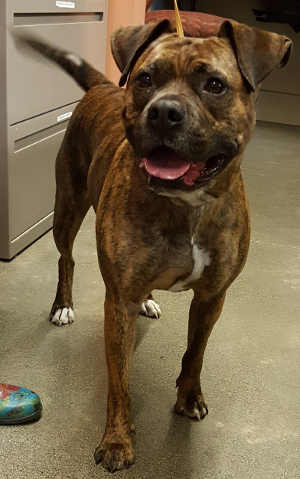
'Rosie'
“Rosie” is a female boxer-pit bull mix.
She has a short brown brindle coat with white markings.
Her adoption fee will be less expensive due to already being spayed.
She's in kennel No. 32, ID No. 4670.
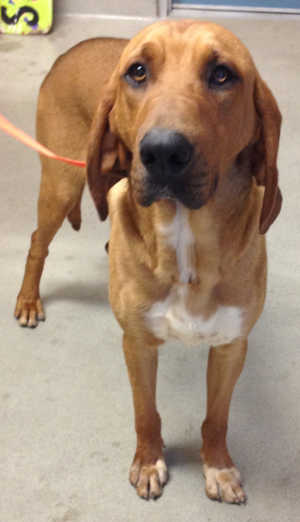
Hound mix
This male hound mix has a short tan coat with white markings.
He's in kennel No. 33, ID No. 4712.
To fill out an adoption application online visit http://www.co.lake.ca.us/Government/Directory/Animal_Care_And_Control/Adopt/Dog___Cat_Adoption_Application.htm .
Lake County Animal Care and Control is located at 4949 Helbush in Lakeport, next to the Hill Road Correctional Facility.
Office hours are Monday through Friday, 11 a.m. to 5 p.m., and 11 a.m. to 3 p.m., Saturday. The shelter is open from 11 a.m. to 4 p.m. Monday through Friday and on Saturday from 11 a.m. to 3 p.m.
Visit the shelter online at http://www.co.lake.ca.us/Government/Directory/Animal_Care_And_Control.htm .
For more information call Lake County Animal Care and Control at 707-263-0278.
Email Elizabeth Larson at
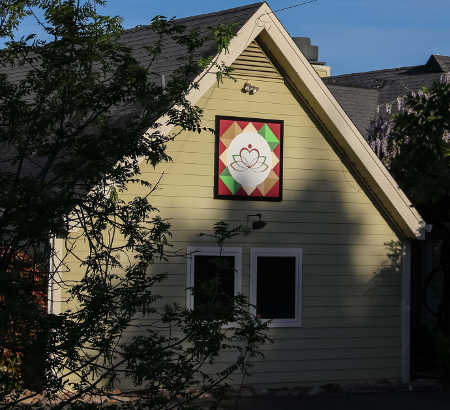
LAKE COUNTY, Calif. – The Lake County Quilt Trail has installed the “Healing Star” quilt block at Specialty Care and Surgery Center in Kelseyville.
Dr. Paula Dhanda owns the center, located at 5685 Main St.
Based on a traditional star pattern, this quilt design incorporates the World Wide Healing Hands’ logo.
Dr. Dhanda has been medically serving Lake County for 25 years as a gynecologist and surgeon.
She founded Worldwide Healing Hands after a medical mission to Chad, Africa, in 2009. She witnessed firsthand the lack of access to medical care for many women and children.
For more information regarding her honors, awards and medical missions – both in Lake County and other parts of the world – visit www.worldwidehealinghands.org .
The Lake County Quilt Trail is an agricultural and tourism project designed to promote community pride.
The 4-foot by 4-foot quilt block “Healing Star” was drawn and painted by the Lake County Quilt Trail team from the design suggestion given by Dr. Dhanda.
LCQT is a group of dedicated volunteer quilters, graphic artists, painters, writers, carpenters and a
videographer.
For more information about the Lake County Quilt Trail visit www.lakecountyquilttrail.com or visit the group on Facebook.
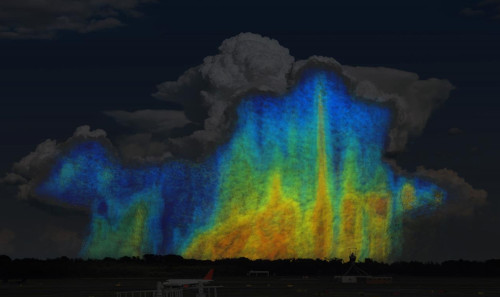
Not all raindrops are created equal. The size of falling raindrops depends on several factors, including where the cloud producing the drops is located on the globe and where the drops originate in the cloud.
For the first time, scientists have three-dimensional snapshots of raindrops and snowflakes around the world from space, thanks to the joint NASA and Japan Aerospace Exploration Agency Global Precipitation Measurement (GPM) mission.
With the new global data on raindrop and snowflake sizes this mission provides, scientists can improve rainfall estimates from satellite data and in numerical weather forecast models, helping us better understand and prepare for extreme weather events.
"The drop size distribution is one of many factors that determines how big a storm will grow, how long it will last and how much rain it will ultimately produce," said Joe Munchak, research meteorologist at NASA's Goddard Space Flight Center in Greenbelt, Maryland. "We've never been able to see how water droplet sizes vary globally until now."
Storm clouds contain a wide variety of drop sizes that ultimately fall as rain or snow. In general, in the cores of clouds the drops tend to be bigger because they collide with each other and aggregate as they fall towards the Earth's surface, while smaller droplets occur at the edges and higher altitudes.
Drops tend to be small when they miss colliding into others or break apart. Scientists refer to the number of drops and snowflakes of different sizes at various locations within a cloud as the "particle size distribution."
In order to accurately know how much precipitation is falling in a storm, scientists need to understand the ratio of large drops to smaller or medium sized drops.
Previously, researchers had to make assumptions of the ratio because earlier studies were conducted in isolated locations and global data were limited, said Munchak.
"Without knowing the relationship or the ratio of those large drops to the smaller or medium sized drops, we can have a big error in how much rain we know fell and that can have some big implications for knowing long term accumulations which can help with flash flood predictions," said Munchak.
With GPM's three-dimensional snapshots of drop size distribution, scientists can also gain insight into the structure of a storm and how it will behave.
Drop size distribution influences storm growth by changing the rate of evaporation of rain as it falls through dry air, said Munchak.
Smaller drops, for instance, will tend to evaporate faster and subsequently cool the air more. This leads to stronger flow of downward moving air that can cause damaging winds when they reach the ground.
However, these same downdrafts can interfere with the upward flowing air that fuels the storm and cause the storm to weaken or dissipate.
"GPM measurements will really help predict these complex interactions that depend in part of the drop size distribution," said Munchak.
GPM was launched in 2014 and carries the first Dual-frequency Precipitation Radar (DPR) to fly in space, as well as a multi-channel GPM Microwave Imager (GMI).
The DPR makes detailed 3D measurements of rainfall, while the GMI uses a set of 13 optimized frequencies to retrieve heavy, moderate, and light precipitation measurements at the Earth's surface.
As GPM improves our understanding of precipitation from space, that information will be vital in improving weather models and forecasts.