 How to resolve AdBlock issue?
News
Research from North Carolina State University and Ohio University finds that having an “alcohol identity” puts college students at greater risk of having drinking problems – and that posting about alcohol use on social media sites is actually a stronger predictor of alcohol problems than having a drink.
“This work underscores the central role that social networking sites, or SNSs, play in helping students coordinate, advertise and facilitate their drinking experiences,” said Lynsey Romo, an assistant professor of communication at NC State and co-lead author of a paper on the work. “The study also indicates that students who are at risk of having drinking problems can be identified through SNSs.”
“We started this project with a threshold question: what drives students to drink and post about alcohol on SNSs,” said Charee Thompson, an assistant professor of communication studies at Ohio University and co-lead author of the study.
To address that question, the researchers conducted an online survey of 364 undergraduate students at a Midwestern university.
The students were all over 18, reported having consumed at least one alcoholic drink in the past month, and had an active Facebook, Twitter or Instagram account.
Study participants were asked about their SNS use, alcohol consumption, alcohol problems and their alcohol-related use of SNSs, as well as a series of questions designed to measure their motivations for drinking.
“The strongest predictor of both drinking alcohol and posting about it on SNSs was espousing an alcohol identity – meaning that the individuals considered drinking a part of who they are,” Thompson said. “And those two behaviors were associated with alcohol problems – such as missing school or work, or getting into fights – because of drinking.”
In fact, the researchers found that posting about alcohol use on social media was actually a stronger predictor of alcohol problems than alcohol use was. In other words, having a drink was less strongly correlated with alcohol problems than posting about alcohol use was – though clearly students with alcohol problems were drinking alcohol.
“This might be because posting about alcohol use strengthens a student’s ties to a drinking culture, which encourages more drinking, which could lead to problems,” Thompson said.
“We’re hopeful that these findings can aid policymakers in developing interventions to target the most at-risk populations – particularly students with strong alcohol identities,” Romo said. “And social media may help identify those students. For example, colleges could train student leaders and others in administrative positions to scan SNSs for text and photos that may indicate alcohol problems.”
In addition, the researchers note that future research on student alcohol use may want to further consider how drinking occurs in tandem with other behaviors that could cause students problems.
The paper, “College Students’ Drinking and Posting About Alcohol: Forwarding a Model of Motivations, Behaviors, and Consequences,” is published in the Journal of Health Communication: International Perspectives.
We strongly support Monica Rosenthal in her run for District 1 supervisor.
Monica will bring to the board a wealth of knowledge and experience from her years of service to the county and the community.
She will continue to make fire recovery a priority, expedite the efforts to clean up Clear Lake, support our agricultural industry, and work on building tourism, all of which are vital to this County’s future success.
We encourage you to vote for Monica on June 7.
Gregory and Marianne Graham live in Lower Lake, Calif.
South Lake County is fortunate to have four strong candidates for supervisor of District One.
But it sure makes deciding who to vote for difficult.
I am hugely impressed by the contributions to our community over the past years by Moke Simon, Monica Rosenthal and Voris Brumfield. I have not had the opportunity to become acquainted with Jim Ryan, but his credentials look good.
After serious consideration, I am falling back on a time-honored truth: An election should not be a popularity contest; it is a matter of hiring the employee who will be most productive on the job.
Monica Rosenthal’s long and active participation in promoting the welfare of Lake County – her tenure with the Lake County Planning Commission, her work with the Middletown Area Merchants Association, the Lower Lake Community Action Group, the Lake County Farm Bureau and at least a dozen other groups – has consistently shown the kind of approach I would prefer to see in our supervisor.
I appreciate that she looks for all the potential solutions to a problem and researches the probable outcome of each, before making an important decision.
I am especially enthused by how well she listens!
And I find truly heartening the number of her avowed supporters (see her Web site) who continually, steadfastly, quietly and productively work for the betterment of our community.
Nina Bouska lives in Middletown, Calif.
LAKE COUNTY, Calif. – Labs, shepherds, an Alaskan Malamute and a boxer named “Rosie” who urgently needs a new home are among the dogs waiting for homes this week at Lake County Animal Care and Control.
Canines offered for adoption this week include mixes of Alaskan Malamute, border collie, boxer, Catahoula Leopard Dog, Doberman Pinscher, foxhound, German Shepherd, Labrador Retriever and pit bull.
Dogs that are adopted from Lake County Animal Care and Control are either neutered or spayed, microchipped and, if old enough, given a rabies shot and county license before being released to their new owner. License fees do not apply to residents of the cities of Lakeport or Clearlake.
If you're looking for a new companion, visit the shelter. There are many great pets hoping you'll choose them.
In addition to the animals featured here, all adoptable animals in Lake County can be seen here: http://bit.ly/Z6xHMb .
The following dogs at the Lake County Animal Care and Control shelter have been cleared for adoption (additional dogs on the animal control Web site not listed are still “on hold”).
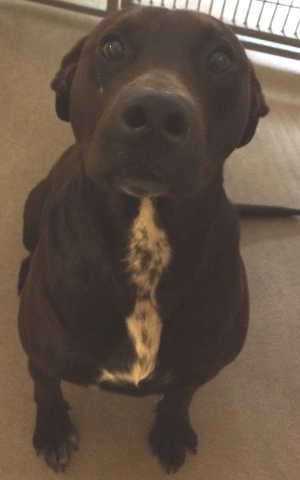
Labrador Retriever mix
This female Labrador Retriever mix has a short black coat with white markings.
She will be available for adoption on June 2.
She's in kennel No. 2, ID No. 4969.
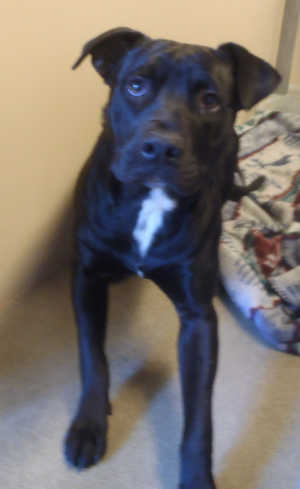
Labrador Retriever mix
This male Labrador Retriever mix has a short black coat with white markings.
He's in kennel No. 3, ID No. 4878.
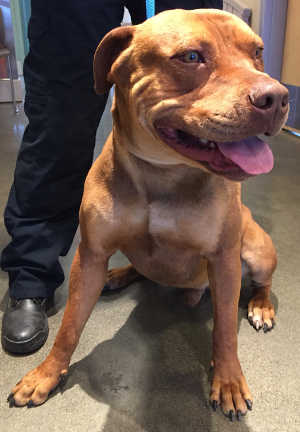
Pit bull terrier mix
This male pit bull terrier mix has a short brown coat.
Shelter staff said he does not jump and is very friendly, walking well on a leash, showing no food aggression, and allowing handling of his mouth, ears, paws and tail with no problems. He also enjoys a good tummy rub.
He would do great in a home with no cats.
He's in kennel No. 4, ID No. 4850.
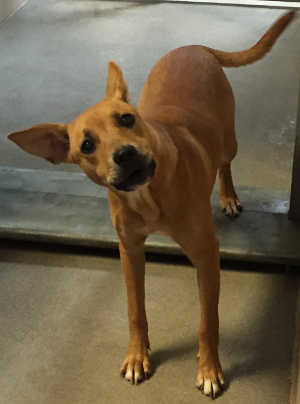
Female shepherd mix
This young female shepherd mix has a short brown coat with white markings.
She's in kennel No. 5, ID No. 4959.
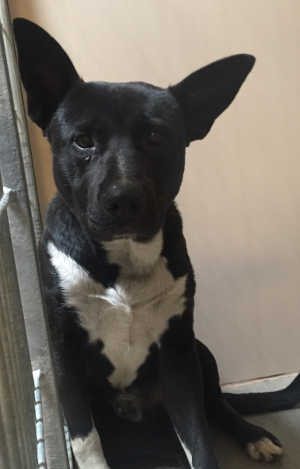
'Bruh'
“Bruh” is a male pit bull terrier mix.
He's got a short black coat with white markings.
He's in kennel No. 6, ID No. 4893.
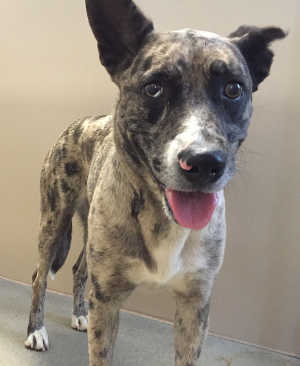
'Elsa'
“Elsa” is a female Catahoula Leopard Dog with a short, multicolored coat.
She's in kennel No. 7, ID No. 4996.
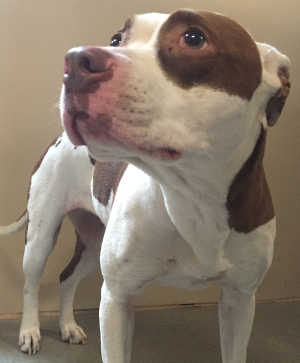
'Patches'
“Patches” is a female pit bull terrier mix with a short brown and white coat.
Shelter staff said Patches is great with both male and female dogs, and allows handling of her paws, ears, tail and body.
She is very people friendly and has a lower energy level, and shelter staff believes she would do great with children.
Patches is in kennel No. 9, ID No. 4817.
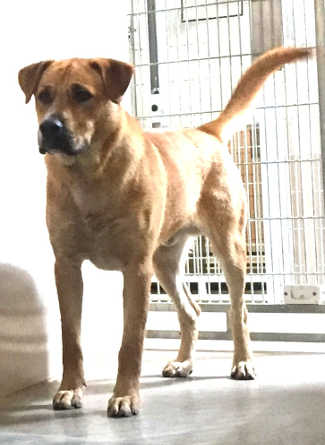
Yellow Labrador Retriever
This male Labrador Retriever mix has a short yellow coat.
He's in kennel No. 14a, ID No. 4925.
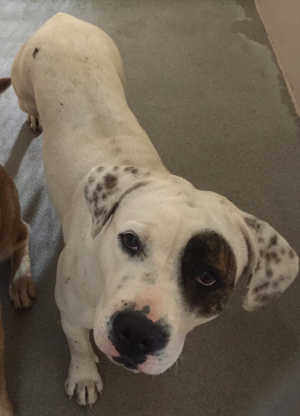
Pit bull mix
This female pit bull terrier mix has a short white coat with dark markings, including an eye patch like “Petey” from the Little Rascals.
She's in kennel No. 14b, ID No. 4926.
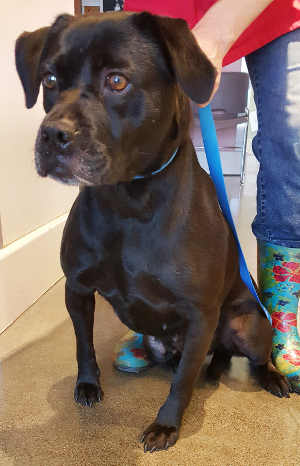
'Baby'
“Baby” is a female Labrador Retriever-pit bull mix.
She has a short, all-black coat.
Shelter staff said she is a sweet dog.
She's in kennel No. 15, ID No. 5005.
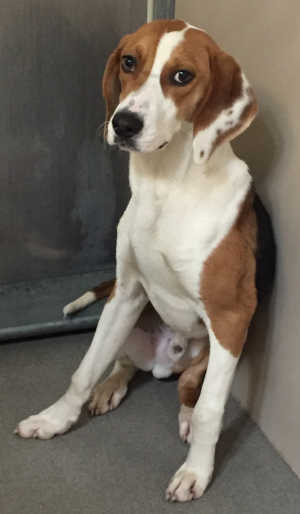
'Stump'
“Stump” is a male foxhound mix with a tricolor coat.
Shelter staff said he is very scared in the animal control environment, so he needs a home where he can feel safe and can start to thrive.
He's in kennel No. 19, ID No. 4935.
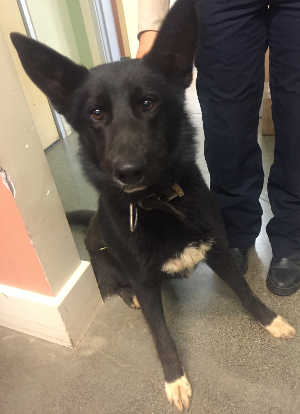
German Shepherd mix
This handsome male German Shepherd mix has a short black coat with white markings.
Shelter staff said he is very people friendly, high energy, and good with female dogs or submissive males. He allows handling of his paws, ears, tail and body with no problems.
He wants to jump and play, and shelter staff suggested he would do great with children after some training for his jumping.
He's in kennel No. 20, ID No. 4862.
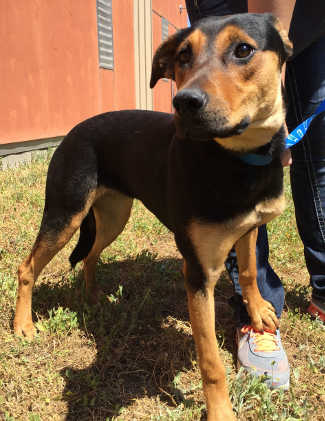
Female shepherd mix
This cute female shepherd mix has a short tricolor coat.
Shelter staff said she has no food aggression, and allows handling of her ears, mouth, paws and tail without any problems.
She is a quick learner, would do fine with cats and is happy to greet everyone she meets.
She's in kennel No. 21, ID No. 4934.
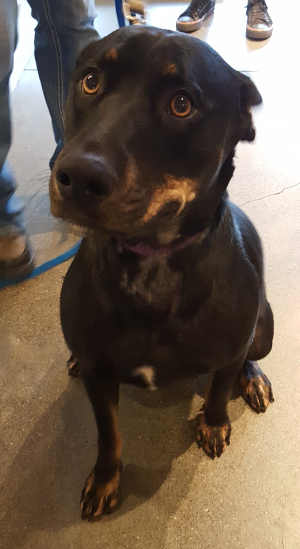
'Mom'
“Mom” is a female Labrador Retriever-Doberman Pinscher mix.
She has a pretty black and tan coat, and a sweet personality.
She's in kennel No. 22, ID No. 4917.
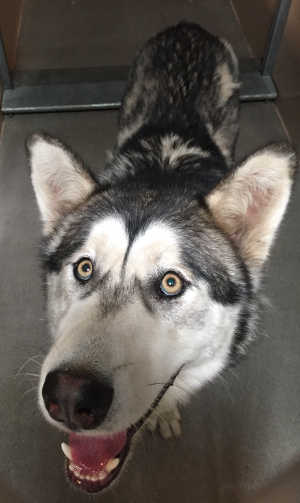
Alaskan Malamute
This handsome male Alaskan Malamute has a gray and white coat.
Shelter staff said he will be available on May 31.
He's in kennel No. 23, ID No. 4991.
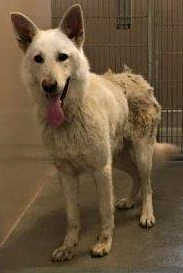
'Snowball'
“Snowball” is a handsome male German Shepherd mix with a short white coat.
He appears to have been abused in his previous home, and he will need a calm, patient and caring home where he can be made to feel safe and loved.
He's in kennel No. 24, ID No. 4947.
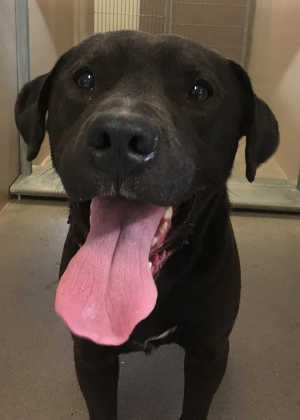
'Shadow'
“Shadow” is a male Labrador Retriever mix with a short black coat.
Shelter staff said he has a happy and loving personality.
He's in kennel No. 25, ID No. 4948.
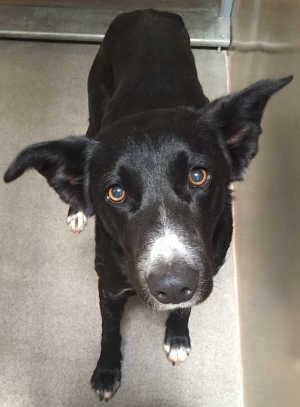
'Koda'
“Koda” is a female Labrador Retriever-border collie mix.
Shelter staff said she would do best in a home with no livestock animals or cats.
She's in kennel No. 27, ID No. 4924.
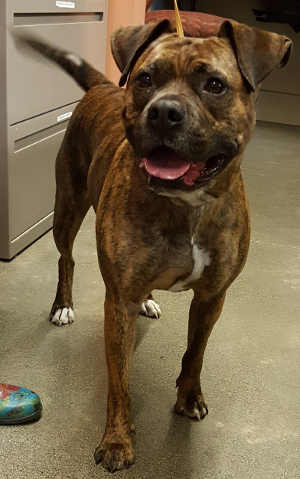
'Rosie'
“Rosie” is a female boxer-pit bull mix listed as “urgent,” and needing a new home immediately.
She has a short brown brindle coat with white markings, a friendly personality, lots of energy and a playful attitude. She's good with other large dogs and loves children.
Her adoption fee will be less expensive due to already being spayed.
She's in kennel No. 32, ID No. 4670.
To fill out an adoption application online visit http://www.co.lake.ca.us/Government/Directory/Animal_Care_And_Control/Adopt/Dog___Cat_Adoption_Application.htm .
Lake County Animal Care and Control is located at 4949 Helbush in Lakeport, next to the Hill Road Correctional Facility.
Office hours are Monday through Friday, 11 a.m. to 5 p.m., and 11 a.m. to 3 p.m., Saturday. The shelter is open from 11 a.m. to 4 p.m. Monday through Friday and on Saturday from 11 a.m. to 3 p.m.
Visit the shelter online at http://www.co.lake.ca.us/Government/Directory/Animal_Care_And_Control.htm .
For more information call Lake County Animal Care and Control at 707-263-0278.
Email Elizabeth Larson at
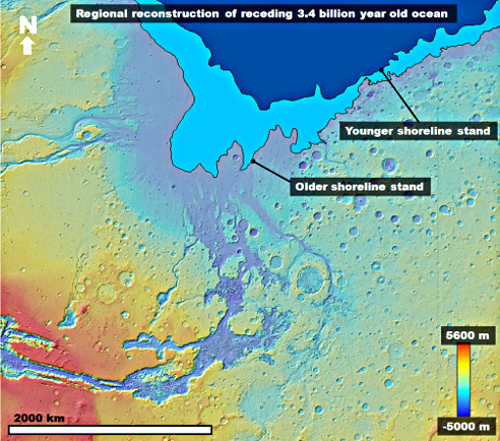
New NASA-funded research indicates that giant tsunamis played a fundamental role in forming Martian coastal terrain, removing much of the controversy that for decades shrouded the hypothesis that oceans existed early in Mars’ history.
“Imagine a huge wall of red water the size of a high-rise building moving towards you at the speed of a jetliner,” said J. Alexis P. Rodriguez, former NASA Postdoctoral Program fellow at NASA’s Ames Research Center in California’s Silicon Valley, and senior research scientist at the Planetary Science Institute in Tucson, Arizona. “That could be a fair way to picture it in your mind.”
It is now widely accepted by the Mars research community that approximately 3.4 billion years ago, an extremely cold and dry desert existed at the surface of Mars, while enormous subsurface aquifers overlain by ice-rich permafrost retained most of the water on the Red Planet.
Researchers think that, at that time in the planet’s history, several large aquifers catastrophically ruptured, carving large outflow channels and flooding Mars’ northern plains to form an ocean. However, an apparent lack of definite shoreline features made this uncertain.
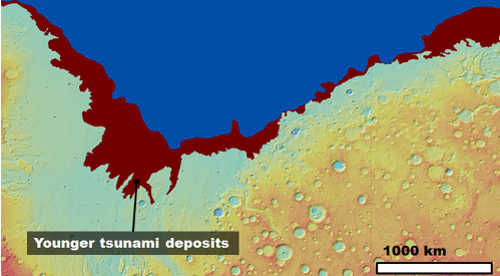
This new research shows that the shorelines exist below the present surface and were modified and buried by two mega-tsunami events.
“We were surprised to find that the older and younger tsunami deposits look so different,” said Rodriguez. “The older tsunami washed ashore and deposited enormous volumes of debris, and evidence for the water hurtling back into the ocean is represented in widespread ‘backwash.’”
Following the formation of the ocean, and in the absence of widespread river systems that could have refilled it, its coastline receded to a lower elevation.
The research documents two mega-tsunami events – giant waves that may have formed as a result of impacts slamming into Mars’ ocean.
“We think that after the ocean shoreline receded to a lower elevation – which likely resulted during a period of extreme climatic cooling lasting several million years – the younger tsunami occurred with enormous waves freezing as it washed over the frozen Martian landscape. The waves froze rapidly, even before they had a chance to flow back into the ocean,” Rodriguez said.
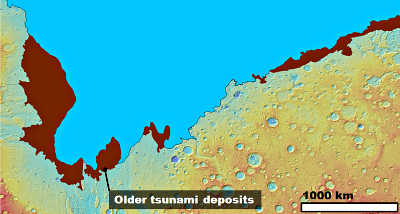
A key implication of the study is that the tsunami deposits can be used to reconstruct the evolution of the Martian climate during the lifetime of the ocean, and the younger deposits likely contain ice remnants from the ancient ocean itself. From a bystander’s viewpoint, if Mars was also covered by red dust then, as it is today, the ocean might have looked red while the particles settled to the bottom.
“The tsunami deposits likely contain rocks and sediments from the ocean floor that were picked up and transported landward by the enormous waves,” said Virginia Gulick, senior research scientist at the SETI Institute and NASA Ames, and a co-author on the paper. “Tsunami deposits are similar to flood deposits except that they are moving in the reverse – landward – direction.”
The researchers believe the ocean floor might have provided habitable environments, if the ocean persisted long enough.
“On Earth, tsunami deposits contain a significant mud or fine-grained component; on Mars, this finer-grained component could have preserved physical or chemical evidence of past microbial activity, if it existed,” said Gulick. “If there were habitable environments, then biosignatures also could have been preserved in the large boulders visible in the older flow deposits.”
The research was conducted using visible and thermal images, combined with digital topography from Mars Odyssey, the Mars Reconnaissance Orbiter (MRO), and the Mars Global Surveyor.
The research team was supported by the NASA Postdoctoral Program, NASA’s Planetary Geology and Geophysics Program, NASA’s MRO HiRISE and the NASA Astrobiology Institute.
LAKE COUNTY, Calif. – The fourth grade classes of Coyote Valley Elementary School were recent guests of the curator of the Lower Lake Historic Schoolhouse Museum, Antone Pierucci, assistant curator Whitney Petrey, and Pierucci's energetic staff.
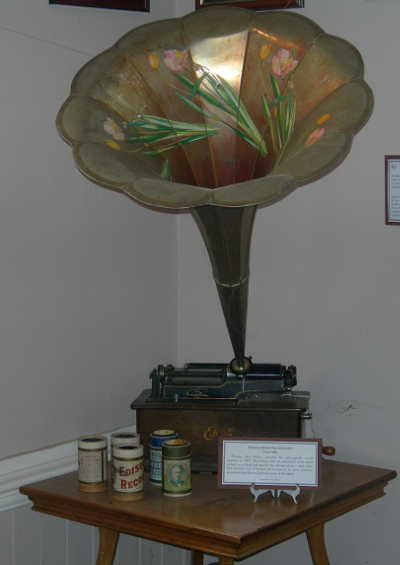
Among the many interesting things we learned was that way before iPods delivered music to our ears, there was the Edison Home Phonograph.
The museum's machine is a circa 1906 version.
The museum document states, “Thomas Alva Edison invented the phonograph record machine in 1877. Recordings were on cylindrical tubes which rotated on a shaft and moved the cylinder along a rigid stylus. This machine was of limited use because of its short, 4-minute recording capability and general set-up of the player.”
After doing a little digging around on the Library of Congress' Web site, I found that the Edison Home Phonograph came into being due to some of his other inventions; namely the telephone and telegraph.
In a series of serendipitous events, Edison had been diligently toiling over a device that would transcribe the messages received from the telegraph machine he invented. His hypothesis was that telephone messages could be heard in a comparable way.
First, he used a metal tube, wrapped in tin foil. Next he devised a way for his “diaphragm-and-needle units” to function as recording and playback devices. Sound vibrations created groves in the cylinders via the recording needle.
On the Web site, www.antiquephono.org it is stated that Edison's Home Phonograph was a definite boon to those in the mid-income range in the 19th and beginning 20th centuries. The machine was sturdy and reliable and hence, proved popular due to these features.
Thomas Edison hoped that the uses for his machine would go farther than mere music appreciation. He thought it was feasible in the future for his machine to be used for dictation, speaking books for the blind, speech lessons, teacher's lesson plans, musical toys and more!
Mr. Edison was truly ahead of his time.
Kathleen Scavone, M.A., is an educator, potter, writer and author of “Anderson Marsh State Historic Park: A Walking History, Prehistory, Flora, and Fauna Tour of a California State Park” and “Native Americans of Lake County.” She also writes for NASA and JPL as one of their “Solar System Ambassadors.” She was selected “Lake County Teacher of the Year, 1998-99” by the Lake County Office of Education, and chosen as one of 10 state finalists the same year by the California Department of Education.