 How to resolve AdBlock issue?
News
NORTH COAST, Calif. – Caltrans reports that the following road projects will be taking place around Lake County and the North Coast during the coming week.
Included are Mendocino County projects that may impact Lake County commuters.
LAKE COUNTY
Highway 20
– Pavement repairs from Sayre Avenue to the Paradise Cove subdivision will continue. One-way traffic control will also be in effect from 7 a.m. to 3:30 p.m. weekdays. Motorists should anticipate 15-minute delays.
– The Mine Restoration Project has been issued a long-term Caltrans Encroachment Permit to allow trucks to access their worksite near the Colusa County Line. Traffic will be restricted to one lane in each direction from 7 to 9 a.m. Motorists should anticipate minor traffic slowdowns.
Highway 29
– Valley fire recovery work between Middletown and Hidden Valley will continue. One-way traffic control will be in effect from 7 a.m. to 7 p.m., weekdays. Motorists should anticipate 15-minute delays.
Highway 53
– AT&T has been granted a Caltrans Encroachment Permit to perform utility work between Orchard Street and Kugelman Street beginning Tuesday, Aug. 9. Traffic will be restricted to one lane in each direction between 9 a.m. and 3 p.m., weekdays. Motorists may encounter minor traffic slowdowns.
Highway 175
– Valley Fire recovery work between Middletown and Loch Lomond will continue. One-way traffic control will be in effect from 7 a.m. to 7 p.m., weekdays. Motorists should anticipate 15-minute delays.
MENDOCINO COUNTY
Highway 1
– Striping operations between Pacific View Drive and Irish Beach Drive will continue. A moving lane closure will be in effect from 7 a.m. to 3 p.m., weekdays. Motorists should anticipate minor traffic slowdown.
– Mowing operations between Noyo Way and the north limits of Elk will begin Monday, Aug. 8. One-way traffic control will be in effect from 8 a.m. to 5 p.m., weekdays. Motorists should anticipate 10-minute delays.
– Paving between Lille Lake Road and Happy Lane will continue. One-way traffic control will be in effect from 7 a.m. to 3 p.m., weekdays. Motorists should anticipate 15-minute delays.
– Mowing operations between Ward Avenue and Beach Access Road will begin Monday, Aug. 8. One-way traffic control will be in effect from 7:30 a.m. to 4:30 p.m., weekdays. Motorists should anticipate 10-minute delays.
– Highway repairs a quarter-mile north of Ocean Meadows Circle will continue. One-way traffic control with a temporary signal will be in effect 24 hours per day, seven days per week. Motorists should anticipate five-minute delays.
– Striping operations between the Soldier Point Viaduct and Hardy Creek will continue. A moving lane closure will be in effect from 7 a.m. to 3 p.m., weekdays. Motorists may encounter minor traffic slowdowns.
Highway 20
– Striping operations between North Route 101 and a private road (located between postmile markers 42 and 43) will continue. A moving lane closure will be in effect from 7 a.m. to 3 p.m., weekdays. Motorists should anticipate minor traffic slowdowns.
Highway 101
– Striping operations between East Side Road and Route 175 East will continue. One-way traffic control will be in effect from 6 a.m. to 3 p.m., weekdays. Motorists should anticipate five-minute delays.
– Paving operations between Sherwood Road and Rattlesnake Creek will continue. One-way traffic control will be in effect from 7 a.m. to 5 p.m., weekdays. Motorists should anticipate 15-minute delays.
– Emergency slide repairs just south of Standish-Hickey State Park will continue. One-way traffic control with a temporary signal will be in effect 24 hours per day, seven days per week. Motorists should anticipate five-minute delays.
– Reggae on the River has been granted a Caltrans Encroachment Permit to hold an event along the State right-of-way. Onramps to Route 271 in Mendocino County at Piercy will be closed except for local traffic from Thursday, Aug. 4, to Monday, Aug. 8. Motorists are advised to seek an alternate route.
Highway 128
– Drainage work from 1.8 to 12.1 miles east of the junction with Route 1 will continue. One-way traffic control will be in effect from 7 a.m. to 5 p.m. Motorists should anticipate 15-minute delays.
– Striping operations between Flynn Creek Road and Wendling Soda Creek Road will continue. A moving lane closure will be in effect from 7 a.m. to 3 p.m., weekdays. Motorists should anticipate minor traffic slowdowns.
– Utility work near Beebe Creek will continue. One-way traffic control will be in effect from 7 a.m. to 3 p.m., weekdays. Motorists should anticipate five-minute delays.
Highway 162
– Paving operations between East Lane Road and Short Creek will continue. One-way traffic control will be in effect from 7 a.m. to 3 p.m. Motorists should anticipate 10-minute delays.
Highway 253
– Paving operations between the Anderson Creek Bridge and Slide Creek will continue. One-way traffic control will be in effect from 7 a.m. to 4:30 p.m., weekdays. Motorists should anticipate 15-minute delays.
– Highway repairs from Cattle Pass to Butler Ranch will continue. One-way traffic control with a temporary signal will be in effect from 7 a.m. to 5 p.m. weekdays. Motorists should anticipate 10-minute delays.
The Caltrans Traffic Operations Office has reviewed each project and determined that individual project delays are expected to be less than the statewide policy maximum of 30 minutes, unless noted otherwise above.
For information pertaining to emergency roadwork or for updates to scheduled roadwork, please contact the California Highway Information Network (CHIN) at 1-800-GAS-ROAD (1-800-427-7623).
Andrew McKinney Jr.
Sept. 7, 1938 – Aug. 2, 2016
LAKE COUNTY, Calif. – Andrew McKinney Jr. leaves behind daughter, Antoinette McKinney-Sterling; grandchildren, Amber Sterling, Brandon Mitchell; two great-granddaughters; niece, Samantha (James) Carter; nephews, Bob and Todd Harris; and a host of relatives and friends.
Andrew served God, served in the Air Force, he was loving man and will be missed dearly.
Arrangements by Chapel of the Lakes Mortuary, 707-263-0357 or 707-994-5611, or visit www.chapelofthelakes.com .

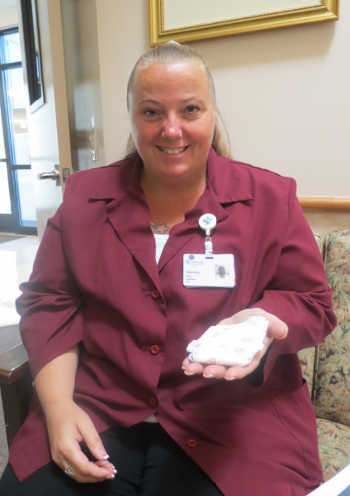
LAKEPORT, Calif. – When Marvelle Ivey began volunteering for Sutter Lakeside Hospital’s Family Birth Center, she had no idea that nurses still spoke of her infamous story.
Despite diligent prenatal care and an uneventful pregnancy, Ivey felt unusual back pain four months before her due date and rushed to Sutter Lakeside’s emergency department out of concern for her unborn twins.
The Ob-Gyn and Family Birth Center staff confirmed her fear: she was in labor four months too early. Shortly after admission, staff identified that Ivey was fully dilated.
“We administered medication to slow her contractions,” said Jackie Rad, RN, Family Birth Center nurse manager. “We put her in a position to minimize pressure on the amniotic sac and began coordinating with UCSF’s neonatal team to get them on site for delivery, and ensure that she and her babies had the best care possible.”
Because of the gestational age of the twins, a Cesarean section provided the safest option for delivery.
By the time Ivey went into the operating room, two transport teams from UCSF were on site at Sutter Lakeside.
“They were the size of baking potatoes when they were born,” Ivey said of her sons.
Jesse and James, born at 23 weeks and weighing less than 2 pounds each, were transported to the Neonatal Intensive Unit, or NICU, at UCSF.
“The nurses kept a journal about caring for the boys,” said Ivey. “I spoke with them every day and they gave me hope.”
The complications from premature birth multiplied: Jesse had heart surgery two weeks after birth to correct a valve, and James couldn’t breathe on his own while in the NICU.
“The doctor in San Francisco didn’t think James would make it,” said Ivey. “I ignored her because I knew he was strong. The last month before they came home, the boys were transferred to Santa Rosa Memorial. I knew they would be OK.”
After months in the NICU, the boys came home in February – just in time for their own baby shower.
The boys grew into rambunctious toddlers and are now normal preteens.
“I wouldn’t have it any other way. Both had motor skill issues, but otherwise were normal kids, getting into everything,” said Ivey. “Now they’re 12 and they love sports, they bicker – they’re such fun.”
Now, Ivey is giving back.
“When I volunteered, I didn’t know I’d be in the Birth Center,” said Ivey. “I haven’t been here in 12 years. When they told me my story is still circulating this hospital I thought ‘No way!’ They see it all – I’m sure they get a lot of difficult cases. If I knew they were still talking about it, I would have brought pictures in sooner!”
“We were so excited to find out that Marvelle, who is something of a living legend, was volunteering,” said Rad. “We’ve made such strides since she delivered here 12 years ago. We now offer neonatal telemedicine in partnership with Sutter Santa Rosa Regional Hospital, so a specialist is available at all times.”
Rad added, ““We’re proud to have been part of such an extraordinary story.”
To find out more about the Family Birth Center or how to volunteer, please visit www.sutterlakeside.org or call the Family Birth Center at 707-262-5087.
 SACRAMENTO – The Central Valley Regional Water Quality Control Board and the California State Parks are urging swimmers, boaters and recreational users to avoid direct contact with, or use of, waters containing blue-green algae (cyanobacteria) now blooming in San Luis Reservoir and O’Neill Forebay located in Merced County on the western edge of the San Joaquin Valley.
Due to the potential health risks, the San Luis Reservoir and O’Neill Forebay are now posted with health advisories.
Water samples collected by the Department of Water Resources on July 11 and July 25 exceeded the trigger levels for the protection of human health from the California Cyanobacteria and Harmful Algal Bloom Network’s Voluntary Guidance.
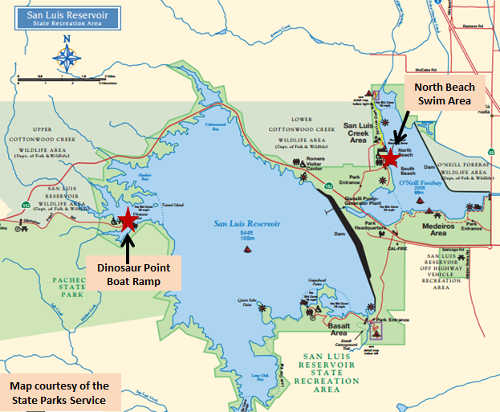
Cyanotoxins in samples from San Luis Reservoir near Dinosaur Point Boat Ramp exceed the danger action trigger and samples from the O-Neill Forebay exceed the caution action trigger.
Samples taken at the O’Neill Forebay North Beach swim area had toxin levels less than the caution action trigger level. However, the public is still urged to use caution when recreating in this area as bloom conditions can change rapidly.
For more information on the status of recreational activities at the San Luis Reservoir and O’Neill Forebay, the public should contact the San Luis Reservoir’s State Parks Service at 209-826-1197.
Officials urge people to choose safe activities when visiting San Luis Reservoir and O’Neill Forebay and recommend that people and their pets avoid contact with water, including swallowing or inhaling water spray, in areas with algae blooms. Children and pets are particularly at risk.
The map above shows the location of the Dinosaur Park Boat Ramp in the San Luis Reservoir where toxin levels tested above the danger action trigger.
Danger signs are posted at this location and water contact recreation is prohibited. The North Beach Swim Area in the O’Neill Forebay has Caution signs posted limiting water contact.
San Luis Reservoir, part of the California State Water Project, provides drinking water to many parts of California.
The State Water Resources Control Board’s Division of Drinking Water is communicating with drinking water systems that pull water from the project, and is not aware of any drinking water impacts from the current algae blooms.
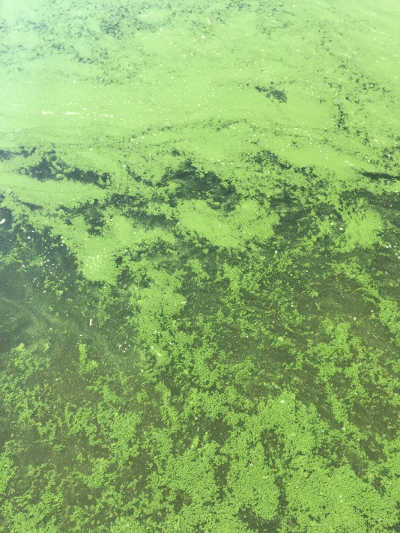
The algae bloom appears bright green in the water and scum or mats that float on the water’s surface have accumulated along the shoreline and boat ramp area in San Luis Reservoir. The blooms also appear as blue-green, white or brown foam.
Recreational exposure to toxic blue-green algae can cause eye irritation, allergic skin rash, mouth ulcers, vomiting, diarrhea, and cold and flu-like symptoms. Liver failure, nerve damage and death have occurred in rare situations where large amounts of contaminated water were directly ingested.
Pets can be especially susceptible since they tend to drink the water and lick their fur after going in the water.
The Statewide Guidance on Cyanobacteria and Harmful Algal Blooms recommends the following for blue-green algae impacted waters:
– Take care that pets and livestock do not drink the water, swim through algae, scums or mats, or lick their fur after going in the water. Rinse pets in clean water to remove algae from fur.
– Avoid wading, swimming, or jet or water skiing in water containing algae blooms or scums or mats.
– Do not drink, cook or wash dishes with untreated surface water from these areas under any circumstances; common water purification techniques (e.g., camping filters, tablets and boiling) do not remove toxins.
– People should not eat mussels or other bivalves collected from these areas. Limit or avoid eating fish from these areas; if fish are consumed, remove guts and liver, and rinse filets in clean drinking water.
– Get medical treatment immediately if you think that you, your pet, or livestock might have been poisoned by blue-green algae toxins. Be sure to alert the medical professional to the possible contact with blue-green algae.
For more information visit the following:
– California Department of Public Health: http://www.cdph.ca.gov/healthinfo/environhealth/water/Pages/Bluegreenalgae.aspx ;
– State Water Resources Control Board - California CyanoHAB Network: http://www.mywaterquality.ca.gov/monitoring_council/cyanohab_network/index.html ;
– California Office of Environmental Health Hazard Assessment, information on microcystin: http://oehha.ca.gov/ecotoxicology/general-info/information-microcystins ;
– US Environmental Protection Agency CyanoHAB Web site: https://www.epa.gov/nutrient-policy-data/cyanohabs ;
– US Environmental Protection Agency, Anatoxin-a report: https://www.epa.gov/sites/production/files/2015-06/documents/anatoxin-a-report-2015.pdf .

LAKE COUNTY, Calif. – When I decided to write “Lake County History,” a book that became a 450-page, three-pounder with more than a hundred stories, I had no idea what I was in for.
Before I was finished I had more than my share of surprises.
For starters, I discovered a hollow mountain, home-grown highwaymen, bloody massacres and a phantom railroad that plagued Lake County for years.
Now you will learn about Lake County's past wars and riots, its crimes and its heroes, its ghosts and high adventure. Once each week, I shall tell it all, right here.
The story begins 140 million years ago. Lake County's planetwide show opened with ear-splitting rumbles and titanic shuddering, as Earth’s rocky mantle slid about over the molten core of our planet.
Tectonic plates rose and fell. Sections of the planet shifted and changed the form and shape and location of continents, all during the slow passage of time, like giant playing cards dealt by a sleepy cosmic dealer.
The Pacific Plate began its slow slide beneath the Farallon Plate, where California would one day be, leaving broken and shattered remains. The rocky contest moved northward creating the San Andreas Fault. No people yet. The Grand Theater of Mother Earth played to an empty house, as she continued her endless slow modification and alteration.
Three million years ago, the San Andreas Fault’s massive, slow-motion hiccup caused the land, east of the western edge of the Pacific Plate, to rise up.
The rocks, bunched in sections like pleats of an accordion, formed parallel series of three major mountain ranges: the Outer Coastal Range, that stretches from Mendocino to Bodega Bay; the Mayacamas Mountains that reach from Cow Mountain to Mount St. Helena; and the Inner Coastal Range, which lines the Sacramento Valley like watchmen on eternal duty.
San Andreas woke again two million years ago. This time the fault’s rumble of destruction split the center of Lake County like a wishbone. The Clear Lake Basin, a 50-mile-long volcanic field, was created. That field's center is nine miles wide and 18 miles long.
The bubbling magma cauldron filling the field is a mere four and a third miles beneath our feet, no more than the distance from Upper Lake halfway to Lakeport.
After the quakes came quietus. Four hundred and sixty thousand years passed. The volcanic field, each time it came alive, spouted the semi-liquid viscous rock slowly from beneath in layered stages, like toothpaste oozing from a tube.
The lava continued to worm its molten way through thinner places in the crust to form Cow Mountain, Cobb Mountain, Mount St. Helena, Mount Hannah, Mount Konocti and the rest of the tall sentinels that guard the lake today.
Volcanoes sent their molten messages, sluggishly upward to the surface, every 3,000 to 4,000 years until, with the passing of the centuries, eruptions grew less urgent, less often, and ceased at last.
Unseen by any human eye, Clear Lake slowly filled and began, as it increased in depth, to drain into the Sacramento River.
The last ice age, several thousand years ago, changed the face of the globe.
Centuries of snow and ice had stolen water from the sea. Like a mammoth slow-moving elevator out of control, the western sea fell hundreds of feet.
Land bridges, once a part of the ocean’s bottom, were left naked and exposed. Australia linked Asia. The Bering Straits became Beringia.
The new continent was a tundra land a thousand miles wide cut by roaring streams and scoured with bitter winds.
Next week: The coming of man.
Author, storyteller and illustrator Gene Paleno lives in Witter Springs. He is author of “Lake County History: A Mystical Adventure in Time.” The book costs $32, including tax and shipping, and is available through Pal Publishing, P.O. Box 6, Upper Lake, Ca 95485. Contact Paleno at
A California Assembly member has persuaded the California Energy Commission to study the use of a technology that would allow the state's roadways to generate power.
Assemblyman Mike Gatto (D-Los Angeles), the chairman of the Utilities & Commerce Committee and the longest-serving current member of the State Assembly, on July 27 got his breakthrough when the commission agreed to piezoelectric road projects.
Shortly after being elected in 2010, Gatto had a conversation with a friend who had just returned from Israel.
Expecting to hear emotional descriptions of religious sites, Gatto was surprised to hear his friend rave instead about a road that produced energy.
After researching the issue, Gatto learned that engineers in Israel, Italy and Japan had successfully installed piezoelectric sensors underneath roadways and railways.
Those sensors, the size of watch batteries, are in effect the reverse of sonar: a vibration comes in, and an electric pulse comes out.
In 2011, Gatto introduced AB 306, which would have implemented two piezoelectric pilot projects on California freeways, but the legislation was vetoed by Gov. Jerry Brown.
Undeterred, Gatto asked the California Energy Commission (CEC) to study the issue. Today, after years of research, the CEC announced it would be funding multiple piezoelectric pilot projects throughout California.
“I still get stopped on the street by people who ask what happened to the idea of using our roads to generate electricity,” said Gatto. “California is the car capitol of the world, and we recycle just about everything. So why not capture the energy from road vibrations, and put it to good use?”
Piezoelectric technology has been used for years in sonar and electric guitars. In 2009, the East Japan Railway Co. installed piezoelectric flooring in their Tokyo railway station, using the energy generated by passing pedestrians to power all displays in the station.
Israel has already placed this technology under some highways, and Italy has signed a contract to place the technology under a stretch of the Venice-to-Trieste Autostrada. A dance club in San Francisco has even piloted the technology under their dance floor to run their lighting.
Scientists estimate the energy generated from a 10-mile stretch of four-lane roadway can power the entire city of Burbank.
“Thirty years ago, no one would have believed that black silicon panels in the desert could generate ‘solar’ power,” said Gatto. “Piezoelectric technology is real, and I am glad the state has finally acknowledged its potential in becoming an energy source.”
As to where the projects might be located, Gatto's spokesman, Eric Menjivar, told Lake County News that the California Energy Commission will decide the project locations in November or December after they have received applications for grant funds for the projects as part of the Electric Program Investment Charge Program.