 How to resolve AdBlock issue?
News
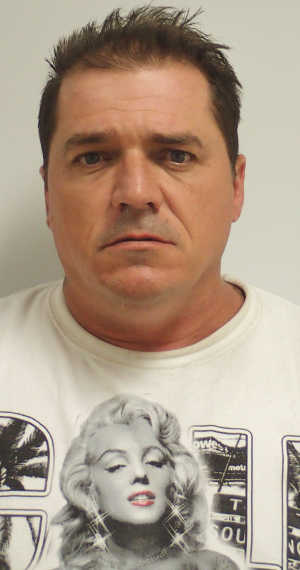
CLEARLAKE, Calif. – A Clearlake man was arrested last week after he was found in possession of several ounces of methamphetamine while driving a motorcycle on a suspended license.
Billy Wayne Stimmel, 43, was arrested on the evening of July 30, according to a report from Sgt. Tim Hobbs of the Clearlake Police Department.
Hobbs said that at 8:10 p.m. that day Officer Mark Harden observed Stimmel riding a motorcycle on Austin Drive. A check via dispatch revealed Stimmel had a suspended driver's license.
Harden attempted to catch up with the motorcycle and did so when it pulled over on Saroni Parkway west of Old Highway 53, Hobbs said.
Hobbs said Harden contacted Stimmel and arrested him for driving with a suspended driver’s license.
During a subsequent search incident to Stimmel's arrest, Harden located approximately 4 ounces of methamphetamine in a pocket of Stimmel’s shorts, said Hobbs, which led to Stimmel being additionally charged with possession of methamphetamine for sale.
Stimmel was later booked into the Lake County Jail, with bail set at $15,000. He has since posted bail and been released, according to jail records.
Anyone with information regarding the unlawful possession or sales of controlled substances can contact the Clearlake Police Department at 707-994-8251. Callers may remain anonymous.
The Air Operations Program of the California Highway Patrol recently became one of 10 accredited air operations programs in the United States.
The Public Safety Aviation Accreditation Commission, or PSAAC, awarded the accreditation at the Airborne Law Enforcement Association Expo held in Savannah, Ga., July 18 to 23.
The CHP is the largest state agency to complete the PSAAC accreditation process.
“I am extremely proud of the men and women in our Air Operations Program and the service they provide on a daily basis,” CHP Commissioner Joe Farrow said. “Receiving PSAAC accreditation validates our commitment to excellence and demonstrates the CHP’s desire to continually look for opportunities for self-improvement.”
The award concludes a three-year pursuit for recognition of implementing industry standards intended to promote best practices throughout the airborne law enforcement community.
By voluntarily complying with PSAAC standards, the CHP is recognized for its safe, effective and efficient aviation operations.
The CHP Air Operations Program began in the late 1960s and consists of 15 airplanes and 15 helicopters.
The air fleet assists CHP field operations and allied agencies across the state for emergency response, homeland security missions, patrol of rural roadways, speed enforcement, special events and transportation.
More than 170 CHP pilots and flight officers in eight air units throughout the state provide service to the public and allied agencies.
In 2015, Air Operations flew 8,633 search missions, 396 rescue missions and saved 14 lives.
The accreditation process includes five phases: enrollment, self-assessment, unit assessment, commission review, and maintaining compliance and re-accreditation.
A team of PSAAC assessors visited the CHP in October 2015 and examined all aspects of the CHP Air Operations Program, including administrative, operational, safety, training and maintenance standards.
Because accreditation is an ongoing process, the department must continually prove compliance with PSAAC standards and submit to periodic on-site assessments.

New research from North Carolina State University finds that major volcanic activity on the planet Mercury most likely ended about 3.5 billion years ago.
These findings add insight into the geological evolution of Mercury in particular, and what happens when rocky planets cool and contract in general.
There are two types of volcanic activity: effusive and explosive.
Explosive volcanism is often a violent event that results in large ash and debris eruptions, such as the Mount Saint Helens eruption in 1980.
Effusive volcanism refers to widespread lava flows that slowly pour out over the landscape – believed to be a key process by which planets form their crusts.
Determining the ages of effusive volcanic deposits can give researchers a handle on a planet’s geological history.
For example, effusive volcanism was active a few hundred million years ago on Venus, a few million years ago on Mars, and it still takes place on Earth today.
Until now, the duration of effusive volcanic activity on Mercury, made of the same materials as these other planets, had not been known.
NC State assistant professor and planetary geologist Paul Byrne and colleagues determined when the bulk of Mercury’s crust-forming volcanism ended by using photographs of the surface imaged by NASA’s MESSENGER mission.
Because there are no physical samples from the planet that could be used for radiometric dating, the researchers used crater size–frequency analysis, in which the number and size of craters on the planet’s surface are placed into established mathematical models, to calculate absolute ages for effusive volcanic deposits on Mercury.
According to their results, major volcanism on Mercury stopped at around 3.5 billion years ago, in stark contrast to the volcanic ages found for Venus, Mars and Earth.
“There is a huge geological difference between Mercury and Earth, Mars or Venus,” Byrne said. “Mercury has a much smaller mantle, where radioactive decay produces heat, than those other planets, and so it lost its heat much earlier. As a result, Mercury began to contract, and the crust essentially sealed off any conduits by which magma could reach the surface.
“These new results validate 40-year-old predictions about global cooling and contraction shutting off volcanism,” Byrne continued. “Now that we can account for observations of the volcanic and tectonic properties of Mercury, we have a consistent story for its geological formation and evolution, as well as new insight into what happens when planetary bodies cool and contract.”
The research appears in Geophysical Research Letters, with co-authors from the Carnegie Institution of Washington, Mount Holyoke College, the University of Georgia, Southwest Research Institute and Brown University. The MESSENGER mission provided substantial funding for this work.

Jack Jesse Carter
Aug. 4, 1918 - July 23, 2016
LAKE COUNTY, Calif. – Jack Carter went to his heavenly home on July 23, 2016, just 12 days short of his 98th birthday.
He was born in Clinton, Okla., one of 10 children. He and his family moved to California during the Great Depression and Dust Bowl years.
Jack graduated from Anaheim High School in 1936. He met his wife-to-be in Whittier where he ran a grocery store. He and Dorothy Potter were married in 1941. They were married for 72 years before Dorothy passed away in 2013.
Jack worked on submarines at Mare Island Naval Base in Vallejo during World War II. In those years, Jack and Dorothy had two daughters, Irene and Jackie.
After the war, they moved to Delano where Jack worked as a welder and blacksmith for his brother Bob at Carter's Welding and Manufacturing. Jack also laid carpet in Bend, Ore., and eventually moved back to Lake County in 1977. He owned a fix-it shop in Lakeport until he retired.
Both Jack and Dorothy were very active for more than 30 years at Clear Lake Baptist Church in Lakeport.
Jack was preceded in death by his wife, Dorothy, and his daughter, Irene Wilson. He leaves behind his daughter, Jackie Carter of Lakeport; three grandchildren; four great-grandchildren; one great-great-granddaughter; nieces; nephews; and many, many friends.
A memorial service for both Jack and Dorothy will be held at Clear Lake Baptist Church, 555 N. Forbes St. in Lakeport at 11 a.m. Tuesday, Aug. 9.
Arrangements by Chapel of the Lakes Mortuary, 707-263-0357 or 707-994-5611, or visit www.chapelofthelakes.com .

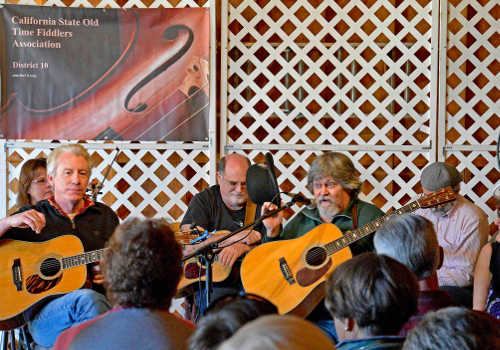
KELSEYVILLE, Calif. – Bring the whole family to the Ely Stage Stop & Country Museum on Sunday, Aug. 7, for the monthly Fiddlers’ Jam.
Musicians will meet in the Ely barn to perform their wonderful Americana music from noon until 2 p.m.
The event is free, but donations made during the event benefit both the Ely Stage Stop, helping to fund the blacksmith shop, and the Old Time Fiddlers Association, funding the group's scholarship programs.
Enjoy the music with beverages and tasty treats provided by the Ely volunteers. Have a picnic in the oak grove. Bring your own wine and sip it in Ely Stage Stop wine glasses that are available for purchase.
There will be the regular monthly raffle near the end of the jam and the opportunity to purchase tickets for a “quilt” raffle that will celebrate a winner later in the year. Those items will be on display in the barn during the jam.
Come early and enjoy the five-years-of-operation celebratory exhibit in the main house. Take a hayride or stroll the barn trail.
Lake County Historical Society’s Ely Stage Stop & Country Museum is located at 9921 State Highway 281 (Soda Bay Road) in Kelseyville, near the Clear Lake Riviera, just north of Highway 29-Kit's Corner.
Current hours of operation are 11 a.m. to 3 p.m. each Saturday and Sunday. Fiddlers’ Jams occur the first Sunday of every month from noon until 2 p.m. Living History events are held on the fourth Saturday of each month, again, from noon until 2 p.m.
Come join the Lake County Historical Society and become a volunteer at Ely or its sister museum, the Gibson Museum & Cultural Center in Middletown. Applications will be available during the day.
Visit www.elystagestop.org or www.lakecountyhistory.org , check out the stage stop on Facebook at www.facebook.com/elystagestop or call the museum at 707-533-9990.
Can minors legally hunt alone?
Question: I am 16 years old and have my hunter education certification. I was wondering if it is legal for me to hunt by myself with a firearm. I have not found anything saying one way or another whether I can legally do this.
If it is legal, do I need to carry written consent from my parents with me? (Jonah A.)
Answer: If you have a valid junior license, you may hunt by yourself with a firearm. However, if you are using a handgun, then you either need to be accompanied by a parent or a responsible adult, or have the written permission of a parent.
Firearms laws are contained in the California Penal Code. A good reference guide to California firearms laws can be obtained by visiting the California Department of Justice, Firearms Bureau website (click on “Firearms Summary” on the right-hand side).
Here’s an excerpt from the publication relating to minors in possession of firearms:
Possession of a Handgun or Live Ammunition by Minors
It is unlawful for a minor to possess a handgun unless one of the following circumstances exists:
• The minor is accompanied by his or her parent or legal guardian and the minor is actively engaged in a lawful recreational sporting, ranching or hunting activity, or a motion picture, television or other entertainment event;
• The minor is accompanied by a responsible adult and has prior written consent of his or her parent or legal guardian and is involved in one of the activities cited above; or
• The minor is at least 16 years of age, has prior written consent of his or her parent or legal guardian, and the minor is involved in one of the activities cited above (Pen. Code, §§ 29610, 29615).
It is unlawful for a minor to possess live ammunition unless one of the following circumstances exists:
• The minor has the written consent of a parent or legal guardian to possess live ammunition;
• The minor is accompanied by a parent or legal guardian; or
• The minor is actively engaged in, or is going to or from, a lawful, recreational sport, including, competitive shooting, or agricultural, ranching, or hunting activity (Pen. Code, §§ 29650, 29655).
On state wildlife areas, any visitor 16 or 17 years of age presenting a valid resident or non-resident hunting license issued in his or her own name will be issued an entry permit and may hunt independently (California Code of Regulations Title 14, section 550.5(c)(9)).
Are trail cameras legal to use on National Forest lands?
Question: Are there any regulations that prohibit the use of trail cameras on National Forest lands? I ask because a friend was on National Forest land and was told by U.S. Forest Service (USFS) personnel that trail cameras constitute harassment and are illegal. He was then told he must remove them.
I’m trying to find out which National Forest it was. If this is true, wouldn’t ALL wildlife photography be illegal, including photographing birds? (Brian K.)
Answer: This is not a California Department of Fish and Wildlife (CDFW) regulation. I suggest you find out which specific area of National Forest your friend was in when this happened. Afterward, contact the USFS office in that area for more details.
Salmon and groundfish fishing
Question: Is it legal to fish for both salmon and ground fish by boat on the same day? If so, are there any restrictions on gear that may be used? I'm interested in the Bodega Bay area. (Dan P.)
Answer: No more than two single point, single shank barbless hooks shall be used in the ocean north of Point Conception (34o27'00” N. lat.) when salmon fishing or fishing from any boat or floating device with salmon on board (CCR, Title 14 section 27.80(a)(2)).
It is legal to fish for both salmon and rockfish on the same day and have them on your boat. If you fish for salmon first or have any salmon on your boat, you would be restricted to fishing for groundfish with barbless hooks thereafter.
If you fish groundfish first, you may use barbed hooks (no more than two) for groundfish and then switch to barbless gear once you target salmon. And once you have rockfish onboard, you are also held to the groundfish depth constraints.
Carrie Wilson is a marine environmental scientist with the California Department of Fish and Wildlife. While she cannot personally answer everyone’s questions, she will select a few to answer each week in this column. Please contact her at