 How to resolve AdBlock issue?
News
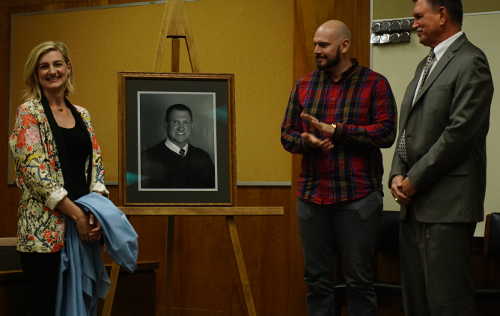 LAKEPORT, Calif. – The newest portrait of a retired Lake County Superior Court judge was unveiled on Friday.
The portrait of Judge David Herrick had its debut during a Friday afternoon ceremony that included many past and current judges and a courtroom filled with friends and other colleagues from the local justice system.
Herrick’s official portrait is a formal black and white photograph taken of him by his son-in-law, Ryan Ottem, who was on hand along with several other family members.
Herrick retired from the bench after 18 years of service as a Lake County Superior Court judge in January 2013, and was succeeded by Michael Lunas.
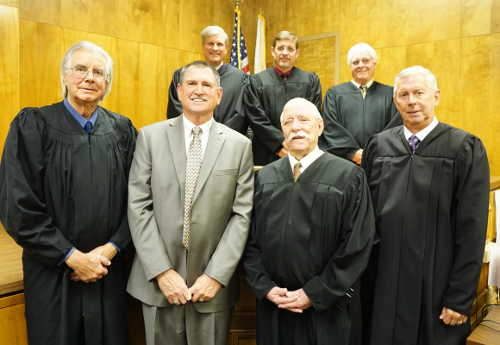
He continues to hear cases on a part-time basis, joining a group of other retired working judges including Galen Hathaway, Robert Crone and Arthur Mann, all of whom were on hand for the ceremony in the Department 1 courtroom where Herrick had served.
Presiding over the jovial ceremony were current Lake County Superior Court judges Andrew Blum, Richard Martin and Stephen Hedstrom.
The judges took turns sharing stories about Herrick and each other, with members of the audience – including District Attorney Don Anderson – adding their thoughts about Herrick's tenure.
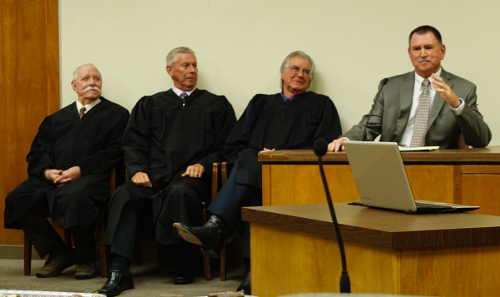
One of the recurring themes was how that the paths of Herrick and Hedstrom had continued to cross over the years.
They had met in law school in 1971 at University of California’s Hastings College of the Law in San Francisco, where the alphabetical seating arrangement put them side by side. They would meet again several years later when both were working in the Lake County legal system.
During the ceremony the judges joked that perhaps Judge Hedstrom has been stalking Judge Herrick due to the course of their careers sharing significant commonalities.
When Judge John Golden announced his retirement in 1994, Herrick ran to succeed him, winning in the fall after a hard-fought campaign against Peter Windrem, who had led the race after the June primary.
During the ceremony, Herrick was offered the opportunity to “rebut” some of the comments and kidding that had been directed his way.
Armed with what he said were about 10 pages of notes on a legal pad, he took a seat at the stand and shared fond memories of working as a judge.
John Jensen contributed to this article.
Email Elizabeth Larson at
 KELSEYVILLE, Calif. – The Kelseyville Business Association is busy with preparations for the 24th annual Christmas in the Country celebration, which takes place on Friday, Dec. 2.
The afternoon and evening of activities will feature the Kelseyville Senior Center's Christmas in the Country Craft Fair from 4 to 8 p.m.; Kelseyville Presbyterian Church will have chili and chowder for a reasonable donation; St. Peter's Catholic Church will have hot dogs and beans; Kelseyville Methodist Church will have cider, cookies and caroling; and the main event, the parade of lights, begins at 6:30 p.m.
Downtown merchants also will open their doors and offer holiday goodies, and the Saw Shop Gallery Bistro will share a Christmas quilt display.
The little ones can take their picture with Santa at Westamerica Bank after the lighting of the tree at the fire station.
Indoors at Westamerica Bank they will be celebrating the season and welcoming families with live music by The Bridge Band and the gourd artwork of Linda Kelly will be on display.
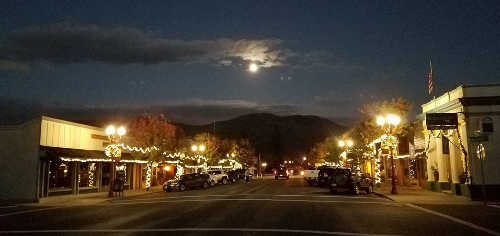
Event organizer Mary Morse, along with a half dozen members of the association, Team Riley and community service students from Kelseyville High School have made sure downtown Kelseyville is lit up and looking like a picture perfect holiday postcard.
Lights and garland are hung above every shop on Main Street, trees are lit from the floor to the sky, a sparkling bridge welcomes people into town and the street lights have all been dressed for the season.
Applications for the light parade will continue to be accepted until Friday, Nov. 25, but spaces are going fast.
Pick up applications at Kelseyville Appliance, Umpqua Bank or Westamerica Bank. For more information please call Mary Morse at 707-279-8559.
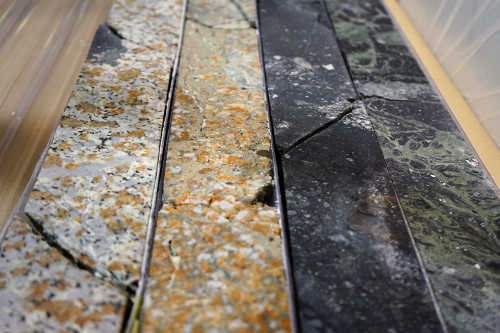
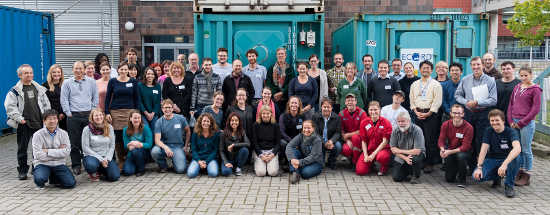
An international team of 38 scientists has shown how large asteroid impacts deform rocks and possibly create habitats for early life on Earth and elsewhere.
Around 65 million years ago, a massive asteroid crashed into the Gulf of Mexico, causing an impact so huge that the blast and its aftermath wiped out about 75 percent of all life on Earth, including most of the dinosaurs. It’s known as the Chicxulub impact.
In April and May, scientists on an offshore expedition drilled deep into part of the Chicxulub impact crater. Their mission was to retrieve samples from the rocky inner ridges of the crater – known as the “peak ring” – drilling about 1,600 to 4,380 feet below the modern-day sea floor to learn more about the ancient cataclysmic event.
Now, the researchers have performed the first analysis of the core samples in a study published online Thursday in the journal Science. They found that the impact deformed the peak ring rocks, making them more porous and less dense than models had predicted.
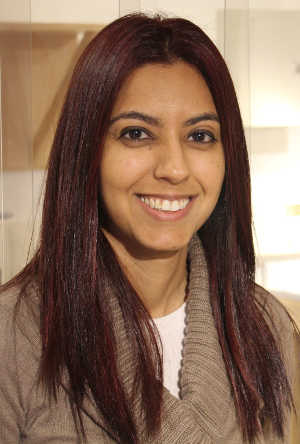
“Chicxulub crater is the only crater on Earth that has such a well-preserved peak ring and since we can't get samples of peak rings from other planets yet, it's really our best window into understanding the formation of large impact basins anywhere in the solar system,” said Sonia Tikoo, an assistant professor in Rutgers University's Department of Earth and Planetary Sciences in the School of Arts and Sciences. “We really didn’t know the exact physical mechanisms behind how peak ring craters form until this study.”
Porous rocks provide niches for simple organisms to take hold, and nutrients would also be available in the pores from circulating water that would have been heated inside the Earth’s crust.
Early Earth was constantly bombarded by asteroids, and the team has inferred that this bombardment must have also created other rocks with similar physical properties. This may partly explain how life took hold on Earth.
The study also confirmed a model of how peak rings formed in the Chicxulub crater, and how peak rings may be formed in craters on other planetary bodies.
The asteroid that created the Chicxulub crater hit the Earth’s surface with such force that it pushed rocks – at the time about 6 miles beneath the surface – farther downward and then outward, the team’s work confirmed.
These rocks then moved inward toward the impact zone and then up to the surface before collapsing downward and outward again to form the peak ring. All told, the rocks moved about 18.6 miles in a few minutes.
Professor Joanna Morgan, lead author of the study from the Department of Earth Science and Engineering at Imperial College London, said: “It is hard to believe that the same forces that destroyed the dinosaurs may have also played a part, much earlier on in Earth’s history, in providing the first refuges for early life on the planet. We are hoping that further analyses of the core samples will provide more insights into how life can exist in these subterranean environments.”
Tikoo, who studies magnetic fields preserved in rocks, said, “It’s surprising that we have this possible habitat down there in an environment that experienced so much energy and heat and deformation. It’s incredible that a biosphere may be produced in that environment as well.”
In the next steps, the team will make detailed measurements from the recovered core samples to refine their numerical simulations.
Ultimately, the team is looking for evidence of modern and ancient life in the peak-ring rocks. They also want to learn more about the first sediments that were deposited on top of the peak ring. That could tell the researchers if a giant tsunami deposited the sediments, and provide insights into how life recovered and when life returned to this sterilized zone after the impact.
Tikoo has studied the physical properties of the rocks and the granite “basement” that makes up the much of the peak ring. That includes preparing and examining the samples, and making density, porosity and magnetic measurements.
“I have about 400 samples in my lab right now and in the coming months, I’m going to start looking in more detail at the magnetization of these rocks,” she said.
“Magnetism can be used to detect minerals created by impact-related hydrothermal systems,” she said. “You could potentially have hydrothermal systems forming in the Martian crust where you have warm water moving through and we’ve shown that life may be able to exist in those environments here. It’s possible that a similar process could have happened on Mars long ago. It’s another place to look for fossil evidence of life in the past.”
The expedition was conducted by the European Consortium for Ocean Research Drilling (ECORD) as part of the International Ocean Discovery Program (IODP). The expedition is also supported by the International Continental Scientific Drilling Programme (ICDP). The expedition would not have been possible without the support and assistance of the Yucatán Government, Mexican federal government agencies and scientists from the National Autonomous University of Mexico (UNAM) and the Centro de Investigación Científica de Yucatán (CICY).
Colin Smith is with the Imperial College London and Todd B. Bates with Rutgers University.
LOWER LAKE, Calif. – The Lower Lake Historical School Preservation Committee will host its annual holiday open house on Friday, Dec. 9.
The event will take place from 6 to 9 p.m. at the Lower Lake Historic Schoolhouse Museum, 16435 Main St.
Come celebrate the holiday season with a Christmas tree lighting, caroling, a visit from and pictures with Santa Claus, free treats and Christmas carols around the player piano.
This year there will also be arts and crafts for children to make upstairs in the auditorium, including their very own ornaments to take home to decorate their own trees.
UKIAH, Calif. – Mendocino College is pleased and excited to invite the community to join them as they celebrate Native American Heritage Month.
The event will be held in the Lowery Student Center and Plaza on the Ukiah campus Wednesday, Nov. 30, beginning at 4 p.m. with a traditional American Indian prayer.
Guest speakers will include Clayton Duncan who will address the attendees about historical events which impacted local American Indian communities as well as looking to the future and visualizing the many possibilities available to our native Indian populations.
There also will be several students who will speak about their individual successes at Mendocino College.
This free event is open to the public so bring your family and friends and join us for an entertaining evening of traditional native dancers, crafts, games, food and cultural activities which will include a display of historical artifacts and photos that provide a history of the culture of Mendocino and Lake counties.
Indian tacos will also be available for sale by members of the American Indian Alliance Club.
The month of November is recognized as Native American Heritage month across the country as a way to honor and preserve the American Indian culture.
The Ukiah campus of Mendocino College is located at 1000 Hensley Creek Road, Ukiah.
For more information about the event, contact Chantell Martinez at 707-468-3223.
LAKEPORT, Calif. – Sutter Lakeside Hospital is pleased to announce the addition of a 64-slice CT scanner in its Emergency Department.
The new machine joins an existing CT scanner in the Imaging Department.
“As the only certified stroke center in Lake County, we felt that an additional CT scanner would expand our capacity to serve patients,” said Siri Nelson, chief administrative officer, Sutter Lakeside Hospital. “When a stroke patient comes through our doors, efficient imaging is essential. With the additional scanner, routine imaging won’t be disrupted while emergency cases will still be seen immediately.”
As a certified stroke center, Sutter Lakeside Hospital partners with Sutter California Pacific Medical Center in San Francisco to provide real-time images to neurointerventionalists for diagnosis. The team at Sutter Lakeside uses telemedicine to communicate with the highly-specialized doctors.
“By the time a patient reaches the physician at CPMC, the care team is already familiar with the case,” said Nelson. “Telemedicine allows treatment to begin immediately, and connection to a highly trained team as soon as possible.”
Construction began in April of this year; the completion of construction follows a hospital-wide push to educate community members about the symptoms of stroke.
“We encourage our community to remember to ‘BE FAST’, an acronym for the signs of stroke,” said Nelson. “A change in balance, eyes, face, arms, speech, and the time symptoms began could indicate a serious condition and requires immediate medical attention.”
For more information about stroke education, contact Nicole Lamm, Emergency Department manager, at 707-262-5051.