 How to resolve AdBlock issue?
News
NORTHERN CALIFORNIA – Homelessness continues to decline in the U.S, specifically among families with children, veterans and individuals with long-term disabling conditions, according to the latest national estimate by the U.S. Department of Housing and Urban Development, or HUD.
HUD’s 2016 Annual Homeless Assessment Report to Congress found that 549,928 persons experienced homelessness on a single night in 2016, a decline of 14 percent since 2010, the year the Obama Administration launched Opening Doors, the nation’s first comprehensive strategy to prevent and end homelessness.
Over this seven-year period, HUD estimates the nation experienced a 23-percent reduction among homeless families, a 47-percent drop in veteran homelessness, and a 27 percent decline in individuals experiencing chronic homelessness.
This national estimate is based upon data reported by approximately 3,000 cities and counties across the nation.
Every year on a single night in January, planning agencies called “Continuums of Care” and tens of thousands of volunteers seek to identify the number of individuals and families living in emergency shelters, transitional housing programs and in unsheltered settings.
In making the announcement, HUD Secretary Julián Castro noted that though the nation is making significant progress in reducing homelessness, the number of ‘doubled up’ or rent-burdened families remains a vexing problem.
“Every person deserves a safe, stable place to call home,” said Secretary Castro. “The Obama Administration has made unprecedented progress toward ending homelessness and today marks the seventh straight year of measureable progress. While we know that our work is far from finished, it’s clear we’re on the right track to prevent and end homelessness for good.”
“While our continued progress reinforces that we are on the right path, the data also makes clear that we must increase the pace of that progress,” said Matthew Doherty, executive director of the U.S. Interagency Council on Homelessness. “To do so, we must be unwavering in our commitment to strategies and investments that are working. Our communities and our citizens deserve nothing less.”
During one night in late January of 2016, tens of thousands of volunteers across the nation sought to identify individuals and families living on their streets as well as in emergency shelters and transitional housing programs.
These one-night “snapshot” counts, as well as full-year counts and data from other sources (U.S. Housing Survey, Department of Education), are crucial in understanding the scope of homelessness and measuring progress toward reducing it.
While, on the national level, homeless numbers are dropping, on the local level in Lake County, the number of homeless has nearly doubled over the past year.
The federal report showed that Lake County had an estimated 332 homeless this year at the time of the count, compared to the 170 counted and reported locally in 2015.
Of those 332 individuals, 44 were sheltered and 288 were not. Most of those counted – 210 – were people on their own, while the remainder were homeless people in families.
Those numbers also included 31 chronically homeless people and 21 homeless veterans, the report showed.
Key findings of HUD’s 2016 Annual Homeless Assessment Report
On a single night in January 2016, state and local planning agencies reported:
– 549,928 people were homeless representing an overall 14 percent reduction from January 2010. Most homeless persons (373,571) were located in emergency shelters or transitional housing programs while 176,357 persons were unsheltered.
– The number of families with children experiencing homelessness declined 23 percent since 2010.
– Veteran homelessness dropped by 47 percent (or 34,616 persons) since January 2010. On a single night in January 2016, 39,471 veterans were experiencing homelessness.
– Chronic or long-term homelessness among individuals declined by 27 percent (or 77,486 persons) since 2010.
– The number of unaccompanied homeless youth and children appeared to decline in 2016 to 35,686 though HUD will launch a more robust effort to more accurately account for this important population in January of 2017.
The Obama Administration's strategic plan to end homelessness is called Opening Doors – a roadmap for joint action by the 19 federal member agencies of the U.S. Interagency Council on Homelessness along with local and state partners in the public and private sectors.
The plan offers strategies to connect mainstream housing, health, education, and human service programs as part of a coordinate plan to prevent and end homelessness.
Family homelessness
There were 61,265 family households experiencing homelessness on a single night in 2016, a nearly 23 percent decline since 2010.
Meanwhile, the number of persons in families declined by nearly 20 percent during that time, due in large measure to the expansion of Rapid Rehousing Programs across the country and a concerted effort by local planners to reallocate scarce resources in a more strategic way.
Veteran homelessness
Since the launch of Opening Doors, several states and local communities have declared an effective end to veteran homelessness.
As a consequence of intense planning and targeted intervention, homelessness among veterans fell by nearly 50 percent since 2010.
This decline is largely attributed to the close collaboration between HUD and the U.S. Department of Veterans Affairs on a joint program called HUD-VA Supportive Housing (HUD-VASH).
Since 2008, more than 79,000 rental vouchers have been awarded and approximately 111,000 formerly homeless veterans are currently in homes of their own because of HUD-VASH.
Chronic homelessness
Long-term or chronic homelessness among individuals declined 27 percent since 2010. This reduction is due in part to a concerted effort to make available more permanent supportive housing opportunities for people with disabling health conditions who otherwise continually cycle through local shelters or the streets.
Research demonstrates that for those experiencing chronic homelessness, providing permanent housing, coupled with appropriate low-barrier supportive services, is the most effective solution for ending homelessness.
This “housing first” approach also saves the taxpayer considerable money by interrupting a costly cycle of emergency room and hospital, detox, and even jail visits.
While homelessness nationally continues to decline, some communities are reporting less progress.
LAKE COUNTY, Calif. – October proved another good month for Lake County real estate.
The Lake County Association of Realtors, or LCAOR, reported that the median sales price for October 2016 exceeded the September median by 10.6 percent.
On a year-over-year basis, the median sales price was 23-percent greater than the October 2015 median of $211,250.
The number of sales in October was 75, which was 23-percent higher than the 61 sales reported in September. In October of 2015 there were 72 reported sales, marking a 4-percent increase in year over year sales.
“Along with the Clear Lake Riviera we saw a number of sales in the Hidden Valley Lake, Clearlake and Lakeport areas,” said 2016 LCAOR President Erin Woodward. “This is very common given the density of housing in those locations.”
Financing mixes continued on a trend that has been prevalent for some time. Cash buyer purchased 32 percent of the homes and 60 percent of the homes were financed with loans.
The median sales price for the Clear Lake Riviera was $195,000, Hidden Valley Lake came in at $280,000, north Lakeport at $286,000 and the northwest section of Clearlake at $80,000. These prices demonstrate the diversity in housing cost in the county.
The California Association of Realtors reported that statewide existing, single-family home sales totaled 442,970 in October up 4.1 percent from September and 8 percent from October 2015. October’s statewide median home price was $513,520, up 1.2 percent from the revised September numbers and up 7.3 percent from October 2015.
The statewide median days to sell a home was 29.4 days compared to 69 days in Lake County.
LAKE COUNTY NUMBERS AT A GLANCE
October 2016
Median price: $260,000
Median days to sell: 69
Units sold: 75
September 2016
Median price: $235,000
Median days to sell: 91
Units sold: 61
October 2015
Median price: $211,250
Median days to sell: 78
Units sold: 72
Mistakes made behind the wheel of a vehicle can be costly and life changing. To emphasize the message and save lives, the California Highway Patrol will utilize a federal grant to implement a yearlong statewide campaign aimed at reducing the number of collisions associated with aggressive driving.
“Speed is the number one cause of traffic collisions in California,” CHP Commissioner Joe Farrow said. “With the help of this grant, the CHP plans to address this issue by educating motorists of the dangers associated with aggressive driving and providing a more visible presence for improved behavior.”
Speed, coupled with aggressive driving, consistently contributes to the vast majority of serious collisions in California.
In fiscal year 2013-2014, speed was a factor in approximately 43 percent of all fatal and injury collisions in the state.
That year, more than 27,294 speed-related collisions resulted in the death of more than 304 people and the injury of more than 39,720 others.
With the support of a federal traffic safety grant, Regulate Aggressive Driving and Reduce Speed, or RADARS, the CHP will educate motorists about the dangers of aggressive driving and actively enforce aggressive driving laws.
The main goal of RADARS is to achieve a five percent reduction in the number of fatal and injury traffic collisions in which speed, improper turning, and driving on the wrong side of the road are primary collision factors.
The RADARS program will also focus on street racing and sideshows. To achieve these goals, the CHP will combine enhanced enforcement with an active public awareness campaign.
Funding for this program was provided by a grant from the California Office of Traffic Safety through the National Highway Traffic Safety Administration.
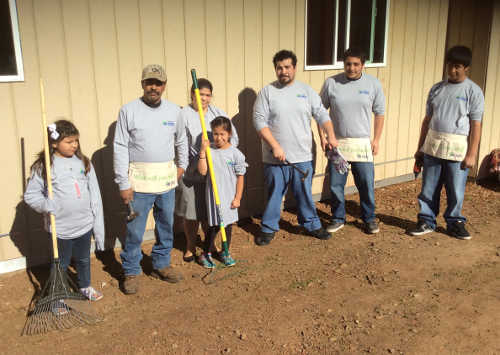 CLEARLAKE, Calif. – Construction of house No. 20 is in full swing and Habitat for Humanity Lake County is seeking volunteers to help the Pantoja family through the building process.
Trancito and Juana Pantoja currently live in an overcrowded, rundown home with their five children and have been working hard to bring their dream of a better home for their family to fruition.
Volunteering can be an enjoyable and rewarding experience, and gets you custom-designed shirt for your efforts, as well as the camaraderie with other volunteers and the satisfaction of knowing you have built a home for those in need of a decent place to live.
If you have construction experience, or are interested in gaining some, and are interested in helping the Pantojas celebrate the upcoming holidays in their new home, please contact Laurie at 707-994-1100, Extension 103, or email her at
NORTH COAST, Calif. – Caltrans reports that the following road projects will be taking place around Lake County and the North Coast during the coming week.
Included are Mendocino County projects that may impact Lake County commuters.
Caltrans will suspend work on Northern California highways from Wednesday, Nov. 23, through Sunday, Nov. 27, in observance of the Thanksgiving Holiday. However, due to unforeseen circumstances, it may be necessary for Caltrans Maintenance forces to respond to emergency situations.
LAKE COUNTY
Highway 20
– Pavement repairs from Sayre Avenue to Paradise Cove will continue. One-way traffic control will be in effect from 7 a.m. to 5 p.m. weekdays. Motorists should anticipate 15-minute delays.
Highway 29
– Pavement marker replacement from .3 miles north of the Siegler Canyon Bridge to just north of Cruikshank Road will continue through Friday, Nov. 18. One-way traffic control will be in effect overnight from 9 p.m. to 6 a.m., or from 7 a.m. to 6 p.m. weekdays. Motorists should anticipate five-minute delays.
Highway 53
– Rocky Fire cleanup near 40th Avenue will continue. One-way traffic control will be in effect from 7 a.m. to 4 p.m. weekdays. Motorists should anticipate five-minute delays.
MENDOCINO COUNTY
Highway 1
– AT&T has been granted a Caltrans Encroachment Permit for utility repairs near Westward Ho Road through Friday, Nov. 18. One-way traffic control will be in effect from 8 a.m. to 4 p.m. weekdays. Motorists should anticipate five-minute delays.
– Caltrans will perform routine maintenance from Old Stageroad Drive to Lighthouse Road through Friday, Nov. 18. One-way traffic control will be in effect from 8 a.m. to 4 p.m. weekdays. Motorists should anticipate 10-minute delays.
– Bridge deck repairs at the Brush Creek will continue. One-way traffic control will be in effect from 7 a.m. to 11 p.m. weekdays. Motorists should anticipate five-minute delays.
Highway 20
– Pavement repairs from the North Calpella Overcrossing to Cold Creek Bridge No. 3 will continue. One-way traffic control will be in effect overnight from 7 p.m. to 6:30 a.m. weekdays. Motorists should anticipate 20-minute delays.
Highway 101
– Routine maintenance near Frog Woman Rock will continue. Northbound traffic will be restricted to one lane 25 hours per day, seven days per week. Motorists should anticipate minor traffic slowdowns.
– Bridge deck repairs at the Korean War Veterans Memorial Bridge will continue. Traffic will be restricted to one lane in both directions from 7 a.m. to 11 p.m. weekdays. Motorists should anticipate minor traffic slowdowns.
– PG&E has been granted a Caltrans Encroachment Permit for utility repairs from Feliz Creek to Rosetti Creek through Friday, Nov. 18. One-way traffic control will be in effect from 7 a.m. to 4 p.m. weekdays. Motorists should anticipate five-minute delays.
– Pavement marker replacement from just south of Uva Drive to the new junction of Routes 20/101 will continue. Traffic will be restricted to one lane in both directions from 7 a.m. to 6 p.m., or overnight from 9 p.m. to 6 a.m. weekdays. Motorists should anticipate minor traffic slowdowns.
– Bridge rail upgrades at the South Willits Overhead will continue. Northbound traffic will be restricted to one lane 24 hours per day, 7 days per week. Motorists should anticipate minor traffic slowdowns.
– Rumble strip installation at various locations from Willits to Confusion Hill will continue. One-way traffic control will be in effect from 6 a.m. to 6 p.m. weekdays. Motorists should anticipate 15-minute delays.
– Emergency slide repairs just south of Standish-Hickey State Park will continue. One-way traffic control with a temporary signal will be in effect 24 hours per day, seven days per week. Motorists should anticipate five-minute delays.
Highway 253
– Highway repairs east of Cattle Pass will continue. One-way traffic control will be in effect from 7 a.m. to 5 p.m. weekdays. Motorists should anticipate 10-minute delays.
The Caltrans Traffic Operations Office has reviewed each project and determined that individual project delays are expected to be less than the statewide policy maximum of 30 minutes, unless noted otherwise above.
For information pertaining to emergency roadwork or for updates to scheduled roadwork, please contact the California Highway Information Network (CHIN) at 1-800-GAS-ROAD (1-800-427-7623).
MENDOCINO NATIONAL FOREST, Calif. – Operations started Tuesday, Nov. 15, on the Log Springs Timber Sale about 14 miles southwest of Paskenta.
Trucks will be hauling west from the sale area on the M9 Road to County Road 55 at the Log Springs station, west to the M4 intersection and then east down the M4 Road.
Approximately 15 truckloads a day are expected to exit the sale area and hauling could continue into the spring depending on the weather. Truck traffic and active felling signs are posted. Please drive with caution in this vicinity.
For additional forest road information check here: http://www.fs.usda.gov/Internet/FSE_DOCUMENTS/fseprd524846.pdf .