 How to resolve AdBlock issue?
News
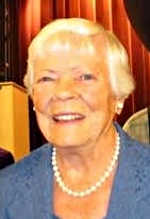
Wilma Jane Weaver
Feb. 1, 1921 – Nov. 5, 2016
Wilma Jane Weaver, longtime resident of Lake County, Calif., passed away peacefully on Nov. 5, 2016, in Castro Valley, Calif., at the age of 95. Her daughters were with her at the time of her passing.
Jane was born in Connellsville, Penn., and raised in Gary, Ind. She moved to Southern California after high school and there she met the love of her life, John Weaver, on a blind date arranged by friends. They married in 1940 and had two beautiful daughters, Janet and Carol.
In 1970 Jane and John moved to Lake County. Their first creative community endeavor was to build the Creekside Mobile Home Park on Dam Road in Clearlake. Decades later, Jane moved there and enjoyed the last years of her life living in the park she created.
Jane was very involved in her community, becoming a member of many civic organizations including the Park Study Club, Lake County Repertory Theater and the Lower Lake Community Action Group. She was also a member of the Lower Lake Methodist Church for 45 years.
While most people in their 70s were taking it easy, Jane had a vision. The old schoolhouse, built in 1877, needed to be saved, so she became a founding member of the Lower Lake Historic School Preservation Committee. Jane, her husband John, and 2 friends repaired and restored the building, and she designed the museum, becoming its first curator. Jane retired as curator at age 80.
Jane is survived by her daughters, two granddaughters, two grandsons and four great-grandchildren. She was dearly loved by friends and family.
A celebration of Jane’s life will take place on Dec. 3 at 2 p.m. in the Weaver Auditorium at the Lower Lake Schoolhouse Museum, 16435 Main St., Lower Lake. The public is invited.
Contributions can be made to the Lower Lake Methodist Church rebuilding fund, P.O. Box 516, Lower Lake, CA 95457.
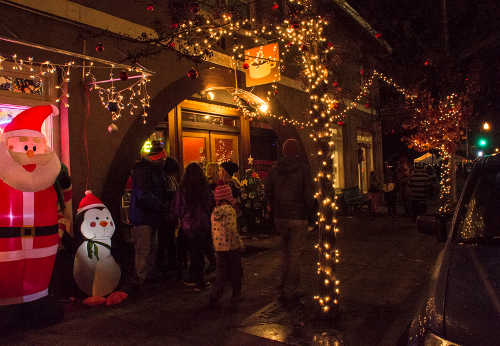 MIDDLETOWN, Calif. – Christmas in Middletown is an annual, free community event occurring on Saturday, Dec. 10, from 4 to 8 p.m.
The streets of Middletown are filled with neighbors and friends who greet you as you pass. Families turn out in multiple generations, rain or shine.
Organizations set up booths on the streets and indoors at the high school cafeteria to sell goodies and crafts or offer to gift wrap your purchases in order to support their good works.
Decorated merchant storefronts and business-sponsored, cut Christmas trees with ornaments created by area schoolchildren bring a festive feel to the town. The trees are later donated to local families in need through Spirit of the Season.
Santa Claus arrives on an old-fashioned fire truck to the Middletown Park where he helps with the tree lighting and carol singing at 5:15 p.m.
Afterwards, he meets children from 5:30 to 7 p.m. and Mrs. Claus gives each a stuffed animal, courtesy of Hospice Services.
Nearby is a free hot chocolate bar and craft table for kids donated and run by the Middletown Seventh-day Adventist School.
The free Passport for Fun program encourages participants to visit member businesses to collect stamps in their passports for a chance to win a prize. This year, two firepits donated by Hardester’s Markets and gift certificates to area businesses will be awarded.
Individual businesses compete for “best decorated” storefront and they pass out their own refreshments to passersby. It’s a perfect small town event.
Find out more at www.christmasinmiddletown.com or visit the Middletown Area Merchant Association Web site at www.middletownareamerchants.com .
California election administrators continue the detailed and tedious process of vote counting and election canvassing as the federal government prepares for a transfer of power and voter attention shifts from the Nov. 8 General Election to the holidays and new year.
In the state of California, election results are not final and certified until early December, which can come as a surprise to some election observers who frequently have a keen interest in contests where the margin of victory is extremely close and remain vigilant in their observation and anticipation of the final count.
According to Dean Logan, registrar-recorder/county clerk for Los Angeles County and President of the California Association of Clerks and Election Officials, California has one of the lengthiest post-election canvass periods in the nation.
Counties in the state have up to 28 days to complete the count for President and up to 30 days for all other contests and measures.
“Historically, up to one third of the total ballots cast in an election are processed and counted during this post-election canvassing period,” Logan added.
The extended period is responsive to the state’s open voting model that includes multiple options for voting and failsafe provisions to ensure voters who are unable to get to their assigned polling place on Election Day or those whose registration status is in question are able to cast ballots and, once verified, have their votes included in the final, certified returns.
“It is often surprising to the public and media – and agonizing for the candidates and political parties – to have to wait out the final count, but California election law places completeness and accuracy over speed,” said Logan. “And, in the end, our electorate is best served by ensuring every vote counts.”
There are three categories of ballots that make up those that remain to be processed after Election Day:
· Vote-by-Mail – or absentee – ballots cast and returned by mail in the final days leading up to and on the day of the election as well as mail ballots turned in at polling places on Election Day. State law allows ballots postmarked on or before and received within three business days of the election to be counted. Records must be checked to ensure the same voters did not also appear to vote in person at a polling place on Election Day.
Additionally, state law requires comparison and verification of voter signatures on all mail ballot return envelopes to the signature on voter registration records prior to counting. Another new state law allows voters who forgot to sign their vote by mail ballot envelope up to eight days after the election to provide a signature.
· Provisional ballots cast by voters who were not listed on the precinct rosters where they appeared to vote or who were listed as having been issued a mail ballot that they misplaced, didn’t receive and/or weren’t able to surrender at the time of voting. These ballots also must be manually reviewed to confirm voter eligibility and undergo signature verification. Once verified, they must be checked to ensure contests and measures counted match up to where the voter is registered.
· Ballots with write-in votes are set aside in the initial vote counting process to allow for a check to ensure no votes were cast in the same contest for a candidate already listed on the ballot. Write-in votes must also be checked against the list of declared write-in candidates and then manually tallied for reporting on the final returns.
Lake County Registrar of Voters Diane Fridley reported last week that she and her staff have nearly 12,000 ballots to finish processing during the official canvass period. That tally includes 1,497 provisional ballots and 10,494 absentees.
The Secretary of State's Office said Tuesday that approximately 2,078,794 ballots remain to be processed statewide.
In addition to processing and counting the remaining ballots in the election, county officials must also conduct a series of legally required audit and record keeping processes prior to certifying the results to the Secretary of State's Office.
“All of these activities contribute to the transparency and accountability of the state’s election process,” Logan said.
In response to the massive tree die off across California – which the U.S. Forest Service today estimated has killed over 102 million trees since 2010 – Cal Fire is continuing its work with federal, local, and utility partners to remove dead and dying trees that pose the greatest risk to public safety.
“Although the epidemic tree mortality we are facing is devastating, it has galvanized partnerships at all levels, and focused renewed interests on forest health,” said Chief Ken Pimlott, Cal Fire director and California’s state forester. “With disaster comes opportunity, and we will continue our work to remove the dead and dying trees that pose the greatest risk to public safety and private property.”
To date, Cal Fire and its partners have removed more than 423,000 trees in 10 counties, inspected and cleared of dead trees nearly 52,000 miles of roads and powerlines, treated more than 26,000 acres and created roughly 1,300 acres of fuel breaks.
“The number of dead trees in our state is truly saddening and another widespread impact of this historic drought we are managing in our state,” said Mark Ghilarducci, director of the California Governor’s Office of Emergency Services. “Through the Governor’s Tree Mortality Task Force, we’re actively leveraging all of our resources around California to ensure protection of lives, critical infrastructure and the environment in our wooded communities and wildlands.”
Stakeholders working through the Governor’s Tree Mortality Task Force committed to redouble their efforts in the face of an expanding epidemic of trees killed by drought and bark beetles.
On Nov. 18, the U.S. Forest Service increased its estimate of the number of dead trees in California’s forestlands from 66 million to 102 million, greatly widening the estimated scope of a die-off unprecedented in modern history.
The estimated 36 million dead trees identified by the U.S. Forest Service in its latest aerial surveys will heighten the danger of falling trees and wildfire for years to come.
California has endured five years of drought – 2012 to 15 are the four driest consecutive years on record, based on statewide precipitation – and drought continues despite improved precipitation in Northern California last winter.
Drought is a frequent and natural feature of California’s Mediterranean climate, and the state’s highest economic losses due to drought typically involve loss of timberland and wildfire damage.
Healthy trees typically produce enough resinous pitch to repel bark beetles, but beetle populations can flourish among stands of trees stressed by lack of precipitation.
The beetles and their larvae feed on the tree’s living tissue. Beetle-damaged trees can take down powerlines, damage homes and fuel wildfire.
Over $10 million in state funds have been earmarked in grants for local projects to help combat tree mortality, focusing on the removal of dead and dying trees around homes.
Another $6 million of state funds have been used to buy equipment for removing dead and dying trees in high-hazard zones.
Ten counties stretching from Placer to Kern have been identified as the highest-hazard region for tree mortality.
“Work to address this massive bark beetle epidemic began quickly a year ago, and the joint undertaking continues,” said Mariposa County Supervisor Kevin Cann. “The sheer number of dead trees is hard to imagine, but it’s real and we must continue our efforts to address the fact that this will be an ongoing issue for years to come. We have come a long way since Governor Brown first declared this emergency. It is important that we recognize the substantial progress as we redouble our efforts to deal with this ecosystem impacting event.”
In October 2015, Gov. Brown signed an executive order addressing tree mortality, including the creation of a Tree Mortality Task Force. More than 80 local, state and federal agencies, as well as utilities and other stakeholders, focus on a coordinated response through the task force.
Additional information on the work of the task force to date can be found here.
For more information on how to be ready for wildfire and to learn how to make your trees healthy and prepared for bark beetles, visit www.ReadyForWildfire.org .
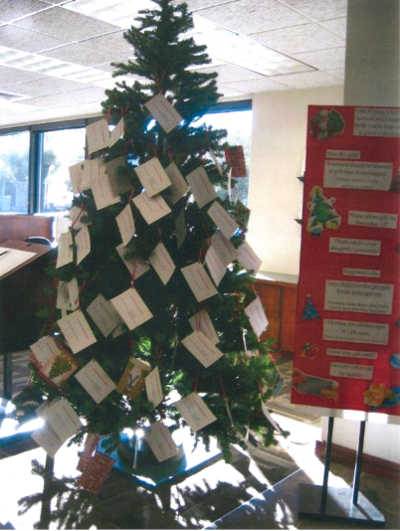
LAKE COUNTY, Calif. – The holiday wish trees have returned to Umpqua Bank in Lakeport and Kelseyville.
In partnership with Lake County Child Welfare Services, or CWS, Umpqua Bank associates have committed to making holiday wishes come true for children under the supervision of CWS of Lake County.
Experience the joy of giving and brighten the holiday of a child in need. It's a great way to teach your children the joy of giving.
The public is invited to stop by either of the two Umpqua Bank locations, choose a child’s card and sign the register.
Items should be returned by Dec. 14 and placed in a gift bag or use one of the gift bags provided by Umpqua Bank. The dedicated staff of CWS will see that the gifts are delivered to the children.
People who are unable to purchase a gift but would like to sponsor one can notify bank staff who will do the shopping for them.
The Lakeport Store of Umpqua Bank is located at 805 11th St and the Kelseyville Store is located at 4280 Main St.
For information, call 707-262-3342 or 707-262-3389.
NORTH POLE – Yes, Virginia, there is a Santa Claus, and the U.S. Postal Service can help you prove it when Santa replies to your child’s letter – complete with a North Pole postmark.
Here are the steps for your child to get a letter back from Santa:
• Have your child write a letter to Santa and place it in an envelope addressed to: Santa Claus, North Pole.
• Later, when alone, open the envelope and write a personalized response.
• Insert the response letter into an envelope and address it to the child.
• Add the return address: SANTA, NORTH POLE, to the envelope.
• Affix a First-Class Mail stamp, such as a new Holiday Windows stamp, to the envelope.
• Place the complete envelope into a larger envelope – preferably a Priority Mail Flat Rate envelope – with appropriate postage and address it to: North Pole Postmark, Postmaster, 4141 Postmark Drive, Anchorage, AK 99530-9998.
“Letters from Santa” must be received by the Anchorage, AK, postmaster no later than Dec. 15. Santa’s helpers at the Postal Service will take care of the rest.
Be sure to share the experience on social media using #LettersFromSanta.
Tips
• To save paper, write Santa’s response on the back of your child’s letter. If you keep them together, your child will also be able to recall what he or she wrote.
• When responding as Santa, make the response as personal as possible by highlighting your child’s accomplishments over the past year, for example, helping around the house, receiving good grades in a particular subject at school or participating in community service activities.
• This is a great activity to do at Thanksgiving that the whole family can enjoy, including parents, grandparents, aunts, uncles and other caregivers.
The Letters from Santa program adds to the excitement of Christmas and is ideal for interesting youngsters in letter writing, stamps and penmanship.
The Postal Service receives no tax dollars for operating expenses and relies on the sale of postage, products and services to fund its operations.