How to resolve AdBlock issue?
Refresh this page
How to resolve AdBlock issue?
Refresh this page
Lake County News,California
  • Home
    • Registration Form
  • News
    • Education
    • Veterans
    • Community
      • Obituaries
      • Letters
      • Commentary
    • Police Logs
    • Business
    • Recreation
    • Health
    • Religion
    • Legals
    • Arts & Life
    • Regional
  • Calendar
  • Contact us
    • FAQs
    • Phones, E-Mail
    • Subscribe
  • Advertise Here
  • Login

News

How does raw water compare to tap water? A microbiologist explains why the risks outweigh the benefits


Water that comes straight from natural sources, dubbed “raw water,” is gaining popularity. Raw water advocates reject public water supplies, including tap water, because they don’t enjoy the taste or believe it’s unsafe and depleted of vital minerals.

On the surface, raw water might seem alluring – the natural surroundings may look beautiful, and the water may look clean and taste refreshing. But unlike tap or commercially bottled water, raw water is not evaluated for safety. This leaves the people who drink it vulnerable to infectious microbes or potentially other toxic contaminants.

I’m a microbiology researcher studying infectious diseases. From a public health perspective, clarifying misconceptions about tap water and the health hazards of raw water can protect consumers and curtail the spread of infectious diseases.

A short history of public drinking water

Archaeological evidence suggests that humans have long associated dirty water with negative health outcomes. As early as 1500 BCE, ancient Egyptians added a binding agent to their water to clump contaminants together for easy removal.

Two major developments in the mid-1800s showed why impure water is dangerous. First, physician John Snow traced a deadly cholera outbreak to contaminated water from London’s Broad Street pump. Second, Louis Pasteur advanced the germ theory of disease, which postulated that microbes can cause illness. Pasteur established that consumable liquids like raw water and milk can harbor disease-causing pathogens.

Scanned page of neighborhood map, with stacked black rectangles in various streets
Physician John Snow’s 1854 map of cholera cases in London, highlighted in black, clustered around a contaminated pump. John Snow/Wellcome Collection

These discoveries paved the way for large-scale infrastructure projects in the 20th century to ensure the public water supply is safe.

Today, the process of cleaning water begins with the same steps employed by the ancient Egyptians, followed by extensive filtration to get rid of debris as well as most germs and chemicals. Chlorine is added to kill lingering pathogens, including those that may reside in the service pipes carrying the water to the faucet. Beginning in the 1940s, a small amount of fluoride was added as an inexpensive, safe and effective means to improve dental health.

The cleanliness and fluoridation of the water supply has dramatically reduced infectious disease and cavities, and has been heralded as one of the 20th century’s greatest public health achievements.

Is raw water healthier than tap water?

People who champion raw water claim it has health benefits, such as essential minerals and beneficial bacteria called probiotics, that are stripped from tap water. Let’s unpack each of these claims.

Water dissolves bits of soil and rock at its source; therefore, its mineral content depends on the local geology. Areas with a lot of limestone, like the Midwest, have water that is higher in calcium. Water from deeper in the ground may have higher mineral content since it passes through more rock on its way to the surface.

Stream of water flowing from a shelf of rocks
The mineral content of water largely depends on its source and location. Sergii Zyskо/iStock via Getty Images Plus

The idea that tap water is depleted of essential minerals is not true, as these nutrients are too small to be excluded by the filtration process. Test kits can determine the mineral content of your water, and if you find it lacking, mineral supplements can be added. Experts suggest, however, that most minerals you need come from your diet, not water.

Some also claim that raw water contains probiotics that are removed from tap water. The amount of probiotics in water would also vary by location, and the notion that health-promoting bacteria reside in raw water has not been proved.

There are no studies associating raw water with any health benefit. Anecdotal claims about smoother skin or increased energy are likely to be placebo effects. Even the idea that raw water tastes better might be more psychological than physiological – a 2018 study showed that most people preferred tap water over bottled water in a blind taste test.

Risks of drinking raw water

Raw water carries the risk of serious gastrointestinal infection from a wide variety of pathogens.

Water-borne viruses include rotavirus and norovirus, which cause rapid-onset diarrhea and vomiting, and hepatitis A, which infects the liver. Bacteria such as E. coli and Salmonella, or parasites like Cryptosporidium and Giardia, also cause severe diarrhea that can lead to dangerous levels of dehydration. Toxoplasma gondii can also lurk in raw water and can cause miscarriage or birth defects if consumed during pregnancy.
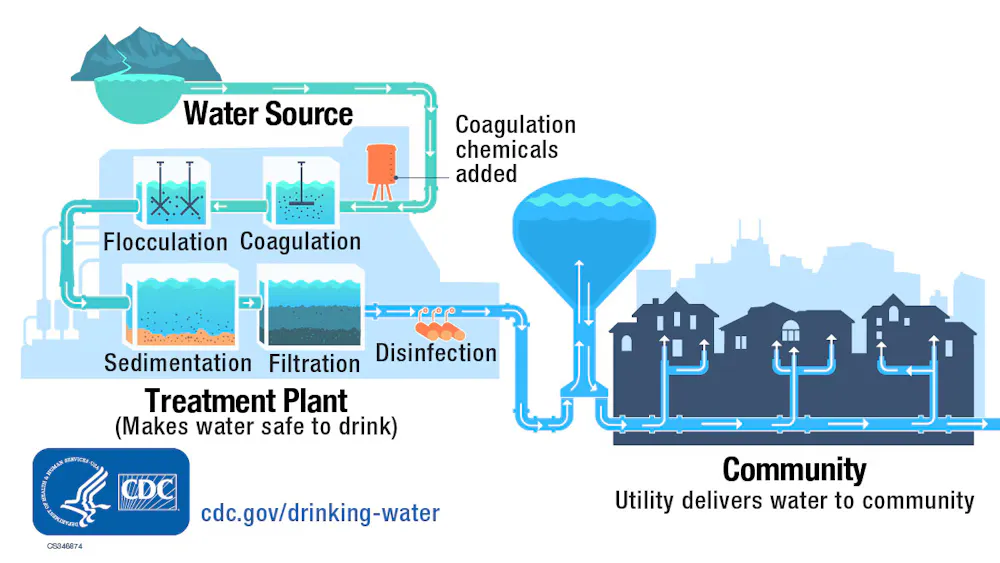
Diagram of water treatment process, moving from water source to treatment plant to community
Tap water undergoes several treatment steps before it reaches your faucet. CDC

Carriers of diarrheal infections can transmit them to others if they swim in public pools or fail to properly wash their hands before touching others or preparing food. Norovirus is particularly durable and can survive on surfaces for days, increasing chances of it infecting someone else.

Raw water can also contain algae that release toxins causing abdominal issues and damage to the brain and nervous system.

Cholera, dysentery and typhoid fever are no longer health burdens in the U.S. thanks to a robust water treatment system. But areas of the world lacking this privilege suffer high child mortality and widespread diarrheal diseases.

How safe is tap water in the US?

Tap water in the U.S. is among the safest to drink in the world. The Biden administration took steps to further improve it, including funding to replace lead pipes and new rules to monitor forever chemicals like perfluoroalkyl and polyfluoroalkyl substances, or PFAS, which have been linked to cancer and developmental disorders.

Importantly, raw water is not necessarily free from lead, arsenic, pesticides or industrial contaminants. Raw water sources are not reliably monitored by experts, so it is difficult to say which ones pose less risk. In addition, the water may be acceptably safe one day, but not on another. For example, soil runoff from a storm could introduce new germs or pollutants into the area.

The Environmental Protection Agency routinely screens for nearly 100 contaminants to ensure tap water is safe. In contrast, raw water remains untested, unregulated and untreated, leaving its safety to drink in question. In terms of risks and benefits, there are no demonstrated health benefits from drinking raw water, but clear evidence that you may be exposing yourself to harmful infectious and toxic contaminants.The Conversation

Bill Sullivan, Professor of Microbiology and Immunology, Indiana University

This article is republished from The Conversation under a Creative Commons license. Read the original article.

California joins coalition challenging federal funding freeze

On Tuesday, a coalition of states including California filed a lawsuit that led to a temporary stay of a sweeping order freezing trillions of dollars in federal assistance that impacts people across all walks of life.

California Attorney General Rob Bonta and New York Attorney General Letitia James led the coalition of 23 attorneys general in filing a lawsuit to block implementation of a memo by the Office of Management and Budget, or OMB, threatening to freeze up to $3 trillion in federal assistance funding including more than 2,600 programs effective at 2 p.m. Tuesday.

The attorneys general were successful in their bid for a temporary restraining order to block the memo from taking effect, citing immediate harm to their states due to the potential to lose billions of dollars in funding for critical health and safety programs.

They argued the OMB directive violates the U.S. Constitution, violates the Administrative Procedure Act, and is arbitrary and capricious.

The attorneys general also argued that Congress has not delegated any unilateral authority to OMB to indefinitely pause all federal financial assistance under any circumstance, and that the order violates the “separation of powers” between Congress and the Executive Branch because the Spending Clause of the U.S. Constitution gives the power of the purse exclusively to Congress.

Bonta’s office said the order has already thrown state programs into chaos and created uncertainty around their administration, with impacted programs including disaster-relief funding necessary for Los Angeles’ recovery from recent wildfires, as well as public health, education, public safety and government programs.

“The Trump Administration is recklessly disregarding the health, wellbeing, and public safety of the people it is supposed to serve,” said Attorney General Bonta. “This directive is unprecedented in scope and would be devastating if implemented. Already, it has created chaos and confusion among our residents. I will not stand by while the president attempts to disrupt vital programs that feed our kids, provide medical care to our families, and support housing and education in our communities. Instead of learning from the defeats of his first administration, President Trump is once again plowing ahead with a damaging – and most importantly, unlawful – agenda. I’m proud to co-lead a coalition of attorneys general in taking him to court.”

The suit argued that the OMB directive freezing federal funding less than 24 hours after it was announced will cause immediate and irreparable harm to the states every day that it is in effect — in the form of millions of dollars in funds and mass regulatory chaos.

Bonta’s office said the order would have devastating consequences for California in particular, given the uncertainty around continued disbursement of Federal Emergency Management Agency funding that is essential for recovery from the Los Angeles wildfires, which have caused an estimated $150 billion in economic losses.

Congressman Mike Thompson (CA-04), whose district includes Lake County, called the Trump Administration’s actions “alarming.”

“These funds were lawfully appropriated by Congress and are owed to the American people. In freezing them, the administration has unleashed chaos on states, localities, American families, nonprofits, and businesses across our country,” Thompson said.

Thompson said the Trump Administration is blocking funds for firefighting and disaster relief, housing assistance, veterans’ care, food banks and food assistance, Medicaid, childcare, farmers, small businesses, military readiness and more, which he called “unacceptable.”

All of those programs are important in Lake County, where policing programs have received federal aid, and where there is a large per capita veterans population, agriculture is a major industry sector, and there is high poverty and food insecurity.

“I continue to do all I can to help ensure all federal resources are delivered in accordance with the law. One week ago, the President swore an oath to faithfully execute our laws and protect the Constitution. He owes it to the American people to comply with the lawful disbursement of federal funds owed to American taxpayers,” said Thompson. “The call is coming from inside the building and the American people are being ripped off.”

Sen. Alex Padilla, who also raised alarm about Trump’s actions, called on his Republican colleagues to not confirm Russell Vought to be OMB director until Trump reverses “this reckless order.”

Padilla also provided a list of key areas where the funding would have serious impacts.

That list follows.

Disaster relief: Public assistance and hazard mitigation grants from the Disaster Relief Fund to state, tribal, territorial, and local governments and non-profits to help communities quickly respond to, recover from, and prepare for major disasters will be halted — right as so many Southern California communities are struggling amid the recent fires.

Firefighting: Grants to support firefighters across the country will be halted. This includes grants that help states and localities purchase essential firefighting equipment.

Public safety: Grants for law enforcement and homeland security activities will cease to go out the door, undermining public safety in every state and territory.

Infrastructure projects: All federally-funded transportation projects — roads, bridges, public transit, and more — will be halted, including projects already under construction.

Homelessness/housing: In the midst of a homelessness and housing crisis, the Trump Administration is freezing housing and homelessness funding, which will exacerbate our housing crisis.

988 Suicide and Crisis Lifeline: Funding for the 988 Suicide and Crisis Lifeline that Senator Padilla significantly improved, as well as grants for mental health services, will be cut off.

Nutrition assistance: Millions of American citizens who rely on nutrition assistance programs like school lunch programs will be left hungry as funding is cut off and non-profits who provide additional assistance lose federal funding.

Combating the fentanyl crisis: Funding for communities to address the substance use disorder crisis and combat the fentanyl crisis will be cut off.

Emergency Preparedness: Critical preparedness and response capability funding used to prepare for disasters, public health emergencies, and chemical, biological, radiological or nuclear events will be frozen.

Child care: Child care programs across the country will not be able to access the funding they rely on to keep their doors open.

K-12 Schools: Federal funding for K-12 schools will be halted. School districts may not be able to access key formula grant funding including Title I, IDEA, Impact Aid, and Career and Technical Education, which would pose tremendous financial burdens on schools in the middle of the school year.

Biomedical research: There will be immediate pauses on all funding for critical health research, including research on cancer, Alzheimer’s disease, and diabetes, as well as clinical trials at the NIH Clinical Center and all across the country — disrupting lifesaving and often time-sensitive research.

Higher education and job training: Millions of students relying on federal student loans and federal work study will have their plans to pursue postsecondary education and further their careers thrown into chaos as federal financial aid disbursements are paused.

Health services: Federal funding for community health centers that provide health care for over 30 million Americans will be immediately frozen, creating chaos for patients trying to get their prescriptions, a regular checkup and more.

Small businesses: The Small Business Administration will have to halt loans to small businesses — including those in disaster-ravaged California communities.

Veterans care: Federal grants to help veterans in rural areas access health care and grants to help veterans get other critical services, including suicide prevention resources, transition assistance, and housing for homeless veterans, will be cut off.

Tribes: Funding to tribes for basic government services like health care, public safety, programs, tribal schools, and food assistance will be halted.

Preventing violence against women: All Violence Against Women Act grants, as well as funding for victims assistance and state and local police, will be cut off.

U.S. competitiveness: Existing grants to support research for artificial intelligence and quantum computing will be halted and any new grant funding would be paused — undermining U.S. innovation and competitiveness with China and putting California jobs at risk.

Energy jobs: Grants for critical energy projects nationwide will be cut off — halting billions of dollars in investment nationwide and jeopardizing good-paying American jobs. The Department of Energy Loan Program Office will halt loans in 28 states, impacting hundreds of thousands of construction and operations jobs.

Food inspections: Some states will have to take on the full financial burden of ensuring the nation’s meat supply is safe if federal cooperative agreements for meat inspection are halted.

Support for servicemembers: Support for a host of Department of Defense financial assistance and grant programs supporting servicemembers and their families will be halted, including the Fisher House, Impact Aid, community noise mitigation, ROTC language training, STEM programs, and the USO.

Military readiness: Grants and other assistance appropriated to strengthen military effectiveness and defense capacity will be halted, including Defense Production Act support for the defense industrial base, basic research grants necessary to advance key technologies, and small business support to strengthen supply chains.

Email Elizabeth Larson at This email address is being protected from spambots. You need JavaScript enabled to view it.. Follow her on Twitter, @ERLarson, and on Bluesky, @erlarson.bsky.social. Find Lake County News on the following platforms: Facebook, @LakeCoNews; X, @LakeCoNews; Threads, @lakeconews, and on Bluesky, @lakeconews.bsky.social.

Full-length warning siren test planned Feb. 3

LAKE COUNTY, Calif. — Next week, the Lake County Sheriff’s Office will conduct a full-length test of the county’s warning sirens.

The test will take place at 11 a.m. Monday, Feb. 3.

The three-minute test will involve the warning sirens in Middletown, Anderson Springs, Cobb, Loch Lomond, Kelseyville Riviera (formerly known as the Clear Lake Riviera) and Riviera West.

The sheriff’s office said the test is part of ongoing preparedness efforts for emergencies such as wildfires, earthquakes or other hazards.

Monthly siren tests occur on the first Monday of each month at 11 a.m.

Tests from March through January will last 30 seconds, while the February test is the full three-minute activation. Notifications about these tests will be sent via LakeCoAlerts and Nixle just before each test.

What to do when you hear sirens outside of scheduled tests

If you hear sirens outside of a scheduled test, it’s important to stay alert and seek more information.

The sirens may not always be heard depending on factors like terrain, background noise, being indoors, or your distance from the sirens.

Always remain vigilant and follow any instructions provided.

The Middletown, Anderson Springs, Cobb, and Loch Lomond sirens have been in place since 2018 and are maintained by the South Lake County Fire District. Should there be any issues, please contact South Lake County Fire District at 707-987-3089.

In 2021, the Kelseyville Riviera Homeowners Association installed three warning sirens. Should there be any issues, please contact the Kelseyville Riviera Homeowners Association at This email address is being protected from spambots. You need JavaScript enabled to view it..

The Riviera West warning sirens were installed in 2023. Should there be any issues, please contact the Riviera West Homeowner Association’s President at This email address is being protected from spambots. You need JavaScript enabled to view it..

The Lake County Sheriff’s Office urges all residents to take steps to prepare for all hazards which includes opting in for LakeCoAlerts and learning your zone. For details visit https://Ready.LakeCountyCA.gov.

Stay informed by following the Office of Emergency Services and the Lake County Sheriff on Facebook at http://www.facebook.com/lakecountyOES and www.facebook.com/lakesheriff.

Medical research depends on government money – even a day’s delay in the intricate funding process throws science off-kilter


Of the tens of thousands of grant applications submitted to the National Institutes of Health, only around 1 in 5 is funded. Sean Gladwell/Moment via Getty Images

In the early days of the second Trump administration, a directive to pause all public communication from the Department of Health and Human Services created uncertainty and anxiety among biomedical researchers in the U.S. This directive halted key operations of numerous federal agencies like the National Institutes of Health, including those critical to advancing science and medicine.

These operations included a hiring freeze, travel bans and a pause on publishing regulations, guidance documents and other communications. The directive also suspended the grant review panels that determine which research projects receive funding.

As a result of these disruptions, NIH staff has reported being unable to meet with study participants or recruit patients into clinical trials, delays submitting research findings to science journals, and rescinded job offers.

Shorter communication freezes in the first few days of a new administration aren’t uncommon. But the consequences of a freeze lasting weeks or potentially longer underscore the critical role the federal government plays in supporting biomedical research. It also brings the intricate processes through which federal research grants are evaluated and awarded into the spotlight.

I am a member of a federal research grant review panel, as well as a scientist whose own projects have undergone this review process. My experience with the NIH has shown me that these panels come to a decision on the best science to fund through rigorous review and careful vetting.

How NIH study sections work

At the heart of the NIH’s mission to advance biomedical research is a careful and transparent peer review process. Key to this process are study sections – panels of scientists and subject matter experts tasked with evaluating grant applications for scientific and technical merit. Study sections are overseen by the Center for Scientific Review, the NIH’s portal for all incoming grant proposals.

A typical study section consists of dozens of reviewers selected based on their expertise in relevant fields and with careful screening for any conflicts of interest. These scientists are a mix of permanent members and temporary participants.

I have had the privilege of serving as a permanent chartered member of an NIH study section for several years. This role requires a commitment of four to six years and provides an in-depth understanding of the peer review process. Despite media reports and social media posts indicating that many other panels have been canceled, a section meeting I have scheduled in February 2025 is currently proceeding as planned.

Person wearing glasses reviewing a stack of papers, surrounded by other stacks of papers on a desk
Evaluating projects for their scientific merit and potential impact is an involved process. Center for Scientific Review

Reviewers analyze applications using key criteria, including the significance and innovation of the research, the qualifications and training of the investigators, the feasibility and rigor of the study design, and the environment the work will be conducted in. Each criterion is scored and combined into an overall impact score. Applications with the highest scores are sent to the next stage, where reviewers meet to discuss and assign final rankings.

Because no system is perfect, the NIH is constantly reevaluating its review process for potential improvements. For example, in a change that was proposed in 2024, new submissions from Jan. 25, 2025, onward will be reviewed using an updated scoring system that does not rate the investigator and environment but takes these criteria into account in the overall impact score. This change improves the process by increasing the focus of the review on the quality and impact of the science.

From review to award

Following peer review, applications are passed to the NIH’s funding institutes and centers, such as the National Institute of Allergy and Infectious Diseases or the National Cancer Institute, where program officials assess the applications’ alignment with the priorities and budgets of institutes’ relevant research programs.

A second tier of review is conducted by advisory councils composed of scientists, clinicians and public representatives. In my experience, study section scores and comments typically carry the greatest weight. Public health needs, policy directives and ensuring that one type of research is not overrepresented relative to other areas are also considered in funding decisions. These factors can change with shifts in administrative priorities.

Grant awards are typically announced several months after the review process, although administrative freezes or budgetary uncertainties can extend this timeline. Last year, approximately US$40 billion was awarded for biomedical research, largely through almost 50,000 competitive grants to more than 300,000 researchers at over 2,500 universities, medical schools and other research institutions across the U.S.

Getting federal funding for research is a highly competitive process. On average, only 1 in 5 grant applications is funded.

Scientist looking into microscope, surrounded by other lab equipment
Medical research often follows a strict timeline. gorodenkoff/iStock via Getty Images Plus

Consequences of an administrative freeze

The Trump administration’s initial freeze paused some of the steps in the federal research grant review process. Some study section meetings have been postponed indefinitely, and program officials faced delays in processing applications. Some research groups relying on NIH funding for ongoing projects can face cash flow challenges, potentially resulting in a need to scale back research activities or temporarily reassign staff.

Because my own study section meeting is still scheduled to take place in February, I believe these pauses are temporary. This is consistent with a recent follow-up memo from acting HHS Secretary Dorothy Fink, stating that the directive would be in effect through Feb. 1.

Importantly, the pause underscores the fragility of the research funding pipeline and the cascading effects of administrative uncertainty. Early-career scientists who often rely on timely grant awards to establish their labs are particularly vulnerable, heightening concerns about workforce sustainability in biomedical research.

As the NIH and research community navigate these pauses, this chapter serves as a reminder of the critical importance of stable and predictable funding systems. Biomedical research in the U.S. has historically maintained bipartisan support. Protecting the NIH’s mission of advancing human health from political or administrative turbulence is critical to ensure that the pursuit of scientific innovation and public health remains uncompromised.The Conversation

Aliasger K. Salem, Associate Vice President for Research and Professor of Pharmaceutical Sciences, University of Iowa

This article is republished from The Conversation under a Creative Commons license. Read the original article.

State Water Project increases allocation forecast for millions of Californians

SACRAMENTO — On Tuesday, the Department of Water Resources, or DWR, announced an update to the State Water Project allocation forecast for 2025.

The allocation has increased to 20 percent of requested supplies, up from 15 percent in December. The State Water Project, or SWP, provides water to 29 public water agencies that serve 27 million Californians.

While January has been incredibly dry across California, storm runoff into the state’s reservoirs came in higher than forecasted at the end of December allowing for a modest allocation increase.

Storms in late November and early December had a positive impact by saturating the ground, allowing for storms through December to more efficiently runoff into reservoirs.

More storms are needed, and the long-range forecast does hint at a return to wet conditions in early February that could bring much-needed rain and snow.

“We are in the middle of our biggest months for precipitation for California, and unfortunately January has been very dry, putting a significant dent in our season,” said DWR Director Karla Nemeth. “A return to wet weather is critical for our season’s success and it will take many more storms to make up the deficit and further boost water supply deliveries.”

Despite the dry conditions, California has effectively managed its reservoirs to keep storage above average for this time of year. Lake Oroville, the State Water Project’s largest reservoir, is currently at 127 percent of average for this time of year.

San Luis Reservoir, which is jointly operated by the U.S. Bureau of Reclamation, is at 102 percent of average for this time of year. Reservoirs in Southern California are also near or above their historical averages.

Each year, DWR provides SWP allocation forecasts based on available water storage, projected water supply, and water demands. Allocations are updated monthly as snowpack, rainfall, and runoff information is assessed, with a final allocation typically determined in May or June.

As the winter progresses, if California sees an increase in rain and snowfall, the allocation forecast may increase.

Learn more about how the State Water Project allocation process works here.

The allocation forecast notice to State Water Contractors and historical data on SWP allocations are available here.

Lakeport releases 2024 police stats: Less crime and traffic citations

LAKEPORT, Calif. — A new report shows an overall drop in crime in the city of Lakeport, with property crimes down while, at the same time, several categories of violent crime increasing.

The Lakeport Police Department presented its 2024 statistics report last Tuesday during the Lakeport City Council meeting.

The data shows a decrease in traffic offenses and most types of crimes, except for assaults.

“We have a slight increase in reported assaults for the year,” reported Sgt. Ryan Cooley.

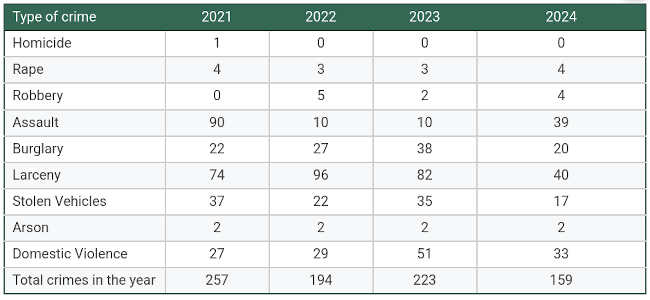
The data shows 39 reported assaults in 2024, an increase from 10 in both 2022 and 2023. However, that 2024 number remained low when compared with 2021’s 90 cases.

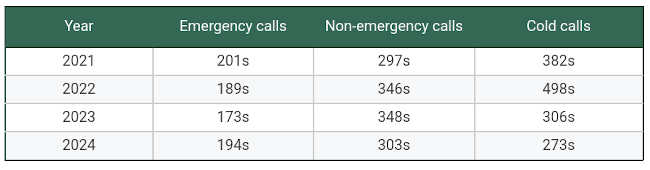
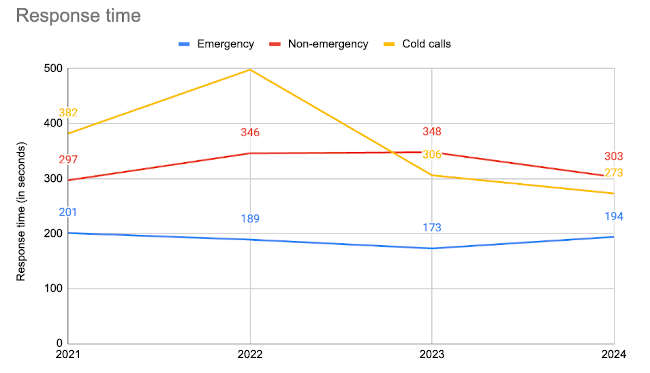
Cooley then highlighted decreased police response time to non-emergency calls and cold calls, decreased cases in stolen vehicles, domestic violence, arrests, driving-under-the-influence, traffic collisions and suspended cases.

For the use of force, “The 2024 year showed 0 uses of force reportable to the California Department of Justice,” read the 2024 Use of Force Analysis Report.

“Nearly 50% increase in lesser uses of force that includes the pointing of firearms or less lethal devices,” Cooley said.

Although it was just passed in November, Cooley mentioned that the implementation of Proposition 36 has brought about “collaboration between the law enforcement stakeholders.”

City Manager Kevin Ingram added that the District Attorney’s Office was going to be “a critical piece on that.”

“We've already started to put the pieces into place to kind of start getting some of that communication in order,” he added.

Ingram also asked the public to call the police when in need.

“You got a shoplifter in your shop and there’s nothing we can do — that has changed,” Ingram said. “We do need people to kind of bring those calls and attention in, start the log, start the process, get things moving, where we can kind of enact some of those pools that come out of Prop. 36 so we're learning as we're going.”

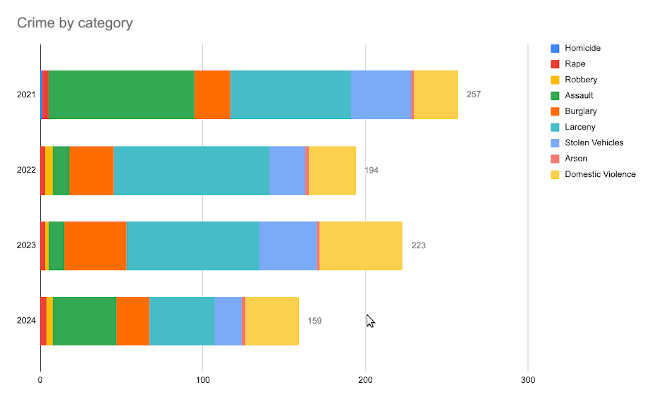
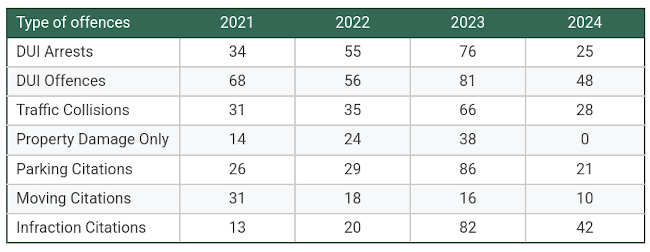
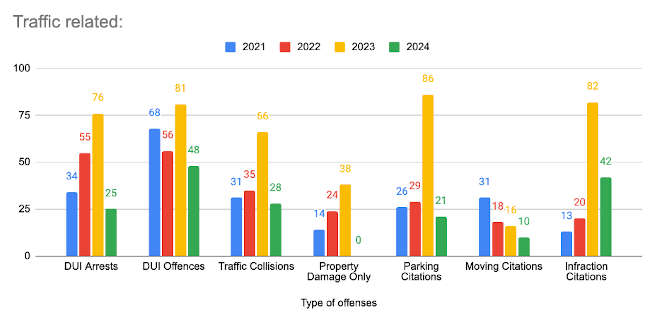
Lake County News has put together five most important data sets across the past four years, drawing raw data from the police department’s staff report.

A: Crimes

The total number of crimes at 159 came to the lowest in 2024 in four years. Larceny, assault, and domestic violence were the most common crime types in Lakeport for the year. The number of assault cases in 2024 were four times higher than in 2022 and 2023, but remained far lower than 90 cases in 2021.


B: Traffic related

All types of traffic-related offences, including DUI arrests, reduced significantly from the previous year. To note, 2023 was a year with particularly high numbers across the board.

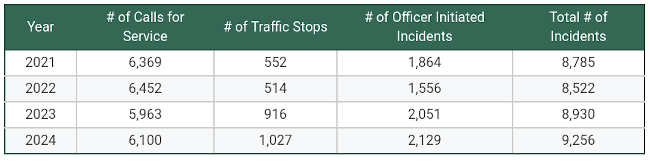
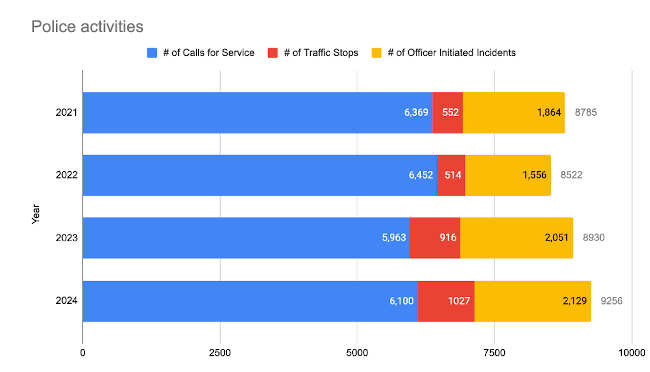
During council comments, Councilmember Kenny Parlet pointed to the correlation between the increase in traffic stops — from 916 in 2023 to 1027 in 2024 — and the “huge decrease in traffic accidents.” The number of traffic collisions dropped to 28 in 2024 from 66 in 2023.


C: Police activities


D: Police response time

In 2024, response time to non-emergency and cold calls were both brought down to five minutes or sooner for the first time.


E: Arrests

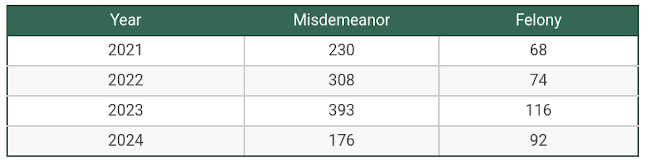
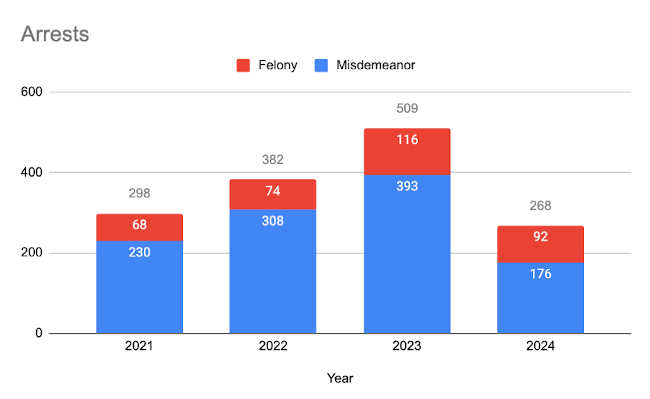
Misdemeanor arrests came to lowest in the past four years, more than 50% down from 2023. Felony arrests also decreased slightly compared to the previous year, but stayed higher than that of 2021 and 2022. Total arrests dropped to the lowest in the four-year period.

In addition, Lakeport police officers made 230 events of foot patrols in 2024. Councilmember Brandon Disney noted that it’s the first time that this data was recorded.

Email staff reporters Lingzi Chen at This email address is being protected from spambots. You need JavaScript enabled to view it..


  • 266
  • 267
  • 268
  • 269
  • 270
  • 271
  • 272
  • 273
  • 274
  • 275

Community

  • Lake County Wine Alliance offers sponsor update; beneficiary applications open 

  • Mendocino National Forest announces seasonal hiring for upcoming field season

Public Safety

  • Lakeport Police logs: Thursday, Jan. 15

  • Lakeport Police logs: Wednesday, Jan. 14

Education

  • Woodland Community College receives maximum eight-year reaffirmation of accreditation from ACCJC

  • SNHU announces Fall 2025 President's List

Health

  • California ranks 24th in America’s Health Rankings Annual Report from United Health Foundation

  • Healthy blood donors especially vital during active flu season

Business

  • Two Lake County Mediacom employees earn company’s top service awards

  • Redwood Credit Union launches holiday gift and porch-to-pantry food drives

Obituaries

  • Rufino ‘Ray’ Pato

  • Patty Lee Smith

Opinion & Letters

  • The benefits of music for students

  • How to ease the burden of high electric bills

Veterans

  • CalVet and CSU Long Beach team up to improve data collection related to veteran suicides

  • A ‘Big Step Forward’ for Gulf War Veterans

Recreation

  • Wet weather trail closure in effect on Upper Lake Ranger District

  • Mendocino National Forest seeking public input on OHV grant applications

  • State Parks announces 2026 Anderson Marsh nature walk schedule 

  • BLM lifts seasonal fire restrictions in central California

Religion

  • Kelseyville Presbyterian to host Ash Wednesday service and Lenten dinner Feb. 18

  • Kelseyville Presbyterian Church to hold ‘Longest Night’ service Dec. 21

Arts & Life

  • Auditions announced for original musical ‘Even In Shadow’ set for March 21 and 28

  • ‘The Rip’ action heist; ‘Steal’ grounded in a crime thriller

Government & Politics

  • Lake County Democrats issue endorsements in local races for the June California Primary

  • County negotiates money-saving power purchase agreement

Legals

  • March 3 hearing on ordinance amending code for commercial cannabis uses

  • Feb. 12 public hearing on resolution to establish standards for agricultural roads

How to resolve AdBlock issue?
Refresh this page