 How to resolve AdBlock issue?
News

There are those like me who can't even tell when an avocado is ripe, and those who know exactly how to perfectly prepare a ripe one. Here's a poem of avocado expertise by Diane Lockward from The Uneaten Carrots of Atonement, published by Wind Publications. The poet lives in New Jersey.
For the Love of Avocados
I sent him from home hardly more than a child.
Years later, he came back loving avocados.
In the distant kitchen where he'd flipped burgers
and tossed salads, he'd mastered how to prepare
the pear-shaped fruit. He took a knife and plied
his way into the thick skin with a bravado
and gentleness I'd never seen in him. He nudged
the halves apart, grabbed a teaspoon and carefully
eased out the heart, holding it as if it were fragile.
He took one half, then the other of the armadillo-
hided fruit and slid his spoon where flesh edged
against skin, working it under and around, sparing
the edible pulp. An artist working at an easel,
he filled the center holes with chopped tomatoes.
The broken pieces, made whole again, merged
into two reconstructed hearts, a delicate and rare
surgery. My boy who'd gone away angry and wild
had somehow learned how to unclose
what had once been shut tight, how to urge
out the stony heart and handle it with care.
Beneath the rind he'd grown as tender and mild
as that avocado, its rubies nestled in peridot,
our forks slipping into the buttery texture
of unfamiliar joy, two halves of what we shared.
American Life in Poetry does not accept unsolicited submissions. It is made possible by The Poetry Foundation ( www.poetryfoundation.org ), publisher of Poetry magazine. It is also supported by the Department of English at the University of Nebraska-Lincoln. Introduction copyright © 2017 by The Poetry Foundation. The introduction's author, Ted Kooser, served as United States Poet Laureate Consultant in Poetry to the Library of Congress from 2004-2006.
LAKE COUNTY, Calif. – Dry weather on Friday and Saturday has helped lessen flooding conditions around Lake County, with Clear Lake’s elevation continuing to drop.
This past week, authorities issued mandatory evacuations in four neighborhoods in the city of Lakeport as well as advisory evacuations in parts of Clearlake, Clearlake Oaks and the Clearlake Keys, and low-lying areas at Big Valley Rancheria, Corinthian Bay and Lands End near Lakeport and Soda Bay near Kelseyville due to the widespread flooding.
Authorities have so far not indicated that they’ve lifted the mandatory and advisory evacuations, as Clear Lake’s elevation is still well into flood stage, which begins at 9 feet Rumsey.
Lake County also remains under a flood warning issued by the National Weather Service.
Clear Lake’s elevation topped out at about 10.6 feet Rumsey on Thursday and Friday, and has since dropped to just over 10.3 feet Rumsey as of early Sunday morning, according to the United States Geological Survey.
Local officials said the lake is expected to continue to recede at the rate of about a tenth of a foot a day if there is no serious inflow.
The Cache Creek Dam, which had its releases reduced briefly on Friday so debris could be cleared from it, was back to high volume releases from the lake of more than 4,700 cubic feet per second on Sunday, the United States Geological Survey said.
The California Nevada River Forecast Center expects that Clear Lake will continue to recede at a fairly steady pace, reaching about 9.7 feet Rumsey by Wednesday, even though a small amount of rain is in the forecast on Sunday and Monday.
The National Weather Service said Lake County has a chance of showers during the day on Sunday as well as winds of up to 13 miles per hour, with rain expected to total less than a tenth of an inch.
On Sunday night, rains showers – and a small amount of show – also is possible, even in the county’s lower elevations, with a slight chance of rain and snow also forecast on Monday morning, and a reduced chance of more showers on Monday night, according to the forecast.
Temperatures on Sunday are forecast to be in the high 40s during the daytime and the high 20s at night. On Monday, daytime temperatures are expected to be closer to 50 degrees, while nighttime temperatures are forecast to drop near the mid 20s.
Then, from Tuesday through Saturday, the National Weather Service said conditions are expected to be sunny and clear, with temperatures topping out around 60 degrees during the day and nighttime lows around 30 degrees.
Email Elizabeth Larson at
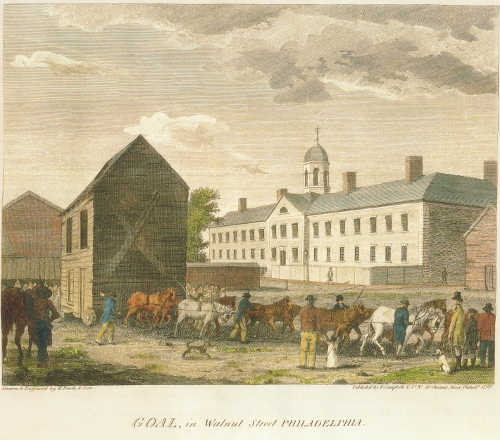
This week in history features the birth of modern prisons and an Army experiment with good intentions but poor results.
Feb. 26, 1773
Although it is difficult to imagine, incarceration as a form of criminal punishment is a comparatively modern practice.
Before the 19th century, prisons as we know them today were a relatively rare feature of American cities.
Now, they are as common as schools and churches with as many as 2.3 million Americans living in more than 6,000 correctional facilities (source: https://www.prisonpolicy.org/reports/pie2016.html).
This wasn’t always the case. In fact, there was a time when criminals of all stripes – from petty thieves to cold-blooded murders – could count their punishment not in the number of years spent behind bars, but in the number of limbs removed or minutes spent swinging at the end of a long rope.
Rehabilitation is an entirely modern notion in jurisprudence. It was far easier to simply and permanently remove the criminal – or offending limb – from society.
On this day in 1773, the city of Philadelphia took the first step towards a new system of punishment in the construction of a modern prison, the Walnut Street Jail.
Conceived as a Quaker alternative to corporal punishment, this jail featured small individual cells radiating off from the large communal rooms, thereby introducing the practice of solitary confinement.
Prior to this, most prisons in the colonies were more akin to the English workhouses across the Atlantic: spacious communal-living structures where vagabonds and other ne’er-do-wells were forced to do menial tasks.
Workhouses – and the later jails and prisons of America – were intended to rehabilitate penitent criminals (hence the term penitentiary).
Incarceration was thought to be far more humane than the other types of punishment. Their ancestry certainly can be traced to medieval dungeons.
The difference between the dank dungeons of King Arthur’s castle and the workhouses of 17th-century England is one of intent.
Once glimpsed, the inside of a dark dungeon cell usually remained the only vista ever seen by the unfortunate inmate until his death. A workhouse, on the other hand, was a place to sweat and toil the evil from a criminal before once more releasing him into the world.
This switch between simple punishment and humane rehabilitation began around the early 1500s. In Sir Thomas More’s famous “Utopia,” the social philosopher urged England to enslave criminals rather than send them to the gallows, although it took hundreds of years for most rulers to heed this advice.
For the next several centuries England, and other European kingdoms, transformed their jurisprudence and developed types of punishment that were scaled to the different crimes committed. The concept of rehabilitating criminals was born.
In North America, the construction of Philadelphia’s Walnut Street Jail marks an important point of departure towards our modern correctional facilities.
Following the Revolution, American prisons began to develop along similar lines as the Walnut Street Jail and incarcerating prisoners in solitary cells increased apace. For better or worse, the practice continues into the 21st century.

March 3, 1855
The canonical features of the American West – its iconography – include the stagecoach, the lone sheriff, the masked bandit, the band of Indians and camels.
Well, camels almost became an important symbol and on this day in 1855 the first step towards making that a reality were taken.
Jefferson Davis, then the secretary of war, urged Congress to appropriate funds for the purchase and training of camels for use in the arid southwest. On this day in 1855, Congress set aside $30,000 to import the dromedaries from Egypt.
As part of his plan, Davis suggested that howitzers be mounted on the camels’ humps and used against the Indians as mobile batteries – a sort of fantastic prelude to tank warfare.
As far-fetched as this idea was – and is, for that matter – using camels in America’s desserts was actually a stroke of genius.
The animals could travel miles without a sip of water and, when the need finally hit them, they had an uncanny knack for tracking down potable sources of the stuff.
In May of 1856, 33 of the large animals were finally unloaded at a port in Texas, after a journey that had taken over a year and cost countless bumps and bruises to the poor sailors tasked with the duty.
When they finally landed, the Army took to the task of training the camels, and themselves, for imminent duties in the southwest.
The animals’ first field tests involved carting materials across the expanse of Texas and they passed with flying colors.
Whereas the traditional mule-drawn wagons were only able to carry 1,800 pounds of oats and took nearly five days to make the journey, the six camels were able to carry a combined weight of 3,648 pounds and made the trip in only two days!
Jefferson Davis was pleased with the results of these early endeavors and wrote in his annual report to Congress for 1857: “These tests fully realize the anticipation entertained of their usefulness in the transportation of military supplies … Thus far the result is as favorable as the most sanguine could have hoped.”
Unfortunately, after some successful missions along the Colorado River carting supplies for survey teams, the Army’s “Camel Corps” began to be neglected.
The dark clouds of Civil War were creeping over the horizon and Congress was more concerned with keeping the country together than appropriating additional funds for Davis’ pipe dream of camel-tanks.
In 1860, the camels were moved to California and, more due to poor leadership than any actual deficiencies in the camels themselves, failed several field missions in the Golden State.
At the start of the Civil War, those few camels that remained back in Texas were captured by the Confederates and used to transport salt and other supplies for the remainder of the war.
Back in California, the herd remained in pastures and started breeding. Finally, in 1864 the by then 37 camels in our state were sold to private citizens.
Ending up in circuses or living on private ranches for the exotic pleasure of their owners, these camels became a familiar sight in the state. Many of them were eventually turned out and allowed to roam in the wild.
Sightings of these wild camels continued unabated well into the 20th century, with the last camel reportedly dying in 1934.
And so we missed an opportunity for the Wild West to be that much wilder. If not for the Civil War, the Lone Ranger’s Silver might have had two humps and a penchant for spitting.
Antone Pierucci is the former curator of the Lake County Museums in Lake County, Calif.
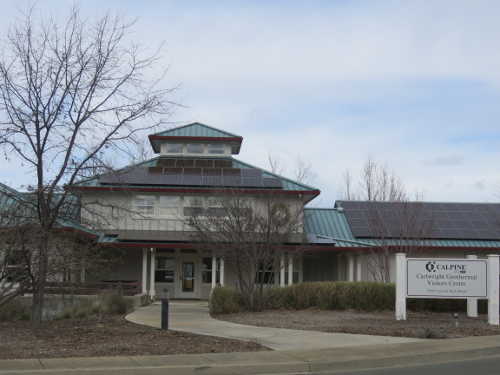
MIDDLETOWN, Calif. – We are lucky enough to live in, and amongst, many diverse communities here in Lake County.
We boast beautiful agricultural lands. We are surrounded by cattle grazing lands, and their requisite cowboys.
There are several Indian rancherias and casinos, including Middletown's Twin Pine Casino and Hotel, Upper Lake's Running Creek Casino, Lakeport's Konocti Vista Casino-Resort and Marina, and Nice's Robinson Rancheria Resort and Casino.
We are host to communities of artists, and also a world famous geothermal region called The Geysers.
The Geysers, situated in the Mayacamas Mountains, is the largest geothermal electrical operation in the world.
The geothermal fields that comprise The Geysers originates due to an intense heat deep below the earth's surface.
Layers of rock heat up which are situated above the molten rock. The magma is thought to be located about 4 miles beneath the earth at The Geysers.
Since the rock is layered with fractures, water is heated there naturally, creating hot springs and fumaroles across the land.
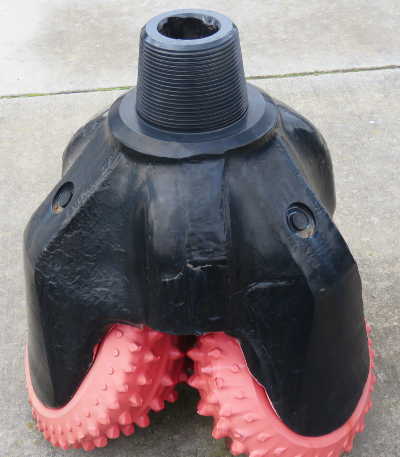
There are 327 steam wells at The Geysers, and 56 injection wells. The wells at The Geysers average a depth of 8,500 feet, with the deepest well being 12,900 feet in depth.
The unique technology utilized at The Geysers starts in earth's core, and uses the extreme heat found in earth which is pressurized and flows from the steam wells to the power plants via insulated steel pipelines.
As steam rushes into the mighty turbines it expands and drives generators to create electricity for over 725,000 residences.
The geothermal fields at The Geysers were born about a million years ago when molten magma and steam eruptions occurred.
Now, flash-forward to around 12,000 years ago when Indians took advantage of the unique lands of this region's hot springs and fumaroles, then leap forward once again to the 1840s when The Geysers was known as a tourist attraction and destination.
Our county boasted many other hot springs resorts, and became world famous during the late 1800s to early 1900s.
Mineral hot springs such as Hoberg's, Anderson Springs, Howard Hot Springs, Bartlett Springs, Harbin Springs Health and Pleasure Resort built in 1870, and many more were visited for health and recreational purposes.
In the mid 1800s a hotel was constructed at the area now known as The Geysers, drawing many tourists. Soon the hotel began using the steam for electricity.
The first exploratory well was drilled there in 1920, with the first modern well being drilled in 1955. In 1960 the first commercial geothermal electricity production began.
Since the first production well, there have been 400 geothermal wells drilled and 28 power plants in use. The height of The Geysers geothermal production was in 1987.
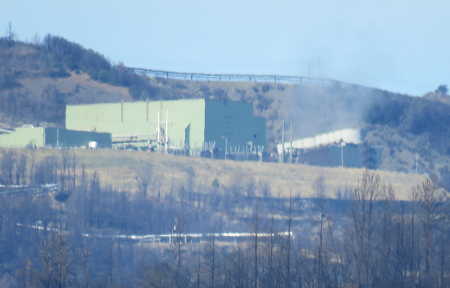
After the big boom of 1987, production at The Geysers dwindled for several reasons. One reason was that more hydro-power plants evolved at about that time, utilizing power from rivers.
Another reason steam production for electricity declined at The Geysers then was that the geothermal field's steam dropped off significantly.
Coinciding with the decline of the naturally-occurring underground steam, an idea was hatched which solved a couple of problems. This was the wastewater injection project, or effluent project.
The way it works is that wastewater is taken from both Lake and Sonoma counties and injected into the wells to revive steam production of the geothermal wells, and “kills two birds with one stone.”
Throughout The Geysers’ long history, many power plants have consolidated, and now Calpine has 13 power plants which provide 350 jobs.
The Geysers produces 21 percent of California's renewable energy, and about 60 percent of the electricity needed from San Francisco's Golden Gate Bridge all the way to Oregon.
Visit the Calpine Geothermal Visitors Center, located in south Middletown to see their unique, interactive exhibits and learn more about our county's unique landscape.
For more information visit the Calpine Visitor Center Web site at http://www.geysers.com/default.aspx .
Kathleen Scavone, M.A., is a retired educator, potter, writer and author of “Anderson Marsh State Historic Park: A Walking History, Prehistory, Flora, and Fauna Tour of a California State Park” and “Native Americans of Lake County.” She also writes for NASA and JPL as one of their “Solar System Ambassadors.” She was selected “Lake County Teacher of the Year, 1998-99” by the Lake County Office of Education, and chosen as one of 10 state finalists the same year by the California Department of Education.
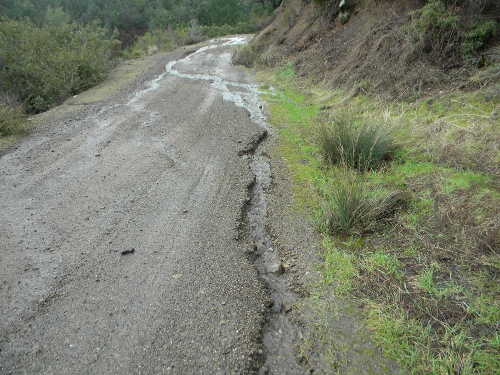
MENDOCINO NATIONAL FOREST, Calif. – The past week’s storms – which packed high winds and rain – impacted the Mendocino National Forest, causing potential problems in various areas of the forest.
The public is advised that there may be unstable roads due to saturated soil, blocked roads from downed trees, plugged culverts, deep ruts and running water.
“We are striving to provide as much information as possible about current conditions. Please be aware, that there may be hazards that have not been identified yet as some areas are unsafe for employees to enter,” acting Mendocino National Forest Supervisor Frank Aebly said.
The forest reported that the off-highway vehicle trail closures on the Upper Lake and Grindstone ranger districts have reopened. However, seasonal closures on the Upper Lake district that are in effect include sections of Pine Mountain Road and High Glade Lookout Road.
A full list of closures can be found here.
Visitors are encouraged to call ahead before traveling to the forest. Aebly added that additional closures may be implemented.
For those enthusiastic folks starting to think about camping, hiking and visiting the forest, the typical camping season is May through November.
However, forest officials said this has been a very different precipitation year. It is likely that new records of precipitation may be reached while just three years ago, near record or record low precipitation was recorded.
For example, only 17.9 inches of precipitation was recorded at Alder Springs from Oct. 1, 2013, to Sept. 30, 2014, and this year more than 41 inches has fallen in this area so far.
Forest officials ask that the public continue to check the forest website for more information as there are six to eight weeks of winter precipitation left.
In addition, the current road report is posted at the bottom of the forest website home page. https://www.fs.usda.gov/mendocino/ .
LAKE COUNTY, Calif. – This week Lake County Animal Care and Control has a new group of puppies, as well as German Shepherds, pit bulls, border collies and other mixes.
This week’s available dogs include basset hound, border collie, Chihuahua, dachshund, German Shepherd, Labrador Retriever, pit bull and wirehaired terrier mix.
Dogs that are adopted from Lake County Animal Care and Control are either neutered or spayed, microchipped and, if old enough, given a rabies shot and county license before being released to their new owner. License fees do not apply to residents of the cities of Lakeport or Clearlake.
If you're looking for a new companion, visit the shelter. There are many great pets hoping you'll choose them.
The following dogs at the Lake County Animal Care and Control shelter have been cleared for adoption (additional dogs on the animal control Web site not listed are still “on hold”).

Chihuahua-dachshund puppy
This female Chihuahua-dachshund puppy has a short tricolor coat.
She’s in kennel No. 2a, ID No. 6989.

Chihuahua-dachshund puppy
This female Chihuahua-dachshund puppy has a short tricolor coat.
She’s in kennel No. 2b, ID No. 6990.

Chihuahua-dachshund puppy
This female Chihuahua-dachshund puppy has a short tricolor coat.
She’s in kennel No. 2c, ID No. 6993.

Chihuahua-dachshund puppy
This male Chihuahua-dachshund puppy has a short tricolor coat.
He’s in kennel No. 2d, ID No. 6994.

Pit bull terrier
This young male pit bull terrier has a short brown brindle coat, and gold and green eyes.
He’s in kennel No. 3, ID No. 7002.

‘Estrella’
“Estrella” is a female Chihuahua mix with a medium-length black coat and white markings.
She already has been spayed.
She’s in kennel No. 4, ID No. 6963.

Pit bull terrier
This female pit bull terrier mix has a short white coat with black markings, and one blue and one brown eye.
She’s in kennel No. 5a, ID No. 7016.

Pit bull terrier
This female pit bull terrier mix has a short white coat and blue eyes.
She’s in kennel No. 5b, ID no. 7017.

'Miles'
“Miles” is a young male pit bull terrier mix with a short brindle coat and gold eyes.
Shelter staff said he is great with other dogs and a little shy of people, but show him some kindness and he will learn to trust you. He would do great in a home with children ages 10 years old and up. They also believe he would be OK with cats. He’s looking for a calm, quiet home.
She's in kennel No. 6, ID No. 6875.

Female pit bull terrier
This female pit bull terrier has a short tan and white coat.
She’s in kennel No. 10, ID No. 6988.

Pit bull terrier-basset hound mix
This male pit bull terrier-basset hound mix has a short black and white coat.
Shelter staff said he is extremely submissive and fearful of other dogs, and needs a home with an experienced dog owner willing to teach him confidence. He allows handling of mouth, ears, tail and paws, and gently takes treats.
He’s in kennel No. 11, ID No. 6967.

‘Ralph’
“Ralph” is a Labrador Retriever-wirehaired terrier mix with a medium-length brown coat.
He already has been neutered.
He’s in kennel No. 14, ID No. 6787.

Female German Shepherd
This female German Shepherd has a short black and tan coat.
She is calm, and appears to have recently had puppies.
She’s in kennel No. 15, ID No. 6995.

Male pit bull terrier
This male pit bull terrier has a short brown and tan coat.
He’s in kennel No. 16, ID No. 6978.

German Shepherd
This female German Shepherd has a long back and tan coat.
She’s in kennel No. 17, ID No. 6987.

Male German Shepherd
This male German Shepherd has a short black and tan coat.
He’s in kennel No. 21, ID No. 6999.

‘Tippy’
“Tippy” is a male border collie with a short black and white coat.
He already has been neutered.
Tippy is in kennel No. 30a, ID No. 7003.

‘Amber’
“Amber” is a female border collie with a medium-length red and white coat.
She’s in kennel No. 30b, ID No. 7004.
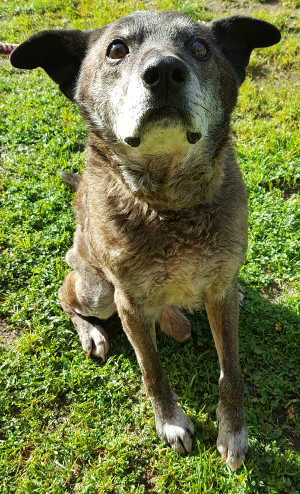
Cattle dog
This senior male cattle dog has a short brown coat.
He’s in kennel No. 31, ID No. 7000.
To fill out an adoption application online visit http://www.co.lake.ca.us/Government/Directory/Animal_Care_And_Control/Adopt/Dog___Cat_Adoption_Application.htm .
Lake County Animal Care and Control is located at 4949 Helbush in Lakeport, next to the Hill Road Correctional Facility.
Office hours are Monday through Friday, 11 a.m. to 5 p.m., and 11 a.m. to 3 p.m., Saturday. The shelter is open from 11 a.m. to 4 p.m. Monday through Friday and on Saturday from 11 a.m. to 3 p.m.
Visit the shelter online at http://www.co.lake.ca.us/Government/Directory/Animal_Care_And_Control.htm .
For more information call Lake County Animal Care and Control at 707-263-0278.
Email Elizabeth Larson at