 How to resolve AdBlock issue?
News
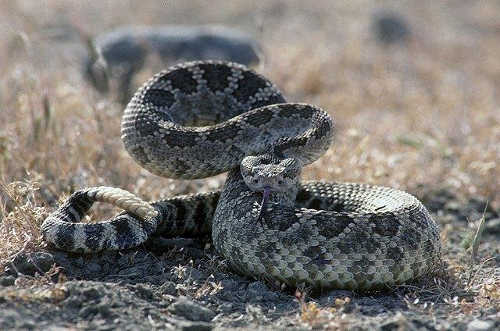
With the coming of spring and warmer weather conditions, snakes of many species are through hunkering down, making human encounters with these elusive creatures more likely.
Although most native snakes are harmless, the California Department of Fish and Wildlife recommends steering clear of the venomous rattlesnake – and knowing what to do in the event of a strike.
Rattlesnakes are widespread in California and are found in a variety of habitat throughout the state from coastal to desert. They may also turn up around homes and yards in brushy areas and under wood piles.
Generally not aggressive, rattlesnakes will likely retreat if given room or not deliberately provoked or threatened. Most bites occur when a rattlesnake is handled or accidentally touched by someone walking or climbing.
On rare occasions, rattlesnake bites have caused severe injury – even death. However, the potential of encountering a rattlesnake should not deter anyone from venturing outdoors.
The California Poison Control System notes that the chances of being bitten are small compared to the risk of other environmental injuries.
Most bites occur between the months of April and October when snakes and humans are most active outdoors, but there are precautions that can and should be taken to lessen the chances of being bitten.
The dos and don’ts in snake country
Rattlesnakes are not confined to rural areas. They have been found in urban areas, on riverbanks and lakeside parks and at golf courses.
The following safety precautions can be taken to reduce the likelihood of an encounter with a rattlesnake.
– Be alert. Like all reptiles, rattlesnakes are sensitive to the ambient temperature and will adjust their behavior accordingly. After a cold or cool night, they will attempt to raise their body temperature by basking in the sun midmorning. To prevent overheating during hot days of spring and summer, they will become more active at dawn, dusk or night.
– Wear sturdy boots and loose-fitting long pants. Never go barefoot or wear sandals when walking through brushy, wild areas. Startled rattlesnakes may not rattle before striking defensively.
– Children should not wear flip-flops while playing outdoors in snake country.
– When hiking, stick to well-used trails. Avoid tall grass, weeds and heavy underbrush where snakes may hide during the day.
– Do not step or put your hands where you cannot see. Step on logs and rocks, never over them, and be especially careful when climbing rocks or gathering firewood. Check out stumps or logs before sitting down, and shake out sleeping bags before use.
– Never grab “sticks” or “branches” while swimming in lakes and rivers. Rattlesnakes can swim.
– Be careful when stepping over doorsteps as well. Snakes like to crawl along the edge of buildings where they are protected on one side.
– Never hike alone. Always have someone with you who can assist in an emergency.
– Do not handle a freshly killed snake, as it can still inject venom.
– Teach children early to respect snakes and to leave them alone.
– Leash your dog when hiking in snake country. Dogs are at increased risk of being bitten due to holding their nose to the ground while investigating the outdoors. Speak to your veterinarian about canine rattlesnake vaccines and what to do if your pet is bitten.
Rattlesnakes belong to a unique group of venomous snakes known as pit vipers and the rattlesnake is the only pit viper found in California.
The copperhead and water moccasin also belong to this group; however, they are most commonly found in the southern, southeastern and eastern part of the United States.
The term “pit” refers to special heat sensors located midway between the snake’s eye and nostril. These special thermoreceptors detect differences in temperature which help the snake pinpoint prey while hunting. The term “viper” is short for Viperidae, the family in which scientists categorize the rattlesnake.
Pit vipers are venomous and rely on the use of venom to kill prey to eat. The rattlesnake’s prey of choice is chiefly rodents and other small mammals and this is an important factor in terms of keeping rodent populations in an ecosystem in check.
Keeping snakes out of the yard
The best protection against rattlesnakes in the yard is a “rattlesnake proof” fence. The fence should either be solid or with mesh no larger than one-quarter inch.
It should be at least three feet high with the bottom buried a few inches in the ground. Slanting your snake fence outward about a 30-degree angle will help.
Keep vegetation away from the fence and remove piles of boards or rocks around the home. Use caution when removing those piles – there may already be a snake there. Encourage and protect natural competitors like gopher snakes, king snakes and racers. King snakes actually kill and eat rattlesnakes.
What to do in the event of a snake bite:
Though uncommon, rattlesnake bites do occur, so have a plan in place for responding to any situation. Carry a cell phone, hike with a companion who can assist in an emergency and make sure that family or friends know where you are going and when you will be checking in.
In the event of a bite:
– Stay calm but act quickly.
– Remove watches, rings, etc., which may constrict swelling.
– Transport the victim to the nearest medical facility.
– For more first aid information, please call the California Poison Control System at 800-222-1222.
What you should NOT do after a rattlesnake bite:
– DON’T apply a tourniquet.
– DON’T pack the bite area in ice.
– DON’T cut the wound with a knife or razor.
– DON’T use your mouth to suck out the venom.
– DON’T let the victim drink alcohol.
More information about rattlesnakes can be found at www.wildlife.ca.gov/Data/CWHR/Life-History-and-Range and www.californiaherps.com/info/rattlesnakeinfo.html .
LAKE COUNTY, Calif. – The important part dispatchers play in the effort to keep communities safe is being celebrated this week.
April 9 through 15 is Public Safety Dispatcher Appreciation Week in Lake County. It coincides with the 2017 National Public Safety Telecommunications Week.
“Please join me in thanking Lake County’s public safety dispatchers from the various law enforcement and public safety agencies not only during this week, but throughout the rest of the year as well,” said Sheriff Brian Martin.
Lake County’s public safety dispatchers provide dedicated service every minute of every hour of every day of the year to ensure that our communities are able to receive life-saving services from our law enforcement, fire protection, and emergency medical services first responders.
Public safety dispatchers coordinate responses to tragedies in our community and deal with a wide array of situations from petty thefts, tragic car crashes, or devastating wildland fires and floods such as the disasters that Lake County has faced over the last few years.
These dispatchers provide comfort and reassurance to those in need, including citizens, officers and firefighters.
They work long hours and don’t receive nearly the recognition they deserve.
Every person who has called 911 or the business line to request public safety services should be thankful our public safety dispatchers are here to answer the call.
With tax returns due April 18, time is running out, but you can still help California's rare, threatened and endangered species when you file your state return.
In the Voluntary Contributions section you can donate any dollar amount to the California Sea Otter Fund on line 410 and the Rare and Endangered Species Preservation Program on line 403.
These special funds help support California Department of Fish and Wildlife (CDFW) endangered species research and conservation programs.
California's sea otters (Enhydra lutris nereis) were driven nearly to extinction, then given legal protection that has allowed the population to grow. In recent years, that growth stagnated, and is just starting to grow again, to a few more than 3,000 sea otters in California waters. This small population is vulnerable to oil spills, chemicals and other pollutants in road and agricultural run-off, predation by white sharks and other threats.
Donations to the California Sea Otter Fund (line 410) are split between CDFW and the State Coastal Conservancy. Those contributions have funded studies that link many sea otter deaths to polluted runoff, including fecal parasites, bacterial toxins and chemicals related to coastal land use.
The Southern sea otter is fully protected by the State of California, and take is not allowed except for scientific research and recovery purposes.
Additionally, the sea otter is federally listed, and it is illegal to harass, pursue, hunt, catch, capture or kill, or attempt any of those actions on such listed species.
Yet, just last year, four were shot and many others were intentionally harassed by people. The California Sea Otter Fund also supports a growing program to reduce human disturbance to sea otters.
Another 83 species of animals and 219 plants are listed by the state as rare, threatened or endangered. Donations to the Rare and Endangered Species Preservation Program (line 403) pay for essential CDFW research and recovery efforts for these plants and animals, and critical efforts to restore and conserve their habitat.
Past donations to this program have enabled biologists to study the Livermore tarplant (Deinandra bacigalupii) and the critically endangered Slender-petaled mustard (Thelypodium stenopetalum), and implement conservation efforts for the Mohave ground squirrel (Xerospermophilus mohavensis), California tiger salamander (Ambystoma californiense), Giant garter snake (Thamnophis gigas),Tricolored blackbird (Agelaius tricolor) and Desert pupfish (Cyprinodon macularius).
"There is no upper limit to voluntary contributions; any dollar amount is welcome. But, with so many species in need of conservation efforts and given the size of the Golden State, we'd like to encourage higher donations," said CDFW Senior Environmental Scientist Esther Burkett. "Can Californians beat last year's average of $15 per household? These plants and animals are part of our heritage and need your support to survive and thrive."
If someone else prepares your state tax return, please let him or her know you want to donate to the California Sea Otter Fund on line 410 or the Rare and Endangered Species Preservation Program on line 403. If you use Turbo Tax, when you're near the end of your tax return it should ask if you want to make a voluntary contribution to a special fund. Click "Yes" and go to lines 403 and 410.
CDFW biologists have achieved important recovery milestones and protected vulnerable species, thanks to California taxpayers.
More information about how CDFW uses funds in the Rare and Endangered Species Preservation Program and Sea Otter program is available at www.wildlife.ca.gov/tax-donation and at www.facebook.com/seaotterfundcdfw .
LAKEPORT, Calif. – Hospice Services of Lake County is inviting families with children ages 5 years and older that have experienced the death of a loved one to participate in a free bereavement camp.
The one-day camp will take place Saturday, April 15, from 9 a.m. to 4 p.m. in Lakeport.
Hospice Services of Lake County recognizes and addresses the unique ways children grieve and heal from a loss of a loved one.
Camp activities are designed for healing in a fun and positive environment with horse and dog therapy, music, and a family art project.
“It is an honor to serve the needs of the children in our county who are experiencing the pain of grief over the death of someone close to them – whether it is a grandparent, parent, sibling, other relative or significant person in their lives,” said Jo Moore, a bereavement counselor with Hospice Services. “These children are facing heartbreak and sometimes giant upheavals in their lives. I get to offer my time, attention, and respect, as well as offer them some tools to help in the healing of wounds that death opens.”
Wings of Hope bereavement camps are offered by Hospice Services of Lake County periodically throughout the year and are facilitated by bereavement counselors and trained volunteers.
Preregistration for the camp is required. For information about the camp and its location, and to reserve space, contact Jo Moore at 707-263-6270, Extension 137, or
For more information, call Hospice Services of Lake County at 707-263-6222. Visit the organization’s Web site at www.lakecountyhospice.org .
Janine Smith-Citron is marketing/development coordinator for Hospice Services of Lake County.

Once the carpenter put the sash-weights into the wall next to the window, they were never seen again.
Eventually they fell off the ropes and with just one loud outcry fell deeper into the dark. But we propped the windows open with this and that, and forgot about the weights.
Here's a poem about those props by Michelle Menting, who lives in Maine, and who was once our assistant at American Life in Poetry.
Her forthcoming book is “Leaves Surface Like Skin” from Terrapin Books.
Objects Used to Prop Open a Window
Dog bone, stapler,
cribbage board, garlic press
because this window is loose—lacks
suction, lacks grip.
Bungee cord, bootstrap,
dog leash, leather belt
because this window had sash cords.
They frayed. They broke.
Feather duster, thatch of straw, empty
bottle of Elmer's glue
because this window is loud—its hinges clack
open, clack shut.
Stuffed bear, baby blanket,
single crib newel
because this window is split. It's dividing
in two.
Velvet moss, sagebrush,
willow branch, robin's wing
because this window, it's pane-less. It's only
a frame of air.
American Life in Poetry does not accept unsolicited submissions. It is made possible by The Poetry Foundation ( www.poetryfoundation.org ), publisher of Poetry magazine. It is also supported by the Department of English at the University of Nebraska-Lincoln. Poem copyright ©2015 by Michelle Menting, “Objects Used to Prop Open a Window,” from Terrapin Books (February, 2015). Poem reprinted by permission of Michelle Menting and the publisher. Introduction copyright © 2017 by The Poetry Foundation. The introduction's author, Ted Kooser, served as United States Poet Laureate Consultant in Poetry to the Library of Congress from 2004-2006.
There is no doubt that scams have gone high tech, but the riskiest scam is the face-to-face home improvement scam, with fake check scams running a close second, according to the new BBB Risk Index, a sophisticated analysis that goes beyond volume to look at the risk each scam type poses.
The BBB Institute for Marketplace Trust (BBB Institute) recently released its inaugural BBB Scam Tracker Annual Risk Report, which provides comprehensive insight into scams based on the more than 32,000 reports made to BBB Scam Tracker in 2016.
There were some real surprises within the data: men were more vulnerable than women in seven of the top ten scam categories; and consumers 18-24 were the most likely to lose money to a scam.
This analysis uncovered that younger consumers have a lower median loss than people in their top earning years, partly because the types of scams aimed at older consumers tend to have higher median losses.
While seniors also tend to lose more money than millennials when they are scammed, they fall for scams far less often. And the biggest takeaway is that no one is immune from the risk posed by scams.
The BBB Risk Index measures risk along three dimensions: exposure (how likely are you to be exposed to the con?), susceptibility (if you are exposed, how likely are you to lose money?) and monetary loss (if you do lose money, how much is it likely to be?). Exposure X Susceptibility X Monetary Loss = Risk Index.
Based on the BBB Risk Index, the riskiest top five scams overall (U.S. and Canada combined) are:
– Home improvement scams, www.bbb.org/homescam ;
– Fake checks and money orders, www.bbb.org/fakecheckscam ;
– Employment scams, www.bbb.org/employmentscam ;
– Online purchase scams, www.bbb.org/webpurchasescam ;
– Advance fee loan scams, www.bbb.org/loanscam .
The BBB Risk Index is a paradigm shift in how to calculate the true impact of different scams. In the past, virtually all involved organizations used volume alone to create “top scam” lists, but this approach ignored two other equally critical factors: the susceptibility of the population and dollar losses.
For instance, the scam most reported to BBB Scam Tracker in 2016 – by far – was the tax scam. However, consumers are savvy to this con and rarely fall for it, so it did not even make the BBB Risk Index’s top ten.
Employment scams were three times as risky for consumers as tax scams, and ranked #3 on the BBB Risk Index.
Home improvement scams, ranked #1 on the BBB Risk Index, was the only category in the top ten to rely on in-person contact.
Because of the highly personal nature of this scam – someone literally at your doorstep – the exposure rate was low but the susceptibility rate and the median loss were both very high, making it the riskiest scam of all.
Fake check scams take on a variety of approaches, but all rely on the fact that consumers assume that when a check “clears” their account and funds are made available, they are in the clear to spend those funds. In fact, it may take several weeks for a fake check to be detected and returned, and that includes cashier’s checks and money orders.
The BBB Institute also notes that fake checks are used in about 30 to 40 percent of employment scams, and appear frequently in other scams, as well. Whenever a consumer is asked to deposit a check and then send funds back out for any reason, that’s a big red flag.
The full report is available at www.bbb.org/RiskReport . Consumers and businesses are urged to report all scams to BBB Scam Tracker at www.bbb.org/scamtracker , whether or not money is actually lost.
Rebecca Harpster is public relations specialist for the Better Business Bureau serving the San Francisco Bay Area and Northern Coastal California.