 How to resolve AdBlock issue?
News
In a compelling analysis of the factors that affect how much the ocean will rise along California's coast in coming decades, a seven-member team of experts has provided the State with a report on the best-available sea-level rise science – including recent scientific advances on the role of polar ice loss.
The report includes new information on the expected sea level changes that will occur based on different greenhouse gas emission scenarios.
For example, with very successful mitigation efforts, the report states that there is a 67 percent probability that the Bay Area will experience sea level rise between 1.0 foot and 2.4 feet by 2100.
However, if no significant mitigation efforts are taken, that range increases to 1.6 to 3.4 feet.
The report also emphasizes the importance of preparing for extreme but uncertain scenarios involving the rapid loss of the Antarctic ice sheet, which would have an enormous impact on coastal regions.
In one such scenario, sea levels along California’s coastline could rise up to 10 feet by 2100 – about 30 to 40 times faster than sea-level rise experienced over the last century.
“Although our scientific understanding is rapidly increasing, waiting for scientific certainty about the rate or ultimate amount of sea-level rise is neither a safe nor prudent option” said Dr. Gary Griggs, chair of the science team and professor at University of California Santa Cruz. “The sea-level rise projections presented in this report provide the scientific foundation for taking action today, preparing our coastal communities and mitigating hazards, and preventing much greater losses than will occur without action now.”
An estimated 75 percent of California's population lives in coastal counties. Sea-level rise, already underway, threatens hundreds of miles of roads and railways, harbors, airports, power plants, wastewater treatment plants, coastal wetlands, beaches, dunes, bluffs, and thousands of businesses and homes.
The new science report was requested by the California Ocean Protection Council and the California Natural Resources Agency, in collaboration with the Governor's Office of Planning and Research, the California Energy Commission, and the California Ocean Science Trust.
Expertise on the scientific team includes risk assessment, climatic change, ice sheet behavior, and statistical modeling.
The science report will be presented on April 26 at a meeting in Sacramento of the Ocean Protection Council. The report provides the scientific basis for updating statewide policy, which guides state and local decisions along California shorelines.
"California leads the way in both addressing climate change and protecting our coastal and ocean communities and resources," said Jenn Eckerle, deputy director of the Ocean Protection Council. "Our statewide policy on sea-level rise is another example of that leadership. We provide guidance to state agencies and local governments for incorporating sea-level rise projections into planning, permitting, investment, and other decisions, so it is critical that it is grounded in the best and latest science."
The current State of California Sea-Level Rise Guidance Document, released in 2010 and updated in 2013, included a range of projections over various timescales, but did not estimate the likelihood that such levels would be met.
The scientific team's new report includes information on the likelihood of specific scenarios and provides a framework for evaluating risk, adaptive capacity and consequences from rising seas.
This will allow local and state stakeholders to weigh the costs and benefits of taking action now against the potential harmful effects of inaction.
The science report will inform California’s sea-level rise guidance document, which will help cities and counties as they comply with state law that requires them to incorporate climate change into their planning efforts.
The updated guidance document will also assist state agencies prepare for, and adapt to sea level rise, as directed by Governor Brown’s April 2015 Executive Order on climate change.
Public input will be integrated into the final guidance document update, which is scheduled for adoption by the California Ocean Protection Council in January 2018.
The seven scientists who synthesized the latest science as a working group of the Ocean Protection Council’s Science Advisory Team, convened by the California Ocean Science Trust, are Gary Griggs, University of California, Santa Cruz; Dan Cayan, Scripps Institution of Oceanography; Claudia Tebaldi, National Center for Atmospheric Research; Helen Amanda Fricker, Scripps Institution of Oceanography; Joe Arvai, University of Michigan; Rob DeConto, University of Massachusetts; and Robert E. Kopp, Rutgers University.
Among their key findings:
– Scientific understanding of sea-level rise is advancing at a rapid pace. Projections of future sea-level rise, under high emissions scenarios, have increased substantially over the last few years, primarily due to new and improved understanding of mass loss from continental ice sheets.
– The rate of ice loss from the Greenland and Antarctic Ice Sheets is increasing. These ice sheets will soon become the primary contributor to global sea-level rise, overtaking the contributions from ocean thermal expansion and melting mountain glaciers and ice caps.
– Mountain glaciers contain enough ice to raise sea levels by only about 1.5 feet. In contrast, the Greenland and Antarctic ice sheets contain enough ice to raise global mean sea level by 24 feet and 187 feet, respectively. Although these ice sheets are not expected to melt completely, even on century or millennial timescales, the loss of even a small fraction of either of these huge ice sheets could have devastating consequences for global shorelines.
– For California, ice loss from Antarctica, and especially from West Antarctica, causes higher sea-level rise in than the global average. For every 1 foot of global sea-level rise caused by loss of ice on West Antarctic, sea-level will rise approximately 1.25 feet along the California coast.
– After 2050, sea-level rise projections increasingly depend on the trajectory of greenhouse gas emissions.
– While model results have revealed the potential for high rates of ice loss and extreme sea-level rise during this century if greenhouse gas emissions continue unabated, the precise magnitude and timing of when the Antarctic Ice Sheet may begin to contribute substantially to rising sea levels is uncertain.
– It is clear that sea-levels are rising. As cities, counties and state agencies make decisions about adaptation and hazard mitigation efforts, it is increasingly important to incorporate long-range planning for sea-level rise. Consideration of high and even extreme sea levels in decisions with implications past 2050 is needed to safeguard the people and resources of coastal California.
For a schedule of upcoming listening sessions, and more information on the process of updating the state’s sea-level rise guidance document, visit http://www.opc.ca.gov/climate-change/updating-californias-sea-level-rise-guidance/ or http://www.oceansciencetrust.org/projects/updating-californias-sea-level-rise-guidance/ .
LAKEPORT, Calif. – Californians are encouraged to “Take It Outside, California!” the first weekend of May by visiting parks and nature areas and improving their health and well-being along the way.
This effort to get Californians outside and enjoying the great outdoors is part of the California Council of Land Trust’s statewide effort to show our residents all the natural lands and outdoor activities that are available to them.
The Lake County Land Trust is excited to be the only organization in Lake County participating in this effort in 2017.
The Lake County Land Trust will be hosting a free “Art & Nature Day” from 11 a.m. to 5 p.m. on Saturday, May 6, as part of the “Take It Outside” effort.
It will feature nature hikes, an art exhibition featuring local artists with a "Clear Lake" theme, mini yoga classes for kids and adults, hand-drawn temporary tattoos for kids, live music, and informational/ activity booths hosted by various organizations.
While there is no charge for admission or any of the activities, art and food will be available for purchase. A portion of proceeds from the art sales will help support the Land Trust.
The Lake County Land Trust’s “Art & Nature Day” will be held at the Rodman Preserve and Nature Center, 6350 Westlake Drive, Upper Lake.
Rodman Preserve is the Land Trust’s keystone property, located on 131 acres of wetlands surrounded by oak woodlands. This preserve protects the natural habit of many nesting, breeding, and feeding areas for many species of native Lake County wildlife.
Getting outside has multiple powerful effects on mental and physical health. Despite these known benefits, people are losing connection with the outdoors and spending less time outside than ever before.
The Lake County Land Trust encourages our residents to start a new routine, beginning May 6 by “taking it outside” as a way to promote healthy mind, body, and spirit.
Visit www.lakecountylandtrust.org for more information about the Lake County Land Trust, or www.TakeItOutsideCA.com for the list of fun, free events throughout California that will be taking place May 6.
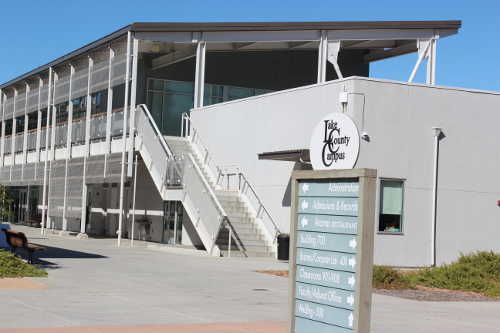
CLEARLAKE, Calif. – The Lake County Campus of Woodland Community College has rescheduled the Native American Empowerment Day to Friday, April 21.
American Indian students grades seventh through 12 and American Indian adults are invited to this event from 9 a.m. until 1 p.m. at 15880 Dam Road Extension in Clearlake.
At this free event, the college will provide morning snacks, lunch, book bags and educational materials.
College staff will provide campus tours and information on careers, certificates and degrees. The day will open with a traditional blessing and prayer.
Nationwide only 1 percent of college students are American Indian. This workshop will provide motivation and support for students to enroll and succeed in school.
Local tribal members will present keynote presentations. Robert Geary will speak about local historical and contemporary issues. Dino Beltran will share about the recent gains in protecting ancestral items.
All participants will attend hands-on workshops regarding traditional practices and the value of higher education.
College staff will provide assistance for anyone wishing to enroll in high-school equivalency classes, certificates, associate degrees or transfer to a university. Financial aid staff will provide information on financial aid, grants, and scholarships.
Groups are invited to provide resource tables and resources at this event.
To register for the Native American Empowerment Day, please call the campus at 707-995-7900. The college requests that all participants preregister in order to prepare the right amount of food.
For more information about the Lake County Campus, please visit http://lcc.yccd.edu .
SACRAMENTO – The Pacific Fishery Management Council on Tuesday adopted ocean salmon season recommendations that provide recreational and commercial opportunities for most of the Pacific Coast.
However, due to low forecasts, several areas are closed this year, and the open areas are significantly constrained.
The adopted salmon fisheries off the coasts of California, Oregon, and Washington do achieve conservation goals for the numerous individual salmon stocks on the West Coast..
The recommendation will be forwarded to the National Marine Fisheries Service for approval by May 1, 2017.
“It has been another challenging year for the Council, its advisors, fishery stakeholders and the public as we strive to balance fishing opportunities on harvestable stocks of Chinook and coho with the severe conservation needs we are facing on salmon stocks, both north and south of Cape Falcon,” said Council Executive Director Chuck Tracy. “The Council has recommended commercial and recreational ocean salmon seasons in Washington, Oregon, and California this year that provide important protections for stocks of concern including Klamath River fall Chinook, Washington coastal coho, and Puget Sound Chinook.”
“We have made the tough decisions and implemented fishery restrictions to protect salmon stocks while providing at least some opportunity for commercial recreational, and tribal ocean salmon fishing along much of the west coast,” said Council Chair Herb Pollard.
Washington and Northern Oregon (north of Cape Falcon)
Fisheries north of Cape Falcon (near Nehalem in northern Oregon) depend largely on Columbia River Chinook and coho stocks. Columbia River fall Chinook returns are expected to be healthy in 2017, and Columbia River coho are expected to return at reduced but moderate levels in 2017.
However, some coastal Washington and Puget Sound coho abundance is reduced from recent years, and some wild coho stocks are expected to return at very low levels.
In response, the Council has been challenged with shaping fisheries to provide access to relatively abundant Chinook stocks while protecting natural coho populations.
North of Cape Falcon, there is an overall non-Indian total allowable catch of 90,000 Chinook coastwide (compared to 70,000 last year) and 42,000 marked hatchery coho in (compared to 18,900 last year).
Recreational fisheries
The recreational fishery north of Cape Falcon does not include a mark-selective Chinook season this year, but opens to all salmon on June 24 in most areas (July 1in Westport) and ends Sept. 4 or when Chinook or coho quotas are reached.
Recreational fisheries in all port areas will have access to 45,000 Chinook (compared to 35,000 Chinook last year), and a marked coho quota of 42,000 (compared to 18,900 last year). For details, please see the season descriptions on the council Web site at www.pcouncil.org .
Commercial fisheries
Tribal and non-Indian ocean commercial fisheries are designed to provide harvest opportunity on strong Chinook returns primarily destined for the Columbia River while avoiding coho stocks of concern.
Coho retention is allowed in commercial fisheries north of Cape Falcon this year, which is an improvement over the non-retention regulations from last year; however, the coho quotas are very low in 2017.
Non-Indian ocean commercial fisheries north of Cape Falcon include traditional, but reduced, Chinook seasons in the spring (May-June) and summer season (intermittent openings during July through September).
The Chinook quota of 27,000 in the spring is greater than the 2016 quota of 19,100. The summer season quotas include 18,000 Chinook and 5,600 coho.
Tribal ocean fisheries north of Cape Falcon are similar in structure to past years, with quotas that include 40,000 Chinook and 12,500 coho.
California and Oregon south of Cape Falcon, Oregon
Fisheries south of Cape Falcon (in northern Oregon) are limited by the need to protect Klamath River fall Chinook, and south of Point Arena (in northern California), they are also affected by the need to protect Sacramento River winter Chinook.
Returns of spawning Klamath River fall Chinook are projected to be the lowest on record in 2017 due to drought, disease, poor ocean conditions, and other issues. At the same time, the Council must protect Sacramento River winter Chinook, which are listed under the Endangered Species Act.
Because both of these fish intermix with other stocks in the ocean, fisheries targeting more abundant stocks must be constrained.
Recreational fisheries
Recreational fisheries off the central Oregon coast will allow Chinook retention from March 15 through October 31.
Coho fisheries consist of a mark-selective quota fishery of 18,000 in mid-summer (compared to 26,000 last year) and a non-mark-selective quota fishery of 6,000 in September (compared to 7,500 last year), both open from Cape Falcon to Humbug Mountain.
The Brookings/Crescent City/Eureka areas are closed for the entire season to conserve Klamath River fall Chinook, which are most abundant in these areas. Fisheries further south all opened on April 1.
In the Fort Bragg area, the season will close during June, July, and half of August, then reopen through Nov. 12.
In the San Francisco area, the season will close during the first half of May and reopen through October 31. Salmon fishing will remain open through July 15 in the Monterey Bay area and through May 31 for areas south of Monterey Bay.
Commercial fisheries
Commercial fisheries from Cape Falcon to the Florence South Jetty, Oregon open on April 15 and will run through July 31 with intermittent closures to reduce impacts on Klamath fall Chinook. This area will also be open in September and October.
Fisheries from the Florence South Jetty to Horse Mountain, California will be closed for the entire season to reduce impacts on Klamath River fall Chinook.
Between Horse Mountain and Point Arena (in the Fort Bragg area), there will be a 3,000 Chinook quota ocean fishery during the month of September, after 2017 Klamath River fall Chinook spawners have entered the Klamath River.
In the area from Point Arena to Pigeon Point (San Francisco), the season will be open for most of August and all of September. From Pigeon Point to the Mexico border (Monterey), the Chinook season will be open in May and June.
There will also be a season from Point Reyes to Point San Pedro (subset of the San Francisco area), open October 2 to 6 and October 9 to 13.
Management process
The council developed the management measures after several weeks spent reviewing three season alternatives.
The review process included input by Federal state, and tribal fishery scientists and fishing industry members; public testimony, and three public hearings in coastal communities.
The council received additional scientific information and took public testimony at its April Council meeting before taking final action. The decision will be forwarded to the National Marine Fisheries Service for approval and implementation.
In addition, the coastal states will decide on compatible state waters fishery regulations at their respective Commission hearings.
Council role
The Pacific Fishery Management Council is one of eight regional fishery management councils established by the Magnuson Fishery Conservation and Management Act of 1976 for the purpose of managing fisheries 3-200 miles offshore of the United States of America coastline.
The Pacific Council recommends management measures for fisheries off the coasts of California, Oregon and Washington.

HIDDEN VALLEY LAKE, Calif. – The Lake County Milers Walking and Running Club will hold its 15th annual Spring Has Sprung event on Sunday, May 7.
The run takes place at Coyote Valley Elementary School in Hidden Valley Lake with the race for children starting at 8 a.m and the 5K warm-up at 8:15 a.m., starting at 8:30 a.m.
The event will feature along with their family-friendly 5K and very popular children’s runs 1/2K (300 yards) for ages 4 to 5 and 1K (600 yards) for ages 6-9. The age divisions for the 5K are 10 and under (for kids that are comfortable with a 3 mile distance) through ages 70+.
This year the Spring Has Sprung event will support Middletown High School Track and Field and Kelseyville High School Track and Field.
The entry fee for the kids run is $5 and includes a finisher’s medal (limited to 45 kids so register early).
The 5K entry fee is a low $15 for ages 19 and under and $30 for adults and includes an event shirt in a variety of styles while supplies last.
Register at www.runsignup.com/spring or find the link at www.lakecountymilers.com .
The popular Spring Has Sprung annual event features a flat 5K (3.1 mile) run and walk through the beautiful Hidden Valley Lake golfing neighborhood.
Participants can choose to “race” the timed event as a runner or fast walker or take their time strolling the course.
Medals are awarded to the top 3 in age and gender division in the 5K. The popular kid’s 1/2K to 1K run for kids between ages 4 through 9 is not timed and is limited to 45 kids.
Each child in the kids run will receive a finisher’s medal as they cross the finish line and can head right over to a kid-specific refreshment table.
Participants in the 5K will receive an event shirt and goodie bag.
The male and female first-place overall winners will receive a free entry into the Santa Rosa Marathon event of their choice happening Aug. 26 and 27; 5K, 10K, half marathon or full marathon distance, valued at $45 to $145.
For more information email

CLEARLAKE, Calif. – To help customers who otherwise cannot schedule an appointment for passport service, the Clearlake Post Office at 14500 Olympic Drive will accept walk-ins for passport applications on Saturday, April 15, from 10 a.m. to 2 p.m.
Postal clerks will be on hand to provide passport information and to accept passport applications, with no appointments necessary.
To help speed up the process, customers should fill out forms ahead of time. Application forms and information on the costs and how to apply for a passport book and/or passport card can be found at www.usps.com/passport or www.travel.state.gov/passport .
Customers can also obtain passport information by phone, in English and Spanish, by calling the National Passport Information Center toll-free at 877-487-2778.
To apply for a passport, applicants need a valid form of photo identification and proof of citizenship.
You may submit items such as the following containing your signature and a photograph that is a good likeness of you: Current or previous U.S. passport, naturalization certificate, certificate of citizenship or a current and valid driver’s license, government ID or military ID.
A photocopy of the identification – front and back – must be submitted with your passport application. Many post offices do provide photocopy service for an added fee.
Proof of citizenship includes any one of the following:
– Certified birth certificate issued by the city, county or state;
– Naturalization certificate or certificate of citizenship, and;
– An expired passport.
The customer must submit a photocopy of the front and back of the proof of citizenship document, effective January 2017.
USPS Passport Wallets are available at passport acceptance offices and at www.usps.com/shop .