How to resolve AdBlock issue?
News
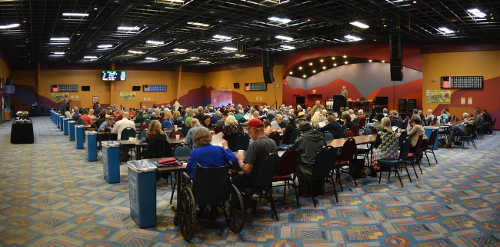
NICE, Calif. – About 250 senior citizens and friends from throughout Lake County attended the inaugural Senior Summit on Saturday, April 1 at the Robinson Rancheria Resort and Casino.
“That’s 100 more than we initially planned for,” said Lake County District 3 Supervisor Jim Steele, who created the event concept. “Thanks to our accommodating venue hosts, there was enough food to feed everyone.”
In a conference-style approach, the all-day event provided a forum for information and services available to seniors; delivered training for nonprofit boards; and celebrated the contributions of seniors from throughout Lake County.
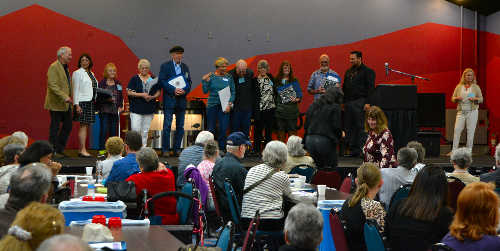
Several seniors from throughout Lake County received county, state and federal honors for their volunteer efforts and contributions to Lake County.
Deemed “Inspirational Seniors,” nine award recipients were recommended by senior center directors Joyce Overton, Jonathan Crooks, Lori Tourville and Supervisor Steele.
Among those selected were Shirley Kelsey and Janis Stockton of Clearlake; Sandi Baroni, Shirley Koch and Mary Veeninga of Lakeport and Kelseyville; Ron Keas and Gene Paleno of Lucerne and Bartlett Springs, and Freeda Krukoff of the Robinson Rancheria Band of Pomo Indians.
Recipients received plaques and certificates commemorating their contributions from Steele, State Assemblywoman Cecilia Aguiar-Curry and Tribal Chair E.J. Crandell, representing Congressman Mike Thompson.
A key aspect of the summit was introducing the Lake County Silver Foundation, a nonprofit entity designed to raise funds in support of Senior Centers and other nonprofit entities that provide services to seniors and conduct future annual summit conferences.
Chosen to speak for the nonprofit senior and support services in the county, Jonathan Crooks, manager of the Lakeport and Kelseyville centers, discussed the needs of a growing senior populace.
“Affecting 30 percent of Lake County seniors, food insecurity is a serious problem in Lake County,” he said. “Senior centers serve only a portion of those seniors and we receive government funding for only about 45 percent of what it costs to feed this vulnerable population. The rest we have to raise ourselves which is tough and getting tougher in the economically challenged communities we serve. We need new funding sources like the Silver Foundation.”
Speaking to another problem facing seniors, keynote speaker Prescott Cole, an attorney with California Advocates for Nursing Home Reform, addressed financial abuses – including agents who sell annuities to the elderly that will never pay out in their lifetime.
A senior himself, Cole explained that these abuses occur because of changes as people age and the trusting nature of the older population.
Event volunteers scurried to process the large number of guests, including those who did not pre-register or registered late. “We ran out of everything – conference bags, the programs, even name badges,” said Janine Smith-Citron, one of the volunteers helping to register guests.
“It’s a bit risky to plan a first time event like this,” said conference organizer Olga Martin Steele. “We worried attendance might be low due to other competing activities that day but in the final analysis, we confirmed our thinking – that seniors are a respected segment of our population worthy of an event honoring them.”
The prevailing comment of the day was, “This was great and can only get better,” Martin Steele said.
According to Supervisor Steele, the event volunteers carried the day, working to accommodate a much larger group than anticipated.
“We owe a huge debt of gratitude to everyone who helped, especially the core planning group including senior center managers Joyce Overton, Jonathan Crooks, Lori Tourville and Nathan Maxman as well as Joyce Adams, KPFZ radio host and Janine Smith-Citron of Hospice. Bill Shields and Lenny Matthews, behind the scenes volunteers who worked hard, handing out and posting flyers all around the county, also deserve a special note of thanks as does Rae Eby-Carl and Kurt McKelvey who worked throughout the day of the conference.”
The day closed with a raffle of about 50 items as diverse as acclaimed photographs and books to gift certificates, Nordic walking sticks and more. Charged with securing donated items for the raffle, Wanda Quitiquit remarked, “It is so encouraging to see the community support for this event. If I named every donor we’d need an entire page in the newspaper.”
Conference planners also credited sponsors with the successful event. The bulk of the funding came from major sponsors including the Robinson Rancheria Resort & Casino, Calpine At The Geysers, Clearlake Oaks-Glenhaven Business Association, PG&E, Lake County senior centers, Supervisor Steele, Lake Transit Authority and the Law Offices of Dennis A. Fordham.
Several organizations also contributed at the table sponsor level including Hospice Services of Lake County, Konocti Senior Services, Law Offices of Mary Heare Amodio and the Lucerne Community Clinic.
Steele had several primary goals in mind when he reached out to the senior centers with the idea of an event to change the way we perceive lake county senior citizens:
– To change the community view of seniors and elders. “Seniors have lived the longest and have the wisdom of time. They continue to be the bedrock of their community and should be viewed that way. A great example of this view is traditional tribal cultures that honor elders and look to instill this respect in youth,” he said.
– To conduct an annual conference style event for seniors and elders. Steele said, “The idea is to provide a touchstone for their value to society and help senior and elder centers adjust their course toward what is relevant for each generation.”
– To provide a professional level training seminar for senior center boards. Steele explained many nonprofit boards struggle to find members. “The goal is to improve the vitality of each center through training and attract new members for the nonprofit boards charged with overseeing budgets and operations, raising funds and setting policy,” he said.
– To establish a foundation to seek out of county donations, provide endowment options for seniors who want to direct their gifts to other seniors and conduct an annual professional-style conference for seniors. Steele said, “Feedback from seniors can also be used to inform agencies about the effectiveness of support programs.”
Steele believes the summit was a big step towards achieving those goals. “I’m pleased with the results and ready to begin planning the next summit, hopefully through an engaged Lake County Silver Foundation Board of Directors.”
For information on how you can support the foundation and the next annual Senior Summit, call 707-998-1302.

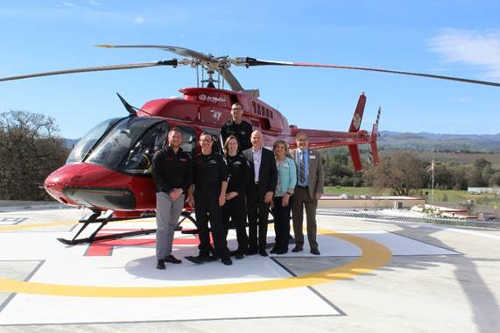
CLEARLAKE, Calif.—St. Helena Hospital Clear Lake now has a new helipad to help emergency medical staff treat the most time-sensitive emergencies and to provide efficient transport in and out of the hospital.
The first helicopter landed on the new helipad on March 6.
A makeshift pad on the east side of the hospital near the outpatient lab had served as the landing zone at the hospital since helicopter medical transport began over three decades ago.
“We’ve been working toward this day for a long time,” said Chief Willie Sapeta of the Lake County Fire Protection District. “Having a dedicated helipad at the hospital increases emergency response capabilities for all of Lake County.”
The new helipad is a benefit to patients and is appreciated by local first responders, hospital emergency staff and the air medical teams that provide transport services.
“When REACH and CALSTAR land at St. Helena Hospital Clear Lake, our pilots now have a more straightforward flight path and our clinical team is closer to the entrance of the emergency department,” said Jeff Cress, REACH program manager for Santa Rosa, Lakeport and Willits. “It’s an improvement to safety and patient care.”
The helipad is busy most days of the week transporting patients directly from on-scene trauma or out of the hospital to receive specialty care.
Helicopter transport is crucial to successfully treating patients in the hospital’s Emergency Department. If a patient’s condition requires specialized services that are offered at another facility, the helipad ensures the fastest possible access to care, bringing the best specialty centers in North Bay and greater Bay Area hospitals within minutes instead of hours.
“We are proud of our first-class emergency department, and the new helipad extends high-quality care to patients needing transport to our emergency department or out to a higher level of care,” said David Santos, president and chief executive officer of St. Helena Hospital Clear Lake. “We want to provide the best possible outcomes for our community when time is of the essence.”
NORTHERN CALIFORNIA – With record rainfall in the Northern Sierra and the snowpack still building, the California Department of Water Resources on Friday increased its estimate of this year’s State Water Project supply to 100 percent for contractors north of the Sacramento-San Joaquin Delta and 85 percent of requests for other contractors.
“We’re hopeful we’ll be able to increase deliveries even more as we monitor conditions,” said William Croyle, acting director of the Department of Water Resources, or DWR.
Friday’s allocation is the highest since 100 percent in 2006.
DWR initially estimated it would only be able to deliver 20 percent of the 4.1 million acre-feet of SWP water requested this year.
That projection, or allocation, was increased to 45 percent on Dec. 21 and to 60 percent on Jan. 18 as storms developed.
In step with Friday’s allocation increase, DWR announced that repairs have been completed to the intake structure at Clifton Court Forebay, a reservoir feeding the Delta pumps that deliver State Water Project water to most of California.
Erosion damage was discovered last month on the concrete apron that supports the reservoir’s intake gates. Clifton Court Forebay and Delta pumping operations will return to normal on Sunday.
Emergency work is under way to repair spillways at the keystone SWP reservoir, Lake Oroville.
Lake levels this spring and summer have not been determined yet and will depend on public safety, the weather, and the pace at which the Sierra Nevada snowpack melts, among other factors.
But the above-average size of that snowpack will allow DWR to deliver at least 85 percent of SWP contract requests and perhaps adjust the allocation higher later this spring.
The 29 public agencies contracting to receive SWP water serve more than 25 million Californians and nearly a million acres of irrigated agricultural land.
Clear Lake is part of the Bay-Delta Watershed. Its waters flow into the Bay Delta through Cache Creek.

NASA scientists are releasing new global maps of Earth at night, providing the clearest yet composite view of the patterns of human settlement across our planet.
Satellite images of Earth at night – often referred to as "night lights" – have been a gee-whiz curiosity for the public and a tool for fundamental research for nearly 25 years.
They have provided a broad, beautiful picture, showing how humans have shaped the planet and lit up the darkness. Produced every decade or so, such maps have spawned hundreds of pop-culture uses and dozens of economic, social science and environmental research projects.
But what would happen if night lights imagery could be updated yearly, monthly or even daily? A research team led by Earth scientist Miguel Román of NASA's Goddard Space Flight Center in Greenbelt, Maryland, plans to find out this year.
In the years since the 2011 launch of the NASA-NOAA Suomi National Polar-orbiting Partnership, or NPP, satellite, Román and colleagues have been analyzing night lights data and developing new software and algorithms to make night lights imagery clearer, more accurate and readily available.
They are now on the verge of providing daily, high-definition views of Earth at night, and are targeting the release of such data to the science community later this year.
Since colleagues from the National Oceanic and Atmospheric Administration and NASA released a new Earth at night map in 2012, Román and teammates at NASA's Earth Observing Satellite Data and Information System (EOSDIS) have been working to integrate nighttime data into NASA's Global Imagery Browse Services (GIBS) and Worldview mapping tools.
Freely available to the science community and the public via the Web, GIBS and Worldview allow users to see natural- and false-color images of Earth within hours of satellite acquisition.
They are releasing a new global composite map of night lights as observed in 2016, as well as a revised version of the 2012 map.
The NASA group has examined the different ways that light is radiated, scattered and reflected by land, atmospheric and ocean surfaces. The principal challenge in nighttime satellite imaging is accounting for the phases of the moon, which constantly varies the amount of light shining on Earth, though in predictable ways.
Likewise, seasonal vegetation, clouds, aerosols, snow and ice cover, and even faint atmospheric emissions (such as airglow and auroras) change the way light is observed in different parts of the world. The new maps were produced with data from all months of each year. The team wrote code that picked the clearest night views each month, ultimately combining moonlight-free and moonlight-corrected data.
Román and colleagues have been building remote sensing techniques to filter out these sources of extraneous light, gathering a better and more consistent signal of how human-driven patterns and processes are changing.
The improved processing moves Suomi NPP closer to its full potential of observing dim light down to the scale of an isolated highway lamp or a fishing boat. The satellite's workhorse instrument is the Visible Infrared Imaging Radiometer Suite (VIIRS), which detects photons of light reflected from Earth's surface and atmosphere in 22 different wavelengths.
VIIRS is the first satellite instrument to make quantitative measurements of light emissions and reflections, which allows researchers to distinguish the intensity, types and the sources of night lights over several years.
Suomi NPP observes nearly every location on Earth at roughly 1:30 p.m. and 1:30 a.m. (local time) each day, observing the planet in vertical 3000-kilometer strips from pole to pole. VIIRS includes a special "day-night band," a low-light sensor that can distinguish night lights with six times better spatial resolution and 250 times better resolution of lighting levels (dynamic range) than previous night-observing satellites.
And because Suomi NPP is a civilian science satellite, the data are freely available to scientists within minutes to hours of acquisition.
Armed with more accurate nighttime environmental products, the NASA team is now automating the processing so that users will be able to view nighttime imagery within hours of acquisition. This has the potential to aid short-term weather forecasting and disaster response.
"Thanks to VIIRS, we can now monitor short-term changes caused by disturbances in power delivery, such as conflict, storms, earthquakes and brownouts," said Román. "We can monitor cyclical changes driven by reoccurring human activities such as holiday lighting and seasonal migrations. We can also monitor gradual changes driven by urbanization, out-migration, economic changes, and electrification. The fact that we can track all these different aspects at the heart of what defines a city is simply mind-boggling."
For instance, VIIRS detected power outages in the wake of Hurricane Matthew, a major storm that struck the northeastern Caribbean and the southeastern United States in late September 2016. NASA's Disasters Response team provided the data to colleagues at the Federal Emergency Management Agency; in the future, NASA, FEMA and the Department of Energy hope to develop power outage maps and integrate the information into recovery efforts by first responders.
The NASA team envisions many other potential uses by research, meteorological and civic groups. For instance, daily nighttime imagery could be used to help monitor unregulated or unreported fishing. It could also contribute to efforts to track sea ice movements and concentrations. Researchers in Puerto Rico intend to use the dataset to reduce light pollution and help protect tropical forests and coastal areas that support fragile ecosystems. And a team at the United Nations has already used night lights data to monitor the effects of war on electric power and the movement of displaced populations in war-torn Syria.
In a separate, long-term project, Román is working with colleagues from around the world to improve global and regional estimates of carbon dioxide emissions. The team at NASA's Global Modeling and Assimilation Office (GMAO) is combining night lights, urban land use data, and statistical and model projections of anthropogenic emissions in ways that should make estimates of sources much more precise.
Historically low numbers of fall-run and winter-run Chinook salmon have prompted the California Fish and Game Commission, or FGC, to drastically limit the state’s salmon fishery for the remainder of 2017.
In the Klamath Management Zone, which is the area between the Oregon/California border and Horse Mountain (40° 05’ 00” N. latitude), the entire ocean salmon fishery will be closed, as will the fall-run Chinook fishery on both the Klamath and Trinity rivers.
Returning stock projections for fall-run Chinook in the Klamath River Basin are the lowest on record. By limiting, and in some cases closing, the fisheries for the remainder of 2017, the FGC hopes to maximize fall- and winter-run Chinook survival and reproduction and support efforts to rebuild the fisheries.
“Closing an entire fishing season is not something that I take lightly, but the survival of the fall-run Chinook in the Klamath and Trinity rivers is at stake,” said California Department of Fish and Wildlife (CDFW) Director Charlton H. Bonham. “CDFW and other fisheries management partners agree that these restrictions are necessary to help recover this vital species.”
Inland, spring-run Chinook fishing will still be allowed through Aug. 14 on the Klamath River and through Aug. 31 on the Trinity River. After these dates, both fisheries will close for the remainder of the calendar year.
However, the nearby Smith River will remain open for fall-run Chinook, and there are additional opportunities in southern Oregon rivers. During the salmon season closure, steelhead angling will still be allowed in both the Klamath and Trinity rivers.
The ocean salmon season north of Horse Mountain will be completely closed in 2017. All areas south of Horse Mountain opened on April 1 and will remain open, with some restrictions, as follows.
– In the Fort Bragg area, which extends from Horse Mountain to Point Arena (38° 57’ 30” N. latitude), the season will continue through May 31, reopening Aug. 15 and extending through Nov. 12 with a 20-inch minimum size limit for the season. The summer closure in this area is also related to the limited numbers of Klamath River fall-run Chinook.
– In the San Francisco area, which extends from Point Arena to Pigeon Point (37° 11’ 00” N. latitude), the season will close on April 30 under a 24-inch minimum size limit, and reopen on May 15 through Oct. 31 with a 20-inch minimum size limit.
– In the Monterey area between Pigeon Point and Point Sur (36° 18’ 00” N. latitude), the season will continue through July 15, while areas south of Point Sur will continue through May 31. The minimum size limit south of Pigeon Point will remain 24-inches total length.
Other restrictions for these areas are as follows:
– The daily bag limit is two salmon per day of any species except coho salmon and no more than two daily bag limits may be possessed when on land. On a vessel in ocean waters, no person shall possess or bring ashore more than one daily bag limit. CDFW reminds anglers that retention of coho (also known as silver salmon) is prohibited in all ocean fisheries.
– For anglers fishing north of Point Conception (34° 27’ 00” N. latitude), no more than two single-point, single-shank barbless hooks shall be used, and no more than one rod may be used per angler when fishing for salmon or fishing from a boat with salmon on board. In addition, barbless circle hooks are required when fishing with bait by any means other than trolling between Horse Mountain and Point Conception.
Shortened ocean salmon seasons in Northern California were necessary partly because data show that Klamath River fall-run Chinook are most likely to be caught in ocean areas near the Klamath River mouth, with impacts on this stock decreasing the further south fishing opportunity occurs.
Concerns are also high for endangered Sacramento River winter-run Chinook, contributing to the decision to shorten ocean fishing seasons in areas south of Pigeon Point.
Three consecutive years of low juvenile numbers, coupled with unusually warm and unproductive ocean conditions, led fishery managers and industry representatives to implement protections beyond those required by the Endangered Species Act biological opinion and the federal salmon Fishery Management Plan’s harvest control rule.
Fishery data suggest that winter-run Chinook are concentrated south of Pigeon Point, especially south of Point Sur, during the summer and early fall. Ocean fishery closures and size limit restrictions implemented in the Monterey management areas are intended to minimize contact with winter-run Chinook.
Klamath fall-run Chinook are currently classified under the federal plan as “approaching an overfished condition.” Given the poor return of adults to the river the past two years, coupled with returns this fall that are expected to be just as poor or even worse, the stock is expected to be classified as “overfished” in 2018.
As a result, CDFW will be working with federal and tribal partners to develop a Rebuilding Plan for Klamath River fall-run Chinook next year.
CDFW and the FGC are tasked with managing the state’s fishery resources to ensure sustainability. Given the stock status, extra precaution is warranted. Every fish counts this year – especially every fish returning to the river to spawn.
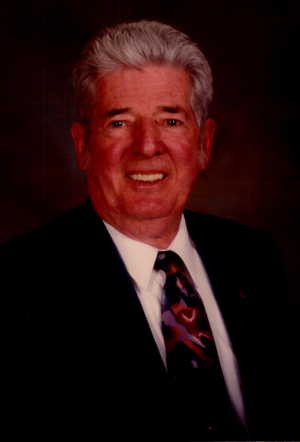
LOWER LAKE, Calif. – George Henry Ryder (1928-2017), a longtime resident of Lake County for 54 years, passed way April 6, 2017, at his home in Lower Lake.
He was born in San Jose, Calif., in 1928, the son of Irving and Mary Ryder. He grew up in Santa Clara County on their Rancho Escadendo with his two sisters, Nellie and Patricia.
He attended a one-room schoolhouse in Llagas Canyon and graduated from Lincoln High School Class of 1948.
George joined the US Navy 1946 at the age of 17 and served on board the USS Los Angeles in the Pacific until the end of the war in December 1947.
In 1950 he married Mary Elizabeth Twiss and had two children, Steven and Jane Ryder. Since 1948, George made a career with California Division of Forestry for over 37 years. In 1962 he took a position to build and open the Konocti Conservation Camp in Lake County until retirement in 1984.
George loved the great outdoor including hunting, fishing and backpacking in God’s creation and never sat a minute still. He was a kind and loving man who always had a kind word and light-hearted joke.
After retirement, George and Mary enjoyed travel in the fifth-wheel trailer as far as Alaska to Mexico to Washington, DC.
Over the years he served in the Masonic Lodge for over 50 years, Shrine, Kiwanis Club, Lions Club, Konocti School Board for 39 years, Lake County School Board, president of Little League for 10 years and Lower Lake Volunteer Fire Department.
He received numerous awards and recognition for his community service including Congressional Record 2015 from the California House of Representatives for service at the Konocti School Board, Kiwanian of the Year 1970, Lions Club Citizen of the Year 1975, E.P.O. Elks Citizen of the Year 1973, Grand Lodge of Order of Elks Distinguished Citizenship Award 1972-1973, High Twelve International President 1989-90, L.C. Shrine Club President 1992, High Twelve International Recognition for Outstanding Service in 1995.
George knew how he wanted to live his life and he did so to the fullest. His favorite poem was “If” by Rudyard Kipling. It speaks volumes for how he lived his life. I know we will all truly miss him but are better off for having known him.
George is survived by his wife, Mary; sister, Nellie; brother-in law, Robert Twiss; son, Steven; son-in-law, John Bonner; four grandchildren, Mikael, Amanda, Suzanne and Kathleen; and six great-grandchildren, Jayke, Jayse and Mayci Ryder, and Gracie, Conner and Jai Campbell.
In honor of George Henry Ryder there will be a memorial service held at 11 a.m., Friday, April 21, at the Masonic Lodge, 7100 S Center Drive, Clearlake, with full military and masonic honors followed by a luncheon for all family and friends. Any donations may be made to American Legion Konocti Post 437, 14770 Austin Road, Clearlake, CA 95422.
Thank you to all those who helped him through his health challenges the last years of his life. Per his request, he will be cremated and family will gather in celebration this summer and scatter his ashes in God creation, the forest, he loved so much.
Arrangements under the care of Jones & Lewis Clear Lake Memorial Chapel. Please share your loving memories of George by signing his online guestbook at www.jonesandlewis.com and www.legacy.com .