How to resolve AdBlock issue?
News
Bay Area baseball fans, rejoice! Oakland A’s and SF Giants games have begun.
Want to attend a game? It’s important to be safe when purchasing tickets so that you don’t get turned away at the gate.
In 2016, consumers nationwide filed around 3,000 complaints on ticket brokers and event ticket sellers with BBB.
The leading cause for complaints was problems with refunds and exchanges. Consumers allege being unable to get refunds (even if shows were cancelled or postponed), being charged hidden fees and receiving fraudulent tickets.
It can be fun to wear team gear to the game, but only if it’s authentic. Consumers nationwide reported nearly 500 counterfeit product scams to BBB Scam Tracker in 2016, and 53 percent involved a monetary loss.
Buying gear online is especially tricky. In 2016, consumers reported around 2,800 online purchase scams to BBB Scam Tracker. These scams often involve purchasing an item from an unknown Web site and never receiving it.
Watch out for ticket fraud
Stick to trustworthy sources when buying tickets. The best way to buy is through the Major League Baseball (MLB) official Web site, www.mlb.com .
If they’re sold out and you have to purchase from an online ticket exchange or broker, be careful. Unfortunately, ticket fraud can occur when you purchase tickets from the secondary market.
Look up every business at www.bbb.org and check out their BBB Business Profile before making a purchase. For more tips on avoiding fraudulent tickets, visit www.bbb.org/tickets .
When buying gear, watch out for counterfeits
The best way to be sure the hats and jerseys you’re buying are authentic is by shopping at the MLB’s official store, www.mlbshop.com .
You can also find MLB licensed gear from authorized resellers. If you’re unfamiliar with the business or Website, make sure to look it up at www.bbb.org first to avoid an online purchase scam.
Know the signs that an item is counterfeit: it’s much less expensive than items from official shops, the Web site has spelling or grammatical errors, or logos and colors on the merchandise aren’t right.
Be smart when making a purchase
Whenever you’re making a purchase online, protect yourself. Verify that the website is secure by looking for the “https:,” where the “s” stands for “secure,” and other trust marks.
Make sure your computer is running up-to-date anti-virus, anti-spyware and anti-malware software. Always try to use a credit card, as they offer more protection than debit and prepaid cards, and never pay by wire transfer or gift cards.
Additionally, always read the purchase terms and conditions carefully. Understand the refund and guarantee policies before making a purchase, and be on the lookout for hidden fees.
Don’t show up empty handed
Don’t plan on buying tickets or gear outside the venue.
Tickets sold by scalpers are often either overpriced or fake, and gear sold outside the gates is also likely to be overpriced or counterfeit.
Avoid stress by showing up to the game with a ticket in hand.
Look up your seats beforehand
When purchasing a ticket, make sure you know the section, row and seat number. Look up the seat location before buying the ticket to ensure the seats exist, they’re in a location you like and the view isn’t obscured.
Know what you’re buying to avoid possible disappointment when you arrive.
If you encounter fraudulent tickets or counterfeit goods, let BBB know. You can file a complaint on a business here at www.bbb.org , and report a scam to BBB Scam Tracker at www.bbb.org/scamtracker .
Rebecca Harpster is public relations specialist with the Golden Gate Better Business Bureau, serving the San Francisco Bay Area and Northern Coastal California.
NORTHERN CALIFORNIA – This week in history features the creation of an employment program that strove to relieve the country of a great depression and an earth-shattering disaster that threatened to forever change an American city.
April 17, 1933
Like the rest of the nation, Lake County was hit hard during the Great Depression.
Those who lived through that time and related their experiences afterwards remember lean years, with the threat of losing a farm to the bank always present.
In such a rural area with virtually no industry to speak of beyond agriculture and a dwindling number of mines, the loss of even a few jobs was felt keenly in Lake County in the 1930s.
One of the saving graces during this time was the multitude of government support that helped to prop up the local economy.
On this day in 1933 President Franklin Roosevelt opened the first Civilian Conservation Corps, or CCC, camps in the nation in Luray, Virginia.
A program that targeted young men under the age of 25, the CCC employed them in construction jobs across the nation as the program quickly spread outwards from Virginia.
The construction of highways and the maintenance on preexisting roads provided a steady source of income for those lucky enough to land such a job. Each month the young men would receive a paycheck of $35, of which at least $25 had to be sent back home to their families.
Those young men lucky enough to land a CCC job in Lake County helped infuse the local economy with much needed money.
The CCC had a camp stationed at the Mendocino National Forest outside of Upper Lake and employed locals in such projects as road construction.
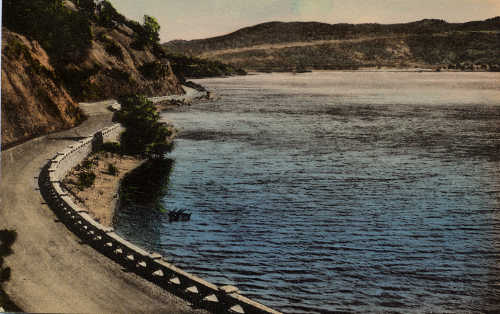
The stone-lined stretch of Highway 20 south of Lucerne along Clear Lake still stands as testament to these CCC crews and the work they performed.
A CCC job wasn’t always the difference between going hungry one month and having enough to eat, sometimes it was simply a way of making a little extra cash for a young man.
This, at least, is how Lamar Enderlin remembered his experience working at the CCC camp in Willits in the mid-1930s.
In a 1980 interview with the Lake County Historical Society, Mr. Enderlin fondly remembered that the $1 a day wage that the CCC paid “was a lot of money” – money that he used to pay off bills in Lake County so he could start fresh in San Francisco.
By 1939, Lake County’s economy was being annually infused with $50,000 to $75,000 of federal money through another federal program, the Works Progress Administration, or WPA, which each year employed about 65 locals (Source: Lake County Bee, August 3, 1939. Lake County Bee, August 10, 1939).
One of the more long-lasting legacies of the WPA in Lake County was the construction of the county’s first museum building, which was funded in part by the administration.
All of these federal programs greatly assisted the country, bringing to rural areas jobs that otherwise would not have existed in the starved economy.
In Lake County, we still have a stone-lined highway as a stark reminder of those tough times, and of the perseverance of our forebears.

April 18, 1906
The hub of business, trade and culture in California and home to some 400,000 people, by 1906 San Francisco was the ninth-largest city in the U.S. and the jewel of the West Coast.
The city itself was a microcosm of the larger social makeup of the new-century America.
Home to businessmen like Mark Hopkins and Leland Sanford – two of the “Big Four” industrial barons who had amassed fortunes during the previous decades – and newly immigrated families from Europe (one in three residents of the city were foreign-born), citizens of San Francisco ran the gamut of extraordinarily wealthy to utterly impoverished.
The urban fabric of the city reflected this disparity, with blocks of stately hotels and office buildings cheek by jowl with wood tenements and shanties.
It was a city of longshoremen and lawyers; prostitutes and politicians; Marxists and merchants; poets, artists, drunkards, dimwits and dandies. In short: the epitome of urban America at the turn of the century.
Over the previous decades the city had sprouted stone and cement edifices like the Call Building, San Francisco’s first skyscraper. The city was on the rise and nothing looked like it could stop its ascendancy.
The earthquake announced itself with a shockwave at 5:13 a.m. that was felt from Coos, Oregon in the north to Los Angeles in the South and Nevada in the east – an area of about 375,000 square miles.
San Francisco’s rise had stopped abruptly.
The quake rent buildings from their foundations and collapsed walls into streets. By 6:30 a.m. troops stationed at the nearby Presidio were ordered into the city.
The initial reaction of those residents unharmed was relief at being spared. At 8:14 a.m. a major aftershock finished what the initial quake started, toppling those buildings just barely standing.
Although the damage was severe, it would pale in comparison to the fire that raged shortly thereafter.
The first fire started almost immediately, the second quickly followed suit sometime after 10:30 a.m. – later called the “Ham and Egg” fire because it was believed to have started from an untended breakfast left on a stove.
Sometime in the mid-morning, the Winchester hotel caught fire. At 11:00 a.m., weakened by the furious onslaught of flames, the hotel collapsed in a heap of broken brick and flaming beams. Somewhere deep within the rubble lay the singed guest registry.
The fires raged for days. At the end of the disaster, over half of the population of the city found themselves homeless.
The financial cost of the Great San Francisco Earthquake and subsequent fire were unprecedented, the human cost somewhere around 3,000 dead.
Visiting San Francisco today, you would never know of the sheer destruction that was visited upon the city.
It took years but the scar left by the fire healed, buildings rebuilt, people repopulated. If nothing else, humans are persistent.
Antone Pierucci is the former curator of the Lake County Museum and a freelance writer whose work has been featured in such magazines as Archaeology and Wild West as well as regional California newspapers.
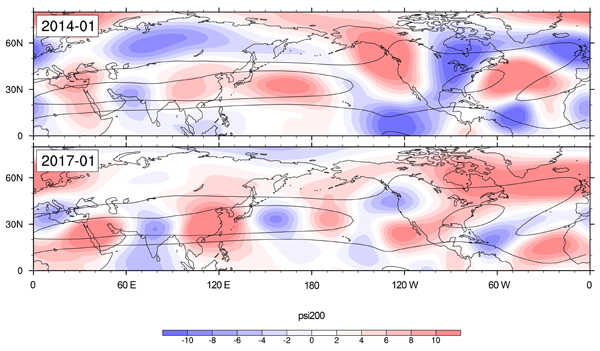
The crippling wintertime droughts that struck California from 2013 to 2015, as well as this year's unusually wet California winter, appear to be associated with the same phenomenon: a distinctive wave pattern that emerges in the upper atmosphere and circles the globe.
Scientists at the National Center for Atmospheric Research, or NCAR, found in a recent study that the persistent high-pressure ridge off the west coast of North America that blocked storms from coming onshore during the winters of 2013-14 and 2014-15 was associated with the wave pattern, which they call wavenumber-5.
Followup work showed that wavenumber-5 emerged again this winter but with its high- and low-pressure features in a different position, allowing drenching storms from the Pacific to make landfall.
"This wave pattern is a global dynamic system that sometimes makes droughts or floods in California more likely to occur," said NCAR scientist Haiyan Teng, lead author of the California paper. "As we learn more, this may eventually open a new window to long-term predictability."
The finding is part of an emerging body of research into the wave pattern that holds the promise of better understanding seasonal weather patterns in California and elsewhere.
Another new paper, led by NCAR scientist Grant Branstator, examines the powerful wave pattern in more depth, analyzing the physical processes that help lead to its formation as well as its seasonal variations and how it varies in strength and location.
The California study was published in the Journal of Climate while the comprehensive study into the wave patterns is appearing in the Journal of the Atmospheric Sciences.
Both papers were funded by the National Science Foundation, which is NCAR's sponsor, as well as by the Department of Energy, the National Oceanic and Atmospheric Administration, and NASA.
The new papers follow a 2013 study by Teng and Branstator showing that a pattern related to wavenumber-5 tended to emerge about 15-20 days before major summertime heat waves in the United States.
Strong impacts on local weather systems
Wavenumber-5 consists of five pairs of alternating high- and low-pressure features that encircle the globe about six miles (10 kilometers) above the ground.
It is a type of atmospheric phenomenon known as a Rossby wave, a very large-scale planetary wave that can have strong impacts on local weather systems by moving heat and moisture between the tropics and higher latitudes as well as between oceanic and inland areas and by influencing where storms occur.
The slow-moving Rossby waves at times become almost stationary. When they do, the result can be persistent weather patterns that often lead to droughts, floods, and heat waves. Wavenumber-5 often has this stationary quality when it emerges during the northern winter, and, as a result, is associated with a greater likelihood of persistent extreme events.
To determine the degree to which the wave pattern influenced the California drought, Teng and Branstator used three specialized computer models, as well as California rainfall records and 20th century data about global atmospheric circulation patterns.
The different windows into the atmosphere and precipitation patterns revealed that the formation of a ridge by the California coast is associated with the emergence of the distinctive wavenumber-5 pattern, which guides rain-producing low-pressure systems so that they travel well north of California.
Over the past winter, as California was lashed by a series of intense storms, wavenumber-5 was also present, the scientists said. But the pattern had shifted over North America, replacing the high-pressure ridge off the coast with a low-pressure trough. The result was that the storms that were forced north during the drought winters were, instead, allowed to make landfall.
Clues to seasonal weather patterns
Forecasters who predict seasonal weather patterns have largely looked to shifting sea surface temperatures in the tropical Pacific, especially changes associated with El Niño and La Niña. But during the dry winters of 2013-14 and 2014-15, those conditions varied markedly: one featured the beginning of an El Niño while the sea surface temperatures during the other were not characteristic of either El Niño or La Niña.
The new research indicates that the wave pattern may provide an additional source of predictability that sometimes may be more important than the impacts of sea surface temperature changes. First, however, scientists need to better understand why and when the wave pattern emerges.
In the paper published in Journal of the Atmospheric Sciences, Branstator and Teng explored the physics of the wave pattern.
Using a simplified computer model of the climate system to identify the essential physical processes, the pair found that wavenumber-5 forms when strong jet streams act as wave guides, tightening the otherwise meandering Rossby wave into the signature configuration of five highs and five lows.
"The jets act to focus the energy," Branstator said. "When the jets are present, the energy is trapped and cannot escape." But even when the jets are present, the wavenumber-5 pattern does not always form, indicating that other forces requiring study are also at play.
The scientists also searched specifically for what might have caused the wave pattern linked to the severe California drought to form. In the paper published in the Journal of Climate, the pair found that extremely heavy rainfall from December to February in certain regions of the tropical Pacific could double the probability that the extreme ridge associated with wavenumber-5 will form. The reason may have to do with the tropical rain heating parts of the upper atmosphere in such a way that favors the formation of the wavenumber-5 pattern.
But the scientists cautioned that many questions remain.
"We need to search globally for factors that cause this wavenumber-5 behavior," Teng said, "Our studies are just the beginning of that search."
David Hosansky writes for the University Corporation for Atmospheric Research, which manages the National Center for Atmospheric Research.
LAKE COUNTY, Calif. – Lake County Animal Care and Control this week has a variety of dogs ranging from hunting breeds to toy breeds.
This week’s available dogs include mixes of American Eskimo Dog, American Staffordshire Terrier, beagle, border collie, Chihuahua, collie, coonhound, German Shorthaired Pointer, Jack Russell Terrier, Labrador Retriever, mastiff, pit bull, shepherd, a wirehair terrier and a wirehaired pointing griffon.
Dogs that are adopted from Lake County Animal Care and Control are either neutered or spayed, microchipped and, if old enough, given a rabies shot and county license before being released to their new owner. License fees do not apply to residents of the cities of Lakeport or Clearlake.
If you're looking for a new companion, visit the shelter. There are many great pets hoping you'll choose them.
The following dogs at the Lake County Animal Care and Control shelter have been cleared for adoption (additional dogs on the animal control Web site not listed are still “on hold”).

Wirehaired terrier mix puppy
This male wirehaired terrier mix puppy has a medium-length black coat.
He’s in kennel No. 4, ID No. 7244.

‘Luke’
“Luke” is a male German Shorthaired Pointer mix with a short black and white coat.
Shelter staff said he is a big, young, happy, bouncy boy would will be a lot of fun for an active family that is willing to include him in their activities. He would benefit from training classes for basic manners. He does well with other dogs that tolerate his level of play, but would do best in a home with no small dogs or cats due to his size and energy level.
He’s in kennel No. 5, ID No. 7057.

‘Midnight’
“Midnight” is a young male Labrador Retriever mix with a short black coat with tan markings.
He’s in kennel No. 7, ID No. 7239.

‘Rosco’
“Rosco” is a male pit bull terrier mix with a short tan and white coat.
He already has been neutered.
He’s in kennel No. 10, ID No. 6752.

American Staffordshire Terrier-mastiff
This male American Staffordshire Terrier-mastiff has a short black and brown coat.
He’s in kennel No. 11, ID No. 7225.
Border collie
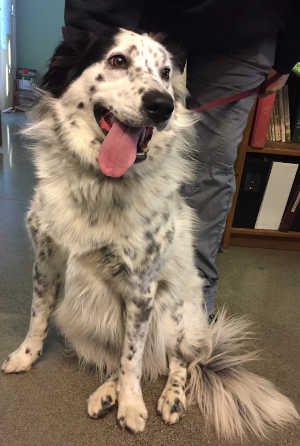
This female border collie has a medium-length black and white coat and has been spayed.
Shelter staff said she has a high energy level. When introduced to another dog and a cat, she play bowed and was friendly. They suggest she would do well in a high energy home with older children because of her size. She also knows how to sit on command.
She already has been spayed.
She’s in kennel No. 14, ID No. 7227.

‘Elmer’
“Elmer” is a Jack Russell Terrier with a short brown and white coat and floppy ears.
He’s in kennel No. 15, ID No. 7256.

Male Chihuahua
This male Chihuahua has a short black and tan coat.
He’s in kennel No. 16, ID No. 7257.

‘Sniff’
“Sniff” is a female coonhound with a short tricolor coat and a lovely singing voice.
She already has been spayed.
She’s in kennel No. 17, ID No. 7290.

‘Lucy’
“Lucy” is a beagle with a short red and white coat.
She already has been spayed.
She’s in kennel No. 18, ID No. 4743.

Pit bull terrier
This male pit bull terrier has a short blue coat with white markings.
He’s in kennel No. 19, ID No. 7275.

‘Lexi’
“Lexi” is a female American Eskimo Dog.
She has a long, white and fluffy coat.
She’s in kennel No. 20, ID No. 7247.

‘Sheriff’
“Sheriff” is a wirehaired pointing griffon.
He has a fluffy black and gray coat and already has been neutered.
Shelter staff said he gets along with chickens and likes to be in the house at night. He also has been around children as young as 2. He was surrendered because his owner was unable to keep him at their home.
He’s in kennel No. 23, ID No. 7307.

Collie-shepherd mix
This female collie-shepherd mix has a short brown, tan and white coat.
She’s in kennel No. 26, ID No. 7260.

‘Fluffy’
“Fluffy” is a young male Labrador Retriever mix with a short black coat and white markings.
He’s in kennel No. 33a, ID No. 7299.

‘Moo Moo’
“Moo Moo” is a young female Labrador Retriever mix with a short black and white coat.
She’s in kennel No. 33b, ID No. 7300.
To fill out an adoption application online visit http://www.co.lake.ca.us/Government/Directory/Animal_Care_And_Control/Adopt/Dog___Cat_Adoption_Application.htm .
Lake County Animal Care and Control is located at 4949 Helbush in Lakeport, next to the Hill Road Correctional Facility.
Office hours are Monday through Friday, 11 a.m. to 5 p.m., and 11 a.m. to 3 p.m., Saturday. The shelter is open from 11 a.m. to 4 p.m. Monday through Friday and on Saturday from 11 a.m. to 3 p.m.
Visit the shelter online at http://www.co.lake.ca.us/Government/Directory/Animal_Care_And_Control.htm .
For more information call Lake County Animal Care and Control at 707-263-0278.
Email Elizabeth Larson at
Earth. A world dominated by water. Trillions of gallons flow freely across the surface of our blue-green planet. While we once thought oceans made our planet unique, we’re now coming to realize that ‘ocean worlds’ are all around us.
Our planet retains its atmosphere and in turn its abundance of liquid water thanks, in part, to a very strong magnetic field, which provides protection from the solar wind.
Without this magnetic field our atmosphere would be stripped away leaving the pale blue dot looking more like… one of our neighbors?
Scientists believe Venus’ early oceans evaporated. With no water left on the surface, carbon dioxide built up in the atmosphere, leading to a runaway greenhouse effect that created present conditions.
Likewise, Mars appears to have had oceans long ago. But the Red Planet’s global magnetic field decayed, leaving it vulnerable to atmospheric erosion by the solar wind.
Farther from the sun in the sub-freezing temperatures of the outer solar system, it may seem impossible for liquid water to exist. However, not only does it exist, but it some places it may be more abundant than on Earth.
Jupiter is orbited by at least three moons that contain oceans; Europa, Ganymede, and Callisto.
Europa is crisscrossed by cracks and semi-rectangular features that look like ice rafts frozen into the surface. Below those immobile icebergs, researchers believe there is a vast ocean just below the icy crust warmed by the tidal forces of Jupiter, containing about twice as much water as is found on Earth.
In 2014 and 2016, the Hubble Space Telescope has observed what appear to be water vapor plumes coming out of cracks near the south pole.
Photos of Ganymede from the Galileo space probe show ancient ice flows frozen into its surface. Moreover, Hubble has looked at Ganymede’s auroras and seen signs suggesting an ocean’s worth of saltwater.
Hiding beneath a thick crust of ice, the ocean on Ganymede could actually harbor as much as four times more water than all of Earth's oceans combined. Callisto also seems to contain a salt water ocean beneath the icy crust, betraying its presence by the effects of Callisto on Jupiter’s overlying magnetic field.
In 2005, NASA's Cassini spacecraft found Saturn’s moon, Enceladus, busily puffing plumes of water vapor and organic compounds out through fissures (now known as "tiger stripes") in its frozen carapace.
Cassini flew through the plumes frequently since then, and has discovered nanosilica grains and the presence of molecular hydrogen, both suggesting the movement of heated water on the seafloor of the icy moon.
Other evidence provided by Cassini has convinced researchers that Enceladus has a global subsurface ocean spewing into space through these tiger stripes. Saturn’s E Ring, the planet’s second outermost ring, was actually formed from this water and ice!
Saturn’s largest moon, Titan, has a landscape dotted with lakes and seas. The liquid on Titan’s surface is not, however, H2O. Researchers believe the fluid sculpting Titan’s surface is a mixture mostly of methane with smaller amounts of ethane, and other hard-to-freeze hydrocarbons.
Other bodies around the solar system also show signs of liquid water.
In 2014, scientists using the European Space Agency led Herschel space observatory detected water vapor coming from two regions of the dwarf planet Ceres. NASA’s Dawn probe reached Ceres in 2015 and while the water vapor had subsided, there were other signs of water.
Ahuna Mons is an ice mountain apparently formed from repeated eruptions of salty muddy water. Also, widely-reported bright spots in Ceres’ crater Occator are thought to be deposits of salt left behind by the escape and sublimation of briny water from below.
Even distant Pluto may be an ocean world. As revealed by the recent flyby of New Horizons, Pluto’s strangely molded surface features suggest the presence of a liquid underground.
As astronomers look beyond our solar system they are finding exoplanets of sizes and distances from their stars that could have oceans. And based on our solar system these exoplanets could potentially have moons with oceans as well.
The locations of water within the diverse environments of our own planetary system will guide and inform the search for oceans beyond our solar system.
Next time you look out over the ocean, think about our neighboring worlds. They may have more in common with our own ocean world than we once believed was possible.
For more news about oceans – at home and abroad – stay tuned to http://science.nasa.gov .
“A good farmer is nothing more nor less than a handy man with a sense of humor.” – E.B. White
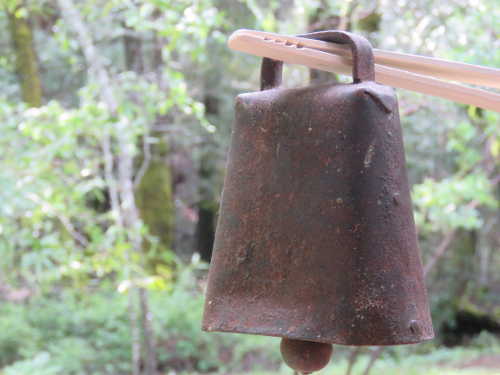
LAKE COUNTY, Calif. – The ubiquitous cowbell can be found on almost any farm, on any farm animal in Lake County.
Called “cowbell,” the name of the special livestock necklace originated because it could be found, most typically, on cows.
Cattle are not native to California or, for that matter, North America, but were introduced to these lands by the Spanish during the mission era.
According to the “Historical and Descriptive Sketchbook of Napa, Sonoma, Lake and Mendocino” by C. A. Menefee, 1873, “The first farming (in Lake County) was commenced in 1854.”
Menefee added, “Stock raising is the chief source of natural wealth outside of the mines. The hills are devoted to stock, and so much of the valleys as are not used for the production of grain ...”
Quite probably John Still Anderson, a Scottish immigrant who purchased Anderson Ranch in the 1880s – or his European predecessors the Grigsbys who hailed from Tennessee and homesteaded there at what is now Anderson Marsh State Historic Park in 1855 – and operated a cattle ranch along with his wife, Sarah and six children made use of a cowbell or two.
A cowbell helps the farmer locate his animal if it should meander off. It is believed that the first cowbells were crafted back in the Iron Age.
Archaeologists have found that cowbells date back over 5,000 years ago in China, where clay cowbells were believed to have been used by shepherds as an aid to find their goats, cows and sheep. Later in time the clay bells were substituted by metal bells.
A “bell-wether,” which is the pilot sheep of the flock, was written about by the Brothers Grimm in their early dictionary called the Deutsches Wortenbuch.
Chaucer is thought to have coined the phrase “to bear the bell,” meaning, to win first place, and originally indicated the lead animal in a flock or drive. The cowbell has played parts in many other traditions over time.
The different sizes, shapes and sounds contribute to other uses such as salsa and other popular music . The clapperless cowbell is popular in Latin-American music when it is hit with a stick, the Cuban culture calls cowbell music “cencerro,” and who doesn't remember Creedence Clearwater Revival's cowbell music in their song "Born on the Bayou"?
There is a cowbell which plays a part in Swiss folklore and uses a Trychel, as a large cowbell is called.
The legend of the alpine valley of Simmental describes a straying cowherd, and involves the farmer's choice of either gold coins, the Trychel (giant cowbell) or the beautiful fairy. Long story short, the Trychel was selected as the item of choice.
The Connecticut town of East Hampton holds the last of the cowbell companies in the United States. Called the Bevin Brothers Manufacturing Co., it began making cowbells back in 1832.
In some places the sound a cowbell emits is like an information chip, describing a particular animal's species and age.
The cowbell's craftsmanship, whether created from bronze, brass, copper, iron or even wood can be quite ornamental or merely plain, and is often attached around the animal's neck via leather.
Western European countries have a tradition of herding cattle to the higher alpine meadows to graze after snow has melted in spring.
Called Alpaufzug, the ceremony commences with cows parading through the villages bedecked with floral wreaths. The favorite and most productive milk-cow has the honor of leading the parade, and is, of course, wearing her cowbell.
Kathleen Scavone, M.A., is a retired educator, potter, writer and author of “Anderson Marsh State Historic Park: A Walking History, Prehistory, Flora, and Fauna Tour of a California State Park” and “Native Americans of Lake County.” She also writes for NASA and JPL as one of their “Solar System Ambassadors.” She was selected “Lake County Teacher of the Year, 1998-99” by the Lake County Office of Education, and chosen as one of 10 state finalists the same year by the California Department of Education.