How to resolve AdBlock issue?
Refresh this page
How to resolve AdBlock issue?
Refresh this page
Lake County News,California
  • Home
    • Registration Form
  • News
    • Education
    • Veterans
    • Community
      • Obituaries
      • Letters
      • Commentary
    • Police Logs
    • Business
    • Recreation
    • Health
    • Religion
    • Legals
    • Arts & Life
    • Regional
  • Calendar
  • Contact us
    • FAQs
    • Phones, E-Mail
    • Subscribe
  • Advertise Here
  • Login

News

Alarming rise in rates of advanced prostate cancer found in California


Following a change in screening guidelines, the incidence went up across the state, even more than it has nationally.

The incidence of advanced prostate cancer in California rose markedly in the decade since doctors stopped routinely screening all men for the disease, according to a new study by UC San Francisco.

After declining for many years, the death rate from the disease also plateaued in most regions across the state.

The findings reinforce the need for screening that can identify potentially fatal tumors without raising false alarms about ones that pose no threat to the patient.

The study appears Jan. 27 in JAMA Network Open.

“This overall rising trend is alarming and has occurred across age groups, regions of California, races and ethnicities,” said lead author Erin L. Van Blarigan, ScD, UCSF associate professor of Epidemiology & Biostatistics and Urology.

“Our data point to how urgent this problem is,” said Van Blarigan, who is also with the UCSF Helen Diller Family Comprehensive Cancer Center. “Figuring out the best way to screen for prostate cancer continues to be a challenge for researchers and doctors. Without screening, the number of men diagnosed with advanced prostate cancer – when treatments are less effective – increases fast.”

The challenge of screening for prostate cancer

Among men in the U.S., prostate cancer is the most common cancer and second-leading cause of cancer deaths. While some tumors are aggressive and can lead to death, the majority are low-grade and never spread.

The most frequently used screening tool is PSA testing (prostate specific antigen), which does not differentiate between aggressive or non-aggressive tumors, leading many men to be diagnosed with cancers that would not hurt them in the long run.

On the other hand, if screening isn’t done, timely diagnosis of more advanced cancers can be missed – those cancers might have been successfully treated if found early.

After years of screening all men for prostate cancer, the U.S. Preventative Services Task Force stopped recommending it in 2012. They hoped to prevent unnecessary and potentially harmful interventions, like surgery, for men whose disease was not serious.

In 2018, they began recommending that men between the ages of 55 and 69 discuss possible benefits and harms of screening with their doctors. But, as the authors note, this may not always be happening.

Prostate cancer mortality stops falling

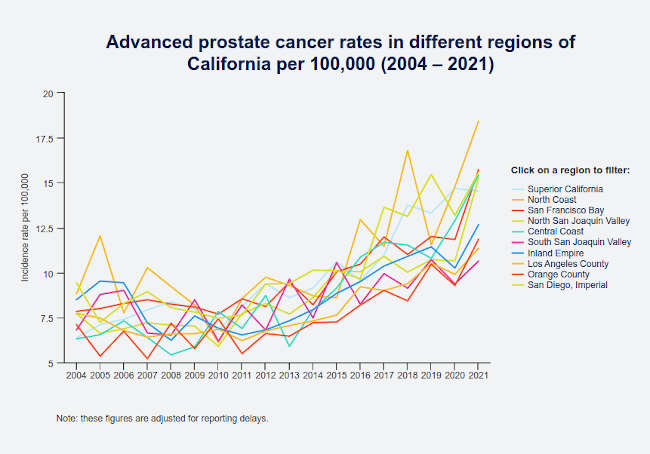
UCSF researchers analyzed data involving nearly 388,000 men with prostate cancer in California between 2004 and 2021. Almost 28,000 (7.2%) had advanced disease, which has a five-year survival rate of just 37%. During the study timeframe, there were 58,754 deaths from prostate cancer.

Investigators looked at 10 regions spanning the state to see if rates in certain areas were increasing faster or slower.

They found that serious disease, which had been stable or dropping until 2010, grew 6.7% a year from 2011 to 2021. By contrast, national rates grew by 4.5% a year from 2011 to 2019. The lowest annual increase was in the Southern San Joaquin Valley (2.3%), the highest was in the Central Coast (9.1%).

Prostate cancer mortality dropped by 2.6% a year between 2004 and 2012; but after that, it plateaued in 7 out of 10 regions in the state. Mortality was highest in the Inland Empire followed by San Diego-Imperial and North Coast. It was lowest in the San Francisco Bay Area.

“It’s important to continue monitoring prostate cancer trends both in California and nationally as we learn more about the impact of screening guidelines on different populations,” said senior author Scarlett L. Gomez, PhD, MPH, UCSF professor in the Department of Epidemiology & Biostatistics.

Additional authors: Meg A. McKinley, MPH; Samuel L. Washington III, MD, MAS; Matthew R. Cooperberg, MD, MPH; Stacey A. Kenfield, ScD; and Iona Cheng, PhD, all with UCSF.

Funding: California Department of Public Health; Centers for Disease Control and Prevention’s National Program of Cancer Registries (1NU58DP007156); the National Cancer Institute’s Surveillance, Epidemiology and End Results Program (HHSN2612018000321, HHSN2612018000151, HHSN2612018000091).

Elizabeth Fernandez writes for the University of California at San Francisco.

Lakeport City Council bans loitering near public restrooms

LAKEPORT, Calif. — The Lakeport City Council on Tuesday night unanimously and swiftly passed a new ordinance proposed by the police department to curb “loitering” in and about public restrooms.

The new rule would prohibit individuals from loitering within 15 feet of public restrooms and intentionally blocking the entrances and exits.

Offenders ordered to leave for loitering by a peace officer would be barred from returning for 72 hours.

The ordinance exempts any person whose conduct arises out of a medical emergency.

For the Lakeport Police Department, it’s an added tool in their toolbox in response to a rise in loitering behavior at public restrooms.

Over the past 18 months, the police department “through officer contacts noticed that there was a significant increase in the number of people loitering around the entrances and within the restrooms,” said Police Chief Dale Stoebe, who submitted the proposal.

The purpose of the new ordinance was “for the sake of enhancing public safety in the community,” he added.

With just one short public comment, and no council comment or questions, the council voted all in favor to approve the ordinance. The process took less than four minutes.

Four weeks ago, at its Jan. 21 meeting, the City Council conducted its first public hearing for the ordinance, during which it was slightly challenged and received some council discussion.

At that first hearing, Lakeport resident Danny Wind spoke against the ordinance, suggesting that it was about arresting homeless people.

Lakeport Police Officers’ Association President Todd Freitas disagreed in comments he offered during public comment.

Freitas said the ordinance was not targeting the homeless and it was just a warning tool that a police officer could use to ask offenders to leave the public restroom.

Chief Stoebe: More instances, more aggressive encounters

After the meeting, Lake County News sent a text message to Stoebe, inquiring about police data on public restroom loitering, such as the annual increase in the number of cases.

Stoebe replied that the department doesn't keep statistics on that. “It would be very hard to establish a number,” he said in a reply text message.

But Stoebe shared his personal counts for the past 18 months.

“I have personally been to 5 such calls when I don’t think I went to five in the ten years prior (and I worked many more patrol shifts in that 10 year period). Also, those instances have been far more aggressive,” Stoebe wrote.

He gave an example about one of his five encounters: “An apparent biological male was sitting in and completely blocking the entrance to the women’s restroom and only moved after several requests made by law enforcement. This male was suspected of having a behavioral health issue.”

Stoebe’s staff report for the council meeting noted that current local code does not have “an enforceable section to regulate the described conduct,” while related state laws are only “enforceable when a sexual gratification component can be established.”

The new ordinance allows officers to address problematic behavior without imposing fines that could worsen the “financial struggles of unhoused or underprivileged community members,” Stoebe said in the text message.

Email staff reporter Lingzi Chen at This email address is being protected from spambots. You need JavaScript enabled to view it.. 

Authorities investigate nighttime break-ins and vandalisms in Lucerne

LUCERNE, Calif. — The Lake County Sheriff’s Office is investigating a series of nighttime vandalisms and attempted vehicle burglaries in a Lucerne neighborhood.

The incidents occurred overnight Sunday and early Monday, according to reports from residents as well as video footage they posted online.

The neighborhood that was hit is located in Lucerne’s “second riviera” and included homes on and around Plaza Terrace.

Residents reported vehicles being damaged and broken into and smashed mailboxes.

Footage showed what appeared to be two males carrying skateboards who were walking through the neighborhood, trying vehicle doors. There also were reports of two young females having accompanied them.

Sheriff’s public information officer Lauren Berlinn said the agency had received reports about the incidents and were working with about five different victims.

“At this time, it appears to have been juveniles,” said Berlinn. “We are actively investigating and working with neighbors who have provided some video surveillance that may help identify the parties responsible.”

Berlinn said Deputy Marcos De la Torre is working the cases.

Deputy De la Torre asks that anyone with information email him at This email address is being protected from spambots. You need JavaScript enabled to view it..

Email Elizabeth Larson at This email address is being protected from spambots. You need JavaScript enabled to view it.. Follow her on Twitter, @ERLarson, and on Bluesky, @erlarson.bsky.social. Find Lake County News on the following platforms: Facebook, @LakeCoNews; X, @LakeCoNews; Threads, @lakeconews, and on Bluesky, @lakeconews.bsky.social.

Senators demand answers about Elon Musk and DOGE’s access to disaster survivors’ personal data

Senators: “When disaster strikes, Americans should have confidence the government will safeguard their data, regardless of the Administration at the helm.”


U.S. Senators Alex Padilla (D-Calif.) and Peter Welch (D-Vt.) demanded answers from the Federal Emergency Management Agency (FEMA) after Elon Musk’s Department of Government Efficiency (DOGE) reportedly accessed sensitive personal data of disaster survivors.

Senators Padilla and Welch led 10 of their colleagues from disaster-impacted states in sounding the alarm on DOGE’s potential security breach.

This breach is particularly concerning as Californians request federal disaster assistance following the devastating Southern California fires last month.

The senators also requested more information on the procedures FEMA follows to protect data from misuse, and questioned whether DOGE’s unaccountable agents were in compliance with federal law.

“In order to register for federal disaster assistance and receive help rebuilding their communities, our constituents have provided their personally identifiable information to FEMA. They did not do so with the expectation that their sensitive information would be turned over to unvetted, unaccountable DOGE agents,” wrote the senators.

“When disaster strikes, Americans should have confidence the government will safeguard their data, regardless of the Administration at the helm,” continued the senators. “Reports indicate you have breached that trust—perhaps in violation of federal privacy law.”

In their letter, the senators also expressed that while Congress must better equip FEMA and communities with the tools needed to cut through red tape and quickly assist disaster victims, these reforms “do not require, or come close to justifying, the invasive measures DOGE has reportedly undertaken.”

In addition to Senators Padilla and Welch, Senators Richard Blumenthal (D-Conn.), Martin Heinrich (D-N.M.), Mazie Hirono (D-Hawaii), Amy Klobuchar (D-Minn.), Edward J. Markey (D-Mass.), Jeff Merkley (D-Ore.), Bernie Sanders (I-Vt.), Adam Schiff (D-Calif.), Chris Van Hollen (D-Md.), and Ron Wyden (D-Ore.) also signed the letter.

The full text of the letter is below.

Dear Mr. Hamilton,

We write with serious concern about reports that Elon Musk’s “Department of Government Efficiency” (DOGE) has obtained access to sensitive information at the Federal Emergency Management Agency (FEMA), including the personal data of thousands of disaster victims.

The United States has suffered from a growing number of natural disasters over the past several years—from severe flooding in Vermont, Minnesota, and Connecticut and hurricanes in North Carolina, to catastrophic wildfires in Hawai’i, California, New Mexico, and Oregon. In order to register for federal disaster assistance and receive help rebuilding their communities, our constituents have provided their personally identifiable information to FEMA. They did not do so with the expectation that their sensitive information would be turned over to unvetted, unaccountable DOGE agents.

Mr. Musk has stated his desire to eliminate waste at FEMA. We agree the country must examine and thoughtfully consider reforms to the operation of FEMA. Our constituents have experienced first-hand the frustrating bureaucracies that hinder the federal disaster recovery process. Congress must take steps to equip FEMA and communities with the tools needed to better assist disaster victims after the storm has passed. We stand ready to work with anyone willing to fix it.

But such reforms do not require, or come close to justifying, the invasive measures DOGE has reportedly undertaken.

When disaster strikes, Americans should have confidence the government will safeguard their data, regardless of the Administration at the helm. Reports indicate you have breached that trust —perhaps in violation of federal privacy law.

To understand the scope of that breach and the extent of your compliance with federal law, we request responses to the following items by no later than February 28, 2025:

1. Please provide a complete list of individuals authorized by FEMA to access disaster victims’ data and records during the period between January 20, 2025, and February 14, 2025. Please indicate whether those individuals are employees of FEMA, the White House, DOGE, or another federal agency and specify the agency. If the individuals are not federal employees, please indicate that in your response.

2. What are the individuals specified above authorized to do with disaster victims’ data and records, and what types of data were obtained?

3. What procedures does FEMA follow to protect disaster victims’ data from misuse? Are DOGE-affiliated individuals required to follow those procedures?

4. How many Americans’ personally identifiable data has been accessed by DOGE affiliated individuals? What vetting did these individuals undergo prior to their being granted access to FEMA systems?

Why community pharmacies are closing – and what to do if your neighborhood location shutters


Neighborhood pharmacies are rapidly shuttering.

Not long ago, Walgreens, one of the nation’s biggest pharmacy chains, announced plans to close 1,200 stores over the next three years. That’s part of a larger trend that has seen nearly 7,000 pharmacy locations close since 2019, with more expected in the coming years.

Many community pharmacies are struggling to stay open due to an overburdened workforce, shrinking reimbursement rates for prescription drugs and limited opportunities to bill insurers for services beyond dispensing medications.

As trained pharmacists who advocate for and take care of patients in community settings, we’ve witnessed this decline firsthand. The loss of local pharmacies threatens individual and community access to medications, pharmacist expertise and essential public health resources.

The changing role of pharmacies

Community pharmacies – which include independently owned, corporate-chain and other retail pharmacies in neighborhood settings – have changed a lot over the past decades. What once were simple medication pickup points have evolved into hubs for health and wellness. Beyond dispensing prescriptions, pharmacists today provide vaccinations, testing and treatment for infectious diseases, access to hormonal birth control and other clinical services they’re empowered to provide by federal and state laws.

Given their importance, then, why have so many community pharmacies been closing?

There are many reasons, but the most important is reduced reimbursement for prescription drugs. Most community pharmacies operate under a business model centered on dispensing medications that relies on insurer reimbursements and cash payments from patients. Minor revenue comes from front-end sales of over-the-counter products and other items.

However, pharmacy benefit managers – companies that manage prescription drug benefits for insurers and employers – have aggressively cut reimbursement rates in an effort to lower drug costs in recent years. As a result, pharmacists often have to dispense prescription drugs at very low margins or even at a loss. In some cases, pharmacists are forced to transfer prescriptions to other pharmacies willing to absorb the financial hit. Other times, pharmacists choose not to stock these drugs at all.

And it’s not just mom-and-pop operations feeling the pinch. Over the past four years, the three largest pharmacy chains have announced plans to close hundreds of stores nationwide. CVS kicked off the trend in 2021 by announcing plans to close 900 pharmacy locations. In late 2023, Rite Aid said that thousands of its stores would be at risk for closure due to bankruptcy. And late in 2024, Walgreens announced its plans to close 1,200 stores over the next three years.

To make matters worse, pharmacists, like many other health care providers, have been facing burnout due to high stress and the lasting effects of the COVID-19 pandemic. At the same time, pharmacy school enrollment has declined, worsening the workforce shortage just as an impending shortfall of primary care physicians looms.

Why pharmacy accessibility matters

The increasing closure of community pharmacies has far-reaching consequences for millions of Americans. That’s because neighborhood pharmacies are one of the most accessible health care locations in the country, with an estimated 90% of Americans living within 5 miles of one.

However, research shows that “pharmacy deserts” are more common in marginalized communities, where people need accessible health care the most. For example, people who live in pharmacy deserts are also more likely to have a disability that makes it hard or impossible to walk. Many of these areas are also classified as medically underserved areas or health professional shortage areas. As pharmacy closures accelerate, America’s health disparities could get even worse.

So if your neighborhood pharmacy closes, what should you do?

While convenience and location matter, you might want to consider other factors that can help you meet your health care needs. For example, some pharmacies have staff who speak your native language, independent pharmacy business owners may be active in your community, and many locations offer over-the-counter products like hormonal contraception, the overdose-reversal drug naloxone and hearing aids.

You may also consider locations – especially corporate-owned pharmacies – that also offer urgent care or primary care services. In addition, most pharmacies offer vaccinations, and some offer test-and-treat services for infectious diseases, diabetes education and help with quitting smoking.

What to ask if your pharmacy closes

If your preferred pharmacy closes and you need to find another one, keep the following questions in mind:

• What will happen to your old prescriptions? When a pharmacy closes, another pharmacy may buy its prescriptions. Ask your pharmacist if your prescriptions will be automatically transferred to a nearby pharmacy, and when this will occur.

• What’s the staffing situation like at other pharmacies? This is an important factor in choosing a new pharmacy. What are the wait times? Can the team accommodate special situations like emergency refills or early refills before vacations? Does the pharmacist have a relationship with your primary care physician and your other prescribers?

• Which pharmacies accept your insurance? A simple call to your insurer can help you understand where your prescriptions are covered at the lowest cost. And if you take a medication that’s not covered by insurance, or if you’re uninsured, you should ask if the pharmacy can help you by offering member pricing or manufacturer coupons and discounts.

• What are your accessibility needs? Pharmacies often offer services to make your care more accessible and convenient. These may include medication packaging services, drive-thru windows and home delivery. And if you’re considering switching to a mail-order pharmacy, you should ask if it has a pharmacist to answer questions by phone or during telehealth visits.

Remember that it’s best to have all your prescriptions filled at the same pharmacy chain or location so that your pharmacist can perform a safety check with your complete medication list. Drug interactions can be dangerous.

Community pharmacies have been staples of neighborhoods for more than a century. Unfortunately, current trends in pharmacy closures pose real threats to public health. We hope lawmakers address the underlying systemic issues so more Americans don’t lose access to their medications, health services and pharmacists.The Conversation

Lucas A. Berenbrok, Associate Professor of Pharmacy and Therapeutics, University of Pittsburgh; Michael Murphy, Assistant Professor of Pharmacy Practice and Science, The Ohio State University, and Sophia Herbert, Assistant Professor of Pharmacy, University of Pittsburgh

This article is republished from The Conversation under a Creative Commons license. Read the original article.
Thompson announces 2025 Lake County Public Safety Heroes

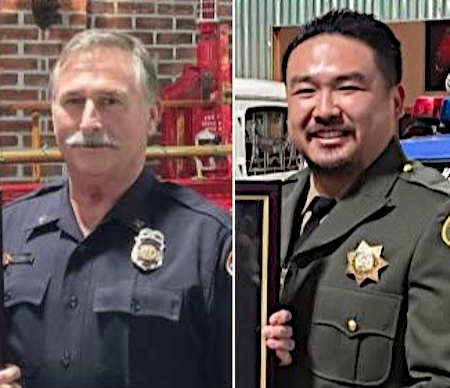
From left, Capt. Bret Butler and Det. Michael Nakahara. Courtesy photos.

On Monday, Rep. Mike Thompson (CA-04) announced Lake County Sheriff’s Det. Michael Nakahara and Fire Capt. Bret Butler as the 2025 Lake County Public Safety Heroes.

Every year, Thompson honors first responders who have gone above and beyond the call of duty in our community.

“Our first responders go above and beyond to protect and serve the communities they call home. I am proud to recognize many of the public safety heroes in our district who go the extra mile to keep us safe,” said Thompson. “Detective Michael Nakahara displayed great courage, especially during a recent homicide investigation involving the first known death from fentanyl in the county of Lake. I am also proud to recognize Fire Captain Bret Butler for his leadership in his firehouse and as a Federal Excess Equipment Program Coordinator with CalFire. Detective Nakahara and Fire Captain Butler are both exemplary public servants who are well deserving of this recognition.”

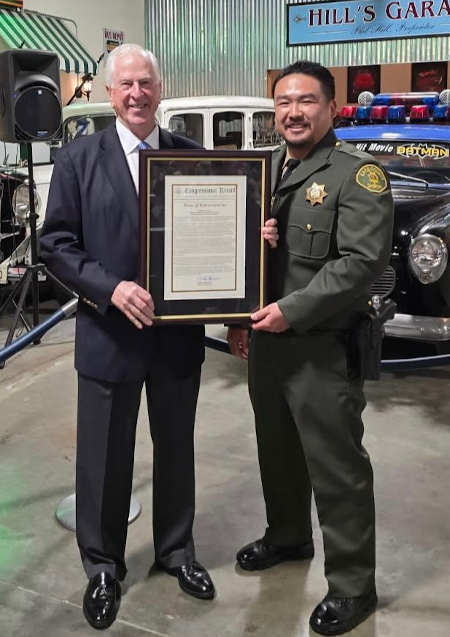
Congressman Mike Thompson with 2025 Lake County Public Safety Hero Det. Michael Nakahara of the Lake County Sheriff’s Office on Monday, Feb. 17, 2025, in Vallejo, California. Photo courtesy of Congressman Thompson’s office.

Det. Michael Nakahara

Det. Michael Nakahara graduated from the San Joaquin Delta College POST Academy in 2021 and joined the Lake County Sheriff’s Office later that year.

In 2024 he was promoted to the Major Crimes Unit, where he was assigned an investigation regarding the tragic death of a 17-year-old from fentanyl.

Despite this being his first major case, Nakahara worked tirelessly to gather evidence and conduct interviews. His work led to the arrest and charging of a suspect who is now set to face trial next month.

Det. Nakahara is also known for his contributions to our community outside of the sheriff’s office, notably as an assistant coach for the Youth Varsity Kelseyville Chiefs.

“His tenacity, dedication, and resolve make our community safer,” Thompson said in his announcement.

Congressman Mike Thompson with 2025 Lake County Public Safety Hero Capt. Bret Butler of the Lake Pillsbury Fire Protection District on Monday, Feb. 17, 2025, in Vallejo, California. Photo courtesy of Congressman Thompson’s office.

Capt. Bret Butler

Capt. Bret Butler began his career as a firefighter before rising to the rank of captain. He is locally recognized for his involvement in the Rice Fork community and thought of by many as the unofficial “mayor.”

Most notably, Capt. Butler is the leader of the Lake Pillsbury Fire Protection District. He is responsible for many important local projects, including procuring and installing mile marker signs along popular rural roads, facilitating engines and ambulance donations, and personally installing a solar system on Fire Station 2.

“We thank Captain Butler for his leadership, selflessness and love of our community,” Thompson’s announcement said.

Thompson’s office said, “Det. Nakahara and Capt. Bret Butler’s actions are the epitome of what it means to be public servants. They, along with many other public safety officers and first responders, keep our communities and citizens safe. Congressman Thompson is honored to recognize them”

The full list of 2025 Public Safety Heroes for the Fourth Congressional district includes:

• Det. Michael Nakahara, Law Enforcement Public Safety Hero, Lake County;
• Capt. Bret Butler, Fire/EMS Public Safety Hero, Lake County;
• Sgt. Erik Olson, Law Enforcement Public Safety Hero, Napa County;
• Station Lead Roger Lutz, Fire/EMS Public Safety Hero, Napa County;
• Officer Matthew Bowen, Law Enforcement Public Safety Hero, Solano County;
• EMT Michael Robinson, Fire/EMS Public Safety Hero, Solano County;
• Officer Murph, Canine Public Safety Hero, Solano County;
• Detective Kelsea Nelson, Law Enforcement Public Safety Hero, Sonoma County;
• inRESPONSE Program, Fire/EMS Public Safety Hero, Sonoma County;
• Deputy Reiko Matsumura, Law Enforcement Public Safety Hero, Yolo County;
• Battalion Chief Emily Lo, Fire/EMS Public Safety Hero, Yolo County.

Thompson represents California’s 4th Congressional District, which includes all or part of Lake, Napa, Solano, Sonoma and Yolo counties.
  • 250
  • 251
  • 252
  • 253
  • 254
  • 255
  • 256
  • 257
  • 258
  • 259

Community

  • Lake County Wine Alliance offers sponsor update; beneficiary applications open 

  • Mendocino National Forest announces seasonal hiring for upcoming field season

Public Safety

  • Lakeport Police logs: Thursday, Jan. 15

  • Lakeport Police logs: Wednesday, Jan. 14

Education

  • Woodland Community College receives maximum eight-year reaffirmation of accreditation from ACCJC

  • SNHU announces Fall 2025 President's List

Health

  • California ranks 24th in America’s Health Rankings Annual Report from United Health Foundation

  • Healthy blood donors especially vital during active flu season

Business

  • Two Lake County Mediacom employees earn company’s top service awards

  • Redwood Credit Union launches holiday gift and porch-to-pantry food drives

Obituaries

  • Rufino ‘Ray’ Pato

  • Patty Lee Smith

Opinion & Letters

  • The benefits of music for students

  • How to ease the burden of high electric bills

Veterans

  • CalVet and CSU Long Beach team up to improve data collection related to veteran suicides

  • A ‘Big Step Forward’ for Gulf War Veterans

Recreation

  • Wet weather trail closure in effect on Upper Lake Ranger District

  • Mendocino National Forest seeking public input on OHV grant applications

  • State Parks announces 2026 Anderson Marsh nature walk schedule 

  • BLM lifts seasonal fire restrictions in central California

Religion

  • Kelseyville Presbyterian to host Ash Wednesday service and Lenten dinner Feb. 18

  • Kelseyville Presbyterian Church to hold ‘Longest Night’ service Dec. 21

Arts & Life

  • Auditions announced for original musical ‘Even In Shadow’ set for March 21 and 28

  • ‘The Rip’ action heist; ‘Steal’ grounded in a crime thriller

Government & Politics

  • Lake County Democrats issue endorsements in local races for the June California Primary

  • County negotiates money-saving power purchase agreement

Legals

  • March 3 hearing on ordinance amending code for commercial cannabis uses

  • Feb. 12 public hearing on resolution to establish standards for agricultural roads

How to resolve AdBlock issue?
Refresh this page