How to resolve AdBlock issue?
News
NORTHERN CALIFORNIA – On Tuesday, Gov. Jerry Brown, Senate President pro Tempore Kevin de León and Assembly Speaker Anthony Rendon announced that they have reached an agreement on the 2017-18 State Budget.
The budget includes a general fund totaling $127 billion, state officials reported.
"This budget keeps California on a sound fiscal path and continues to support struggling families and make investments in our schools. We've come together on this balanced and progressive budget and I'm confident that we can do the same to extend our critical cap-and-trade program," said Gov. Brown.
"This state budget will keep California strong, protect our fiscal stability and empower our communities at a time when Washington is determined to undermine them. This budget makes historic investments in health care, education, and childcare, and lays down a multi-billion dollar investment to start fixing our roads and infrastructure. This is how government works - by the people and for the people," said de León.
"This is a budget that does things for people, not to people. It is a combination of fiscal responsibility, including the biggest reserves in state history, major spending improvements to fight poverty and improve education, and significant reforms stemming from our strong oversight of the Board of Equalization and the University of California," said Rendon.
Veteran lawmaker Senator Jim Nielsen (R-Tehama), vice chairman of the Senate Budget Committee, said that conspicuously absent from the budget deal are projects to improve and upgrade deteriorated and compromised water infrastructure including Oroville Dam, and river and bypass levees.
“This neglect puts people and properties at great risk,” Nielsen said.
Nielsen also criticized the budget package for making changes to policies not involved with budgeting – such as change to the state’s recall law – and said that it “takes gas and car tax money that is supposed to go to roads, highways and bridges to pay for recruiting lifeguards, park rangers and state park maintenance and local park operations.”
State Sen. Mike McGuire, whose district includes Lake County, said on Tuesday that he was pleased that many of the critical issues he fought for that will benefit Northern California have been included in the state’s budget.
“We have always said that we will fight hard for Northern California to get their fair share when it comes to state resources, this budget reflects that top priority,” McGuire said. “Local students will benefit from the largest boost in education funding in California history, we’re investing in medical and dental services that will expand programs for the most vulnerable, nearly $3 billion for our crumbling roads will be put to work and our rainy day fund remains strong at $8.5 billion.”
McGuire said the budget includes the largest increases in public education funding in California history. School funding has increased $4,500 per student, over the last six years. Schools will now receive $11,058 per student which is the highest the figure has been in California history.
He also lauded $2.8 billion to fix the state’s crumbling highways and local streets and roads, the increase to the Rainy Day Fund and the expansion of the Earned Income Tax Credit, which he said will benefit tens of thousands of low income workers across the North Coast and throughout California.
Other significant features of the budget include more than $460 million for physician and dental rate increases, which McGuire said will expand Medi-Cal for the state’s most vulnerable residents, and $50 million will be included for family planning services, which will be met with a 9-1 federal match, which will benefit programs such as Planned Parenthood.
McGuire said the California Senior Legislature is receiving $375,000 from the General Fund to bridge their funding gap until new legislation goes into effect for its long-term funding sustainability, allowing the CSL to continue advocating on behalf of California’s senior community.
“The bottom line: This year’s budget keeps California moving forward, but recognizes the need to protect the rainy day fund as there could be a softening of the economy ahead,” McGuire said.
The Legislature is expected to take up 16 budget bills this Thursday, June 15.
Additional budget related bills may be taken up in the coming few weeks.
The budget agreement includes the following highlights.
Maintaining fiscal prudence
Under this agreement, the state continues to plan and save for tougher budget times ahead.
The budget package adds $1.8 billion to the state's Rainy Day Fund, bringing the fund to a total of $8.5 billion in 2017-18 – 66 percent of the constitutional target.
That fund is expected to grow to $12 billion by 2021.
However, with the federal government contemplating actions that could send the state budget into turmoil – including defunding health care for millions of Californians, ending deductions for state taxes and eliminating funding for organizations like Planned Parenthood – uncertainty remains.
Supporting working families
The budget expands California's Earned Income Tax Credit to support more working families, including self-employed parents, in line with the federal EITC.
In addition, it expands income ranges to help families working up to full-time at the newly increased minimum wage benefit from the program.
The expansion makes more than one million more households eligible to claim the credit. For the 2015 tax year, almost 400,000 households claimed the credit.
Increasing money for schools
Funding for K-14 schools is expected to grow by $3.1 billion over the revised 2016-17 level to $74.5 billion in 2017-18 – an increase of $1.0 billion since January and $27.3 billion over six years, or 58 percent.
Schools would receive an additional $1.4 billion next year for the Local Control Funding Formula, which would increase the formula's implementation to 97 percent complete.
The budget also includes a total of $14.5 billion General Fund for higher education, with additional funds provided in the next year to expand capacity for California students at the state's public institutions, create guided pathways for students to earn degrees and credentials and keep the costs of attendance low for students and their families.
Additionally, it holds the University of California accountable for implementing needed reforms to its cost structure so that the system remains sustainable over the long term.
Reducing pension liabilities
The budget includes supplemental payments to the California Public Employees' Retirement System, or CalPERS, with a loan from the Surplus Money Investment Fund, a step that is expected to save the state $11 billion over the next two decades while continuing to reduce unfunded liabilities and stabilize state contribution rates.
The state will achieve these savings and reduce these liabilities by leveraging existing resources, without the cost or risk of external borrowing.
Repairing infrastructure
The budget accelerates $2.8 billion toward improving commutes, fixing roads, strengthening overpasses and bridges and building mass transit.
Medi-Cal funding
California will continue its large investments in the Medi-Cal program – including new revenue from Proposition 56 – to serve millions of people who rely on this program for health care.

CLEARLAKE OAKS, Calif. – The service of two search warrants in Clearlake Oaks on Monday morning led to the seizure of approximately 45,274 marijuana plants, 186 pounds of processed marijuana and two firearms, and resulted in six arrests.
The Sheriff’s Narcotics Unit served the warrants in the 24000 block of East State Highway 20 – in an area formerly known as the Oasis Motocross – with assistance from the County of Mendocino Marijuana Eradication Team, or COMMET, and the California National Guard Drug Task Force, the sheriff’s office reported.
Officials said four subjects were detained at a large-scale marijuana complex with both outdoor and greenhouse marijuana plants.
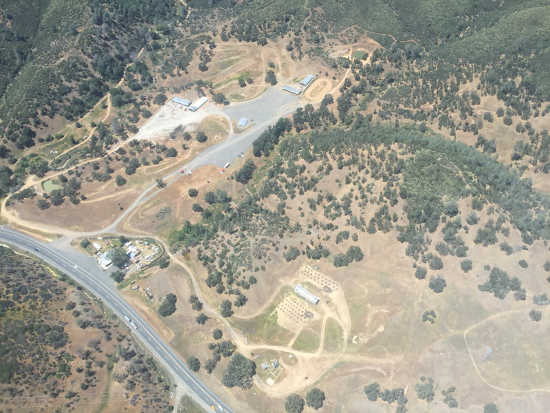
Two other subjects were detained on an adjacent land parcel where thousands of marijuana plants were being cultivated on a mountainside. Another subject was later located walking along East State Highway 20, authorities said.
The investigation led to the arrest of Jeffrey Michael Mann, 58, of Clearlake Oaks; She Ren Huang, 51, of Fremont; Xiaofeng Wang, 46, of Alhambra; Tanng Zhili, 51, of Sacramento; Martin Arellano-Carillo, 39, of Clearlake; and Severiano Carrillo-Alvarado, 29, of Santa Rosa, according to the sheriff’s report.
The sheriff’s office said that during a search of the large scale marijuana complex deputies seized two firearms, 118 approximately 1-pound bags of manicured marijuana bud and 1,883 marijuana plants. The water source for the grow site was being supplied in part by a pond with unpermitted grading.

During a search of the adjacent parcel, the sheriff’s office said detectives seized 43,052 marijuana plants growing on a mountainside, 339 marijuana plants growing near a cabin and approximately 68 pounds of processed marijuana drying inside the cabin. The water source for that grow site was being diverted from a creek with a gasoline pump to a mountain top manmade reservoir.
The Sheriff’s Narcotics Unit will continue its efforts to eradicate narcotics from the communities of Lake County and seize the suspected profits o f drug trafficking for asset forfeiture whenever possible.
Anyone with information that can assist the Narcotics Unit with this effort is encouraged to call the anonymous tip line at 707-263-3663.

MIDDLETOWN, Calif. – The Middletown Area Town Hall on Thursday heard updates on a large development project in the Guenoc Valley, got an update from the sheriff on his plans for a National Night Out event and accepted the 2017 projects list.
Community Development Director Bob Massarelli returned to the meeting this month, as he had said he would, for a monthly update on the Guenoc Valley resort development project, proposed by Lotusland Investment Holdings of San Francisco.
In describing the project to MATH at its meeting last month, Massarelli said it’s expected to be “a high-end, low-density development consisting of boutique-style hotels, space, sporting facilitates, town centers, cultural facilities and residential components.”
This month, Massarelli said that there wasn’t a lot of new information to report, as the developer has not yet submitted an application.
He said his department has been in talks with the developer about procedures and other parts of the complex project.
“We do expect things to start happening in the next month or two,” he said.
Massarelli said he is in the process of hiring two people to be assigned to managing the project, which he expects will be completed within the month.
When asked about if the project will be required to develop parks, Massarelli said yes, that there are open space and recreational requirements in the county code that call for developers to contribute to parks.
He said he expects at the end of process there will be a developer's agreement laying out what is required and how it will be paid for.
The county Web site is being updated, Massarelli reported, and he said he expects to have a place on that site for information on the project.
A company representative at the meeting confirmed to the group that the developer is still in the process of working on the application.
Massarelli said there is a lot of information needed, and many different parts to the project. “There's a lot of work being done,” he said, from recreation to transportation, water, roads and buildings.
Sheriff Brian Martin also was on hand on Thursday to speak to MATH members about his plans to hold a National Night Out event in Middletown in August.
He said the event, which will be free and open to the public, will take place from 6 to 8 p.m. Tuesday, Aug. 1, at the Calpine Visitor Center, 15500 Central Park Road.
“This is a great time to get out and meet your first responders and for us to meet you,” he said.
Martin invited people to come with questions and bring their children to meet first responders. He said other agencies and organizations also are being invited to attend, including Cal Fire, the Boy Scouts and Girls Scouts.
The event also will be the kickoff for the sheriff’s office’s pink patch sales. Martin said he’s authorized deputies to wear pink versions of their uniform patches to bring attention to breast cancer. Proceeds from sales of the patches will go toward the Sutter Foundation’s cancer coach position.
Anyone who would like to donate to the event is encouraged to email
The other main agenda item on Thursday was the consideration and acceptance of a final 2017 MATH project list.
The final approved list includes five projects: A Valley fire memorial, an arch at Middletown Square Park, painting town curbs, getting crosswalks that have push buttons that activate flashing lights, and flashing lights for traffic calming at both ends of town.
In other business on Thursday, MATH Chair Claude Brown explained the process for getting on the agenda and for asking for MATH to represent certain views at public meetings, and Vice Chair Linda Diehl-Darms offered suggested guidelines for interactions at the meetings to ensure civility.
The group also will bring back an action item in July on creating a Facebook page, and held over a discussion to next month on a proposed Valley fire memorial.
Email Elizabeth Larson at
KELSEYVILLE, Calif. – The community is invited to join the Kelseyville Presbyterian Church in celebrating the church’s 145th anniversary this weekend.
Kelseyville Presbyterian Church has been a landmark in the community since its dedication in June of 1872.
The congregation is inviting the community to a Sail-a-Bration of those years on Saturday, June 17, and Sunday, June 18.
The festivities begin at 2 p.m. on Saturday and continue until 6 p.m., with a free lunch catered by FFA, beginning at 2:30 p.m.
There will be live music provided by different musical groups.
At 3:30 p.m., there will be an old-time hymn sing in the Sanctuary, with songs of the past.
Come visit and look at all the old photos, and visit the old church which is still on the premises.
Sunday morning Worship begins at 10 a.m. Join them as they celebrate 145 years with music, Scripture and a potluck lunch following.
These events are open to the public.
It is Kelseyville Presbyterian's way of thanking those who have helped them sail in this community for the past 145 years, and those who will help them sail into the future.
LAKEPORT, Calif. – Outdoor columnist Terry Knight will speak about the history of Clear Lake and Mount Konocti at the Lake County Library’s Know Lake County lecture on Saturday, June 17.
The free program will be presented beginning at 2 p.m. at the county library’s Lakeport branch at 1425 N. High St.
Clear Lake is the largest natural lake entirely within California. Its sixty-eight square miles are home to abundant fish and bird populations.
Lakes have existed on this spot for about two and a half million years, making Clear Lake a candidate for the oldest lake in North America.
Mount Konocti, sitting on the shores of Clear Lake in the center of Lake County, is a volcano that erupted last about 11,000 years ago.
Konocti stands out against the skyline and is a distinctive feature of the Lake County landscape, visible from miles around.
Terry Knight shares his knowledge of Lake County’s outdoor life in his Outdoors column in the Lake County Record-Bee, and in a wide array of other publications. The biology of the outdoors is his favorite part of nature.
Knight was nominated to the California Outdoors Hall of Fame in 2016.
The Know Lake County lectures feature speakers from a wide array of organizations and disciplines, each representing some aspect of Lake County.
The Lake County Library is on the Internet at http://library.lakecountyca.gov and Facebook at www.Facebook.com/LakeCountyLibrary .
Jan Cook is a technician with the Lake County Library.
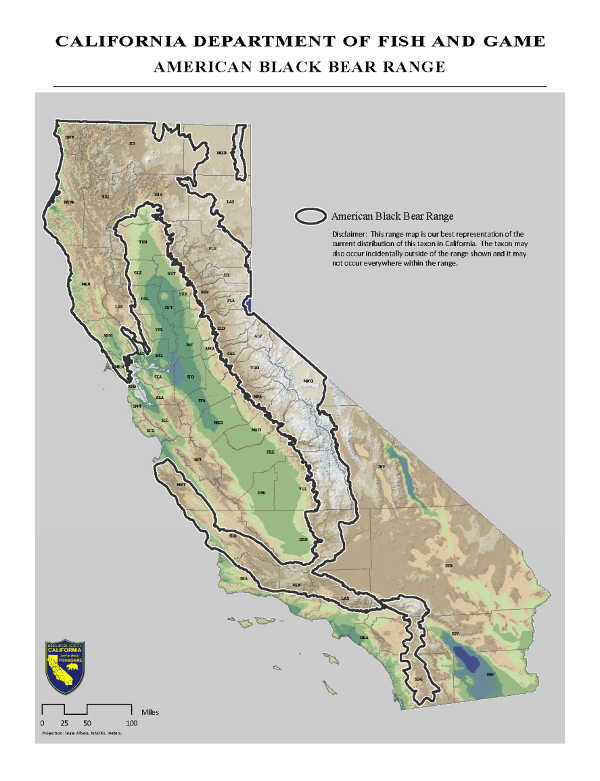
As spring and summer beckon people outdoors, California's black bears are also active after a long winter hibernation.
The California Department of Fish and Wildlife, or CDFW, is highlighting the native black bear – one of most adaptable animals in the state – and encourages citizens to help reduce nuisance encounters with this iconic mammal by being "bear aware," which means taking responsible actions that promote responsible behavior while living and recreating in bear country.
California has a healthy population of black bears that typically prefer remote mountainous areas. But as more people frequent parks and wilderness areas and choose to live in or near bear habitat, bears become more accustomed to the presence of people and as a result display less shy and elusive behavior.
"Over the years, we have seen bear behavior patterns change significantly,” said Marc Kenyon, manager of CDFW's human/wildlife conflict program. "Each spring and summer we receive hundreds of calls from the public reporting anything from bears raiding food in campgrounds to bears taking dips in residential swimming pools. Bears have also been known to break into homes and cabins and steal food right off of the kitchen counter - sometimes while the occupants are home."
Kenyon notes that bears have a highly specialized sense of smell. According to Kenyon, a bear can smell bacon frying from about three miles away, given the right conditions.
An animal that is specialized at finding food sources coupled with greater numbers of people at its doorstep, can create a storm of human/wildlife conflicts. However, nuisance-bear behavior may be significantly reduced – or even eliminated – if people change their behavior.
Tips for bear-proofing your home, rental or timeshare
In settled areas close to bear habitat, bears may venture in searching for food. The best defense against bear break-ins and bears in your yard is to eliminate attractants to your property by following these tips:
• Purchase and properly use a bear-proof garbage container.
• Wait to put trash out until the morning of collection day.
• Do not leave trash, groceries or pet food in your car.
• Keep garbage cans clean and deodorize them with bleach or ammonia.
• Keep barbecue grills clean and stored in a garage or shed when not in use.
• Only provide bird feeders during November through March and make them inaccessible to bears.
• Do not leave any scented products outside, even non-food items such as suntan lotion, insect repellent, soap or candles.
• Keep doors and windows closed and locked.
• Consider installing motion-detector alarms and/or electric fencing.
• Harvest fruit off trees as soon as it is ripe, and promptly collect fruit that falls.
• Bring pets in at night. Provide safe and secure quarters for livestock at night.
• Consider composting bins as opposed to open composting.
• Securely block access to potential hibernation sites such as crawl spaces under decks and buildings.
• Do not spray bear spray around property - when it dries, it can serve as an attractant.
• Do not feed deer or other wildlife - not only can it be unlawful, it will attract bears to your property.
Tips for bear-proofing your campsite
Maintaining a clean campsite is the responsible and safe thing to do when visiting bear country. Here are a few tips for bear proofing your campsite:
• Haul garbage out of camp regularly – check with camp host or other camp personnel about safe garbage storage. Use bear lockers if available.
• Store food (including pet food) and toiletries in bear-proof containers or in an airtight container in the trunk of your vehicle if bear lockers are not available. In some areas, food storage in the trunk is not advisable. Check with camp or park personnel.
• Clean dishes and store food and garbage immediately after meals.
• Clean your grill after each use.
• Never keep food or toiletries in your tent.
• Change out of clothes you cooked in before going to bed.
• Do not clean fish in camp.
• Do not leave pets unattended in camp or sleeping outside.
Tips for hiking in bear country
• Bears may react defensively if your presence is not known - make noise while hiking. Talk loudly or whistle.
• If possible, travel with a group of people.
• Avoid thick brush and walk with the wind at your back so your scent is ahead of you.
• Watch for bear sign along trails - scat, tracks and stripped bark off trees.
• Avoid sites where dead animal carcasses are observed.
• If you see a bear, avoid it and give it the opportunity to avoid you.
• Leash dogs while hiking in bear country - dogs can surprise and aggravate bears - bringing the bear back to you when the dog flees from the bear.
Facts about black bears
• Black bears are the only bear species found in California. They range in color from blonde to black, with cinnamon brown being the most common.
• There are an estimated 35,000 bears in California.
• Males are much larger than females and can weigh up to 500 pounds, although average weight is about 300 pounds.
• Black bears can sprint up to 35 mph and they are strong swimmers and great tree climbers.
• Bears are omnivorous eating foods ranging from berries, plants, nuts and roots to honey, honeycomb, insects, larvae, carrion and small mammals.
• Bears typically mate in June and July.
• As winter approaches, bears will forage for food up to 20 hours a day, storing enough fat to sustain them through hibernation. Bears often hibernate in large hollow trees 40 to 60 feet off the ground.
• Bear cubs are born in winter dens in January and February and are hairless, deaf and blind.
• Black bear attacks are rare in California and typically are defensive in nature because the bear is surprised or defending cubs; however, bears accustomed to people may become too bold and act aggressively.
• Female black bears will often send cubs up a tree and leave the area in response to a perceived threat. Do not remain in the area - when you leave, she will come back for her cubs.
For more information about black bear biology, please visit www.wildlife.ca.gov/Conservation/Mammals/Black-Bear/Biology .
For information about bear-proof containers and where to buy them, please visit www.wildlife.ca.gov/Keep-Me-Wild/Products .