How to resolve AdBlock issue?
News
The moon hanging in the night sky sent Robert Hurt’s mind into deep space – to a region some 40 light years away, in fact, where seven Earth-sized planets crowded close to a dim, red sun.
Hurt, a visualization scientist at Caltech’s IPAC center, was walking outside his home in Mar Vista, California, shortly after he learned of the discovery of these rocky worlds around a star called TRAPPIST-1 and got the assignment to visualize them. The planets had been revealed by NASA’s Spitzer Space Telescope and ground-based observatories.
“I just stopped dead in my tracks, and I just stared at it,” Hurt said in an interview. “I was imagining that could be, not our moon, but the next planet over – what it would be like to be in a system where you could look up and see continental features on the next planet.”
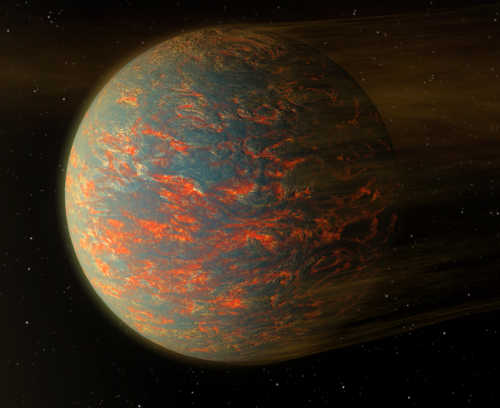
So began a kind of inspirational avalanche. Hurt and his colleague, multimedia producer Tim Pyle, developed a series of arresting, photorealistic images of what the new system’s tightly packed planets might look like – so tightly packed that they would loom large in each other’s skies. Their visions of the TRAPPIST-1 system would appear in leading news outlets around the world.
Artists like Hurt and Pyle, who render vibrant visualizations based on data from Spitzer and other missions, are hybrids of sorts, blending expertise in both science and art.
From squiggles on charts and columns of numbers, they conjure red, blue and green worlds, with half-frozen oceans or bubbling lava. Or they transport us to the surface of a world with a red-orange sun fixed in place, and a sky full of planetary companions.
“For the public, the value of this is not just giving them a picture of something somebody made up,” said Douglas Hudgins, a program scientist for the Exoplanet Exploration Program at NASA Headquarters in Washington. “These are real, educated guesses of how something might look to human beings. An image is worth a thousand words.”
Hurt says he and Pyle are building on the work of artistic pioneers.
“There’s actually a long history and tradition for space art and science-based illustration,” he said. “If you trace its roots back to the artist Chesley Bonestell (famous in the 1950s and ’60s), he really was the artist who got this idea: Let’s go and imagine what the planets in our solar system might actually look like if you were, say, on Jupiter’s moon, Io. How big would Jupiter appear in the sky, and what angle would we be viewing it from?”
To begin work on their visualizations, Hurt divided up the seven TRAPPIST-1 planets with Pyle, who shares an office with him at Caltech’s IPAC center in Pasadena, California.
Hurt holds a Ph.D. in astrophysics, and has worked at the center since he was a post-doctoral researcher in 1996 – when astronomical art was just his hobby.
“They created a job for me,” he said.
Pyle, whose background is in Hollywood special effects, joined Hurt in 2004.
Hurt turns to Pyle for artistic inspiration, while Pyle relies on Hurt to check his science.
“Robert and I have our desks right next to each other, so we’re constantly giving each other feedback,” Pyle said. “We’re each upping each other’s game, I think.”
The TRAPPIST-1 worlds offered both of them a unique challenge. The two already had a reputation for illustrating many exoplanets – planets around stars beyond our own -- but never seven Earth-sized worlds in a single system. The planets cluster so close to their star that a “year” on each of them -- the time they take to complete a single orbit -- can be numbered in Earth days.

And like the overwhelming majority of the thousands of exoplanets found so far, they were detected using indirect means. No telescope exists today that is powerful enough to photograph them.
Real science informed their artistic vision. Using data from the telescopes that reveal each planet’s diameter as well as its “weight,” or mass, and known stellar physics to determine the amount of light each planet would receive, the artists went to work.
Both consulted closely with the planets' discovery team as they planned for a NASA announcement to coincide with a report in the journal Nature.
“When we’re doing these artist’s concepts, we’re never saying, ‘This is what these planets actually look like,’” Pyle said. “We’re doing plausible illustrations of what they could look like, based on what we know so far. Having this wide range of seven planets actually let us illustrate almost the whole breadth of what would be plausible. This was going to be this incredible interstellar laboratory for what could happen on an Earth-sized planet.”
For TRAPPIST-1b, Pyle took Jupiter’s volcanic moon, Io, as an inspiration, based on suggestions from the science team. For the outermost world, TRAPPIST-1h, he chose two other Jovian moons, the ice-encased Ganymede and Europa.
After talking to the scientists, Hurt portrayed TRAPPIST-1c as dry and rocky. But because all seven planets are probably tidally locked, forever presenting one face to their star and the other to the cosmos, he placed an ice cap on the dark side.
TRAPPIST-1d was one of three that fall inside the “habitable zone” of the star, or the right distance away from it to allow possible liquid water on the surface.
“The researchers told us they would like to see it portrayed as something they called an ‘eyeball world,’” Hurt said. “You have a dry, hot side that’s facing the star and an ice cap on the back side. But somewhere in between, you have (a zone) where the ice could melt and be sustained as liquid water.”
At this point, Hurt said, art intervened. The scientists rejected his first version of the planet, which showed liquid water intruding far into the “dayside” of TRAPPIST-1d. They argued that the water would most likely be found well within the planet’s dark half.
“Then I kind of pushed back, and said, ‘If it’s on the dark side, no one can look at it and understand we’re saying there’s water there,’” Hurt said. They struck a compromise: more water toward the dayside than the science team might expect, but a better visual representation of the science.
The same push and pull between science and art extends to other forms of astronomical visualization, whether it’s a Valentine's Day cartoon of a star pulsing like a heart in time with its planet, or materials for the blockbuster announcement of the first detection of gravitational waves by the Laser Interferometer Gravitational-Wave Observatory in February 2016. They've also illustrated asteroids, neutron stars, pulsars and brown dwarfs.
Visualizations based on data can also inform science, leading to genuine scientific insights. The scientists’ conclusions about TRAPPIST-1 at first seemed to suggest the planets would be bathed in red light, potentially obscuring features like blue-hued bodies of water.
“It makes it hard to really differentiate what is going on,” Hurt said.
Hurt decided to investigate. A colleague provided him with a spectrum of a red dwarf star similar to TRAPPIST-1.
He overlaid that with the “responsivity curves” of the human eye, and found that most of the scientists’ “red” came from infrared light, invisible to human eyes.
Subtract that, and what is left is a more reddish-orange hue that we might see standing on the surface of a TRAPPIST-1 world – “kind of the same color you would expect to get from a low-wattage light bulb,” Hurt said. “And the scientists looked at that and said, ‘Oh, ok, great, it’s orange.’ When the math tells you the answer, there really isn’t a lot to argue about.”
For Hurt, the real goal of scientific illustration is to excite the public, engage them in the science, and provide a snapshot of scientific knowledge.
“If you look at the whole history of space art, reaching back many, many decades, you will find you have a visual record,” he said. “The art is a historical record of our changing understanding of the universe. It becomes a part of the story, and a part of the research, I think.”
For more information on exoplanets, visit https://exoplanets.nasa.gov .
Pat Brennan works for the National Aeronautics and Space Administration.
LAKEPORT, Calif. – The Lake County Library is a recipient of a grant of $5,000 to host the NEA Big Read in Lake County.
An initiative of the National Endowment for the Arts, the NEA Big Read broadens our understanding of our world, our communities, and ourselves through the joy of sharing a good book.
Lake County Library is one of 75 nonprofit organizations to receive an NEA Big Read grant to host a community reading program between September 2017 and June 2018.
The NEA Big Read in Lake County will focus on “Station Eleven” by Emily St. John Mandel. Activities will take place in October.
“The Big Read isn’t just a series of fun community events, it’s a great way to promote the importance of reading and literacy for our community,” said Christopher Veach, director of the Lake County Library. “There is more information out there than ever and people need a high level of literacy to be able to evaluate and understand the information they need for their school, work, or personal life. The best way to increase literacy is to read.”
“Through the NEA Big Read we are bringing contemporary works to communities across the country, helping us better understand the diverse voices and perspectives that come with it,” said NEA Chairman Jane Chu. “These 75 organizations have developed unique plans to celebrate these works, including numerous opportunities for exploration and conversation.”
The NEA Big Read showcases a diverse range of contemporary titles that reflect many different voices and perspectives, aiming to inspire conversation and discovery.
The main feature of the initiative is a grants program, managed by Arts Midwest, which annually supports approximately 75 dynamic community reading programs, each designed around a single NEA Big Read selection.
Planning is already underway for the Big Read in Lake County. As well as the library the Lake County Friends of Mendocino College, the Friends of the Lake County Library, the Friends of the Middletown Library, and many other community organizations will be helping to bring the Big Read to Lake County.
Since 2006, the National Endowment for the Arts has funded more than 1,400 NEA Big Read programs, providing more than $19 million in grants to organizations nationwide. In addition, Big Read activities have reached every Congressional district in the country.
Over the past 11 years, grantees have leveraged more than $42 million in local funding to support their NEA Big Read programs. More than 4.8 million Americans have attended an NEA Big Read event, approximately 79,000 volunteers have participated at the local level, and 37,000 community organizations have partnered to make NEA Big Read activities possible.
Last summer, the NEA announced a new focus for the NEA Big Read Library on contemporary authors and books written since the NEA was founded 50 years ago.
For more information about the NEA Big Read, please visit www.neabigread.org .
Since its creation in 1974, the Lake County Library system has provided library service to the public of Lake County with four convenient branch locations in Lakeport, Clearlake, Middletown and Upper Lake.
To learn more about the programs and services offered by the library, including the Big Read, visit http://library.lakecountyca.gov .
Established by Congress in 1965, the National Endowment for the Arts is the independent federal agency whose funding and support gives Americans the opportunity to participate in the arts, exercise their imaginations, and develop their creative capacities.
Through partnerships with state arts agencies, local leaders, other federal agencies, and the philanthropic sector, the NEA supports arts learning, affirms and celebrates America’s rich and diverse cultural heritage, and extends its work to promote equal access to the arts in every community across America. Visit www.arts.gov to learn more about NEA.
Jan Cook is a technician with the Lake County Library.
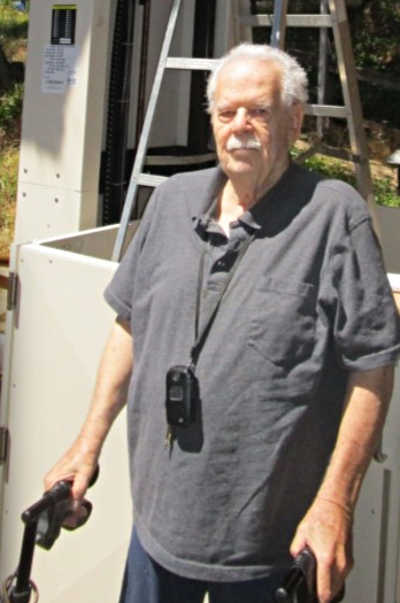
LAKE COUNTY, Calif. – Veteran Al Plyley’s home is situated on a hillside in the Clearlake Park area, necessitating special requirements in order for him to get in and out of his home.
Until recently, his long steep sidewalk sufficed, but when Habitat for Humanity went to his home to provide critical home repair services, the work staff quickly surmised that something else needed to be done if Plyley was to avoid becoming house-bound.
After a lengthy search, and with funding provided by the Home Depot Veteran’s Repair Program, a special 10-foot-tall lift was found for Plyley’s use to assist him in getting from his front door to his vehicle.
Gifford’s Backhoe Service used their crane to assist Habitat for Humanity staff in getting the lift into place so that it could be set up and made workable.
“After the fires the last few years, I’ve been worried about how I could get in and out of my house if one came here,” Plyley said. “I’m grateful that Habitat took the time to do this for me; now I don’t have to worry so much.”
Time is running out for Habitat for Humanity to distribute funds for veteran home repair projects under the grant.
If you are a military veteran who owns your home, or if you are a family member living with a veteran in your home and your home is in need of repairs, please contact Habitat for Humanity Lake County immediately at 707-994-1100 for an application.
Applications also can be picked up at Habitat for Humanity’s office at 15312 Lakeshore Drive, Clearlake.
Applicants are served on a first-come, first-served basis and slots are limited.
KELSEYVILLE, Calif. – The California Highway Patrol will hold another driving class for seniors this month after its debut class quickly filled up in May.
Every year, drivers 65 years of age and older look to the CHP for assistance in maintaining or improving their ability to drive safely.
In response, the CHP provides the “Age Well, Drive Smart” program to equip senior drivers with the necessary tools to remain safe and confident on the road.
The Clear Lake Area CHP invites senior drivers to attend a free, two-hour Age Well, Drive Smart class, which will be held Friday, June 23, from 9:30 to 11:30 a.m., at the CHP Office at 5700 Live Oak Drive in Kelseyville.
This class is an excellent opportunity for senior drivers to refresh their knowledge of California driving laws, evaluate their driving abilities and improve their driving skills.
The Age Well, Drive Smart program covers various topics ranging from California driving laws, safe driving practices, and the effects of aging on a person’s ability to drive safely.
It is not uncommon for senior drivers to be unaware or deny changes in their physical or mental conditions which negatively affect their ability to drive safely.
Therefore the Age Well, Drive Smart program was designed with a self-assessment component to assist senior drivers with identifying these changes and providing possible corrective options.
“Giving senior drivers the tools they need to continue to be safe drivers is not only important to the safety of the motoring public, but also for seniors to maintain their independence,” said CHP Commissioner Joe Farrow. “Our senior driving course affords the continued education that can benefit seniors, helping to ensure they enjoy safe driving well into their golden years.”
If you or a family member would like to attend the Age Well, Drive Safe class, please contact Officer Kory Reynolds at 707-279-0103 or by email at
Call to reserve your spot soon, as space is limited.
Reynolds said the first class, held May 19, filled up immediately, so anyone interested is urged to sign up as quickly as possible.
Funding for this program was provided by a grant from the California Office of Traffic Safety through the National Highway Traffic Safety Administration.
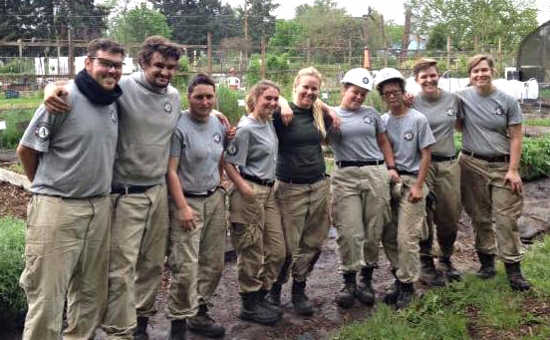
MIDDLETOWN, Calif. – A new AmeriCorps team is at work in Lake County to help rebuild in the wake of the past two summers’ devastating wildland fires.
North Coast Opportunities, or NCO, and Hope City will be receiving the support of nine members from the AmeriCorps National Civilian Community Corps Team Green Eight.
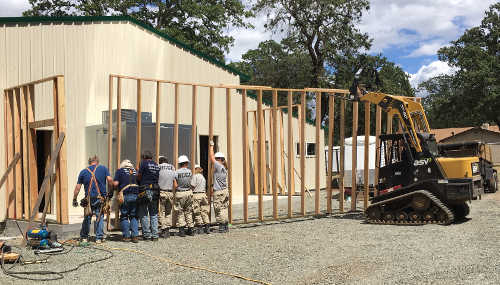
This is the fourth NCCC team to be working directly with Hope City to assist NCO in its efforts to rebuild homes that were destroyed in the wildfires that swept through Lake County.
The mission of North Coast Opportunities is to develop and provide services that strengthen communities.
To do this NCO has partnered with Hope City, a nonprofit based out of Indiana whose mission is to assist in the rebuilding process using volunteer labor.
The NCCC has been supporting the missions of both organizations by working directly with Hope City to rebuild homes for survivors of the wildfire, and by working in the NCO Food Pantry.
This will be the fourth and final project for Green Eight, whose members have previously completed environmental stewardship and disaster response projects in Louisiana, Southern California and Oregon.
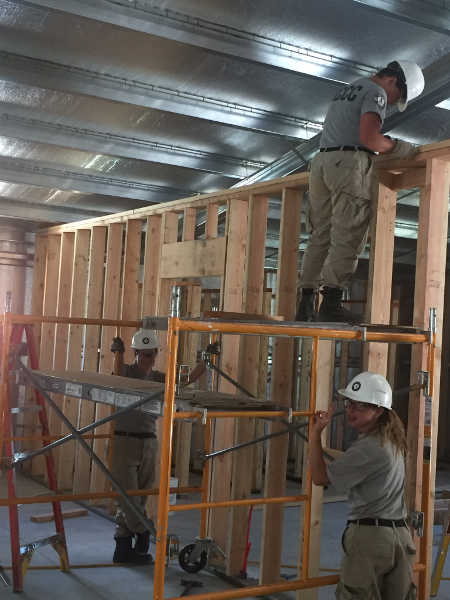
“Our team’s very first project was doing disaster response, so it is a fitting end to our time in AmeriCorps to have the team’s final project be in disaster recovery,” said Green Eight member Katie Niemeyer.
When asked what NCO and the community of Middletown should expect from the team, she replied, “They should expect a hardworking team that is passionate about their work and excited to get out and help the community.”
The AmeriCorps National Civilian Community Corps and its FEMA Corps units engage 2,800 young Americans in a full-time, 10-month commitment to service each year.
AmeriCorps NCCC members address critical needs related to natural and other disasters, infrastructure improvement, environmental stewardship and conservation, and urban and rural development; FEMA Corps members are solely dedicated to disaster preparedness, mitigation, response and recovery work.
The programs are administered by the Corporation for National and Community Service, the federal agency that engages more than five million Americans in service through its AmeriCorps, Senior Corps, Social Innovation Fund, and Volunteer Generation Fund programs, and leads President's national call to service initiative, United We Serve.
For more information, visit www.NationalService.gov .
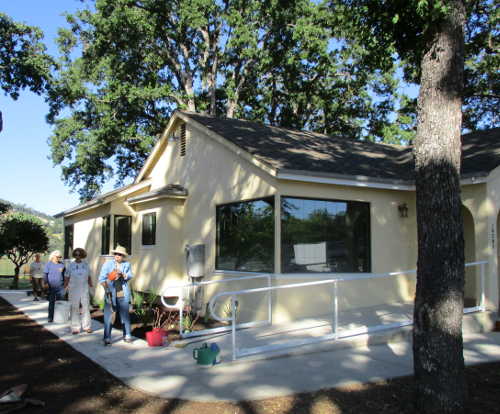
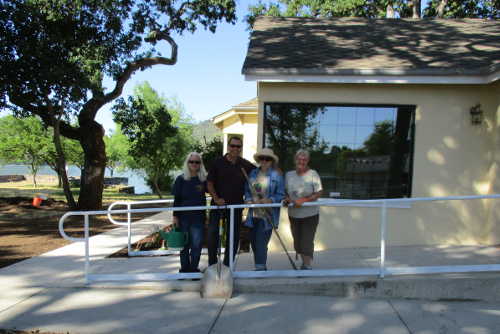
CLEARLAKE, Calif. – Volunteers from the Rotary Club of Clear Lake and Citizens Caring for Clearlake were out Tuesday planting flowers and putting the final touches on the long-awaited visitors center and Clear Lake Chamber of Commerce building located in Highlands Park.
The ribbon cutting celebrating the completion of the building will be held at 11 a.m. Saturday, June 10.
Mayor Russ Perdock and board members of both the Clear Lake Chamber of Commerce and the Lake County Chamber of Commerce are expected to be there and the general public is welcome to attend.
The county of Lake has contributed $100,000 to the rehabilitation of the building and the city of Clearlake has provided additional funding and personnel to work on the rehabilitation.
However, this was really a community project that succeeded due to the efforts of volunteers and donations.
“The community really stepped up with this project, most especially Mike Vandiver who put in hundreds, if not thousands of volunteer hours on this project,” said City Manager Greg Folsom. “We are extremely appreciative of his efforts, as well as the other local businesses, craftspeople, and volunteers who made contributions of time or resources.
Folsom added, “Public Works Director Doug Herren also deserves a lot of credit for coordinating this project and working with Mike Vandiver on his own time to make this project happen.”
“The completion of the visitor’s center has been long in coming, but I think everyone will be pleased with it,” Mayor Russ Perdock said. “The original hardwood floors have been beautifully refinished and stained thanks to Rotarian Mike Anderson. There is a kitchen with granite counters and just an amazing view of the lake from the back meeting room. Thanks to all who were a part of this special place.”
Clear Lake Chamber of Commerce President Denise Loustalot was excited to show off the new building.
“This is a great achievement for the chamber and is just the beginning of the things we are planning,” said Loustalot. “Come out and see our new building and join us as we take the chamber to a new level.”