How to resolve AdBlock issue?
Refresh this page
How to resolve AdBlock issue?
Refresh this page
Lake County News,California
  • Home
    • Registration Form
  • News
    • Education
    • Veterans
    • Community
      • Obituaries
      • Letters
      • Commentary
    • Police Logs
    • Business
    • Recreation
    • Health
    • Religion
    • Legals
    • Arts & Life
    • Regional
  • Calendar
  • Contact us
    • FAQs
    • Phones, E-Mail
    • Subscribe
  • Advertise Here
  • Login

News

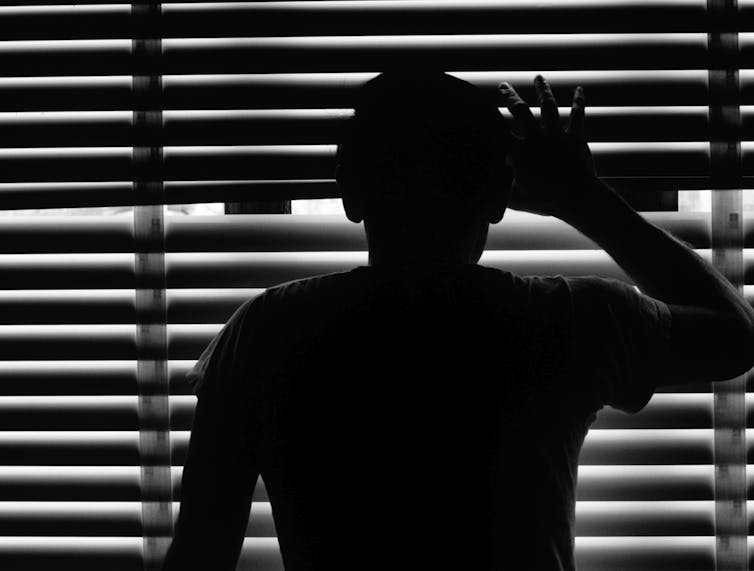
America is becoming a nation of homebodies


The COVID-19 pandemic merely accelerated a trend that began in 2003. C.P. George/ClassicStock via Getty Images
Brian D. Taylor, University of California, Los Angeles; Eric Morris, Clemson University, and Sam Speroni, University of California, Los Angeles

In his February 2025 cover story for The Atlantic, journalist Derek Thompson dubbed our current era “the anti-social century.”

He isn’t wrong. According to our recent research, the U.S. is becoming a nation of homebodies.

Using data from the American Time Use Survey, we studied how people in the U.S. spent their time before, during and after the pandemic.

The COVID-19 pandemic did spur more Americans to stay home. But this trend didn’t start or end with the pandemic. We found that Americans were already spending more and more time at home and less and less time engaged in activities away from home stretching all the way back to at least 2003.

And if you thought the end of lockdowns and the spread of vaccines led to a revival of partying and playing sports and dining out, you would be mistaken. The pandemic, it turns out, mostly accelerated ongoing trends.

All of this has major implications for traffic, public transit, real estate, the workplace, socializing and mental health.

Life inside

The trend of staying home is not new.

There was a steady decline in out-of-home activities in the two decades leading up to the pandemic.

Compared with 2003, Americans in 2019 spent nearly 30 minutes less per day on out-of-home activities and eight fewer minutes a day traveling. There could be any number of reasons for this shift, but advances in technology, whether it’s smartphones, streaming services or social media, are likely culprits. You can video chat with a friend rather than meeting them for coffee; order groceries through an app instead of venturing to the supermarket; and stream a movie instead of seeing it in a theater.

Of course, there was a sharp decline in out-of-home activities during the pandemic, which dramatically accelerated many of these stay-at-home trends.

Outside of travel, time spent on out-of-home activities fell by over an hour per day, on average, from 332 minutes in 2019 to 271 minutes in 2021. Travel, excluding air travel, fell from 69 to 54 minutes per day over the same period.

But even after the pandemic lockdowns were lifted, out-of-home activities and travel through 2023 remained substantially depressed, far below 2019 levels. There was a dramatic increase in remote work, online shopping, time spent using digital entertainment, such as streaming and gaming, and even time spent sleeping.

Time spent outside of the home has rebounded since the pandemic, but only slightly. There was hardly any recovery of out-of-home activities from 2022 to 2023, meaning 2023 out-of-home activities and travel were still far below 2019 levels. On the whole, Americans are spending nearly 1.5 hours less outside their homes in 2023 than they did in 2003.

While hours worked from home in 2022 were less than half of what they were in 2021, they’re still about five times what they were ahead of the pandemic. Despite this, only about one-quarter of the overall travel time reduction is due to less commuting. The rest reflects other kinds of travel, for activities such as shopping and socializing.

Ripple effects

This shift has already had consequences.

With Americans spending more time working, playing and shopping from home, demand for office and retail space has fallen. While there have been some calls by major employers for workers to spend more time in the office, research suggests that working from home in the U.S. held steady between early 2023 and early 2025 at about 25% of paid work days. As a result, surplus office space may need to be repurposed as housing and for other uses.

There are advantages to working and playing at home, such as avoiding travel stress and expenses. But it has also boosted demand for extra space in apartments and houses, as people spend more time under their own roof. It has changed travel during the traditional morning – and, especially, afternoon – peak periods, spreading traffic more evenly throughout the day but contributing to significant public transit ridership losses. Meanwhile, more package and food delivery drivers are competing with parked cars and bus and bike lanes for curb space.

Perhaps most importantly, spending less time out and about in the world has sobering implications for Americans well beyond real estate and transportation systems.

Research we’re currently conducting suggests that more time spent at home has dovetailed with more time spent alone. Suffice it to say, this makes loneliness, which stems from a lack of meaningful connections, a more common occurrence. Loneliness and social isolation are associated with increased risk for early mortality.

Because hunkering down appears to be the new norm, we think it’s all the more important for policymakers and everyday people to find ways to cultivate connections and community in the shrinking time they do spend outside of the home.The Conversation

Brian D. Taylor, Professor of Urban Planning and Public Policy, University of California, Los Angeles; Eric Morris, Professor of City and Regional Planning, Clemson University, and Sam Speroni, PhD Student in Urban Planning, University of California, Los Angeles

This article is republished from The Conversation under a Creative Commons license. Read the original article.

Helping Paws: Heelers, shepherds and Great Pyrenees

LAKE COUNTY, Calif. — Lake County Animal Care and Control has more new dogs and puppies from a variety of breeds waiting for new homes.

The dogs available for adoption this week include mixes of Akita, American blue heeler, Australian shepherd, Belgian malinois, border collie, cattle dog, German shepherd, Great Pyrenees, husky, Labrador Retriever, pit bull terrier and Rottweiler.

Dogs that are adopted from Lake County Animal Care and Control are either neutered or spayed, microchipped and, if old enough, given a rabies shot and county license before being released to their new owner. License fees do not apply to residents of the cities of Lakeport or Clearlake.

Those dogs and the others shown on this page at the Lake County Animal Care and Control shelter have been cleared for adoption.

Call Lake County Animal Care and Control at 707-263-0278 or visit the shelter online for information on visiting or adopting.

The shelter is located at 4949 Helbush in Lakeport.

Email Elizabeth Larson at This email address is being protected from spambots. You need JavaScript enabled to view it.. Follow her on Twitter, @ERLarson, and on Bluesky, @erlarson.bsky.social. Find Lake County News on the following platforms: Facebook, @LakeCoNews; X, @LakeCoNews; Threads, @lakeconews, and on Bluesky, @lakeconews.bsky.social.

 
Spice's preview photo
Spice

Sugar's preview photo
Sugar

Jet's preview photo
Jet

Bear-Bear's preview photo
Bear-Bear

Hamilton's preview photo
Hamilton

Scout's preview photo
Scout

Sable's preview photo
Sable

Shepp's preview photo
Shepp

Pancho's preview photo
Pancho

Chia's preview photo
Chia

Kelly's preview photo
Kelly

Milo's preview photo
Milo

Tilda's preview photo
Tilda

Oscar's preview photo
Oscar

Dolly's preview photo
Dolly

Buck's preview photo
Buck

Benny 's preview photo
Benny

Fred's preview photo
Fred

Annie 's preview photo
Annie

Sephire's preview photo
Sephire

Oliver's preview photo
Oliver

Rocco's preview photo
Rocco

Honey's preview photo
Honey

Sadie's preview photo
Sadie

Aria's preview photo
Aria

 
Kennel#2's preview photo
Kennel#2

Sam's preview photo
Sam

Alma 's preview photo
Alma

Makita's preview photo
Makita

Kennel#14a's preview photo
Kennel#14a

Kennel#14b's preview photo
Kennel#14b

Buddy's preview photo
Buddy

Kennel #19's preview photo
Kennel #19

C#19

Little Hoover Commission to hold hearing on California electricity costs

On Thursday, March 27, the Little Hoover Commission will conduct a virtual public hearing on California electricity costs at 10 a.m., followed by a virtual business meeting.

Both events will be conducted via Zoom and will also be accessible at 925 L St., Suite 175, Sacramento. No commissioners will be present at this location.

The following commissioners will attend the hearing remotely: Pedro Nava, Anthony Cannella, Dion Aroner, David Beier, Senator Christopher Cabaldon, Assemblymember Phillip Chen, Gil Garcetti, José Atilio Hernández, Jason Johnson, Senator Roger Niello, Gayle Miller, Assemblymember Liz Ortega, and Janna Sidley.

Members of the public can attend the events in person or listen to the events by joining online or by phone. Click the URL to join online: https://bit.ly/3FkPtg8.

To join via phone, call toll-free from the U.S. by dialing 888-788-0099. The webinar ID is 955-1716-3786. The passcode is 014479. It is highly recommended that members of the public access the events through the Zoom app. Please visit the Zoom website for instructions on how to download the Zoom app onto a computer or smartphone.

Public comments will be heard at the end of the public hearing, and at the beginning of the business meeting, and will be limited to three minutes per speaker and to a total of 30 minutes.

Remote attendees may indicate to staff that they wish to make public comment by using the “raise” hand feature in Zoom or sending an email to This email address is being protected from spambots. You need JavaScript enabled to view it. with your question and the phone number from which you have joined the event.

Agenda items may be taken out of order to accommodate speakers and to maintain a quorum. The events may be canceled without notice.

The Little Hoover Commission is America’s only permanent, independent citizens commission working to improve state government. A nonpartisan oversight agency created in 1962, the Commission includes 13 Commissioners appointed by the Governor and legislative leaders. The commission’s mission is to investigate state operations and promote efficiency, economy, and improved service.

Space News: Mission possible − parastronaut programs can make space travel more inclusive and attainable for all


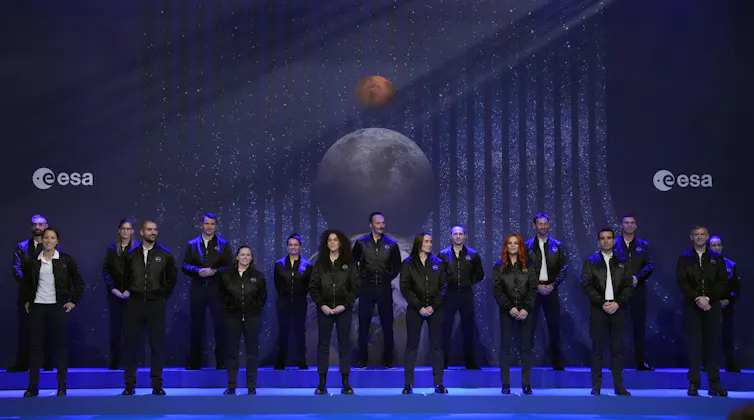
The European Space Agency’s astronaut cohort includes a parastronaut, as part of a feasability project. AP Photo/Francois Mori
Jesse Rhoades, University of North Dakota and Rebecca Rhoades, University of North Dakota

Humans will likely set foot on the Moon again in the coming decade. While many stories in this new chapter of lunar exploration will be reminiscent of the Apollo missions 50 years ago, others may look quite different.

For instance, the European Space Agency is currently working to make space travel more accessible for people of a wide range of backgrounds and abilities. In this new era, the first footprint on the Moon could possibly be made by a prosthetic limb.

An astronaut standing on the lunar surface and using a scoop to retrieve samples.
NASA plans to return humans to the lunar surface in the coming decade. NASA Goddard

Historically, and even still today, astronauts selected to fly to space have had to fit a long list of physical requirements. However, many professionals in the field are beginning to acknowledge that these requirements stem from outdated assumptions.

Some research, including studies by our multidisciplinary team of aerospace and biomechanics researchers, has begun to explore the possibilities for people with physical disabilities to venture into space, visit the Moon and eventually travel to Mars.

Current research

NASA has previously funded and is currently funding research on restraints and mobility aids to help everyone, regardless of their ability, move around in the crew cabin.

Additionally, NASA has research programs to develop functional aids for individuals with disabilities in current U.S. spacecraft. A functional aid is any device that improves someone’s independence, mobility or daily living tasks by compensating for their physical limitations.

The European Space Agency, or ESA, launched its Parastronaut Feasibility Project in 2022 to assess ways to include individuals with disabilities in human spaceflight. A parastronaut is an astronaut with a physical disability who has been selected and trained to participate in space missions.

At the University of North Dakota, we conducted one of the first studies focused on parastronauts. This research examined how individuals with disabilities get into and get out of two current U.S. spacecraft designed to carry crew. The first was NASA’s Orion capsule, designed by Lockheed Martin, and the second was Boeing’s CST 100 Starliner.

Alongside our colleagues Pablo De León, Keith Crisman, Komal Mangle and Kavya Manyapu, we uncovered valuable insights into the accessibility challenges future parastronauts may face.

Our research indicated that individuals with physical disabilities are nearly as nimble in modern U.S. spacecraft as nondisabled individuals. This work focused on testing individuals who have experienced leg amputations. Now we are looking ahead to solutions that could benefit astronauts of all abilities.

Safety and inclusion

John McFall is the ESA’s first parastronaut. At the age of 19, Mcfall lost his right leg just above the knee from a motorcycle accident. Although McFall has not been assigned to a mission yet, he is the first person with a physical disability to be medically certified for an ISS mission.

A man with a prosthetic leg leans over next to mockup of a space capsule with the hatch open, another man kneels beside him.
John McFall stands by a mock-up of the SpaceX Dragon crew capsule. SpaceX, CC BY-NC-SA

Astronaut selection criteria currently prioritize peak physical fitness, with the goal of having multiple crew members who can do the same physical tasks. Integrating parastronauts into the crew has required balancing mission security and accessibility.

However, with advancements in technology, spacecraft design and assistive tools, inclusion no longer needs to come at the expense of safety. These technologies are still in their infancy, but research and efforts like the ESA’s program will help improve them.

Design and development of spacecraft can cost billions of dollars. Simple adaptations, such as adding handholds onto the walls in a spacecraft, can provide vital assistance. However, adding handles to existing spacecraft will be costly.

Functional aids that don’t alter the spacecraft itself – such as accessories carried by each astronaut – could be another way forward. For example, adding Velcro to certain spots in the spacecraft or on prosthetic limbs could improve a parastronaut’s traction and help them anchor to the spacecraft’s surfaces.

Engineers could design new prosthetics made for particular space environments, such as zero or partial gravity, or even tailored to specific spacecraft. This approach is kind of like designing specialized prosthetics for rock climbing, running or other sports.

Accessibility can help everyone

Future space exploration, particularly missions to the Moon and Mars that will take weeks, months and even years, may prompt new standards for astronaut fitness. During these long missions, astronauts could get injured, causing what can be considered incidental disability.

An astronaut with an incidental disability begins a mission without a recognized disability but acquires one from a mission mishap. An astronaut suffering a broken arm or a traumatic brain injury during a mission would have a persistent impairment.

Two astronauts on an extravehicular activity in space, repairing part of a space station.
On longer missions, astronauts may need to troubleshoot issues on their own. NASA

During long-duration missions, an astronaut crew will be too far away to receive outside medical help – they’ll have to deal with these issues on their own.

Considering disability during mission planning goes beyond inclusion. It makes the mission safer for all astronauts by preparing them for anything that could go wrong. Any astronaut could suffer an incidental disability during their journey.

Safety and inclusion in spaceflight don’t need to be at odds. Instead, agencies can reengineer systems and training processes to ensure that more people can safely participate in space missions. By addressing safety concerns through technology, innovative design and mission planning, the space industry can have inclusive and successful missions.The Conversation

Jesse Rhoades, Professor of Education, Heath & Behavior, University of North Dakota and Rebecca Rhoades, Researcher in Education, Health & Behavior, University of North Dakota

This article is republished from The Conversation under a Creative Commons license. Read the original article.

Appellate court sets aside ruling allowing Clearlake hotel and road project to move ahead

LAKE COUNTY, Calif. — A new appellate court decision has halted progress on the city of Clearlake’s plan to improve a roadway and build a new hotel.

At issue is the city’s 18th Avenue project, which will extend 18th Avenue to connect the Old Highway 53 with State Route 53, and build a four-story, 75-room Fairfield Inn & Suites hotel, one-story meeting hall and parking lot on a roughly three-acre portion of the former Pearce Airport landing strip.

In March of 2023, the Koi Nation tribe sued the city because it said the city approved the project and, in so doing, violated the California Environmental Quality Act, more commonly known as CEQA, for failing to hold consultation with the tribe.

In November 2023, Lake County Superior Court Judge Michael Lunas found for the city, ruling the city’s analysis of tribal cultural resources was sufficient, finding that the Koi’s claims that tribal consultation procedures were not followed by the city were false and that the Koi had not adequately requested consultation.

The tribe subsequently appealed the ruling and, on Friday, the California First Appellate District’s Division Two handed down a 33-page decision in which it sided with the tribe.

The tribe did not immediately respond to a request for comment on Friday afternoon.

“The appellate court's opinion puts lead agencies in an impossible situation that is frankly absurd,” said Clearlake City Manager Alan Flora. “I remain convinced the trial court decision was well reasoned and solidly based on the law. We continue to analyze our available options.”

One of those options, Flora said, is the California Supreme Court.

The appellate court document explains that the Koi argued that the city violated CEQA in three ways: It failed to comply with the requirements for tribal consultation; it used a mitigated negative declaration rather than an environmental impact report to review the project, which the tribe argued is required “because the record includes substantial evidence of a fair argument that the project may have a significant impact on tribal cultural resources”; and third, that “even if the City could proceed by means of a mitigated negative declaration rather than an environmental impact report, its mitigated negative declaration lacks information that CEQA requires.”

The appellate court concluded that the city failed to comply with CEQA’s consultation requirements, which required that the city’s approval of the project be set aside.

That was the key focus of the decision. “We need not address Koi Nation’s other arguments,” the justices wrote, referring to the tribe’s statements about the need for an environmental impact report or that the mitigated negative declaration was deficient.

“We will reverse the order and judgment denying Koi Nation’s petition for writ of mandate and remand the matter to the superior court with instructions to issue a writ of mandate setting aside the City’s mitigated negative declaration and related project approvals,” the justices ruled.

They also ordered that the tribe should recover its costs on appeal.

In July 2023 the Koi also sued the city over its Burns Valley Sports Complex, which was approved with a mitigated negative declaration. Flora said the city met with the tribe on that project “multiple times.”

The city’s legal issues over the projects led the Clearlake City Council in August to raise its $500,000 contract with the law firm to $750,000.

Then, in October, Lunas also found for the city in the Koi’s Burns Valley case. The judge concluded that the city “followed the advice of the archaeologist and considered tribal input in determining appropriate mitigation, which included avoiding any impacts to tribal resources and still included the presence of tribal monitors during construction,” the city said in a statement after the decision.

However, the Koi also have appealed that ruling.

Meanwhile, in January the U.S. Department of Interior decided to approve the Koi’s controversial casino and hotel project near Windsor. The project has had major pushback from Sonoma County tribes and residents because, while the Koi tribe claims ancestral ties to the Windsor area, their historic and ancestral lands have been in and around Clearlake.

The site and its history

In the 18th Avenue case, the key issue is tribal consultation, the requirement for which in CEQA was added by the California Legislature in 2014 through AB 52.

Agencies must work with tribes in such cases to protect tribal cultural resources, defined in Public Resources Code section 21074 as “sites, features, places, cultural landscapes, sacred places, and objects with cultural value to a California Native American tribe.”

The court documents acknowledge that, “Most of the project site was disturbed by the construction of an airport extension in the 1970’s, during which the land was bulldozed and graded, with most of the original landscape removed and redistributed as fill to form the base of an airstrip.”

The former airstrip area, which the documents note includes the southern portion of the 2.8 acre parcel where the hotel will sit and part of the land to be used for the road extension, is currently used as a construction staging area for the storage of equipment and vehicles, stockpiles and construction related materials. The city uses the site to store piles of crushed concrete and pavement, sorted and unsorted gravel, and surplus soils from other sites that were dumped by the city and its contractors.

“Some of the piles contain obsidian chunks and flakes that are associated with the soil that originated at other sites,” the documents explain.

Land in the northern portion of the project parcel is “relatively undisturbed, consisting primarily of wooded areas. A portion of the land to be used for the 18th Avenue extension is currently a paved roadway, and a portion is undisturbed land that is primarily grassland with scattered trees and shrubs.”

The case background explains that tribal leadership had raised concerns about the project because an ancestor had held property and resided in the project area. The city’s consultant, Dr. Greg White, worked with the tribe and concluded that the ancestor’s residence was just outside the project area, at which point the tribe advised the city that the project “should proceed with caution.”

The Koi Nation has an intergovernmental agreement with the Habematolel Pomo of Upper Lake, represented by Robert Geary, who the city notified of the opportunity to consult on the project. Geary replied on Habematolel letterhead to request consultation, mentioning only the Upper Lake tribe sought consultation, not the Koi. The city and Geary consulted on the project on March 9, 2022, and the mitigated negative declaration that was prepared said that consultation was requested by, and conducted with, Habematolel.

In October 2022, when the city issued its mitigated negative declaration, it said it received no comments from the Koi tribe within the 30-day comment period. The Clearlake Planning Commission approved the mitigated negative declaration the following month.

The Koi appealed the Planning Commission’s decision in December 2022. The Clearlake City Council denied the appeal in February 2023 after hearing arguments from the tribe about specific mitigations they wanted in place. The tribe sued the following month.

The appellate justices found that the Koi Nation met the statutory requirements for requesting consultation and that, after the March 9, 2022, consultation was held, in which Geary requested implementation of mitigation measures, “The City took the requests under submission, but did not engage in any further discussion with Koi Nation about the requests, even after Geary sent follow-up communication.”

The court decision also noted that “‘consultation’ requires ‘seeking agreement’ where agreement is ‘feasible,’” adding, “Nothing in the record shows that agreement between the City and Koi Nation was infeasible: there is no evidence that either party had adopted an entrenched position or that the parties had reached an impasse. But there is also no evidence that the City sought agreement, as it was required to do.”

It continues, “As far as we can tell from the record, the City simply determined at some point after Dr. White’s report was completed in August 2022 that the mitigation measures that Geary had proposed were unnecessary, but the City did not inform Koi Nation of its decision or the basis for that decision. In the absence of any discussion about the City’s reasoning or conclusions, there was no real opportunity for Koi Nation and the City to seek mutual agreement as the statute contemplates.”

The court concluded that the city failed to comply with CEQA’s consultation requirement and, as a result, abused its discretion.

However, the justices didn’t go into the other arguments the Koi made, including a request for an environmental impact report, or EIR.

“Koi Nation asks us also to order the City to prepare an EIR on the project,” the justices said. “We decline this request as premature. If the City goes forward with the project, it must comply with CEQA’s requirements, including the requirements for formal notification to those California Native American Tribes affiliated with the area that have requested notification and consultation with tribes that request consultation in response to notification.”

The case now heads back to Lake County Superior Court.

Email Elizabeth Larson at This email address is being protected from spambots. You need JavaScript enabled to view it.. Follow her on Twitter, @ERLarson, and on Bluesky, @erlarson.bsky.social. Find Lake County News on the following platforms: Facebook, @LakeCoNews; X, @LakeCoNews; Threads, @lakeconews, and on Bluesky, @lakeconews.bsky.social.

031425 Koi v. Clearlake Lawsuit: A169438 by LakeCoNews on Scribd

After Friday snow, more rain ahead

LAKE COUNTY, Calif. — After a day of snow in parts of Lake County, the National Weather Service has ended its winter weather advisories but expects more rain into next week.

The snow on Friday caused a delayed start for Cobb Mountain Elementary School, with buses not running in that area, according to the Lake County Office of Education. At the same time, the snow slowed down the buses in the Kelseyville Riviera.

Along with snow there was rain.

Rainfall totals in inches for the 48-hour period ending at 1 a..m Saturday are as follows:

— High Glade Lookout (above Upper Lake): 0.25;
— Kelseyville: 0.80;
— Knoxville Creek: 0.63;
— Lake Pillsbury: 1.58;
— Lyons Valley: 1.07;
— Middletown: 0.73;
— Upper Lake: 0.81.

The National Weather Service expects more rain on Saturday, totaling under a quarter of an inch, to be followed by close to two inches on Sunday.

Another quarter of an inch of rain could fall on Monday, to be followed by a break on Tuesday. Rain is then forecast for the rest of the week.

Daytime temperatures are predicted to be in the 40s on Saturday, rising into the 50s through most of next week, with nighttime conditions in the high 30s and moving into the low 40s by the end of next week.

Email Elizabeth Larson at This email address is being protected from spambots. You need JavaScript enabled to view it.. Follow her on Twitter, @ERLarson, and on Bluesky, @erlarson.bsky.social. Find Lake County News on the following platforms: Facebook, @LakeCoNews; X, @LakeCoNews; Threads, @lakeconews, and on Bluesky, @lakeconews.bsky.social.
  • 233
  • 234
  • 235
  • 236
  • 237
  • 238
  • 239
  • 240
  • 241
  • 242

Community

  • Lake County Wine Alliance offers sponsor update; beneficiary applications open 

  • Mendocino National Forest announces seasonal hiring for upcoming field season

Public Safety

  • Lakeport Police logs: Thursday, Jan. 15

  • Lakeport Police logs: Wednesday, Jan. 14

Education

  • Woodland Community College receives maximum eight-year reaffirmation of accreditation from ACCJC

  • SNHU announces Fall 2025 President's List

Health

  • California ranks 24th in America’s Health Rankings Annual Report from United Health Foundation

  • Healthy blood donors especially vital during active flu season

Business

  • Two Lake County Mediacom employees earn company’s top service awards

  • Redwood Credit Union launches holiday gift and porch-to-pantry food drives

Obituaries

  • Rufino ‘Ray’ Pato

  • Patty Lee Smith

Opinion & Letters

  • The benefits of music for students

  • How to ease the burden of high electric bills

Veterans

  • CalVet and CSU Long Beach team up to improve data collection related to veteran suicides

  • A ‘Big Step Forward’ for Gulf War Veterans

Recreation

  • Wet weather trail closure in effect on Upper Lake Ranger District

  • Mendocino National Forest seeking public input on OHV grant applications

  • State Parks announces 2026 Anderson Marsh nature walk schedule 

  • BLM lifts seasonal fire restrictions in central California

Religion

  • Kelseyville Presbyterian to host Ash Wednesday service and Lenten dinner Feb. 18

  • Kelseyville Presbyterian Church to hold ‘Longest Night’ service Dec. 21

Arts & Life

  • Auditions announced for original musical ‘Even In Shadow’ set for March 21 and 28

  • ‘The Rip’ action heist; ‘Steal’ grounded in a crime thriller

Government & Politics

  • Lake County Democrats issue endorsements in local races for the June California Primary

  • County negotiates money-saving power purchase agreement

Legals

  • March 3 hearing on ordinance amending code for commercial cannabis uses

  • Feb. 12 public hearing on resolution to establish standards for agricultural roads

How to resolve AdBlock issue?
Refresh this page