 How to resolve AdBlock issue?
News
NORTHERN CALIFORNIA – State Sen. Bill Dodd (D-Napa) has introduced a bill to reduce the risk of wildfires caused by downed power lines.
The bill requires electric utilities to adopt comprehensive policies and procedures for proactively de-energizing power lines during extreme weather.
“This last fire season underscored the need to think innovatively and proactively about fire prevention,” said Sen. Dodd. “We know downed power lines have caused devastating fires in the past, and we need electric utilities and the Public Utilities Commission to plan ahead and implement best practices.”
He added, “This isn’t a panacea, but it’s an important part of the holistic improvements needed for fire prevention and preparedness. As we adjust to a changing climate, ensuring electricity providers have concrete, well researched wildfire prevention plans in place is absolutely critical. Taking initiative now will minimize disruption and, most importantly, save lives and property.”
Wildfires caused by power lines are not uncommon, and examples span the state from the 2007 Witch fire in San Diego County to the 2015 Butte fire in Amador and Calaveras counties.
The California Department of Forestry and Fire Protection is currently investigating the causes of the wildfires that swept across the North Bay in October. Wildfires across the state cost lives, homes, and cause billions of dollars in losses and taxpayer costs.
“This bill addresses what we can do proactively when circumstances, like the speed of wind or other natural factors, are beyond our control,” said Napa County Supervisor Diane Dillon, who represents portions of Napa County hit by the Tubbs Fire, which was the most destructive fire in state history. “Although the causes of these unprecedented wildfires remain under investigation, this experience highlights a need to think differently about our approach to emergency preparedness statewide. This legislation underscores our focus on planning for a time of crisis, and I applaud the authors for their leadership on this issue.”
Dodd’s bill would require investor and municipal electric utilities to update their wildfire mitigation plans to include policies and procedures for determining if, when and where to temporarily de-energize a power line during extreme weather events for the purpose of preventing a wildfire.
The utilities would have to assess meteorological conditions, mapping of fire risk zones, observations of vegetation conditions around and near power lines, and establish a protocol for notifying impacted customers.
Current law requires all electric utilities to construct, maintain and operate its electric lines and equipment in a manner that will minimize the risk of wildfire.
Utilities are required to prepare a wildfire mitigation plan, detailing the steps it will take to mitigate wildfire risk.
Investor-owned utilities must submit the plan to the California Public Utilities Commission for review and comment. However, the plans are not currently required to contemplate de-energizing lines.
In recognition of the wildfire threat a downed power line may present, at least one utility has taken steps to address the issue. SDG&E has developed a set of policies and procedures to determine if, when and where it may need to temporarily de-energize a power line to prevent the possibility of triggering a wildfire, and has done so at least 17 times.
The bill, SB 901, is co-authored by Senator Mike McGuire (D-Healdsburg) and Assemblymembers Jim Wood (D-Healdsburg) and Marc Levine (D-San Rafael), and should receive its first committee hearing in March.
Dodd formerly served in the state Assembly and represented Lake County. In the Senate he now represents California’s Third Senate District, which includes all or portions of Napa, Sonoma, Solano, Yolo, Sacramento and Contra Costa counties. You can learn more about Senator Dodd at www.sen.ca.gov/dodd.
The bill requires electric utilities to adopt comprehensive policies and procedures for proactively de-energizing power lines during extreme weather.
“This last fire season underscored the need to think innovatively and proactively about fire prevention,” said Sen. Dodd. “We know downed power lines have caused devastating fires in the past, and we need electric utilities and the Public Utilities Commission to plan ahead and implement best practices.”
He added, “This isn’t a panacea, but it’s an important part of the holistic improvements needed for fire prevention and preparedness. As we adjust to a changing climate, ensuring electricity providers have concrete, well researched wildfire prevention plans in place is absolutely critical. Taking initiative now will minimize disruption and, most importantly, save lives and property.”
Wildfires caused by power lines are not uncommon, and examples span the state from the 2007 Witch fire in San Diego County to the 2015 Butte fire in Amador and Calaveras counties.
The California Department of Forestry and Fire Protection is currently investigating the causes of the wildfires that swept across the North Bay in October. Wildfires across the state cost lives, homes, and cause billions of dollars in losses and taxpayer costs.
“This bill addresses what we can do proactively when circumstances, like the speed of wind or other natural factors, are beyond our control,” said Napa County Supervisor Diane Dillon, who represents portions of Napa County hit by the Tubbs Fire, which was the most destructive fire in state history. “Although the causes of these unprecedented wildfires remain under investigation, this experience highlights a need to think differently about our approach to emergency preparedness statewide. This legislation underscores our focus on planning for a time of crisis, and I applaud the authors for their leadership on this issue.”
Dodd’s bill would require investor and municipal electric utilities to update their wildfire mitigation plans to include policies and procedures for determining if, when and where to temporarily de-energize a power line during extreme weather events for the purpose of preventing a wildfire.
The utilities would have to assess meteorological conditions, mapping of fire risk zones, observations of vegetation conditions around and near power lines, and establish a protocol for notifying impacted customers.
Current law requires all electric utilities to construct, maintain and operate its electric lines and equipment in a manner that will minimize the risk of wildfire.
Utilities are required to prepare a wildfire mitigation plan, detailing the steps it will take to mitigate wildfire risk.
Investor-owned utilities must submit the plan to the California Public Utilities Commission for review and comment. However, the plans are not currently required to contemplate de-energizing lines.
In recognition of the wildfire threat a downed power line may present, at least one utility has taken steps to address the issue. SDG&E has developed a set of policies and procedures to determine if, when and where it may need to temporarily de-energize a power line to prevent the possibility of triggering a wildfire, and has done so at least 17 times.
The bill, SB 901, is co-authored by Senator Mike McGuire (D-Healdsburg) and Assemblymembers Jim Wood (D-Healdsburg) and Marc Levine (D-San Rafael), and should receive its first committee hearing in March.
Dodd formerly served in the state Assembly and represented Lake County. In the Senate he now represents California’s Third Senate District, which includes all or portions of Napa, Sonoma, Solano, Yolo, Sacramento and Contra Costa counties. You can learn more about Senator Dodd at www.sen.ca.gov/dodd.
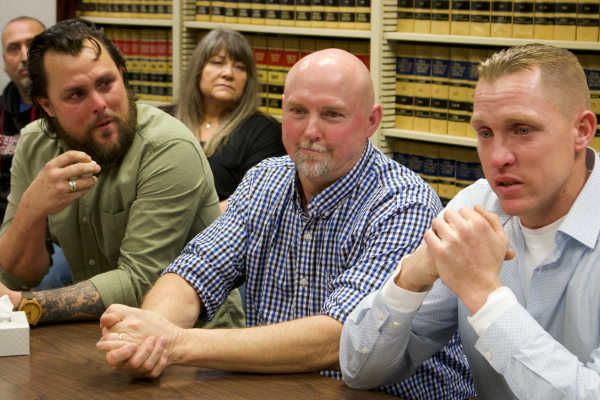
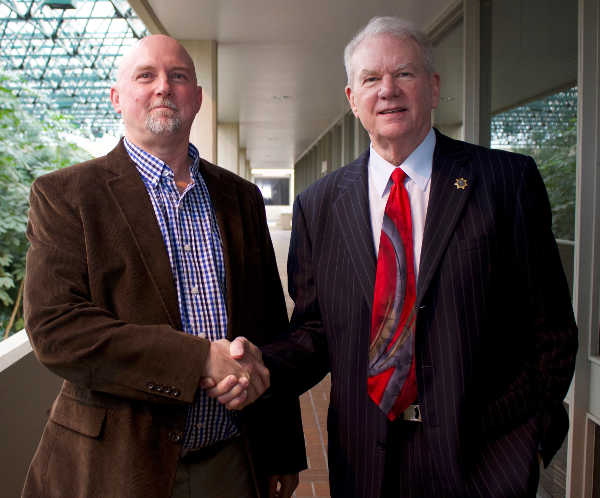
NORTHERN CALIFORNIA – Thanks to new evidence and a California law enacted in January 2017, a man’s 1991 conviction has been vacated by the Butte County Superior Court.
Attorney Paige Kaneb of the Northern California Innocence Project, or NCIP, made the motion to vacate Darwin Crabtree’s child molestation conviction.
Kaneb was able to do so based on the newly enacted California law, Penal Code section 1473.7, which allows one who is no longer incarcerated or restrained to pursue a motion to vacate when that person provides “newly discovered evidence of actual innocence … that requires vacation of the conviction or sentence as a matter of law or in the interest of justice.”
The District Attorney’s Office conducted its own investigation of the case, agreed that the conviction be reversed and issued an apology to Crabtree for its role in his conviction.
Crabtree served nine years in prison for a crime he did not commit.
In 1991, he was convicted of sexually molesting his two sons who were 12 and 8 at the time of the trial.
False statements made by the boys during their parents’ tumultuous divorce were the only direct evidence against Crabtree. Both sons, now adults, have maintained for more than nine years that their father is innocent and he never molested them.
In the care of an unlicensed therapist in training, the young boys “remembered” several incidents under what we now know was suggestive and improper questioning.
In 2008, the sons reunited with their father and apologized for what they had done when they were too young to understand the consequences.
By that time, Crabtree had been tried, convicted, served his sentence and completed his parole. He remained a lifetime sex offender registrant subject to the stigma associated with that status.
After their reunion and in an effort to correct the injustice, the sons contacted NCIP and submitted written statements explaining Crabtree’s innocence. But it wasn’t until PC section 1473.7 became law that NCIP was able to bring this case forward.
According to Crabtree, “The new law gave my boys the opportunity to right the wrong, to alleviate the burden they’ve carried for all these years. This allows them to be good with the world.”
“With the adoption of Penal Code section 1473.7, California has recognized that innocent people are entitled to have their names – and records – cleared regardless of when new evidence is discovered.” said Linda Starr, NCIP executive director and co-founder.
It’s been 27 years since his conviction and Crabtree has experienced many struggles associated with the stigma of registering as a sex offender.
But, he’s also prevailed. For the last 10 years, he has worked as a contractor. He has a wife and grandchildren and he continues to rebuild his relationship with his sons.
“These 27 years have made me who I am. I have a voice that can be heard now,” he said.
“We have struggled with this case for years,” said Starr. “Somehow, Darwin and his sons each found a way to heal enough to live productive lives and redevelop a loving and close relationship even though we couldn’t do anything to clear Darwin’s name. They are amazing people who have lived with this trauma for 27 years. They deserve to have this day, where the court and the state finally validate the truth.”
The Northern California Innocence Project is a nonprofit clinical program of Santa Clara University School of Law whose mission is to promote a fair, effective, and compassionate criminal justice system and protect the rights of the innocent.
Since its inception in 2001, NCIP – www.ncip.scu.edu – has processed more than 10,000 requests for inmate assistance, investigated hundreds of cases, pursued litigation or collaborative resolution in dozens, and obtained the freedom of 20 wrongfully convicted individuals.
LAKE COUNTY, Calif. – A Wednesday night quake centered in southern Lake County rattled parts of Northern California and resulted in hundreds of shake reports to the US Geological Survey.
The survey reported that the 4.2-magnitude quake occurred at 9:5 p.m. Wednesday.
Its epicenter was just inside the Lake County line, about a mile northeast of The Geysers geothermal steamfield and 13 miles south southwest of Clearlake, at a depth of a tenth of a mile, the US Geological Survey reported.
Survey records showed that it was followed about 40 minutes later by a 2.5-magnitude quake a short distance away.
By 11 p.m., the survey had received more than 330 shake reports from 63 zip codes regarding the 4.2-magnitude quake from around Lake County, the North Bay and Bay Area. Reports came in from as far away as Soquel.
Local residents called it a “good shaker” and “intense.”
Email Elizabeth Larson atThis email address is being protected from spambots. You need JavaScript enabled to view it. . Follow her on Twitter, @ERLarson, or Lake County News, @LakeCoNews.
The survey reported that the 4.2-magnitude quake occurred at 9:5 p.m. Wednesday.
Its epicenter was just inside the Lake County line, about a mile northeast of The Geysers geothermal steamfield and 13 miles south southwest of Clearlake, at a depth of a tenth of a mile, the US Geological Survey reported.
Survey records showed that it was followed about 40 minutes later by a 2.5-magnitude quake a short distance away.
By 11 p.m., the survey had received more than 330 shake reports from 63 zip codes regarding the 4.2-magnitude quake from around Lake County, the North Bay and Bay Area. Reports came in from as far away as Soquel.
Local residents called it a “good shaker” and “intense.”
Email Elizabeth Larson at
LAKEPORT, Calif. – The Board of Supervisors on Thursday will host a workshop on the draft commercial cannabis cultivation ordinance.
The workshop will take place beginning at 9 a.m. Thursday, Jan. 18, in the board chambers on the first floor of the Lake County Courthouse, 255 N. Forbes St., Lakeport.
The meeting can be watched live on Channel 8 and online at https://countyoflake.legistar.com/Calendar.aspx. Accompanying board documents, the agenda and archived board meeting videos also are available at that link.
The staff report to the board from County Administrative Officer Carol Huchingson said that Thursday’s meeting will be the first in a series of workshops that are part of the board’s approved work plan to finalize recreational cannabis provisions in the county’s Article 72 “in a manner which is consistent with but not duplicative of state regulations.”
Huchingson said Thursday’s workshop will be divided into two one-hour blocks.
The first hour will include a report by county consultant Mark Lovelace. Huchingson said Lovelace will give an overview of state law and emergency regulations; approaches taken in other areas including California counties, cities and other states; and cannabis market projections.
During the second hour, Community Development Director Bob Massarelli will give a report on the draft local commercial cultivation ordinance “with a particular focus on certain decision points where Board direction is needed,” Huchingson said.
Huchingson said that at the close of the workshop’s second hour, the board will consider directing staff to return at the next regular supervisors’ meeting with a resolution of intent to send the commercial cultivation ordinance to the Lake County Planning Commission.
Email Elizabeth Larson atThis email address is being protected from spambots. You need JavaScript enabled to view it. . Follow her on Twitter, @ERLarson, or Lake County News, @LakeCoNews.
The workshop will take place beginning at 9 a.m. Thursday, Jan. 18, in the board chambers on the first floor of the Lake County Courthouse, 255 N. Forbes St., Lakeport.
The meeting can be watched live on Channel 8 and online at https://countyoflake.legistar.com/Calendar.aspx. Accompanying board documents, the agenda and archived board meeting videos also are available at that link.
The staff report to the board from County Administrative Officer Carol Huchingson said that Thursday’s meeting will be the first in a series of workshops that are part of the board’s approved work plan to finalize recreational cannabis provisions in the county’s Article 72 “in a manner which is consistent with but not duplicative of state regulations.”
Huchingson said Thursday’s workshop will be divided into two one-hour blocks.
The first hour will include a report by county consultant Mark Lovelace. Huchingson said Lovelace will give an overview of state law and emergency regulations; approaches taken in other areas including California counties, cities and other states; and cannabis market projections.
During the second hour, Community Development Director Bob Massarelli will give a report on the draft local commercial cultivation ordinance “with a particular focus on certain decision points where Board direction is needed,” Huchingson said.
Huchingson said that at the close of the workshop’s second hour, the board will consider directing staff to return at the next regular supervisors’ meeting with a resolution of intent to send the commercial cultivation ordinance to the Lake County Planning Commission.
Email Elizabeth Larson at
NORTHERN CALIFORNIA – On Tuesday state legislators from wildfire-damaged communities joined California Insurance Commissioner Dave Jones in introducing a legislative package meant to increase protections for the state’s disaster victims.
Sen. Mike McGuire and Assemblywoman Cecilia Aguiar-Curry, whose districts include Lake County, along with Sen. Bill Dodd, and members of the Assembly Jim Wood, Monique Limón and Marc Levin joined Jones to announce the Wildfire Survivors Insurance Recovery bills.
Altogether, the group unveiled a package that includes a total of 13 bills to be introduced this legislative session to strengthen consumer protections for wildfire survivors making insurance claims who struggle to recover, rebuild and move forward. Several of the pieces of legislation already have been introduced.
Jones said the Wildfire Survivors Insurance Recovery legislative package strengthens the laws protecting wildfire survivors in the insurance claims process and will improve their chances for recovery.
Lake County already had been through four devastating fires – the Rocky, Jerusalem, Valley and Clayton fires – by the time the Sulphur fire occurred in October, at the same time that devastating fires tore through neighboring Mendocino, Sonoma and Napa counties.
“Four of my counties – Lake, Napa, Solano, and Sonoma – were on fire in October,” said Aguiar-Curry. “It will take years for our communities to recover.”
State officials said the North Bay fires claimed 44 lives, with more than 14,700 homes and 728 businesses damaged or destroyed, totaling more than $9 billion worth of insurable damage.
This disaster struck while Lake and Calaveras counties were still in process of rebuilding from the Valley and Butte fires, respectively, of 2015, which destroyed more than 3,000 structures and 1,700 homes; in Lake County alone, about 1,300 homes were destroyed in the Valley fire.
Officials said the latest devastating fires have underscored the challenges homeowners face when trying to navigate the insurance claims process.
McGuire said the North Bay firestorm was the most deadly and destructive in American history.
He said it also has resulted in the largest debris cleanup since the 1906 San Francisco earthquake.
McGuire said fire survivors are struggling to provide detailed home inventories for insurance companies while dealing with the aftermath of the fires, managing debris cleanup, finding new homes and jobs, and caring for their families while living in 200-square-foot hotel rooms.
From Jan. 1 to Jan. 10, his office received 111 complaints – some of them horror stories – from fire survivors who feel overwhelmed about what is being required of them by their insurance companies. They’ve reported experiencing post traumatic stress disorder in having to relive the fires while cataloging their lost possessions.
“It’s simply too much to ask,” and that’s why people pay insurance each month to cover what their homes and valuables are worth, McGuire said.
He’s introducing SB 897 to allow homeowners to forgo itemized lists during a declared state of emergency by the governor and in turn automatically receive 80 percent of the policy limit. Without itemized lists, insurers have provided as little as a 30-percent payoff.
In recent weeks, some of the major insurance companies have begun to advance nonitemized policy payouts. “We are absolutely grateful for that,” said McGuire.
He said the bill would standardize that itemization process so families can fast-track the process of putting their lives back together.
Wood thanked Jones for his hard work, and being a partner throughout the effort with legislators.
The recent massive wildfires and mudslides “exposed significant gaps and deficiencies in our laws and how we protect our residents,” said Assemblyman Jim Wood.
Many of those impacted by the disasters would later find out that their insurance policies weren’t enough, with rebuilding much higher than expected.
He said one of the bills introduced, AB 1875, will require all insurance companies to offer as an option coverage for no less than 50 percent of the extended replacement cost for residential properties.
“Sadly, we know this is not the end of disasters in California and this bill, like others, will be able to provide an ability to start again,” he said.
Dodd, who formerly served in the Assembly and represented an area that included Lake County, said, “I really do believe that the state has a moral authority to act on this.”
He said they need to do everything they can to help victims of wildfires and other natural disasters to recover, and be proactive and ensure that those benefits are there for future disaster victims.
“When a major disaster strikes, we need our insurance companies to have our back,” Dodd said.
Dodd introduced SB 894 to reform insurance coverage by guaranteeing up to three years of living expenses after major disasters. It also requires insurance companies to provide victims with policy renewals for up to two years after a disaster. In addition, it would require companies to report to the insurance commissioner if they pull out of an area.
“Helping victims and communities recover quicker and more completely after disaster strikes – that’s what this is all about,” said Dodd.
Insurance commissioner addresses fire insurance availability issues
In some parts of rural California, getting fire insurance in the first place is becoming more of a challenge.
The introduction of the legislative package comes less than two weeks after Jones released a report addressing the growing problem of fire insurance availability and recommending legislative changes aimed at making fire insurance available in the wildland-urban interface.
Jones said nearly half of California counties have housing rated at high or very high fire risk.
"Californians are facing more severe, more unpredictable and more frequent wildfires," said Jones. "Add to the equation, increasing development in areas more vulnerable to fire and you can see why wildfires are now an everyday threat to life and property for Californians."
Over the past two decades, Jones said wildfires have caused significant insured damage in what is called the wildland-urban interface, where an estimated 3.6 million California homes are located and more than one million are identified as being at high or very high fire risk.
Jones said the California Department of Insurance is seeing an increasing number of complaints, feedback and other evidence from policyholders, consumer groups, public officials and other stakeholders that homeowners' insurance coverage in the wildland-urban interface is increasingly difficult to obtain and, if available, is unaffordable for many.
He said the inability to obtain affordable homeowners' insurance coverage creates great risk to the financial security of individual homeowners and the economy.
"Insurers are increasingly using computer models to assess the risk of fires for individual homes and deciding that homes in some areas face too high a risk," said Jones. "In the wake of last year's wildfires, we may see more areas of the state where insurers decline to write. The Legislature has given insurers broad latitude to decide whether and where to write fire insurance, therefore we are recommending new laws to improve fire insurance availability."
Jones has directed his department to undertake an in-depth analysis of the scope of the availability and affordability issue and develop proposed solutions to mitigate or solve these problems.
This analysis includes an extensive review of consumer complaints and feedback from stakeholders, and also included an in-depth analysis of the two major wildfire-risk models.
According to Jones’ report, just over 50 percent of Lake County’s 34,110 dwelling units are in the high or very high risk categories.
In Lake County, there has been increased concern about people losing fire insurance – both within the fire areas and outside of it – and facing huge rate increases.
Since the Valley fire, Lake County News has received a number of reports from longtime policyholders of various insurance companies suddenly having their policies canceled even when they never missed a payment or didn’t live within the fire area, or who had their rates raised dramatically. In one case, an insurance company canceled a policy on a longtime customer after an inspector said a stack of firewood 25 feet from the house was too close.
Jones’ report shows a wide range of insurance-related activity in Lake County for the years 2015 and 2016.
Based on Jones’ report, in 2015, the following insurance statistics were reported: new policies, 2,942; renewed policies, 22,134; nonrenewed (insured-initiated), 1,481; nonrenewed (insurer-initiated), 313.
That’s compared to 2016: new policies, 3,021; renewed, 21,652; nonrenewed (insured-initiated), 1,657; nonrenewed (insurer-initiated), 428.
Not yet available is data for 2017.
Nancy Kincaid, spokeswoman for the Department of Insurance, said she couldn’t provide statistics for complaints from Lake County regarding insurance policies.
So far, she said insurance companies haven’t indicated that they are pulling out of Lake County.
The new legislation
Synopses of the bills discussed by legislators on Tuesday are below.
AB 1772: Introduced by Assemblymember Cecilia Aguiar-Curry (D-Winters). The bill will give wildfire victims an additional year to rebuild their homes and businesses after a catastrophic wildfire and collect the full amount of insurance dollars to which they are entitled. It extends the amount of time a home or business owner has to rebuild an insured property from two to three years and receive the full replacement costs they are entitled to after a declared emergency. AB 1772 is expected to be heard in the Assembly Committee on Insurance in early spring.
AB 1797: Introduced by Assemblyman Marc Levine (D-Marin County). The bill will require insurers to provide updated replacement costs to consumers when policies are renewed.
AB 1799: Introduced by Levine. The bill requires insurers to provide a full certified copy of the insurance plan to policyholders so they know exactly what is covered.
AB 1800: Introduced by Levine. The bill makes insurance companies responsible for the full replacement value of the insurance plan regardless of where a family wants to purchase or rebuild a home. Levine said the bill grew out of some insurance companies saying that customers were not qualified for a full replacement value of their home if they decided to purchase or build in another location.
AB 1875: Introduced by Assemblyman Jim Wood (D-Healdsburg). The bill will require all insurance companies to offer as an option coverage for no less than 50 percent of the extended replacement cost for residential properties. In addition, it will require insurance companies to advise customers of this option and its cost before policies are issued or renewed.
SB 894: Introduced by Sen. Bill Dodd (D-Napa). The bill will require insurers to renew policies for disaster victims for a minimum of two years following the loss of a home, and it requires companies to report to the insurance commissioner if they subsequently non-renew or pull out of a market. It would also allow disaster victims to recover living expenses from their insurance company over 36 months, helping families make ends meet while they work to rebuild and recover. Lastly, Dodd’s bill would require an insurer to allow disaster victims to combine their policy limits for primary dwelling, other structures, contents, and additional living expenses, to pay for any of the covered purposes. The bill is expected to be heard in the Senate Committee on Insurance, Banking and Financial Institutions in March.
SB 897: Introduced by Sen. Mike McGuire (D-North Bay). The bill waives inventory claim form requirements during a declared state of emergency by the governor. It would allow homeowners the option of forgoing the itemization list and instead automatically providing 80 percent of the policy limit.
Assemblywoman Monique Limón intends to author a bill to require insurers to participate in a consolidated debris removal program authorized by a local government when there is a declared disaster. The bill would better organize and expedite the debris removal process.
Email Elizabeth Larson at
010418 California Department of Insurance Fire Availability and Affordability report by LakeCoNews on Scribd
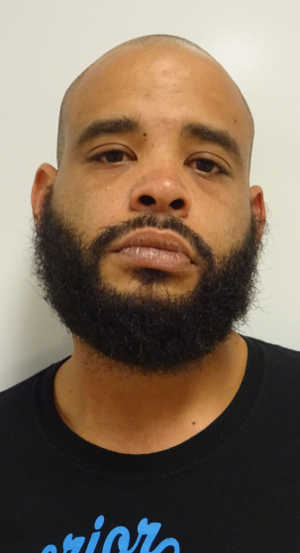
LAKEPORT, Calif. – Authorities have arrested a Texas man for setting fire to a room at a Lakeport motel last week.
Timothy Cofer, 32, of Seagoville was arrested Friday evening shortly after the fire in a room at the Rodeway Inn & Suites Skylark Shores Resort at 1120 N. Main St.
Firefighters, police and sheriff’s deputies were dispatched to the scene shortly before 5:30 p.m. on the report of a disturbance and a fire.
Lakeport Fire Chief Doug Hutchison told Lake County News that within five minutes his firefighters were able to knock down the fire, which was contained to one room and didn’t stop the motel from continuing to operate. There were no injuries.
The Lakeport Police Department said in a report on the fire that the initial investigation by officers indicated that Cofer deliberately set the fire. He was subsequently arrested.
Chief Deputy District Attorney Rich Hinchcliff told Lake County News on Tuesday that he has charged Cofer with arson of an inhabited structure, a felony, which has a maximum sentence of six years if he’s convicted.
“When he was arrested he was acting very strangely,” said Hinchcliff.
Hinchcliff said Cofer was muttering about people trying to kidnap him.
It was discovered that Cofer was high on ecstasy, which led to the second charge against Cofer, possession of that drug, which Hinchcliff said is a misdemeanor.
Hinchcliff added that he didn’t yet have information about Cofer’s possible motive for setting the fire.
He said Cofer – whose profession is listed as truck driver on his booking sheet – had been dropped off at the motel and was staying there.
Cofer will make his first court appearance on Wednesday, Hinchcliff said.
Since his arrest, Cofer has remained in the Lake County Jail, with bail set at $100,000, according to booking records.
Email Elizabeth Larson at