 How to resolve AdBlock issue?
News
CLEARLAKE, Calif. – The city of Clearlake invites the community to an open house next week to offer input on an upcoming road project.
The event will take place beginning at 10 a.m. Wednesday, Jan. 24, in the council chambers at Clearlake City Hall, 14050 Olympic Drive.
The community open house’s topic will be the future Country Club Drive road rehabilitation project.
This open house is an opportunity for residents to hear about the upcoming project as well as provide their thoughts and ideas.
For more information contact Adeline Brown at 707-994-8201, Extension 341, orThis email address is being protected from spambots. You need JavaScript enabled to view it. .
The event will take place beginning at 10 a.m. Wednesday, Jan. 24, in the council chambers at Clearlake City Hall, 14050 Olympic Drive.
The community open house’s topic will be the future Country Club Drive road rehabilitation project.
This open house is an opportunity for residents to hear about the upcoming project as well as provide their thoughts and ideas.
For more information contact Adeline Brown at 707-994-8201, Extension 341, or
NORTH COAST, Calif. – After about five hours of deliberations, a Mendocino County jury on Friday convicted a San Jose man of the attempted murder of a California Highway Patrol officer during a December 2016 high speed chase.
Defendant Ryan Joseph Maxstadt, 28, of San Jose, committed the felony in Willits on the night of Dec. 20, 2016.
The Mendocino County Sheriff’s Office said its deputies had responded to a report of stolen mail on a rural mail route near Ukiah that night, with their investigation identifying Maxstadt as the driver of a vehicle involved in the thefts.
The deputies, working with Ukiah Police and the CHP, located the vehicle Maxstadt was driving and attempted to stop it, but it fled, leading them on a pursuit northbound on Highway 101 at speeds of about 100 miles per hour, authorities said.
It was when he was attempting to evade authorities in Willits that he was reported to have shot at the CHP officer with a handgun.
Maxstadt would eventually abandon the vehicle – the tires of which had gone flat due to spike strips – and was apprehended with the help of a sheriff’s K9 in a creek bed in the 1100 block of South Main Street in Willits.
In addition to the attempted murder charge, on Friday the jury also found true special findings that the attempted murder was willful, deliberate and premeditated; that when Maxstadt made his attempt to kill he knew or should have known that the CHP officer was a peace officer performing his duties; and that during his attempt to kill the defendant personally and intentionally discharged his revolver at the officer, according to the Mendocino County District Attorney’s Office.
What the jury was not told during the course of this week's trial was that Maxstadt had already been convicted last August of assault with a firearm on a peace officer, a felony; personally using a firearm during the assault, a sentencing enhancement; recklessly evading a peace officer, a felony; being a felon in possession of a firearm, a felony; vehicle theft, a felony; and true findings that defendant Maxstadt has previously served two prior prison terms.
The jury that heard basically the same evidence in August ended up being hung on the single charge of attempted murder – 11 for guilt to one – setting the stage for this week's retrial on that single count and associated special findings.
Once this week's jury was thanked and excused, the defendant and all of his convictions were referred to the Adult Probation Department for a background study and sentencing recommendation.
Authorities said Maxstadt is not eligible for probation and any sentence imposed will be served in state prison. He remains in the Low Gap jail facility with a no bail hold.
The court scheduled a future sentencing hearing for Feb. 20 at 9 a.m. in Department G of the Ukiah courthouse. Any person interested in the facts of this case, this defendant, and/or the sentencing outcome is welcome to attend that February sentencing hearing.
The prosecutor who handled the August trial, this week's single count retrial, and who will appear to argue the people's sentencing position in February is District Attorney David Eyster.
The law enforcement agencies who assisted in the investigation of the underlying crimes were the Ukiah Police Department, the California Highway Patrol, the Willits Police Department, the Mendocino County Sheriff's Office, the California Department of Justice crime laboratory, and the District Attorney's own investigators. Additional technical forensic assistance and expert testimony was ably provided by Stutchman Forensic Laboratory in Napa.
The judge who presided over the August jury trial, this week's five-day retrial, and who will be the sentencing judge on February 20th is Mendocino County Superior Court Presiding Judge Ann Moorman.
Defendant Ryan Joseph Maxstadt, 28, of San Jose, committed the felony in Willits on the night of Dec. 20, 2016.
The Mendocino County Sheriff’s Office said its deputies had responded to a report of stolen mail on a rural mail route near Ukiah that night, with their investigation identifying Maxstadt as the driver of a vehicle involved in the thefts.
The deputies, working with Ukiah Police and the CHP, located the vehicle Maxstadt was driving and attempted to stop it, but it fled, leading them on a pursuit northbound on Highway 101 at speeds of about 100 miles per hour, authorities said.
It was when he was attempting to evade authorities in Willits that he was reported to have shot at the CHP officer with a handgun.
Maxstadt would eventually abandon the vehicle – the tires of which had gone flat due to spike strips – and was apprehended with the help of a sheriff’s K9 in a creek bed in the 1100 block of South Main Street in Willits.
In addition to the attempted murder charge, on Friday the jury also found true special findings that the attempted murder was willful, deliberate and premeditated; that when Maxstadt made his attempt to kill he knew or should have known that the CHP officer was a peace officer performing his duties; and that during his attempt to kill the defendant personally and intentionally discharged his revolver at the officer, according to the Mendocino County District Attorney’s Office.
What the jury was not told during the course of this week's trial was that Maxstadt had already been convicted last August of assault with a firearm on a peace officer, a felony; personally using a firearm during the assault, a sentencing enhancement; recklessly evading a peace officer, a felony; being a felon in possession of a firearm, a felony; vehicle theft, a felony; and true findings that defendant Maxstadt has previously served two prior prison terms.
The jury that heard basically the same evidence in August ended up being hung on the single charge of attempted murder – 11 for guilt to one – setting the stage for this week's retrial on that single count and associated special findings.
Once this week's jury was thanked and excused, the defendant and all of his convictions were referred to the Adult Probation Department for a background study and sentencing recommendation.
Authorities said Maxstadt is not eligible for probation and any sentence imposed will be served in state prison. He remains in the Low Gap jail facility with a no bail hold.
The court scheduled a future sentencing hearing for Feb. 20 at 9 a.m. in Department G of the Ukiah courthouse. Any person interested in the facts of this case, this defendant, and/or the sentencing outcome is welcome to attend that February sentencing hearing.
The prosecutor who handled the August trial, this week's single count retrial, and who will appear to argue the people's sentencing position in February is District Attorney David Eyster.
The law enforcement agencies who assisted in the investigation of the underlying crimes were the Ukiah Police Department, the California Highway Patrol, the Willits Police Department, the Mendocino County Sheriff's Office, the California Department of Justice crime laboratory, and the District Attorney's own investigators. Additional technical forensic assistance and expert testimony was ably provided by Stutchman Forensic Laboratory in Napa.
The judge who presided over the August jury trial, this week's five-day retrial, and who will be the sentencing judge on February 20th is Mendocino County Superior Court Presiding Judge Ann Moorman.
NORTHERN CALIFORNIA – A Humboldt County man who attempted to shoot a California Department of Fish and Wildlife wildlife officer has been sentenced to 20 years in prison.
Shawn Eugene Hof, Jr., 25, was convicted in Humboldt County Superior Court of assault with a firearm upon a peace officer with an enhancement of personally using a firearm, being a felon in possession of a firearm, using threats and violence upon an executive officer, negligently discharging a firearm at an occupied vehicle, and one misdemeanor violation of "spotlighting" (using artificial light to poach wildlife).
On Jan. 16, Humboldt County Superior Court Judge John T. Feeney issued the 20-year sentence. By law, Hof must serve at least 85 percent of his sentence because of the serious nature of the offenses.
In the early morning hours of Aug. 21, 2016, a CDFW wildlife officer was patrolling in Carlotta, Humboldt County.
The officer saw a pickup truck with two occupants using spotlights on Redwood House Road near Highway 36. The driver sped away when the officer attempted an enforcement stop.
During the subsequent pursuit, Hof began shooting at the wildlife officer from the truck. The suspects crashed their vehicle into a tree and escaped into the woods. Hof was on the run for more than a year.
The Humboldt County Sheriff's Office and Humboldt District Attorney's Office led the initial investigation into the shooting incident and, working with the CDFW Law Enforcement Division, applied intensive pressure to locate and arrest Hof.
A group of private donors, including the California Wildlife Officers Foundation, California Fish and Game Warden Supervisors and Managers Association, California Waterfowl Association, Defenders of Wildlife, Humane Society of the United States, The Nature Conservancy, Sportfishing Alliance and others collaborated on a $20,000 reward for information leading to his arrest.
Hof ultimately turned himself into police on Aug. 10, 2017.
"We are pleased with the sentence handed down by Judge Feeney," said David Bess, deputy director and chief of the Law Enforcement Division. "It took a dangerous felon out of the community making it safer for the citizens of Humboldt County. CDFW thanks our allied agency partners for their efforts since the moment the incident began and the coalition of donors who offered the reward money. We're relieved the situation was resolved without injuries to our officers or the public."
Hof's accomplice, Thomas Wheeler, 19, of Fortuna, was sentenced last month to a suspended sentence of eight years in state prison for the use of a firearm in aiding and abetting the assault on a peace officer, evading a peace officer with wanton and reckless disregard for person and property, two misdemeanor violations for allowing another person to shoot from a vehicle, and spotlighting.
Shawn Eugene Hof, Jr., 25, was convicted in Humboldt County Superior Court of assault with a firearm upon a peace officer with an enhancement of personally using a firearm, being a felon in possession of a firearm, using threats and violence upon an executive officer, negligently discharging a firearm at an occupied vehicle, and one misdemeanor violation of "spotlighting" (using artificial light to poach wildlife).
On Jan. 16, Humboldt County Superior Court Judge John T. Feeney issued the 20-year sentence. By law, Hof must serve at least 85 percent of his sentence because of the serious nature of the offenses.
In the early morning hours of Aug. 21, 2016, a CDFW wildlife officer was patrolling in Carlotta, Humboldt County.
The officer saw a pickup truck with two occupants using spotlights on Redwood House Road near Highway 36. The driver sped away when the officer attempted an enforcement stop.
During the subsequent pursuit, Hof began shooting at the wildlife officer from the truck. The suspects crashed their vehicle into a tree and escaped into the woods. Hof was on the run for more than a year.
The Humboldt County Sheriff's Office and Humboldt District Attorney's Office led the initial investigation into the shooting incident and, working with the CDFW Law Enforcement Division, applied intensive pressure to locate and arrest Hof.
A group of private donors, including the California Wildlife Officers Foundation, California Fish and Game Warden Supervisors and Managers Association, California Waterfowl Association, Defenders of Wildlife, Humane Society of the United States, The Nature Conservancy, Sportfishing Alliance and others collaborated on a $20,000 reward for information leading to his arrest.
Hof ultimately turned himself into police on Aug. 10, 2017.
"We are pleased with the sentence handed down by Judge Feeney," said David Bess, deputy director and chief of the Law Enforcement Division. "It took a dangerous felon out of the community making it safer for the citizens of Humboldt County. CDFW thanks our allied agency partners for their efforts since the moment the incident began and the coalition of donors who offered the reward money. We're relieved the situation was resolved without injuries to our officers or the public."
Hof's accomplice, Thomas Wheeler, 19, of Fortuna, was sentenced last month to a suspended sentence of eight years in state prison for the use of a firearm in aiding and abetting the assault on a peace officer, evading a peace officer with wanton and reckless disregard for person and property, two misdemeanor violations for allowing another person to shoot from a vehicle, and spotlighting.
The federal Revenue Reconciliation Act of 2017 (“2017 Tax Act”) increases the lifetime federal unified estate and gift tax exemption and the gift tax annual exclusion amounts applicable during the eight year period covering Jan. 1, 2018, through Dec. 31, 2025.
The federal estate tax exemption has effectively been doubled to more than $11 million in 2018. The exemption adjusts each year for inflation through 2025.
In 2026, unless new law is enacted that continues the 2017 Tax Act, it sunsets and the federal estate tax exemption returns to the prior exemption as indexed upwards for inflation using an adjusted Consumer Price Index; just over $5.5 million in 2017.
With a married couple, the $11 million federal estate tax exemption becomes $22 million from 2018 through 2025.
Thus, estates under $11 million for single persons, and estates under $22 million for married persons who die before Jan. 1, 2026, will not owe the Internal Revenue Service any federal estate tax.
Even though such estates do not owe any federal estate tax, the beneficiaries of these estates still receive an adjusted income tax basis equal to the appraised date of death value of all assets in the estate, excluding tax deferred retirement accounts.
The so-called “stepped-up basis” is a significant tax benefit enjoyed by beneficiaries who inherit assets that have appreciated over the life of the deceased former owner.
With a stepped-up basis capital gains tax is avoided with respect to the appreciation that occurred while the decedent owned the asset prior to death.
For example, consider a married couple who purchased their home in 1985 for $100,000. By the time the surviving spouse dies in 2020, their residence has appreciated in value to $400,000.
The parents’ children who inherit the residence receive a stepped-up basis of $400,000, provided it is substantiated by a qualified appraisal. When the children sell the residence they will only owe any capital gains tax if – and only to the extent that – the residence sells above the $400,000 basis.
The $11 million amount of the federal estate and gift tax exemption amount is not guaranteed to continue after 2025.
Anyone with a large estate that would thereafter become subject to federal estate tax were they to die after 2025 – presuming the exemption reverts to the current $5.5 million exemption – may want to consider substantial gifting prior to 2026 in order to use their unified federal estate and gift tax exemption while it lasts.
The gift tax annual exclusion amount has increased from $14,000 (2017) to $15,000 (2018).
Thus, persons can individually gift up to a total of $15,000, and married person together can gift up to a total of $30,000, in assets, in a given tax year, to any one individual – other than their spouse (who is covered by the unlimited interspousal exemption) – without having to file a federal gift tax return and without using any of their eleven million dollar lifetime unified federal estate and gift tax exemption amount.
While the federal estate tax only affects a very tiny fraction of the United States population, it is reassuring to see that the allowance for the stepped-up basis, which depends on the federal estate tax regime, is preserved. The capital gains tax, after all, affects everyone who sells appreciated assets.
Dennis A. Fordham, attorney, is a State Bar-Certified Specialist in estate planning, probate and trust law. His office is at 870 S. Main St., Lakeport, Calif. He can be reached atThis email address is being protected from spambots. You need JavaScript enabled to view it. and 707-263-3235. His Web site is www.DennisFordhamLaw.com.
The federal estate tax exemption has effectively been doubled to more than $11 million in 2018. The exemption adjusts each year for inflation through 2025.
In 2026, unless new law is enacted that continues the 2017 Tax Act, it sunsets and the federal estate tax exemption returns to the prior exemption as indexed upwards for inflation using an adjusted Consumer Price Index; just over $5.5 million in 2017.
With a married couple, the $11 million federal estate tax exemption becomes $22 million from 2018 through 2025.
Thus, estates under $11 million for single persons, and estates under $22 million for married persons who die before Jan. 1, 2026, will not owe the Internal Revenue Service any federal estate tax.
Even though such estates do not owe any federal estate tax, the beneficiaries of these estates still receive an adjusted income tax basis equal to the appraised date of death value of all assets in the estate, excluding tax deferred retirement accounts.
The so-called “stepped-up basis” is a significant tax benefit enjoyed by beneficiaries who inherit assets that have appreciated over the life of the deceased former owner.
With a stepped-up basis capital gains tax is avoided with respect to the appreciation that occurred while the decedent owned the asset prior to death.
For example, consider a married couple who purchased their home in 1985 for $100,000. By the time the surviving spouse dies in 2020, their residence has appreciated in value to $400,000.
The parents’ children who inherit the residence receive a stepped-up basis of $400,000, provided it is substantiated by a qualified appraisal. When the children sell the residence they will only owe any capital gains tax if – and only to the extent that – the residence sells above the $400,000 basis.
The $11 million amount of the federal estate and gift tax exemption amount is not guaranteed to continue after 2025.
Anyone with a large estate that would thereafter become subject to federal estate tax were they to die after 2025 – presuming the exemption reverts to the current $5.5 million exemption – may want to consider substantial gifting prior to 2026 in order to use their unified federal estate and gift tax exemption while it lasts.
The gift tax annual exclusion amount has increased from $14,000 (2017) to $15,000 (2018).
Thus, persons can individually gift up to a total of $15,000, and married person together can gift up to a total of $30,000, in assets, in a given tax year, to any one individual – other than their spouse (who is covered by the unlimited interspousal exemption) – without having to file a federal gift tax return and without using any of their eleven million dollar lifetime unified federal estate and gift tax exemption amount.
While the federal estate tax only affects a very tiny fraction of the United States population, it is reassuring to see that the allowance for the stepped-up basis, which depends on the federal estate tax regime, is preserved. The capital gains tax, after all, affects everyone who sells appreciated assets.
Dennis A. Fordham, attorney, is a State Bar-Certified Specialist in estate planning, probate and trust law. His office is at 870 S. Main St., Lakeport, Calif. He can be reached at

Like the waistband of a couch potato in midlife, the orbits of planets in our solar system are expanding.
It happens because the Sun’s gravitational grip gradually weakens as our star ages and loses mass.
Now, a team of NASA and MIT scientists has indirectly measured this mass loss and other solar parameters by looking at changes in Mercury’s orbit.
The new values improve upon earlier predictions by reducing the amount of uncertainty. That’s especially important for the rate of solar mass loss, because it’s related to the stability of G, the gravitational constant.
Although G is considered a fixed number, whether it’s really constant is still a fundamental question in physics.
“Mercury is the perfect test object for these experiments because it is so sensitive to the gravitational effect and activity of the Sun,” said Antonio Genova, the lead author of the study published in Nature Communications and a Massachusetts Institute of Technology researcher working at NASA’s Goddard Space Flight Center in Greenbelt, Maryland.
The study began by improving Mercury’s charted ephemeris – the road map of the planet’s position in our sky over time. For that, the team drew on radio tracking data that monitored the location of NASA’s MESSENGER spacecraft while the mission was active.
Short for Mercury Surface, Space Environment, Geochemistry, and Ranging, the robotic spacecraft made three flybys of Mercury in 2008 and 2009 and orbited the planet from March 2011 through April 2015.
The scientists worked backward, analyzing subtle changes in Mercury’s motion as a way of learning about the Sun and how its physical parameters influence the planet’s orbit.
For centuries, scientists have studied Mercury’s motion, paying particular attention to its perihelion, or the closest point to the Sun during its orbit. Observations long ago revealed that the perihelion shifts over time, called precession.
Although the gravitational tugs of other planets account for most of Mercury’s precession, they don’t account for all of it.
The second-largest contribution comes from the warping of space-time around the Sun because of the star’s own gravity, which is covered by Einstein’s theory of general relativity. The success of general relativity in explaining most of Mercury’s remaining precession helped persuade scientists that Einstein’s theory was right.
Other, much smaller contributions to Mercury’s precession, are attributed to the Sun’s interior structure and dynamics.
One of those is the Sun’s oblateness, a measure of how much it bulges at the middle – its own version of a “spare tire” around the waist – rather than being a perfect sphere. The researchers obtained an improved estimate of oblateness that is consistent with other types of studies.
The researchers were able to separate some of the solar parameters from the relativistic effects, something not accomplished by earlier studies that relied on ephemeris data.
The team developed a novel technique that simultaneously estimated and integrated the orbits of both MESSENGER and Mercury, leading to a comprehensive solution that includes quantities related to the evolution of Sun’s interior and to relativistic effects.
“We’re addressing long-standing and very important questions both in fundamental physics and solar science by using a planetary-science approach,” said Goddard geophysicist Erwan Mazarico. “By coming at these problems from a different perspective, we can gain more confidence in the numbers, and we can learn more about the interplay between the Sun and the planets.”
The team’s new estimate of the rate of solar mass loss represents one of the first times this value has been constrained based on observations rather than theoretical calculations.
From the theoretical work, scientists previously predicted a loss of one-tenth of a percent of the Sun’s mass over 10 billion years; that’s enough to reduce the star’s gravitational pull and allow the orbits of the planets to spread by about half an inch, or 1.5 centimeters, per year per AU (an AU, or astronomical unit, is the distance between Earth and the Sun: about 93 million miles).
The new value is slightly lower than earlier predictions but has less uncertainty. That made it possible for the team to improve the stability of G by a factor of 10, compared to values derived from studies of the motion of the Moon.
“The study demonstrates how making measurements of planetary orbit changes throughout the solar system opens the possibility of future discoveries about the nature of the Sun and planets, and indeed, about the basic workings of the universe,” said co-author Maria Zuber, vice president for research at MIT.
Elizabeth Zubritsky works for NASA's Goddard Space Flight Center in Greenbelt, Md.

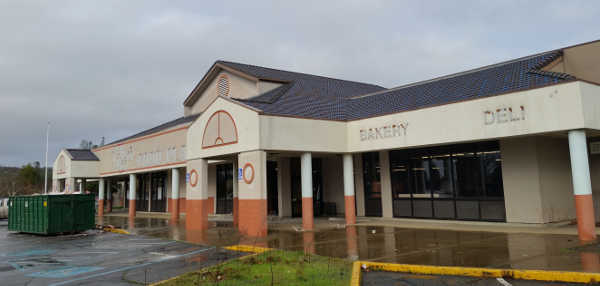
CLEARLAKE, Calif. – Next week an event is planned to celebrate the reopening of the former Ray’s Food Place, which will host new national-level retailers.
At 9 a.m. Monday, the Clear Lake Chamber of Commerce and the city of Clearlake will host a combination groundbreaking and ribbon cutting at the former Ray's Food Place building at 15930 Dam Road in Clearlake.
City Manager Greg Folsom said the event will mark Tractor Supply Co.’s plans to open at the store.
Medford, Ore.-based C&K Market had owned the store and property since 1995. In the fall of 2016, the company announced plans to shutter the store, which it did later that year.
In the spring of 2017, The Carrington Co., based in Eureka, purchased the store, as Lake County News has reported.
At the Aug. 30 “State of the City” event, Greg Cutler, the company’s regional director of acquisitions, told community members about The Carrington Co.’s purchase of the property and the assistance that it had received from city officials.
Cutler said at that time that the intent is to renovate and redevelop the property to house up to three national-level retailers.
Along with the announcement of Tractor Supply Co.’s plans to locate at the Clearlake location – its first in Lake County – Cutler confirmed to Lake County News that an agreement has been reached with a second retailer.
“I can confirm that Big 5 has also signed a lease for the former Ray's,” Cutler said.
“We're still working on the third and final tenant for about 6,500 square feet,” he said.
Tractor Supply Co., founded in 1938, is based in Brentwood, Tenn. The company Web site reports that it owns and operates more than 1,600 stores in 49 states “supplying basic maintenance products to home, land, pet and animal owners.”
Big 5 Sporting Goods reported that as of Jan. 1, 2017, it had 433 locations across 11 Western states.
Email Elizabeth Larson at