How to resolve AdBlock issue?
Refresh this page
How to resolve AdBlock issue?

Refresh this page
Lake County News,California
  • Home
    • Registration Form
  • News
    • Education
    • Veterans
    • Community
      • Obituaries
      • Letters
      • Commentary
    • Police Logs
    • Business
    • Recreation
    • Health
    • Religion
    • Legals
    • Arts & Life
    • Regional
  • Calendar
  • Contact us
    • FAQs
    • Phones, E-Mail
    • Subscribe
  • Advertise Here
  • Login

News

March to end with more rain, wind and cold temperatures

LAKE COUNTY, Calif. — March is going out with more rain and frosty temperatures.

The National Weather Service said Lake County can expect rainfall, wind and overnight frost through the middle of the week.

The forecast calls for rainy conditions through Tuesday night, with up to 2 inches of rain during that time frame.

Rainfall totals in inches for the 48-hour period ending at 1:30 a.m. Monday are as follows:

— High Glade Lookout (above Upper Lake): 0.80.
— Kelseyville: 0.58.
— Knoxville Creek: 0.42.
— Lake Pillsbury: 1.32.
— Lyons Valley: 1.16.
— Middletown: 0.72.
— Upper Lake: 0.64.

Through midweek, windy conditions also are in the forecast, with wind speeds topping 30 miles per hour.

On Monday, temperatures are expected to hover in the 40s during the day and at night, with daytime temperatures continuing in the 40s on Tuesday, dropping into the 30s that night.

Early Wednesday, the National Weather Service said areas of frost are expected, with temperatures forecast to remain in the 30s that night.

From Thursday through Sunday, temperatures will begin to warm up. By Sunday, daytime conditions are expected to reach the low 70s, with nighttime temperatures in the high 40s.

While Lake County can expect more rain and colder temperatures, to the east, areas around Sierras are forecast to see heavy snow this week.

Email Elizabeth Larson at This email address is being protected from spambots. You need JavaScript enabled to view it.. Follow her on Twitter, @ERLarson, and on Bluesky, @erlarson.bsky.social. Find Lake County News on the following platforms: Facebook, @LakeCoNews; X, @LakeCoNews; Threads, @lakeconews, and on Bluesky, @lakeconews.bsky.social.

Community volunteers start to observe and report hitch data

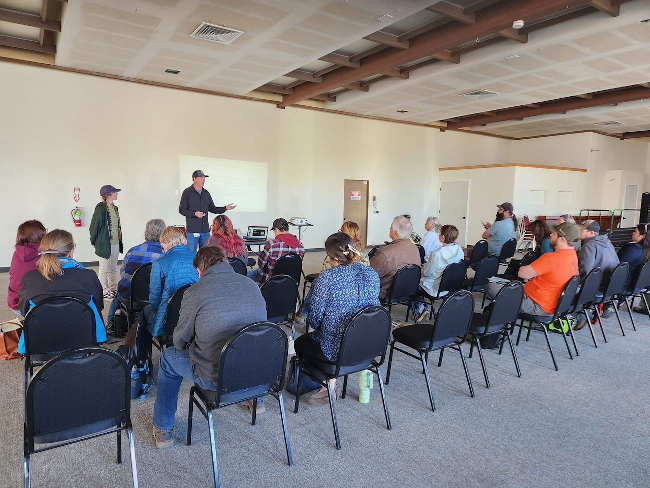
Community members at a training on how to identify and track the Clear Lake hitch in the creeks in Lake County, California. Photo courtesy of Chris Childers.

LAKE COUNTY, Calif. — As the weather warms and the Clear Lake hitch begins its annual spawn, trained community members are heading to local creeks to observe the threatened species and collect data as part of a community science program.

This year, 31 residents have volunteered to be part of the Community Science Hitch Spawner Observation Survey organized by the Lake County Watershed Protection District, in collaboration with California Department of Fish and Wildlife, or the CDFW.

Each volunteer has adopted at least one preselected observation site and is committed to monitoring the site every week on a chosen day for 10 consecutive weeks, starting the week of March 9.

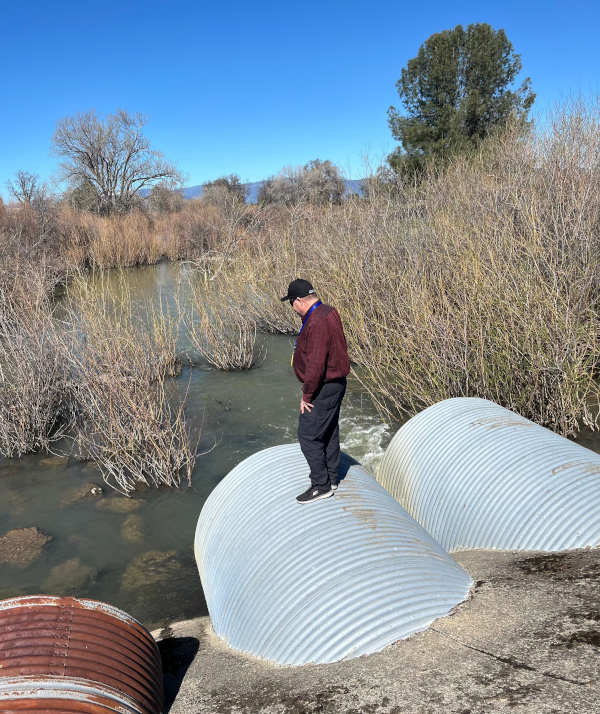
The observation points are spread throughout the county, from Burns Valley Creek to Schindler Creek, Clayton Creek to Scotts Creek, totaling 33 public sites and two private property-sponsored sites, covering a wide range of local tributaries.

The volunteers have attended mandatory training sessions, including in-class and on-field components. They learned how to identify hitch — distinguishing them from other fish in the local streams such as the Sacramento sucker — as well as how to observe environmental factors and use the Survey 123 system to report their findings.

This program of community science is “a form of research that provides everyone, regardless of their background, an opportunity to contribute meaningful data to further our scientific understanding of key issues,” said Chris Childers of Lake County Water Resources — who is one of the hitch program coordinators — during a public presentation on March 13.

Childers noted that the volunteers this year came all from “over the board” in terms of their backgrounds, including a district supervisor, a park ranger, tribal members and agricultural community members

Such community outreach and involvement play a crucial part in hitch preservation, Childers said.

“The more we can get the community involved, and the more we can educate them about these fish, the better the restoration is going to go in the future,” he said. “If nobody knows about this fish, then nobody’s going to care, right?”

Childers said this is the program’s first year and that it will continue annually.

District 4 Supervisor Brad Rasmussen at his hitch observation point at Adobe Creek at Bill Hill Road in Kelseyville, California. Photo courtesy of Brad Rasmussen.

Reporting hitch activity, scientifically

State and local agencies such as the CDFW, Lake County Water Resources, Habematolel Pomo of Upper Lake and Robinson Rancheria all have their own hitch monitoring and surveying programs. Most of them are conducted by hitch experts.

The community observation survey, however, is designed for public participation.

“Theirs is much simpler. I just want 10 weeks of data collection; I just want to know if hitches are present and how many of them are there. So I made it very, very easy for them,” Childers explained in a phone call, adding that the expert version of hitch survey is “more technical.”

“We collect water quality, which means, dissolved oxygen and temperature and pH — these kinds of parameters,” he said. “But for the community scientists, a water quality probe can be anywhere from $5,000 to $30,000 right? I'm not gonna expect people to purchase that kind of equipment.”

Yet, the community scientists make meaningful contributions to monitoring relative hitch population trends over time that will help with “long term management decisions” related to the hitch, Childers said in his presentation.

Such monitoring is beneficial because “we want to see [hitch] presence/absence before and after creek restoration projects and barrier removal efforts,” he said.

Data collected from the volunteers across the sites will also help answer key questions such as: When do hitch enter specific creeks? How long do they remain in each creek?

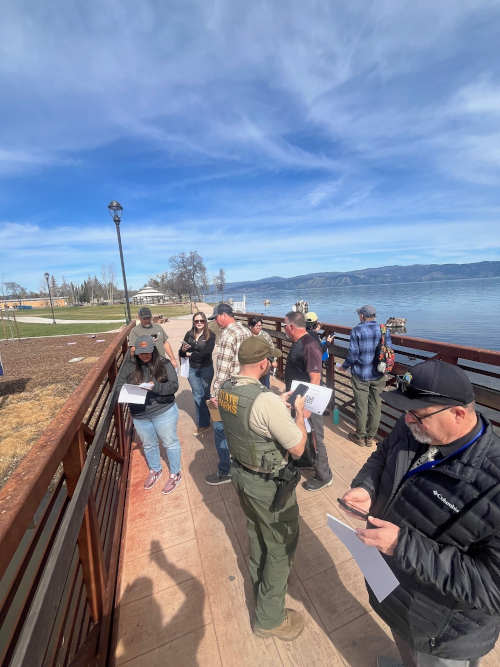
Trained hitch observers at Xabatin Park in Lakeport, California. Photo courtesy of Chris Childers.

Observations from the field

“The first two weeks, I didn’t see any hitch,” said District 4 Supervisor Brad Rasmussen, who is also a volunteer. “And then this week, on Monday, I observed 25 hitches from the observation point.”

Rasmussen’s site is Adobe Creek at Bill Hill Road. He has chosen Sunday as his observation day and usually arrives at noon. But it is OK to deviate by a day, he mentioned, recalling from the training he received.

Childers said that reporting from a day before or after the chosen day is “not a problem.” But going to the site on the same day is the ideal.

“To keep it standardized, the same day is what we’re asking for,” said Childers. “That’s how you eliminate bias from a survey.”

Rasmussen also learned that it is recommended to go to the site between 10 a.m and 4 p.m. because “the sun’s higher and it’s easier to see on the water.”

The observers have been trained to be precise in their reporting.

“I did see more hitch up above the observation point,” said Rasmussen. “But when you’re doing the data entry, you know you have to just report what is from the survey point that you’re assigned.”

So he reported 25 hitches for his site last week with pictures of the fish and the environment. As required, he also uploaded pictures he took of the downstream and upstream from where he stood.

When it comes to identifying hitch in the creek, Rasmussen said he was very confident.

“So that's part of the training to learn what the difference is. And once you learn that, you can easily identify,” he said.

“I’m interested in the hitch and what’s happening with them,” said Rasmussen of why he volunteered. “And also, just to help support the program.”

In fact, the community scientists are asked to report information more than just the number of hitches they see.

They can report mortalities — if they see dead fish, or anything alarming such as trash or oil on the water, Childers explained.

Childers said he was “amazed” and “impressed” by the data quality from the first few weeks’ reporting.

“Just everything that came in the reports were very similar to what I have been seeing in the creeks right now,” he said.

“It could go south or it could go well,” Childers said, referring to the uncertainties surrounding this first-time program. “And it’s going well. So our department is really, really happy about everything that’s going on.”

Email staff reporter Lingzi Chen at This email address is being protected from spambots. You need JavaScript enabled to view it.. 


Hitch video by Rebecca Harper of the Lake County Farm Bureau.

Helping Paws: New terriers and shepherds

LAKE COUNTY, Calif. — Lake County Animal Care and Control has a varied group of dogs this week in need of new families.

The dogs available for adoption this week include mixes of Akita, American blue heeler, Australian shepherd, border collie, Catahoula leopard dog, cattle dog, German shepherd, husky, Labrador Retriever, pit bull terrier, Rottweiler and Siberian husky.

Dogs that are adopted from Lake County Animal Care and Control are either neutered or spayed, microchipped and, if old enough, given a rabies shot and county license before being released to their new owner. License fees do not apply to residents of the cities of Lakeport or Clearlake.

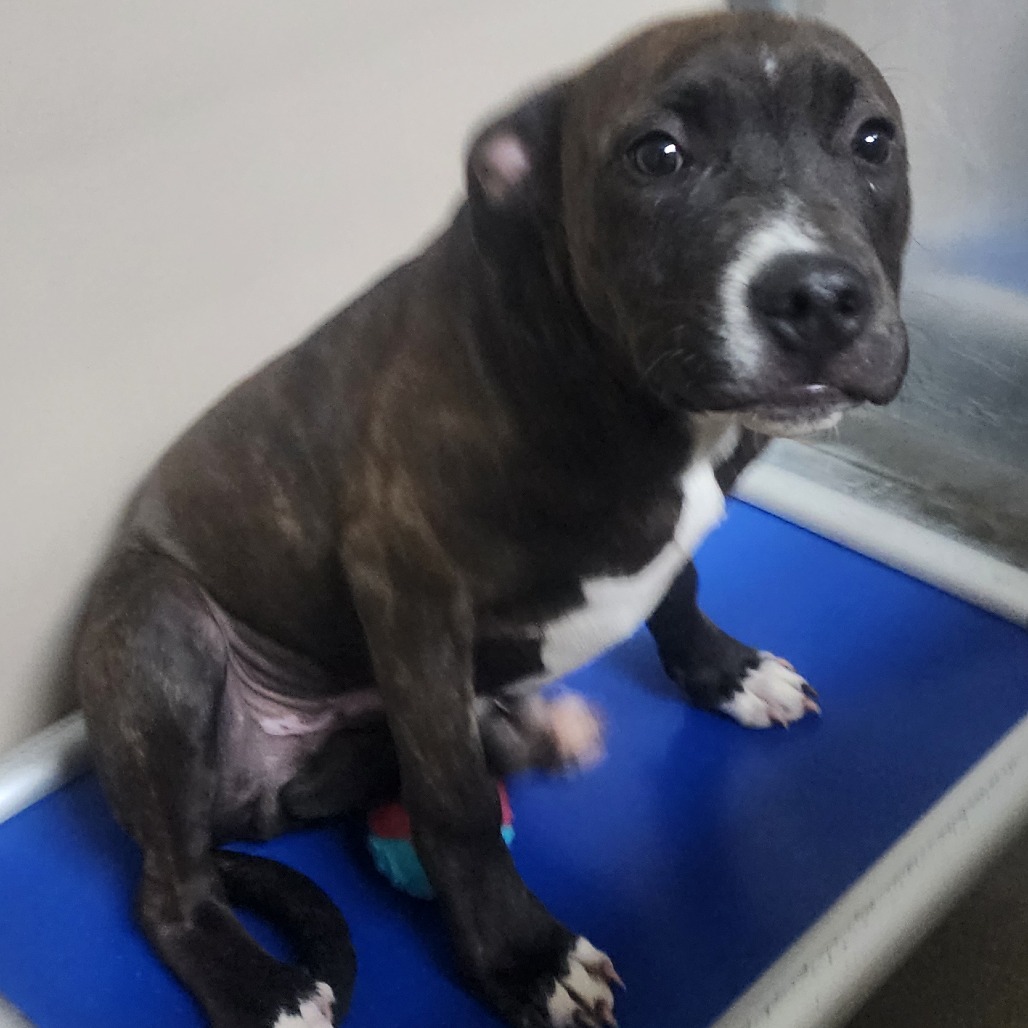
Those dogs and the others shown on this page at the Lake County Animal Care and Control shelter have been cleared for adoption.

Call Lake County Animal Care and Control at 707-263-0278 or visit the shelter online for information on visiting or adopting.

The shelter is located at 4949 Helbush in Lakeport.

Email Elizabeth Larson at This email address is being protected from spambots. You need JavaScript enabled to view it.. Follow her on Twitter, @ERLarson, and on Bluesky, @erlarson.bsky.social. Find Lake County News on the following platforms: Facebook, @LakeCoNews; X, @LakeCoNews; Threads, @lakeconews, and on Bluesky, @lakeconews.bsky.social.


Jet's preview photo
Jet

Hamilton's preview photo
Hamilton

Scout's preview photo
Scout

Sable's preview photo
Sable

Shepp's preview photo
Shepp

Oscar(Brutus)'s preview photo
Oscar(Brutus)

Dolly's preview photo
Dolly

Annie 's preview photo
Annie

Sephire's preview photo
Sephire

Oliver's preview photo
Oliver

Rocco's preview photo
Rocco

Honey's preview photo
Honey

Alma 's preview photo
Alma

Makita's preview photo
Makita

Hariett's preview photo
Hariett

Mila's preview photo
Mila

Beau's preview photo
Beau

Queenie's preview photo
Queenie

Charles's preview photo
Charles

Toby's preview photo
Toby

Timmy's preview photo
Timmy

Mister's preview photo
Mister

Koda's preview photo
Koda

Leia's preview photo
Leia

O'Reiley's preview photo
O'Reiley

Billy's preview photo
Billy

Wheezy 's preview photo
Wheezy

Blizzard 's preview photo
Blizzard

Tony's preview photo
Tony

Dottie's preview photo
Dottie

Kennel#30a's preview photo
Kennel#30a

Kennel#30b's preview photo
Kennel#30b

Kennel #15's preview photo
Kennel #15

Kennel#11a(Puppy)'s preview photo
Kennel#11a(Puppy)

Kennel#11b's preview photo
Kennel#11b

Kennel#16a's preview photo
Kennel#16a

Kennel#16b's preview photo
Kennel#16b

Chia's preview photo
Chia

Kennel#7's preview photo
Kennel#7

Kennel#19's preview photo
Kennel#19

Kennel#18's preview photo
Kennel#18

Kennel#24's preview photo
Kennel#24

Want to stay healthier and fulfilled later in life? Try volunteering


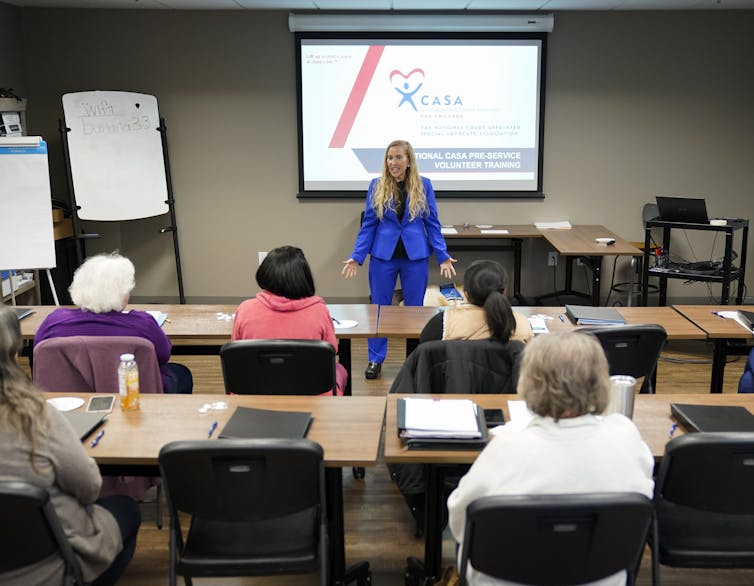
New volunteers get trained in Lexington, Ky., to help out at CASA of Lexington in April 2023. AP Photo/Joshua A. Bickel
Cal J. Halvorsen, Washington University in St. Louis and Seoyoun Kim, University of Michigan

As gerontologists – social scientists who study aging populations – we envision a future in which older people leave a doctor’s visit with a prescription to go volunteer for something.

Does that sound far-fetched? There’s scientific research backing it up.

Good for your health

While spending more than a dozen years researching what happens when older adults volunteer with nonprofits, including churches, we’ve found that volunteers consider themselves to be in better health than their peers who don’t. In addition, their blood pressure is lower, and they appear to be aging more slowly than other people of the same age.

Other researchers have found that volunteering is associated with a lower risk of having a heart attack.

The mental health benefits are just as striking.

Volunteering is tied to having fewer symptoms of depression and being more satisfied with your life. It often brings an instant boost in mood – along with a deeper sense of meaning and purpose.

Even engaging in what’s known as “informal helping” – lending a hand to friends, neighbors or community members in need, without getting paid or participating in an organized program – can help you in similar ways.

There are also health benefits for those who start volunteering much earlier in life.

Children and teens who volunteer tend to have better health and lower levels of anxiety and fewer behavioral problems than those who don’t volunteer.

Changing demographics

The number of U.S. adults at least 62 years old – the earliest age at which you can claim Social Security retirement benefits – has grown by nearly 35 million since 2000, while the number of children and teens under 18 has fallen by nearly 1.5 million. There are now about 76 million Americans over 62 and 71 million under 18.

This change has been gradual. Following a long-term demographic shift, record numbers of Americans are reaching retirement age.

Benefits for society and the economy

The benefits of volunteering aren’t just for the volunteers themselves.

The total value of the hours of unpaid work volunteers put in totals an estimated US$170 billion each year, according to AmeriCorps, the federal agency focused on national and community service.

And participating in community service programs can lead to better job prospects for volunteers, that same agency has found.

AmeriCorps Seniors, which focuses on engaging volunteers ages 55 and older, runs programs that offer major benefits to their communities. These include the Foster Grandparent program, which connects older adult mentors to children, and the Senior Companion program, which connects volunteers to older adults seeking some help to continue living independently in their own homes.

A current AmeriCorps Seniors pilot program is helping adults 55 and up, who can have more trouble landing new jobs than younger people, gain new job skills through their community service.

People of all ages can get together through volunteering. Some organizations intentionally encourage this kind of intergenerational cooperation, including CoGenerate and Generations United.

Rebuilding communities

Researchers have also found that volunteering may increase trust within a community, especially when it brings together people from different backgrounds.

It can strengthen “social cohesion,” a term researchers use to describe how much people bond and help each other, and reduce prejudice.

Volunteers’ views on social issues may change through their work, too: More than 4 in 5 adults over 55 who tutored public school students to strengthen their reading skills in the national Experience Corps program, for example, stated that their views on public education evolved as a result. Those volunteers expressed more support for public education and said they’d be more likely to vote in favor of spending on schools.

An American pastime

Our findings are backed by science, but they also have roots in American history.

Alexis de Tocqueville – a French philosopher and diplomat who arrived in the United States in 1831 to study the new nation’s penal system – was so impressed by the scale of volunteering in the U.S. that he wrote about it in his 1835 book “Democracy in America.”

Tocqueville observed that “Americans of all ages, all conditions, all minds” were likely to unite in many kinds of groups or associations.

More recently, former U.S. Surgeon General Vivek Murthy has said that volunteering can strengthen communities, and that “community is a powerful source of life satisfaction and life expectancy.”

If you aren’t volunteering today, here are a few ideas to help you begin.

Start small. Try joining an organization or association in your community, taking part in neighborhood cleanups or volunteering at your local senior center, animal shelter or museum. Love gardening? You can take care of local parks, conservation areas, community gardens and more.

Once you’re ready for a bigger commitment, consider becoming a mentor through programs such as OASIS Intergenerational Tutoring or Big Brothers Big Sisters.

And consider a more extensive level of commitment to organizations or causes you care deeply about. This might include joining a nonprofit board of directors, volunteering more hours, or taking on a volunteer leadership role.

At a time when trust is eroding and divisions seem insurmountable, volunteering offers something rare: an evidence-backed way to reconnect with communities, institutions and each other.

Reach out to your favorite nonprofit, visit Volunteer.gov or VolunteerMatch.org, or connect with a nonprofit resource center, a regional United Way or a community foundation to find volunteer opportunities near you.The Conversation

Cal J. Halvorsen, Associate Professor of Social Work, Washington University in St. Louis and Seoyoun Kim, Associate adjunct of Sociology, University of Michigan

This article is republished from The Conversation under a Creative Commons license. Read the original article.

Earth News: NASA takes to the air to study wildflowers

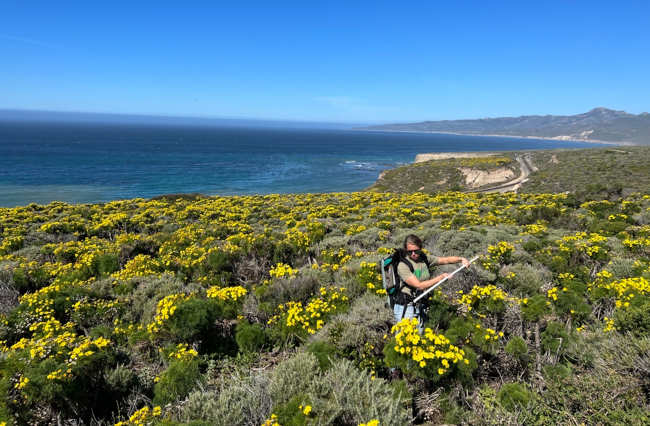
Researcher Ann Raiho measures sunlight interacting with yellow Coreopsis gigantea flowers during field work in the Jack and Laura Dangermond Preserve in California’s Santa Barbara County in 2022. Photo courtesy of NASA/Yoseline Angel.

For many plant species, flowering is biologically synced with the seasons. Scientists are clocking blooms to understand our ever-changing planet.

NASA research is revealing there’s more to flowers than meets the human eye. A recent analysis of wildflowers in California shows how aircraft- and space-based instruments can use color to track seasonal flower cycles. The results suggest a potential new tool for farmers and natural-resource managers who rely on flowering plants.

In their study, the scientists surveyed thousands of acres of nature preserve using a technology built by NASA’s Jet Propulsion Laboratory in Southern California. The instrument — an imaging spectrometer — mapped the landscape in hundreds of wavelengths of light, capturing flowers as they blossomed and aged over the course of months.

It was the first time the instrument had been deployed to track vegetation steadily through the growing season, making this a “first-of-a-kind study,” said David Schimel, a research scientist at JPL.

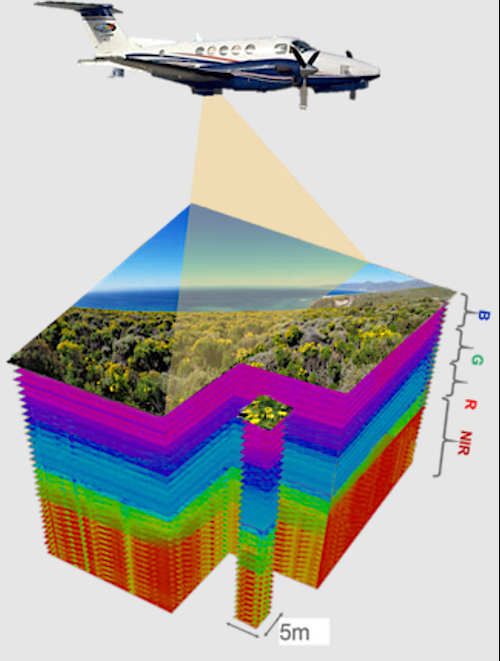
A diagram shows an airplane flying over a landscape with a yellow cone representing data collection. Below, a 3D block represents the landscape with stacked color layers labeled B, G, R, and NIR. A ruler indicates 5m.

For many plant species from crops to cacti, flowering is timed to seasonal swings in temperature, daylight, and precipitation. Scientists are taking a closer look at the relationship between plant life and seasons — known as vegetation phenology — to understand how rising temperatures and changing rainfall patterns may be impacting ecosystems.

Typically, wildflower surveys rely on boots-on-the-ground observations and tools such as time-lapse photography. But these approaches cannot capture broader changes that may be happening in different ecosystems around the globe, said lead author Yoseline Angel, a scientist at the University of Maryland-College Park and NASA’s Goddard Space Flight Center in Greenbelt, Maryland.

“One challenge is that compared to leaves or other parts of a plant, flowers can be pretty ephemeral,” she said. “They may last only a few weeks.”

To track blooms on a large scale, Angel and other NASA scientists are looking to one of the signature qualities of flowers: color.

In this illustration, an imaging spectrometer aboard a research plane measures sunlight reflecting off California coastal scrub. In the data cube below, the top panel shows the true-color view of the area. Lower panels depict the spectral fingerprint for every point in the image, capturing the visible range of light (blue, green, and red wavelengths) to the near-infrared (NIR) and beyond. Spatial resolution is around 16 feet (5 meters). Image courtesy of NASA.

Mapping native shrubs

Flower pigments fall into three major groups: carotenoids and betalains (associated with yellow, orange, and red colors), and anthocyanins (responsible for many deep reds, violets, and blues). The different chemical structures of the pigments reflect and absorb light in unique patterns.

Spectrometers allow scientists to analyze the patterns and catalog plant species by their chemical “fingerprint.” As all molecules reflect and absorb a unique pattern of light, spectrometers can identify a wide range of biological substances, minerals, and gases.

Handheld devices are used to analyze samples in the field or lab. To survey moons and planets, including Earth, NASA has developed increasingly powerful imaging spectrometers over the past 45 years.

One such instrument is called AVIRIS-NG (short for Airborne Visible/InfraRed Imaging Spectrometer-Next Generation), which was built by JPL to fly on aircraft. In 2022 it was used in a large ecology field campaign to survey vegetation in the Jack and Laura Dangermond Preserve and the Sedgwick Reserve, both in Santa Barbara County. Among the plants observed were two native shrub species — Coreopsis gigantea and Artemisia californica — from February to June.

The scientists developed a method to tease out the spectral fingerprint of the flowers from other landscape features that crowded their image pixels. In fact, they were able to capture 97% of the subtle spectral differences among flowers, leaves, and background cover (soil and shadows) and identify different flowering stages with 80% certainty.

NASA’s AVIRIS sensors have been used to study wildfires, World Trade Center wreckage, and critical minerals, among numerous airborne missions over the years. AVIRIS-3 is seen here on a field campaign in Panama, where it helped analyze vegetation in many wavelengths of light not visible to human eyes. Image courtesy of NASA/Shawn Serbin.

Predicting superblooms

The results open the door to more air- and space-based studies of flowering plants, which represent about 90% of all plant species on land. One of the ultimate goals, Angel said, would be to support farmers and natural resource managers who depend on these species along with insects and other pollinators in their midst. Fruit, nuts, many medicines, and cotton are a few of the commodities produced from flowering plants.

Angel is working with new data collected by AVIRIS’ sister spectrometer that orbits on the International Space Station. Called EMIT (Earth Surface Mineral Dust Source Investigation), it was designed to map minerals around Earth’s arid regions. Combining its data with other environmental observations could help scientists study superblooms, a phenomenon where vast patches of desert flowers bloom after heavy rains.

One of the delights of researching flowers, Angel said, is the enthusiasm from citizen scientists. “I have social media alerts on my phone,” she added, noting one way she stays on top of wildflower activity around the world.

The wildflower study was supported as part of the Surface Biology and Geology High-Frequency Time Series (SHIFT) campaign. An airborne and field research effort, SHIFT was jointly led by the Nature Conservancy, the University of California, Santa Barbara, and JPL. Caltech, in Pasadena, manages JPL for NASA.

The AVIRIS instrument was originally developed through funding from NASA’s Earth Science Technology Office.

Sally Younger writes for NASA’s Earth Science News Team.

Department of Interior to reconsider Scotts Valley Pomo’s Vallejo casino approval

NORTHERN CALIFORNIA — Days after a federal lawsuit was filed over the approval of a casino proposed by the Scotts Valley Pomo tribe in Vallejo, the Department of Interior said it is reconsidering the project.

The news was communicated to Scotts Valley and several tribes opposing its casino plan in a letter from the Department of Interior this week.

The Department of the Interior under the Biden Administration approved the fee-to-trust proposal for Scotts Valley’s project at the start of January, over the objections of tribes and other community leaders and residents in and around Vallejo.

Scotts Valley, based near Lakeport, proposes to build a $700 million, 400,000-square-foot mega casino complex, along with 24 homes and an administrative building, on a 128-acre site near I-80 and Highway 37.

The Yocha Dehe Wintun Nation said the site is on its ancestral land, and that the development will destroy important cultural sites, including a quarry.

On Monday, the Yocha Dehe, which owns Cache Creek Casino in Yolo County, and the Kletsel Dehe Band of Wintun Indians, a nongaming tribe based in Colusa County, filed a lawsuit challenging the Department of the Interior’s casino decision, as Lake County News has reported.

In response, Scotts Valley said the litigation is unmerited and called it an “anti-competitive lawsuit.”

In a letter to Scotts Valley Tribal Chairman Shawn Davis dated March 27, Scott Davis, senior advisor to new Secretary of the Interior Doug Burgum, explained that on Jan. 10, then-Principal Deputy Assistant Secretary - Indian Affairs Wizipan Garriot issued a decision to take the 160.33-acre parcel in the city of Vallejo in trust for gaming purposes for the Scotts Valley Band.

Scott Davis’ letter explained that the decision included two determinations — one that found that the site was eligible for gaming under the restored lands exception of the Indian Gaming Regulatory Act and the Department of the Interior's gaming eligibility determination regulations, and the second, that the site may be taken into trust pursuant to the Indian Reorganization Act
and the agency’s trust determination.

“The Gaming Eligibility Determination replaces a 2019 Indian Lands Opinion that was remanded to the Department on September 30, 2022,” Scott Davis said in his letter, referencing the outcome of a federal lawsuit Scotts Valley had filed against the Department of Interior.

Davis’ letter continued, “This letter is to inform you that, while the Trust Determination still stands and the Vallejo Site remains in trust, the Department is temporarily rescinding the Gaming Eligibility Determination for reconsideration.'”

That action, Davis said, is taken pursuant to law that gives the secretary of the Interior “broad authority to review and reconsider any decision of the Department.”

In this case, “The Secretary is concerned that the Department did not consider additional evidence submitted after the 2022 Remand. During the pendency of this reconsideration, neither the Tribe nor any other entity or person should rely on the Gaming Eligibility Determination,” Davis said.

The tribes that sued the Department of the Interior over the Vallejo casino project greeted the decision with optimism.

“For more than a year, we have requested that the Department of the Interior establish a fair, transparent, fact-based decision-making process in which all tribes can participate on equal footing,” said Yocha Dehe Chairman Anthony Roberts. “It’s hard to know why the Biden Administration refused to follow these basic principles, but we’re glad the incoming Administration is committed to getting it right. This is about more than just a single project. It is about ensuring all tribal voices are honored and heard.”

Roberts added, “Nothing is more important than our ancestral homelands, and to see them stripped away without consultation by the Biden Administration was extremely painful. We applaud Secretary Burgum for beginning the process to right that wrong, and we look forward to working with him to ensure our lands and cultural resources are protected for generations to come.”

Chairman Charlie Wright of the Kletsel Dehe Wintun Nation also lauded Interior’s decision.

“Kletsel Dehe is pleased that the Department of the Interior appears to be taking our concerns seriously, and we look forward to participating in a fair, transparent reconsideration process,” Wright said.

In response to the action, Scotts Valley Tribal Chairman Shawn Davis maintained, “The evidence supporting our tribe’s gaming approval under the restored lands exception is robust, well-documented, and consistent with prior rulings from the department and federal courts. It was the product of many years of thorough study and review. While we are disappointed in the arbitrary decision to reopen a review that already correctly granted our gaming rights, we know we will win on the merits. Our progress will continue towards the development of our homeland to the benefit of our members and our neighbors across Vallejo and Solano County.

Shawn Davis said Interior’s “unilateral reversal, based on the submission of materials by a competitor tribe, disrespects the sovereignty of the Scotts Valley Band and is inconsistent with law and appropriate process. It is unconscionable to reopen a final determination based solely on the objections of a competitor, especially considering they just repackage previously considered and rejected arguments. The greed of the Yocha Dehe Wintun Nation is disgusting. Despite their billions of dollars, they aren’t satisfied. The Scotts Valley Band will not be bullied, and we won’t back down.”

He added, “Scotts Valley’s restoration, federal recognition status, and demonstrated historical connection to the lands remain unchanged. Our tribe and the city of Vallejo have long been underdogs, and we are unimpeded in working together for a brighter future for all residents.

The Department of Interior invited the tribes and other interested parties to submit evidence and/or legal analysis regarding whether the Vallejo site qualifies as restored lands under federal laws.

To ensure that they have all of the relevant materials, they ask that any documents submitted after the September 2022 remand related to the federal course decision should resubmit them by providing them to the director of the Office of Indian Gaming, at 1849 C. Street NW, MS-3543, Washington, DC 20240, or at This email address is being protected from spambots. You need JavaScript enabled to view it..

The deadline for submissions is Friday, May 30.

For more information on the opposition to the project visit www.protecttribalhomelands.com. 

To learn more about the studies conducted and the proposed project from Scotts Valley’s perspective, visit https://www.scottsvalleycasinoea.com/. 

Email Elizabeth Larson at This email address is being protected from spambots. You need JavaScript enabled to view it.. Follow her on Twitter, @ERLarson, and on Bluesky, @erlarson.bsky.social. Find Lake County News on the following platforms: Facebook, @LakeCoNews; X, @LakeCoNews; Threads, @lakeconews, and on Bluesky, @lakeconews.bsky.social.

2025.03.27 DOI Letter Re Reconsideration of Scotts Valley Jan. 10th Decision by LakeCoNews on Scribd

  • 223
  • 224
  • 225
  • 226
  • 227
  • 228
  • 229
  • 230
  • 231
  • 232

Community

  • Lake County Wine Alliance offers sponsor update; beneficiary applications open 

  • Mendocino National Forest announces seasonal hiring for upcoming field season

Public Safety

  • Lakeport Police logs: Thursday, Jan. 15

  • Lakeport Police logs: Wednesday, Jan. 14

Education

  • Woodland Community College receives maximum eight-year reaffirmation of accreditation from ACCJC

  • SNHU announces Fall 2025 President's List

Health

  • California ranks 24th in America’s Health Rankings Annual Report from United Health Foundation

  • Healthy blood donors especially vital during active flu season

Business

  • Two Lake County Mediacom employees earn company’s top service awards

  • Redwood Credit Union launches holiday gift and porch-to-pantry food drives

Obituaries

  • Rufino ‘Ray’ Pato

  • Patty Lee Smith

Opinion & Letters

  • The benefits of music for students

  • How to ease the burden of high electric bills

Veterans

  • CalVet and CSU Long Beach team up to improve data collection related to veteran suicides

  • A ‘Big Step Forward’ for Gulf War Veterans

Recreation

  • Wet weather trail closure in effect on Upper Lake Ranger District

  • Mendocino National Forest seeking public input on OHV grant applications

  • State Parks announces 2026 Anderson Marsh nature walk schedule 

  • BLM lifts seasonal fire restrictions in central California

Religion

  • Kelseyville Presbyterian to host Ash Wednesday service and Lenten dinner Feb. 18

  • Kelseyville Presbyterian Church to hold ‘Longest Night’ service Dec. 21

Arts & Life

  • Auditions announced for original musical ‘Even In Shadow’ set for March 21 and 28

  • ‘The Rip’ action heist; ‘Steal’ grounded in a crime thriller

Government & Politics

  • Lake County Democrats issue endorsements in local races for the June California Primary

  • County negotiates money-saving power purchase agreement

Legals

  • March 3 hearing on ordinance amending code for commercial cannabis uses

  • Feb. 12 public hearing on resolution to establish standards for agricultural roads

How to resolve AdBlock issue?
Refresh this page