LAKEPORT, Calif. – The Board of Supervisors this week will host a visit from California’s United States Department of Agriculture Rural Development director.
The board will meet beginning at 9 a.m. Tuesday, April 3, in the board chambers on the first floor of the Lake County Courthouse, 255 N. Forbes St., Lakeport.
The meeting can be watched live on Channel 8 and online at https://countyoflake.legistar.com/Calendar.aspx. Accompanying board documents, the agenda and archived board meeting videos also are available at that link.
At 9:30 a.m., the board will get a presentation from California USDA Rural Development Director Kim Vann.
Vann, a former Colusa County supervisor, was appointed to oversee USDA Rural Development’s California operations in November by President Donald Trump, as Lake County News has reported.
She will speak to the board about housing and economic development projects in Lake County.
The full agenda follows.
CONSENT AGENDA
7.1: Adopt the resolution of support for protection of our ocean and coast from offshore drilling and fracking.
7.2: Approve minutes of the Board of Supervisors meetings held March 13 and March 20.
7.3: (a) Adopt a resolution amending adopted budget for FY 2017-18 to establish Fund 64 – Cannabis Fees and Taxation, Budget Unit 1072 – Cannabis Program; and (b) adopt a resolution amending Resolution No. 2017-125 Establishing Position Allocations for Fiscal Year 2017-2018, Budget Unit No. 1122, Treasurer – Tax Collector, Budget Unit No. 2201, Sheriff – Coroner, Budget Unit No. 2602, Building and Safety, Budget Unit No. 2702, Planning.
7.4: Sitting as the Lake County Air Quality Management District Board of Directors, approve waiver of the 900 hour limitation for Extra Help Secretary 1 / Field Worker 1 Robert Boss.
7.5: Approve agreement between county of Lake and CliftonLarsonAllen LLP for audit services for fiscal years ending June 30, 2018, and June 30, 2019.
7.6: Approval request for advance step hiring of mental health specialist II, Step 5 for Dr. Andrea Bruce.
7.7: (a) Approve waiver of the 900-hour extra help limitation for extra help district attorney investigator aides, Robert McPherson and Billy Newsom and (b) approve waiver of the 900-hour extra help limitation for extra help information tech support tech I, Ryan Clair.
7.8: Adopt proclamation designating the month of April 2018 as Child Abuse Prevention Month in Lake County.
7.9: Authorize the Public Services director/assistant purchasing agent to increase the purchase order to Geologic Computer Systems in the amount of $550 for a revised amount not to exceed $119,838.88, due to out of state sales tax that was not included in the original request.
7.10: Adopt resolution approving right of way certification for the HSIP Cycle 8 Upgrade Warning Signs and Striping Project - State Agreement No. HSIPL-5914 (113).
7.11: Approve contract between county of Lake and Redwood Community Services Inc. for family wraparound services in the amount of $360,000 from Jan. 1 to Dec. 31, 2018, and authorize the chair to sign.
7.12: Approve agreement #EW-2018-14 between the Regents of the University of California at Davis and the Lake County Department of Social Services for training services in the amount of $122,400 from July 1, 2018, to June 30, 2019 and authorize the chair to sign.
7.13: Approve agreement between the county of Lake and Bid4Assets Inc. for the period of Jan. 1 through Dec. 31, 2018, for tax default public auction services for an amount not to exceed $30,000; and authorize the chair to sign.
TIMED ITEMS
8.2, 9:10 a.m.: Presentation of proclamation designating the month of April 2018 as Child Abuse Prevention Month in Lake County.
8.3, 9:15 a.m.: Public hearing, consideration of resolution approving resolutions and capital fire facility and equipment plans submitted by Lake County fire agencies and updating the Lake County Capital Fire Facility and Equipment Plan. Continued from March 20.
8.4, 9:30 a.m.: Presentation by Kim Vann, state director of USDA-Rural Development in California, to discuss housing and economic development projects in Lake County.
UNTIMED ITEMS
9.2: Continued from March 13, consideration of board appointment to the Building Board of Appeals.
CLOSED SESSION
10.1: Public employee evaluations: Information technology director, Water Resources director.
10.2: Employee grievance complaint pursuant to Gov. Code sec. 54957.
Email Elizabeth Larson at This email address is being protected from spambots. You need JavaScript enabled to view it.. Follow her on Twitter, @ERLarson, or Lake County News, @LakeCoNews.
LAKEPORT, Calif. – The Lakeport City Council this week will hold a public hearing on an ordinance to give an earlier deadline for hazardous weed removal and present proclamations to increase awareness of sexual assault, child abuse and human trafficking.
The council will meet in closed session at 5:30 p.m. Tuesday, April 3, to discuss negotiations with Lake County Tribal Health for property located at 902 Bevins Court before the public portion of the meeting begins at 6 p.m. in the council chambers at Lakeport City Hall, 225 Park St.
At the start of the meeting, the council will present proclamations designating April as Sexual Assault Awareness Day and Child Abuse Prevention Month to Lake Family Resource Center staff, and a proclamation designating April 14 as Human Trafficking Awareness Day to the Soroptimist International of Clear Lake.
On the agenda is a public hearing on a new hazardous weed abatement ordinance which will change the date in which dry vegetation creating fire hazard conditions on private property must be abated from early July to June 1.
Under business, council members will approve the updated Sewer System Management Plan and direct staff to complete the update certification process in the State Water Resources Board’s electronic database.
The city clerk also will present a proposed resolution adopting an email retention policy and will ask the council to appoint a member to serve as the Lakeport representative to the Public, Educational and Governmental Channel Board of Directors with a term expiring on the first Monday of January 2020.
Police Chief Brad Rasmussen also will give an update on police activity in the first quarter of 2018.
Items on the consent agenda – items considered noncontroversial and usually accepted as a slate on one vote – are ordinances; minutes of the council’s regular meeting on March 20 and the special meeting of March 27; approval of Application 2018-012, with staff recommendations, for the quagga mussel outreach booth to be set up at the Third Street boat ramp during summer events in Library Park; approval of Application 2018-013, with staff recommendations, for the Walk for Life event to be held on May 5; adoption of a resolution approving the compensation and benefits program for the city of Lakeport Unrepresented Employees for the period of March 1, 2018 through June 30, 2020; adoption of a proposed resolution opposing the Tax Fairness, Transparency and Accountability Act of 2018; and receipt and filing of the Public, Educational and Governmental Channel fiscal year 2018-19 budget.
Email Elizabeth Larson at This email address is being protected from spambots. You need JavaScript enabled to view it.. Follow her on Twitter, @ERLarson, or Lake County News, @LakeCoNews.
LAKE COUNTY, Calif. – Lake County Animal Care and Control has had an influx of German Shepherds, which join a group of other dogs needing new homes.
In addition to the German Shepherds, dogs available for adoption this week include mixes of Labrador Retriever, pit bull, shepherd and terrier.
Dogs that are adopted from Lake County Animal Care and Control are either neutered or spayed, microchipped and, if old enough, given a rabies shot and county license before being released to their new owner. License fees do not apply to residents of the cities of Lakeport or Clearlake.
If you're looking for a new companion, visit the shelter. There are many great pets hoping you'll choose them.
The following dogs at the Lake County Animal Care and Control shelter have been cleared for adoption (additional dogs on the animal control Web site not listed are still “on hold”).
This female shepherd mix puppy is in kennel No. 2a, ID No. 9732. Photo courtesy of Lake County Animal Care and Control.
Female shepherd mix puppy
This female shepherd mix puppy has a short black and tan coat.
She is in kennel No. 2a, ID No. 9732.
This female shepherd mix puppy is in kennel No. 2b, ID No. 9733. Photo courtesy of Lake County Animal Care and Control.
Female shepherd mix puppy
This female shepherd mix puppy has a short tan coat.
She is in kennel No. 2b, ID No. 9733.
This female pit bull terrier in kennel No. 7, ID No. 9588. Photo courtesy of Lake County Animal Care and Control.
Pit bull terrier
This female pit bull terrier has a short brown and blue coat.
She’s in kennel No. 7, ID No. 9588.
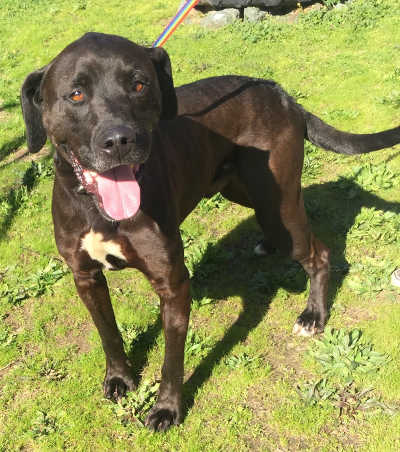
This male pit bull-Labrador Retriever mix is in kennel No. 11, ID No. 9591. Photo courtesy of Lake County Animal Care and Control.
Pit bull-Labrador Retriever mix
This male pit bull-Labrador Retriever mix has a short black coat.
He already has been neutered.
He’s in kennel No. 11, ID No. 9591.
This female German Shepherd is in kennel No. 12, ID No. 9657. Photo courtesy of Lake County Animal Care and Control.
Female German Shepherd
This female German Shepherd has a short black and tan coat.
She is in kennel No. 12, ID No. 9657.
This male terrier mix is in kennel No. 18, ID No. 9659. Photo courtesy of Lake County Animal Care and Control.
Terrier mix
This male terrier mix has a tan and white coat.
He already has been neutered.
He is in kennel No. 18, ID No. 9659.
This female pit bull terrier is in kennel No. 19, ID No. 9711. Photo courtesy of Lake County Animal Care and Control.
Female pit bull terrier
This female pit bull terrier has a short blue coat with white markings.
She’s in kennel No. 19, ID No. 9711.
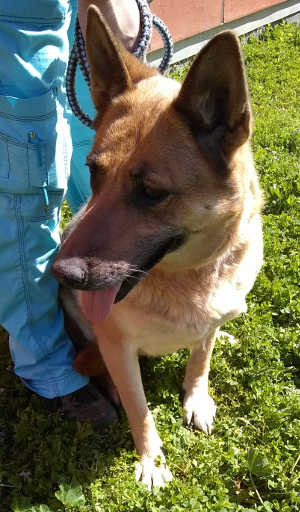
“Camilia” is a female German Shepherd mix in kennel No. 20, ID No. 9694. Photo courtesy of Lake County Animal Care and Control.
‘Camilia’
“Camilia” is a female German Shepherd mix with a long black and brown coat.
She’s in kennel No. 20, ID No. 9694.
“Onyx” is a female shepherd mix in kennel No. 22, ID No. 4174. Photo courtesy of Lake County Animal Care and Control.
‘Onyx’
“Onyx” is a female shepherd mix.
She has a medium-length black coat with white markings, and already has been spayed.
She’s in kennel No. 22, ID No. 4174.
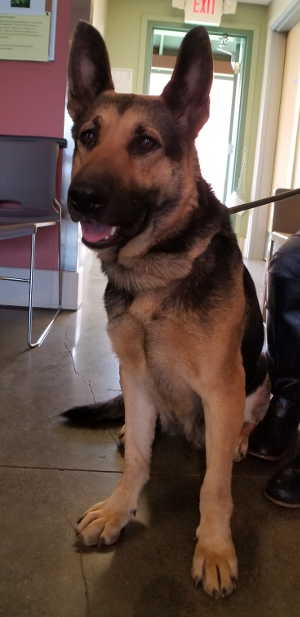
This female German Shepherd is in kennel No. 25, ID No. 9708. Photo courtesy of Lake County Animal Care and Control.
Female German Shepherd
This female German Shepherd has a medium-length tan and black coat.
She’s in kennel No. 25, ID No. 9708.
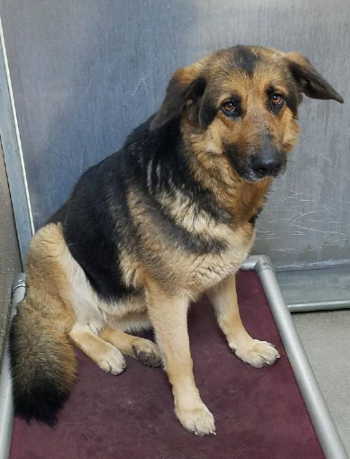
This female German Shepherd is in kennel No. 26, ID No. 9707. Photo courtesy of Lake County Animal Care and Control.
Female German Shepherd
This female German Shepherd has a medium-length black and tan coat.
She’s in kennel No. 26, ID No. 9707.
This female German Shepherd is in kennel No. 27, ID No. 9706. Photo courtesy of Lake County Animal Care and Control.
Female German Shepherd
This female German Shepherd has a medium-length tan and black coat.
She’s in kennel No. 27, ID No. 9706.
This female German Shepherd is in kennel No. 28, ID No. 9710. Photo courtesy of Lake County Animal Care and Control.
Female German Shepherd
This female German Shepherd has a medium-length tan and black coat.
She’s in kennel No. 28, ID No. 9710.
This female German Shepherd is in kennel No. 29, ID No. 9709. Photo courtesy of Lake County Animal Care and Control.
Female German Shepherd
This female German Shepherd has a short black and tan coat.
She’s in kennel No. 29, ID No. 9709.
Lake County Animal Care and Control is located at 4949 Helbush in Lakeport, next to the Hill Road Correctional Facility.
Office hours are Monday through Friday, 11 a.m. to 5 p.m., and 11 a.m. to 3 p.m., Saturday. The shelter is open from 11 a.m. to 4 p.m. Monday through Friday and on Saturday from 11 a.m. to 3 p.m.
For more information call Lake County Animal Care and Control at 707-263-0278.
Email Elizabeth Larson at This email address is being protected from spambots. You need JavaScript enabled to view it.. Follow her on Twitter, @ERLarson, or Lake County News, @LakeCoNews.
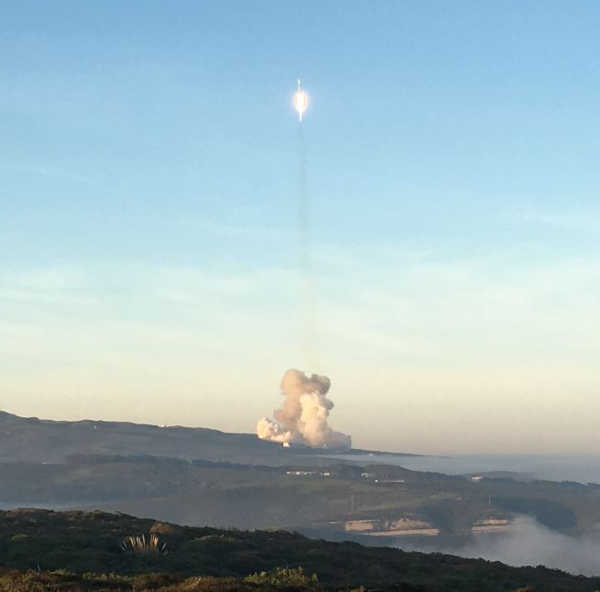
The SpaceX Falcon 9 rocket launched on Friday, March 30, 2018, at Vandenberg Air Force Base in California. Photo by Jerome Strach.
VANDENBERG AIR FORCE BASE, Calif. – As a rising sun held back an encroaching fog slithering from both the nearby coastline and the inland farmland on Friday, fueling vapor could be seen escaping from the SpaceX Falcon 9 rocket perched at the launch tower.
The rocket configuration, or “stack,” launched from Vandenberg Air Force Base where several SpaceX launches have taken place in recent years.
This particular payload, consisting of 10 Iridium NEXT satellites, were secured at the top of the 230-foot-tall rocket, protected inside an eggshell-shaped nose cone known as a fairing.
This fairing protects the payload during ascent as the rocket screams through the atmosphere and then is discarded once the rocket moves beyond Earth’s protective layer, about three minutes and 28 seconds after liftoff.
The Iridium-5 launch is the fifth cluster of satellites out of 10 launches that will strive to form an upgraded web of communication technology around the globe.
SpaceX will be responsible for eight payloads with each launch delivering on average nine satellites for a total of 75 in all. This web will assist people as they utilize the Internet of Things, or IoT, accessible by an enormous array of various technological components.
The instantaneous launch window Friday was at 7:13 a.m. and as planned the rocket catapulted off the launchpad at T-minus zero.
SpaceX continues to demonstrate the reliability of their reusable hardware as this rocket booster, the first stage, flew previously on another mission and was prepared for this flight.
In fact, Iridium points out this Falcon 9 rocket first stage previously carried the third set of 10 Iridium NEXT satellites to orbit back in October of 2017.
Previously flown hardware is often described by SpaceX as “flight-proven.” Veteran rocket boosters from SpaceX are easily spotted from the visual scarring which can be seen on the vehicle as dark marks reflecting the intense heat the booster experiences as it descends back through the atmosphere.
The Iridium-5 mission suffered a temporary setback during launch preparation when a problem with a harness on a satellite provided concerning data.
“We don’t want to launch a brick,” Iridium CEO Matt Desch explained, referring to an unresponsive satellite.
This problem was detected only hours prior to launch and it would be determined that an external testing harness was to blame. Once the problem was identified and corrected, all activity for launch proceeded as normal.
After the first and second stage separation of the Falcon 9 rocket occurs, the second stage initiates thrust from its vacuum Merlin engine and then shuts down for 43 minutes during what is commonly referred to as a coast phase.
Upon restart and a short burn, the second stage has then ensured the satellite payload has achieved the desired trajectory. About 57 minutes into the flight, the 10 satellites began a timed release sequence distributing each satellite not unlike a string of pearls across the sky.
Once each satellite is powered and makes contact with ground crews, they will eventually propel themselves into their desired altitudes and orbits.
When the successful launch and deployment of Iridium’s NEXT payload occurred, Desch provided these remarks. "The new satellites and services we're launching and continued strong subscriber growth are cementing our position as an industry leader and critical global communications platform and underscore the significant transformation we've undergone as a company over the last 10 years. This truly is a testament to the trust our partners and customers have in our network, which is only going to continue growing as the deployment of the Iridium NEXT constellation nears completion."
The partnership between SpaceX and Iridium has proven to be a successful endeavor as SpaceX provides the launch services Iridium needs to advance their technological edge over competitors. There are still a few more planned launches this year with the manifest indicating launches taking place in May, June and August, but those predicted dates can easily change.
Lake County resident Jerome Strach is a Lake County News correspondent and photographer.
Satellites weighing in at 600 kilograms (~1,300 lbs). Photo Credit: SpaceX/Iridium.
An ink drawing of the “Great Locomotive Chase.” Wikimedia Commons image.
In retrospect, it was a very brave, if ill-conceived, plan.
Or maybe it was a very ill-conceived, if brave, plan – 150 years later and the jury is still out. But then again, any venture that posterity dubs the “Great Locomotive Chase” has got to have a good deal of bravery and foolhardiness in equal measure.
Don’t let the name fool you, though, the great chase had a lot riding on it – the potential collapse of the Confederate Army in the west to be exact.
It was spring in 1862 and the Civil War was approaching the end of its first long year. In the western theatre, the tide was turning in favor of the Union, with General Curtis scoring a victory at Pea Ridge in Arkansas and General Grant capturing Fort Donelson along the Kentucky-Tennessee border.
On all fronts, the men in blue had the rebels whipped. Following up these victories, the Union commander of the theater ordered his two armies to gather together, the better to fend off a massing of Confederate troops in Corinth, Mississippi.
The subsequent clash between the opposing forces kicked off the bloody battle of Shiloh. That first day of fighting nearly saw the complete collapse of the Union Army, as a tide of gray-clad demons emerged from the predawn fog and caught the Yankees with their pants down.
As the exhausted and bloody-nosed Union troops bedded down for the night at Shiloh, General Ormsby Mitchell considered his predicament.
Mitchell was 200 miles to the east, in command of 8,000 soldiers. Now that the Union army to the west was engaged with a considerable force of rebels at Shiloh, he needed to plan his next move wisely.
Recognizing that in their haste to ambush the enemy, the Confederate army had left the city of Chattanooga loosely defended, General Mitchell began sketching out a plan to deal a deadly blow.
The city of Chattanooga was a vital connection point for the Confederates, located as it was at the intersection of major railway lines leading throughout the south. Capturing that city would open a gateway for the Union to launch campaigns deep into enemy territory, cutting the Confederate Army in the west in two.
But in order to achieve such a victory, Mitchell needed to ensure that the enemy couldn’t reinforce the beleaguered defenders of Chattanooga once his assault was underway. So the general turned to an unlikely source for help: a spy.
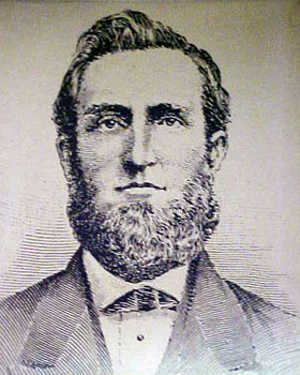
James Andrews hailed from Kentucky, and when word of the war reached him, he threw his hat in with the Union. Since he had lived in the area of operations for a few years already, the Union commanders saw fit to take advantage of his local knowledge, and a spy was born.
General Mitchell invited James Andrews into his tent the night of April 6. By the tattered light of a single candle, Andrews and \ Mitchell hatched an audacious plan.
Andrews, dressed in civilian clothes, would lead 23 similarly-disguised soldiers to Atlanta Georgia, the city to the south of Chattanooga where the Confederate reinforcements were likely to come from.
Once there, he and his force of commandos would hijack a train and ride it north to Chattanooga, all the while ripping up track behind them. If their plan succeeded, they would have stolen from the enemy the quickest means of reinforcing Chattanooga.
Mitchell and Andrews planned to coordinate their movements, so that the assault on Chattanooga occurred as Andrews and his men set off on their stolen locomotive. Andrews’ team set out in small groups, to reassemble at Marietta, Georgia on April 10 and steal the train on the morning of the 11.
Rain delayed them one day, but promptly at 6 a.m. on the 12th Andrews and his men boarded a train bound for Chattanooga. The engine of the train was known locally as the General.
James Andrews. Public domain image.
Eight miles into the trip, the Union squad jumped the crew and successfully hijacked the locomotive. Now the real challenge began.
Racing down the track, Andrews and his team stopped periodically to cut telegraph lines and tear up track behind them. The latter task took longer than they had anticipated. To make matters worse, the enemy were prompt in their response.
Led by a young conductor, a group of railroad employees rushed pell-mell after Andrews, first on foot, then marginally quicker on a push car. The disassembled track delayed the pursuers, but aboard the General, Andrews and his team were facing their own setbacks.
Mitchell and Andrews had timed the assault too perfectly, and in their haste to save important military supplies from the advancing Union army, the garrison at Chattanooga was sending down boxcars full of munitions – right into the path of the stolen train.
Andrews was able to talk his way out of several close encounters, one time claiming that the General was a rush delivery of munitions for the Confederate army further to the north. These untimely delays alone might not have prevented Andrews from reaching his destination. But then the General went and got finicky on them.
Trains, after all, need fuel.
Pushing full-steam ahead for over 50 miles had depleted the meager supply of wood and coal onboard, and a brief resupply of the stuff was cut short.
As they were frantically hauling wood aboard, the hijackers heard the telltale clunking of a racing locomotive. Looking behind them, to their horror, they saw in hot pursuit that persistent conductor and his loyal train workers.
While Andrews had been conning incoming trainloads fleeing Chattanooga, the pursuing force had made decent headway on their pushcart. When they were flung from the vehicle after hitting a section of track derailed by Andrews and his team, two of the Confederate train workers picked themselves up and continued pursuit on foot.
They soon reached a station where they telegraphed ahead to Chattanooga, telling them of the situation and asking them to send down guards. Not content to let others take the glory, these two persistent men boarded their own locomotive and chased after the General themselves.
Now, faced with a trainload of armed guards barreling down from the north and an unknown number of enemy coming up from the south, Andrews knew the game was up.
Shouting, “Scatter boys.” he and his crew abandoned the engine and split up. Although they tried to disappear into the bush, even in civilian clothes it didn’t take long for Andrews and his men to be recognized as Yankees.
He and his entire crew were caught.
Since they had been wearing civilian clothes, the Confederate government considered them spies. They hanged James Andrews and seven of his comrades. The rest of the Union saboteurs they shipped to prison.
A year later, the entire group of them escaped, two men even rowing several hundred miles up the coast to seek safety north of the Mason-Dixon Line.
In March 1863, six of the raiders met with Secretary of War Edwin Stanton, who explained that Congress had created a new medal to honor valor.
“Your party shall have the first,” he said as he pinned onto Private Jacob Parrott our nation’s first Medal of Honor.
That concluded the saga of the “Great Locomotive Chase” of the Civil War.
Foolhardy or brave? Probably a bit of both. But then again, maybe acts as brave as theirs require a suspension of better judgement. After all, the sacrifice had been great, but the reward would have been greater still.
Antone Pierucci is curator of history at the Riverside County Park and Open Space District and a freelance writer whose work has been featured in such magazines as Archaeology and Wild West as well as regional California newspapers.
“Braving the Wilderness” by Breneě Brown is the Book to Action selection for 2018 at the Lake County Library. Free discussions and events will happen around Lake County all during April. Photo by Jan Cook.
LAKEPORT, Calif. – Book to Action, the Lake County Library’s community-wide reading program, will feature “Braving the Wilderness: the Quest for True Belonging and the Courage to Stand Alone” by Breneě Brown.
The Book to Action discussions and other events will happen throughout April around Lake County.
Lake County Library is one of 20 libraries across the state that won the Book to Action grant from the California Center for the Book. This is the third year that Lake County has done this program.
The California Center for the Book is a program of the California Library Association, supported in whole or in part by the U.S. Institute of Museum and Library Services under the provisions of the Library Services and Technology Act, administered in California by the State Librarian.
Book to Action is an exciting program that builds on the classic book club concept by creating a dynamic series of events.
Along with discussing an engaging book on a current topic, libraries across the state will be hosting events that help people put their new-found knowledge into action by collaborating on a community service project or civic engagement activity related to the book’s topic
The book was chosen because it is a down-to-earth guide to achieving a healthy connection with one’s community. JoAnn Saccato, local author and mindfulness teacher, is helping to develop the Book to Action events.
On the selection of the this book she said, “At this crucial time when our public conversation is rife with increasing polarization, discord and unrest, meaningful conversation around the vital issues we grapple with as a community and nation is desperately needed to find peaceful, lasting solutions.”
In “Braving the Wilderness,” Brown redefines what it means to belong in an age of increased polarization.
Using research, storytelling and her own personal stories, Brown changes the cultural conversation while mapping a clear path to achieving a sense of what she calls true belonging.
JoAnn Saccato will lead a workshop discussing “Braving the Wilderness” at the Lakeport Library in Lakeport, Calif., on Saturday, April 21, 2018, as part of the Book to Action program. Photo by Nathan DeHart.
Saccato goes on to say, “Author Breneě Brown offers us an opportunity to forge an authentic and meaningful path to these solutions that brings dignity, civility, authenticity and bravery back to the town square. Brown argues that we're in a ‘spiritual crisis of disconnection’ and invites us to not only dig deeper and embrace our own sacred truth, but to courageously bring that truth to community – even if we stand alone in it.”
Lake County’s Book to Action events will begin with book discussions at each of the library branches on Saturday, April 7, at 2 p.m. Lakeport Library is located at 1425 N. High St., Redbud Library at 14785 Burns Valley Road in Clearlake, Middletown Library at 21256 Washington St. and Upper Lake Library at 310 Second St.
The events continue with a screening of the Breneě Brown’s TED Talk “The Power of Vulnerability” on Saturday, April 14, at 2 p.m. at the Lakeport Library.
JoAnn Saccato will lead a free workshop and discussion of Braving the Wilderness on Saturday, April 21, at 2 p.m. at Lakeport Library.
This workshop will be a discussion around each of the four strategies put forth by Brown, namely:
– “People are hard to hate close up. Move in.” – “Speak truth to BS. Be civil.” – “Hold hands. With strangers.” – “Strong back. Soft front. Wild heart.”
It will encourage conversation around the validity and value of Brown's ideas as a strategy to return to passionate and respectful civil discourse.
The workshop agenda will set ground rules around safety and civility, then take each topic separately.
Saccato’s workshop will take the work as a whole as a turning point to invite participation in the "Hold hands. With strangers" community conversation on Saturday, April 28, at 2 p.m. at Lakeport Library. The conversation is the final event in the 2018 Book to Action program.
 How to resolve AdBlock issue?