How to resolve AdBlock issue?
Refresh this page
How to resolve AdBlock issue?
Refresh this page
Lake County News,California
  • Home
    • Registration Form
  • News
    • Education
    • Veterans
    • Community
      • Obituaries
      • Letters
      • Commentary
    • Police Logs
    • Business
    • Recreation
    • Health
    • Religion
    • Legals
    • Arts & Life
    • Regional
  • Calendar
  • Contact us
    • FAQs
    • Phones, E-Mail
    • Subscribe
  • Advertise Here
  • Login

News

Lake County superintendent of schools responds to federal memo on civil rights compliance and DEI programs

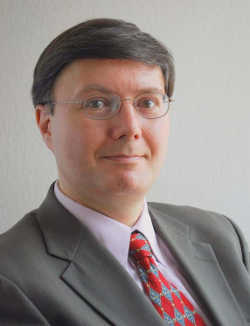
Lake County Superintendent of Schools Brock Falkenberg. Courtesy photo.

LAKE COUNTY, Calif. — Lake County’s superintendent of schools is raising concerns about a federal education memorandum issued earlier this month that’s aimed at rolling back efforts to encourage and embrace diversity.

On April 3, the U.S. Department of Education issued a four-page memorandum to public school superintendents across the nation, reaffirming that federal funding for school districts is contingent upon compliance with Title VI of the Civil Rights Act of 1964, said Superintendent Brock Falkenberg.

Title VI prohibits discrimination based on race, color, or national origin under any program or activity receiving federal financial assistance.

“Expressed in the form of a positive mindset this is about supporting all students,” said Falkenberg.

“In Lake County, the value of supporting all students is embedded in everything we do. This value is not adopted because federal law demands it, but because it reflects who we are as a Lake County community and what we, the community, believe. Our commitment to nondiscrimination would remain unchanged even in the absence of Title VI,” Falkenberg said.

Falkenberg said that, what is more concerning in the memo is the ambiguous assertion that diversity, equity and inclusion, or DEI, programs may be at odds with federal law.

“The document provides no definition of DEI, no examples of what is considered noncompliant, and no clear guidance for public schools. This vague language, combined with what appears to be an emerging pattern of ambiguous communication from federal agencies, including a similar ‘Dear Colleague’ letter issued on Feb. 14, suggests a shift toward threats and posturing rather than clear policy and guidance,” Falkenberg said.

“This is deeply problematic,” he said.

“DEI is not a slogan or a box to check in Lake County. It is a reflection of our community and a core aspect of our mission to serve every child. Diversity is not optional in Lake County, it is our lived reality. Our families represent a wide range of racial, cultural, religious, linguistic, and socioeconomic backgrounds. Our students include English language learners, children with disabilities, LGBTQ+ youth, and students from every political and social walk of life. You cannot ban or regulate diversity. It exists, and we choose to honor and leverage it,” Falkenberg explained.

“Equity, meanwhile, is how we ensure that every student has what they need to learn and succeed. It’s not about favoritism or unfair advantage, it’s about fairness,” said Falkenberg.

“Equity means providing a wheelchair for a student with mobility issues, lunch for students facing food insecurity, or flexible academic programs for students dealing with a health crisis or family emergency. Equity is meeting students where they are, giving them the tools and support they need, and holding high expectations for all,” he said.

Inclusion, Falkenberg explained, “is simply the practice of making sure every student, every family, and every staff member feels valued, respected, and welcome in our schools. That includes opportunities to engage in clubs, community events, cultural celebrations, and educational programs that reflect our shared values and diverse experiences.”

Across Lake County, over $17.1 million of annual school districts’ budgets comes from federal grants, most notably Title I, which supports students in low-income communities, and Individuals with Disabilities Act, or IDEA, which Falkenberg said provides partial funding for special education services.

“This funding is critical to serving our students and should never be used as leverage to pressure school districts into abandoning the values of the communities they serve or compromising their commitment to children,” Falkenberg said.

The Pledge of Allegiance, Falkenberg points out, ends with the statement, “With liberty and justice for all.”

“Our movement forward as a county is dependent on all students and children thriving, Falkenberg said. “Something is fundamentally wrong when school leaders are asked to choose between critical federal support and doing what is right for students.”

Falkenberg added, “In Lake County, we will continue to stand for all children without exception. We will not allow vague threats or rhetoric to derail the progress we have made. We will not retreat from our responsibility to prepare every child, regardless of background, to thrive, while they contribute meaningfully to society, the workforce, and our democracy.”

Central Region Town Hall to meet April 14

LUCERNE, Calif. — The Central Region Town Hall will next meet on Monday, April 14.

The meeting will begin at 6 p.m. at the Lucerne Alpine Senior Center, 3985 Country Club Drive.

Virtual participation is available via Zoom at https://app.zoom.us/wc.

To join by phone dial 1 669 900 9128. The Zoom Webinar ID is 825 9780 9680; the passcode is 778050.

The full agenda can be seen here.

Agenda items include:

• Discussion and possible action including acceptance of an update from Public Services Director Lars Ewing and the Department of Water Resources regarding Alpine Park cleanup, swim area cleanup and tule/brush cleanup.

• A presentation from Senior Transportation Planner John Speka regarding the Lake Area Planning Council's update of the Regional Transportation Plan.

• A presentation from Public Works Director Glen March regarding transportation concerns and future projects.

• An update from Caltrans regarding potential projects.

• An update regarding a potential joint municipal advisory committee meeting.

• Flood control mitigation for Victoria Creek.

An update from Supervisor EJ Crandell.

The Central Region Town Hall Board includes Chair Becky Schwenger, Vice Chair Austin Pratt, Recorder Atlas Pearson, and members Jon Karlsson and Jacob Blue.

Clearlake Animal Control: ‘Levi’ and the dogs

“Levi.” Photo courtesy of Clearlake Animal Control.

CLEARLAKE, Calif. — Clearlake Animal Control has many dogs waiting for a new start with adoptive families.

The shelter has 55 adoptable dogs listed on its website.

This week’s dogs include “Levi,” a 10-month-old male mixed breed dog with a brown brindle coat.

Shelter staff said Levi — who is still a puppy — would love another furry friend to play with in his new home. He’s energetic, loves walks and cuddling.

The shelter is located at 6820 Old Highway 53. It’s open from 9 a.m. to 6 p.m. Tuesday through Saturday.

For more information, call the shelter at 707-762-6227, email This email address is being protected from spambots. You need JavaScript enabled to view it., visit Clearlake Animal Control on Facebook or on the city’s website.

This week’s adoptable dogs are featured below.

Email Elizabeth Larson at This email address is being protected from spambots. You need JavaScript enabled to view it.. Follow her on Twitter, @ERLarson, and on Bluesky, @erlarson.bsky.social. Find Lake County News on the following platforms: Facebook, @LakeCoNews; X, @LakeCoNews; Threads, @lakeconews, and on Bluesky, @lakeconews.bsky.social.


Estate Planning: Skilled nursing facility residents appointing health care decision makers

Dennis Fordham. Courtesy photo.
Residents at skilled nursing facilities are well advised to have an advanced health care directive, with an authorized agent (health care decisionmaker) in place to make decisions regarding medical treatment and placement.

However, a skilled nursing facility still cannot require the execution of an advanced health care directive as a condition to providing services (Probate Code Section 5677).

In California, “A patient is presumed to have the capacity to make a health care decision, to give or revoke an advance health care directive, and to designate or disqualify a surrogate (Probate Code Section 4657).”

An adult resident at a skilled nursing facility with capacity may appoint an agent, often a close family member or trusted friend, with representative authority, and express enforceable health care decisions using an advanced health care directive or a “power of attorney for health care.”

The representative authority to make health care decisions for the resident may either be immediate or delayed. A resident with capacity will usually make the advanced health care directive immediate, both in anticipation of an unforeseen health care crisis and so that the employees of the skilled nursing facility may discuss the resident’s health care with the agent.

The advanced health care directive will need to be supplemented by a Health Insurance Portability and Accountability Act, or HIPAA, release to allow disclosure of confidential medical information.

If a skilled nursing facility resident does not already have an advanced health care directive or power of attorney for health care, with which the resident agrees, then the resident will typically want to execute an advanced health care directive (present day approach).

California law requires that execution of an advanced health care directive by a skilled nursing facility resident involve the protective oversight of an ombudsman representative as a witness.

The ombudsman will need to meet with the skilled nursing facility resident, alone or with family if requested by the resident, to ensure that the resident has the capacity to sign the document.

That is, does the resident understand, at the time of signing, that the advanced health care directive is an important legal tool to express the resident’s preferences regarding health care and to appoint an agent as a health care decisionmaker.

Also, the ombudsman will want to ensure that the resident, at the time of signing, is acting voluntarily and not under duress, undue influence or menace.

If the ombudsman is still uncertain as to the resident’s capacity to understand the advanced health care directive, the ombudsman may look at the resident’s medical chart for further information before deciding.

Next, the signing of the prepared advanced health care directive involves either one of two approaches, that is, either the notary public and an ombudsman approach, or, second, an ombudsman and an additional witness approach. Typically the first approach is used.

The additional witness to the advanced health care directive (not the ombudsman) cannot be an employee of the skilled nursing facility or the agent nominated in the advanced health care directive.

Moreover, the additional witness (that is, other than the ombudsman), “… shall be an individual who is neither related to the patient by blood, marriage, or adoption, nor entitled to any portion of the patient’s estate upon the patient’s death under a will existing when the advance directive is executed or by operation of law then existing.”

That last restriction naturally favors hiring a travelling notary as most of the people who would be willing to come to the SNF and be a witness are disqualified persons.

As a temporary or emergency (“stop gap”) measure, a resident with capacity may choose to nominate a “surrogate” health care decisionmaker.

All this requires is that the resident personally inform the supervising health care provider or a designee of the skilled nursing facility (section 4711 Probate Code). The surrogate’s authority does not exceed 60 days but, while effective, the surrogate’s authority is the controlling authority, even over the authority of an agent under any existing advanced health care directive.

The foregoing is not legal advice. Consult a qualified estate planning attorney for guidance.

Dennis A. Fordham, attorney, is a State Bar-Certified Specialist in estate planning, probate and trust law. His office is at 870 S. Main St., Lakeport, Calif. He can be reached at This email address is being protected from spambots. You need JavaScript enabled to view it. and 707-263-3235. 

Space News: Jets from powerful black holes can point astronomers toward where − and where not − to look for life in the universe


Black holes, like the one in this illustration, can spray powerful jets. S. Dagnello (NRAO/AUI/NSF), CC BY-SA

One of the most powerful objects in the universe is a radio quasar – a spinning black hole spraying out highly energetic particles. Come too close to one, and you’d get sucked in by its gravitational pull, or burn up from the intense heat surrounding it. But ironically, studying black holes and their jets can give researchers insight into where potentially habitable worlds might be in the universe.

As an astrophysicist, I’ve spent two decades modeling how black holes spin, how that creates jets, and how they affect the environment of space around them.

What are black holes?

Black holes are massive, astrophysical objects that use gravity to pull surrounding objects into them. Active black holes have a pancake-shaped structure around them called an accretion disk, which contains hot, electrically charged gas.

The plasma that makes up the accretion disk comes from farther out in the galaxy. When two galaxies collide and merge, gas is funneled into the central region of that merger. Some of that gas ends up getting close to the newly merged black hole and forms the accretion disk.

There is one supermassive black hole at the heart of every massive galaxy.

Black holes and their disks can rotate, and when they do, they drag space and time with them – a concept that’s mind-boggling and very hard to grasp conceptually. But black holes are important to study because they produce enormous amounts of energy that can influence galaxies.

How energetic a black hole is depends on different factors, such as the mass of the black hole, whether it rotates rapidly, and whether lots of material falls onto it. Mergers fuel the most energetic black holes, but not all black holes are fed by gas from a merger. In spiral galaxies, for example, less gas tends to fall into the center, and the central black hole tends to have less energy.

One of the ways they generate energy is through what scientists call “jets” of highly energetic particles. A black hole can pull in magnetic fields and energetic particles surrounding it, and then as the black hole rotates, the magnetic fields twist into a jet that sprays out highly energetic particles.

Magnetic fields twist around the black hole as it rotates to store energy – kind of like when you pull and twist a rubber band. When you release the rubber band, it snaps forward. Similarly, the magnetic fields release their energy by producing these jets.

A diagram showing an accretion disk and black hole spraying out a jet of particles, surrounded by magnetic field lines.
The accretion disk around a black hole can form a jet of hot, energetic particles surrounded by magnetic field lines. NASA, ESA, and A. Feild (STScI), CC BY

These jets can speed up or suppress the formation of stars in a galaxy, depending on how the energy is released into the black hole’s host galaxy.

Rotating black holes

Some black holes, however, rotate in a different direction than the accretion disk around them. This phenomenon is called counterrotation, and some studies my colleagues and I have conducted suggest that it’s a key feature governing the behavior of one of the most powerful kinds of objects in the universe: the radio quasar.

Radio quasars are the subclass of black holes that produce the most powerful energy and jets.

You can imagine the black hole as a rotating sphere, and the accretion disk as a disk with a hole in the center. The black hole sits in that center hole and rotates one way, while the accretion disk rotates the other way.

This counterrotation forces the black hole to spin down and eventually up again in the other direction, called corotation. Imagine a basketball that spins one way, but you keep tapping it to rotate in the other. The tapping will spin the basketball down. If you continue to tap in the opposite direction, it will eventually spin up and rotate in the other direction. The accretion disk does the same thing.

Since the jets tap into the black hole’s rotational energy, they are powerful only when the black hole is spinning rapidly. The change from counterrotation to corotation takes at least 100 million years. Many initially counterrotating black holes take billions of years to become rapidly spinning corotating black holes.

So, these black holes would produce powerful jets both early and later in their lifetimes, with an interlude in the middle where the jets are either weak or nonexistent.

When the black hole spins in counterrotation with respect to its accretion disk, that motion produces strong jets that push molecules in the surrounding gas close together, which leads to the formation of stars.

But later, in corotation, the jet tilts. This tilt makes it so that the jet impinges directly on the gas, heating it up and inhibiting star formation. In addition to that, the jet also sprays X-rays across the galaxy. Cosmic X-rays are bad for life because they can harm organic tissue.

For life to thrive, it most likely needs a planet with a habitable ecosystem, and clouds of hot gas saturated with X-rays don’t contain such planets. So, astronomers can instead look for galaxies without a tilted jet coming from its black hole. This idea is key to understanding where intelligence could potentially have emerged and matured in the universe.

Black holes as a guide

By early 2022, I had built a black hole model to use as a guide. It could point out environments with the right kind of black holes to produce the greatest number of planets without spraying them with X-rays. Life in such environments could emerge to its full potential.

Looking at black holes and their role in star formation could help scientists predict when and where life was most likely to form.

Where are such conditions present? The answer is low-density environments where galaxies had merged about 11 billion years ago.

These environments had black holes whose powerful jets enhanced the rate of star formation, but they never experienced a bout of tilted jets in corotation. In short, my model suggested that theoretically, the most advanced extraterrestrial civilization would have likely emerged on the cosmic scene far away and billions of years ago.The Conversation

David Garofalo, Professor of Physics, Kennesaw State University

This article is republished from The Conversation under a Creative Commons license. Read the original article.

Middletown Area Town Hall discusses early plans for Valley Fire anniversary

LAKE COUNTY, Calif. — Community groups in the south county are in the early stages of planning to mark the 10th anniversary of the Valley Fire later this year.

The fire burned from Sept. 12 to Oct. 15, 2015. It began on Cobb due to faulty wiring in a residential hot tub, and within hours had burned down into Middletown.

The Valley Fire killed four people, destroyed 1,955 structures and burned 76,067 acres.

It’s listed as the eighth most destructive wildfire in California history.

During its meeting on Thursday night, the Middletown Area Town Hall, or MATH, hosted a brief discussion on the plans that are already developing to mark the anniversary.

Ken Gonzales, a former MATH Board member who now works for Harbin Hot Springs Resort Center — owned and operated by Heart Consciousness Church — as its health and safety coordinator, said the resort has its own plans and wants to work with other community groups as well.

“Harbin is going to invite all the residents back,” said Gonzales, explaining that there were 200 residents at the resort at the time of the fire.

“Ninety-five percent are gone,” he said, noting they have left the state.

Dan Tyrrell, president of the Middletown Area Merchants Association, or MAMA, said the group’s board vice president, Chanel Hellwege, is spearheading their anniversary plans.

He said MAMA wants to collaborate with other groups like MATH, the Middletown Arts Center, the Gibson Museum and South Lake County Fire Protection District.

“I think it’s going to be more of a resilience theme” as opposed to commemoration of the fire, which Tyrrell said is important for those who lived through it.

Mike Wink of Cal Fire said the agency wants to listen to anything the community has to say about the fire and the anniversary. Cal Fire and the fire district also want to support what the community wants to do for the anniversary event.

“Resiliency seems like a great theme because there is a lot of resiliency happening,” he said.

Hidden Valley Lake resident David Stoneberg said he hoped the 10th anniversary would include remembrances of the four people who died during the fire, including Leonard Neft.

Much more is to be determined and will be back for discussion, said MATH Chair Monica Rosenthal.

“We’ll talk about this more in future meetings,” Rosenthal said.

Email Elizabeth Larson at This email address is being protected from spambots. You need JavaScript enabled to view it.. Follow her on Twitter, @ERLarson, and on Bluesky, @erlarson.bsky.social. Find Lake County News on the following platforms: Facebook, @LakeCoNews; X, @LakeCoNews; Threads, @lakeconews, and on Bluesky, @lakeconews.bsky.social.
  • 214
  • 215
  • 216
  • 217
  • 218
  • 219
  • 220
  • 221
  • 222
  • 223

Community

  • Lake County Wine Alliance offers sponsor update; beneficiary applications open 

  • Mendocino National Forest announces seasonal hiring for upcoming field season

Public Safety

  • Lakeport Police logs: Thursday, Jan. 15

  • Lakeport Police logs: Wednesday, Jan. 14

Education

  • Woodland Community College receives maximum eight-year reaffirmation of accreditation from ACCJC

  • SNHU announces Fall 2025 President's List

Health

  • California ranks 24th in America’s Health Rankings Annual Report from United Health Foundation

  • Healthy blood donors especially vital during active flu season

Business

  • Two Lake County Mediacom employees earn company’s top service awards

  • Redwood Credit Union launches holiday gift and porch-to-pantry food drives

Obituaries

  • Rufino ‘Ray’ Pato

  • Patty Lee Smith

Opinion & Letters

  • The benefits of music for students

  • How to ease the burden of high electric bills

Veterans

  • CalVet and CSU Long Beach team up to improve data collection related to veteran suicides

  • A ‘Big Step Forward’ for Gulf War Veterans

Recreation

  • Wet weather trail closure in effect on Upper Lake Ranger District

  • Mendocino National Forest seeking public input on OHV grant applications

  • State Parks announces 2026 Anderson Marsh nature walk schedule 

  • BLM lifts seasonal fire restrictions in central California

Religion

  • Kelseyville Presbyterian to host Ash Wednesday service and Lenten dinner Feb. 18

  • Kelseyville Presbyterian Church to hold ‘Longest Night’ service Dec. 21

Arts & Life

  • Auditions announced for original musical ‘Even In Shadow’ set for March 21 and 28

  • ‘The Rip’ action heist; ‘Steal’ grounded in a crime thriller

Government & Politics

  • Lake County Democrats issue endorsements in local races for the June California Primary

  • County negotiates money-saving power purchase agreement

Legals

  • March 3 hearing on ordinance amending code for commercial cannabis uses

  • Feb. 12 public hearing on resolution to establish standards for agricultural roads

How to resolve AdBlock issue?
Refresh this page