How to resolve AdBlock issue?
Refresh this page
How to resolve AdBlock issue?
Refresh this page
Lake County News,California
  • Home
    • Registration Form
  • News
    • Education
    • Veterans
    • Community
      • Obituaries
      • Letters
      • Commentary
    • Police Logs
    • Business
    • Recreation
    • Health
    • Religion
    • Legals
    • Arts & Life
    • Regional
  • Calendar
  • Contact us
    • FAQs
    • Phones, E-Mail
    • Subscribe
  • Advertise Here
  • Login

News

Lakeport City-Wide Yard Sale set for April 26

LAKEPORT, Calif. — The countdown is on for one of Lakeport’s most anticipated community events—the Lakeport City-Wide Yard Sale, happening Saturday, April 26.

With over 70 yard sales already signed up, the city is ready to transform into a shopper’s paradise filled with hidden gems, great bargains and small-town charm.

Whether you're a seasoned thrifter, vintage hunter or just looking for a fun way to explore Lakeport, this is the perfect opportunity to spend the day strolling through neighborhoods and supporting local families, businesses and community spirit.

Still want to join the fun? It’s not too late to register your yard sale. Sign up now at www.DiscoverLakeportCA.com to get your sale listed on the official yard sale map and downloadable list.

How to plan your yard sale adventure:

• Yard sale list and map available Friday, April 25 at www.DiscoverLakeportCA.com.
• Early access? Newsletter subscribers will receive the full list straight to their inbox on Thursday, April 24. Go to the website to sign up for the newsletter.
• Printed copies of the yard sale list will be available starting at 6 a.m. on April 26 at Susie Q’s Donuts and Espresso or Jitter Bean Lakeport (North Lakeport location).

And it’s not just homes participating — many local stores are offering special sales too, and these deals are also included on the official yard sale list.

Come out and enjoy a day of fun, shopping and community connection. With so many sales and surprises around every corner, there’s truly something for everyone.

For more details or to register your yard sale, visit www.DiscoverLakeportCA.com.

Space News: Scientists found a potential sign of life on a distant planet – an astronomer explains why many are still skeptical


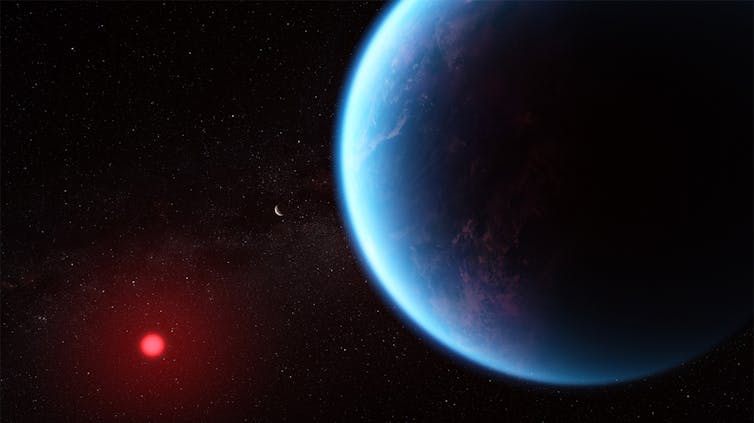
An illustration of the exoplanet K2-18b, which some research suggests may be covered by deep oceans. NASA, ESA, CSA, Joseph Olmsted (STScI)

A team of astronomers announced on April 16, 2025, that in the process of studying a planet around another star, they had found evidence for an unexpected atmospheric gas. On Earth, that gas – called dimethyl sulfide – is mostly produced by living organisms.

In April 2024, the James Webb Space Telescope stared at the host star of the planet K2-18b for nearly six hours. During that time, the orbiting planet passed in front of the star. Starlight filtered through its atmosphere, carrying the fingerprints of atmospheric molecules to the telescope.

A diagram showing planets and stars emitting light, which goes through JWST detectors, where it's split into different wavelengths to make a spectrum. Each spectrum suggests the presence of a different element.
JWST’s cameras can detect molecules in the atmosphere of a planet by looking at light that passed through that atmosphere. European Space Agency

By comparing those fingerprints to 20 different molecules that they would potentially expect to observe in the atmosphere, the astronomers concluded that the most probable match was a gas that, on Earth, is a good indicator of life.

I am an astronomer and astrobiologist who studies planets around other stars and their atmospheres. In my work, I try to understand which nearby planets may be suitable for life.

K2-18b, a mysterious world

To understand what this discovery means, let’s start with the bizarre world it was found in. The planet’s name is K2-18b, meaning it is the first planet in the 18th planetary system found by the extended NASA Kepler mission, K2. Astronomers assign the “b” label to the first planet in the system, not “a,” to avoid possible confusion with the star.

K2-18b is a little over 120 light-years from Earth – on a galactic scale, this world is practically in our backyard.

Although astronomers know very little about K2-18b, we do know that it is very unlike Earth. To start, it is about eight times more massive than Earth, and it has a volume that’s about 18 times larger. This means that it’s only about half as dense as Earth. In other words, it must have a lot of water, which isn’t very dense, or a very big atmosphere, which is even less dense.

Astronomers think that this world could either be a smaller version of our solar system’s ice giant Neptune, called a mini-Neptune, or perhaps a rocky planet with no water but a massive hydrogen atmosphere, called a gas dwarf.

Another option, as University of Cambridge astronomer Nikku Madhusudhan recently proposed, is that the planet is a “hycean world”.

That term means hydrogen-over-ocean, since astronomers predict that hycean worlds are planets with global oceans many times deeper than Earth’s oceans, and without any continents. These oceans are covered by massive hydrogen atmospheres that are thousands of miles high.

Astronomers do not know yet for certain that hycean worlds exist, but models for what those would look like match the limited data JWST and other telescopes have collected on K2-18b.

This is where the story becomes exciting. Mini-Neptunes and gas dwarfs are unlikely to be hospitable for life, because they probably don’t have liquid water, and their interior surfaces have enormous pressures. But a hycean planet would have a large and likely temperate ocean. So could the oceans of hycean worlds be habitable – or even inhabited?

Detecting DMS

In 2023, Madhusudhan and his colleagues used the James Webb Space Telescope’s short-wavelength infrared camera to inspect starlight that filtered through K2-18b’s atmosphere for the first time.

They found evidence for the presence of two simple carbon-bearing molecules – carbon monoxide and methane – and showed that the planet’s upper atmosphere lacked water vapor. This atmospheric composition supported, but did not prove, the idea that K2-18b could be a hycean world. In a hycean world, water would be trapped in the deeper and warmer atmosphere, closer to the oceans than the upper atmosphere probed by JWST observations.

Intriguingly, the data also showed an additional, very weak signal. The team found that this weak signal matched a gas called dimethyl sulfide, or DMS. On Earth, DMS is produced in large quantities by marine algae. It has very few, if any, nonbiological sources.

This signal made the initial detection exciting: on a planet that may have a massive ocean, there is likely a gas that is, on Earth, emitted by biological organisms.

An illustration of what scientists imagine K2-18b to look like, which looks a little like Earth, with clouds and a translucent surface.
K2-18b could have a deep ocean spanning the planet, and a hydrogen atmosphere. Amanda Smith, Nikku Madhusudhan (University of Cambridge), CC BY-SA

Scientists had a mixed response to this initial announcement. While the findings were exciting, some astronomers pointed out that the DMS signal seen was weak and that the hycean nature of K2-18b is very uncertain.

To address these concerns, Mashusudhan’s team turned JWST back to K2-18b a year later. This time, they used another camera on JWST that looks for another range of wavelengths of light. The new results – announced on April 16, 2025 – supported their initial findings.

These new data show a stronger – but still relatively weak – signal that the team attributes to DMS or a very similar molecule. The fact that the DMS signal showed up on another camera during another set of observations made the interpretation of DMS in the atmosphere stronger.

Madhusudhan’s team also presented a very detailed analysis of the uncertainties in the data and interpretation. In real-life measurements, there are always some uncertainties. They found that these uncertainties are unlikely to account for the signal in the data, further supporting the DMS interpretation. As an astronomer, I find that analysis exciting.

Is life out there?

Does this mean that scientists have found life on another world? Perhaps – but we still cannot be sure.

First, does K2-18b really have an ocean deep beneath its thick atmosphere? Astronomers should test this.

Second, is the signal seen in two cameras two years apart really from dimethyl sulfide? Scientists will need more sensitive measurements and more observations of the planet’s atmosphere to be sure.

Third, if it is indeed DMS, does this mean that there is life? This may be the most difficult question to answer. Life itself is not detectable with existing technology. Astronomers will need to evaluate and exclude all other potential options to build their confidence in this possibility.

The new measurements may lead researchers toward a historic discovery. However, important uncertainties remain. Astrobiologists will need a much deeper understanding of K2-18b and similar worlds before they can be confident in the presence of DMS and its interpretation as a signature of life.

Scientists around the world are already scrutinizing the published study and will work on new tests of the findings, since independent verification is at the heart of science.

Moving forward, K2-18b is going to be an important target for JWST, the world’s most sensitive telescope. JWST may soon observe other potential hycean worlds to see if the signal appears in the atmospheres of those planets, too.

With more data, these tentative conclusions may not stand the test of time. But for now, just the prospect that astronomers may have detected gasses emitted by an alien ecosystem that bubbled up in a dark, blue-hued alien ocean is an incredibly fascinating possibility.

Regardless of the true nature of K2-18b, the new results show how using the JWST to survey other worlds for clues of alien life will guarantee that the next years will be thrilling for astrobiologists.The Conversation

Daniel Apai, Associate Dean for Research and Professor of Astronomy and Planetary Sciences, University of Arizona

This article is republished from The Conversation under a Creative Commons license. Read the original article.
Soper Reese Theatre renovation groundbreaking planned April 26

LAKEPORT, Calif. — A new phase in the renovation of Lakeport’s Soper Reese Theatre is kicking off next week.

The renovation’s ceremonial groundbreaking will be part of a public event at 1 p.m. Saturday, April 26, at the theatre, 275 S. Main St., Lakeport.

Members of the Soper Reese management team invite donors, patrons and supporters to join them for a history of the former movie theater, which was built in 1947 by the Reese family and purchased in 1997 by the Lake County Arts Council to become a venue for the performing arts and other community uses.

The building has been used for concerts, classic movies, plays, dances, award ceremonies, town halls, conferences and fundraising events all while undergoing continuous upgrades, repairs and maintenance.

The theater is the home of the Lake County Symphony Association and used for performances by the Lake County Theatre Company.

The afternoon’s program will include depictions of the next phases and costs of development to provide enhanced accessibility for all users.

After a brief presentation and orientation inside the theatre, the gathering will move outdoors to the Martin Street courtyard where participants will don hard hats and wield shovels to break ground to start the renovation.

The immediate construction work will include foundations for new restrooms and the loading dock at the rear of the building, creating compliance for safe entry and exit.

Fundraising for the next phases of renovation is a continuing effort by volunteers.

The management team and the Lake County Arts Council appreciate the supporters from Lake County and beyond who have championed and funded the transformation of the former movie theatre into a modern-day, multi-use community venue.

More information for tax-deductible contributions may be found at https://soperreesetheatre.com/donate/. 

Contact Nina Marino at This email address is being protected from spambots. You need JavaScript enabled to view it. for more information about the groundbreaking event.

Celebrate Earth Day at State Parks with in-person and virtual events

SACRAMENTO — Celebrate Earth Day this month with California State Parks at any of the 280 unique state parks.

State Parks will host numerous Earth Day-themed events throughout April 19 to 27.

They include in-person activities, such as guided nature walks, beach cleanups, interactive junior ranger programs and hands-on restoration projects, as well as virtual programming with a live dive broadcast exploring the hidden world of the ocean.

“Earth Day is a celebration of our connection to the land, the water and each other,” said California State Parks Director Armando Quintero. “California State Parks is proud to protect the places that inspire stewardship, spark curiosity, and remind us why connecting with nature is important and worth preserving. Join us in celebrating Earth Day every day!”

A list of statewide Earth Day events for departments, conservancies and commissions under the California Natural Resources Agency is available at resources.ca.gov/earthday2025. 

While Earth Day is Tuesday, April 22, it is being celebrated throughout the month. Here are some in-person and virtual events being held at state parks:

Event: Earth Week PORTScast 
Date and time: Sunday, April 20 – Friday, April 25
Location: Virtual
Description: PORTScast LIVE broadcasts will bring the wonders of California’s state parks into classrooms, wherever you may be. Join staff for several special Earth Week events covering a range of topics from the difference between baleen and toothed whales to learn how some forest fires can actually be good for the ecosystem. Find a virtual event here: https://ports.parks.ca.gov/2-portscast/portscasts-calendar/ 

Event: Earth Day Celebration at California Natural Resources Agency
Date and time: Tuesday, April 22 – 3-5 p.m.
Location: 715 P Street, Sacramento, CA 95814
Description: Discover the great work underway to conserve, protect, and restore California's natural and cultural resources. Fun activities for all ages with indoor and outdoor interactive activities with giveaways and more. The event is open to the public — free admission.

State Parks looks forward to seeing Californians on trails, beaches, mountains, and the deserts on Earth Day, but asks for all to please recreate responsibly:

Know Before You Go: Prior to leaving home, check the status of the park you want to visit to find out what restrictions and guidelines are in place, and to find out if your destination may be temporarily closed. Have a backup plan in case your destination is crowded.

Play It Safe: Find out what precautions you should take when exploring the outdoors, especially if this is your first time visiting the State Park System. For example, make sure to dress in layers, bring plenty of snacks and water, and wear appropriate hiking shoes.

Leave No Trace: Leave areas better than how you found them by staying on designated trails and packing out all trash. Do not disturb wildlife or plants.

Download Mobile App: Visitors are invited to download the California State Parks mobile app, which allows users to download park unit maps and receive up-to-date information on any trail closures and events. Powered by OuterSpatial, the app has park information, route details, and virtual badges you can collect as you visit parks. Visitors can download the app here.

California’s state park system has 280 state park units, over 340 miles of coastline, 970 miles of lake and river frontage, 15,000 campsites, 5,200 miles of trails, 3,195 historic buildings, and more than 11,000 known prehistoric and historic archaeological sites. Plus, there are also many other local and national parks across the state that Californians can enjoy on Earth Day and year-round.

California launches streamlined online permitting process to fast-track critical wildfire safety projects

State officials report that a new online streamlining request process cuts bureaucratic red tape and now makes it faster to get state approval to implement forest and vegetation management projects, which are critical to reducing the risk of catastrophic wildfires.

This new process will shorten project approvals to as little as 30 days — saving a year or more of review and red tape for more complicated projects.

Officials said this builds on consecutive years of intensive and focused work by the State of California to confront the severe ongoing risk of catastrophic wildfires, and most recently Governor Newsom’s emergency proclamation.

Full information on project eligibility and the suspension request form are available here.

The new process to accelerate critical wildfire safety projects advances some of the essential actions identified in the Governor’s Wildfire and Forest Resilience Task Force’s ambitious 25 key deliverables for 2025, and builds on statewide efforts to move fast to prepare communities ahead of peak wildfire season by promoting key safety measures such as hardening homes and creating defensible space.

“Peak fire season is still ahead of us, yet this year has already been marked by some of the most destructive wildfires in California’s history. We need to move faster and go bigger,” said Gov. Gavin Newsom. “This new streamlined process, which builds on historic investments and nation leading actions to confront catastrophic wildfires, cuts red tape to fast-track more wildfire projects than ever before.”

Faster permitting without compromising environmental protections

The new process will allow practitioners across the state to move faster without compromising important environmental protections.

A new Statewide Fuels Reduction Environmental Protection Plan, or EPP, has been developed to enable critical wildfire safety projects to proceed expeditiously while protecting public health and the environment.

The EPP requires applicants to comply with best management practices and measures to minimize impacts to environmental resources while completing fuels reduction projects, ensuring the safeguarding of water and air quality, tribal cultural resources, and special-status species and their habitats.

Expanding prescribed and cultural fire

In addition to streamlining permitting, leaders from across the state have already come together in response to the Emergency Proclamation to start developing recommendations on specific actions to expand and expedite the implementation of prescribed and cultural fire.

On April 11, a virtual briefing provided an overview on the execution of the proclamation and provided the public an opportunity to share recommendations for expanding beneficial fire.

Building on unprecedented progress

New, bold moves to streamline state-level regulatory processes builds long-term efforts already underway in California to increase wildfire response and forest management in the face of a hotter, drier climate. A full list of California’s progress on wildfire resilience is available here.

Highlights of achievements to date include:

Historic investments — Overall, the state has more than doubled investments in wildfire prevention and landscape resilience efforts, providing more than $2.5 billion in wildfire resilience since 2020, with an additional $1.5 billion to be allocated from the 2024 Climate Bond.

On-the-ground progress — More than 2,200 landscape health and fire prevention projects are complete or underway, and from 2021-2023, the State and its partners treated nearly 1.9 million acres, including nearly 730,000 acres in 2023.

Increasing transparency — The Governor’s Task Force launched an Interagency Treatment Dashboard to display wildfire resilience work across federal, state, local, and privately managed lands across the State. The Dashboard, launched in 2023, provides transparency, tracks progress, facilitates planning, and informs firefighting efforts.

Hardening communities — Adding to California’s nation-leading fire safety standards, Governor Newsom signed an executive order to further improve community hardening and wildfire mitigation strategies to neighborhood resilience statewide. Since 2019, CAL FIRE has awarded more than $450 million for 450 wildfire prevention projects across the state and conducts Defensible Space Inspections on more than 250,000 homes each year.

Leveraging cutting-edge technology — On top of expanding the world’s largest aerial firefighting fleet, Cal Fire has doubled its use of Uncrewed Aerial Systems and the state is utilizing AI-powered tools to spot fires quicker.

Space News: Why the meteorites that hit Earth have less water than the asteroid bits brought back by space probes – a planetary scientist explains new research


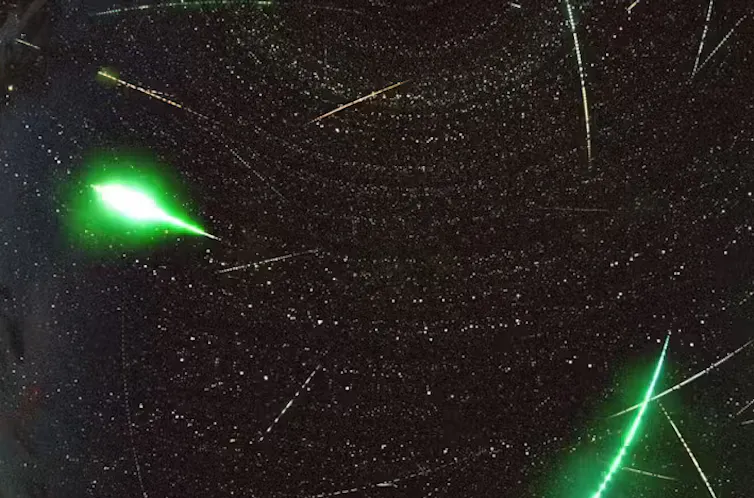
This image overlays over 100 fireball images recorded between 2016 and 2020. The streaks are fireballs; the dots are star positions at different times. Desert Fireball Network

Much of what scientists know about the early solar system comes from meteorites – ancient rocks that travel through space and survive a fiery plunge through Earth’s atmosphere. Among meteorites, one type – called carbonaceous chondrites – stands out as the most primitive and provides a unique glimpse into the solar system’s infancy.

The carbonaceous chondrites are rich in water, carbon and organic compounds. They’re “hydrated,” which means they contain water bound within minerals in the rock. The components of the water are locked into crystal structures. Many researchers believe these ancient rocks played a crucial role in delivering water to early Earth.

Before hitting the Earth, rocks traveling through space are generally referred to as asteroids, meteoroids or comets, depending on their size and composition. If a piece of one of these objects makes it all the way to Earth, it becomes a “meteorite.”

From observing asteroids with telescopes, scientists know that most asteroids have water-rich, carbonaceous compositions. Models predict that most meteorites – over half – should also be carbonaceous. But less than 4% of all the meteorites found on Earth are carbonaceous. So why is there such a mismatch?

In a study published in the journal Nature Astronomy on April 14, 2025, my planetary scientist colleagues and I tried to answer an age-old question: Where are all the carbonaceous chondrites?

Sample-return missions

Scientists’ desire to study these ancient rocks has driven recent sample-return space missions. NASA’s OSIRIS‑REx and JAXA’s Hayabusa2 missions have transformed what researchers know about primitive, carbon‑rich asteroids.

Meteorites found sitting on the ground are exposed to rain, snow and plants, which can significantly change them and make analysis more difficult. So, the OSIRIS‑REx mission ventured to the asteroid Bennu to retrieve an unaltered sample. Retrieving this sample allowed scientists to examine the asteroid’s composition in detail.

Similarly, Hayabusa2’s journey to the asteroid Ryugu provided pristine samples of another, similarly water-rich asteroid.

Together these missions have let planetary scientists like me study pristine, fragile carbonaceous material from asteroids. These asteroids are a direct window into the building blocks of our solar system and the origins of life.

A dusty, rocky asteroid against a dark backdrop.
Carbonaceous near-Earth asteroid Bennu as seen from NASA’s OSIRIS-REx sample-return spacecraft. NASA

The carbonaceous chondrite puzzle

For a long time, scientists assumed that the Earth’s atmosphere filtered out carbonaceous debris.

When an object hits Earth’s atmosphere, it has to survive significant pressures and high temperatures. Carbonaceous chondrites tend to be weaker and more crumbly than other meteorites, so these objects just don’t stand as much of a chance.

Meteorites usually start their journey when two asteroids collide. These collisions create a bunch of centimeter- to meter-size rock fragments. These cosmic crumbs streak through the solar system and can, eventually, fall to Earth. When they’re smaller than a meter, scientists call them meteoroids.

Meteoroids are far too small for researchers to see with a telescope, unless they’re about to hit the Earth, and astronomers get lucky.

But there is another way scientists can study this population, and, in turn, understand why meteorites have such different compositions.

Meteor and fireball observation networks

Our research team used the Earth’s atmosphere as our detector.

Most of the meteoroids that reach Earth are tiny, sand-sized particles, but occasionally, bodies up to a couple of meters in diameter hit. Researchers estimate that about 5,000 metric tons of micrometeorites land on Earth annually. And, each year, between 4,000 and 10,000 large meteorites – golf ball-sized or larger – land on Earth. That’s more than 20 each day.

A fireball observed by the FRIPON network in Normandy, France, in 2019.

Today, digital cameras have rendered round-the-clock observations of the night sky both practical and affordable. Low-cost, high-sensitivity sensors and automated detection software allow researchers to monitor large sections of the night sky for bright flashes, which signal a meteoroid hitting the atmosphere.

Research teams can sift through these real-time observations using automated analysis techniques – or a very dedicated Ph.D. student – to find invaluable information.

Our team manages two global systems: FRIPON, a French-led network with stations in 15 countries; and the Global Fireball Observatory, a collaboration started by the team behind the Desert Fireball Network in Australia. Together with other open-access datasets, my colleagues and I used the trajectories of nearly 8,000 impacts observed by 19 observation networks spread across 39 countries.

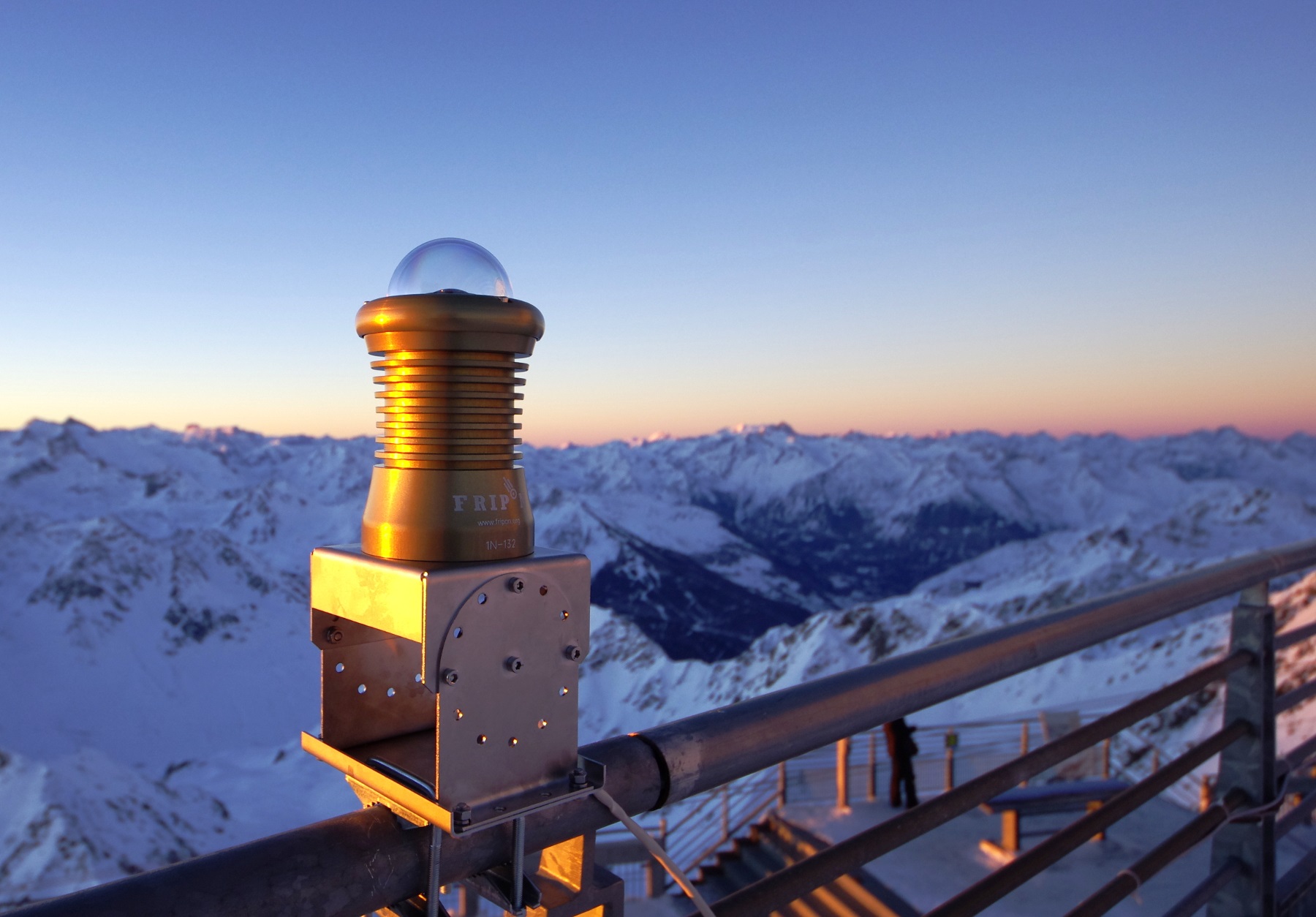
A camera, which looks like a glass sphere, attached to a metal stand on a railing overlooking mountains.
FRIPON camera installed at the Pic du Midi Observatory in the French Pyrenees. FRIPON

By comparing all meteoroid impacts recorded in Earth’s atmosphere with those that successfully reach the surface as meteorites, we can pinpoint which asteroids produce fragments that are strong enough to survive the journey. Or, conversely, we can also pinpoint which asteroids produce weak material that do not show up as often on Earth as meteorites.

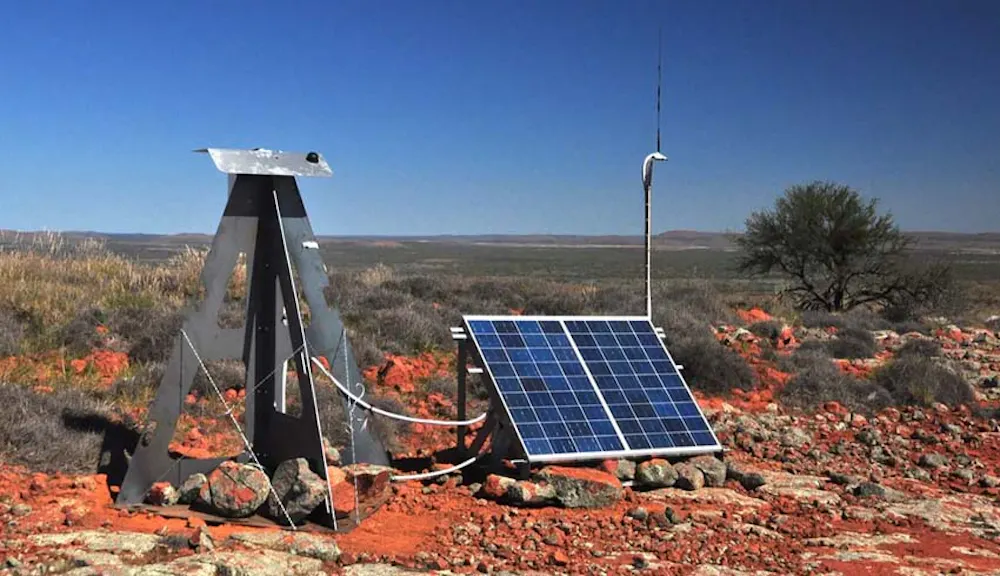
A mechanical panel sitting in a desert in Australia
Desert Fireball Network automated remote observatory in South Australia. The Desert Fireball Network

The Sun is baking the rocks too much

Surprisingly, we found that many asteroid pieces don’t even make it to Earth. Something starts removing the weak stuff while the fragment is still in space. The carbonaceous material, which isn’t very durable, likely gets broken down through heat stress when its orbit takes it close to the Sun.

As carbonaceous chondrites orbit close, and then away from the Sun, the temperature swings form cracks in their material. This process effectively fragments and removes weak, hydrated boulders from the population of objects near the Earth. Anything left over after this thermal cracking then has to survive the atmosphere.

Only 30%-50% of the remaining objects survive the atmospheric passage and become meteorites. The debris pieces whose orbits bring them closer to the Sun tend to be significantly more durable, making them far more likely to survive the difficult passage through Earth’s atmosphere. We call this a survival bias.

For decades, scientists have presumed that Earth’s atmosphere alone explains the scarcity of carbonaceous meteorites, but our work indicates that much of the removal occurs beforehand in space.

Going forward, new scientific advances can help confirm these findings and better identify meteoroid compositions. Scientists need to get better at using telescopes to detect objects right before they hit the Earth. More detailed modeling of how these objects break up in the atmosphere can also help researchers study them.

Lastly, future studies can come up with better methods to identify what these fireballs are made of using the colors of the meteors.The Conversation

Patrick M. Shober, Postdoctoral Fellow in Planetary Sciences, NASA

This article is republished from The Conversation under a Creative Commons license. Read the original article.

  • 209
  • 210
  • 211
  • 212
  • 213
  • 214
  • 215
  • 216
  • 217
  • 218

Community

  • Lake County Wine Alliance offers sponsor update; beneficiary applications open 

  • Mendocino National Forest announces seasonal hiring for upcoming field season

Public Safety

  • Lakeport Police logs: Thursday, Jan. 15

  • Lakeport Police logs: Wednesday, Jan. 14

Education

  • Woodland Community College receives maximum eight-year reaffirmation of accreditation from ACCJC

  • SNHU announces Fall 2025 President's List

Health

  • California ranks 24th in America’s Health Rankings Annual Report from United Health Foundation

  • Healthy blood donors especially vital during active flu season

Business

  • Two Lake County Mediacom employees earn company’s top service awards

  • Redwood Credit Union launches holiday gift and porch-to-pantry food drives

Obituaries

  • Rufino ‘Ray’ Pato

  • Patty Lee Smith

Opinion & Letters

  • The benefits of music for students

  • How to ease the burden of high electric bills

Veterans

  • CalVet and CSU Long Beach team up to improve data collection related to veteran suicides

  • A ‘Big Step Forward’ for Gulf War Veterans

Recreation

  • Wet weather trail closure in effect on Upper Lake Ranger District

  • Mendocino National Forest seeking public input on OHV grant applications

  • State Parks announces 2026 Anderson Marsh nature walk schedule 

  • BLM lifts seasonal fire restrictions in central California

Religion

  • Kelseyville Presbyterian to host Ash Wednesday service and Lenten dinner Feb. 18

  • Kelseyville Presbyterian Church to hold ‘Longest Night’ service Dec. 21

Arts & Life

  • Auditions announced for original musical ‘Even In Shadow’ set for March 21 and 28

  • ‘The Rip’ action heist; ‘Steal’ grounded in a crime thriller

Government & Politics

  • Lake County Democrats issue endorsements in local races for the June California Primary

  • County negotiates money-saving power purchase agreement

Legals

  • March 3 hearing on ordinance amending code for commercial cannabis uses

  • Feb. 12 public hearing on resolution to establish standards for agricultural roads

How to resolve AdBlock issue?
Refresh this page