 How to resolve AdBlock issue?
News
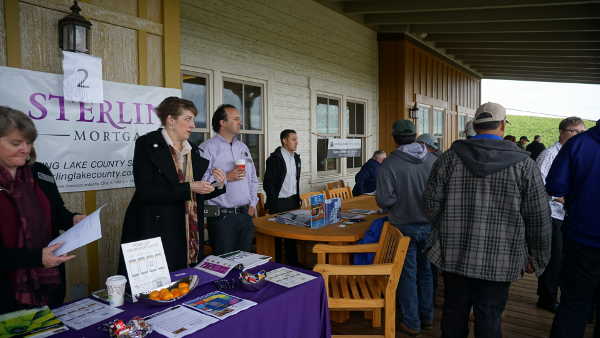
KELSEYVILLE, Calif. – The first of several planned housing fairs in Lake County took place on May 25 at the Beckstoffer Vineyard offices in Kelseyville.
The housing fair targeted the agricultural workforce of Lake County and was organized by the Lake County Economic Development Corp. in collaboration with United States Department of Agriculture Rural Development.
The housing fair was sponsored in part by Beckstoffer Vineyards and Bella Vista Farms. Participating service providers included the Lake County Association of Realtors, Sterling Mortgage, Savings Bank of Mendocino County, Umpqua Bank, Skiles and Associates General Construction and Development and Dunshee Builders.
The purpose of the fair was to increase awareness of available USDA Rural Development home loan programs with the goal of expediting homeownership for the Lake County workforce.
Several targeted housing fairs will take place around Lake County with the next fair scheduled in July to address the ongoing rebuilding efforts in the Cobb and Middletown areas. Details of the Cobb area housing fair will be announced when finalized.
Future fairs are anticipated in the Clearlake and Upper Lake areas, with another agricultural workforce housing fair to be scheduled.
“Affordable housing is a vital component in our mission at USDA to improve rural prosperity, but we can’t do it alone,” said USDA Rural Development California State Director Kim Dolbow Vann. “Working together with our local partners and stakeholders in Lake County we are able to offer these comprehensive housing fairs, and make sure everyone is aware of the resources available to them.”
USDA Rural Development’s Single Family Housing loan programs help moderate to low-income individuals and households purchase homes, build equity, and increase their investment in the community.
Highlights of the programs include no down payment, no mortgage insurance, and interest rates as low as one percent for eligible buyers.
Loans are available to all individuals and households that meet criteria such as income levels, credit scores, and stable income. Residents may be assisted in purchasing an existing home or building a new one.
For more information on USDA Rural Development’s programs visit www.rd.usda.gov/ca.
Contact the Lake County Economic Development Corp. at 3895 Main Street, Kelseyville, 707-279-1540, Extension 101.
LAKE COUNTY, Calif. – In January, the County of Lake began a process of community visioning, by getting out into the community, listening to people’s needs and priorities, and taking strategic steps to create a brighter future.
The community made it clear that economic development is a high priority, and the Lake County Board of Supervisors responded by making it one of the 10 pillars of its 10-year plan, Vision 2028.
Additionally, the board supported that commitment by contributing to development of a series of community visioning forums on the topic.
The Lake County Economic Development Corporation, or LCEDC, will host these forums.
LCEDC is a coalition that includes the county of Lake and cities of Clearlake and Lakeport, community business leaders, and experts in the areas of workforce development, real estate, health care, education and more.
Renowned North Bay Economist and Sonoma State University Professor Robert Eyler will lead the conversation with the purpose of creating a plan that offers an honest look at the realities, possibilities and opportunities for Lake County’s economic health and well-being, by focusing on economic sector opportunities.
“There are many cogs in the wheel of local economic development, and each of them needs to be strengthened for Lake County’s diverse communities to flourish,” said County Administrative Officer Carol J. Huchingson. “Dr. Robert Eyler understands Lake County’s challenges and opportunities. These Community Visioning Forums can trigger targeted action.”
“For Lake County businesses to succeed, they need to be strategically positioned in the marketplace, but even a great business model will only be sustainable with the right people,” added Bruce Wilson of Workforce Alliance North Bay. “Workforce development empowers and enables a thriving economy, and we look forward to contributing to these Forums.”
The community visioning forums on economic development are scheduled as follows.
Thursday, June 21, from 6 to 8 p.m.
Twin Pine Event Center
22223 Highway 29, Middletown
Tuesday, June 26, from 6 to 8 p.m.
Lakeport City Council chambers at City Hall
225 Park St.
Wednesday, June 27, from 6 to 8 p.m.
Clearlake City Council chambers at Clearlake City Hall
14050 Olympic Drive
For more information, call the County Administrative Office at 707-263-2580.
The community made it clear that economic development is a high priority, and the Lake County Board of Supervisors responded by making it one of the 10 pillars of its 10-year plan, Vision 2028.
Additionally, the board supported that commitment by contributing to development of a series of community visioning forums on the topic.
The Lake County Economic Development Corporation, or LCEDC, will host these forums.
LCEDC is a coalition that includes the county of Lake and cities of Clearlake and Lakeport, community business leaders, and experts in the areas of workforce development, real estate, health care, education and more.
Renowned North Bay Economist and Sonoma State University Professor Robert Eyler will lead the conversation with the purpose of creating a plan that offers an honest look at the realities, possibilities and opportunities for Lake County’s economic health and well-being, by focusing on economic sector opportunities.
“There are many cogs in the wheel of local economic development, and each of them needs to be strengthened for Lake County’s diverse communities to flourish,” said County Administrative Officer Carol J. Huchingson. “Dr. Robert Eyler understands Lake County’s challenges and opportunities. These Community Visioning Forums can trigger targeted action.”
“For Lake County businesses to succeed, they need to be strategically positioned in the marketplace, but even a great business model will only be sustainable with the right people,” added Bruce Wilson of Workforce Alliance North Bay. “Workforce development empowers and enables a thriving economy, and we look forward to contributing to these Forums.”
The community visioning forums on economic development are scheduled as follows.
Thursday, June 21, from 6 to 8 p.m.
Twin Pine Event Center
22223 Highway 29, Middletown
Tuesday, June 26, from 6 to 8 p.m.
Lakeport City Council chambers at City Hall
225 Park St.
Wednesday, June 27, from 6 to 8 p.m.
Clearlake City Council chambers at Clearlake City Hall
14050 Olympic Drive
For more information, call the County Administrative Office at 707-263-2580.
NORTHERN CALIFORNIA – Firefighters on Sunday raised containment on two fires burning in the Northern Sacramento Valley.
The Apple and Chrome fires began on Saturday afternoon, as Lake County News has reported.
The Apple fire, located west of Corning in Tehama County, was 2,956 acres and 90-percent contained as of Sunday night.
The fire has destroyed three homes and six outbuildings. Officials said all evacuations have been lifted.
Cal Fire said crews are making good progress on the fire. Thirty personnel, seven engines and two water tenders remain assigned to the incident.
In neighboring Glenn County, the Chrome fire, burning north of Elk Creek, was reported to be 2,252 acres and 50-percent contained on Sunday night, according to the Cal Fire update.
Firefighters who arrived at the scene on Saturday said it was a rekindle of a fire that was contained last week.
The Chrome fire destroyed one outbuilding and prompted evacuations, which the Glenn County Sheriff’s Office said Sunday morning had been lifted.
Cal Fire said 246 fire personnel, 20 engines, 10 fire crews, six water tenders, two dozers and one helicopter are assigned to the fire.
Email Elizabeth Larson atThis email address is being protected from spambots. You need JavaScript enabled to view it. . Follow her on Twitter, @ERLarson, or Lake County News, @LakeCoNews.
The Apple and Chrome fires began on Saturday afternoon, as Lake County News has reported.
The Apple fire, located west of Corning in Tehama County, was 2,956 acres and 90-percent contained as of Sunday night.
The fire has destroyed three homes and six outbuildings. Officials said all evacuations have been lifted.
Cal Fire said crews are making good progress on the fire. Thirty personnel, seven engines and two water tenders remain assigned to the incident.
In neighboring Glenn County, the Chrome fire, burning north of Elk Creek, was reported to be 2,252 acres and 50-percent contained on Sunday night, according to the Cal Fire update.
Firefighters who arrived at the scene on Saturday said it was a rekindle of a fire that was contained last week.
The Chrome fire destroyed one outbuilding and prompted evacuations, which the Glenn County Sheriff’s Office said Sunday morning had been lifted.
Cal Fire said 246 fire personnel, 20 engines, 10 fire crews, six water tenders, two dozers and one helicopter are assigned to the fire.
Email Elizabeth Larson at
CLEARLAKE OAKS, Calif. – Nearly two dozen locals served as extras on a movie shoot in Clearlake Oaks last weekend.
The project is a trailer for “ZTV: the PreZerve” which is a zombie tale.
Among the locals on the crew, local Realtor David Hughes served as site coordinator for the shoot.
Producer Marisa Garay and Director Jason Ragosta described a positive experience shooting the trailer in Lake County.
If the trailer is successful, a feature length film will be shot in Lake County in the fall.
Email John Jensen at
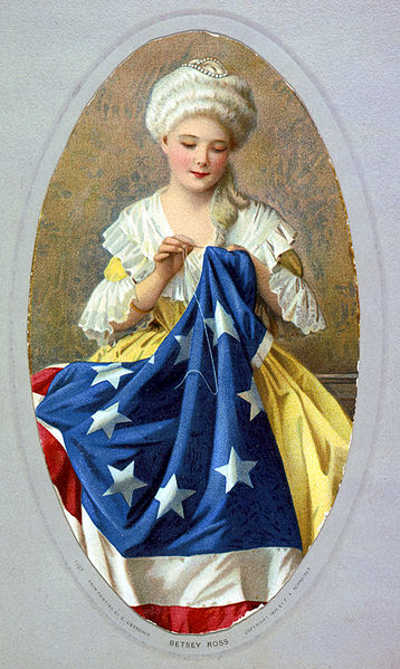
June 14 is Flag Day, the day we celebrate the birthday of the Stars and Stripes. But do you know the story behind the flag?
Of all the designs the new country could have chosen, why the stars and stripes?
Tradition tells us the quaint story of Betsy Ross, which goes like this:
George Washington and Robert Morris (a main financier of the war) went with a man named George Ross to the upholstery shop run by one of his relatives, a Mrs. Betsy Ross.
The American general – apparently taking time off from the desperate conflict raging about him to get some interior design tips from a random woman – had in hand a rough sketch of a flag he wanted for his new army. He wanted to know what Mrs. Ross thought.
With a critical eye, the veteran upholsterer made a few suggested alterations, changing the number of points on the stars from five to six (can you imagine a flag full of pentagrams?) and otherwise fine-tuning the sketch. With the men’s approval, Betsy Ross proceeded to sew the first official American flag.
This is the story passed down over the years in nursery rhymes and folk songs and absolutely no documentary evidence exists to substantiate it. So what do we know?
Well for one, we know that on June 14, 1777, in the early years of the Revolutionary War, the Continental Congress adopted the Stars and Stripes as the official national flag. The resolution read:
“Resolved, that the Flag of the thirteen United States be thirteen stripes, alternate red and white; that the Union be thirteen stars, white on a blue field, representing a new constellation.”
Not very descriptive when you think about it? A half-decent lawyer could find enough loopholes in that short resolution to create pretty much any flag he wished.

To start, no mention is given on how the stars and stripes are to be represented together. It would technically be true for the American flag to display the constellation of stars in the main field with the stripes in the upper left corner. For that matter, the stripes could appear in any corner or no corner at all. Who’s to say?
Although the exact details escape us, we can at least trace the origins of the flag with some certainty. A brief look at them might give us some insight into how Congress came up with the design they did.
Since the United States was the rebellious child of Great Britain, it’s no surprise that the story of its flag is tied to the tradition of our own.
From 1707 until the Revolution, a British naval flag called the Meteor Flag or Red Ensign was a common sight up and down the Atlantic seaboard in colonial harbors. Flown by ships of the Royal Navy, it was red with Union Jack in the upper left corner. The location of the Union Jack would be the exact location of our Stars against a blue field.
Okay, so we’re getting somewhere. But what about the stripes?
As the Revolutionary War got under way, farmers-turned-soldiers from every colony showed up to fight, each group carrying their own kind of flag. Such diversity wouldn’t do, so the patriots decided they needed a single flag to represent all American forces.
The Grand Union Flag, also known as the Congress Colors, First Ensign and Cambridge Flag emerged as the unofficial national flag during the early years of the war. However, this new flag, meant to be the one to represent all American forces, was rarely flown over anything other than ships.
This wouldn’t be the flag to confront England’s forces on the battlefield. It was, however, the flag to fly over America’s first Continental fleet (and is considered by many to be the first “true” American flag).
The Grand Union took the design of the Meteor Flag and added red and white stripes to the main field. So when Congress passed the resolution on June 14, 1777, dictating that the flag display stripes and stars, everyone at least had an idea of what they were talking about.
But, other than Betsy Ross, who could have been the first person to set pen to paper and given life to the design congress had in mind?
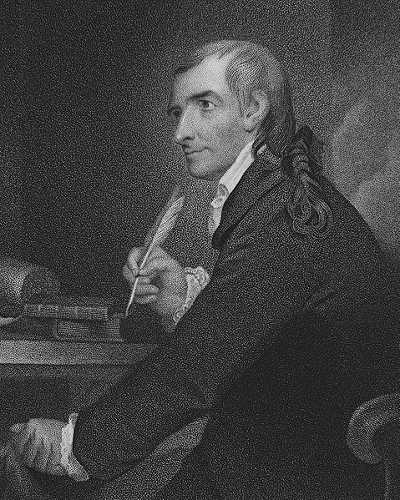
The answer is less romantic than an old lady upholsterer.
The only evidence we have for who designed the flag comes from a series of angry letters written by a disgruntled politician and a series of government reports his letter sparked. His name was Francis Hopkinson, a signer of the Declaration and Congressman and chair of the Navy board during the war.
In 1780, Hopkinson sent a letter to the Admiralty demanding payment for work he had done during his time on the Navy board. At the bottom of a long list of things he had designed, including things like ornaments for letterheads, Hopkinson claimed he had designed “the flag of the United States of America” (way to bury the lead, right?).
In typical government fashion, the letter made the rounds among politicians and bureaucrats before someone had the bright idea to waste Congressional time by appointing a committee to investigate Hopkinson’s claims (after all, the only other thing on their agenda was fighting the British, so there was plenty of time!).
In the end, the committee found that Hopkinson had indeed had a part in designing the flag, but had not been the only man consulted, and therefore did not deserve full credit – or payment – for his contribution.
What had he asked for in exchange for designing the most powerful symbol of this country?
A quarter of a cask of wine.
I think we had better stick to the Betsy story for our nursery rhymes.
Happy Flag Day.
Antone Pierucci is curator of history at the Riverside County Park and Open Space District and a freelance writer whose work has been featured in such magazines as Archaeology and Wild West as well as regional California newspapers.

GLENN COUNTY, Calif. – High winds blowing through the northern Sacramento Valley on Saturday helped fuel fires burning in nearby Glenn and Tehama counties, where thousands of of acres were burned and several structures destroyed.
The fires that began on Saturday included the Apple fire in Tehama County and the Chrome fire in Glenn County, both of which occurred in Cal Fire’s Tehama-Glenn Unit.
The Apple fire, located off of Apple and Paskenta roads west of Corning, started at 2:10 p.m. Saturday, according to Cal Fire.
The fire, whipped by erratic winds, led to closure of Corning and Butte Mountain roads, Cal Fire reported.
By 7 p.m., Cal Fire said the fire had grown to 2,500 acres and was 60-percent contained, with five residences and three outbuildings destroyed.
Cal Fire said the Chrome fire began just after 3:30 p.m. on Highway 162 and Forest Highway 7. It’s located north of the community of Elk Creek and just east of the boundaries of the Mendocino National Forest.
The fire was dispatched minutes later, and reported to be a rekindle of an earlier Chrome fire, which had begun on May 28 and was contained June 4 at 75 acres, according to Cal Fire.
Mendocino National Forest and Cal Fire personnel were on scene within minutes, according to radio reports.
Just after 5:30 p.m. the Glenn County Sheriff’s Office’s Office of Emergency Services reported that mandatory evacuations were in effect for Road 309 N from Stony Gorge east to the community of Elk Creek, with an evacuations shelter opened at Willows Memorial Hall.
At that point, the fire was about 500 acres with no containment, a figure that rose to 700 acres and 10-percent containment about two hours later.
Throughout the afternoon, Cal Fire air tankers criss-crossed the valley as they joined the effort to control the fire.
At about 8 p.m. the Glenn County Sheriff’s Office reported that 911 emergency lines in the area of Elk Creek to Stony Gorge were not working.
By 9:30 p.m. Saturday, Cal Fire gave an updated size estimate of 2,200 acres with 30 percent containment, with one residential structure destroyed and evacuation warnings in effect.
Additional information will be posted on the fires as it becomes available.
Email Elizabeth Larson at