 How to resolve AdBlock issue?
News
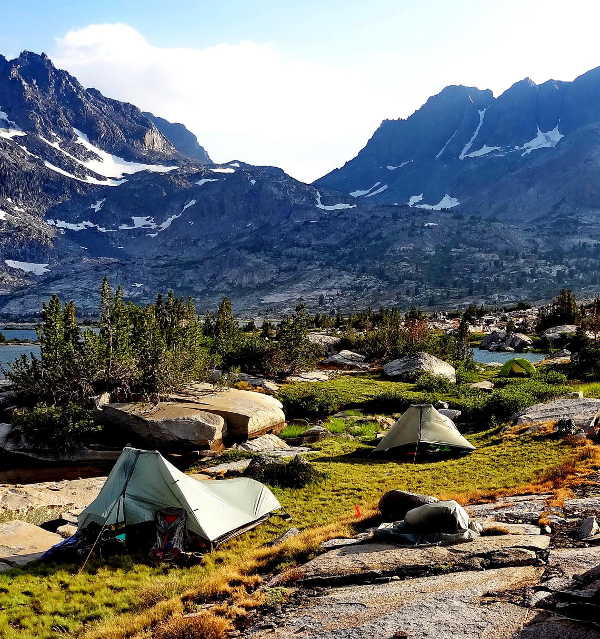
With summer officially here, it’s a great time to explore the outdoors! As people go hiking, camping, wildlife viewing and engage in other recreation activities, there can be associated impacts on the natural environment.
In 2017, more than 330 million people visited national parks alone, with millions more visiting state parks, wildlife refuges and federally designated wilderness areas as well.
US Geological Survey scientists are working with many partners to study how these visitors are affecting protected natural areas. Some of the impacts include trampling of native vegetation, causing erosion of soils, contaminating water, attracting wildlife with food and displacing wildlife from preferred habitats.
“We’re doing research on the impacts people are having while they are out having fun in our nation’s wilderness,” said Jeffrey Marion, a USGS research ecologist. “The information we gather helps land managers make the best decisions on how to accommodate more visitors while limiting their overall impact, helping preserve protected natural areas for all generations to enjoy.”
Camping
One of the major issues associated with camping is the common practice of cutting down trees for firewood. A USGS study of campsites in the Boundary Waters Canoe Area Wilderness of northern Minnesota found that 44 percent of campsite trees had been damaged and approximately 18 trees per campsite had been cut down, primarily for firewood. This significantly alters natural environments, especially wildlife habitat.
“With 2,000 campsites in Boundary Waters, that’s approximately 36,000 tree stumps in a single wilderness area,” said Marion. “Understanding the effects that campers are having on the area can help rangers develop strategies on the best way to prevent further tree loss and explore options for recovery.”
USGS scientists are also examining what influences the expansion of campsite size and creation of new and unnecessary campsites. One significant factor is topography. Campsites in large, flat areas are frequently expanded by campers, which can cause more water runoff with soil and pollutants into lakes and creeks. Campsites in sloping terrain can still have sufficient flat areas for tents, but are smaller, will likely resist future expansion and will have less impact than larger campsites.
Runoff and pollution from campsites can degrade aquatic environments, leading to impacts such as decreased water clarity and purity. These have the potential to affect trout reproduction, as sediments carry fungus and bacteria that harm trout eggs. Sediments also introduce nutrients that cause algal blooms in water, diminishing the amount of dissolved oxygen that’s critical to fish survival.
The USGS has begun a study on the Pacific Crest Trail to identify the most sustainable campsites and develop online maps for easy navigation to those locations. Visitors will be able to print the maps or download them to a smartphone app or GPS device, and accompanying tips will be provided on low-impact camping suggestions.
Low-impact outdoor practices
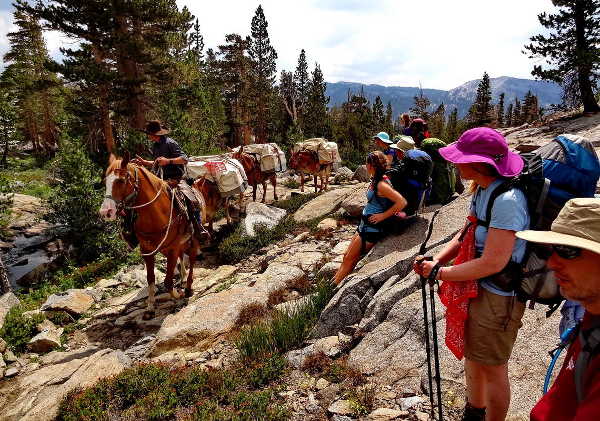
USGS science is used by many organizations to develop and communicate low-impact outdoor practices. Organizations include the Leave No Trace Center for Outdoor Ethics and federal land management agencies, such as the National Park Service, Bureau of Land Management, U.S. Fish and Wildlife Service, U.S. Forest Service and the U.S. Army Corps of Engineers.
Based on USGS science, some low-impact outdoor practices communicated by land managers include visitors collecting only dead and fallen campfire wood that they can break by hand; choosing small campsites in sloped areas that are more than 200 feet from water; and concentrating activity on durable surfaces like rock or areas that lack plant cover.
Hiking trails
Most visitors to protected natural areas hike on trails created with hardened treads designed to sustain traffic. However, heavy hiking traffic and use by mountain bikers, motorized vehicles and horseback riders all take their toll.
Parks are also becoming more crowded, with long lines of trail users during the popular summer season. More visitors have been venturing off trails, trampling and removing protective vegetation and organic materials. This can compact soils and increase water runoff and erosion. Soil loss is the most significant and long lasting environmental impact.
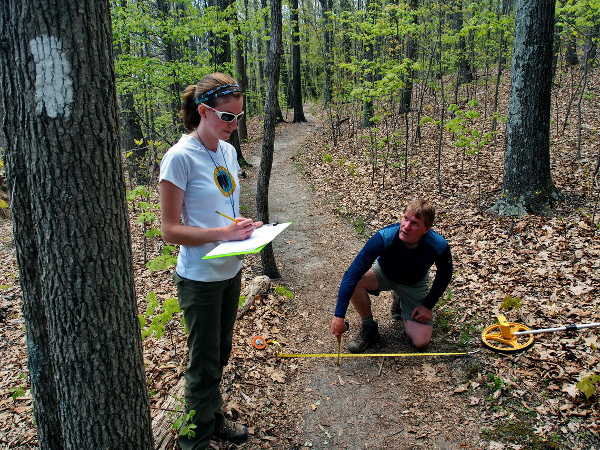
To address this issue, USGS scientists are collaborating with university social scientists to investigate sustainable trail design guidance and actions to deter off-trail hiking. As an example, a study was conducted to protect large numbers of rare plants near the Billy Goat Trail in Washington, D.C.
In the study, scientists tested various communication methods at formal trailheads and at informal trails created by visitors -- including “don’t walk here” signs and placement of organic materials, such as leaves -- to hide and discourage use of the informal trails.
Another study area was Cadillac Mountain at Acadia National Park in Maine, where visitors have trampled fragile subalpine soils and vegetation on the summit. The USGS provided the science in support of a collaborative effort to develop best management practices, with recommendations that included educational signs and low fencing along trail borders.
Research findings identified the most effective educational messages and suggested that the formal trail be extended and widened, with short side-trails to the most scenic spots.
Feeding wildlife
Wildlife feeding, intentional or unintentional, is common in many national parks and protected areas. This can lead to food attraction behavior, where animals start to associate food with people, sometimes putting dangerous animals, or those that spread disease, in close proximity to humans.
But the practice is also harmful to wildlife, which can suffer nutritionally, become dependent on unreliable food sources and become more susceptible to predators, dogs and vehicle accidents.
USGS science has helped land managers develop effective visitor messages to deter wildlife feeding. As an example, a study conducted on the popular Angel’s Landing Trail at Zion National Park in Utah looked at the issue, focusing on chipmunks. Educational messages were provided through signs or delivered personally by uniformed park staff. Messaging significantly reduced the instances of visitors feeding wildlife.
Education
The USGS works with the Leave No Trace Center for Outdoor Ethics to provide science that underpins the development and evaluation of best practices as well as educational courses and materials. Those resources have been widely adopted by federal, state and local managers of protected areas and numerous outdoor organizations.
The book, “Leave No Trace in the Outdoors,” which is authored by Marion, discusses ways to enjoy the outdoors while minimizing environmental and social impacts.
Start with science
“With so many people visiting and enjoying the great outdoors and exploring the wonders of nature off the beaten path, leaving no trace can be a real challenge,” said Marion. “But our science can inform decisions being made across the landscape to help prevent, minimize or mitigate the effects some recreational activities are having on our wildernesses.”
On Feb. 15, 2013, a house-sized meteor entered into Earth’s atmosphere at over 40,000 miles per hour and exploded 14 miles above Chelyabinsk, Russia.
The blast – wielding more than 30 times the energy of the Hiroshima atom bomb – generated a shock wave that shattered windows and damaged buildings in several Russian cities, injuring over 1600 people.
Lindley Johnson is the Planetary Defense Officer at NASA Headquarters.
“The Chelyabinsk event was an ominous warning shot. It drew attention to what should be done to detect even larger asteroids that could possibly strike our planet.”
According to Johnson, the need for worldwide collaboration in asteroid detection and tracking was already recognized, but Chelyabinsk was a spectacular reminder.
It was also an ironic coincidence.
“Our report with recommendations on what should be done about the hazard from near-Earth objects (NEOs) was being presented at a U.N. committee meeting that very same day.”
That coincidence helped lead to a coordinated effort among many nations to keep a closer eye on the sky. In 2013, the United Nations endorsed the creation of the International Asteroid Warning Network (IAWN), for which observatories around the world regularly search the skies to find and track asteroids and comets whose orbits periodically bring them within 30 million miles of Earth’s orbit. Additionally, NASA established the Planetary Defense Coordination Office (PDCO) in 2016 to organize the near-Earth object search and to plan and coordinate any response to possible asteroid impacts.
So, how well would the IAWN, the PDCO, and their partners work together if an object was flying into Earth’s neighborhood?
October 2017 presented a golden opportunity for asteroid trackers around the world to test their ability to operate as a coordinated network. Led by the US, IAWN mounted a practice observation campaign to find and track a small asteroid named 2012 TC4, first detected in 2012. While this asteroid posed no risk of impact with Earth, it was predicted to come back into view in the fall of 2017 with a very close approach.
Observers with the European Space Agency and the European Southern Observatory were the first to re-acquire 2012 TC4 in late July 2017 by calculating where to look with an 8-meter aperture telescope in Chile. Then, more than a dozen observatories, universities, and space labs around the globe detected 2012 TC4 and reported their observations to the Minor Planet Center at the Smithsonian Astrophysical Observatory where experts calculate asteroid orbits to identify any danger to Earth.
As expected, the object approached and passed by Earth on October 12, 2017.
Dr. Kelly Fast is manager of NASA’s NEO Observations Program at NASA Headquarters.
“This was a very successful exercise for the IAWN with precise prediction of the orbit and tracking of the asteroid. It passed about 27,000 miles from Earth’s surface – only a tenth of the distance to our Moon.”
NASA’s NEO Observations Program focuses on finding asteroids 460 feet (140 meters) and larger. The goal is to find any of these asteroids that could be an impact hazard early enough to allow deflection by either a gravity tractor or a kinetic impactor.
“While no known asteroid larger than 140 meters in size has a significant chance to hit Earth for the next 100 years, only about one-third of the estimated total population of that size and larger has been found to date.”
So, the international asteroid hunt goes on.
For more on asteroid hunting and other cosmic adventures, visit http://science.nasa.gov.
LAKE COUNTY, Calif. – New wildland fire incidents were reported around California on Friday as the work continued to fully contain several large fires around the region.
Cal Fire, now giving one daily report on the Pawnee fire, said Friday evening that the fire – burning northeast of Clearlake Oaks since June 23 – edged up slightly in size to 15,185 acres, with containment also up to 95 percent. The fire’s estimated containment date continues to be July 10.
A scaled-back firefighting force of 543 personnel, 10 engines, eight water tenders, six hand crews and six dozers remain assigned to the incident, Cal Fire said.
To the southeast, the County fire in Napa and Yolo counties burned several hundred more acres on Friday, rising to 88,375 acres with 42 percent containment. Cal Fire said the incident should be fully contained on July 12.
On Friday, 110 structures remained threatened, with the total destroyed increasing by one to total 10, Cal Fire said. Mandatory evacuations remain in effect in several parts of the fire area.
Conditions have remained challenging for firefighters.
While temperatures were cooler on Friday, lightning was reported in the fire area during the afternoon, and a small wildland fire of about 10 acres to the east of the fire was quickly knocked down later in the afternoon in the area of Fox Canyon.
The Yolo County Office of Emergency Services, along with Cal Fire Incident Management Team 3, will host a community meeting at 4 p.m. Saturday at the Guinda Grange Hall, 16787 Forrest Ave. Representatives from the agencies managing the incident will provide an operational briefing and be available for questions.
As the region’s biggest fire, the County incident still commands a large firefighting force of 3,660 personnel, 270 engines, 56 water tenders, 22 helicopters, 80 hand crews and 69 dozers, Cal Fire said.
However, with new critical fire incidents in other parts of California, resources continued to be reassigned on Friday and into early Saturday, when crews were released from the County fire and sent north to the Klamathon fire in Siskiyou County.
The Klamathon fire, which began on Thursday afternoon near the community of Hornbrook, had as of Friday night taken at least one life and destroyed 15 structures, burning 9,600 acres with 5 percent containment, officials reported.
Friday also saw other major incidents begin around the state.
The West fire began in a heavily populated area of San Diego County near Alpine on Friday morning. Cal Fire said it burned 400 acres and was 5-percent contained by day’s end.
That fire led to evacuations and was reported to have destroyed numerous structures and threatened critical infrastructure.
The incident prompted Gov. Jerry Brown to declare a state of emergency in San Diego County.
On Friday afternoon, another fire – the Irish – began in Amador County,south of Plymouth.
Cal Fire said the Irish fire burned 840 acres and was 40-percent contained on Friday night.
Email Elizabeth Larson at
CLEARLAKE, Calif. – The Clearlake City Council last week approved an update to the city’s purchasing program and voted to support an updated management class plan and salary schedule that creates two new administrative jobs for current staff.
Finance Director Alan Flora presented to the council the first reading of the ordinance updating the city’s purchasing system, to include the interlocal purchasing program, which had been raised at the previous meeting.
He said staff wanted to come back to this meeting to provide clarity to the public on purchasing system, which was accepted in 2006 and has certain exceptions to bidding
Mayor Bruno Sabatier asked if it gives the county better rates on products. Flora said yes it should, that’s the idea and participating businesses are willing to provide a better rate.
City Attorney Ryan Jones clarified that the program is not a way to circumvent state law.
The council approved the item 5-0 and set a second reading of July 12.
City Manager Greg Folsom also presented the updated management class plan and salary schedule.
His written report for the meeting explained, “While the financial condition of the City is much improved, there is still a limited tax base and many needed community services. This requires city administration to take on additional responsibilities in order to achieve the goals of the City’s Strategic Plan.
He explained that there are three employee bargaining units, while management staff are unrepresented.
The consumer price index is 2.4 percent, Folsom said the update proposed a 2-percent increase for management staff.
He said they also are planning a management staff reorganization.
“We’ve historically had an elected city clerk,” he said, but after voters approved a change four years ago, the city intends to move forward with an appointed city clerk this fall.
He said the plan is to create a combined Administrative Services director/city clerk position that will have expanded responsibilities that cover areas including human resources, management, marketing, the city’s Community Development Block Grant program and city facility rentals.
That new position will have a monthly salary range of $6,633.14 on the A step to $8,062.62 on the E step. On an annual basis, those steps range from $79,597.68 to $96,751.48, based on the new salary schedule.
Folsom also recommended removing the Community Development Department director from the schedule, as he’s been covering that job and sees no need for a freestanding position any time soon.
That Community Development director’s job responsibilities are proposed to be placed under the authority of the assistant city manager’s position, the creation of which was part of the new plan, Folsom said.
Finance Director Alan Flora is slated to take on that assistant city manager role, and will continue his finance duties. Folsom noted that Flora has experience both in finance and urban planning, so he will take on overseeing planning commission meetings and economic development.
The assistant city manager’s job has a monthly range of $8,465.76 to $10,290.16, or $101,589.12 to $123,482.21 annually, based on city documents.
Folsom said the city wouldn’t appoint anyone to the Administrative Services director-city clerk position until November, as it remains an elected position until then. Melissa Swanson, the current city clerk, is expected to take on that role.
Councilwoman Joyce Overton said she was nervous about the pay ranges for the new positions, and was concerned about them being sustainable.
Folsom said they had forecast those positions in the new budget, and believed the city can sustain them.
During the discussion, Folsom also pointed out that new businesses are coming into the city – bringing with them sales tax and other revenue – along with new cannabis revenue, none of which are reflected in the new fiscal year budget.
Councilman Phil Harris asked if salary steps for all positions will automatically adjust due to a mandated minimum wage increase. Folsom said the city’s minimum steps will have to be at least minimum wage, but they won’t cascade up the ladder.
Councilman Russell Cremer questioned if the new jobs will lead to increased efficiencies. “What are we getting for our buck?”
Folsom said responsibility was being transferred from some staffers to others in an effort on increase capacity.
Sabatier said the city has a lot of projects right now that are stuck on Folsom’s desk because he can’t do everything. “We’re asking a lot from you.”
He said he was excited to see more of a focus on Community Development as well as the assistant city manager position.
“I’m less worried about the bottom half of this sheet of paper as I am about the top half,” he said, referring to jobs on the lower end of the pay scale, such as kennel technicians for the city’s animal control department.
The kennel tech job earns a monthly range of $1,994.57 to $2,2424.41, or $23,934.84 to $29,092.95 annually, based on the salary schedule.
Sabatier said that the city needs to pay better if it wants to improve its animal control department. “There’s a lot that comes along with that job,” he said, adding he wanted to look at increasing that job in the near future with new anticipated city revenues.
Cremer agreed with Sabatier, explaining the city was competing with vineyards paying $15 an hour and the cannabis industry paying $20 an hour.
Harris also had concerns about the low pay, “There’s an enormous disparity between the top and the bottom of this sheet, and that’s a problem for me,” he said, explaining that it should weigh heavily on the thought process as the council looks at a living wage.
Overton said she wanted to analyze the city’s salaries, and Folsom said it would be a good thing to do at the midyear budget review.
The council would ultimately give unanimous approval to three motions, among them, the adoption of two resolutions, one amending the management/confidential employees classification and benefit plan and the second approving the job description and salary level for the Administrative Services director/city clerk, and also approving the city’s updated salary schedule.
Jones said there was no reportable action taken in the council’s closed session to discuss the continuing police chief recruitment process.
Folsom confirmed to Lake County News in recent weeks that the city has narrowed the search to one candidate who is going through the background process and is expected to be announced next week.
Email Elizabeth Larson at
HIDDEN VALLEY LAKE, Calif. – County officials reported that a bat found in Hidden Valley Lake recently tested positive for rabies, resulting in treatment of a person who came in contact with the animal.
Bats are wonderful animals and they are important to our ecosystem, but there is reason to exercise caution around them.
Although most bats do not have rabies, bat variant rabies exists throughout California and can infect any mammal, including humans.
Cases of rabid bats were confirmed locally in the fall, at which time the migration season for bats was starting, as Lake County News has reported.
The rabies virus is found in the animal’s saliva. Exposure can occur due to bites or direct contact with infected animals that groom themselves by licking their fur.
Bat bites may be unapparent, such that a person who discovers a bat in a room where they were sleeping should be considered exposed.
Only rarely is rabies diagnosed in domestic pets, since it is preventable through vaccination. However, unvaccinated dogs and cats are susceptible to rabies and are at particular risk for exposure in rural environments where they may come into contact with bats or other wildlife, such as skunks, fox, and raccoons.
A case of human rabies in 2011 was suspected to be the result of contact with unvaccinated cats.
For people who are exposed to rabies, post-exposure treatment is highly effective in preventing the infection as long as it is given before the person becomes symptomatic.
Once symptoms of infection begin, the infection is nearly 100-percent fatal, officials said.
Recommendations to prevent rabies include:
· Vaccinate all dogs and cats
· Keep your pets where they are supervised and protected against exposure to wildlife
· Avoid contact with feral dogs and cats and other wildlife
· Seek prompt medical treatment for bites or exposures to sick or unvaccinated animals. Discuss post-exposure preventive treatment with the healthcare provider.
Post-exposure treatment can be avoided if the biting dog or cat can be observed under quarantine for a 10-day period.
However, exposure to wild animals requires euthanasia and testing of the animal or, if the animal cannot be located, a strong recommendation will be made for the bite victim to receive post-exposure preventive treatment.
Contrary to the legendary and frightening rabies prevention treatments of many years ago, current post-exposure treatment now involves only a series of four shots in the arm spread out over a period of two weeks and one additional shot of antibody specifically against rabies virus on the first day.
For more information, visit https://www.cdc.gov/rabies/index.html.
Bats are wonderful animals and they are important to our ecosystem, but there is reason to exercise caution around them.
Although most bats do not have rabies, bat variant rabies exists throughout California and can infect any mammal, including humans.
Cases of rabid bats were confirmed locally in the fall, at which time the migration season for bats was starting, as Lake County News has reported.
The rabies virus is found in the animal’s saliva. Exposure can occur due to bites or direct contact with infected animals that groom themselves by licking their fur.
Bat bites may be unapparent, such that a person who discovers a bat in a room where they were sleeping should be considered exposed.
Only rarely is rabies diagnosed in domestic pets, since it is preventable through vaccination. However, unvaccinated dogs and cats are susceptible to rabies and are at particular risk for exposure in rural environments where they may come into contact with bats or other wildlife, such as skunks, fox, and raccoons.
A case of human rabies in 2011 was suspected to be the result of contact with unvaccinated cats.
For people who are exposed to rabies, post-exposure treatment is highly effective in preventing the infection as long as it is given before the person becomes symptomatic.
Once symptoms of infection begin, the infection is nearly 100-percent fatal, officials said.
Recommendations to prevent rabies include:
· Vaccinate all dogs and cats
· Keep your pets where they are supervised and protected against exposure to wildlife
· Avoid contact with feral dogs and cats and other wildlife
· Seek prompt medical treatment for bites or exposures to sick or unvaccinated animals. Discuss post-exposure preventive treatment with the healthcare provider.
Post-exposure treatment can be avoided if the biting dog or cat can be observed under quarantine for a 10-day period.
However, exposure to wild animals requires euthanasia and testing of the animal or, if the animal cannot be located, a strong recommendation will be made for the bite victim to receive post-exposure preventive treatment.
Contrary to the legendary and frightening rabies prevention treatments of many years ago, current post-exposure treatment now involves only a series of four shots in the arm spread out over a period of two weeks and one additional shot of antibody specifically against rabies virus on the first day.
For more information, visit https://www.cdc.gov/rabies/index.html.
Estate planning attorneys often ask their clients for their reasons behind why they want to distribute their estate in the way the way they describe.
That is especially true when the distribution differs from how the California Probate Code otherwise distributes the estate in the absence of a will or trust.
Why does the attorney need to hear the client’s explanation?
First, the attorney needs to make the client aware when the client makes a distribution that differs from what California law provides for the client’s heirs.
An attorney will document the legal file with proof that the client both understood what he or she was doing and acted of his or her own free will.
That may include a handwritten letter signed by the client stating his or her intentions and relevant background facts.
Second, heirs or existing beneficiaries who then receive less may later bring a lawsuit to overturn the executed estate planning documents.
The lawsuit may allege that the person executing the estate planning documents lacked capacity to do what they did and/or allege that the person acted under undue influence, i.e., did what someone else told them to do.
A successful lawsuit might restore a prior estate planning document (i.e., a prior will or trust) or have the estate distributed to the surviving heirs as though the person had died with no will or trust, i.e., intestate succession.
Such a lawsuit may either occur while the person is incapacitated, or after the person dies.
California has different standards of capacity depending on the nature of the act in question. Wills have a simple standard and trusts have a more complex standard to meet.
For a will, “an individual is not mentally competent to make a will if at the time of making the will either of the following is true: (1) The individual does not have sufficient mental capacity to be able to (A) understand the nature of the testamentary act, (B) understand and recollect the nature and situation of the individual’s property, or (C) remember and understand the individual’s relations to living descendants, spouse, and parents, and those whose interests are affected by the will. (2) The individual suffers from a mental disorder with symptoms including delusions or hallucinations, which delusions or hallucinations result in the individual’s devising property in a way which, except for the existence of the delusions or hallucinations, the individual would not have done. [Probate Code Section 6100.5]
For trusts, California uses a multi-step approach to determining a person’s capacity. It presumes that, “… all persons have the capacity to make decisions and to be responsible for their acts or decisions [Probate Code section 810].” That presumption, however, is rebuttable. The person trying to overcome the presumption has the burden of proof (evidentiary burden).
Overcoming the presumption requires evidence of one or more deficits in the person’s mental functions and evidence that such deficits were relevant to the decision or action.
Four (4) mental functions are examined: (1) Alertness and Attention [i.e., is the person aware of themselves and their surroundings, themselves, their time and place, and able to concentrate]; (2) Information Processing [i.e., does the person have sufficient memory including immediate recall; is he able to understand or communicate, is he able to reason and to reason and to plan logically]; (3) Thought Processes [i.e., does the person have hallucinations or delusions or repetitive and uncontrollable thoughts], and (4) Ability to Modulate Mood and Affect [i.e., does the person suffer from anxiety, depression, euphoria, panic, despair, etc., that is inappropriate to the person’s situation]. [Probate Code section 811]
A mental deficit alone is not enough. The deficit must relate to the decision or the action at issue. For example, hallucinations without any bearing as to why a person gifted his or her estate the way he did is simply irrelevant to the person’s capacity to do so.
In addition, California law requires that, “a person has the ability to communicate, either verbally or by any other means, the decision in question, and to understand and appreciate, to the extent relevant, all of the following: (a) The rights, duties and responsibilities so created or affected. (b) The probable consequences of the decision to all affected. (c) The significant risks, benefits and reasonable alternatives involved.” [Probate Code section 812]
With regards to undue influence, it is important that the attorney meet with the client alone, sufficiently to establish that the client is acting freely.
Otherwise, it may later be argued that someone else – who was also present during the meeting – was actively involved in procuring the estate plan. Likewise, beneficiaries should not be present when the estate planning documents are signed.
The foregoing precautions are taken while someone is still alive. Otherwise, it becomes more likely that a disgruntled heir or beneficiary will see more reason to contest the deceased person’s will or trust.
Dennis A. Fordham, attorney, is a State Bar-Certified Specialist in estate planning, probate and trust law. His office is at 870 S. Main St., Lakeport, Calif. He can be reached atThis email address is being protected from spambots. You need JavaScript enabled to view it. and 707-263-3235. His Web site is www.DennisFordhamLaw.com.
That is especially true when the distribution differs from how the California Probate Code otherwise distributes the estate in the absence of a will or trust.
Why does the attorney need to hear the client’s explanation?
First, the attorney needs to make the client aware when the client makes a distribution that differs from what California law provides for the client’s heirs.
An attorney will document the legal file with proof that the client both understood what he or she was doing and acted of his or her own free will.
That may include a handwritten letter signed by the client stating his or her intentions and relevant background facts.
Second, heirs or existing beneficiaries who then receive less may later bring a lawsuit to overturn the executed estate planning documents.
The lawsuit may allege that the person executing the estate planning documents lacked capacity to do what they did and/or allege that the person acted under undue influence, i.e., did what someone else told them to do.
A successful lawsuit might restore a prior estate planning document (i.e., a prior will or trust) or have the estate distributed to the surviving heirs as though the person had died with no will or trust, i.e., intestate succession.
Such a lawsuit may either occur while the person is incapacitated, or after the person dies.
California has different standards of capacity depending on the nature of the act in question. Wills have a simple standard and trusts have a more complex standard to meet.
For a will, “an individual is not mentally competent to make a will if at the time of making the will either of the following is true: (1) The individual does not have sufficient mental capacity to be able to (A) understand the nature of the testamentary act, (B) understand and recollect the nature and situation of the individual’s property, or (C) remember and understand the individual’s relations to living descendants, spouse, and parents, and those whose interests are affected by the will. (2) The individual suffers from a mental disorder with symptoms including delusions or hallucinations, which delusions or hallucinations result in the individual’s devising property in a way which, except for the existence of the delusions or hallucinations, the individual would not have done. [Probate Code Section 6100.5]
For trusts, California uses a multi-step approach to determining a person’s capacity. It presumes that, “… all persons have the capacity to make decisions and to be responsible for their acts or decisions [Probate Code section 810].” That presumption, however, is rebuttable. The person trying to overcome the presumption has the burden of proof (evidentiary burden).
Overcoming the presumption requires evidence of one or more deficits in the person’s mental functions and evidence that such deficits were relevant to the decision or action.
Four (4) mental functions are examined: (1) Alertness and Attention [i.e., is the person aware of themselves and their surroundings, themselves, their time and place, and able to concentrate]; (2) Information Processing [i.e., does the person have sufficient memory including immediate recall; is he able to understand or communicate, is he able to reason and to reason and to plan logically]; (3) Thought Processes [i.e., does the person have hallucinations or delusions or repetitive and uncontrollable thoughts], and (4) Ability to Modulate Mood and Affect [i.e., does the person suffer from anxiety, depression, euphoria, panic, despair, etc., that is inappropriate to the person’s situation]. [Probate Code section 811]
A mental deficit alone is not enough. The deficit must relate to the decision or the action at issue. For example, hallucinations without any bearing as to why a person gifted his or her estate the way he did is simply irrelevant to the person’s capacity to do so.
In addition, California law requires that, “a person has the ability to communicate, either verbally or by any other means, the decision in question, and to understand and appreciate, to the extent relevant, all of the following: (a) The rights, duties and responsibilities so created or affected. (b) The probable consequences of the decision to all affected. (c) The significant risks, benefits and reasonable alternatives involved.” [Probate Code section 812]
With regards to undue influence, it is important that the attorney meet with the client alone, sufficiently to establish that the client is acting freely.
Otherwise, it may later be argued that someone else – who was also present during the meeting – was actively involved in procuring the estate plan. Likewise, beneficiaries should not be present when the estate planning documents are signed.
The foregoing precautions are taken while someone is still alive. Otherwise, it becomes more likely that a disgruntled heir or beneficiary will see more reason to contest the deceased person’s will or trust.
Dennis A. Fordham, attorney, is a State Bar-Certified Specialist in estate planning, probate and trust law. His office is at 870 S. Main St., Lakeport, Calif. He can be reached at