How to resolve AdBlock issue?
News
NORTHERN CALIFORNIA – A fire burning in Napa County grew by several hundred more acres on Sunday, with firefighters raising containment.
Cal Fire said Sunday evening that the Snell fire had reached 2,400 acres and was 20-percent contained. No structures have been damaged or destroyed.
The fire began Saturday afternoon near the Berryessa Estates subdivision southeast of Middletown.
Cal Fire said the blaze continues to threaten 180 structures. As such, evacuations remain in effect on the west side of Berryessa Knoxville Road from Pope Creek Bridge to Lake-Napa County line, Snell Valley Road and all roads to Snell Valley, and Berryessa Estates.
An evacuation center is located at Pope Valley Farm Center, 5800 Pope Valley Road.
Berryessa Knoxville Road from Putah Creek Bridge north to the county line and Snell Valley Road at the intersection of Butts Canyon Road remain closed, Cal Fire reported.
Resources assigned include 132 engines, 20 water tenders, 31 fire crews, seven helicopters, 24 bulldozers, six air tankers and 1,241 personnel, according to Cal Fire.
Cal Fire said the Snell fire’s cause remains under investigation.
Email Elizabeth Larson atThis email address is being protected from spambots. You need JavaScript enabled to view it. . Follow her on Twitter, @ERLarson, or Lake County News, @LakeCoNews.
Cal Fire said Sunday evening that the Snell fire had reached 2,400 acres and was 20-percent contained. No structures have been damaged or destroyed.
The fire began Saturday afternoon near the Berryessa Estates subdivision southeast of Middletown.
Cal Fire said the blaze continues to threaten 180 structures. As such, evacuations remain in effect on the west side of Berryessa Knoxville Road from Pope Creek Bridge to Lake-Napa County line, Snell Valley Road and all roads to Snell Valley, and Berryessa Estates.
An evacuation center is located at Pope Valley Farm Center, 5800 Pope Valley Road.
Berryessa Knoxville Road from Putah Creek Bridge north to the county line and Snell Valley Road at the intersection of Butts Canyon Road remain closed, Cal Fire reported.
Resources assigned include 132 engines, 20 water tenders, 31 fire crews, seven helicopters, 24 bulldozers, six air tankers and 1,241 personnel, according to Cal Fire.
Cal Fire said the Snell fire’s cause remains under investigation.
Email Elizabeth Larson at
LAKEPORT, Calif. – The Lakeport Economic Development Advisory Committee will hold its next meeting this week.
The committee, or LEDAC, will meet from 7:30 to 9 a.m. Wednesday, Sept. 12, at Lakeport City Hall, 225 Park St.
The meeting is open to the public.
Lakeport Community Development Director Kevin Ingram will lead the group in the continued review of the city’s economic development element.
LEDAC members also will discuss implementation of the Lakeport Economic Development Strategic Plan 2017-2022, the business walk and survey, the guide to doing business in Lakeport and economic development pages online.
There also will be an update on city projects and citizen’s input.
Following the Wednesday meeting, the next LEDAC meeting will take place on Nov. 14.
LEDAC advocates for a strong and positive Lakeport business community and acts as a conduit between the city and the community for communicating the goals, activities and progress of Lakeport’s economic and business programs.
Members are Chair Wilda Shock and Vice Chair Denise Combs, Candy De Los Santos, Bill Eaton, Melissa Fulton, Pam Harpster, Judith Kanavle, Andy Lucas, Dan Peterson and Panette Talia. City staff who are members include City Manager Margaret Silveira and Community Development Director Kevin Ingram.
Email Elizabeth Larson atThis email address is being protected from spambots. You need JavaScript enabled to view it. . Follow her on Twitter, @ERLarson, or Lake County News, @LakeCoNews.
The committee, or LEDAC, will meet from 7:30 to 9 a.m. Wednesday, Sept. 12, at Lakeport City Hall, 225 Park St.
The meeting is open to the public.
Lakeport Community Development Director Kevin Ingram will lead the group in the continued review of the city’s economic development element.
LEDAC members also will discuss implementation of the Lakeport Economic Development Strategic Plan 2017-2022, the business walk and survey, the guide to doing business in Lakeport and economic development pages online.
There also will be an update on city projects and citizen’s input.
Following the Wednesday meeting, the next LEDAC meeting will take place on Nov. 14.
LEDAC advocates for a strong and positive Lakeport business community and acts as a conduit between the city and the community for communicating the goals, activities and progress of Lakeport’s economic and business programs.
Members are Chair Wilda Shock and Vice Chair Denise Combs, Candy De Los Santos, Bill Eaton, Melissa Fulton, Pam Harpster, Judith Kanavle, Andy Lucas, Dan Peterson and Panette Talia. City staff who are members include City Manager Margaret Silveira and Community Development Director Kevin Ingram.
Email Elizabeth Larson at
NORTHERN CALIFORNIA – The Bureau of Land Management Ukiah Field Office is temporarily closing the Knoxville Management Area, within the Berryessa Snow Mountain National Monument, due to the proximity of the Snell fire burning southeast of Middletown in Napa County.
This temporary closure includes the Knoxville Off-Highway Vehicle Recreation Area, Northside Staging Area, Hunting Creek Campground and the Knoxville Area of Critical Environmental Concern.
The closure is necessary to protect public land users from active wildfire, to safeguard wildland fire fighters from recreational activities and to shield natural resources that may require rehabilitation after fire suppression. These areas will remain closed to public access until further notice.
The Snell fire started on Saturday afternoon along Butts Canyon and Snell Valley roads. As of Sunday night, the fire was 2,400 acres and 20-percent contained, burning primarily in grassy oak woodlands in difficult terrain, according to Cal Fire.
Evacuations are in place and portions of Berryessa Knoxville Road and Snell Valley Road are closed. The most current information is available at http://www.fire.ca.gov/current_incidents/incidentdetails/Index/2244.
The Cow Mountain Recreation Area sustained heavy damage during the Mendocino Complex fire and remains closed to all access.
All public lands managed by the Ukiah Field Office are under fire restrictions, which prohibit recreational target shooting and ban all campfires and open flame. Read more at https://www.blm.gov/press-release/blm-ukiah-increases-fire-restrictions-limits-shooting-Aug2018.
A complete listing off all fire restrictions on BLM-managed public lands in California is available at https://www.blm.gov/programs/public-safety-and-fire/fire-and-aviation/regional-info/california/fire-restrictions.
For specific questions, please contact the Ukiah Field Office, Monday through Friday, at 707-468-4000.
This temporary closure includes the Knoxville Off-Highway Vehicle Recreation Area, Northside Staging Area, Hunting Creek Campground and the Knoxville Area of Critical Environmental Concern.
The closure is necessary to protect public land users from active wildfire, to safeguard wildland fire fighters from recreational activities and to shield natural resources that may require rehabilitation after fire suppression. These areas will remain closed to public access until further notice.
The Snell fire started on Saturday afternoon along Butts Canyon and Snell Valley roads. As of Sunday night, the fire was 2,400 acres and 20-percent contained, burning primarily in grassy oak woodlands in difficult terrain, according to Cal Fire.
Evacuations are in place and portions of Berryessa Knoxville Road and Snell Valley Road are closed. The most current information is available at http://www.fire.ca.gov/current_incidents/incidentdetails/Index/2244.
The Cow Mountain Recreation Area sustained heavy damage during the Mendocino Complex fire and remains closed to all access.
All public lands managed by the Ukiah Field Office are under fire restrictions, which prohibit recreational target shooting and ban all campfires and open flame. Read more at https://www.blm.gov/press-release/blm-ukiah-increases-fire-restrictions-limits-shooting-Aug2018.
A complete listing off all fire restrictions on BLM-managed public lands in California is available at https://www.blm.gov/programs/public-safety-and-fire/fire-and-aviation/regional-info/california/fire-restrictions.
For specific questions, please contact the Ukiah Field Office, Monday through Friday, at 707-468-4000.
Gov. Edmund G. Brown Jr. has signed an executive order to safeguard California’s unique plants, animals and ecosystems which are threatened by climate change.
“The new reality of climate change requires a more thoughtful and systemic approach that considers the connections and the vast web of relationships that tie together the myriad elements of California’s ecosystems,” Gov. Brown wrote in the order.
California is home to more species of plants and animals than any other state in the country.
The deserts, forests, mountain ranges, valleys, wetlands, woodlands, rivers, estuaries, marine environments, rangelands and agricultural fields of California provide refuge for a vast array of species including approximately 650 species of birds, 220 mammals, 75 amphibians, 70 freshwater fish, over 100 marine fish and mammals and approximately 6,500 native plants – of which 2,000 or more are rare.
Together, the state’s plants and animals co-exist to create the complex ecosystems upon which so much of California’s people and economy depend.
This executive order directs the Department of Food and Agriculture and the Department of Fish and Wildlife to work together to safeguard existing plants and animals while restoring and protecting habitat across both working and wild places.
The order also establishes Sept. 7 as California Biodiversity Day each year.
The action follows steps taken earlier this year to protect the state’s biological heritage. The enacted 2018-19 state budget allocated $2.5 million to launch the California Biodiversity Initiative in partnership with tribal groups, educators and researchers, the private sector, philanthropic groups and landowners. In May, Governor Brown also recognized International Day for Biological Diversity.
The steps outlined in the executive order and complimentary California Biodiversity Initiative will improve understanding of the state’s biological richness and identify actions to preserve, manage and restore ecosystems to protect the state’s biodiversity from climate change.
The text of the executive order can be found here.
“The new reality of climate change requires a more thoughtful and systemic approach that considers the connections and the vast web of relationships that tie together the myriad elements of California’s ecosystems,” Gov. Brown wrote in the order.
California is home to more species of plants and animals than any other state in the country.
The deserts, forests, mountain ranges, valleys, wetlands, woodlands, rivers, estuaries, marine environments, rangelands and agricultural fields of California provide refuge for a vast array of species including approximately 650 species of birds, 220 mammals, 75 amphibians, 70 freshwater fish, over 100 marine fish and mammals and approximately 6,500 native plants – of which 2,000 or more are rare.
Together, the state’s plants and animals co-exist to create the complex ecosystems upon which so much of California’s people and economy depend.
This executive order directs the Department of Food and Agriculture and the Department of Fish and Wildlife to work together to safeguard existing plants and animals while restoring and protecting habitat across both working and wild places.
The order also establishes Sept. 7 as California Biodiversity Day each year.
The action follows steps taken earlier this year to protect the state’s biological heritage. The enacted 2018-19 state budget allocated $2.5 million to launch the California Biodiversity Initiative in partnership with tribal groups, educators and researchers, the private sector, philanthropic groups and landowners. In May, Governor Brown also recognized International Day for Biological Diversity.
The steps outlined in the executive order and complimentary California Biodiversity Initiative will improve understanding of the state’s biological richness and identify actions to preserve, manage and restore ecosystems to protect the state’s biodiversity from climate change.
The text of the executive order can be found here.
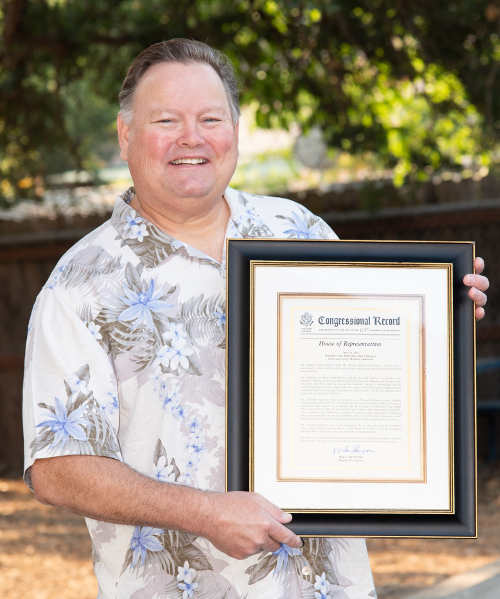
KELSEYVILLE, Calif. – Congressman Mike Thompson joined Kelseyville Unified Superintendent Dave McQueen in honoring retiring high school Principal Matt Cockerton at the recent annual back-to-school staff breakfast.
Thompson presented Cockerton with a Congressional Record thanking Cockerton for his service as an educator and a community member.
The congressional recognition reads as follows:
“Mr. Cockerton began his career in education as a Physical Education teacher, Athletic Director and Coach in 1985. In 1991, he became the Vice Principal and Athletic Director of Kelseyville High School. Mr. Cockerton was the Principal of Mountain Vista Middle School from 1996 to 1997. He has been Principal of Kelseyville High School since 1997…
“Mr. Cockerton has been active in our community. He is a long-time coach for Westshore Little League Baseball and has served on their board. He is also a coach for Westshore Youth Football where he has been the President of the organization…
“George Matthew Cockerton has served his community honorably as a school administrator and coach. It is therefore fitting and proper that we honor him here today.”

Cockerton was one of seven retiring staff members recognized by the district, but he was the only one who grabbed the microphone and began sharing funny comments that had Superintendent McQueen shaking his head in mock disbelief and the whole room of Kelseyville Unified employees laughing.
In addition to bidding a fond farewell to outgoing teachers, McQueen announced the dedication of the Kelseyville Unified Board Room in honor of recently deceased board member Dr. Peter J. Quartarolo, who served as a district trustee for 26 years.
Quartarolo was the longest serving board member of any school district board of trustee in Lake County at the time of his death and all of his children attended the Kelseyville Unified School District.
His wife, Cherie, was present at the back-to-school breakfast and she spoke eloquently about how much her husband’s work on the school board meant to him.

She accepted a plaque commemorating the Kelseyville Unified Board of Trustees’ renaming of the board room to the Dr. Peter J. Quartarolo Board Room.
McQueen also welcomed new staff members, reinforced the district’s values and priorities, outlined the professional development planned for the week, and took care of housekeeping issues like parking permits and communication protocols.
Finally, McQueen thanked Kelseyville Unified bus drivers who assisted during the recent fires, and he closed by thanking everyone present and letting them know how excited he is about this upcoming school year.
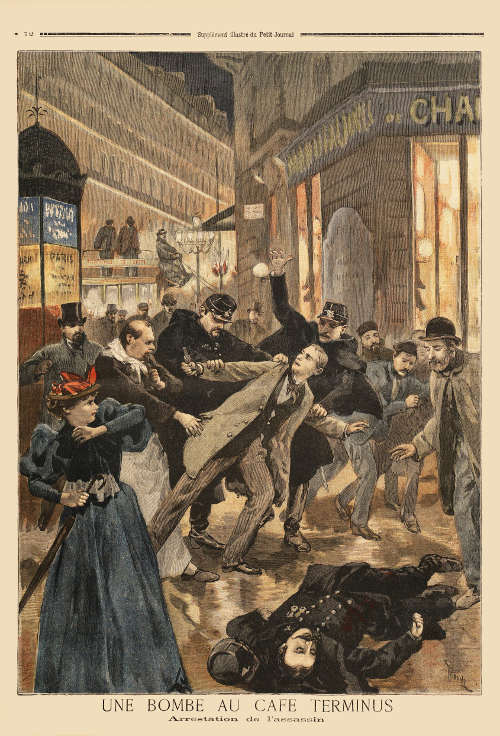
A lone man stalked the elegant cafes along the Avenue de l’Opera in Paris, France. He was ordinary, just one among many out for a stroll along the popular street of cafes. The only thing odd about him, if anyone even took the time to look closely, was that this ordinary man carried a metal lunchbox—like the type used by factory workers.
But like I said, such a detail would only have briefly registered with the occasional passerby.
This lone, completely ordinary man of middle age, carrying a metal lunchbox, turned into the Cafe Terminus and sat at a table.
The waiter arrived and took the man’s order: a beer and a cigar, please. His cigar arrived first, along with a box of matches and an ashtray. Picking one match out of the box, this ordinary man named Emile Henry struck one end of the match.
Cupping his other hand in front of the one with the match, Henry shielded the small flame and lit his cigar. Then he discreetly bent down and, with his newly-lit cigar, lit his lunchbox – or rather the bomb inside the lunchbox. Sitting up straight, Henry gathered his hat and ran out of the café just as the windows burst in a spray of glass, wood and shrapnel from his bomb. The ensuing carnage killed one and injured 20. Henry was wrestled to the ground as he tried to escape.
Emile Henry had arguably conducted the first act of modern terrorism.
* * *
Our idea of terrorism crumbled to pieces along with the Twin Towers on Sept. 11, 2001.
Whatever we once associated with acts of terrorism, from then on we would picture only radical religionists.
But I think we are currently witnessing firsthand in our own country that politics and the furor of partisan ideology are potent enough on their own to poison one’s mind and – in extreme cases – bend one’s hand towards terror.
If we were to cast our minds back to Sept. 10, 2001, we might remember that the cry of the terrorist has not always been one of religious fervor, and that those selfsame maniacs have not always come from the Middle East. In fact, we might recall that Western Europe itself has bred its fair share of terrorist movements.
Before radical Islam, for instance, there was the radical ideology of the anarchists.
* * *
Emile Henry was just one of thousands of men and women who proscribed to the beliefs of anarchism.
Developed around the same time as communism, anarchy as a political ideology was really a cluster of many schools of thought, but all of them shared an embittered hatred of government and/or authority of any institutionalized sort.
Anarchists were, you could say, extreme individualists that held the rights of the individual at the same level others held God.
In the earliest manifestations of anarchism, the notion of nonviolence was esteemed just as highly as the divine right of the individual.
But, just as Christianity, which is based on the tenets of love and compassion, became the excuse for such atrocities as the Crusades and Spanish Inquisition, so too did anarchism over time lose its more pacifist tendencies. If anarchists were going to get rid of every sovereign, they began to think, they would have to do it forcibly.
Within a few decades, anarchists had developed the notion of “Propaganda of the Deed,” which was specific political action meant to inspire revolution and further acts of anarchy.
In the early years, these deeds were acts of terrorism that solely targeted policemen and politicians. Things started to change in the 1890s, however, when anarchists began to spread their propaganda through deeds of indiscriminate murder.
One of the first to do that was Emile Henry and his lunchbox bomb. According to Henry, in setting off the bomb in a busy café, he had acted on his belief that “there are no innocent bourgeois.” Here was a man who targeted not a specific person or member of law enforcement, but anyone who happened to be in the café that day.
Anarchists seemed to have been inspired by this and other bloody acts of terrorism. Later that same year as Henry’s café bombing, another anarchist assassinated the president of France. Several years later, the king of Italy was killed.
In North America, politicians looked askance at all the turmoil caused by European anarchists and worried. Oh sure, America had already by then experienced anarchist violence – with the famous Haymarket Riots of 1886 in Chicago being a perfect example – but no high profile targets had yet to be successfully killed.
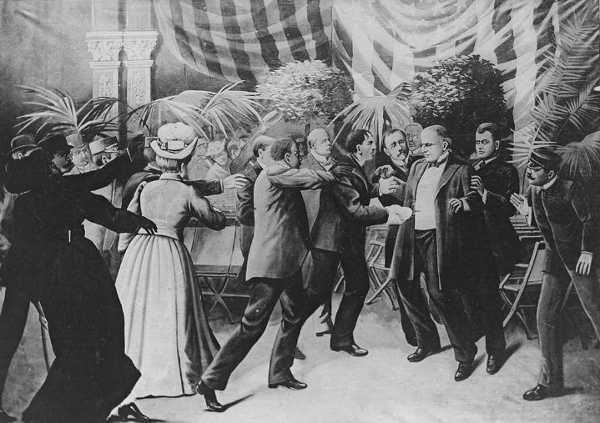
That all changed on Sept. 6, 1901, in Buffalo, New York when United States President McKinley was shot twice in the stomach by a 28-year old anarchist.
After he was rushed to the nearest doctor – a gynecologist was all they had on hand – McKinley began to recover reasonably well, so well that his vice president, Theodore Roosevelt, set out on a camping trip a few days later.
However, once his wound turned gangrenous, the president quickly faded and in the early hours of Sept. 14, 1901, America’s 25th president – and anarchism’s latest victim – lay cold.
Terrorism is not unique to any one religion, culture or political ideology. It is the manifestation of the basest of human emotions. For decades, the face of terrorism was the faceless European anarchist.
Today, it’s religious radicals. Tomorrow? Who knows?
Antone Pierucci is curator of history at the Riverside County Park and Open Space District and a freelance writer whose work has been featured in such magazines as Archaeology and Wild West as well as regional California newspapers.