How to resolve AdBlock issue?
News
LAKE COUNTY, Calif. – Following the Federal Emergency Management Agency’s “National Preparedness Month” in September, individuals and communities throughout California will participate in the 10th annual Great California ShakeOut earthquake drill.
Held annually on the third Thursday of October, the ShakeOut International Day of Action is set for Thursday, October 18, at 10:18 a.m., according to Lt. Corey Paulich of the Lake County Sheriff’s Office.
All citizens, businesses, and communities in Lake County are encouraged participate.
During the self-led drill, participants practice how to “Drop, Cover, and Hold On.”
Endorsed by emergency officials and first responders, the safe response to an earthquake is to:
– DROP where you are, onto your hands and knees. This position protects you from being knocked down and also allows you to stay low and crawl to shelter if nearby.
– COVER your head and neck with one arm and hand. If a sturdy table or desk is nearby, crawl underneath it for shelter. If no shelter is nearby, crawl next to an interior wall (away from windows). Stay on your knees; bend over to protect vital organs. If you’re under shelter, hold on to it with one hand; be ready to move with your shelter if it shifts. If there is no shelter, hold on to your head and neck with both arms and hands.
– HOLD ON until shaking stops.
Wednesday, Oct. 17, marks the anniversary of the Loma Prieta earthquake.
On Oct. 17, 1989, a 6.9-magnitude earthquake hit the San Francisco Bay Area. The shaking was felt across the region including Lake County.
In that quake, 67 people lost their lives and there was more than $5 billion in damages.
The 6.0-magnitude quake on Aug. 24, 2014, in Napa serves as a reminder that large earthquakes can occur with little to no warning.
The region is home to several active seismic zones capable of producing damaging earthquakes, including the San Andreas, Hayward/Rodgers Creek and the Cascadia Subduction Zone.
While damaging earthquakes in Lake County may be fewer in number when compared to other areas, they can occur at any time, Paulich said.
As such, everyone, everywhere should know how to protect themselves from an earthquake.
The ShakeOut is free and open-to-the-public, and participants include individuals, schools, businesses, local and state government agencies, and many other groups.
To take part in the ShakeOut, individuals and organizations are asked to join the drill by registering to participate www.shakeout.org .
Once registered, participants receive regular information on how to plan their drill and become better prepared for earthquakes and other disasters.
Paulich said the Lake County Sheriff’s Office is now using LakeCoAlerts to communicate with citizens and businesses during emergencies and other critical events. Residents are encouraged to register immediately to receive these alerts by visiting www.lakesheriff.com.
Held annually on the third Thursday of October, the ShakeOut International Day of Action is set for Thursday, October 18, at 10:18 a.m., according to Lt. Corey Paulich of the Lake County Sheriff’s Office.
All citizens, businesses, and communities in Lake County are encouraged participate.
During the self-led drill, participants practice how to “Drop, Cover, and Hold On.”
Endorsed by emergency officials and first responders, the safe response to an earthquake is to:
– DROP where you are, onto your hands and knees. This position protects you from being knocked down and also allows you to stay low and crawl to shelter if nearby.
– COVER your head and neck with one arm and hand. If a sturdy table or desk is nearby, crawl underneath it for shelter. If no shelter is nearby, crawl next to an interior wall (away from windows). Stay on your knees; bend over to protect vital organs. If you’re under shelter, hold on to it with one hand; be ready to move with your shelter if it shifts. If there is no shelter, hold on to your head and neck with both arms and hands.
– HOLD ON until shaking stops.
Wednesday, Oct. 17, marks the anniversary of the Loma Prieta earthquake.
On Oct. 17, 1989, a 6.9-magnitude earthquake hit the San Francisco Bay Area. The shaking was felt across the region including Lake County.
In that quake, 67 people lost their lives and there was more than $5 billion in damages.
The 6.0-magnitude quake on Aug. 24, 2014, in Napa serves as a reminder that large earthquakes can occur with little to no warning.
The region is home to several active seismic zones capable of producing damaging earthquakes, including the San Andreas, Hayward/Rodgers Creek and the Cascadia Subduction Zone.
While damaging earthquakes in Lake County may be fewer in number when compared to other areas, they can occur at any time, Paulich said.
As such, everyone, everywhere should know how to protect themselves from an earthquake.
The ShakeOut is free and open-to-the-public, and participants include individuals, schools, businesses, local and state government agencies, and many other groups.
To take part in the ShakeOut, individuals and organizations are asked to join the drill by registering to participate www.shakeout.org .
Once registered, participants receive regular information on how to plan their drill and become better prepared for earthquakes and other disasters.
Paulich said the Lake County Sheriff’s Office is now using LakeCoAlerts to communicate with citizens and businesses during emergencies and other critical events. Residents are encouraged to register immediately to receive these alerts by visiting www.lakesheriff.com.
LAKEPORT, Calif. – Pacific Gas and Electric Co.’s decision to cut off power to tens of thousands of residents across Northern California on Sunday and its continuing impacts as power was being restored was added to the Board of Supervisors’ agenda on Tuesday morning.
About 11,000 Lake County residents were impacted by the shutoff, which began Sunday evening, as Lake County News has reported.
Continued power outages in some areas led to school being canceled on Tuesday for Cobb Elementary School, while other districts that had closed on Monday were back in session, school officials said. Power was still being restored to areas of Kelseyville on Tuesday afternoon.
Supervisor Rob Brown asked for the discussion to be added as an extra item, which the board unanimously approved.
He prefaced his comments by saying that the county’s criticisms weren’t pointed out their PG&E representatives, Herman Hernandez and Brian Bottari, who were on hand to answer questions.
“The plan, or the lack of planning, that happened is just – we can’t allow this to continue in our community,” said Brown, noting the loss of money to local governments, schools and businesses, and the impacts on people with health concerns. “We’ve got to get to the bottom of this.”
Bottari explained that this was the first event for the Public Safety Power Shutoff program. He said that, beginning this year state law requires a shutoff of power in conditions where a utility could spark a wildfire that could spread into a catastrophic event.
Separately, he said PG&E developed its own protocols for such an event, which it benchmarked through other utilities – most notably, San Diego Gas and Electric – and some companies in Australia. The program is part of PG&E’s larger Community Wildfire Safety Program.
Explaining the process
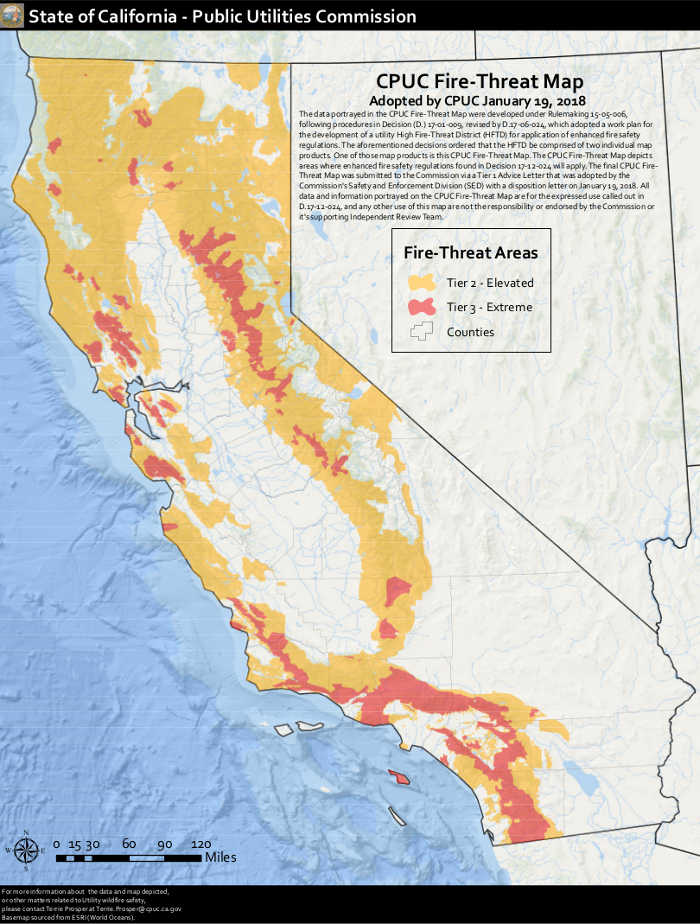
A few months ago, PG&E started communicating with local governments, community stakeholders and customers in Tier 3 wildfire areas, which are based on a map developed by the California Public Utilities Commission, Cal Fire and investor utilities that show the highest fire risk areas in the state, Bottari said.
He said PG&E communicated by letter and phone with customers to say the shutoff was coming, and that it was expected to happen once or twice a fire system.
Bottari said PG&E has a 24/7 Wildfire Safety Operations Center in San Francisco to monitor conditions.
He said it wasn’t just a red flag warning that triggered it the shutdown, but a number of other factors, including excessive wind speeds, low relative humidity and fuel moisture.
PG&E’s meteorologists also use the the Fosberg fire weather index to determine potential risk areas, Bottari said. The index, according to the US Forest Service, is a tool for “evaluating the potential influence of weather on a wildland fire based on temperature, relative humidity and wind speed.”
Bottari said PG&E had been monitoring the storm system for most of last week. Then, on Saturday morning, there was a shift and it appeared that there was a strong diablo wind event potentially coming into the service territory.
On Saturday afternoon, PG&E started its outreach to local governments regarding the likelihood that they would have to turn off power on Sunday night, Bottari said. Calls to customers went out on Saturday evening, followed by another notification to customers on Sunday morning.
At about 4:45 p.m. Sunday, Lake County News received notification from PG&E that the shutoff was set to occur, and just before 8:30 p.m. the shutoffs began in communities around Lake County, with the exception of Lucerne, Nice and Upper Lake. Limited areas of Lakeport were impacted, with the bulk of the outages reported in and around Kelseyville, Cobb, Clearlake and Middletown, according to PG&E’s outage map.
Bottari said that, beginning on Monday morning, PG&E used helicopters, vehicles and personnel on foot to inspect every inch of the transmission lines that had been deenergized. He said they didn’t want to turn the power back on if there were downed lines, because those could start fires.
He said there were more than 2,200 miles of power lines deenergized in the regional system,
and all of them had to be patrolled, inspected and tested before the power could be restored.
At the time of the Tuesday morning meeting, about 1,700 customers of the original 11,000 Lake County customers who had their power turned off were still waiting to be restored. Bottari said they were located around Loch Lomond and surrounding areas, and a few in Long Valley.
“This is the first time, obviously, we’ve done this,” he said.
Bottari said he’d conveyed to local officials ahead of the event that it might be “bumpy,” adding, “I think we’ve experienced that.”
He said that, to his knowledge, the power shutoff was the largest event of its kind in the state. “We’re all learning together. We’re going to tighten this up, particularly on the communication side.”
Bottari said PG&E wanted to meet with county officials, including the sheriff, for an after action report.
He said PG&E will do better next time, and he hoped there isn’t a next time. “This is the world we’re in right now.”
Board Chair Jim Steele asked about damage to equipment. Bottari acknowledged that there was some but he didn’t have specifics, explaining that the company is still documenting it.
Bottari said PG&E also is documenting how the weather ended up. As part of that, he reported that there was a wind gust on Mount St. Helena during the wind event that was 77 miles per hour.
During the discussion he said that San Diego had done some smaller power shutoffs to just over 90 customers in the backcountry, and last year shut it off to 17,000 customers during the Thomas fire.
Brown asked how many meters there are in Lake County. Bottari didn’t have an exact number, but said it’s in the high 20,000s. Brown concluded as a result that the shutoff left a third of the county’s residents out of power.
Bottari said the impacted areas are the Tier 3 risk areas as well as circuits that run through them.
“Which is bizarre to me,” Brown replied. “The entire town of Kelseyville was out except for the Brick Tavern. I’m just wondering how that worked out, but anyway. Not that I was there or anything, but I talked to people that were.”
Brown asked Bottari and Hernandez to convey to PG&E leadership that the county wasn’t happy how the situation rolled out.
He said the county’s sewer system has 75 sewer lift stations and only six generators, and they were moving them around like crazy to keep operations going. If lift stations go out, sewage goes into the lake, he said.
Something has to be done differently, Brown said. “There’s nothing to get used to here.”
Shutoff program part of a larger effort
Bottari told the board on Tuesday, “I want to make clear that the Public Safety Power Shutoff is a last resort. We’re not taking this lightly. We’ve a company full of folks who have spent careers trying to keep the lights on and this is not something we’re enjoying.”
He said the shutoff is part of a larger effort, the Community Wildfire Safety Program, which seeks to create a more resilient grid. It includes arborists and foresters clearing vegetation around lines, a goal of installing 200 new weather stations this year – 130 already are in place – plus another 200 next year, and grid hardening.
As they work to improve the power grid, Bottari said PG&E is looking at how to make the system more resilient, including replacing wood poles with steel, installing more coated conductors and considering undergrounding projects. They’re piloting a few of those undergrounding projects around the territory to see how efficiently and cheaply they can be done because cost is a big factor.
Sheriff Brian Martin said PG&E has been a great partner to the county during disasters, restoring power quickly. However, “This event was disappointing,” he said.
Martin said that if PG&E is going to cite state law that gives it the authority to turn off the power, the company also needed to recognize the state law that requires vegetation clearances. “Those are the proactive measures that our community needs,” he said.
He added, “This was a well-intentioned idea but it was very clearly poorly planned for and I think poorly executed.”
Martin said county officials couldn’t get consistent information, nor could he get definitive answers as a customer, with the company Web site telling him he wouldn’t be impacted but a separate phone call warning him his power was about to be turned off. It wasn’t.
PG&E has a database of medically fragile customers that emergency responders needed. Martin said that 36 minutes before the scheduled power outages, his office received the nondisclosure agreement from PG&E about those customers.
Supervisor Brown added that the county didn’t get the list of medically fragile customers until Monday morning, well after the shutoff was under way. “There was no time to react to this.”
“We should have got that in August,” Martin said of the list.
During the meeting, PG&E and county officials indicated an after action meeting could take place next month.
Shortly before 9:30 p.m. Tuesday, Lake County News received notification from PG&E that power had been restored to all customers impacted by the shutoff program. The company said it had restored about two-thirds of impacted customers by Monday night and the remainder on Tuesday.
PG&E also confirmed that it had repaired wind damage in the impacted areas.
Approximately 59,000 PG&E customers were ultimately impacted by the public safety power shut off, while PG&E initially had notified approximately 97,000 customers in advance of the possibility that power would be turned off.
Separately on Tuesday, the board adjourned into closed session to discuss a decision on whether to initiate litigation against PG&E due to last year’s Sulphur fire. Details about any reportable action out of the closed session weren’t available by the time of publication.
Email Elizabeth Larson atThis email address is being protected from spambots. You need JavaScript enabled to view it. . Follow her on Twitter, @ERLarson, or Lake County News, @LakeCoNews.
About 11,000 Lake County residents were impacted by the shutoff, which began Sunday evening, as Lake County News has reported.
Continued power outages in some areas led to school being canceled on Tuesday for Cobb Elementary School, while other districts that had closed on Monday were back in session, school officials said. Power was still being restored to areas of Kelseyville on Tuesday afternoon.
Supervisor Rob Brown asked for the discussion to be added as an extra item, which the board unanimously approved.
He prefaced his comments by saying that the county’s criticisms weren’t pointed out their PG&E representatives, Herman Hernandez and Brian Bottari, who were on hand to answer questions.
“The plan, or the lack of planning, that happened is just – we can’t allow this to continue in our community,” said Brown, noting the loss of money to local governments, schools and businesses, and the impacts on people with health concerns. “We’ve got to get to the bottom of this.”
Bottari explained that this was the first event for the Public Safety Power Shutoff program. He said that, beginning this year state law requires a shutoff of power in conditions where a utility could spark a wildfire that could spread into a catastrophic event.
Separately, he said PG&E developed its own protocols for such an event, which it benchmarked through other utilities – most notably, San Diego Gas and Electric – and some companies in Australia. The program is part of PG&E’s larger Community Wildfire Safety Program.
Explaining the process
A few months ago, PG&E started communicating with local governments, community stakeholders and customers in Tier 3 wildfire areas, which are based on a map developed by the California Public Utilities Commission, Cal Fire and investor utilities that show the highest fire risk areas in the state, Bottari said.
He said PG&E communicated by letter and phone with customers to say the shutoff was coming, and that it was expected to happen once or twice a fire system.
Bottari said PG&E has a 24/7 Wildfire Safety Operations Center in San Francisco to monitor conditions.
He said it wasn’t just a red flag warning that triggered it the shutdown, but a number of other factors, including excessive wind speeds, low relative humidity and fuel moisture.
PG&E’s meteorologists also use the the Fosberg fire weather index to determine potential risk areas, Bottari said. The index, according to the US Forest Service, is a tool for “evaluating the potential influence of weather on a wildland fire based on temperature, relative humidity and wind speed.”
Bottari said PG&E had been monitoring the storm system for most of last week. Then, on Saturday morning, there was a shift and it appeared that there was a strong diablo wind event potentially coming into the service territory.
On Saturday afternoon, PG&E started its outreach to local governments regarding the likelihood that they would have to turn off power on Sunday night, Bottari said. Calls to customers went out on Saturday evening, followed by another notification to customers on Sunday morning.
At about 4:45 p.m. Sunday, Lake County News received notification from PG&E that the shutoff was set to occur, and just before 8:30 p.m. the shutoffs began in communities around Lake County, with the exception of Lucerne, Nice and Upper Lake. Limited areas of Lakeport were impacted, with the bulk of the outages reported in and around Kelseyville, Cobb, Clearlake and Middletown, according to PG&E’s outage map.
Bottari said that, beginning on Monday morning, PG&E used helicopters, vehicles and personnel on foot to inspect every inch of the transmission lines that had been deenergized. He said they didn’t want to turn the power back on if there were downed lines, because those could start fires.
He said there were more than 2,200 miles of power lines deenergized in the regional system,
and all of them had to be patrolled, inspected and tested before the power could be restored.
At the time of the Tuesday morning meeting, about 1,700 customers of the original 11,000 Lake County customers who had their power turned off were still waiting to be restored. Bottari said they were located around Loch Lomond and surrounding areas, and a few in Long Valley.
“This is the first time, obviously, we’ve done this,” he said.
Bottari said he’d conveyed to local officials ahead of the event that it might be “bumpy,” adding, “I think we’ve experienced that.”
He said that, to his knowledge, the power shutoff was the largest event of its kind in the state. “We’re all learning together. We’re going to tighten this up, particularly on the communication side.”
Bottari said PG&E wanted to meet with county officials, including the sheriff, for an after action report.
He said PG&E will do better next time, and he hoped there isn’t a next time. “This is the world we’re in right now.”
Board Chair Jim Steele asked about damage to equipment. Bottari acknowledged that there was some but he didn’t have specifics, explaining that the company is still documenting it.
Bottari said PG&E also is documenting how the weather ended up. As part of that, he reported that there was a wind gust on Mount St. Helena during the wind event that was 77 miles per hour.
During the discussion he said that San Diego had done some smaller power shutoffs to just over 90 customers in the backcountry, and last year shut it off to 17,000 customers during the Thomas fire.
Brown asked how many meters there are in Lake County. Bottari didn’t have an exact number, but said it’s in the high 20,000s. Brown concluded as a result that the shutoff left a third of the county’s residents out of power.
Bottari said the impacted areas are the Tier 3 risk areas as well as circuits that run through them.
“Which is bizarre to me,” Brown replied. “The entire town of Kelseyville was out except for the Brick Tavern. I’m just wondering how that worked out, but anyway. Not that I was there or anything, but I talked to people that were.”
Brown asked Bottari and Hernandez to convey to PG&E leadership that the county wasn’t happy how the situation rolled out.
He said the county’s sewer system has 75 sewer lift stations and only six generators, and they were moving them around like crazy to keep operations going. If lift stations go out, sewage goes into the lake, he said.
Something has to be done differently, Brown said. “There’s nothing to get used to here.”
Shutoff program part of a larger effort
Bottari told the board on Tuesday, “I want to make clear that the Public Safety Power Shutoff is a last resort. We’re not taking this lightly. We’ve a company full of folks who have spent careers trying to keep the lights on and this is not something we’re enjoying.”
He said the shutoff is part of a larger effort, the Community Wildfire Safety Program, which seeks to create a more resilient grid. It includes arborists and foresters clearing vegetation around lines, a goal of installing 200 new weather stations this year – 130 already are in place – plus another 200 next year, and grid hardening.
As they work to improve the power grid, Bottari said PG&E is looking at how to make the system more resilient, including replacing wood poles with steel, installing more coated conductors and considering undergrounding projects. They’re piloting a few of those undergrounding projects around the territory to see how efficiently and cheaply they can be done because cost is a big factor.
Sheriff Brian Martin said PG&E has been a great partner to the county during disasters, restoring power quickly. However, “This event was disappointing,” he said.
Martin said that if PG&E is going to cite state law that gives it the authority to turn off the power, the company also needed to recognize the state law that requires vegetation clearances. “Those are the proactive measures that our community needs,” he said.
He added, “This was a well-intentioned idea but it was very clearly poorly planned for and I think poorly executed.”
Martin said county officials couldn’t get consistent information, nor could he get definitive answers as a customer, with the company Web site telling him he wouldn’t be impacted but a separate phone call warning him his power was about to be turned off. It wasn’t.
PG&E has a database of medically fragile customers that emergency responders needed. Martin said that 36 minutes before the scheduled power outages, his office received the nondisclosure agreement from PG&E about those customers.
Supervisor Brown added that the county didn’t get the list of medically fragile customers until Monday morning, well after the shutoff was under way. “There was no time to react to this.”
“We should have got that in August,” Martin said of the list.
During the meeting, PG&E and county officials indicated an after action meeting could take place next month.
Shortly before 9:30 p.m. Tuesday, Lake County News received notification from PG&E that power had been restored to all customers impacted by the shutoff program. The company said it had restored about two-thirds of impacted customers by Monday night and the remainder on Tuesday.
PG&E also confirmed that it had repaired wind damage in the impacted areas.
Approximately 59,000 PG&E customers were ultimately impacted by the public safety power shut off, while PG&E initially had notified approximately 97,000 customers in advance of the possibility that power would be turned off.
Separately on Tuesday, the board adjourned into closed session to discuss a decision on whether to initiate litigation against PG&E due to last year’s Sulphur fire. Details about any reportable action out of the closed session weren’t available by the time of publication.
Email Elizabeth Larson at
A Lake County student who plans to come home to help his tribe is among four American Indian students from across California who have each received a $10,000 scholarship from the Morongo Band of Mission Indians near Palm Springs as part of the 14th Annual Rodney T. Mathews Jr. Scholarship program.
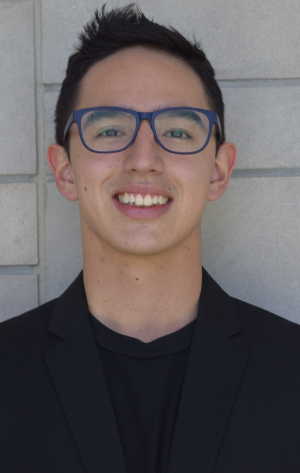
Andres Ramos of the Big Valley Band of Pomo Indians is among this year’s scholarship recipients.
“The Rodney T. Mathews Jr. Scholarship at Morongo was created to reverse the trends that have left Native Americans as the most underrepresented group in colleges and universities,” Morongo Tribal Chairman Robert Martin said. “We are happy to be supporting each of this year’s deserving recipients in attaining the education and skills they need to pursue their goals and improve their tribal communities.”
Ramos is pursuing a B.S. in biochemistry at Northern Arizona University.
Following graduation, he plans to attend pharmacy school to obtain a Doctor of Pharmacy.
His goal is to be a pharmacist on his reservation to help his community where he noticed a shortage of medical personnel while growing up.
“Thanks to the scholarship from Morongo, I’ll now be able to volunteer more of my time to Indian health clinics since I won’t have to spend as much time working to pay for school,” Ramos said.
The other 2018 recipients are:
Deserea Langley of Susanville Indian Rancheria attends the UC Davis where she is pursuing a Ph.D. in Native American studies. Her doctoral research will be the first comprehensive history of the Susanville Indian Rancheria and the implementation of the Dawes Act in Northern California. She plans to be an education counselor at a tribal college or state university to help educate future leaders.
“I’m so thankful for tribal communities like Morongo supporting student success,” Langley said. “It is important to have educated Native Americans for the future of our culture, communities and tribal governments.”
Donald Salcedo of the Quechan Indian Tribe attends UCLA and is working on a Bachelor of Arts in American Indian studies.
He plans to continue his education with an advanced degree in social work to assist in tribal communities.
Salcedo worked in tribal social services and mental health for eight years. He is the American Indian Student Association President at UCLA and a board member of the California Indian Basketweavers Association.
“I felt so lucky and blessed to have received this scholarship from Morongo, especially since I was having a hard time financially,” Salcedo said. “As a non-traditional and first-generation student, I didn’t know I had so much support to go to school. It felt like someone believed in me.”
Shayleena Britton of the Round Valley Indian Tribe is working towards on her B.A. in 3D Animation at the Academy of Art University in San Francisco.
Britton wants to use her animation and media skills to make films that preserve Native languages and bring tribal culture to others, while also inspiring native youth to go to college.
She received a grant through Running Strong for Native American Youth Dreamstarter to be an Ambassador for the Wailaki language. She manages a Facebook page titled “Wailaki Kunnes Bakang Ishjii Naagai” and is creating a website with an accessible Wailaki dictionary.
“I am very thankful and so happy to have received this scholarship from Morongo,” Britton said. “San Francisco is such a different place from the small town I grew up in, but I love the city, my friends, and my classes.”
American Indians and Alaskan Natives comprise less than 1 percent of the nation’s college students, the lowest college enrollment rate of any ethnic group, according to the U.S. Department of Education.
Similarly, only 15 percent of American Indians hold bachelor’s degrees, fewer than any ethnic group in the U.S., according to the Bureau of Indian Affairs.
The scholarship program honors the late Rodney T. Mathews Jr., a Morongo tribal member and Hastings Law School graduate who passed away in 2004 after serving as a judge pro tem for more than a decade.
Scholarship applicants are considered based on their academic success and community service.
Candidates must be full-time students at an accredited college or university; complete 60 hours with a designated California Indian agency; and be actively involved in the Native American community.
Since launching the program, Morongo has provided $470,000 in scholarships to 49 American Indian students seeking to secure a college or postgraduate degree.
The scholarship program is unique in that it is open to enrolled members of any of the more than 100 federally recognized tribes in California.
LAKEPORT, Calif. – The SafeRx program of AmeriCorps VISTA will present “The Opioid Epidemic: What it is, and how it affects you and your community" on Saturday, Oct. 20, at two branches of the Lake County Library.
The first presentation will be held at 11 a.m. at Redbud Library 14785 Burns Valley Road in Clearlake.
The second presentation will take place at 2 p.m. at Lakeport Library, 1425 N High St. in Lakeport.
At the presentations, guests will be able to sign up for training in use of naloxone, or Narcan, the opioid overdose reversal agent.
“So far, the wave of Chinese fentanyl has not hit California, but we are starting to see the changeover from prescription opioid overdose to illegal street drug overdose here in Lake County,” said Lisa Hardy of SafeRx.
Data from the Centers for Disease Control show that the 2017 opioid prescription rate in Lake County, the most recent data available, was 95 prescriptions per 100 Lake County residents.
In Lake County, from 2014 through 2017, 63 people died of opioid overdoses.
The California Department of Public Health publishes statistics on opioid use by county at https://discovery.cdph.ca.gov/CDIC/ODdash.
The SafeRx website http://saferxlakecounty.org offers alternatives to prescription drugs and other resources for pain management.
The Lake County Library is on the Internet at http://library.lakecountyca.gov and Facebook at www.facebook.com/LakeCountyLibrary.
Jan Cook is a library technician with the Lake County Library.
The first presentation will be held at 11 a.m. at Redbud Library 14785 Burns Valley Road in Clearlake.
The second presentation will take place at 2 p.m. at Lakeport Library, 1425 N High St. in Lakeport.
At the presentations, guests will be able to sign up for training in use of naloxone, or Narcan, the opioid overdose reversal agent.
“So far, the wave of Chinese fentanyl has not hit California, but we are starting to see the changeover from prescription opioid overdose to illegal street drug overdose here in Lake County,” said Lisa Hardy of SafeRx.
Data from the Centers for Disease Control show that the 2017 opioid prescription rate in Lake County, the most recent data available, was 95 prescriptions per 100 Lake County residents.
In Lake County, from 2014 through 2017, 63 people died of opioid overdoses.
The California Department of Public Health publishes statistics on opioid use by county at https://discovery.cdph.ca.gov/CDIC/ODdash.
The SafeRx website http://saferxlakecounty.org offers alternatives to prescription drugs and other resources for pain management.
The Lake County Library is on the Internet at http://library.lakecountyca.gov and Facebook at www.facebook.com/LakeCountyLibrary.
Jan Cook is a library technician with the Lake County Library.
The California Highway Patrol and the California Office of Traffic Safety are working together to focus on child safety through the California Restraint Safety Education and Training, or CARSEAT II, campaign.
Reducing the number of children killed in collisions because they were not properly restrained is the goal of the year-long CARSEAT II campaign.
The CHP will host educational seminars, classes, and child safety seat inspections throughout California to help meet the goal.
“Making sure every child in your vehicle is buckled up in an appropriate car seat for their age and size is the easiest way to prevent serious injury or even death in the event of a crash,” CHP Commissioner Warren Stanley said. “Drivers should set an example by always buckling up and requiring everyone in the vehicle to wear their seat belt, no matter how short the trip.”
California law requires a child be properly restrained in an appropriate child safety seat in the rear seat of a vehicle until they are at least eight years of age.
For the best protection, all children should ride rear-facing until they reach the upper weight and height limits of their car seat.
Child passenger safety seats reduce the risk of fatal injury by 71 percent for infants and by 54 percent for toddlers in passenger cars, the National Highway Traffic Safety Administration has reported.
In California, preliminary 2017 data from the Statewide Integrated Traffic Records System of the CHP recorded 17 unrestrained children age seven and younger killed in traffic collisions in the state.
In addition to educational efforts, the CHP will be conducting enforcement operations concentrating on seat belt violations throughout the year with a special emphasis during the national “Click It or Ticket” campaign of OTS and national Child Passenger Safety Week.
More information regarding child passenger safety, child safety seats, and seat belt regulations, is available at any local CHP Area office.
Funding for this program was provided by a grant from the California Office of Traffic Safety, through the National Highway Traffic Safety Administration.
Reducing the number of children killed in collisions because they were not properly restrained is the goal of the year-long CARSEAT II campaign.
The CHP will host educational seminars, classes, and child safety seat inspections throughout California to help meet the goal.
“Making sure every child in your vehicle is buckled up in an appropriate car seat for their age and size is the easiest way to prevent serious injury or even death in the event of a crash,” CHP Commissioner Warren Stanley said. “Drivers should set an example by always buckling up and requiring everyone in the vehicle to wear their seat belt, no matter how short the trip.”
California law requires a child be properly restrained in an appropriate child safety seat in the rear seat of a vehicle until they are at least eight years of age.
For the best protection, all children should ride rear-facing until they reach the upper weight and height limits of their car seat.
Child passenger safety seats reduce the risk of fatal injury by 71 percent for infants and by 54 percent for toddlers in passenger cars, the National Highway Traffic Safety Administration has reported.
In California, preliminary 2017 data from the Statewide Integrated Traffic Records System of the CHP recorded 17 unrestrained children age seven and younger killed in traffic collisions in the state.
In addition to educational efforts, the CHP will be conducting enforcement operations concentrating on seat belt violations throughout the year with a special emphasis during the national “Click It or Ticket” campaign of OTS and national Child Passenger Safety Week.
More information regarding child passenger safety, child safety seats, and seat belt regulations, is available at any local CHP Area office.
Funding for this program was provided by a grant from the California Office of Traffic Safety, through the National Highway Traffic Safety Administration.

LAKEPORT, Calif. – Local, state and federal authorities last week served numerous search warrants at Big Valley Rancheria, where they said they eradicated thousands of marijuana plants and arrested 10 people who are part of a cartel drug operation.
On Oct. 10, the Lake County Sheriff’s Office Narcotics Unit along with the assistance of numerous state, local and federal law enforcement agencies including the Drug Enforcement Administration, the Mendocino Major Crimes Task Force, California State Parks, Tri-County Drug Enforcement Team, or TRIDENT, as well as the Clearlake Police Department and Lake County District Attorney’s Office served a series of 14 search warrants on properties within the Big Valley Rancheria in Lakeport regarding illegal marijuana cultivation, according to Lt. Corey Paulich of the Lake County Sheriff’s Office.
Paulich said the investigation led detectives to learn a Hispanic drug trafficking organization was cultivating thousands of marijuana plants on tribal lands and were doing so while committing a number of environmental crimes.
Upon arrival, law enforcement personnel began conducting the service of the search warrants on Mission Way, Paulich said.
When they initially entered the site, two Hispanic male adults identified as Gilberto Figueroa, 20, of Santa Rosa and Cristian Garcia Saucedo, 22, of Clearlake fled one of the grow sites on foot towards Reeves Lane in Lakeport, but were quickly apprehended by deputies. Also located at the Mission Way locations were Arnulfo Barragan, 39, of Clearlake and Cesar Godinez, 31, of Ukiah, according to Paulich.
Paulich said a second team of law enforcement personnel conducted simultaneous warrant services at several properties located on Mission Rancheria Road with one Hispanic male fleeing into the brush. After a search of the area, deputies located the male – identified as Alexis Saucedo, 18, of Clearlake – hiding in the brush near the lake.
Four additional Hispanic males were located within the cultivation sites and identified as Miguel Saucedo, 31, of Clearlake; Braulio Vargas Saucedo, 25, of Clearlake; Severiano Cerda, 28, of Clearlake; and Fernando Rodriguez, 27, of Rockford, Illinois, Paulich said.
Detectives learned that some residents had entered into agreements to allow the grow operations on their properties. Paulich said the investigation also determined that the majority of the residents did not want the operations on their land.
Paulich said a total of more than 5,200 marijuana plants were located and eradicated from the 14 locations, with more than 500 pounds of bulk processed marijuana seized.
During the search of the locations, detectives located containers of commercial insecticide being used on the marijuana plants which were being cultivated in a creek, which flows directly into Clearlake, Paulich said. Additionally a number of these cultivation sites were being conducted in and along the marsh of the Rumsey Slough, within the high water mark of Clearlake.
The chemicals, soil products, insecticides and fertilizers being used for this activity were leaching into the soil and into the marsh threatening plant, animal and aquatic life of Clear Lake. A large amount of garbage and debris associated with the cultivation were being stashed in the marsh, Paulich said.
Paulich said a series of three additional search warrants were served later that day at residences in the 14000 block of Emory Avenue, 3800 Block of Alvita Avenue and 3600 Block of Thomas Avenue in Clearlake.
While searching these locations, detectives identified another suspect, Jose Ceja-Torres, 29, of Clearlake who was also placed under arrest. Paulich said detectives located evidence tying Ceja-Torres to the operation at the Big Valley Rancheria.
Paulich said detectives also located evidence tying Ceja-Torres to a large scale marijuana cultivation investigation conducted by the narcotics unit on Sept. 25 involving Pedro Landa-Alvarez and several properties located in the Lower Lake and Middletown areas.
All subjects were placed under arrest for felony marijuana cultivation violations associated with environmental crimes, felony conspiracy to commit a crime and possession of marijuana for sale. All subjects were later released after posting bail, Paulich said.