How to resolve AdBlock issue?
Refresh this page
How to resolve AdBlock issue?
Refresh this page
Lake County News,California
  • Home
    • Registration Form
  • News
    • Education
    • Veterans
    • Community
      • Obituaries
      • Letters
      • Commentary
    • Police Logs
    • Business
    • Recreation
    • Health
    • Religion
    • Legals
    • Arts & Life
    • Regional
  • Calendar
  • Contact us
    • FAQs
    • Phones, E-Mail
    • Subscribe
  • Advertise Here
  • Login

News

Friday evening shooting injures one

LAKE COUNTY, Calif. — Authorities are investigating a Friday evening shooting in Nice that sent one victim to the hospital.

Lauren Berlinn, spokesperson for the Lake County Sheriff’s Office, said law enforcement was on the scene in the area of Floyd Way and Buckingham Way in Nice on Friday evening and that there was no immediate threat to public safety.

“The community remains safe, and detectives and deputies are actively investigating this incident,” she said.

The shooting was first reported at 6 p.m., when deputies responded to the area of Lakeview Way and Buckingham Way in Nice due to reports of a shooting, Berlinn said.

Radio traffic indicated that Northshore Fire initially was dispatched to a report of a vehicle into a ditch at Kelly Road and Floyd Way, with a possible gunshot.

That first call was followed shortly afterward by reports that a juvenile had been shot and was bleeding from the chest at a location in the area of Lakeview Drive and Buckingham Way.

Additional reports over the radio between dispatch, firefighters and deputies said a driveby shooting had occurred.

Firefighters found a vehicle, mostly on its roof, on Floyd Way. It also was determined that the two calls — for the vehicle crash and shooting — were related.

Witnesses told authorities that the injured juvenile was placed in a vehicle and taken to the hospital.

Radio reports also noted other vehicles that had been seen leaving the area, including a black Suburban that left the scene with three individuals after more shots were fired.

It was later reported over the air that the shooting victim had arrived at Sutter Lakeside Hospital for treatment.

Berlinn said the victim was in stable condition and flown to an out-of-county hospital for treatment.

As of Friday night, no arrests had been made, Berlinn said.

“This appears to be an isolated incident,” she said.

As the investigation continued, authorities asked that the public avoid the area of the incident.

Berlinn said updates will be provided as more information becomes available.

If you have information related to this investigation, please call the Major Crimes Unit tipline at 707-262-4088.

Email Elizabeth Larson at This email address is being protected from spambots. You need JavaScript enabled to view it.. Follow her on Twitter, @ERLarson, and on Bluesky, @erlarson.bsky.social. Find Lake County News on the following platforms: Facebook, @LakeCoNews; X, @LakeCoNews; Threads, @lakeconews, and on Bluesky, @lakeconews.bsky.social.

Thompson welcomes home Fourth District DACA recipient denied entry back into U.S.

Last week, U.S. Representative Mike Thompson (CA-04) sat down with a constituent and DACA recipient from California’s Fourth Congressional District who was denied entry back into the U.S. for weeks after a trip to Mexico due to a clerical error by U.S. Citizen and Immigration Services.

DACA stands for Deferred Action for Childhood Arrivals. It does not provide for permanent citizenship for impacted individuals.

The constituent, who is identified only as Jane Doe to remain anonymous, sat down with Rep. Thompson to discuss the harrowing incident and how Thompson and his team were able to intervene to bring her home.

Watch the video here.

“Through no fault of her own, Jane was wrongfully denied re-entry from Mexico into the United States due to a paperwork error made by U.S. Citizen and Immigration Services,” said Thompson. “It’s sad that the federal government can make an error that causes a legal resident of the United States — in this case, my constituent — to have to miss three weeks of work, stay in a foreign country, and leave her family without their sole breadwinner for weeks. It took my office, my staff, and myself to intervene to get her home.

He added, “Constituent services are an important part of my job and my staff and I are dedicated to helping all of our constituents on any matters they have with the federal government.”

When she was stranded in Mexico, Jane said she reached out to Congressman Thompson, and he and his team listened to her story, supported her and provided her with help to solve her situation.

“If not for them, I don't think I would be here today. Thank you for everything,” she said.

On March 26, Jane Doe contacted Thompson’s Washington, D.C. office to ask for help from the Congressman and his team.

Jane had traveled to Mexico legally after being granted an I-131 petition which allows a DACA recipient to leave the country and return for a justified reason. Jane filed her paperwork on time and without errors, and was granted the petition before leaving for her trip.

At the conclusion of her trip, Jane was denied entry onto the plane to fly home to the North Bay. Border patrol officials pointed out that the paperwork sent to Jane by the United States Citizenship and Immigration Services, or USCIS, listed the wrong dates for her return, despite Jane filing for the correct dates.

Thompson’s office intervened to inquire with the USCIS San Francisco office as well as Customs & Border Control.

Thompson and his team worked through USCIS to have Jane’s documents reissued and coordinated to have them couriered to Jane in Mexico. She was able to fly home on Saturday, April 27.

Fourth District residents who face issues with passports and visas, veterans’ benefits, IRS issues, agricultural issues, small business assistance, immigration, Medicare and Medicaid, or any other problem navigating the federal government are encouraged to contact Rep. Thompson’s nearest office for support:

• Napa: 707-226-9898.
• Santa Rosa: 707-542-7182.
• Woodland: 530-753-3501.
• Washington: 202-225-3311.

Thompson represents California’s Fourth Congressional District, which includes all or part of Lake, Napa, Solano, Sonoma and Yolo counties.

Estate Planning: Hidden pitfalls of do it yourself handwritten wills

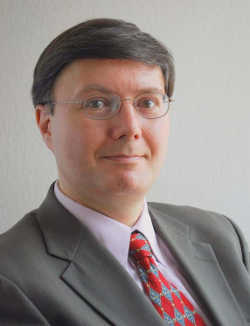
Dennis Fordham. Courtesy photo.

The do-it-yourself handwritten (“holographic”) will has its place but it does have a multitude of hidden traps for the unwary and so should not be taken as the “go to” approach.

I say “hidden traps” because handwritten wills are written by non-attorneys who, for one reason or another, are unable or unwilling to go to an attorney to get a professionally drafted will.

That said, given that handwritten wills are being used it is good to know what issues to look out for.

Does the will include a so-called “residuary clause”? Some handwritten wills speak only to specific gifts of real and personal property and do not say anything about who inherits the “rest of the estate.”

That is a major oversight. What that means is that the will of the testator (will maker) is only partially sufficient and that the testator is therefore only partially testate, and also partially intestate.

That is, whatever assets are not specifically addressed (as to distribution) goes to the testator’s heirs by intestacy (dying without a will). That is right. A decedent in that situation would die partially testate and partially intestate.

The lesson here is make sure that the will says who inherits the rest of the decedent’s real and personal assets.

Does the will have a disinheritance clause? If the testator wishes to disinherit any of his or her heirs (typically the testator’s children) then the will should expressly disinherit these persons, and maybe even the children of these disinherited persons.

An attorney-drafted will has a comprehensive disinheritance clause that expressly disinherits all the testators’ heirs who are not otherwise named as a beneficiary under the will.

Does the will provide for alternative beneficiaries? What happens to bequests (gifts under a will) made to a beneficiary who fails to survive the testator? Attorney-drafted wills speak to such situations.

Does the will have a “no contest” clause? If the testator wants to dissuade a disgruntled beneficiary from contesting the will, then a well drafted “no contest” clause may discourage that beneficiary from disputing the will in order to avoid losing whatever gift(s) are made to that beneficiary.

Naturally, if someone gets nothing or too little under the will then a “no contest” clause is ineffectual as there is nothing to lose except attorney fees and court costs.

Does the will waive the bond requirement? Many people are unaware that personal representatives of an estate are required to post a bond in the amount of the assets in the estate. Most attorney-drafted wills expressly waive the bond requirement.

Most all do-it-yourself handwritten wills, however, are silent (due to the testator’s not knowing) and thus do not waive the bond requirement. If the will nominates a person who is unable to pay for the bond, or is simply not bondable because of their income, net worth and/or credit rating, then that person will likely have to decline the nomination.

Does the will nominate an executor and alternative executors who are willing and able to serve? Some handwritten wills do not even nominate an executor. Other handwritten wills nominate only one person and that person may or may not be agreeable to serve. A will should nominate one or two alternative persons to serve as executor.

Does the will consent to the executor having full independent powers of administration? Full independent powers of administration make the sale of real and personal assets less expensive and time consuming insofar as the legal process is concerned. Most attorney-drafted wills expressly provide for the executor to have full independent powers of administration.

Handwritten wills are commonly used by persons going on vacation or by persons near death (e.g., on their death bed). It offers an immediate and easy solution to estate planning. When possible, however, see an attorney and get a professionally drafted will or living trust to achieve a better outcome.

The foregoing is not legal advice.  Consult a qualified estate planning attorney for guidance.

Dennis A. Fordham, Attorney, is a State Bar-Certified Specialist in estate planning, probate and trust law. His office is at 870 S. Main St., Lakeport, Calif. He can be reached at This email address is being protected from spambots. You need JavaScript enabled to view it. and 707-263-3235. 


Space News: Spacecraft can ‘brake’ in space using drag − advancing craft agility, space safety and planetary missions


Planetary space probes such as Mars Odyssey use a technique called aerobraking to save fuel. NASA/JPL

When you put your hand out the window of a moving car, you feel a force pushing against you called drag. This force opposes a moving vehicle, and it’s part of the reason why your car naturally slows to a stop if you take your foot off the gas pedal. But drag doesn’t just slow down cars.

Aerospace engineers are working on using the drag force in space to develop more fuel-efficient spacecraft and missions, deorbit spacecraft without creating as much space junk, and even place probes in orbit around other planets.

Space is not a complete vacuum − at least not all of it. Earth’s atmosphere gets thinner with altitude, but it has enough air to impart a force of drag on orbiting spacecraft, even up to about 620 miles (1,000 kilometers).

As an aerospace engineering professor, I study how drag affects the movement of spacecraft in orbit. Aerobraking, as the name suggests, is a type of maneuver that uses the thin air in space to apply a drag force in the direction opposite to a spacecraft’s motion, much like braking in a car.

Changing an orbit

In space, aerobraking can change the orbit of a spacecraft while minimizing the use of its propulsion system and fuel.

Spacecraft that orbit around Earth do so in two types of orbits: circular and elliptical. In a circular orbit, the spacecraft is always at the same distance from the center of the Earth. As a result, it’s always moving at the same speed. An elliptical orbit is stretched, so the distance from Earth − and the speed the craft moves at − changes as the spacecraft travels along the orbit.

The closest point in an elliptical orbit around Earth, where the satellite or spacecraft is moving fastest, is called the perigee. The farthest point, where it’s moving slowest, is called the apogee.

A diagram showing an oval path around Earth, represented by a blue dot. The point on the oval farthest from Earth is labeled 'apogee' while the point closest is labeled 'perigee.'
The apogee is the point farthest from Earth in an elliptical orbit, while the perigee is the point closest to Earth. Iketsi/Wikimedia Commons, CC BY-SA

The general idea behind aerobraking is to start in a large circular orbit and maneuver the spacecraft into a highly elliptical orbit, so that the lowest point in the orbit − the perigree − lies in the denser part of the upper atmosphere. For Earth, that’s between about 62 and 310 miles (100 and 500 kilometers), with the choice depending on time required to complete the orbit change.

As the spacecraft passes through this lowest point, the air exerts a drag force on it, which reduces the stretch of the orbit over time. This force pulls the craft toward a circular orbit smaller than the original orbit.

A diagram showing two orbits around circles representing planets, with the orbit labeled elliptical shaped more like an oval or stretched circle, while the orbit labeled circular is the shape of a circle.
Aerobraking brings a spacecraft from a large, circular orbit into a highly elliptical orbit, into a smaller, more circular one. Moneya/Wikimedia Commons, CC BY-SA

The first maneuver to put the spacecraft in an elliptical orbit so that drag can take effect does require using a propulsion system and some fuel. But once it’s in the elliptical orbit, drag from the atmosphere slows the craft, and it doesn’t need to use much, if any, fuel.

Aerobraking brings a craft from a large orbit to a small orbit and is not reversible − it can’t increase the size of an orbit. Increasing the size of an orbit or raising the spacecraft to a higher orbit requires propulsion and fuel.

Aerobraking uses

A common case where spacecraft controllers use aerobraking is when changing the craft’s orbit from a geostationary orbit − GEO − to a low Earth orbit, LEO. A GEO orbit is a circular orbit with an altitude of roughly 22,236 miles (35,786 km). In GEO, the spacecraft makes one orbit around Earth in 24 hours, so the spacecraft always stays above the same point on Earth’s surface.

A drawing of Earth, with an arrow pointing clockwise, with a satellite and its circular path above it, with an arrow pointing clockwise as well.
In GEO orbit, a spacecraft orbits with Earth and stays above the same point on the surface the whole time. MikeRun/Wikimedia Commons, CC BY-SA

Before aerobraking, the spacecraft’s onboard propulsion system thrusts in the opposite direction of the GEO orbit’s motion. This thrust puts it into an elliptical orbit. The craft passes through the atmosphere multiple times, which eventually circularizes the orbit.

Once it makes it to LEO, the spacecraft may need to use a little bit of fuel to propel itself up into its target orbit. Usually, the lowest point of the original elliptical orbit is lower than the final target circular orbit.

This process is conceptually similar to how the U.S. Space Force’s X-37B used aerobraking in early 2025.

The U.S. Space Force reported that its unmanned spaceplane, X-37B, used aerobraking. This test demonstrated the craft’s agility and maneuverability.

Another application for aerobraking is to make a spacecraft deorbit − or reenter the atmosphere − after it has stopped working. This way, the company or agency can dispose of the spacecraft and avoid creating space junk, since it will burn up in the lower atmosphere.

An illustration of a spacecraft with two large solar panels and a metal sheet in a circular shape orbiting around a dusty planet.
NASA’s Mars reconnaissance orbiter used aerobraking to orbit around Mars. NASA/JPL

Aerobraking for interplanetary missions

A few Mars missions, including the Mars reconnaissance orbiter and the Mars Odyssey orbiter, have used aerobraking to reach their target orbits around the red planet.

For interplanetary missions like these, scientists use aerobraking in conjunction with the craft’s onboard propulsion system. When a spacecraft arrives at Mars, it does so in a hyperbolic orbit.

A diagram showing an oval around a dot, which represents an elliptical orbit, and two curved lines getting close to but not going all the way around the dot to represent parabolic and hyperbolic orbits.
While an elliptical orbit is closed, a hyperbolic orbit doesn’t go all the way around a planet. Maxmath12/Wikimedia Commons

Unlike a circular or an elliptical orbit, the spacecraft’s path in hyperbolic orbit won’t keep it orbiting around Mars. Instead, it would fly through and depart Mars − unless it uses thrust from its propulsion system to get “captured” into a closed elliptical orbit.

As the spacecraft arrives at Mars, the onboard propulsion system fires to provide the force necessary to capture the spacecraft into a highly elliptical orbit around Mars. Once captured, scientists use aerobraking over several orbital passes through the atmosphere to achieve the final orbit, generally a circular one.

Aerobraking maneuvers can result in significant fuel savings. As humans get closer to landing on the surface of the red planet, the fuel savings enabled by aerobraking could save mass and allow each spacecraft headed to Mars to take more supplies.

In the grand arc of space exploration, aerobraking is not just a maneuver. It has a crucial role to play in the future of space operations and planetary missions and colonization.The Conversation

Piyush Mehta, Associate Professor of Space Systems, West Virginia University

This article is republished from The Conversation under a Creative Commons license. Read the original article.

Middletown Teachers Association celebrates approval of new contract with Middletown Unified School District

LAKE COUNTY, Calif. — This week, the ongoing negotiations between the Middletown Unified School District and the Middletown Teachers Association, which represents the district’s teachers, came to a successful conclusion.

After the association, or MTA, voted in April to authorize a strike, the two sides returned to the bargaining table, which led to a May 2 session that resulted in a tentative agreement.

On Tuesday, MTA ratified the agreement, and on the following evening the Middletown Unified School District unanimously approved the agreement.

The approval of the contract by both parties comes, appropriately, in the midst of national Teacher Appreciation Week.

In a Thursday statement, the union said the agreement “marks a meaningful step forward for our educators, our schools, and — most importantly — our students. It reflects the core values that guide our work every day: respect, professionalism and a steadfast commitment to educational excellence.”

The agreement’s highlights include the following:

Contingency-based salary increase: A 1% salary increase will be triggered if the district’s unaudited 2024-25 financials show an increase in either the ending balance or reserves beyond the cost of such an increase — establishing what the union called “a fair, data-driven path to compensation improvements.”

Improved training flexibility: 50% of mandated Keenan training will now take place during professional development time, early release days, or in lieu of staff meetings — protecting valuable personal and instructional time.

Support for colleagues: Peer Support/Induction stipends will increase to $2,500, recognizing the important mentorship roles educators take on.

Fair compensation for bilingual educators: A new bilingual stipend will be implemented for translation services of at least 30 minutes, ensuring educators are compensated for this vital support.

Individualized education program, or IEP, meeting clarity: Annual reminders will be sent at the start of each school year to ensure timely and inclusive scheduling of IEP meetings.

“We are pleased to have reached an agreement that honors the dedication of our educators and provides continued stability for our school community,” said MTA President Adam Evans. “This contract supports our members while reinforcing our shared goal of delivering excellent education in every classroom.”

“While we celebrate this achievement, we remain focused on the future,” Evans said. “Bargaining will resume next school year, and MTA is committed to ensuring that the voices of educators — those who know our students best — remain central in shaping the future of education in Middletown.”

He added, “We thank our members for their unity and strength throughout this process and reaffirm our dedication to advocating for the resources, conditions, and respect that educators and students alike deserve.”

Email Elizabeth Larson at This email address is being protected from spambots. You need JavaScript enabled to view it.. Follow her on Twitter, @ERLarson, and on Bluesky, @erlarson.bsky.social. Find Lake County News on the following platforms: Facebook, @LakeCoNews; X, @LakeCoNews; Threads, @lakeconews, and on Bluesky, @lakeconews.bsky.social.

‘Peace be with all of you’: how Pope Leo XIV embodies a living dialogue between tradition and modernity


When Robert Francis Prevost appeared on the loggia of St Peter’s Basilica as Pope Leo XIV, he set three precedents.

He is the first pope from North America, the first Augustinian to occupy the throne of Peter, and the first native English-speaker to do so since Adrian IV in the 12th century.

Pope Leo XIV greeted Rome and the world with a simple benediction: “peace be with all of you”.

In choosing a blessing that stressed concord – and in issuing it in Italian and Spanish – he signalled both pastoral directness and cultural breadth.

A Chicago childhood and academic rigour

Prevost was born in Chicago in 1955.

Raised in the working-class suburb of Dolton, he served as an altar boy and attended St Augustine Seminary High School. He studied a bachelor of science at Villanova University, and earned a doctoral degree in canon law at the Angelicum in Rome.

Prevost entered the Augustinian order in 1977, professed solemn vows in 1981 and was ordained in 1982.

For Augustinians, virtue lies not in poverty for its own sake, but in the radical sharing of goods: community precedes individual achievement.

There are three pillars: interiority, the practical love of neighbour, and a relentless search for truth. This framework would guide Prevost’s missionary work, and his call for unity and peace.

A yellow church.
Chiclayo Cathedral, officially the Cathedral of Saint Mary in Chiclayo, Peru is the seat of the Roman Catholic Diocese of Chiclayo. BETO SANTILLAN/Shutterstock

Prevost has administered communities in more than 50 countries, but he first arrived as a missionary in northern Peru in 1985. Over the next decade he taught canon law, ran a seminary in Trujillo, judged marriage cases and led a fledgling parish on Lima’s urban fringe.

The experience sharpened his awareness of informal employment, extractive industries and migration – concerns that echo the Rerum novarum , an open letter issued by his namesake Leo XIII in 1891. They remain visible in Prevost’s social priorities today.

In 2015, he was appointed Bishop of Chiclayo, Peru, and, in 2023, prefect of the Dicastery for Bishops, effectively placing him in charge of vetting episcopal appointments world-wide.

What’s in a name?

Created cardinal in September 2023 and elevated to the rank of cardinal-bishop of Albano in February 2025, Prevost entered the conclave with a reputation for quiet competence, linguistic dexterity (he speaks five languages fluently) and unspectacular holiness.

The electors turned to him on the fourth ballot. An hour later he greeted the city and the world as Pope Leo XIV, first in Italian then in Spanish: a bilingual gesture honouring his Italian American Chicago roots and his Peruvian citizenship.

Leo XIV’s choice of name is a programmatic signal. By invoking examples of Rome’s protector Leo the Great (pope from 440–61) and the great social teacher Leo XIII (1878–1903), the new Pontiff intimates he will draw upon their precedent.

Two battalions ride horses.
Raphael’s The Meeting between Leo the Great and Attila, painted in 1514, depicts Leo, escorted by Saint Peter and Saint Paul, meeting with the Hun king outside Rome. Wikimedia Commons

His substantive focus will remain squarely on the challenges of 2025: translating Augustinian communal spirituality into governance, extending the social teaching inaugurated by Leo XIII, and mediating polarised factions.

The memory of his Leo predecessors functions as a compass rather than a map, orienting a pontificate whose horizon is the digital, migratory and climatic upheavals of the 21st century.

Black and white photo of Leo XIII.
Pope Leo XIV will draw inspiration from his namesake, Leo XIII. Library of Congress

We can expect where Leo the Great entered dialogue, Leo XIV will offer diplomacy. Where Leo XIII defended trade-union rights and attacked exploitative capitalism, Leo XIV must address labour, climate disruption and forced displacement.

If Leo XIII gave Catholicism its first systematic response to industrial modernity, Leo XIV may be tasked with articulating an Augustinian vision for the digital Anthropocene: a view of humanity as a pilgrim community, bound by shared love rather than algorithmic preference-profiling.

Of one heart

The opening sentence of the Rule of Saint Augustine is “be of one mind and heart on the way to God”.

The order’s stress on interior prayer rather than external activism complements Leo XIV’s preference for silent Eucharistic adoration over elaborate ceremony. The Augustinian tradition of learning aligns with his own scholarly instinct.

Consistent with Francis, Leo XIV has condemned abortion and euthanasia. He has criticised hard-line immigration policies in the United States. He holds the line only men can be deacons. In a 2012 address, he pointed to media normalisation of “alternative families comprised of same-sex partners”.

The combination marks him as a centrist prepared to defend doctrinal boundaries while pressing assertively on social justice, climate action and the governance transparency that Francis began but did not finish.

Challenges ahead

Leo XIV inherits a fragmented Church. Traditionalists fear doctrinal drift, while progressives want accelerated reform of governance, liturgy and the role of women.

His Augustinian commitment to shared discernment could provide a mediating structure. Meanwhile geopolitical crises demand renewed Holy See diplomacy and Vatican finances still run unsustainable deficits.

Ultimately, Leo XIV embodies a living dialogue between tradition and modernity.

Whether he succeeds will depend on his capacity to translate the Augustinian Order’s ancient ideal of one heart, one mind into structures that protect the vulnerable worker, the displaced migrant and the wounded planet.

Yet his formation, intellect and record of bridge-building suggest he understands the Church’s credibility now rests where it did in 1891 under Leo XIII: in that social charity and theological clarity are not rivals, but partners on the road to God.

Like Leo XIII, Leo XIV approaches the world not as an enemy to be refuted but as a moral terrain to be cultivated. His pontificate must confront the ecological, technological and migratory questions of our age.

His inaugural plea for peace hints at an integral vision in which social justice, ecological stewardship and human fraternity intersect.

Whether he can translate that vision into institutional reform and global moral leadership remains to be seen.

By invoking the heritage of Leo XIII, Leo XIV has set the compass of his papacy. It points toward a Church intellectually serious, socially committed and pastorally close: one speaking anew to workers in Amazon warehouses, migrants in detention camps, students in schools, refugees in the Sahel and young people navigating the gig economy.

If he succeeds, the name he chose will read as prophetic promise, linking 1891’s clarion call for justice with the uncharted demands of 2025 and beyond.The Conversation

Darius von Guttner Sporzynski, Historian, Australian Catholic University

This article is republished from The Conversation under a Creative Commons license. Read the original article.

  • 195
  • 196
  • 197
  • 198
  • 199
  • 200
  • 201
  • 202
  • 203
  • 204

Community

  • Lake County Wine Alliance offers sponsor update; beneficiary applications open 

  • Mendocino National Forest announces seasonal hiring for upcoming field season

Public Safety

  • Lakeport Police logs: Thursday, Jan. 15

  • Lakeport Police logs: Wednesday, Jan. 14

Education

  • Woodland Community College receives maximum eight-year reaffirmation of accreditation from ACCJC

  • SNHU announces Fall 2025 President's List

Health

  • California ranks 24th in America’s Health Rankings Annual Report from United Health Foundation

  • Healthy blood donors especially vital during active flu season

Business

  • Two Lake County Mediacom employees earn company’s top service awards

  • Redwood Credit Union launches holiday gift and porch-to-pantry food drives

Obituaries

  • Rufino ‘Ray’ Pato

  • Patty Lee Smith

Opinion & Letters

  • The benefits of music for students

  • How to ease the burden of high electric bills

Veterans

  • CalVet and CSU Long Beach team up to improve data collection related to veteran suicides

  • A ‘Big Step Forward’ for Gulf War Veterans

Recreation

  • Wet weather trail closure in effect on Upper Lake Ranger District

  • Mendocino National Forest seeking public input on OHV grant applications

  • State Parks announces 2026 Anderson Marsh nature walk schedule 

  • BLM lifts seasonal fire restrictions in central California

Religion

  • Kelseyville Presbyterian to host Ash Wednesday service and Lenten dinner Feb. 18

  • Kelseyville Presbyterian Church to hold ‘Longest Night’ service Dec. 21

Arts & Life

  • Auditions announced for original musical ‘Even In Shadow’ set for March 21 and 28

  • ‘The Rip’ action heist; ‘Steal’ grounded in a crime thriller

Government & Politics

  • Lake County Democrats issue endorsements in local races for the June California Primary

  • County negotiates money-saving power purchase agreement

Legals

  • March 3 hearing on ordinance amending code for commercial cannabis uses

  • Feb. 12 public hearing on resolution to establish standards for agricultural roads

How to resolve AdBlock issue?
Refresh this page