 How to resolve AdBlock issue?
News
LAKE COUNTY, Calif. — The Board of Supervisors reached a consensus last Tuesday to direct staff to conduct a preliminary study on the feasibility of introducing a special sales tax to fund road improvements in unincorporated areas of the county.
The item was initially brought forward by District 1 Supervisor Helen Owen, who requested the “use of staff time in excess of eight hours” for initial feasibility research on a dedicated special tax for county roads.
During the discussion, all supervisors acknowledged that deteriorating roads and lack of funding are shared concerns across districts, and agreed to engage county staff in conducting the research.
The board and Public Works Director Glen March settled on a three- to six-month timeline for March to return with a presentation.
“Probably my biggest complaint as a supervisor is our county roads,” Owen said. “Funding seems to be an issue to take care of our roads, to be able to keep them usable. And there are roads in every district that need attention.”
A 2023 report by NCE, a civil engineering firm, recommended a 10-year pavement management program of $165 million over 10 years — a minimum scenario — that aims to raise the overall pavement condition in Lake County and reduce the need for deferred maintenance. However, even this plan was “well beyond” the county’s funding capacity, according to the staff memo.
The memo explained that a special tax could directly fund road projects and may also qualify Lake County for the state’s Local Partnership Program, or LPP, which “offers matching funds to jurisdictions with voter-approved dedicated transportation ‘taxes, tolls, or fees’ in place.”
“The state sets aside $72 million annually for competitive grants for projects in cities and counties that have a dedicated road tax or fee,” March said at the board meeting. “And we can also use sales tax revenue to pay for the local match portion of grants.”
He added, “So the intent would be to use that money to leverage it to get more money.”
March mentioned that both cities of Lakeport and Clearlake have enacted a 1% sales tax measure for road improvement. Clearlake is also using their sales tax money to fund bonds to improve the roads.
He also noted that a transient occupancy tax, commonly known as “hotel tax,” does not qualify the county for the LPP; only sales tax does.
“One of the reasons we're looking at a sales tax is because it opens us up to additional funding and grants,” Owen added. “We just want to see if the public would be interested in it, and if we can do something to make our roads safe.”
She added, “I wanted to make this tax specific to our roads so it couldn't get hijacked, basically for other funding, but just to take care of our county unincorporated road.”
Owen also expected the feasibility research to explore “if this is something we can bring forward for the 2026 ballot to be voted on.”
Supervisors urge caution moving forward
While all supervisors expressed interest in exploring the idea of a special tax, they asked staff to proceed with caution and limited scope.
“I am very, very concerned about the economy right now, and if muni [municipal] bonds are going to be taxed — there's a lot to look at on the financial side,” said Supervisor Jessica Pyska.
“I don't think it's quite time to survey the public yet,” she said, adding that it should remain “an internal conversation” with staff, the auditor and tax collector for initial review only.
Pyska continued: “We have had those discussions years ago, and because we've never had a tax measure be successful in this county, be very careful about how we move forward.”
Supervisor Brad Rasmussen reminded the public that this was “by no means” a step toward placing a measure on the ballot, but simply an “investigation.”
“I just want to make sure the public's aware of that at this point — that strictly would be research to see if it's feasible, and if so, how, how much would we be asking for,” he said.
“I think our director can come back to us and see what the timelines and costs and potential revenues would be so that we can make the right decisions for the right reasons,” Supervisor Bruno Sabatier said.
Discussion on the road problems
The board also engaged in a brief discussion on the road problems and longstanding funding shortfalls that have remained unresolved for years.
“As I understand, we’re really low on funds. Some of it has to do with the tribal gas stations not paying 75 cents per gallon tax,” Owen said at the beginning of the item.
Later, during board comment, Supervisor Eddie Crandell pushed back on the statement associating tribes with the road problem.
“I'd just like to emphasize that we've had road problems way before tribal gas stations. So I just don't think it's very responsible to say that because tribes don't get taxed for SB 1 funds that's the problem,” Crandell said, referring to the landmark Senate Bill 1 enacted in 2017 that increases tax dollars invested in transit and safety.
“I didn't mean it like that,” Owen said immediately. “The way it was explained to me was that we're not getting those taxes, that we would be getting more money for if, if they were all contributing to 75 cents a gallon.”
“They go through weights and measures,” Crandell responded.
Pyska added that electrical vehicles are not paying tax for gas either. “The whole system is changing,” she said.
Owen agreed. “There's a number of things that are contributing to us not having enough money to maintain our roads. So I apologize,” she said.
“The reason I had to mention it is because we have people watching who will take that, and I've seen it everywhere,” Crandell added. “When tribal people pay taxes, sales tax, they pay federal tax dollars, they pay state taxes. So I'm not blaming you for saying that per se; I just know how people take it.”
During public comment, community member Thomas Lajcik said, “You have electric vehicles and they’re driving just as much as a regular vehicle, and they put wear and tear on the roads, but they don’t stop at the gas station…We do have to look at it a different way because the gas tax model will not fund our roads, either in this county or this state.”
“We are four out of 58 counties that are still at a 7.25 [%] tax base,” said Sabatier. “Now I'm not saying that means we should increase our tax but we will never resolve our road issues without doing something different than what we've been doing this entire time.”
“The roads are just deteriorating more, I mean, so we need to do something — and what's the definition of insanity?” Owen said.
Crandell quickly picked it up: “Doing the same thing over and over.”
The complete line of the familiar saying is: “The definition of insanity is doing the same thing over and over, and expecting different results.”
Email staff reporter Lingzi Chen atThis email address is being protected from spambots. You need JavaScript enabled to view it. .
The item was initially brought forward by District 1 Supervisor Helen Owen, who requested the “use of staff time in excess of eight hours” for initial feasibility research on a dedicated special tax for county roads.
During the discussion, all supervisors acknowledged that deteriorating roads and lack of funding are shared concerns across districts, and agreed to engage county staff in conducting the research.
The board and Public Works Director Glen March settled on a three- to six-month timeline for March to return with a presentation.
“Probably my biggest complaint as a supervisor is our county roads,” Owen said. “Funding seems to be an issue to take care of our roads, to be able to keep them usable. And there are roads in every district that need attention.”
A 2023 report by NCE, a civil engineering firm, recommended a 10-year pavement management program of $165 million over 10 years — a minimum scenario — that aims to raise the overall pavement condition in Lake County and reduce the need for deferred maintenance. However, even this plan was “well beyond” the county’s funding capacity, according to the staff memo.
The memo explained that a special tax could directly fund road projects and may also qualify Lake County for the state’s Local Partnership Program, or LPP, which “offers matching funds to jurisdictions with voter-approved dedicated transportation ‘taxes, tolls, or fees’ in place.”
“The state sets aside $72 million annually for competitive grants for projects in cities and counties that have a dedicated road tax or fee,” March said at the board meeting. “And we can also use sales tax revenue to pay for the local match portion of grants.”
He added, “So the intent would be to use that money to leverage it to get more money.”
March mentioned that both cities of Lakeport and Clearlake have enacted a 1% sales tax measure for road improvement. Clearlake is also using their sales tax money to fund bonds to improve the roads.
He also noted that a transient occupancy tax, commonly known as “hotel tax,” does not qualify the county for the LPP; only sales tax does.
“One of the reasons we're looking at a sales tax is because it opens us up to additional funding and grants,” Owen added. “We just want to see if the public would be interested in it, and if we can do something to make our roads safe.”
She added, “I wanted to make this tax specific to our roads so it couldn't get hijacked, basically for other funding, but just to take care of our county unincorporated road.”
Owen also expected the feasibility research to explore “if this is something we can bring forward for the 2026 ballot to be voted on.”
Supervisors urge caution moving forward
While all supervisors expressed interest in exploring the idea of a special tax, they asked staff to proceed with caution and limited scope.
“I am very, very concerned about the economy right now, and if muni [municipal] bonds are going to be taxed — there's a lot to look at on the financial side,” said Supervisor Jessica Pyska.
“I don't think it's quite time to survey the public yet,” she said, adding that it should remain “an internal conversation” with staff, the auditor and tax collector for initial review only.
Pyska continued: “We have had those discussions years ago, and because we've never had a tax measure be successful in this county, be very careful about how we move forward.”
Supervisor Brad Rasmussen reminded the public that this was “by no means” a step toward placing a measure on the ballot, but simply an “investigation.”
“I just want to make sure the public's aware of that at this point — that strictly would be research to see if it's feasible, and if so, how, how much would we be asking for,” he said.
“I think our director can come back to us and see what the timelines and costs and potential revenues would be so that we can make the right decisions for the right reasons,” Supervisor Bruno Sabatier said.
Discussion on the road problems
The board also engaged in a brief discussion on the road problems and longstanding funding shortfalls that have remained unresolved for years.
“As I understand, we’re really low on funds. Some of it has to do with the tribal gas stations not paying 75 cents per gallon tax,” Owen said at the beginning of the item.
Later, during board comment, Supervisor Eddie Crandell pushed back on the statement associating tribes with the road problem.
“I'd just like to emphasize that we've had road problems way before tribal gas stations. So I just don't think it's very responsible to say that because tribes don't get taxed for SB 1 funds that's the problem,” Crandell said, referring to the landmark Senate Bill 1 enacted in 2017 that increases tax dollars invested in transit and safety.
“I didn't mean it like that,” Owen said immediately. “The way it was explained to me was that we're not getting those taxes, that we would be getting more money for if, if they were all contributing to 75 cents a gallon.”
“They go through weights and measures,” Crandell responded.
Pyska added that electrical vehicles are not paying tax for gas either. “The whole system is changing,” she said.
Owen agreed. “There's a number of things that are contributing to us not having enough money to maintain our roads. So I apologize,” she said.
“The reason I had to mention it is because we have people watching who will take that, and I've seen it everywhere,” Crandell added. “When tribal people pay taxes, sales tax, they pay federal tax dollars, they pay state taxes. So I'm not blaming you for saying that per se; I just know how people take it.”
During public comment, community member Thomas Lajcik said, “You have electric vehicles and they’re driving just as much as a regular vehicle, and they put wear and tear on the roads, but they don’t stop at the gas station…We do have to look at it a different way because the gas tax model will not fund our roads, either in this county or this state.”
“We are four out of 58 counties that are still at a 7.25 [%] tax base,” said Sabatier. “Now I'm not saying that means we should increase our tax but we will never resolve our road issues without doing something different than what we've been doing this entire time.”
“The roads are just deteriorating more, I mean, so we need to do something — and what's the definition of insanity?” Owen said.
Crandell quickly picked it up: “Doing the same thing over and over.”
The complete line of the familiar saying is: “The definition of insanity is doing the same thing over and over, and expecting different results.”
Email staff reporter Lingzi Chen at
CLEARLAKE, Calif. — On Friday, May 16, Woodland Community College’s Lake County Campus will celebrate its annual commencement ceremony.
The event will take place on campus near the 400 Lab, located at 15880 Dam Road Extension in Clearlake, beginning at 6 p.m.
The ceremony will honor students who have earned certificates of achievement, as well as those receiving Associate in Arts and Associate in Science degrees.
Dean Korinda Ebenhack will serve as host for the evening, joined by representatives from the Lake County Campus faculty and staff, as well as members of the Woodland Community College administration.
The student address will be delivered by Dustin Lawson, and degrees will be formally conferred by Douglas Harris, trustee of the Yuba Community College District.
The following students will be graduating with associate degrees and certificates.
Arbuckle
Andrea Lisette Barba – Associate in Science for Transfer, Administration of Justice.
Clearlake
Hope Isabel Teresa Alvarez – Associate in Science, Pre-Health Occupations; Ava Andrews – Associate in Science, Pre-Health Occupations; Rebecca Velvie Andrieux – Associate in Art, Social and Behavioral Sciences; Reagan Elizabeth Bailey – Associate in Art for Transfer, Psychology; Alysia Caruso – Certificate of Achievement, Baking and Culinary Arts, Associate Degree in Art, Culinary Arts; Gregory Ronaldo Chavez – Certificate of Achievement, Drinking Water and Wastewater Technology; Nina A. Davis – Associate in Art, Social and Behavioral Sciences; Medina N. Decosta, Certificate of Achievement, Child Development Teacher and Child Development Associate Teacher; Joshua Morgan Degroff – Certificate of Achievement, Culinary Arts; Douglas Raymond Durden – Associate in Art, Culinary Arts; Allison B. Elliott – Certificate of Achievement, Child Development Associate Teacher; Sarah Jho Frieman – Certificate of Achievement, Child Development Teacher; Cecilia Guzman – Certificate of Achievement, Child Development Associate Teacher; Izabela Alycia Hernandez – Associate in Art, Arts and Humanities; Isabelle M. Hiner – Certificate of Achievement Baking and Culinary Arts; Charles Starin Emil Hoberg – Certificate of Achievement, Accounting; James Thomas Hubman – Certificate of Achievement and Associate in Science Drinking Water and Wastewater Technologies; Elizabeth Ingalls – Associate in Science Administration of Justice, Law Enforcement; Susanne M. Kibler – Certificate of Achievement CSU General Breadth, Associate in Science, Accounting and Associate in Science for Transfer, Business Administration 2.0; Coy Anthony Klicka – Associate in Science, Business Management; Emily J. Larson – Certificate of Achievement, Child Development Associate Teacher, Associate for Art, Social and Behavioral Sciences, Associate in Art for Transfer, Child and Adolescent Development; Matthew Wesley Law – Associate in Art, Culinary Arts; Dustin Dwayne Lawson – Certificate of Achievement, Chemical Dependency Counselor, Associate in Science, Human Services and Chemical Dependency Counselor; Amanda Legg – Certificate of Achievement Child Development; Joshua Caleb Leone – Certificate of Achievement Culinary Arts; Rusty James Lewis – Associate in Science Natural Sciences; Jonathan David Lopez – Certificate of Achievement, Entrepreneurship; Christopher Malcolm – Associate in Art for Transfer, Anthropology; Ryan Wedel Martinez – Associate in Art, Social and Behavioral Sciences, Associate in Science Natural Sciences; Kimberly Newton – Associate in Art for Transfer, Child and Adolescent Development; Emily Rose Nichols – Associate in Science, Early Childhood Education; Robert Kelsey Noble – Associate in Science, Business Administration 2.0, Angel Ochoa – Certificate of Achievement, CSU General Breadth, Associate in Art, Social and Behavioral Science, Associate in Science, Pre-Health Occupations; Forrest Kaelan Edward Olsen – Certificate of Achievement, Culinary Arts; Anjelina Denise Padilla – Associate in Science, Pre-Health Occupations; Shaunara Khem Nang Pannyasy – Certificate of Achievement, Culinary Arts; Greissy L. Perez – Certificate of Achievement Child Development Teacher and Child Development Associate Teacher; Heather Lynn Pike – Associate in Art for Transfer, Social Work and Human Services; Adrian Alejandro Pimentel – Certificate of Achievement, Welding Technologies; Mariana Flor Pimentel – Certificate of Achievement, Welding Technologies; Nicole Angela Poe – Certificate of Achievement Baking and Culinary Arts; Terry Lee Reed – Certificate of Achievement Baking and Culinary Arts, Associate in Art, Culinary Arts; Jamara A. Richardson – Certificate of Achievement, Child Development Associate Teacher; Jessica A. Robinson – Associate in Art for Transfer, Psychology, Associate in Art, Social and Behavioral Sciences; Roberto Robles – Associate in Science, Pre-Health Occupations; Heather Ann Rulka – Associate for Transfer, Law, Public Policy and Society, Associate in Science for Transfer, Administration of Justice, Certificate of Achievement CSU General Education Breadth; Alejandro Salud – Associate in Art, Culinary; Michaela Juliana Scull – Associate in Art, Social and Behavioral Sciences and Psychology; Samantha Ann Stepp – Associate in Art, English; Marilyn Patricia Stone – Certificate of Achievement, School Age Children, Associate in Art, Social and Behavioral Sciences, Associate in Science, Early Childhood Education; Janessa Nicole Teixeira – Certificate of Achievement Culinary Arts; Yajaira Torres Garcia – Certificate of Achievement, Child Development Associate Teacher; Miranda Penelope Vazquez – Associate in Science Natural Sciences and Pre-Health Occupations; Maria Guadalupe Victoria Perez – Certificate of Achievement, Child Development Associate Teacher; Shondra L. Vielguth – Associate in Science for Transfer, Business Administration 2.0; Michelle Rebecca Wilkinson-Roybal – Certificate of Achievement, Medical Office Specialist; John West Wilson III – Certificate of Achievement, Drinking Water and Wastewater Technology.
Clearlake Oaks
Brittney Marie Dandridge – Certificate of Achievement, Child Development Associate Teacher; Elizabeth Dianne Moses – Associate in Science, Chemical Dependency Counselor; Jessica A. Robinson – Certificate of Achievement, CSU General Breadth, Associate in Art Social and Behavioral Sciences, Associate in Art for Transfer, Psychology; Bryan Edward Schwartz – Certificate of Achievement, Culinary Arts.
Cobb Mountain
Norma A. Barron – Associate in Science for Transfer, Business Administration 2.0, Associate in Art, Social and Behavioral Science and Certificate of Achievement, IGETC.
Hidden Valley Lake
Estefanie Rodriguez Cruz – Certificate of Achievement, CSU General Breadth, Associate in Art, Social and Behavioral Sciences, Associate in Science, Pre Health Occupations; Brianna Lee Eixenberger – Associate in Science, Pre-Health Occupations; Amber Rose Holt – Associate of Science, Pre-health Occupations; Jason Michael Joyner – Certificate of Achievement, Culinary Arts; Adriana Perez – Certificate of Achievement, Culinary Arts; Angela Marie White – Certificate of Achievement Child Development Teacher, Associate in Science for Transfer, Early Childhood Education.
Kelseyville
Azyadet X Fernandez-Acosta – Associate in Art, Culinary; Rachael Sharon Jones – Certificate of Achievement, Drinking Water and Wastewater Technology; Brianna Isabel Sonato Orozco – Certificate of Achievement, Baking, Associate in Art, Culinary Arts; Marcello Robert Silveira – Certificate of Achievement., Culinary Arts, Associate in Science, Culinary Arts.
Lower Lake
Carmen Nailea Aceves – Associate in Art for Transfer, Social Work and Human Services; Emily Lynne Austin – Certificate of Achievement, CSU General Breadth, Associate for Transfer, Early Childhood Education; Kaycie Jo Meckfessel – Associate in Art, Psychology; Nancy L. Olivarez – Associate in Science, Early Childhood Education; Darcie A. Schmidt – Certificate of Achievement Child Development Teacher and Child Development Associate Teacher; Mariah E. Wood – Certificate of Achievement, Child Development Associate Teacher.
Middletown
Stephanie Michelle Kenyon – Certificate of Achievement, Child Development Associate Teacher.
Petaluma
Machael Lynn Albericci – Associate in Science, Early Childhood Education.
Congratulations to the Class of 2025!
Family and friends are warmly invited to join the administration, faculty, and staff in celebrating the outstanding accomplishments of our graduating students. It’s a momentous occasion recognizing their hard work, perseverance, and academic success.
For more information, please contact the Lake County Campus at 707-995-7900 or visit https://wcc.yccd.edu/lake/.
The event will take place on campus near the 400 Lab, located at 15880 Dam Road Extension in Clearlake, beginning at 6 p.m.
The ceremony will honor students who have earned certificates of achievement, as well as those receiving Associate in Arts and Associate in Science degrees.
Dean Korinda Ebenhack will serve as host for the evening, joined by representatives from the Lake County Campus faculty and staff, as well as members of the Woodland Community College administration.
The student address will be delivered by Dustin Lawson, and degrees will be formally conferred by Douglas Harris, trustee of the Yuba Community College District.
The following students will be graduating with associate degrees and certificates.
Arbuckle
Andrea Lisette Barba – Associate in Science for Transfer, Administration of Justice.
Clearlake
Hope Isabel Teresa Alvarez – Associate in Science, Pre-Health Occupations; Ava Andrews – Associate in Science, Pre-Health Occupations; Rebecca Velvie Andrieux – Associate in Art, Social and Behavioral Sciences; Reagan Elizabeth Bailey – Associate in Art for Transfer, Psychology; Alysia Caruso – Certificate of Achievement, Baking and Culinary Arts, Associate Degree in Art, Culinary Arts; Gregory Ronaldo Chavez – Certificate of Achievement, Drinking Water and Wastewater Technology; Nina A. Davis – Associate in Art, Social and Behavioral Sciences; Medina N. Decosta, Certificate of Achievement, Child Development Teacher and Child Development Associate Teacher; Joshua Morgan Degroff – Certificate of Achievement, Culinary Arts; Douglas Raymond Durden – Associate in Art, Culinary Arts; Allison B. Elliott – Certificate of Achievement, Child Development Associate Teacher; Sarah Jho Frieman – Certificate of Achievement, Child Development Teacher; Cecilia Guzman – Certificate of Achievement, Child Development Associate Teacher; Izabela Alycia Hernandez – Associate in Art, Arts and Humanities; Isabelle M. Hiner – Certificate of Achievement Baking and Culinary Arts; Charles Starin Emil Hoberg – Certificate of Achievement, Accounting; James Thomas Hubman – Certificate of Achievement and Associate in Science Drinking Water and Wastewater Technologies; Elizabeth Ingalls – Associate in Science Administration of Justice, Law Enforcement; Susanne M. Kibler – Certificate of Achievement CSU General Breadth, Associate in Science, Accounting and Associate in Science for Transfer, Business Administration 2.0; Coy Anthony Klicka – Associate in Science, Business Management; Emily J. Larson – Certificate of Achievement, Child Development Associate Teacher, Associate for Art, Social and Behavioral Sciences, Associate in Art for Transfer, Child and Adolescent Development; Matthew Wesley Law – Associate in Art, Culinary Arts; Dustin Dwayne Lawson – Certificate of Achievement, Chemical Dependency Counselor, Associate in Science, Human Services and Chemical Dependency Counselor; Amanda Legg – Certificate of Achievement Child Development; Joshua Caleb Leone – Certificate of Achievement Culinary Arts; Rusty James Lewis – Associate in Science Natural Sciences; Jonathan David Lopez – Certificate of Achievement, Entrepreneurship; Christopher Malcolm – Associate in Art for Transfer, Anthropology; Ryan Wedel Martinez – Associate in Art, Social and Behavioral Sciences, Associate in Science Natural Sciences; Kimberly Newton – Associate in Art for Transfer, Child and Adolescent Development; Emily Rose Nichols – Associate in Science, Early Childhood Education; Robert Kelsey Noble – Associate in Science, Business Administration 2.0, Angel Ochoa – Certificate of Achievement, CSU General Breadth, Associate in Art, Social and Behavioral Science, Associate in Science, Pre-Health Occupations; Forrest Kaelan Edward Olsen – Certificate of Achievement, Culinary Arts; Anjelina Denise Padilla – Associate in Science, Pre-Health Occupations; Shaunara Khem Nang Pannyasy – Certificate of Achievement, Culinary Arts; Greissy L. Perez – Certificate of Achievement Child Development Teacher and Child Development Associate Teacher; Heather Lynn Pike – Associate in Art for Transfer, Social Work and Human Services; Adrian Alejandro Pimentel – Certificate of Achievement, Welding Technologies; Mariana Flor Pimentel – Certificate of Achievement, Welding Technologies; Nicole Angela Poe – Certificate of Achievement Baking and Culinary Arts; Terry Lee Reed – Certificate of Achievement Baking and Culinary Arts, Associate in Art, Culinary Arts; Jamara A. Richardson – Certificate of Achievement, Child Development Associate Teacher; Jessica A. Robinson – Associate in Art for Transfer, Psychology, Associate in Art, Social and Behavioral Sciences; Roberto Robles – Associate in Science, Pre-Health Occupations; Heather Ann Rulka – Associate for Transfer, Law, Public Policy and Society, Associate in Science for Transfer, Administration of Justice, Certificate of Achievement CSU General Education Breadth; Alejandro Salud – Associate in Art, Culinary; Michaela Juliana Scull – Associate in Art, Social and Behavioral Sciences and Psychology; Samantha Ann Stepp – Associate in Art, English; Marilyn Patricia Stone – Certificate of Achievement, School Age Children, Associate in Art, Social and Behavioral Sciences, Associate in Science, Early Childhood Education; Janessa Nicole Teixeira – Certificate of Achievement Culinary Arts; Yajaira Torres Garcia – Certificate of Achievement, Child Development Associate Teacher; Miranda Penelope Vazquez – Associate in Science Natural Sciences and Pre-Health Occupations; Maria Guadalupe Victoria Perez – Certificate of Achievement, Child Development Associate Teacher; Shondra L. Vielguth – Associate in Science for Transfer, Business Administration 2.0; Michelle Rebecca Wilkinson-Roybal – Certificate of Achievement, Medical Office Specialist; John West Wilson III – Certificate of Achievement, Drinking Water and Wastewater Technology.
Clearlake Oaks
Brittney Marie Dandridge – Certificate of Achievement, Child Development Associate Teacher; Elizabeth Dianne Moses – Associate in Science, Chemical Dependency Counselor; Jessica A. Robinson – Certificate of Achievement, CSU General Breadth, Associate in Art Social and Behavioral Sciences, Associate in Art for Transfer, Psychology; Bryan Edward Schwartz – Certificate of Achievement, Culinary Arts.
Cobb Mountain
Norma A. Barron – Associate in Science for Transfer, Business Administration 2.0, Associate in Art, Social and Behavioral Science and Certificate of Achievement, IGETC.
Hidden Valley Lake
Estefanie Rodriguez Cruz – Certificate of Achievement, CSU General Breadth, Associate in Art, Social and Behavioral Sciences, Associate in Science, Pre Health Occupations; Brianna Lee Eixenberger – Associate in Science, Pre-Health Occupations; Amber Rose Holt – Associate of Science, Pre-health Occupations; Jason Michael Joyner – Certificate of Achievement, Culinary Arts; Adriana Perez – Certificate of Achievement, Culinary Arts; Angela Marie White – Certificate of Achievement Child Development Teacher, Associate in Science for Transfer, Early Childhood Education.
Kelseyville
Azyadet X Fernandez-Acosta – Associate in Art, Culinary; Rachael Sharon Jones – Certificate of Achievement, Drinking Water and Wastewater Technology; Brianna Isabel Sonato Orozco – Certificate of Achievement, Baking, Associate in Art, Culinary Arts; Marcello Robert Silveira – Certificate of Achievement., Culinary Arts, Associate in Science, Culinary Arts.
Lower Lake
Carmen Nailea Aceves – Associate in Art for Transfer, Social Work and Human Services; Emily Lynne Austin – Certificate of Achievement, CSU General Breadth, Associate for Transfer, Early Childhood Education; Kaycie Jo Meckfessel – Associate in Art, Psychology; Nancy L. Olivarez – Associate in Science, Early Childhood Education; Darcie A. Schmidt – Certificate of Achievement Child Development Teacher and Child Development Associate Teacher; Mariah E. Wood – Certificate of Achievement, Child Development Associate Teacher.
Middletown
Stephanie Michelle Kenyon – Certificate of Achievement, Child Development Associate Teacher.
Petaluma
Machael Lynn Albericci – Associate in Science, Early Childhood Education.
Congratulations to the Class of 2025!
Family and friends are warmly invited to join the administration, faculty, and staff in celebrating the outstanding accomplishments of our graduating students. It’s a momentous occasion recognizing their hard work, perseverance, and academic success.
For more information, please contact the Lake County Campus at 707-995-7900 or visit https://wcc.yccd.edu/lake/.
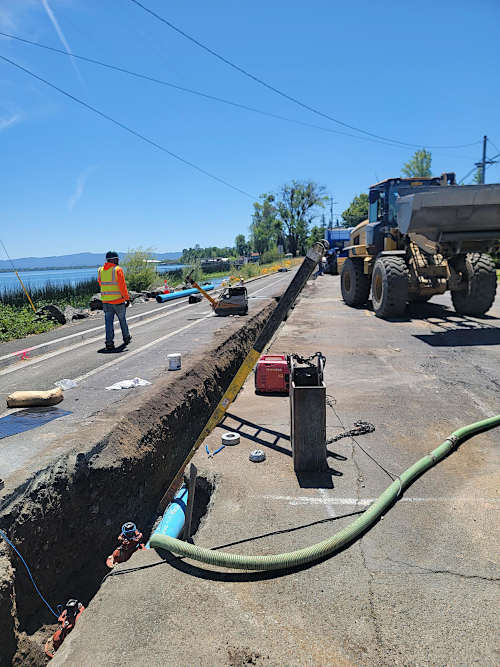
LAKEPORT, Calif. — The Lakeport Utilities Department is continuing its water infrastructure improvement project along Lakeshore Boulevard.
The Water Pipeline Replacement Project is currently under way. It is designed to replace aging water mains and service connections, improving system reliability, reducing the risk of leaks, and preparing the corridor for future upgrades.
The project is taking place on Lakeshore Boulevard, from Giselman Avenue to Beach Lane.
The project’s first phase began on Tuesday and continues to May 23. It is taking place on Lakeshore Boulevard, from Giselman Avenue to Lange Street.
The second phase, set to occur from May 27 to June 13, will take place on Lakeshore Boulevard from Lange Street to Beach Lane.
During construction, road closures will be in effect within active work zones.
Motorists are advised to follow posted detour signs, drive slowly, and use caution when traveling near construction crews and equipment.
The city urges residents to plan for minor delays, equipment noise, and possible dust throughout the duration of the work.
“This project represents a key investment in the long-term sustainability of our water infrastructure,” said Utilities Director Paul Harris. “We appreciate the community’s patience as we work to improve water service and prepare the area for resurfacing.”
On Tuesday, U.S. Senators Alex Padilla (D-Calif.), ranking member of the Senate Committee on Rules and Administration with oversight over elections, Brian Schatz (D-Hawaii), Vice Chairman of the Senate Committee on Indian Affairs, and Ron Wyden (D-Ore.) led 11 senators in sounding the alarm on the devastating impacts of President Trump’s anti-voter “election integrity” executive order and the SAVE Act on Native American voting rights.
In a letter to Secretary of the Interior Doug Burgum, the senators specifically warn about the challenges Native communities will face with the proposed requirements of documentary proof of citizenship and restrictions on mail-in voting.
“Enactment of new voter registration policies under the Executive Order and the SAVE Act would lead to mass disenfranchisement of eligible Native voters and further depress the Native vote,” wrote the senators. “Tribal IDs generally lack place of birth information required by the legislation, and the vast majority of these IDs lack the specific U.S. citizenship documentation required by the Executive Order. And the SAVE Act’s in-person requirement would exacerbate existing barriers, such as requiring IDs that list residential mailing addresses, by forcing many Native voters to travel great distances, including costly flights or multi-hour drives, to reach their local elections office or polling place.
“As Secretary of the Interior, you have a special moral and legal responsibility to uphold our nation’s trust and treaty obligations,” continued the senators. “If implemented, the sweeping federal mandates included in the Executive Order and the SAVE Act would disenfranchise eligible Native voters who are following state laws. We encourage your active engagement with the White House and the Department of Justice to ensure that Native communities are able to exercise the franchise fully and have their voices heard at the ballot box.”
Tribal IDs are currently an acceptable form of documentation to register to vote in nearly every state, but the SAVE Act and Trump executive order require that an ID must show place of birth and citizenship, which the majority of tribal IDs lack, adding another barrier to the ballot box for many Native American communities.
The senators underscored that if enacted, these provisions would force tribal voters who live in rural and remote locations to travel significant distances to prove their citizenship in order to register to vote.
The senators also emphasized the disproportionate impact the vote-by-mail restrictions would have on Native communities, which often rely more on mail-in voting because of a lack of infrastructure and transportation access.
Trump’s executive order penalizes states that accept absentee or mail-in ballots received after Election Day, harming Native voters in states like Alaska, North Dakota, Oregon, and California that process ballots as long as they are postmarked by Election Day.
In Alaska specifically, which has 229 federally recognized tribes, vote-by-mail is essential because polling sites can be hundreds of miles away for villages that are not on the road system.
Only 66 percent of Native Americans eligible to participate in elections are currently registered to vote, leaving more than one million eligible voting-age Native Americans unregistered. Creating further obstacles to register to vote would likely reduce these numbers even further.
In addition to Senators Padilla, Schatz, and Wyden, the letter was also signed by Senators Catherine Cortez Masto (D-Nev.), Kirsten Gillibrand (D-N.Y.), Mazie Hirono (D-Hawaii), Tim Kaine (D-Va.), Amy Klobuchar (D-Minn.), Edward J. Markey (D-Mass.), Jeff Merkley (D-Ore.), Jacky Rosen (D-Nev.), Tina Smith (D-Minn.), Chris Van Hollen (D-Md.) and Elizabeth Warren (D-Mass.).
The full text of the letter is below.
Dear Secretary Burgum:
We write to express our serious concern over the impact of the Administration’s March 25 Executive Order 14284 “Preserving and Protecting the Integrity of American Elections” on Native communities. As former Governor of North Dakota, and now as Secretary of the Interior, you must appreciate that Indian Country faces voting challenges unique to the rest of the country, including remote locations, limited resources, and a legacy of legal discrimination. Unfortunately, both this Executive Order, and the related Safeguard American Voter Eligibility (SAVE) Act (H.R. 22) recently passed by the House of Representatives, would represent the largest steps backwards for Native American voting rights in many decades. We urge you to ensure that the federal government meets its trust responsibility to safeguard Native American voting rights and to engage in Tribal consultation on any new policies that impact the Native vote.
Enactment of new voter registration policies under the Executive Order and the SAVE Act would lead to mass disenfranchisement of eligible Native voters and further depress the Native vote. For example, both the Executive Order and the SAVE Act include a requirement for voters to provide documentary proof of citizenship when registering or re-registering to vote. Tribal IDs generally lack place of birth information required by the legislation, and the vast majority of these IDs lack the specific U.S. citizenship documentation required by the Executive Order. And the SAVE Act’s in-person requirement would exacerbate existing barriers, such as requiring IDs that list residential mailing addresses, by forcing many Native voters to travel great distances, including costly flights or multi-hour drives, to reach their local elections office or polling place.
What’s more, under the Executive Order, the Attorney General is directed to take action against states with laws that accept absentee or mail-in ballots received after Election Day. This directive will have a disproportionate impact on Native communities, given the remote locations of many Native communities, along with a general lack of infrastructure and transportation access. As a result, Native voters often must rely on vote-by-mail systems to cast their ballots, but extremely long distances and unpredictable weather can result in mail delays that impact the arrival times of ballots. For example, in states like Alaska, which is home to 229 federally recognized Tribes, voters must rely on mail-in ballots due to the lack of local polling sites in Native villages, the majority of which are not on the road system; in fact, the nearest polling site might be hundreds of miles away by plane or boat. So, it is standard practice for many states to allow ballots to be counted for several days following the federal election as long as they were postmarked before or on election day. Of note, no state allows hand-delivered ballots to be returned after Election Day. If the Executive Order’s provision were enforced, it risks further disenfranchisement of Native voters in states like Alaska, North Dakota, Oregon, and California that accept absentee or mail-in ballots postmarked by the day before Election Day.
As Secretary of the Interior, you have a special moral and legal responsibility to uphold our nation’s trust and treaty obligations. If implemented, the sweeping federal mandates included in the Executive Order and the SAVE Act would disenfranchise eligible Native voters who are following state laws. We encourage your active engagement with the White House and the Department of Justice to ensure that Native communities are able to exercise the franchise fully and have their voices heard at the ballot box.
Thank you for your attention to this matter and we welcome the opportunity to further discuss these concerns with you.
In a letter to Secretary of the Interior Doug Burgum, the senators specifically warn about the challenges Native communities will face with the proposed requirements of documentary proof of citizenship and restrictions on mail-in voting.
“Enactment of new voter registration policies under the Executive Order and the SAVE Act would lead to mass disenfranchisement of eligible Native voters and further depress the Native vote,” wrote the senators. “Tribal IDs generally lack place of birth information required by the legislation, and the vast majority of these IDs lack the specific U.S. citizenship documentation required by the Executive Order. And the SAVE Act’s in-person requirement would exacerbate existing barriers, such as requiring IDs that list residential mailing addresses, by forcing many Native voters to travel great distances, including costly flights or multi-hour drives, to reach their local elections office or polling place.
“As Secretary of the Interior, you have a special moral and legal responsibility to uphold our nation’s trust and treaty obligations,” continued the senators. “If implemented, the sweeping federal mandates included in the Executive Order and the SAVE Act would disenfranchise eligible Native voters who are following state laws. We encourage your active engagement with the White House and the Department of Justice to ensure that Native communities are able to exercise the franchise fully and have their voices heard at the ballot box.”
Tribal IDs are currently an acceptable form of documentation to register to vote in nearly every state, but the SAVE Act and Trump executive order require that an ID must show place of birth and citizenship, which the majority of tribal IDs lack, adding another barrier to the ballot box for many Native American communities.
The senators underscored that if enacted, these provisions would force tribal voters who live in rural and remote locations to travel significant distances to prove their citizenship in order to register to vote.
The senators also emphasized the disproportionate impact the vote-by-mail restrictions would have on Native communities, which often rely more on mail-in voting because of a lack of infrastructure and transportation access.
Trump’s executive order penalizes states that accept absentee or mail-in ballots received after Election Day, harming Native voters in states like Alaska, North Dakota, Oregon, and California that process ballots as long as they are postmarked by Election Day.
In Alaska specifically, which has 229 federally recognized tribes, vote-by-mail is essential because polling sites can be hundreds of miles away for villages that are not on the road system.
Only 66 percent of Native Americans eligible to participate in elections are currently registered to vote, leaving more than one million eligible voting-age Native Americans unregistered. Creating further obstacles to register to vote would likely reduce these numbers even further.
In addition to Senators Padilla, Schatz, and Wyden, the letter was also signed by Senators Catherine Cortez Masto (D-Nev.), Kirsten Gillibrand (D-N.Y.), Mazie Hirono (D-Hawaii), Tim Kaine (D-Va.), Amy Klobuchar (D-Minn.), Edward J. Markey (D-Mass.), Jeff Merkley (D-Ore.), Jacky Rosen (D-Nev.), Tina Smith (D-Minn.), Chris Van Hollen (D-Md.) and Elizabeth Warren (D-Mass.).
The full text of the letter is below.
Dear Secretary Burgum:
We write to express our serious concern over the impact of the Administration’s March 25 Executive Order 14284 “Preserving and Protecting the Integrity of American Elections” on Native communities. As former Governor of North Dakota, and now as Secretary of the Interior, you must appreciate that Indian Country faces voting challenges unique to the rest of the country, including remote locations, limited resources, and a legacy of legal discrimination. Unfortunately, both this Executive Order, and the related Safeguard American Voter Eligibility (SAVE) Act (H.R. 22) recently passed by the House of Representatives, would represent the largest steps backwards for Native American voting rights in many decades. We urge you to ensure that the federal government meets its trust responsibility to safeguard Native American voting rights and to engage in Tribal consultation on any new policies that impact the Native vote.
Enactment of new voter registration policies under the Executive Order and the SAVE Act would lead to mass disenfranchisement of eligible Native voters and further depress the Native vote. For example, both the Executive Order and the SAVE Act include a requirement for voters to provide documentary proof of citizenship when registering or re-registering to vote. Tribal IDs generally lack place of birth information required by the legislation, and the vast majority of these IDs lack the specific U.S. citizenship documentation required by the Executive Order. And the SAVE Act’s in-person requirement would exacerbate existing barriers, such as requiring IDs that list residential mailing addresses, by forcing many Native voters to travel great distances, including costly flights or multi-hour drives, to reach their local elections office or polling place.
What’s more, under the Executive Order, the Attorney General is directed to take action against states with laws that accept absentee or mail-in ballots received after Election Day. This directive will have a disproportionate impact on Native communities, given the remote locations of many Native communities, along with a general lack of infrastructure and transportation access. As a result, Native voters often must rely on vote-by-mail systems to cast their ballots, but extremely long distances and unpredictable weather can result in mail delays that impact the arrival times of ballots. For example, in states like Alaska, which is home to 229 federally recognized Tribes, voters must rely on mail-in ballots due to the lack of local polling sites in Native villages, the majority of which are not on the road system; in fact, the nearest polling site might be hundreds of miles away by plane or boat. So, it is standard practice for many states to allow ballots to be counted for several days following the federal election as long as they were postmarked before or on election day. Of note, no state allows hand-delivered ballots to be returned after Election Day. If the Executive Order’s provision were enforced, it risks further disenfranchisement of Native voters in states like Alaska, North Dakota, Oregon, and California that accept absentee or mail-in ballots postmarked by the day before Election Day.
As Secretary of the Interior, you have a special moral and legal responsibility to uphold our nation’s trust and treaty obligations. If implemented, the sweeping federal mandates included in the Executive Order and the SAVE Act would disenfranchise eligible Native voters who are following state laws. We encourage your active engagement with the White House and the Department of Justice to ensure that Native communities are able to exercise the franchise fully and have their voices heard at the ballot box.
Thank you for your attention to this matter and we welcome the opportunity to further discuss these concerns with you.
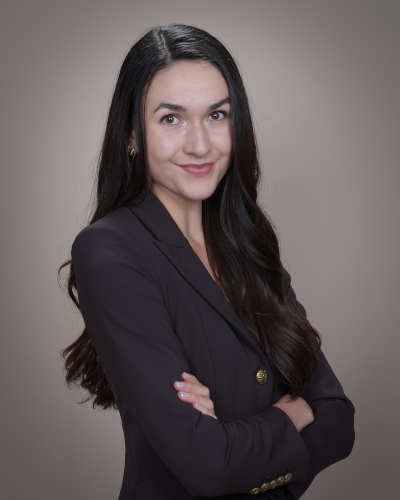
MALIBU, Calif. — Julianne Carter, a lifelong Lake County resident currently attending Pepperdine University School of Law in Malibu, has been named the school’s 2025 Terry M. Giles Honor Scholar.
The Giles Honor Scholar is a student in their third and final year of law school who is selected on the basis of scholastic achievement, co-curricular and extracurricular activities, personality, and character.
The scholarship is the namesake of its donor, Terry Giles is a Pepperdine Law alum who established one of the largest and most successful criminal law firms on the West Coast, and is also an award-winning author and law professor. Giles personally interviewed the applicants and selected Carter.
Carter, 22, will graduate from Pepperdine Law this month as the youngest student to ever receive a Juris Doctor law degree from the institution.
Prior to law school, she graduated from Pepperdine University with honors at age 19, receiving a bachelor's degree in philosophy.
While in law school, she was an advocate on the Honors Trial Team, where she competed in state and national trial competitions.
She was also a member of the Trial Team Executive Board and the Criminal Law Society; clerked at Legal Aid in downtown Los Angeles; worked at the Ventura County District Attorney’s Office; and spent two years appearing in criminal court in Lake County as a certified law student supervised by her mother, local attorney Angela Carter.
"I'm incredibly proud of Julianne," Angela Carter said. "It has been amazing to get to work with her. My clients and our local judges have been so kind to her. She is already a fantastic advocate with extreme intelligence and a kind heart. I am one lucky mom to have her as my daughter and one lucky lawyer to have her as my partner. She had her choice of jobs all over California, and she chose to come back and help her local community."
Following her graduation, Julianne Carter will join Angela Carter at her private criminal defense practice in Lakeport, which will be renamed Carter Law.
"I'm excited to return home to Lake County and practice law there," Julianne Carter said. "Our county is incredibly important to me, and I'm so grateful to have had everyone's support during my legal education."
CLEARLAKE, Calif. — The Clearlake City Council is set this week to consider approving a new Cal Fire map that rates thousands more acres within the city as being in the highest fire hazard severity zone.
The council will meet at 6 p.m. Thursday, May 15, in the council chambers at Clearlake City Hall, 14050 Olympic Drive.
The agenda can be found here.
The meeting will be broadcast live on the city's YouTube channel or the Lake County PEGTV YouTube Channel.
Community members also can participate via Zoom. The webinar ID is 899 0339 3920, the pass code is 024684. One tap mobile is available at +16694449171,,82771053751#, or join by phone at 669-444-9171 or 646-931-3860.
The council meeting will start with a presentation on May’s adoptable dogs, a proclamation declaring May 18 to 24 as Public Works Week and a presentation by Police Chief Tim Hobbs, who will give an update on Proposition 36, an initiative passed by voters last year to increase the penalties for drug and theft offenses.
On Thursday, the council will hold three public hearings.
The first is to discuss and consider Ordinance 281-2025, which will designate fire hazard severity zones in the Local Responsibility area as required by state law.
The zones are shown in a new map released to the public in February.
That new map adds a total of 14,000 acres of Lake County land to the “very high” fire hazard severity zone, marking an 878% increase in acreage designated the highest severity category, as Lake County News https://www.lakeconews.com/news/81111-cal-fire-s-new-fire-hazard-map-expands-very-high-zones-across-lake-county-local-officials-express-concernhas reported.
In Clearlake, the acreage rated as “very high” increases from 1,583 to 4,054 acres.
So far, city officials said they have had little to no public comment on the map, which officials are concerned could have a negative impact on the county, especially when it comes to fire insurance ratings, which the map isn’t supposed to be used to set.
If the first reading of the ordinance passes, a second reading and adoption will be set. The cities and the county have until July 1 to approve the map.
The council’s second public hearing involves the closeout of the Community Development Block Grant Covid 2/3 Funds for the Senior Community Center Upgrades, with the third being to consider adoption of fees related to Ordinance No. 280-2025, which authorizes bingo games for charitable purposes only.
Under business, the council will consider letters of opposition to SB 226 (Cabaldon) regarding community college territory transfers, and also will discuss a presentation regarding Safe Routes to Schools plans for Burns Valley and Pomo Elementary schools.
On the meeting's consent agenda — items that are considered routine in nature and usually adopted on a single vote — are warrants and council minutes; continuation of the emergency declarations for the winter storms and Boyles Fire; adoption of the update to Resolution 2024-15, HOME Application to increase the requested not-to-exceed amount to $10,200,000; and an update to the City Council meeting calendar to include June 19 as a regular City Council
meeting date.
The council also will hold a closed session for a performance evaluation of City Manager Alan Flora and discuss litigation with Highlands Mutual Water Co.
Email Elizabeth Larson atThis email address is being protected from spambots. You need JavaScript enabled to view it. . Follow her on Twitter, @ERLarson, and on Bluesky, @erlarson.bsky.social. Find Lake County News on the following platforms: Facebook, @LakeCoNews; X, @LakeCoNews; Threads, @lakeconews, and on Bluesky, @lakeconews.bsky.social.
The council will meet at 6 p.m. Thursday, May 15, in the council chambers at Clearlake City Hall, 14050 Olympic Drive.
The agenda can be found here.
The meeting will be broadcast live on the city's YouTube channel or the Lake County PEGTV YouTube Channel.
Community members also can participate via Zoom. The webinar ID is 899 0339 3920, the pass code is 024684. One tap mobile is available at +16694449171,,82771053751#, or join by phone at 669-444-9171 or 646-931-3860.
The council meeting will start with a presentation on May’s adoptable dogs, a proclamation declaring May 18 to 24 as Public Works Week and a presentation by Police Chief Tim Hobbs, who will give an update on Proposition 36, an initiative passed by voters last year to increase the penalties for drug and theft offenses.
On Thursday, the council will hold three public hearings.
The first is to discuss and consider Ordinance 281-2025, which will designate fire hazard severity zones in the Local Responsibility area as required by state law.
The zones are shown in a new map released to the public in February.
That new map adds a total of 14,000 acres of Lake County land to the “very high” fire hazard severity zone, marking an 878% increase in acreage designated the highest severity category, as Lake County News https://www.lakeconews.com/news/81111-cal-fire-s-new-fire-hazard-map-expands-very-high-zones-across-lake-county-local-officials-express-concernhas reported.
In Clearlake, the acreage rated as “very high” increases from 1,583 to 4,054 acres.
So far, city officials said they have had little to no public comment on the map, which officials are concerned could have a negative impact on the county, especially when it comes to fire insurance ratings, which the map isn’t supposed to be used to set.
If the first reading of the ordinance passes, a second reading and adoption will be set. The cities and the county have until July 1 to approve the map.
The council’s second public hearing involves the closeout of the Community Development Block Grant Covid 2/3 Funds for the Senior Community Center Upgrades, with the third being to consider adoption of fees related to Ordinance No. 280-2025, which authorizes bingo games for charitable purposes only.
Under business, the council will consider letters of opposition to SB 226 (Cabaldon) regarding community college territory transfers, and also will discuss a presentation regarding Safe Routes to Schools plans for Burns Valley and Pomo Elementary schools.
On the meeting's consent agenda — items that are considered routine in nature and usually adopted on a single vote — are warrants and council minutes; continuation of the emergency declarations for the winter storms and Boyles Fire; adoption of the update to Resolution 2024-15, HOME Application to increase the requested not-to-exceed amount to $10,200,000; and an update to the City Council meeting calendar to include June 19 as a regular City Council
meeting date.
The council also will hold a closed session for a performance evaluation of City Manager Alan Flora and discuss litigation with Highlands Mutual Water Co.
Email Elizabeth Larson at