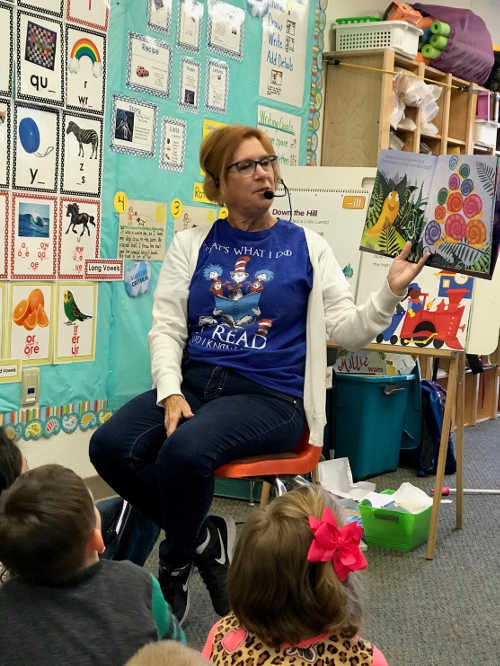
Jo Fay, a retired teacher and storyteller, is part of a team conducting 18 free “Talk, Read, Sing” storytimes around Lake County in April, May and June 2019. Courtesy photo.
LAKEPORT, Calif. – The Lake County Library’s Adult Literacy Program is hosting a series of special free storytimes at an array of venues around Lake County in April, May and June.
The library invites parents, grandparents, any family members and caregivers, storytime readers and not-yet readers of any age to join Families for Literacy with their children for a fun-filled hour of reading, singing, playing and more.
Jo Fay and Martha Miller, both multi-talented local retired teachers and storytellers will conduct the “Talk, Read, Sing” storytimes.
Parents and caregivers can take home tips on sharing these fun activities with their little ones every day. Each storytime will include free books for the children and free snacks.
The Talk, Read, Sing storytimes are sponsored by a Families for Literacy grant from the California State Library. The Lake County Library in partnership with Lake Bloom is promoting these Talk, Read, Sing sessions.
The storytimes take place on Wednesdays.
On April 10, storytimes will be at Lakeport Library, 1425 N. High St. at 10:30 a.m. and at Upper Lake Library, 310 2nd Street at 2:30 p.m.
On April 17, storytimes will be at Middletown Senior Center, 21256 Washington St. at 10:30 a.m. and at Redbud Library at 14785 Burns Valley Rd. in Clearlake at 2:30 p.m.
On April 24, storytimes are at Lucerne Alpine Senior Center 3985 Country Club Drive, at 10:30 a.m. and at the Moose Lodge in 15900 Highway 20 Clearlake Oaks at 2:30 p.m.
On May 8, storytimes will be at Lakeport Library at 10:30 a.m. and Upper Lake Library at 2:30 p.m.
On May 29 storytimes will happen at Middletown Senior Center at 10:30 a.m. and at Redbud Library in Clearlake at 2:30 p.m.
June 5 will see storytimes at Lucerne Alpine Senior Center at 10:30 a.m. and at the Moose Lodge in Clearlake Oaks at 2:30 p.m.
On June 12 talk, read and sing at Middletown Library, 21256 Washington St. at 10:30 a.m. and at Redbud Library at 2:30 p.m.
On June 19 storytimes will be at Lakeport Library at 10:30 a.m. and at Upper Lake Library at 2:30 p.m.
The program finishes with storytimes on June 26, at Lucerne Alpine Senior Center at 10:30 a.m. and at the Moose Lodge in Clearlake Oaks at 2:30 p.m.
For more information about Talk, Read, Sing contact Tina Woelbling at 707-263-7633 or This email address is being protected from spambots. You need JavaScript enabled to view it..
Lake Bloom is a locally based program that is dedicated to providing tools and resources to Lake County parents of children under 6 years of age, to help them become more engaged in talking, playing and reading with their children, to help better prepare Lake County children for kindergarten.
LAKE COUNTY, Calif. – Lake County Animal Care and Control has several new dogs along with many others that continue to wait for new homes.
Dogs available for adoption this week include mixes of bluetick coonhound, Brussels Griffon, Chihuahua, German Shepherd, Great Pyrenees, heeler, husky, pit bull, redbone coonhound, Rhodesian Ridgeback, shepherd and Staffordshire bull terrier.
Dogs that are adopted from Lake County Animal Care and Control are either neutered or spayed, microchipped and, if old enough, given a rabies shot and county license before being released to their new owner. License fees do not apply to residents of the cities of Lakeport or Clearlake.
If you're looking for a new companion, visit the shelter. There are many great pets hoping you'll choose them.
The following dogs at the Lake County Animal Care and Control shelter have been cleared for adoption (additional dogs on the animal control Web site not listed are still “on hold”).
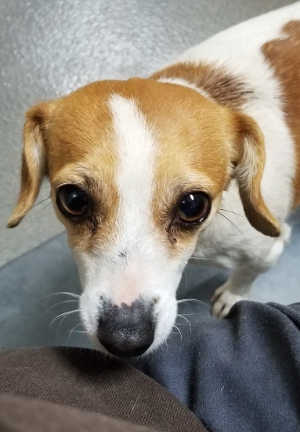
This young male Brussels Griffon is in kennel No. 2, ID No. 11971. Photo courtesy of Lake County Animal Care and Control. Male Brussels Griffon
This young male Brussels Griffon has a short tan and brown coat.
He’s in kennel No. 2, ID No. 11971.
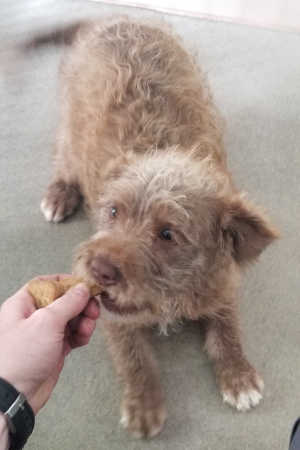
This female Chihuahua-terrier mix is in kennel No. 3b, ID No. 11936. Photo courtesy of Lake County Animal Care and Control. Chihuahua-terrier mix
This female Chihuahua-terrier mix has a short brown and white coat.
She already has been spayed.
She’s in kennel No. 3b, ID No. 11936.
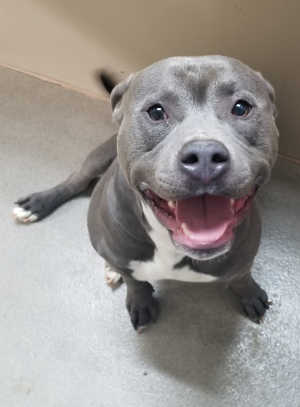
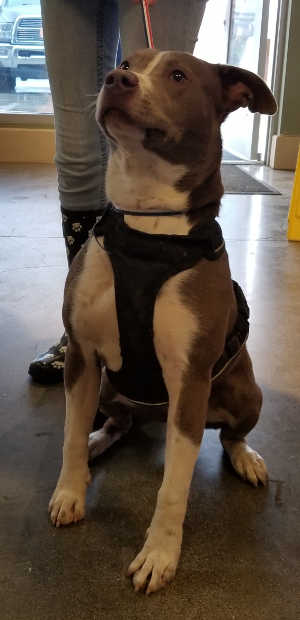
This male pit bull terrier is in kennel No. 7, ID No. 11970. Photo courtesy of Lake County Animal Care and Control. Male pit bull
This male pit bull terrier has a short blue and gray coat.
He’s in kennel No. 7, ID No. 11970.
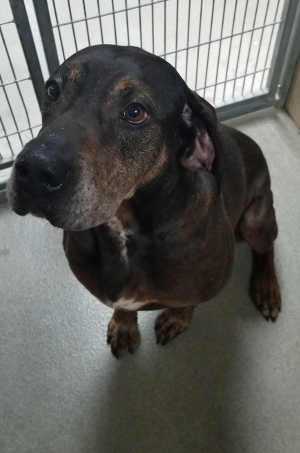
“Rio” is a male bluetick coonhound-shepherd mix in kennel No. 11, ID No. 11947. Photo courtesy of Lake County Animal Care and Control. ‘Rio’
“Rio” is a male bluetick coonhound-shepherd mix with a short tricolor coat.
He already has been neutered.
He’s in kennel No. 11, ID No. 11947.
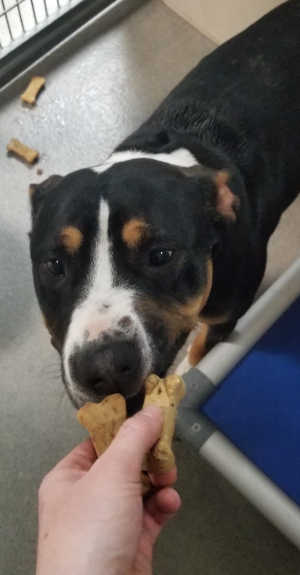
“Baylee” is a female pit bull terrier in kennel No. 14, ID No. 11892. Photo courtesy of Lake County Animal Care and Control. ‘Baylee’
“Baylee” is a female pit bull terrier has a short brindle and white coat.
Shelter staff said she is good with other dogs, has lived with cats and chickens, and was raised with children.
She already has been spayed.
She’s in kennel No. 14, ID No. 11892.
“Maebelle” is a female pit bull terrier in kennel No. 15, ID No. 11893. Photo courtesy of Lake County Animal Care and Control. ‘Maebelle’
“Maebelle” is a female pit bull terrier with a short brindle and white coat.
Shelter staff said she is good with other dogs, has lived with cats and chickens, and was raised with a small child.
She’s in kennel No. 15, ID No. 11893.
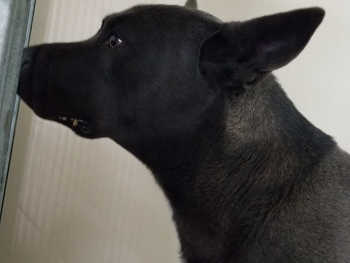
“Darby” is a male husky in kennel No. 16, ID No. 11933. Photo courtesy of Lake County Animal Care and Control. ‘Darby’
“Darby” is a male husky with a medium-length black and gray coat.
He’s in kennel No. 16, ID No. 11933.
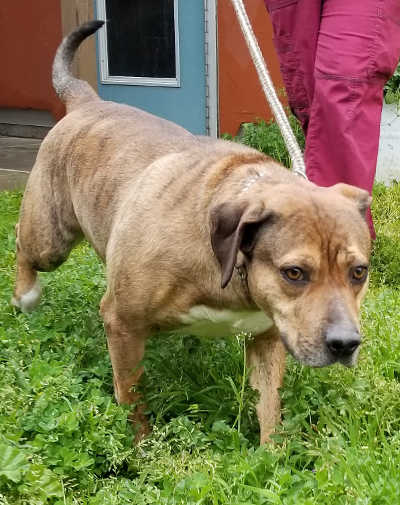
This male Staffordshire Bull Terrier is in kennel No. 17, ID No. 11943. Photo courtesy of Lake County Animal Care and Control. Male Staffordshire Bull Terrier
This male Staffordshire Bull Terrier has a short buff, white and brown coat.
He’s in kennel No. 17, ID No. 11943.
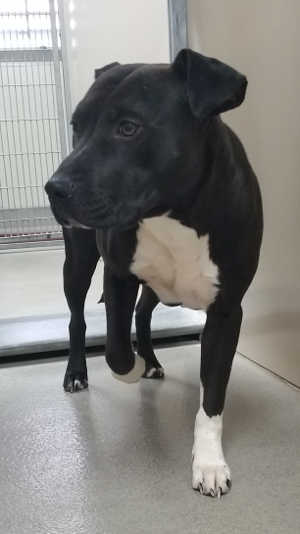
This male pit bull terrier is in kennel No. 20, ID No. 11958. Photo courtesy of Lake County Animal Care and Control. Male pit bull terrier
This male pit bull terrier has a short black coat.
He’s in kennel No. 20, ID No. 11958.
“Bobby Socks” is a female Staffordshire bull terrier-Rhodesian Ridgeback in kennel No. 21, ID No. 11911. Photo courtesy of Lake County Animal Care and Control. ‘Bobby Socks’
“Bobby Socks” is a female Staffordshire bull terrier-Rhodesian Ridgeback.
She has a short red coat and has already been spayed.
She’s in kennel No. 21, ID No. 11911.
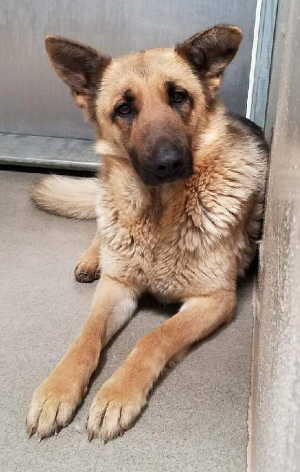
“Abby” is a female German Shepherd in kennel No. 22, ID No. 9707. Photo courtesy of Lake County Animal Care and Control. ‘Abby’
“Abby” is a female German Shepherd with a medium-length black and tan coat.
She already has been spayed.
She’s in kennel No. 22, ID No. 9707.
This male redbone coonhound is in kennel No. 25, ID No. 11960. Photo courtesy of Lake County Animal Care and Control. Male redbone coonhound
This male redbone coonhound has a short red coat.
He’s in kennel No. 25, ID No. 11960.
“Taya” is a female pit bull terrier in kennel No. 26, ID No. 12005. Photo courtesy of Lake County Animal Care and Control. ‘Taya’
“Taya” is a female pit bull terrier who a short tricolor coat.
He’s in kennel No. 26, ID No. 12005.
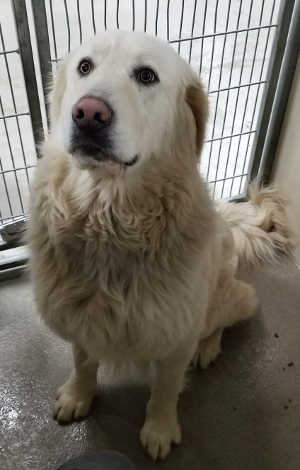
“Little Foot” is a white male Great Pyrenees is in kennel No. 27, ID No. 11854. Photo courtesy of Lake County Animal Care and Control. ‘Little Foot’
“Little Foot” is a white male Great Pyrenees with a long white coat and gold eyes.
Shelter staff said the right home for him will not have cats, small dogs or livestock.
He’s in kennel No. 27, ID No. 11854.
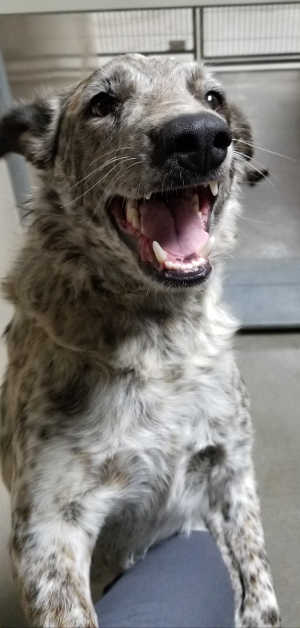
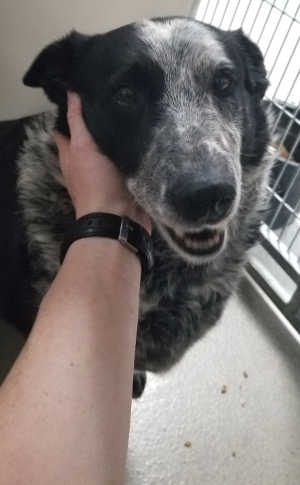
This female heeler is in kennel No. 31, ID No. 11962. Photo courtesy of Lake County Animal Care and Control. Female heeler
This female heeler has a medium-length black and white coat.
She’s in kennel No. 31, ID No. 11962.
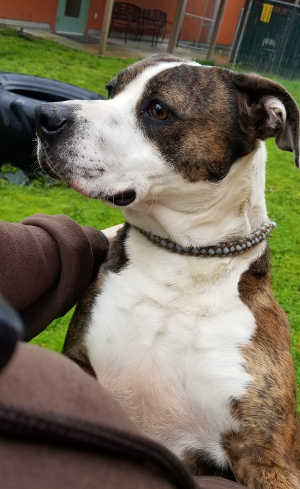
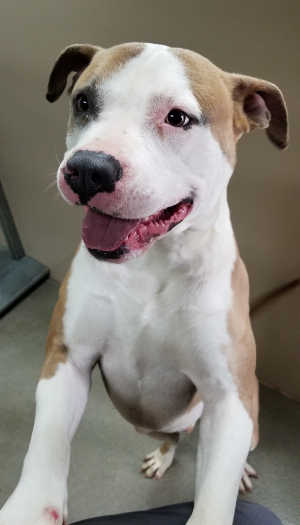
This female pit bull terrier is in kennel No. 33, ID No. 11950. Photo courtesy of Lake County Animal Care and Control. Female pit bull terrier
This female pit bull terrier has a short brown and white coat.
She’s in kennel No. 33, ID No. 11950.
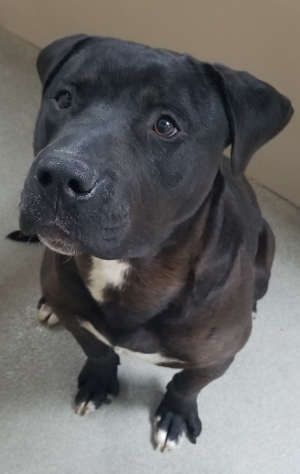
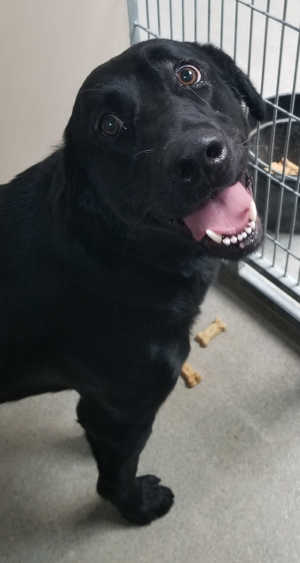
“Bear” is a male Labrador Retriever in kennel No. 34, ID No. 11986. Photo courtesy of Lake County Animal Care and Control. ‘Bear’
“Bear” is a male Labrador Retriever with an all-black coat.
He already has been neutered.
He’s in kennel No. 34, ID No. 11986.
Lake County Animal Care and Control is located at 4949 Helbush in Lakeport, next to the Hill Road Correctional Facility.
Office hours are Monday through Friday, 11 a.m. to 5 p.m., and 11 a.m. to 3 p.m., Saturday. The shelter is open from 11 a.m. to 4 p.m. Monday through Friday and on Saturday from 11 a.m. to 3 p.m.
For more information call Lake County Animal Care and Control at 707-263-0278.
Email Elizabeth Larson at This email address is being protected from spambots. You need JavaScript enabled to view it.. Follow her on Twitter, @ERLarson, or Lake County News, @LakeCoNews.
When sea-faring nations began to explore new regions of the world, one of their biggest concerns in making the journey safely was how to cope with weather.
They could harness the wind for power. They could rely on the Sun and the stars for navigation. They could build sturdy ships. But if a storm rose suddenly, they were at nature’s mercy.
More than five centuries later, our nation is once again on the cusp of exploring new worlds. And once again, one of our concerns about traveling long distances is the weather. Space weather.
While space is a vacuum – it’s not 100 percent empty. Particles, energy and magnetic fields travel through the void. Much of these emanate from the Sun’s corona, as part of a constant outward flow known as the solar wind – which stretches well beyond the orbit of Neptune.
There are also high energy particles or cosmic rays in the mix, which travel vast distances from dying stars or supernovae. Earth’s magnetic field and relatively thick atmosphere act as a shield against the most harmful forms of this radiation, but in space there is no such deterrent.
If we want to travel though this space, we need ways to protect our astronauts. These particles can affect our technology, tripping onboard electronics.
Dr. Yari Collado-Vega, Space Weather Scientist at NASA’s Goddard Space Flight Center noted, “We are working hard to forecast when these particles will be at their peak, such as during solar flares or coronal mass ejections.”
Acute exposure to these solar energetic particles is a serious concern for astronauts and instruments. Therefore, having a better understanding of when to expect solar activity is important for safely sending our astronauts and spacecraft through space.
Ironically, such space weather activity can actually protect against another threat to astronauts: The sun's activity can block dangerous cosmic rays coming from other stars, which are constantly present – illustrating the complexity of the system NASA tries to understand and mitigate for our space travelers.
Over time, sea captains learned when to sail their ships and when to stay in harbor, based on their accumulated knowledge of the weather. It’s more risky to be on the water in the Caribbean during hurricane season, and you’d want to consider avoiding the Northeast coast of America during the height of winter.
Dr. Collado-Vega said, “It’s very similar to what we’re doing today. We’re constantly developing and testing new models to predict space weather. And we’re constantly seeking new data to refine those models.”
A host of heliophysics missions observe space from a variety of vantage points, not unlike terrestrial weather sensors, which work in tandem to paint a bigger picture of our space environment.
In August 2018, NASA launched the Parker Solar Probe to help us better understand the Sun’s activity, especially what drives the solar wind, and how energetic particles get accelerated.
This data could be used to improve models of space weather forecasting – ultimately helping us find new and better ways to shield our spacecraft and protect our astronauts.
Whether it was the oceans ancient ships traveled through or the space we will one day travel through, we know this: keeping a watchful eye on the environment around us is key to ensuring safe passage.
LAKEPORT, Calif. – While full regulations are still being created for the introduction of industrial hemp in California, the Board of Supervisors this week decided against a temporary moratorium on the crop, deciding instead to explore how hemp growing can be allowed locally.
The board will continue the discussion in an untimed item at its meeting next week.
Hemp has been grown for centuries in the United States, with George Washington including it among his crops at his estate, Mount Vernon, using it for rope, boat sails and thread for clothing.
Today it’s used for food, fiber, lotions and oils, and even types of plastic, and it’s grown in many other countries, including Canada.
The Controlled Substances Act of 1970 made it illegal in the United States because of its relation to marijuana, even though it has a very low level of THC, the main psychoactive constituent of cannabis.
However, last year, industrial hemp was legalized nationwide as part of the farm bill.
Now, while rules are being formulated, there are concerns about how to handle the crop’s introduction.
For the cannabis industry, hemp is a major concern because if hemp and cannabis plants cross-pollinate, the result is that the quality and strength of cannabis plants can be degraded.
Agriculture Commissioner Steve Hajik told the board on Tuesday that he was not pushing for anything, but he raised significant concerns that appeared to favor a temporary moratorium, citing the unfinished regulations, challenges and workload.
He also provided urgency ordinances regarding the crop from neighboring Mendocino and Yolo counties and an industrial hemp white paper from the California Agricultural Commissioner and Sealer Association.
His written report explained that the industrial Hemp Program is a joint federal, state and county program. It’s considered to be an agricultural commodity by the federal and state government, but there are additional regulations associated with it, and the proposed US Department of Agriculture regulations will be out this fall and finalized in 2020.
He said the state regulations are being developed and have to be approved by the USDA, but the federal government will allow the state regulations since the USDA cannot approve them until their own regulations are finalized. “This arrangement will be in effect only until the end of 2019,” Hajik wrote.
With both state and federal regulations still being written, Hajik said some counties have adopted temporary moratoriums until they are finalized, a measure meant to allow the regulations to catch up with the registration process.
As of Tuesday, Hajik said that 20 counties have or are expected to have a moratorium, 23 counties don’t and 15 counties haven’t decided either way.
He noted that, on that very day, Sonoma County also was considering a moratorium.
On Tuesday, the Sonoma County Board of Supervisors moved forward with putting a moratorium in place on hemp, as did the Humboldt County Board of Supervisors.
“What makes this so bad that the state feels the need to get involved at all? I just don’t get it,” said Supervisor Rob Brown.
Hajik said there is pressure to do something from hemp industry.
“Hemp is a commodity that we could benefit from here in Lake County,” said Brown, who has remained a firm opponent of cannabis.
“I agree,” said Hajik.
Hajik explained that, for him, the bottom line is that cannabis is easy for his department to handle. He said they have 17 inspections over a year and a half. With hemp, every site will need to be inspected for its THC content 30 days before harvest, the same time as the summer pear harvest is taking place. He said he'll choose pears over hemp.
Hemp with a THC level of more than 0.3 of 1 percent cannot be sold and must be destroyed. Concerns Hajik noted during the discussion included the fact that growers registering before the program regulations are fully developed could be taking a risk, and he questioned whether the county can legally require a crop to be destroyed.
Hajik said he will be required to run the hemp program and he doesn’t have enough staffing to do it. Without a moratorium, he will be obligated to register hemp growers, and he was concerned there will be a rush of growers. Hajik also questioned if hemp qualifies for right to farm protections; he didn’t think so.
During the meeting the board heard from those who wanted to grow it and had enough land to buffer it and from cannabis growers who didn’t want it because it would harm their crops.
Cobb grower Lance Williams, who has experience with both cannabis and hemp, said he was concerned that someone with hemp seeds and not much knowledge could cause disaster for the cannabis industry, so he suggested a pilot project.
Another grower, Michael Wagner, pointed out that Oregon has been allowing both crops for years, with buffers and seed sourcing, so the county could look north for guidance.
He said the value of imported hemp fibers has been valued at $50, and that in 2018 the USDA estimated total hemp industry to be worth roughly $4 billion.
“Obviously there’s the right way to do it and the wrong way to do it,” he said, adding that it didn’t seem right to keep people from growing it but that it needed to be done correctly.
Supervisor Moke Simon, also tribal chair for Middletown Rancheria, said the county’s seven tribal nations are looking at hemp as an economic opportunity, and he said the county can’t put a moratorium on the tribes. He noted that it’s a clean biofuel.
County Counsel Anita Grant pointed out that there are a number of jurisdictions that regulate hemp through use permits, with zoning being critical.
She said the board might want to consider looking at examples of how zoning could occur and determine what would work best for Lake County. Grant said she could bring back examples at the April 9 board meeting, and the supervisors agreed.
Her report for the April 9 meeting notes, “Some counties have now developed or are in the process of developing land use ordinances that will allow both business concerns to coexist. Inyo County has passed an ordinance that limits industrial hemp activities to take place in certain zones and which requires a conditional use permit for all hemp activities. Another county has determined to allow limited commercial cannabis cultivation in industrially-zoned areas and to allow industrial hemp in those same areas.”
She added, “Whether your Board determines to impose a temporary moratorium on industrial hemp cultivation or to take a wait-and-see approach in anticipation of the impending State regulations, there is nothing to prevent you from exercising your land use authority to initiate the development of an ordinance establishing the parameters within which you wish this type of cultivation to occur so to ensure the viability of both industrial hemp cultivation and cannabis cultivation. This may include determining the zones in which industrial hemp cultivation will be allowed, implementing requirements for buffers, deciding whether and how best to utilize conditional use permits to ensure compatibility with other commercial businesses, and promulgating other requirements not in conflict with State law.”
She reported that both her office and the Community Development Department will provide the board will options to pursue at the April 9 meeting.
Email Elizabeth Larson at This email address is being protected from spambots. You need JavaScript enabled to view it.. Follow her on Twitter, @ERLarson, or Lake County News, @LakeCoNews.
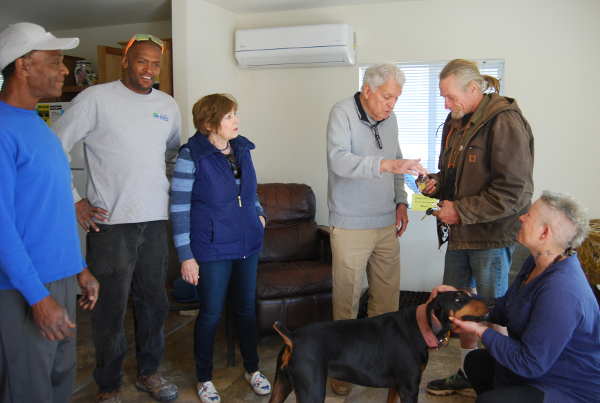
Homeowner Chris White receiving the keys to his home in Clearlake, Calif., from Habitat for Humanity Lake County President Richard Birk as his guests look on on Saturday, March 30, 2019. Courtesy photo. CLEARLAKE, Calif. – Habitat for Humanity Lake County has dedicated the 31st house it has completed for local residents in need, this time for a veteran.
On Saturday, March 30, Habitat for Humanity Lake County welcomed Chris White into his new home in Clearlake at a dedication attended by Habitat staff and White’s friends.
Food and fellowship were shared as White received the keys to his home. The Clearlake Grocery Outlet was on hand to stock the shelves of the new home and help get White off to a great start in this new phase of his life.
White is a disabled military veteran who was, prior to his connecting with Habitat, living in a travel trailer that was about to be condemned. Hearing his plight, Habitat was eager to work with him and find a way to help.
“I’m completely overwhelmed by everything Habitat has done for me,” White said, emotion in his voice. “I’d be homeless now if not for this chance. I never thought I’d have the opportunity to have a place, never thought I’d see this day. I can’t thank everyone enough for all the chances, all the help, all the work that’s been done.”
If you are a qualifying, low-income resident of Lake County and are interested in the possibility of owning your own home, please contact Habitat for Humanity Lake County.
Call the office at 707-994-1100, Extension 106, to speak directly to our Homeownership Program staff, or come by the office at 15312 Lakeshore Drive, Clearlake, Tuesday through Thursday between 10 a.m. and 4 p.m. for a pre-application and to discuss how you too might qualify for homeownership.
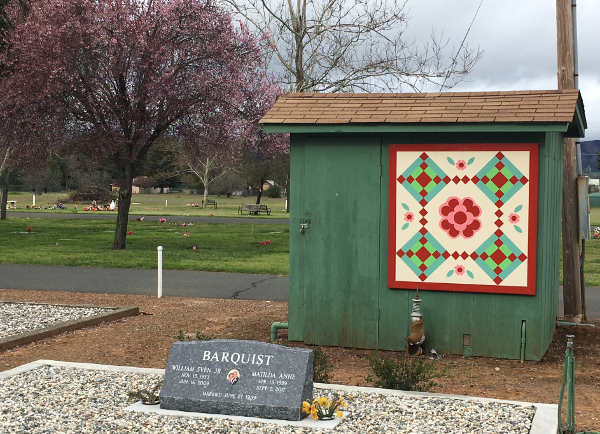
The newest quilt block on the Lake County Quilt Trail is “Anne’s Quilt,” in memory of Anne and Bill Barquist. Photo courtesy of the Lake County Quilt Trail. KELSEYVILLE, Calif. – “Anne’s Quilt” is the newest quilt block to be added to the Lake County Quilt Trail.
It has been installed on the pump house near the headstone of Anne and Bill Barquist in the Kelseyville Cemetery at 3375 Bell Hill Road.
Anne Barquists’s son, Erik Barquist, and his wife Julie have sponsored “Anne’s Quilt,” which replicates a quilt Anne made for Julie.
Anne Barquist was a prominent figure in Lake County. She operated Quilted Treasures, a quilting and fabric store in Kelseyville, was known for her skills as a piano instructor, her leadership in the local 4-H club, her volunteer activity in St. John’s Episcopal Church in Lakeport and she raised guide dogs.
She and her husband, Bill, resided in Finley. Anne Barquist was a supporter of music and donated to the Allegro Scholarship Fund as well as the local symphony.
The Lake County Quilt Trail is an agricultural and tourism project designed to promote community pride.
The 4-foot by 4-foot quilt block was drawn and painted by the Lake County Quilt Trail team.
The Lake County Quilt Trail is a group of dedicated volunteer quilters, graphic artists, painters, writers and carpenters.
 How to resolve AdBlock issue?