Members of the AmeriCorps National Civilian Community Corps Team Blue 2 and Red Cross installed free smoke detectors in Clearlake Oaks, Calif. Courtesy photo. CLEARLAKE OAKS, Calif. – AmeriCorps National Civilian Community Corps Team Blue 2 assisted the Red Cross in its efforts to save more lives through Sound the Alarm, a part of the Red Cross’ Home Fire Campaign.
According to the U.S. Fire Administration, the risk of dying in a home fire is cut in half in homes with working smoke alarms.
Wildfires break out in Lake County every year, and the Red Cross and AmeriCorps team Blue 2 want to make sure residents have the best tools with which to protect themselves.
Eleven young adults from around the United States committed to serving together for 10 months, Blue 2 worked with Red Cross volunteers in Clearlake Oaks.
They installed 81 free smoke alarms and educated residents about fire prevention and safety, protecting 31 homes overall.
“We were very welcomed by the community and learned about fire safety right alongside them,” said Blue 2 Assistant Team Leader Isa Baldwin Zurek. “The impact of replacing old, non-functioning alarms with new, working ones is tremendous.”
Since 2015, Sound the Alarm has installed 1,651,273 smoke alarms, made 684,260 households safer, and saved 582 lives.
LAKE COUNTY, Calif. – Lake County Animal Care and Control has three cats waiting for homes this week.
The following cats at the Lake County Animal Care and Control shelter have been cleared for adoption.
This female domestic short hair cat is in kennel No. 68, ID No. 12183. Photo courtesy of Lake County Animal Care and Control. Female domestic short hair
This female domestic short hair cat has an all-black coat.
She already has been spayed.
She’s in kennel No. 68, ID No. 12183.
“Scout” is a male domestic short hair cat in kennel No. 100, ID No. 12147. Photo courtesy of Lake County Animal Care and Control. ‘Scout’
“Scout” is a male domestic short hair cat with a gray tabby and white coat.
He’s already been neutered.
He’s in kennel No. 100, ID No. 12147.
This male domestic short hair is in kennel No. 137, ID No. 12163. Photo courtesy of Lake County Animal Care and Control. Male domestic short hair
This male domestic short hair has an orange tabby coat.
He’s in kennel No. 137, ID No. 12163.
Lake County Animal Care and Control is located at 4949 Helbush in Lakeport, next to the Hill Road Correctional Facility.
Office hours are Monday through Friday, 11 a.m. to 5 p.m., and 11 a.m. to 3 p.m., Saturday. The shelter is open from 11 a.m. to 4 p.m. Monday through Friday and on Saturday from 11 a.m. to 3 p.m.
For more information call Lake County Animal Care and Control at 707-263-0278.
Email Elizabeth Larson at This email address is being protected from spambots. You need JavaScript enabled to view it.. Follow her on Twitter, @ERLarson, or Lake County News, @LakeCoNews.
Coffee is the national beverage of Ethiopia. Berbere spice blend, used in many dishes, is based on dried chilis and includes warm spices such as turmeric, cardamom, cinnamon and cloves. Tiny black Nigella seeds, a common seasoning, complete the picture. Photo by Esther Oertel. Each drop of rain that falls to Earth has been recycled untold times. There is no new water under the sun; the atmospheric waters that swirl throughout our planet are ancient.
Perhaps the rain that last fell, the water that gathered in fields and drained into soil filling our wells, held drops from the Nile or from Lake Tana on an Ethiopian plateau.
If so, we’ve shared life-giving liquid with our brethren from “the land of origins” in the Horn of Africa, otherwise known as Ethiopia.
As denizens of this brilliant jewel called Earth, we dine at a common table, beneficiaries of the nourishment that our planet provides. Food is the perpetual tie that deliciously binds, bringing us closer to the rest of our human family.
I invite you to join me in an armchair adventure to a land of beginnings and mysteries, a place where hands reach to a common platter to eat, where feeding one another is a sign of love and deep respect.
Ethiopia, a large country with twice the terrain of France, sits in the middle of the Horn of Africa. The Horn juts from the east side of the continent into the Arabian Sea, separated by the Gulf of Aden from the Arabian Peninsula to the north.
A land-locked country, Ethiopia is surrounded by six countries. Going clockwise from the noon position are Eritrea, Djibouti, Somalia, Kenya, South Sudan and Sudan.
Though once plagued by famine, Ethiopia’s economy has grown in recent years. It sits 6th among the 54 countries of Africa when ranked by gross domestic product.
Ethiopia is called the land of origins for good reason. The eastern part of Africa, and most specifically Ethiopia, is dubbed the cradle of civilization; it is believed that the human species originated there, eventually migrating to other parts of the world.
The earliest fossils of recognizable modern humans, homo sapiens, were found in the Omo Valley, which lies in the southwest part of the country.
Another (perhaps less significant) item has its origins in Ethiopia: coffee, which is a key culinary component there.
Coffee is considered Ethiopia’s national drink and its enjoyment is ingrained in Ethiopian culture. Coffee is drunk throughout the day, and rarely alone.
“Buna teta,” which means “come drink coffee,” is an invitation to partake of elaborate coffee ceremonies which can sometimes take hours.
Ethiopians also consume coffee as food; green coffee beans cooked in butter are a popular snack.
It is said that the discovery of this robust bean was made by a ninth century Ethiopian goat-herder named Kaldi. He noticed energizing effects when his flock nibbled on the red berries of what is now known as a coffee bush.
Arabica is considered the superior of the two coffee species widely cultivated throughout the world today (with Robusta being the other), and an amazing 5,046 documented varieties of this species have been found in the ecosystems of Ethiopia’s forested mountains.
Suffice it to say that despite the name, Arabica is not native to Arabia, but to Ethiopia.
On the high central plateaus that make up most of Ethiopia, an indigenous cereal called teff grows, first cultivated by the Ethiopians some 3,000 years ago.
The tiny, sandy-colored seeds of this plant are ground for flour to make injera, a spongy, fermented flatbread which is the staple food of Ethiopia.
To create the unique texture of injera, the dough needs a full three days (or “three moons”) to ferment. (If it’s your first batch, it will require a starter, which takes an additional four days.)
Much of Ethiopian food is in the form of deeply spiced stews, and for injera to properly soak up their beautiful liquids, it must have many holes in its spongy surface. Getting it just right is an important skill.
Injera is cooked on a large, round griddle called a mitad, and the spiraling technique takes many years to master.
In much the same way that creating a proper batter and the cooking method are perfected arts, the complex process of rolling injera in stew to catch the flavorful liquid takes years of practice. The procedure requires a deft hand and is often referred to as “dancing with fingers.”
While many Ethiopian stews are made with meat – beef, lamb, goat, or chicken – there are a variety of vegetarian stews made with things such as lentils, split peas, and chickpeas.
Vegetarian dishes of all types abound, in fact, due to Christian and Muslim practices of abstaining from meat at various times of the year.
Spicy red lentil stew, for example, is a staple dish in Ethiopia, as are collard greens.
A trio of aromatics – onions, garlic and ginger – are commonly used to flavor stews and vegetables, as are a variety of richly appetizing and often piquant spice blends.
Perhaps the most quintessential of these blends is berbere, which is used in many (if not most) Ethiopian dishes. This complex mix of spices is based on dried chilis and includes a plethora of other spices, many with sweet notes.
An internet search will yield recipes for making a simplified version of berbere; however, it’s possible to order authentic berbere online.
The berbere in my pantry includes more than a dozen spices: paprika, coriander, cayenne, cardamom, allspice, ginger, garlic, turmeric, black pepper, cumin, salt, cloves, fenugreek, cinnamon and nutmeg.
The amount of heat from the chilis varies from mixture to mixture and home to home, with many versions in play.
Ground nigella seeds are also a common flavoring, adding a smoky, earthy essence to foods, not unlike a milder, sweeter version of powdered truffle.
Spiced clarified butter is a key ingredient in many dishes, and smoked milk made with the smoke of olive twigs adds a unique flavor component to some foods. (An Ethiopian version of scalloped potatoes is made with smoked milk.)
A variety of beverages are made in homes throughout Ethiopia, including tej, a fermented honey wine, abesh wuha, a water flavored with fenugreek, and perhaps the most unusual, helemur, a tea-like drink made from roasted dough.
Spris is a refreshing, colorful drink made with thick layers of blended fruit. One version includes avocado, mango, and papaya pureed separately and stacked within a glass. A squeeze of lime on top completes the concoction.
Ethiopia is considered one of the safest countries in Africa; violence there, including against travelers, is relatively rare.
Hospitality is important to Ethiopians (entertaining friends in one’s home is frequently enjoyed), so it’s no surprise that a recent travel site poll named Ethiopia the most welcoming country in Africa.
Since food is served on communal platters and diners eat using their hands, hand washing ceremonies are performed both prior to eating and just afterward. The eldest member of the group begins the meal by taking the first handful of food.
Ethiopia is a country that is rumored to have the Ark of the Covenant secretly housed within its borders, is one of just two in Africa that have never been colonized by Europeans, and one whose 20th century emperor sparked a religion. (Rastafarians believe Haile Selassie is a Messiah.)
These facts are strangely fascinating; however, in my opinion one of the most charming components of life in Ethiopia is the custom known as gursha, where a guest at table is honored by being hand-fed a morsel of food wrapped in injera as an act of respect. The person receiving gursha then returns the favor.
Perhaps we can start such a trend here.
The recipe for today is my take on chicken in a sauce made of tej with oranges and is inspired by Yohanis Gebreyesus in his book, Ethiopia: Recipes and Traditions from the Horn of Africa.
A small investment in a packet of berbere spice blend is well worth the taste of this dish.
Tej, fermented honey wine, is difficult to find outside of Ethiopia, but thankfully dry white wine with added honey can be substituted.
The combination of flavors in the sauce danced on my tongue, at once spicy, sweet and earthy. I hope you enjoy it as much as I did.
Chicken in tej sauce with oranges, which is the recipe included in the column. Photo by Esther Oertel. Chicken in Tej sauce with oranges
4 chicken thighs, bone in and skin on 1 tablespoon olive or other oil, plus more for greasing pan ½ - 1 tablespoon berbere spice blend Salt and pepper 1 or 2 medium carrots 1 or 2 medium stalks celery 2 yellow onions Handful fresh thyme Handful fresh Italian parsley 1 cup tej or medium-dry white wine with 1 tablespoon honey added ¼ cup heavy cream 1 tablespoon cornstarch 2 medium oranges
Preheat oven to 400 degrees.
Grease a large cast iron skillet or other roasting pan.
Place chicken thighs in skillet. Rub them with oil and sprinkle berbere spice blend evenly over them, then season with salt and pepper.
Roughly chop carrot(s), celery stalk(s), and onions. Place around chicken thighs in pan.
Add thyme and parsley to pan.
Cover pan with aluminum foil and cook in oven for about 30 minutes.
Remove aluminum foil and continue cooking until chicken registers 165 degrees and the skin is golden brown and crispy, about 20 to 40 minutes longer. (This will vary depending on the size of the chicken thighs.)
If it looks like the vegetables are in danger of burning, add a bit of water.
While chicken is cooking, peel oranges with knife, removing all the white pith. Remove segments by cutting between each membrane. Reserve the juice from the process by working over a bowl.
Whisk the honey into the wine and set aside for sauce.
When chicken is ready, remove from pan to a plate and cover with foil to rest.
Place warm skillet or roasting pan on stovetop and turn to medium heat.
Add wine to pan and deglaze pan, scraping up any bits of vegetable with a large spoon or spatula.
Allow wine to simmer and reduce for a few minutes.
Add cream and allow to lightly simmer briefly for warming and further reduction.
Whisk cornstarch into ¼ cup water and stir into sauce.
Taste and add an additional pinch of berbere spice blend to taste if desired.
Turn off heat and strain sauce with a fine sieve.
Mix in oranges and reserved juice.
Serve chicken drizzled with sauce and oranges.
Esther Oertel is a writer and passionate home cook from a family of chefs. She grew up in a restaurant, where she began creating recipes from a young age. She’s taught culinary classes in a variety of venues in Lake County and previously wrote “The Veggie Girl” column for Lake County News. Most recently she’s taught culinary classes at Sur La Table in Santa Rosa, Calif. She lives in Middletown, Calif.
The Lake County Library invites readers to select a few of the library’s new books to read over the summer. Courtesy photo. LAKEPORT, Calif. – The Lake County Library invites residents to read up a storm with the 2019 Summer Reading Program.
The program is open to all ages, so everyone can join in the fun.
Signups begin Saturday, May 18, at all four Lake County Library branches.
Each library will host “Super Sign-Up Saturday” from 10:30 a.m. to 1 p.m. with a fun craft for kids. You can sign up any time during the program which ends July 27.
Once you sign up you can keep track of your reading progress when you return your books to the library.
There are three programs, each targeting a different age group from children to adults.
When young people aren’t engaged in educational activities during the summer, they experience learning loss.
Reading just five books over the summer can prevent summer learning loss. Rich, engaging and free educational activities like summer reading programs are excellent tools to address the achievement gap.
Library summer reading programs began in the 1890s as a way to help children maintain their reading skills when school was out for the summer. Summer reading programs have been happening in Lake County for decades.
There have been many studies that show that students who read often achieve higher academic success than students who rarely read. Also, students who read just for fun are more likely to do better in school.
A study performed by Dominican University in 2010 found that students who were part of a library summer reading program had better reading skills at the end of the third grade than students who didn’t participate.
The Lake County Library kids program is recommended for children ages from newborn to 14. When you sign up at your local library you can pick up a reading log and start reading library books. When you return library books to the front desk, the library staff will log your page count. For every page you read you get a reading point. For every 50 points you get a sticker for your reading log. At end of the program in August, there will be a party for the children who participate.
Tweens and teens ages 11 to 18 can sign up for the Teen program. Visit the library desk when you return books to get reading credit. For every 200 pages you read, you will be entered in a grand prize drawing. There will also be a variety of events for teens over the summer at the library.
The Lake County Library has a summer reading program for adults. It’s a fun way to challenge yourself to read more this summer.Just like the Teen program, for every 200 pages you read, you will be entered in a grand prize drawing.
For each of these programs, if you read at least 1,000 pages the Friends of the Library will donate a book to the library with your name inside to commemorate your reading achievement.
The Lake County Library Summer Reading Program is supported in part by the Friends of the Lake County Library and Friends of Middletown Library.
LAKE COUNTY, Calif. – Lake County Animal Care and Control has another big group of dogs waiting for homes this week.
Dogs available for adoption this week include mixes of Anatolian Shepherd, black mouth cur, boxer, Chihuahua, Labrador Retriever, pit bull and shepherd.
Dogs that are adopted from Lake County Animal Care and Control are either neutered or spayed, microchipped and, if old enough, given a rabies shot and county license before being released to their new owner. License fees do not apply to residents of the cities of Lakeport or Clearlake.
If you're looking for a new companion, visit the shelter. There are many great pets hoping you'll choose them.
The following dogs at the Lake County Animal Care and Control shelter have been cleared for adoption (additional dogs on the animal control Web site not listed are still “on hold”).
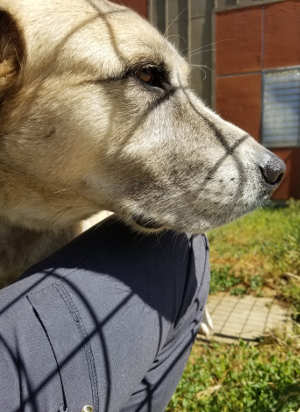
“Lucy” is a female Anatolian Shepherd in kennel No. 9, ID No. 12168. Photo courtesy of Lake County Animal Care and Control. ‘Lucy’
“Lucy” is a female Anatolian Shepherd with a medium-length white and black coat.
She already has been spayed.
She’s in kennel No. 9, ID No. 12168.
This female shepherd is in kennel No. 11, ID No. 12180. Photo courtesy of Lake County Animal Care and Control. Female shepherd
This female shepherd has a short tricolor coat.
She’s in kennel No. 11, ID No. 12180.
“Will” is a male pit bull terrier in kennel No. 12, ID No. 11958. Photo courtesy of Lake County Animal Care and Control. ‘Will’
“Will” is a male pit bull terrier with a short black coat.
He’s in kennel No. 12, ID No. 11958.
“Bon-Bon” is a male Chihuahua in kennel No. 17, ID No. 12157. Photo courtesy of Lake County Animal Care and Control. ‘Bon-Bon’
“Bon-Bon” is a male Chihuahua with a short tricolor coat.
He already has been neutered.
He’s in kennel No. 17, ID No. 12157.
This female black mouth cur in kennel No. 21, ID No. 12156. Photo courtesy of Lake County Animal Care and Control. Female black mouth cur
This female black mouth cur has a short tricolor coat.
She’s in kennel No. 21, ID No. 12156.
This male boxer is in kennel No. 24, ID No. 12123. Photo courtesy of Lake County Animal Care and Control. Male boxer
This male boxer has a short tricolor coat.
He’s in kennel No. 24, ID No. 12123.
“Bear” is a male Labrador Retriever in kennel No. 27, ID No. 12205. Photo courtesy of Lake County Animal Care and Control. ‘Bear’
“Bear” is a male Labrador Retriever with a short black coat with white markings.
He’s in kennel No. 27, ID No. 12205.
“Bear” is a male Labrador Retriever in kennel No. 28, ID No. 11986. Photo courtesy of Lake County Animal Care and Control. ‘Bear’
“Bear” is a male Labrador Retriever with a short black coat.
He’s already been neutered.
He’s in kennel No. 28, ID No. 11986.
This male Chihuahua-terrier mix is in kennel No. 29a, ID No. 12112. Photo courtesy of Lake County Animal Care and Control. Chihuahua-terrier mix
This male Chihuahua-terrier mix has a short black coat.
He’s in kennel No. 29a, ID No. 12112.
This young female Labrador Retriever in kennel No. 33a, ID No. 12189. Photo courtesy of Lake County Animal Care and Control. Female Labrador Retriever
This young female Labrador Retriever has a short black and white coat.
She’s in kennel No. 33a, ID No. 12189.
This young female Labrador Retriever is in kennel No. 34a, ID No. 12191. Photo courtesy of Lake County Animal Care and Control. Female Labrador Retriever
This young female Labrador Retriever has a short black and white coat.
She’s in kennel No. 34a, ID No. 12191.
This young female Labrador Retriever is in kennel No. 34b, ID No. 12192. Photo courtesy of Lake County Animal Care and Control. Female Labrador Retriever
This young female Labrador Retriever has a short black and white coat.
She’s in kennel No. 34b, ID No. 12192.
Lake County Animal Care and Control is located at 4949 Helbush in Lakeport, next to the Hill Road Correctional Facility.
Office hours are Monday through Friday, 11 a.m. to 5 p.m., and 11 a.m. to 3 p.m., Saturday. The shelter is open from 11 a.m. to 4 p.m. Monday through Friday and on Saturday from 11 a.m. to 3 p.m.
For more information call Lake County Animal Care and Control at 707-263-0278.
Email Elizabeth Larson at This email address is being protected from spambots. You need JavaScript enabled to view it. . Follow her on Twitter, @ERLarson, or Lake County News, @LakeCoNews.
The Double Asteroid Redirection Test, or DART. Credits: Johns Hopkins Applied Physics Laboratory.
The Double Asteroid Redirection Test, or DART – NASA’s first mission to demonstrate a planetary defense technique – will get one chance to hit its target, the small moonlet in the binary asteroid system Didymos.
The asteroid poses no threat to Earth and is an ideal test target: measuring the change in how the smaller asteroid orbits about the larger asteroid in a binary system is much easier than observing the change in a single asteroid's orbit around the Sun.
Work is ramping up at the Johns Hopkins Applied Physics Laboratory in Laurel, Maryland, and other locations across the country, as the mission heads toward its summer 2021 launch – and attempts to pull off a feat so far seen only in science fiction films.
Observing Didymos
To navigate the DART spacecraft to its intended target – a binary asteroid that consists of a small moon, Didymos B, orbiting a larger body, Didymos A – scientists need to understand how the system behaves.
Scientists have been making efforts to observe Didymos from Earth since 2015, and now, an international campaign coordinated by Northern Arizona University’s Cristina Thomas, DART’s Observing Working Group Lead, is making critical observations using powerful telescopes worldwide to understand the state of the asteroid system before DART reaches it.
Current observations will help researchers to better understand the extent of the impact made when DART slams into its target – Didymos B – in September 2022.
The most recent observation campaign took place on Cerro Paranal in northern Chile, where scientists viewed Didymos using the Very Large Telescope, which is run by the European Southern Observatory. The “VLT” comprises four telescopes, each with 8.2-meter mirrors; two of them were used in the recent observations.
“The Didymos system is too small and too far to be seen as anything more than a point of light, but we can get the data we need by measuring the brightness of that point of light, which changes as Didymos A rotates and Didymos B orbits,” said APL’s Andy Rivkin, DART investigation team co-lead, who participated in the observations.
The brightness changes indicate when the smaller moon, Didymos B, passes in front of or is hidden behind Didymos A from our point of view.
These observations will help scientists determine the location of Didymos B about Didymos A and inform the exact timing of DART’s impact to maximize the deflection.
The investigation team will observe Didymos again from late 2020 into the spring of 2021. Final ground-based observations will occur as the spacecraft travels toward the asteroid, as well as after impact occurs.
Research with impact
The telescope observations are key to understanding Didymos, but they’re not quite enough to fully understand Didymos B, DART’s target.
“Even though we are performing ground-based observations, we don’t know much about Didymos B in terms of composition and structure,” said Angela Stickle, DART’s Impact Simulation Working Group lead from APL. “We need to anticipate a wide range of possibilities and predict their outcomes, so that after DART slams into Didymos B we’ll know what our measurements are telling us.”
Structure is essential to the equation; in Didymos, researchers aren’t sure whether DART will impact an asteroid composed of solid rock, loose rubble or something “softer,” more akin to sand. A softer surface would absorb more of DART’s force and may not be pushed as drastically as if DART hit a harder surface.
Extensive modeling and simulation, part of a large international campaign that started in 2014, is being done in conjunction with Lawrence Livermore National Laboratory and other members of the investigation team to help researchers predict what will happen to DART’s target after impact.
They’ve considered these various factors – along with the added momentum from DART’s impact and the resulting debris ejected from the crater it creates – as they’ve run various simulations. These simulations help the team shape its expectations for impact.
Eyes on DART and Didymos
Researchers will have the ability to eventually see the Didymos asteroid system close-up – albeit briefly – thanks to DART’s onboard DRACO imager and a planned ride-along CubeSat, the Italian Space Agency’s LICIACube.
Released just before impact, the shoebox-sized LICIACube would document DART’s impact and its aftermath. The CubeSat recently passed its preliminary design review and has moved into the next phase of development.
DRACO – the Didymos Reconnaissance and Asteroid Camera for Op-nav – is DART’s only onboard instrument. It will serve primarily as DART’s optical navigation system, capturing images that help the spacecraft reach its target.
DRACO will feed its images into the APL-developed Small-body Maneuvering Autonomous Real-Time Navigation (SMART Nav) algorithm – the system that, in the spacecraft’s final hours, will precisely and automatically guide DART into Didymos B. SMART Nav is preparing to undergo a series of tests on simulated spacecraft avionics, which will boost engineers’ confidence that the system will be ready to operate successfully when the mission will be relying on it.
Wired for success
While much of the work on DART so far has been modeling and simulation, many parts of the spacecraft have started to take shape. A full-scale mock-up of DART now serves as a placeholder for the assembly of cables and connectors that will eventually make up the wiring harness.
The mission has signed off on the manufacturing of several flight hardware components, specifically the spacecraft’s solar arrays – which passed the critical design review stage – as well as the radio and power system electronics.
In a recent design change, DART will now be able to complete its mission by relying on small hydrazine thrusters in addition to having the ability to utilize the electric propulsion system, NASA’s Evolutionary Xenon Thruster Commercial ion engine, which will also push the start of the primary launch window to July of 2021, shortening the mission flight time. “For a mission that relies on one chance, it’s a move that will provide DART with more options to ensure it hits its mark,” said Ed Reynolds, DART project manager at APL.
 How to resolve AdBlock issue?