 How to resolve AdBlock issue?
News
The grant was awarded in response to the devastation caused by the recent natural disasters throughout the bank’s district.
Community First Credit Union, a Federal Home Loan Bank member, facilitated the grant application.
“We are delighted to have been chosen as one of only five recipients in the tri-state area. This grant will allow the Cobb area to move forward aggressively with our economic development plans and to reinvigorate the area to ensure that Cobb reemerges stronger than ever,” commented Jessica Pyska, chair of the Cobb Area Council’s Economic Development Committee.
“In the wake of the destructive Valley fire in September 2015, the Lake County Board of Supervisors established the Cobb Area Council to advise the County on planning, emergency preparedness, response, public safety, and local infrastructure,” the Federal Home Loan Bank said in a statement.
“At the time, the Valley fire was the third-worst wildfire in California history, destroying almost 2,000 structures. This project will help the Cobb Area Council draft and implement an economic development strategy to revitalize the Cobb Mountain community,” the bank’s statement continued. “The Cobb Area Council will use the funds to conduct an assessment of community assets and resources; analyze local businesses, housing, and employment sectors; create a business revolving loan fund, and establish a Cobb Area Merchants Association.”
A final report will be submitted as a supplement to the Lake County Economic Development plan.
The timetable for the project will run through March 2021, with regular updates being provided at the Cobb Area Council monthly meetings.
The next meeting will be held on Thursday, Oct. 17, starting at 6:30 p.m. at the Little Red Schoolhouse, 15780 Bottle Rock Road, Cobb.

CLEARLAKE, Calif. – A weekend traffic stop in Clearlake led to the arrest of a Santa Rosa man who is on parole and was found to be in possession of a firearm.
John William Brott, 30, was arrested during a Sunday evening enforcement stop on Arrowhead Road, according to the Clearlake Police Department.
The department reported that just before 8:30 p.m. Sunday, Officer Brittany Shores was conducting routine patrol when she observed a 1998 Chevrolet pickup driving on Arrowhead Road.
Officer Shores saw the Chevrolet fail to stop at two stop signs and conducted a traffic enforcement stop, police said.
During the traffic stop, Office Shores contacted the driver, identified as Brott, and a single passenger, according to the report.
Through a records check, police said Shores determined that Brott is a convicted felon who is on active California Department of Corrections and Rehabilitation, or CDCR, parole. It was also determined that the Chevrolet pickup was registered to him.
Due to Brott’s CDCR Parole status, he is subject to search of his person, vehicle and residence. During a search of the vehicle, Officer Shores located a loaded .45 caliber semi-automatic handgun next to the driver's seat where Brott was seated, police said.
Brott was arrested on probable cause for numerous weapons charges to include felon in possession of a firearm and ammunition, carrying a loaded and concealed firearm in a vehicle, the Clearlake Police Department reported.
CDCR Parole placed a parole hold on Brott and he was booked into the Lake County Jail with no bail set due to the parole hold. Jail records show that he remained in custody on Thursday, to days after he was scheduled for arraignment.
At its meeting last week, the board voted unanimously to have an ad hoc committee and staff return with some options for how that transition might take place.
Supervisors Bruno Sabatier and Moke Simon brought the matter to the board.
The two are serving on an ad hoc committee formed by Board Chair Tina Scott to work with the elected Treasurer-Tax Collector Barbara Ringen to see how they can help her department and accomplish a number of goals, including a focus on revenue generation.
Also on the ad hoc committee is County Administrative Officer Carol Huchingson and some of her staff, including Patrick Sullivan, the county’s tax administrator.
Publicly, Ringen, who was reelected after running unopposed last year, has been under the scrutiny of the board and Huchingson since last year. In the spring the ad hoc committee – in particular, Sabatier and Simon – asked her to resign well ahead of the end of her term, which is Jan. 1, 2023.
At the board’s request, Assemblywoman Cecilia Aguiar-Curry authored AB 632, which the governor signed in July, which would allow Lake County to consolidate its auditor-controller and treasurer tax-collector’s offices.
For Sabatier, one of the key issues he’s had with Ringen’s performance has had to do with a dearth of sales of tax defaulted properties, a matter which has had a large impact on his district, especially the city of Clearlake.
Initially, Ringen had indicated she would resign in a June 14 email. However, at a meeting in August, she refused to give a firm date for when she might step down, as Lake County News has reported.
Ringen was not present for the Oct. 8 discussion, during which Sabatier explained that at a previous ad hoc committee meeting, they discussed with Ringen the investment authority matter.
State Government Code makes the Board of Supervisors “the agent of the county who serves as a fiduciary and is subject to the prudent investor standard,” unless, that responsibility is delegated to the county treasurer, according to a memo to the board from Sabatier and Simon.
Sabatier said the board is supposed to get an annual report on the county’s investments, but that hasn’t happened for at least a couple of years or possibly longer.
He said he wanted to have a discussion about relieving Ringen of that responsibility and moving it to the County Administrative Office. “It should be an interim move and not a permanent move,” he said, adding he wants to have Ringen focus on revenue generating work.
Simon added that the county could find licensed investment firms that could help take the responsibility off of Ringen’s office.
Sabatier said the proposal was not meant to be a slap on the hand for Ringen but a way of helping her with other goals.
Supervisor Rob Brown asked about the membership of the ad hoc committee, and whether it included Cathy Saderlund, the auditor-controller-county clerk. He said he was curious about Saderlund’s take on the matter, considering her longterm involvement with county investments and outcomes. Sabatier said that, so far, Saderlund hasn’t been involved.
Huchingson said that it is within the board’s authority to move investment authority wherever it chooses, and Sabatier noted that rules and regulations don’t specify that it must be with the Treasurer-Tax Collector’s Office.
Huchingson asked Sullivan if he could speak to how it’s done in other counties. He said that, in his experience, smaller counties tend to use an outside consultant as they don’t have investment staff in house like larger counties do. Those contracted firms are then able to help with asset allocation, strategy and reporting. He added that sometimes an outside contractor can provide an advantage.
County Counsel Anita Grant said she hadn’t looked closely at the regulations, but she said she noticed that state code allows for the investment responsibility to be delegated by an investment body to the treasurer of a local agency for a period of one year.
“That’s not to say that your board can’t contract with whomever you want to provide advice and to handle various aspects of this,” she said.
Sullivan said that, no matter what model is chosen, the Treasurer-Tax Collector’s Office still retains a major role. “They’re still handling wire transfers and the distribution of funds.”
Grant said that doesn’t alter or affect the board’s ability to contract with consultants.
An ‘exploratory’ discussion
Huchingson said the discussion’s purpose was exploratory in nature, to find out if there’s interest from a majority of the board to come back with a plan. She said Ringen would need to be involved, and Saderlund would be invited.
Huchingson added that she was surprised that Ringen, who was invited to the discussion, wasn’t in attendance.
Brown said it was a good initial discussion, but he wasn’t ready to make a decision and there wasn’t a recommendation about what action to take. He said the matter needs to be explored further, and he wanted Saderlund involved, along with someone from the private sector with experience in investments.
Brown said he also wanted to see information about the county’s investments over the past 15 years so he could gauge how the county has done.
“I think therein lies the problem,” said Huchingson, who explained that they had hadn’t gotten the annual history so she didn’t think it will be possible to provide Brown with that information.
“You’re not sure we can do it. Are you saying we can't do it in a nice way?” Brown asked.
Huchingson said they haven’t been able to obtain that information on a year-to-year basis so she thinks it’s doubtful she can get it.
Brown said it wanted to get to the bottom line. Grant responded, “You’re supposed to get an annual report of investments. You haven’t been getting one.”
Brown pressed, asking if that was because they hadn’t asked for it or if it wasn’t available. Grant said it’s supposed to be prepared by the Treasurer-Tax Collector’s Office and she had no idea if it was available.
Sabatier said the ad hoc committee had been requesting the report from Ringen’s office and have not received it. He said he wanted to come back to the board to see what it would look like to move the investment authority from Ringen’s office.
He said an investment committee must be formed to ensure that there is oversight and that it’s not being held in a single person’s hands, “which leaves us in the situation where we don’t know any of the information of what’s happening,” Sabatier said.
Sabatier added that he thinks it’s important since it’s public money that the board knows exactly what is happening with the funds and how the county is choosing to invest it. “Right now, that is not the case.”
Simon agreed, noting in his three years on the board he’s seen no investment reports from the Treasurer-Tax Collector’s Office.
Brown said the last report he could recall was when the county changed banks under Ringen’s predecessor, Sandy Kacharos. “But that’s been awhile.”
Huchingson said she believes the county’s investment policy also hasn’t been updated since 2013.
Sabatier said an investor the county had contracted with to manage investments had been dropped by many counties and is not really an active investor. “We want to go with somebody that we’re going to be able to have a future with and relationship with, and make sure we can ask for and receive any reporting that we should be receiving.”
Scott said the board has been putting a lot of work on the County Administrative Office. She asked if they had the capability of taking it on, and who in the office would do it.
Huchingson said that if they brought on consultants, they would have a staffer anchor that relationship, and the consultant would submit reports. If it was structured that way, she said they could do it and on the staff side it would likely be a role filled by Sullivan.
Sabatier said he believed that, in the beginning of such a transition, there might be more work for staff and that it should smooth out down the road.
There was no public comment, and Huchingson asked the board for consensus to have the ad hoc committee, staff and others get back to the table and return with a formal recommendation.
Sabatier moved to have that done, including the creation of an investment committee, which the board approved 5-0.
Email Elizabeth Larson at
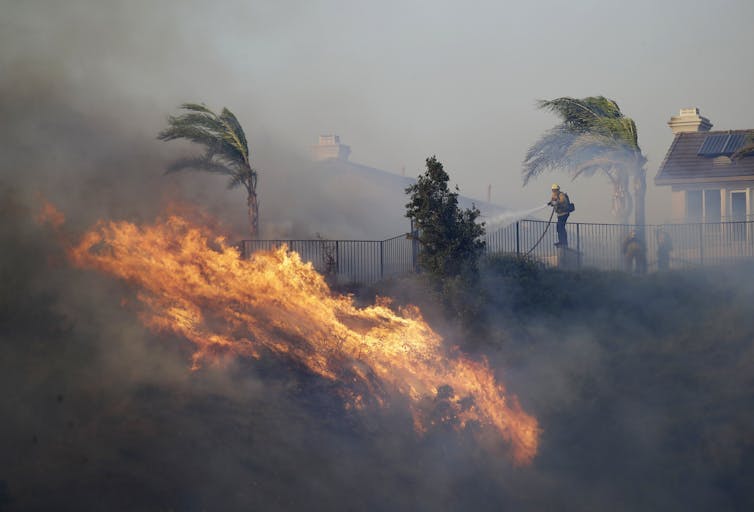
Deadly fires across California over the past several years have shown how wildfire has become a serious public health and safety issue. Health effects from fires close to or in populated areas range from smoke exposure to drinking water contaminated by chemicals like benzene to limited options for the medically vulnerable. These kinds of threats are becoming major, statewide concerns.
Many people still think of wildfires as events that happen “out there” in the wildlands – distant forests, shrublands or grasslands – and see better land and fire management as the primary solution. However, the reality is that fires are spreading into communities and increasingly affecting large numbers of Californians, sometimes repeatedly.
As researchers who have worked extensively on fire in California, we believe it is time to treat fires that affect communities as the public health challenge they have become. This means taking a more robust approach to a host of issues, including focusing on where and how we build, taking the needs of vulnerable populations seriously, and ensuring that solutions are equitable.
Predictable conditions, but future unclear
Fire is a part of life in California, and it doesn’t take long to develop a feel for “fire weather.” Across the state, late fall winds – called by various names including Santa Anas, Diablos and sundowners – blow hot, dry air from the interior of the state out toward the coasts. The winds often intensify as they are channeled through mountain passes and blasted across dry vegetation and steep surfaces to create perfect fire conditions.
Given an ignition, those same winds then help to spread fire very quickly. The strategy that utility companies are taking to implement “Public Safety Power Shutoffs” – sometimes preemptively shutting down electricity service – are aimed at reducing this type of ignition (there are many others) under specific wind and weather conditions.
While winds are in many ways predictable, they are also altering fire hazard in ways that researchers don’t fully understand. As the climate changes, bringing warmer temperatures and increasingly erratic precipitation patterns, more of these extreme wind events may occur during times that are highly conducive to fire.
It is also conceivable that climate change will cause shifts in the atmospheric pressure patterns that spawn extreme wind events to begin with, and that in the future people may see extreme winds in new regions or during unexpected times of year. A deeper understanding of the controls on these events is emerging, but relatively little is known about what the future will hold.
Homes as ‘fuel’ for fires
Wind is one of the biggest factors in fire spread, and it also generates flying embers far ahead of the fire itself. It is this storm of burning embers that often shower neighborhoods and ignite homes after finding sensitive parts of landscaping and structures.
Under the worst circumstances, wind-driven home-to-home fire spread then occurs, causing risky, fast-moving “urban conflagrations” – like those that happened in Santa Rosa in 2017 and Paradise in 2018 – that can be difficult to stop and dangerous to evacuate.

Managing the type and amount of vegetation, or “fuel,” in an area provides a set of tools for altering fire behavior and enhancing firefighter safety in wildland fires. But during wind-driven urban conflagrations, homes are usually a major – if not the main – source of fuel. Retrofitting homes to address vulnerabilities to fire ignition is therefore crucial.
One immediate strategy is for people to create so-called defensible space – removing flammable materials in the area surrounding homes. Vegetation management and prescribed burning in surrounding areas are also part of, but not the only, solutions. Fire-prone communities must also intensify urban and evacuation planning efforts that make the built environment – the buildings where people live and work and the infrastructure we depend on – and those living there safer.
A different lens to view preparedness
The state faces a formidable challenge, and opportunity, to reduce wildfire risk to communities in a way that combines the best of both research and practice. It must integrate both new (and potentially controversial) urban planning reforms as well as novel thinking about evacuation alternatives and other solutions, particularly for vulnerable populations.
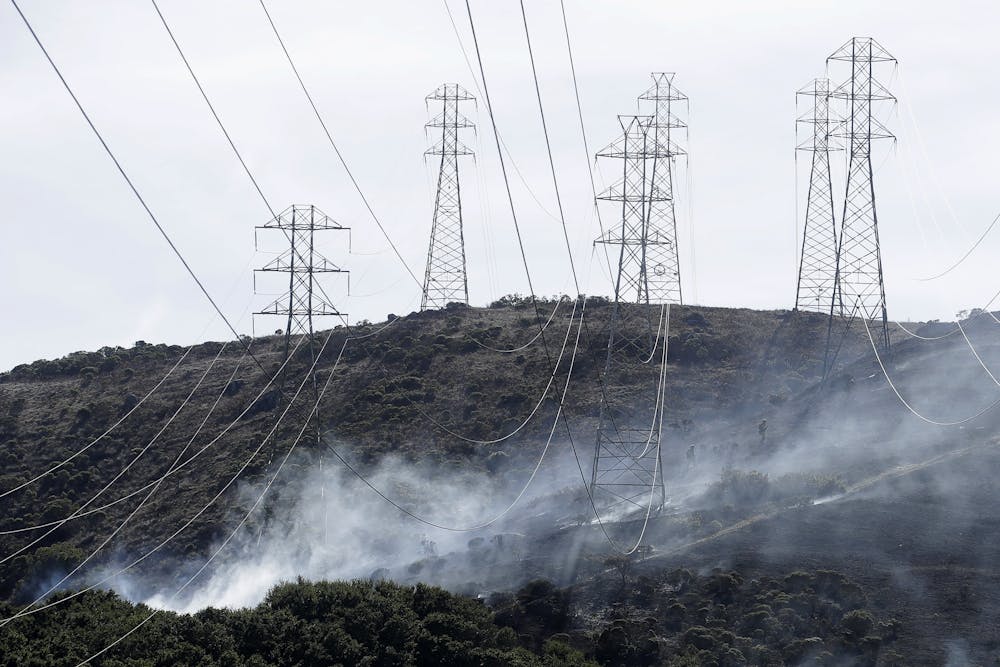
These are steps toward addressing some of the public health and safety concerns that come with wildfires in populated areas. Through this lens, it seems clear that short-term solutions like power shut-offs that may lessen a particular type of ignition come with their own serious risks. Indeed, solutions that worsen inequities cannot really be considered solutions at all.
Fires in California are sounding alarm bells that cannot be ignored, lest we fall into the trap of normalizing the incredible loss of lives and devastated communities year after year. As it stands, California is failing to keep up with what we know about fire hazard and risk, and losing time as we struggle against rapidly changing climate conditions.
This is an updated version of an article that was originally published on Nov. 16, 2018.
Faith Kearns, Academic Coordinator, California Institute for Water Resources, University of California, Division of Agriculture and Natural Resources and Max Moritz, Wildfire Specialist at the University of California Cooperative Extension; Adjunct Professor Bren School of Environmental Studies, University of California, Santa Barbara
This article is republished from The Conversation under a Creative Commons license. Read the original article.
The Zoning Code Update Committee is tasked to work with staff in crafting a new zoning ordinance and design review manual based on the city’s updated general plan.
The committee will meet as needed, but normally not more than once a month, for a few hours at a time to review and discuss needed updates.
Eventually, the committee will make a formal recommendation to the Clearlake Planning Commission with an updated ordinance.
If you have participated in previous development projects or just have ideas or recommendations on improving our community, you are encouraged to apply.
Applicants must be residents of the city of Clearlake.
Applications can be found on the city’s Web site at www.clearlake.ca.us or by contacting Administrative Services Director/City Clerk Melissa Swanson at 707-994-8201, Extension 106, or email at
Applications must be received no later than 5 p.m. on Monday, Oct. 22.
This year’s drill will coincide with the 30th anniversary of the Loma Prieta earthquake that shook Northern California on Oct. 17, 1989.
Also known as the “World Series earthquake,” the magnitude 6.9 Loma Prieta earthquake was felt extensively in Santa Cruz, Monterey and the San Francisco Bay Area.
It was responsible for 63 deaths, 3,757 injuries, and more than $5.9 billion in property damage.
Strong ground shaking, liquefaction, and landslides caused significant structural damage, and approximately 16,000 housing units – almost 13,000 in the nine-county San Francisco Bay region alone – were uninhabitable after the earthquake.
“The Loma Prieta earthquake was a tragedy that caused immense suffering for thousands of California residents," said California Earthquake Authority CEO Glenn Pomeroy. “Anniversaries for big earthquakes often serve as painful reminders of why we need to know how to Drop, Cover, and Hold On when the ground shakes, and know how to financially recover from damage that may be expensive to repair.”
Most Californians live within 30 miles of an active fault. In 2015, scientists reported there was a greater than 99 percent chance of one or more magnitude 6.7 earthquakes striking California between 2014 and 2043.
Magnitude 6.4 and 7.1 earthquakes struck near the Mojave Desert town of Ridgecrest in July 2019, and a magnitude 6.0 earthquake struck near Napa in 2014.
Now more Californians are paying closer attention to their risk for earthquakes, and their potential costs to repair shake damage not covered under a standard homeowner policy. CEA now offers a wide range of coverage options, and has more than 1 million policyholders.
“More than 10 million Californians participated in the Great California ShakeOut last year,” Pomeroy said. “The drill is easy to do. It’s also easy to have a quick conversation with your insurance agent about how to get an earthquake policy. A little preparation can make a big difference if California’s next big earthquake strikes closer to home.”
More information from CEA and other organizations about how to survive and recover from damaging earthquakes that scientists say are possible in the Bay Area, Los Angeles, and San Diego areas can be found at https://www.eqheadquarters.com/ .
Details about the Great California ShakeOut and other ways to prepare for earthquakes can be found here.